
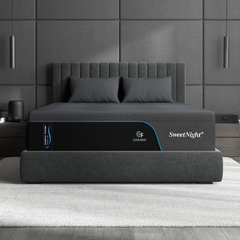
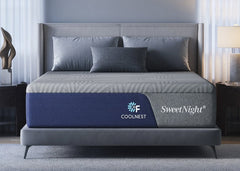
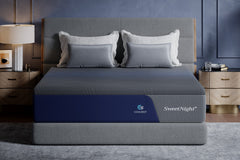
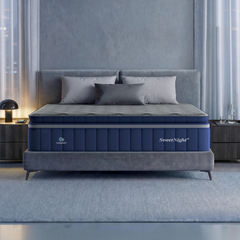
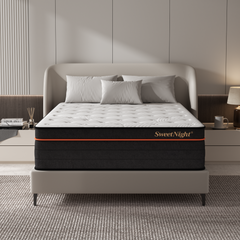
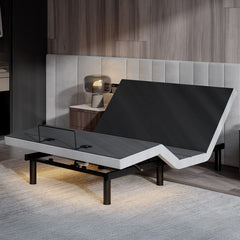


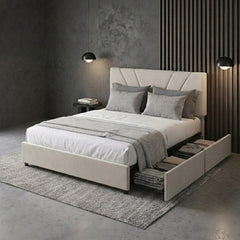
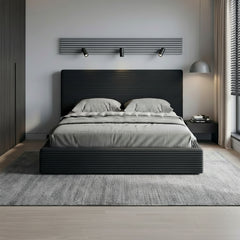
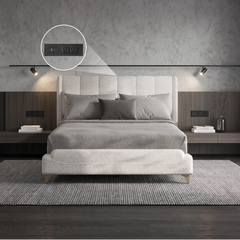
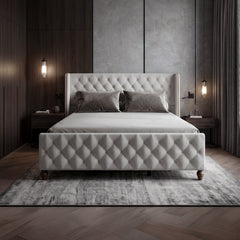
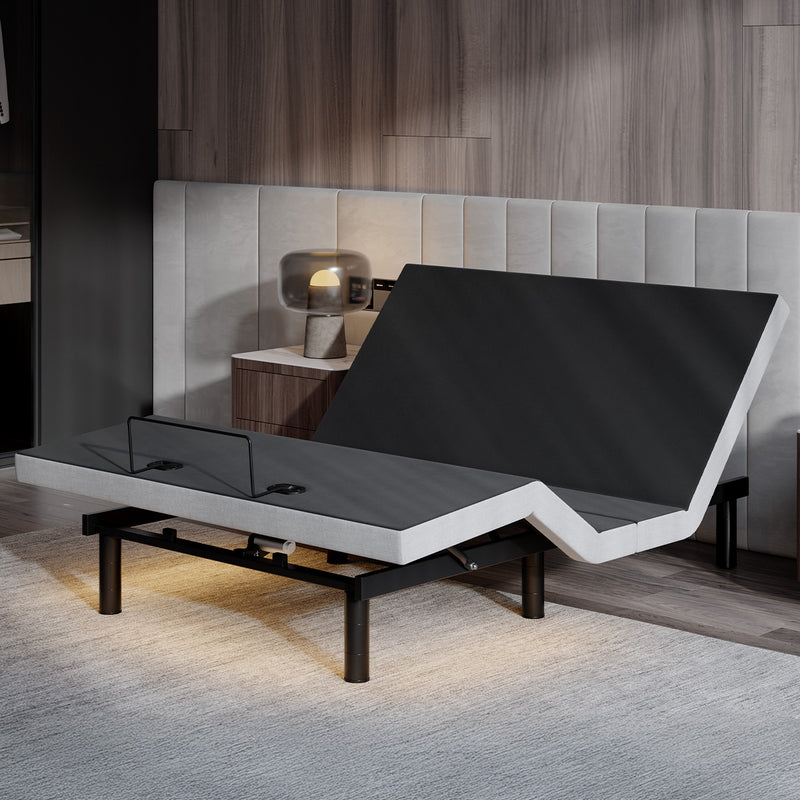


The SweetNight SenseSync™ Adjustable Bed Base is a dual-motor adjustable bed frame that raises the head and foot independently, with Zero Gravity, Anti-Snore, TV and two memory presets, three-level massage, an under-bed light and USB-A and USB-C charging. It comes in Twin XL, Full, Queen and Split King, carries 750 pounds on Full and Queen, and is built to be paired with an all-foam memory foam mattress 12 or 14 inches thick. (Disclosure: this is our own product, so read the limits section as carefully as the features.)
This page is the reference version: what each design choice is for, the full spec table, what every remote button does, which mattresses and frames work, what the warranty really covers year by year, and who should buy something else.
What Is the SweetNight SenseSync Adjustable Bed Base?
An adjustable bed base replaces the box spring or foundation under your mattress. Motors lift the head section, the foot section, or both, so the mattress bends into a recline instead of staying flat. You use it for the same reasons people buy any adjustable bed: sleeping with the upper body raised, putting the legs up after a long day, reading or watching TV without a pile of pillows, and getting out of bed with less effort.
When we planned SenseSync we started from the complaints buyers most often have about adjustable bases: they break, they wobble, and they're a pain to get into the house. So instead of adding more features, most of the engineering went into the motors, the frame and the delivery. Each section below maps a spec back to one of those three problems.
SenseSync Adjustable Bed Frame Specs at a Glance
| Spec | Twin XL | Full | Queen | Split King |
|---|---|---|---|---|
| Base dimensions (L × W) | 79.7" × 37.6" | 74.6" × 53.7" | 79.7" × 59.8" | Two Twin XL bases (about 79.7" × 75.2") |
| Weight capacity (mattress + sleepers) | 400 lb | 750 lb | 750 lb | 400 lb per side |
| Net weight | 93.5 lb | 119 lb | 135 lb | 2 × Twin XL |
| Boxed weight | 100.8 lb | 129 lb | 145.5 lb | Two Twin XL boxes |
| Box size | 41.1" × 39.8" × 6.9" | 55.1" × 39.0" × 6.9" | 61.2" × 41.9" × 6.9" | Two Twin XL boxes |
| List price at launch | $599.99 | $699.99 | $749.99 | $1,199.99 |
| Shipping and returns | Free U.S. shipping; ships in 1–4 business days; 30-day return if unopened | |||
Shared across all sizes: two motors (head and foot) with 4,000N of thrust, a rated noise level of 48 dB or less with no load and 50 dB or less under load, a high-strength steel frame, a padded and upholstered plywood deck, a clip-on mattress retainer bar, stackable 3-inch legs up to 12 inches, a 9V battery clip for lowering the bed in a power cut (battery not included), and a 10-year limited warranty. Prices are the list prices at launch and will move with promotions.
The base measurements are a fraction of an inch smaller than the matching mattress. The Sleep Foundation's mattress size chart lists a Queen at 60 by 80 inches and a Twin XL at 38 by 80. A base that is slightly narrower than its mattress is normal and is what lets it drop inside a bed frame; the adjustable bed sizes and dimensions guide covers the room and doorway math.
Dual Motors and 4,000N of Thrust: What the Power Numbers Mean
SenseSync uses one motor for the head and back section and a second for the foot and leg section. Each drives a linear actuator: a DC motor turns a set of reduction gears, which turn a lead screw, which pushes a nut and rod that lifts the deck. Two motors means the two ends move independently. You can raise your knees without raising your head, which matters for back pain and swollen legs, where the useful setting is often a foot lift with the head flat.
The 4,000N thrust figure is the pushing force of the drive. Think of it as headroom. A base lifting a Queen memory foam mattress and two adults is working against a lot of weight concentrated on the upper half of the deck, and a motor running near its limit strains, slows and wears faster. Extra thrust lets the base move a full load smoothly rather than grinding through the last few degrees.
The same logic sits behind the durability test. SweetNight ran the base through 15,000 full-load lift cycles in fatigue testing, which we estimate equals roughly ten years of regular household use. That's our own test and our own estimate, not an independent certification, but it's the number the warranty and the motor spec were designed around. If you want to know what wears a base out and how to read any brand's warranty, see how long adjustable beds last.
On noise, SenseSync is rated at 48 dB or less with no load and 50 dB or less loaded. For scale, the NIH's hearing institute puts normal conversation at 60 to 70 dBA, so the motors run well below a conversation. You'll hear them, as with any motorized base, but they're unlikely to wake a partner who's already asleep.
Why Adjustable Beds Wobble, and How the Zero-Gap Structure Addresses It
Wobble is the complaint that shows up after the first month. A base that sits on four or six narrow legs has a high center of gravity, and every roll-over, every partner climbing in, every dog jumping up rocks it slightly. Raise the head and the load shifts further from the legs, which makes it worse.
SenseSync's frame is high-strength steel with a widened bottom support area. That lowers the center of gravity and spreads the load over more floor, and the connections between frame sections are designed to limit play. In practice it's built to feel planted when someone turns over or a pet jumps on the bed.
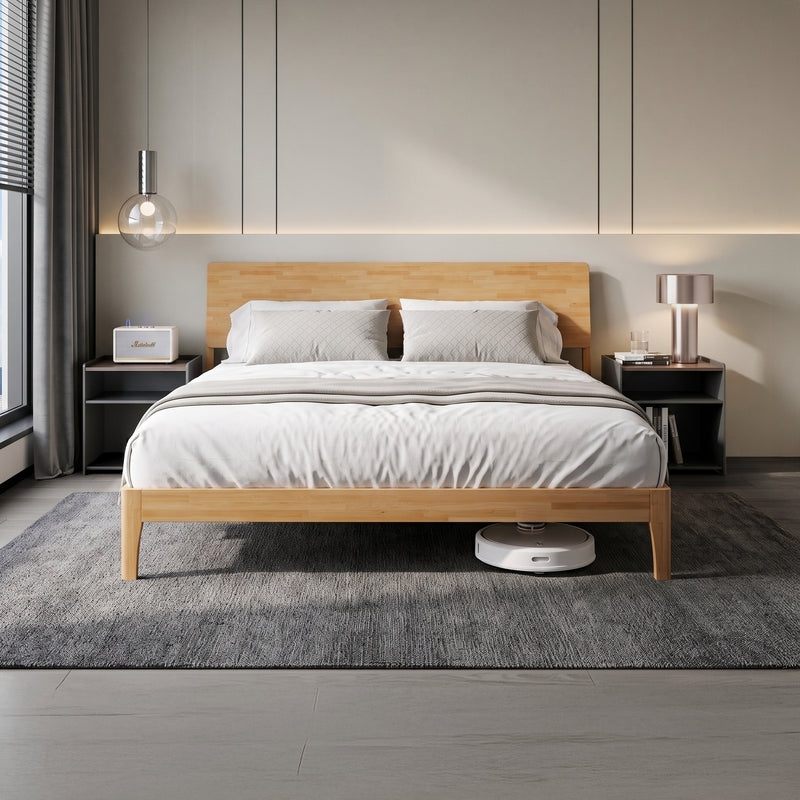
The most stable setup is zero-clearance: take the legs off and set the base directly on the floor or on a solid platform. With no legs there is nothing to rock on. If you prefer a taller bed, the legs stack in 3-inch segments up to 12 inches. Our article on why adjustable beds wobble and squeak explains the other common causes, most of which are fixable at home.
The SenseSync Remote: Presets, Memory Positions, Massage and Light
Everything runs from the included remote. There's no app, no voice control and no snore detection, and we'd rather say so up front than have you find out after delivery. Here's every function:
| Button | What it does |
|---|---|
| Head up / down | Raises or lowers the head and back section |
| Foot up / down | Raises or lowers the leg section, independently of the head |
| Flat | Returns both sections to flat in one press |
| Zero Gravity (Z.G) | Raises the legs above heart level with the head slightly raised |
| Anti-Snore | Lifts the head to a gentle incline of about 15° |
| TV | Raises head and foot to a TV-watching recline |
| M1 / M2 | Press and hold to save your current position; press to return to it |
| Massage | Head and foot vibration, 3 intensity levels, switches off after 30 minutes |
| Under-bed light | LED strip with adjustable brightness, white or warm light, switches off after 10 minutes |
| Child Lock | Hold Head Down and Foot Down together for 3 seconds; other buttons stop working |
A USB-A and USB-C charging port sits on the left side of the base, so a phone can charge without a cable run to the wall.
Two presets deserve context. The Zero Gravity preset is inspired by what NASA calls neutral body posture, the position a relaxed body settles into in weightlessness; the NASA Human Integration Design Handbook describes it for spacecraft design, not sleep, and we cover what it can and can't do in our zero gravity position guide. The Anti-Snore preset's 15° sits inside the 10 to 20 degree range tested in a small 2020 anti-snoring bed pilot study, which is encouraging but not proof it will quiet your snoring. Loud snoring with gasps or pauses should go to a doctor before a bed.
Six Comfort Positions and When to Use Them
Presets cover the obvious cases. For everything else, SweetNight's product team built its guidance around six positions:
- 15° head and neck relief for scrolling or light reading before sleep.
- 30° relaxed lounge for reading, TV and music, with the back supported the whole way up.
- 45° bedtime lifestyle for working from bed, breakfast or a conversation, closer to sitting than lying.
- 60° assisted sitting for sitting up with less effort, useful for older sleepers, late pregnancy, recovery or eating in bed.
- 20° leg elevation for heavy legs after a day of sitting or standing.
- Zero Gravity for a nap, winding down or deep relaxation.
Once you find your own versions, save them to M1 and M2. The adjustable bed positions guide has head and foot angle ranges for each activity, including the laptop-on-lap setting most people get wrong.
Which Mattress Works With the SenseSync Adjustable Bed Base?
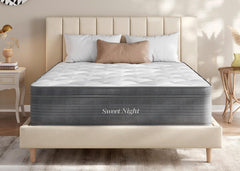
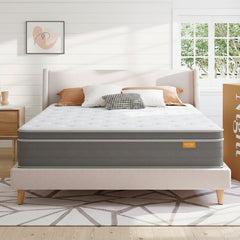
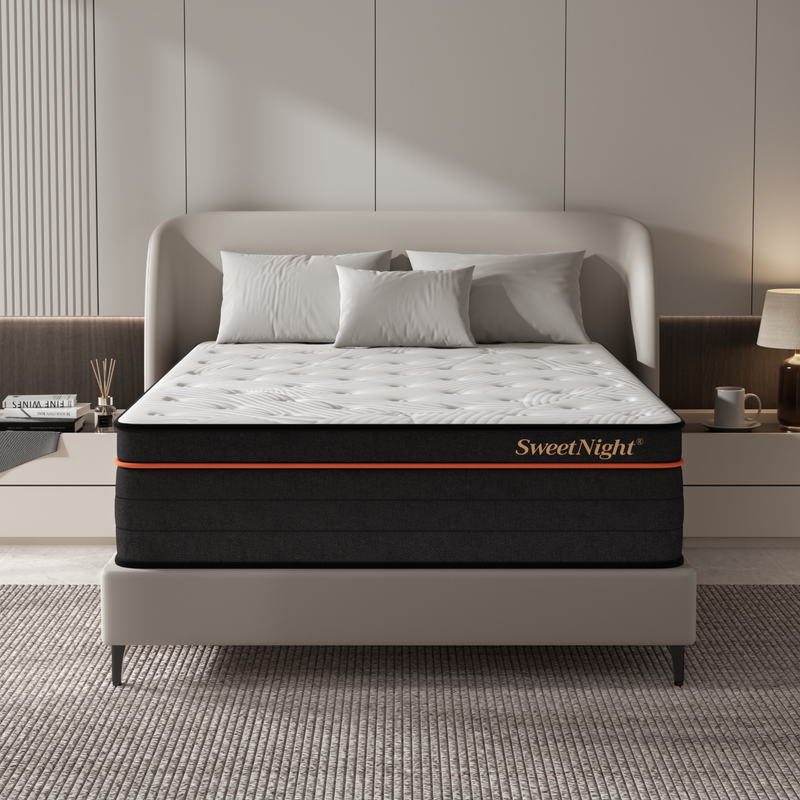
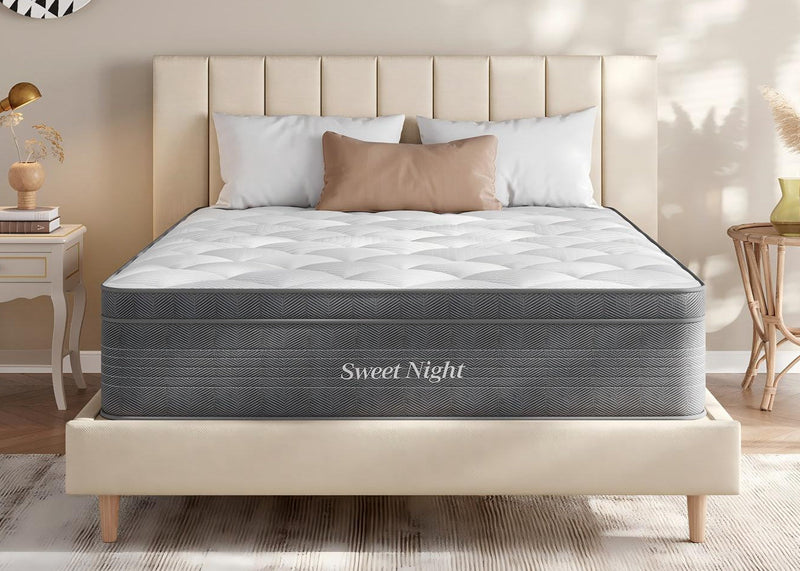
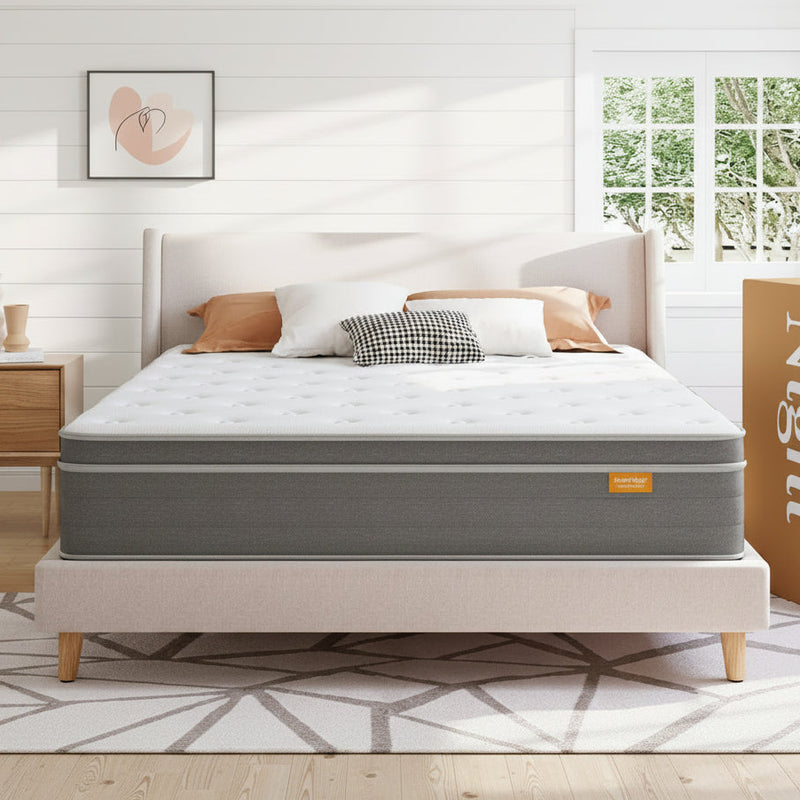
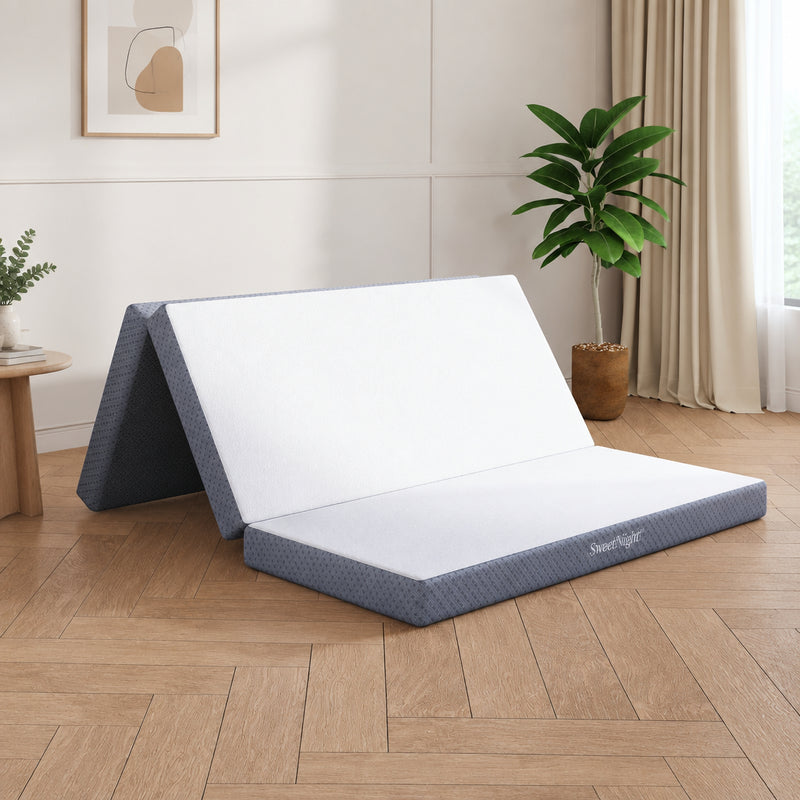
This is the one rule we won't bend: SenseSync is paired only with all-foam memory foam mattresses that are 12 or 14 inches thick. No hybrid, innerspring or pocket-coil mattresses, and no 16-inch mattresses. A Split King takes two Twin XL memory foam mattresses in 12 or 14 inches.
The reason is mechanical. Every time the base moves, it folds the mattress at the hinge points. All-foam bends evenly along that fold. A coil unit resists the bend, can pull away from the deck and puts stress on the coils, the edge support and the motors. A 16-inch mattress is stiffer across the fold and changes how the angle and the retainer bar work. Plenty of hybrids are sold as adjustable-base compatible, and that may well be true on other bases; SenseSync was specified around all-foam 12- and 14-inch mattresses, so that's what we stand behind. The full explanation is in can you put a hybrid mattress on an adjustable bed.
From our own lineup, three mattresses fit the rule in 12 or 14 inches:
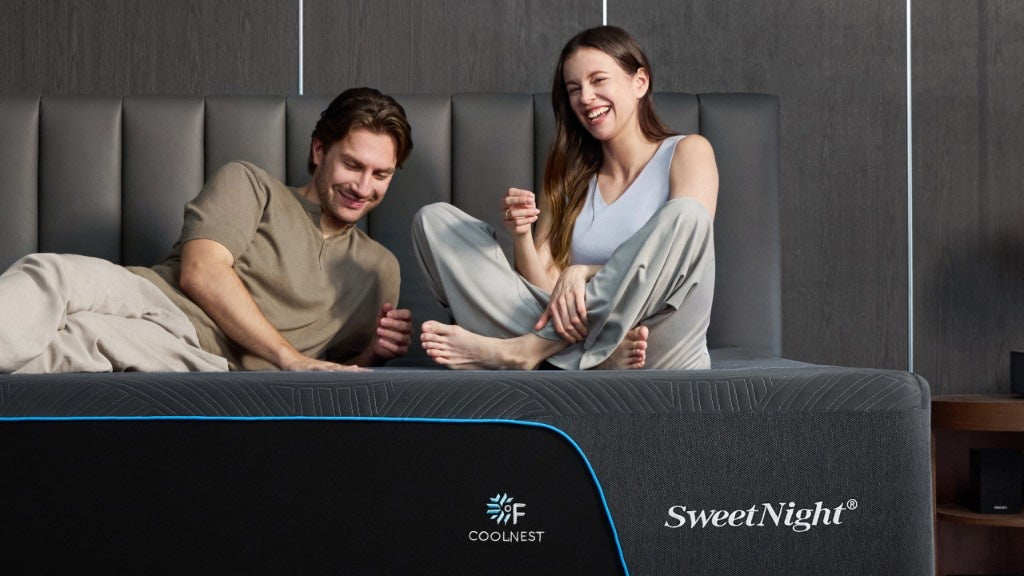
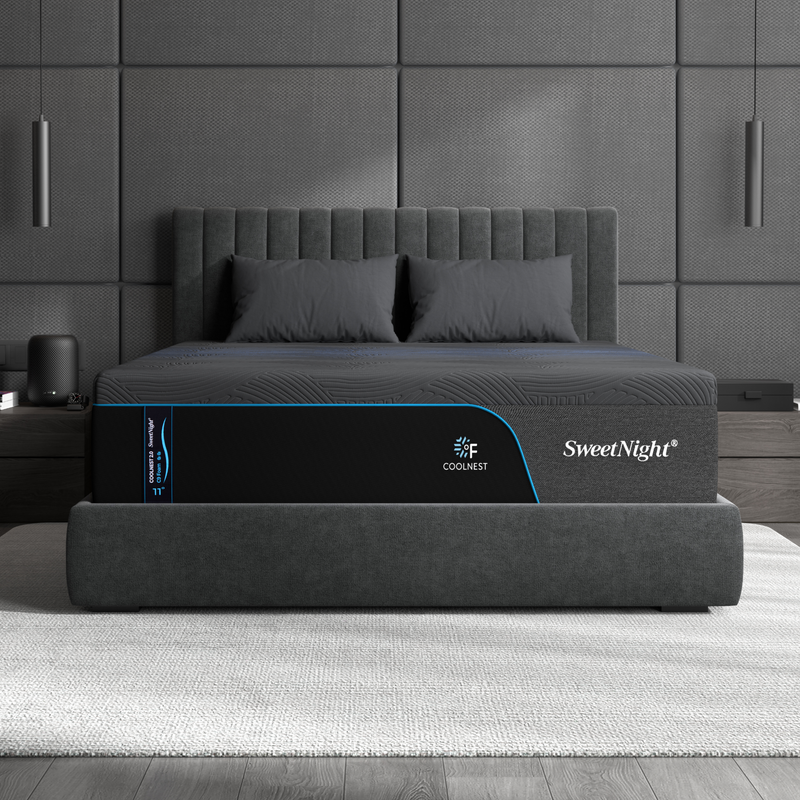
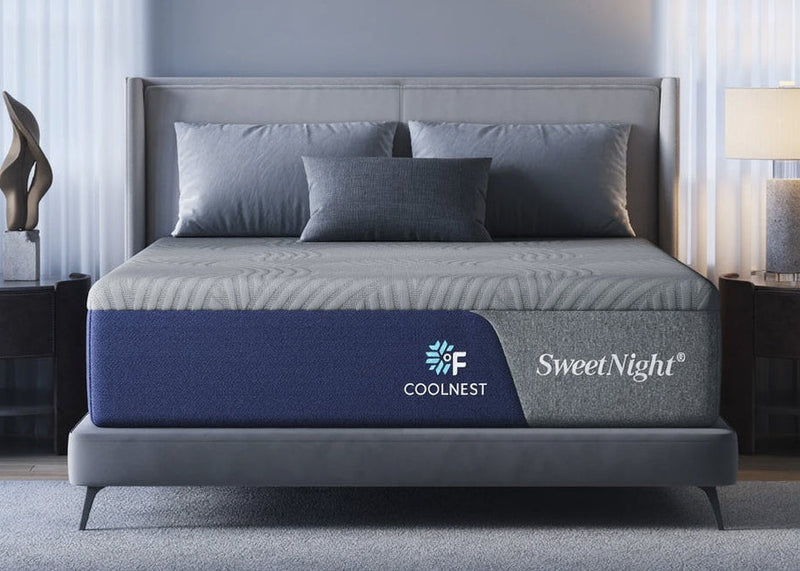
- The CoolNest memory foam mattress, in Full or Queen, with 5-zone support and a CoolNest System that feels up to 8° cooler.
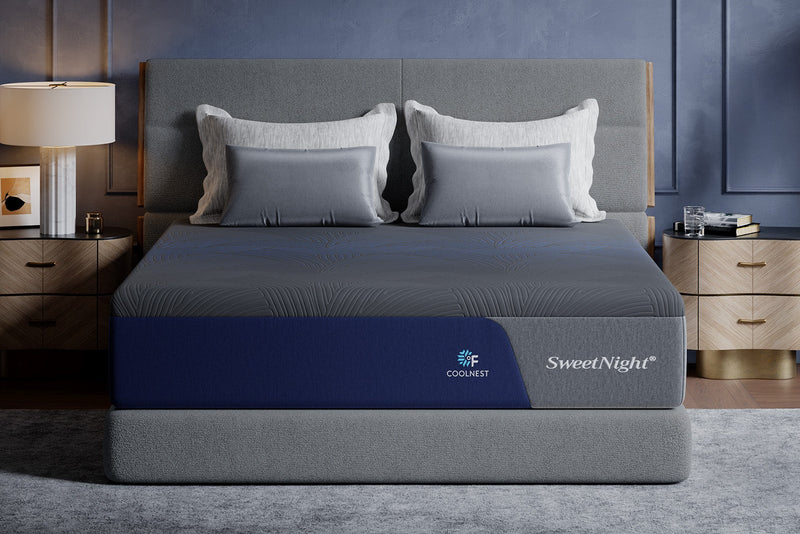
- The CoolNest Pro memory foam mattress, in Queen, with a gradient cooling ice-silk cover and contour-cut 7-zone support.
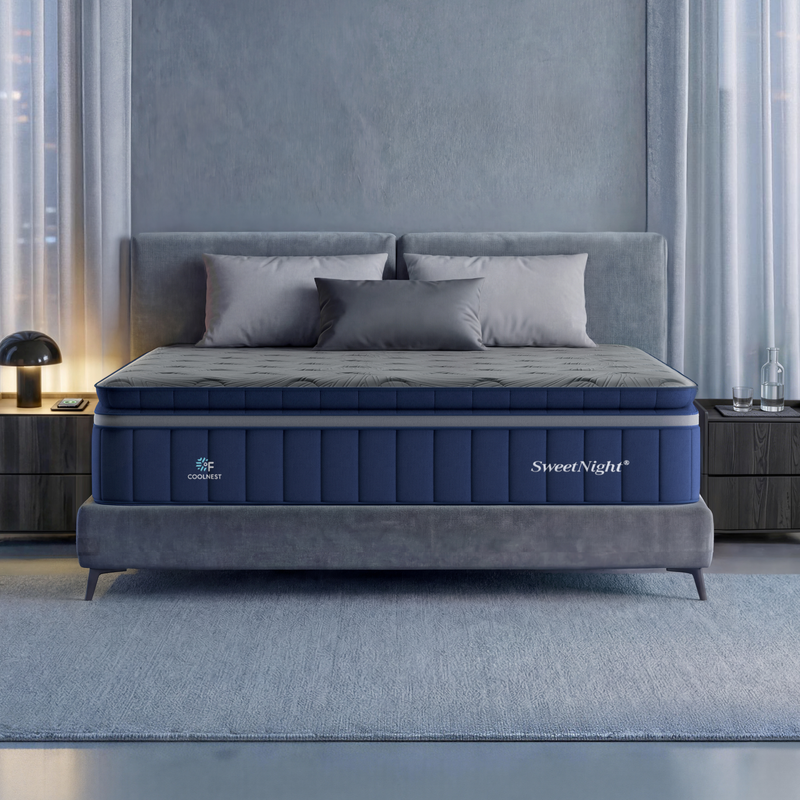
- The CoolNest Ultra cooling memory foam mattress, in Queen, our coolest all-foam model at up to 11° cooler with refined 7-zone support.
Each is also sold in 16 inches, which is not a SenseSync pairing. SweetNight doesn't currently make a Twin XL mattress, so for a Twin XL or Split King SenseSync, choose any all-foam Twin XL memory foam mattress in 12 or 14 inches.
Will SenseSync Fit Your Bed Frame? Four Setup Options
- Standalone on its own legs. The simplest setup. Stack the 3-inch leg segments to the height you want, up to 12 inches.
- Zero-clearance on the floor. Legs off, base directly on the floor. Lowest and most stable.
- Inside an enclosed bed frame. The frame's inside opening must be 0.4 to 0.8 inches (10 to 20 mm) larger than the base on every side. Never force it into a tighter frame.
- On top of a platform or slatted frame. If the frame opening is smaller than the base, leave the frame's platform or slats in place and set the base on top. Slats need to be at least 3 inches wide and no more than 4 inches apart, with center support on Queen and King frames.
SenseSync isn't designed to sit on a box spring, plywood or a bunkie board, a futon base or a sofa bed. It has no headboard brackets and isn't a wall-hugger, so if you want a headboard, it needs to come from a surrounding bed frame, a wall-mounted panel or a freestanding headboard. We explain each route in can you put an adjustable base in a bed frame.
Delivery and Setup: Folded, Pre-Assembled, Tool-Free
Getting a heavy base up a staircase is the third complaint on the list, and it's the one people don't think about until the delivery truck arrives. SenseSync ships folded, with its motors, wiring and frame already assembled at the factory. The box is under 7 inches thick in every size. A Queen box is 61.2 by 41.9 inches and weighs 145.5 pounds, so two people can carry it, and its thin profile gets through narrow doorways, stair turns and small elevators that would stop a full-width box.
Setup is unfolding the base, choosing legs or zero-clearance, clipping the mattress retainer bar onto the foot end so the mattress can't slide when the head rises, and plugging it in. For a Split King, pair the two remotes if you want both sides to move together. It's worth adding a 9V battery to the backup clip on day one so you can still lower the bed during an outage. Our adjustable bed setup guide has a full before-and-after-delivery checklist.
SenseSync Safety Features
Four protections are built in: low-voltage power to the moving parts, obstacle protection that stops or reverses the base if it meets something in its path, a position lock that holds the deck at the angle you set, and the child lock. The base also carries multiple U.S. and international safety certifications.
Good habits matter as much as features. Keep the space under and around the base clear before you adjust it, keep hands, hair and loose clothing away from the hinges while it moves, keep children and pets off it while it's moving, and never stand, jump or walk on it. The under-bed light helps on a night trip to the bathroom, which the CDC includes in its fall-prevention advice for older adults; our guide to adjustable beds for seniors covers that in detail.
SenseSync Warranty: What the 10 Years Actually Covers
Adjustable bed warranties are almost always tiered, and the headline number is usually the frame. Ours is no different, so here are the exact terms:
| Period | What's covered |
|---|---|
| Year 1 | Defects in materials and workmanship, replaced at no cost |
| Year 2 | Defective parts and components, including electrical and electronic parts |
| Years 3–10 | Metal frame and legs only |
The practical reading: motors, control box and remote are covered for two years. That's why the 15,000-cycle test and the thrust headroom matter to us; they're what should carry the base well past that point. Support is based in the U.S. When you compare bases, find the year each brand stops covering motors and electronics. It tells you more than the headline number does.
Who Should Buy SenseSync, and Who Shouldn't
Good fit: people who read or watch TV in bed; back sleepers who snore; people who want their legs up at night; couples who need different angles and have room for a Split King; anyone who has struggled to get a heavy base into an upstairs bedroom; and anyone already sleeping on, or planning to buy, a 12- or 14-inch memory foam mattress.
Look elsewhere if: you want a standard one-piece King or a California King; you want to keep a hybrid or innerspring mattress; you need a lumbar lift, app control, automatic snore response or a wall-hugging design; you want headboard brackets on the base itself; or you need a hospital bed with rails for medical care. Those are real gaps, and there are bases that fill them.
If you're still deciding whether an adjustable bed is worth it at all, start with are adjustable beds worth it. If you've decided and want to see the base, the SenseSync adjustable bed base product page has sizes and current pricing.
FAQ
What sizes does the SenseSync adjustable bed base come in?
SenseSync comes in Twin XL, Full, Queen and Split King. The Split King is two Twin XL bases shipped together, which you can run separately or pair so one remote moves both. There is no standard King, California King, Twin or Split Queen version, so a one-piece King mattress is not a supported setup.
What mattress can I use on the SenseSync base?
SweetNight specifies SenseSync for all-foam memory foam mattresses that are 12 or 14 inches thick. Hybrid, innerspring and pocket-coil mattresses are not supported, and neither are 16-inch mattresses. A Split King needs two Twin XL memory foam mattresses in 12 or 14 inches. SweetNight's CoolNest, CoolNest Pro and CoolNest Ultra memory foam mattresses fit the rule in Full or Queen.
How much weight can the SenseSync adjustable base hold?
The Full and Queen are rated for 750 pounds and the Twin XL for 400 pounds. A Split King is 400 pounds per side. Those limits include the mattress and everyone on the bed, and the weight should be spread evenly across the base rather than concentrated at one end or edge.
What does the SenseSync warranty cover?
It is a 10-year limited warranty in three stages. In year 1, defects in materials and workmanship are replaced at no cost. In year 2, defective parts and components are covered, including electrical and electronic parts. From year 3 through year 10, coverage is for the metal frame and legs only. Motors and electronics are not covered after year 2.
Does the SenseSync base need tools to set up?
The core mechanical and electrical parts come pre-assembled and the base ships folded, so setup is mostly unfolding it, choosing legs or a legless setup, clipping on the mattress retainer bar and plugging it in. The folded box is under 7 inches thick, which makes it easier to carry through narrow doorways, stairs and small elevators.