


For some people, yes. Raising the head and upper body a modest amount can quiet snoring that happens on your back, and in studies of obstructive sleep apnea (OSA), a gentle incline lowered the number of breathing interruptions per hour. The effect is partial and varies a lot from person to person, and an adjustable bed is not a treatment for sleep apnea. If the snoring comes with pauses in breathing or gasping, get evaluated first and treat the bed as a comfort tool on top of whatever your doctor recommends.
Below is what the research tested (the angles matter more than most product pages admit), how to set a base up for snoring, and the situations where a bed won't solve the problem.
Why Do People Snore More on Their Back?
Snoring is the sound of relaxed tissue at the back of the throat vibrating as air squeezes through a narrowed passage. Lying face-up makes that narrowing easier. The American Academy of Sleep Medicine puts it simply: if you sleep on your back, gravity can cause the tongue to fall back, which narrows the airway. The soft palate follows the same pull.
That is why two remedies keep coming up in medical advice. You can get off your back, or you can tilt your upper body so gravity pulls those tissues less directly toward the airway. An incline doesn't change your anatomy. It changes the direction gravity works on it.
It also explains the limits. If your snoring is driven mainly by a blocked nose, or you snore loudly on your side as well, tilting the bed has less to work with.
One practical point before the studies: a stack of pillows bends the neck forward without tilting the trunk. Every incline study below lifted the whole upper body from the hips up, which is what an adjustable base, a full-length wedge or bed risers do. If you want the pillow side of the story, our guide on whether a pillow can help with snoring covers it.
Do Adjustable Beds Help With Snoring? What the Research Found
The study most often quoted on this is a 2020 pilot called "The anti-snoring bed" in Sleep Science and Practice. Twenty-two people slept in a lab for four nights each. On intervention nights the bed listened: after one minute of continuous snoring it lifted the sleeper's trunk to 10, 15 or 20 degrees.
The headline result is real but narrow. In the group of snorers where small and large angles were compared, the 20-degree lift stopped the snoring episode 66.6% of the time. That figure comes from just 12 lifts. The 10-degree lift worked 22.2% of the time across 18 lifts. Sleep quality did not get worse. But total snoring across the night did not drop by a statistically significant amount.
Three things are worth taking from it:
- A bigger angle stopped more episodes than a small one, at least within the 10–20 degree range tested.
- The sample was tiny and young (average age 29.7), snorers were recruited by self-report, and anyone with diagnosed sleep-disordered breathing was excluded. The authors themselves say further studies are needed.
- Stopping a single episode is not the same as a quiet night. If you see this study summarized as "reduces snoring by two-thirds," that is a misreading.
There is also a design difference that most summaries skip. The study bed moved automatically when snoring started. A standard manual base holds whatever angle you set for the whole night and has no way of hearing you snore. That has an upside (no motor moving under you at 2 a.m.) and a downside (you sleep inclined even during stretches when you would have been quiet lying flat). The pilot's numbers are a reasonable signal that incline can interrupt back-sleeping snoring. They are not a prediction for a fixed-angle bed.
Does an Adjustable Bed Help With Sleep Apnea?
Sleep apnea research measures something more concrete than snoring: the apnea-hypopnea index (AHI), the number of times per hour breathing stops or becomes very shallow. Several studies have tilted the head of the bed and counted.
The gentlest one is also the most encouraging. Souza and colleagues (Sleep and Breathing, 2017) raised the head of the bed just 7.5 degrees for 52 people with OSA. The median AHI fell from 15.7 to 10.7 events per hour, the lowest overnight oxygen level rose from 83.5% to 87%, and sleep structure was not disrupted. It was a single-clinic study without randomization, so treat it as promising rather than settled.
At steeper angles, a 2025 multicenter study at 30 degrees found the average AHI in OSA patients dropped from 25.7 events per hour lying flat on the back to 17.8 when elevated, a mean reduction of 31%. Half of the OSA patients counted as responders. Lying on the side did better still, at 14.8 events per hour. Only 30 OSA patients were included, and the design was observational.
Put those together and a pattern shows up. Incline tends to cut breathing events by roughly a third on average, and many people are left with a meaningful number of events per hour. Half of the patients in the 30-degree study didn't respond at all. For comparison, a 2019 Cochrane review found CPAP lowers AHI more than positional therapy, although positional approaches beat no treatment and people may stick with them more reliably. (That review covered side-sleeping devices, not bed elevation, but the lesson carries over: position changes help, and they are weaker than CPAP.)
| Study | Who | Angle | What changed | Main limits |
|---|---|---|---|---|
| Anti-snoring bed pilot, 2020 | 22 adults, mostly young; diagnosed sleep apnea excluded | 10°, 15°, 20° (automatic lifts) | 20° stopped 66.6% of 12 snoring episodes; 10° stopped 22.2% of 18; total snoring not significantly lower | Pilot, tiny number of lifts |
| Souza et al., 2017 | 52 people with OSA | 7.5° | Median AHI 15.7 → 10.7 events/h; lowest oxygen 83.5% → 87% | Single clinic, not randomized |
| Maniaci et al., 2025 | 30 people with OSA | 30° | Mean AHI 25.7 → 17.8 events/h (−31%); half responded; side-lying 14.8 | Observational, small |
| Cochrane review, 2019 | Trials of positional therapy | Side-sleep devices, not incline | CPAP lowered AHI more; positional therapy beat no treatment | Not a bed-incline study |
One more note on angles. Some guides online recommend much steeper settings for apnea. The trials above tested 7.5 to 30 degrees, and we found no trial evidence for going higher. If you've been told to sleep more upright than that, it should come from your own doctor.
Best Sleeping Position for Sleep Apnea
Side sleeping comes first. According to the Sleep Foundation's review of the best sleeping position for sleep apnea, over half of people with OSA have worse symptoms on their back, and elevating the head of the bed can help counteract back sleeping for people who can't break the habit. The AASM describes positional therapy the same way: some people have apnea mainly on their back, and their breathing returns to normal on their side.
Left or right? The Sleep Foundation notes that one study found the right side best for OSA. You'll often read "left side is best," but that advice comes from acid reflux research, where lying right-side down increases reflux. If you have both conditions, the reflux evidence is the stronger of the two, and our guide to using an adjustable bed for acid reflux walks through that setup.
The practical answer for most back-sleeping snorers is a combination: sleep on your side when you can, and keep a mild incline so that when you roll onto your back during the night, you're not lying flat. SweetNight's product team suggests a side-sleeper starting point of head 5–8 degrees and foot 5–12 degrees for comfort. That's gentler than the snoring angles, so if you drift onto your back most nights, the head will likely need to go higher.
How High Should You Raise the Head of Your Bed for Snoring?
Stay inside the range that has been tested. Benefits in apnea studies showed up from 7.5 degrees, the snoring pilot found 20 degrees stopped more episodes than 10, and the steeper apnea studies stopped at 30. Steeper isn't automatically better. The higher the head goes, the more of your weight lands on your tailbone and the more you tend to slide toward the foot of the bed overnight, which flattens the angle you actually sleep at.
Here's a setup routine that works on most bases:
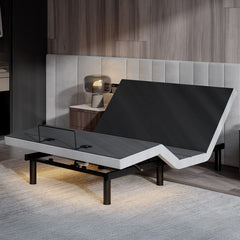
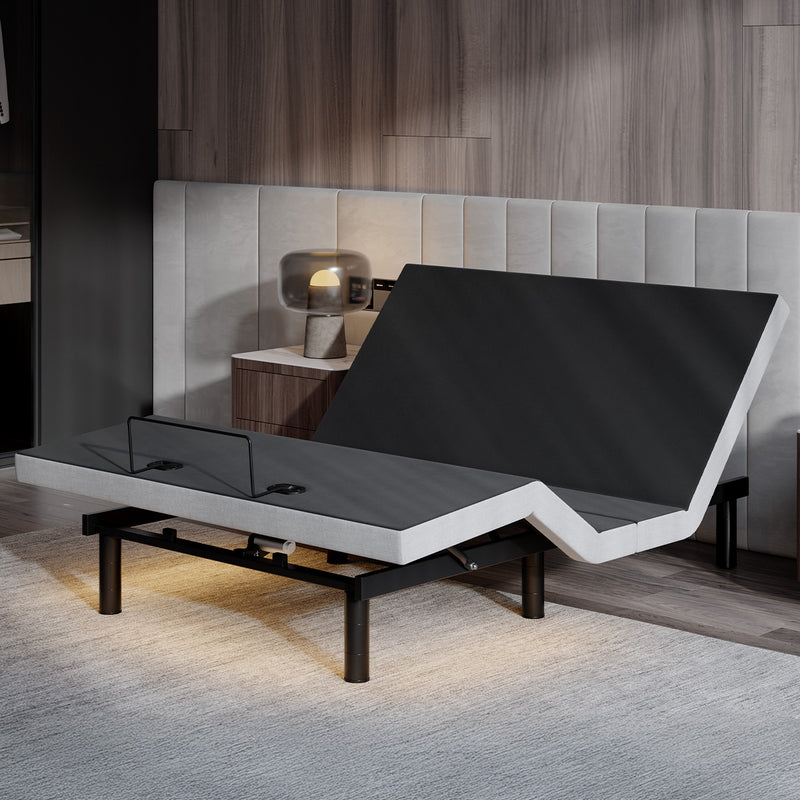
- Start around 15 degrees of head lift. On the SenseSync adjustable bed base, the Anti-Snore preset lifts the head about 15 degrees, which sits inside the 10–20 degree range the pilot study tested. (Disclosure: SweetNight makes the SenseSync base.)
- Add a few degrees at the foot. A small knee lift gives your hips something to rest against so you don't creep downhill; SweetNight's own setting notes use a slight foot raise for the same reason.
- Use one pillow of normal height. The base is doing the lifting now, and a tall pillow on top just bends your neck.
- Give it a week. Your first night on an incline often feels odd. Ask your partner, or use a phone recording app, to judge the difference.
- If snoring continues, raise the head toward 20 degrees before giving up on incline.
- Once you find the angle, save it. SenseSync has two memory buttons (M1 and M2): press and hold to save, press once to recall.
If you'd rather test the idea before buying anything, a full-length wedge or bed risers will tell you whether incline helps your snoring at all. Our wedge pillow vs adjustable bed comparison covers where each one makes sense.
Snoring or Sleep Apnea? Red Flags Worth a Sleep Evaluation
The AASM calls snoring the most common symptom of sleep apnea, and also points out that not everyone who snores has it. The warning sign is snoring that is followed by silent breathing pauses and then choking or gasping sounds. Your partner will usually notice that before you do.
Talk to a doctor about a sleep evaluation if any of these apply:
- Someone has seen you stop breathing, then gasp or choke.
- You wake up unrefreshed after a full night, or you fight to stay awake during the day, especially while driving.
- Your snoring has become louder or more frequent recently.
- You snore loudly in every position, including on your side.
Here's the trap with incline: it can make snoring quieter while leaving a good share of breathing events in place. In the studies above, average AHI fell by about a third, not to zero. So a quieter bedroom doesn't prove the apnea is handled. If you've been prescribed CPAP or an oral appliance, keep using it, and ask your sleep doctor before changing how you sleep.
Adjustable Beds for Couples When One Partner Snores
Snoring is often a two-person problem, and the bed setup matters. On a standard Queen base the whole deck moves as one piece, so if the snorer wants 15 degrees, so does the person next to them. Plenty of couples are fine with that. Others find it the reason they end up in separate rooms, a pattern we looked at in our piece on sleep divorce and couples sleeping apart.
A Split King solves it by putting two Twin XL bases side by side. On SenseSync, each side can run from its own remote, or the two can be paired to move together from one remote. The snorer keeps an incline all night while the other side stays flat. Our split king adjustable bed guide covers the gap between the mattresses, sheets and room size.
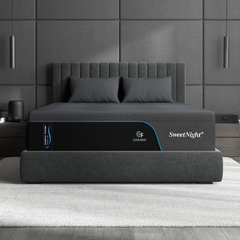
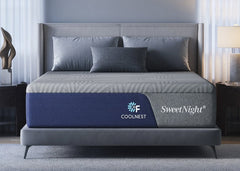
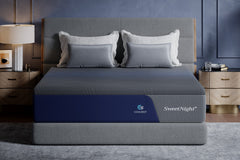
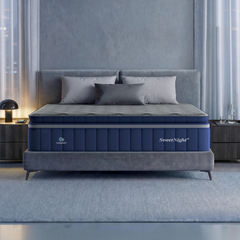
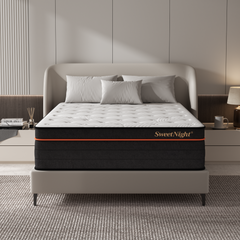
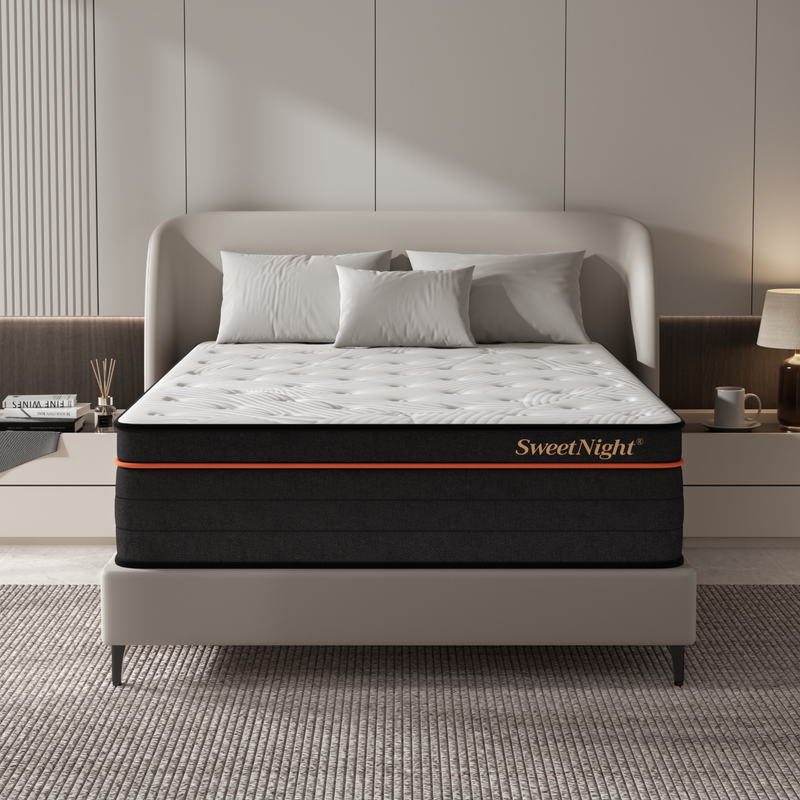
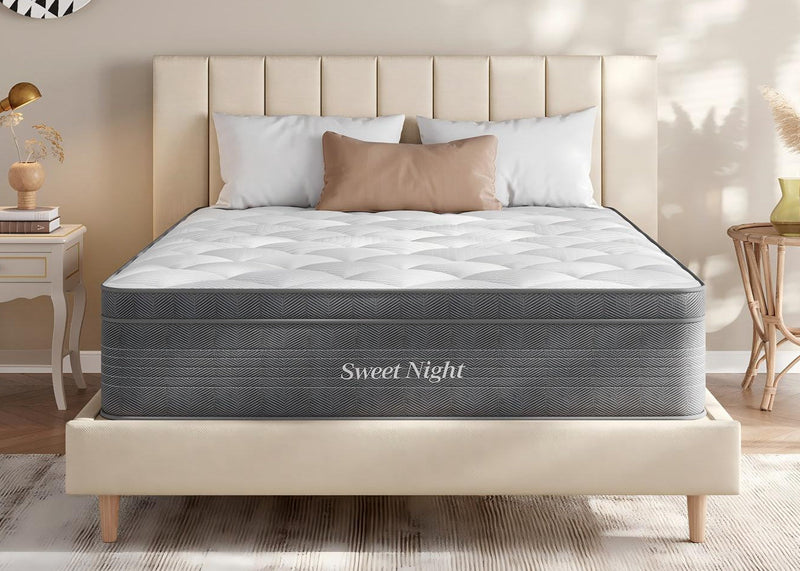
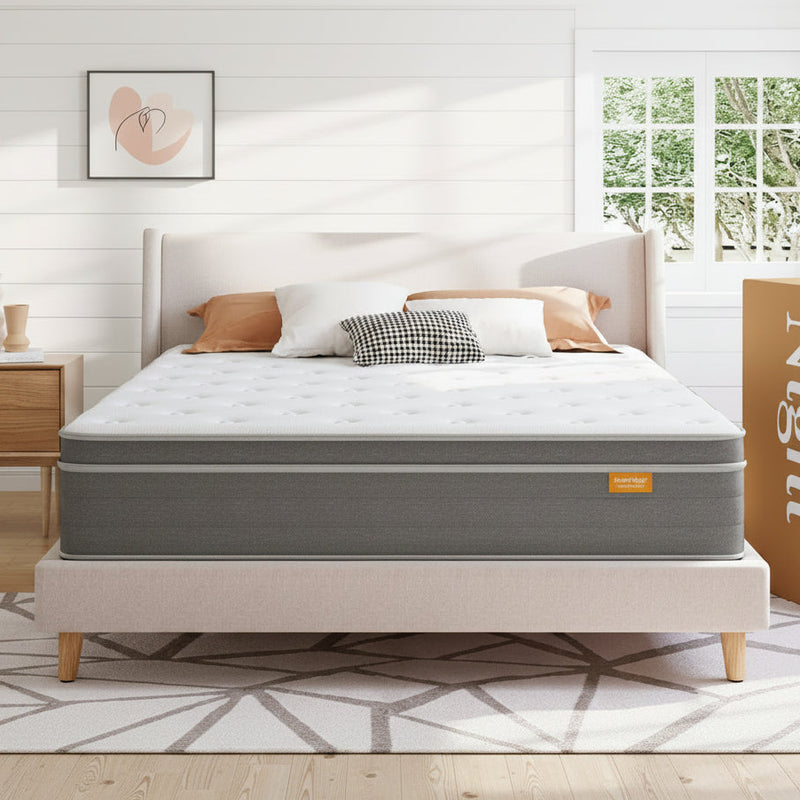
Mattress choice matters here too. SweetNight specifies the SenseSync base only for all-foam memory foam mattresses 12 or 14 inches thick, so a Split King means two Twin XL memory foam mattresses in one of those thicknesses. SweetNight doesn't currently make a Twin XL mattress, so any all-foam Twin XL at 12 or 14 inches is the way to go. The reasoning is in our guide to the best mattress for an adjustable bed.
Is an Adjustable Bed Worth It for Snoring?
It depends on what kind of snorer you are and what else is going on. This is how we'd sort it:
| Your situation | What to try first | Where an adjustable bed fits |
|---|---|---|
| Snore mainly on your back, no pauses or gasping | Side sleeping plus a mild incline; a wedge or risers to test it | Good fit if incline helps and you want to fine-tune the angle |
| Partner has seen breathing pauses or gasping | A sleep evaluation | Only as an add-on, after a diagnosis |
| Diagnosed OSA, using CPAP | Keep the CPAP | Comfort add-on if your doctor agrees |
| Snoring plus nighttime reflux | Incline, with meals finished well before bed | Strong fit, since incline is suggested for both |
| Loud snoring in every position | A doctor or dentist visit | Unlikely to fix it on its own |
| Couple with different angle needs | A Split King setup | Solves the "one moves, both move" problem |
Our honest view: incline is the most overrated fix when it's sold as a cure and one of the most underrated when it's used for what it is, a way to keep a back sleeper from lying flat. If you also like reading or watching TV in bed, a base earns its keep in other ways. If snoring is your only reason and you've never tried an incline, test with a wedge first. People who need to sleep much more upright for medical reasons should read our guide to sleeping upright before choosing a setup.
FAQ
Do adjustable beds really help with snoring?
They can for some people, mostly those who snore on their back. In a 22-person pilot study, lifting the trunk to 20 degrees stopped about two in three individual snoring episodes, while 10 degrees stopped about one in five. Total snoring over the night did not fall significantly, so expect a quieter night rather than a silent one, and expect results to vary.
What angle should an adjustable bed be for sleep apnea?
Studies of head-of-bed elevation in obstructive sleep apnea used gentle angles: 7.5 degrees in one 52-patient study and 30 degrees in others. Both lowered the apnea-hypopnea index on average. There is no good trial evidence for going steeper than 30 degrees. Ask your sleep doctor which angle suits you, and keep using any prescribed therapy.
Can an adjustable bed replace a CPAP machine?
No. Incline studies show a partial drop in breathing events, and half of patients in one 30-degree study did not respond. A Cochrane review found CPAP lowers the apnea-hypopnea index more than positional therapy. An adjustable bed can be a comfort add-on, but only your sleep doctor should change a treatment plan.
Is it better to sleep on your side or elevated for sleep apnea?
Side sleeping usually comes first. In a 2025 study, side-lying lowered breathing events more than a 30-degree incline did. Head elevation is the fallback for people who keep ending up on their back, and a mild incline combined with side sleeping is a reasonable setup to discuss with your doctor.
What does the anti-snore setting on an adjustable bed do?
It is a one-touch preset that raises the head section to a gentle angle so you are not lying flat on your back. On the SenseSync base the Anti-Snore preset lifts the head about 15 degrees. It does not detect snoring or move automatically; it simply holds that angle until you change it.