

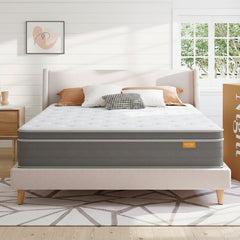

















A wedge pillow is a triangular foam ramp, usually 6 to 12 inches tall, that raises your upper body on a slope. For most people who want to find out whether sleeping on an incline helps their reflux or snoring, a wedge is the right first purchase: it does the core job for a fraction of the cost of an adjustable bed. An adjustable base is worth it when the incline clearly helps but the wedge keeps failing you, by sliding, leaving a gap at your back, bothering your partner, or when you want to change angles or raise your legs as well.
Below: how to use a wedge properly (most people put it in the wrong place), how to stop sliding down, what the research shows, and a decision table.
What Is a Wedge Pillow?
The Sleep Foundation's wedge pillow explainer defines it as an orthopedic pillow whose triangular shape keeps sleepers at an incline through the night. Most wedges are 6 to 12 inches high and 20 to 24 inches long and wide. You can use one under your back and head, or flip it around and put it under your legs.
Wedges are usually marketed by height, and sometimes by angle. That is where confusion starts. Both the Sleep Foundation and Cleveland Clinic describe typical wedges as 30 to 45 degrees. The geometry says otherwise. The slope of a wedge is the arctangent of its height divided by its length, so a standard 24-inch-long wedge that stands 12 inches tall slopes about 27°, and a 7-inch one about 16°.
| Wedge height | Slope if 20" long | Slope if 24" long | Where it sits |
|---|---|---|---|
| 6" | 17° | 14° | Gentlest; low end of the 6–8" reflux range |
| 7" | 19° | 16° | Middle of the reflux range |
| 8" | 22° | 18° | Top of the reflux range |
| 10" | 27° | 23° | Above the reflux range; more of a reading angle |
| 12" | 31° | 27° | Closer to sitting; sliding more likely |
So judge a wedge by its height and length, not by the degree number on the box. If the listing does not give both, you cannot know the slope.
How to Use a Wedge Pillow Correctly
The most common mistake is treating a wedge like a big pillow: head on the top, shoulders halfway down, hips on the mattress. That bends you at the upper back and leaves the stomach-to-throat line almost flat, which defeats the point if you bought it for reflux. A Cleveland Clinic gastroenterologist explains in Cleveland Clinic's guide to acid reflux pillows that wedges work because they elevate your entire torso, while regular pillows only elevate your head.
Set-up steps
- Low edge at your lower back. The thin end should start at the top of your hips or the small of your back, so your whole trunk rests on the slope.
- High edge against the headboard or wall. This stops the wedge from creeping toward the foot of the bed.
- Thin pillow or none on top. A full-size pillow on a wedge pushes your chin toward your chest.
- Something under your knees. A pillow or bolster keeps your hips from sliding and eases the lower back.
- Left side if it is for reflux. Cleveland Clinic's gastroenterologist recommends combining a raised head with left-side sleeping.
Who a wedge does not suit
Stomach sleepers. Cleveland Clinic says it directly: acid reflux pillows are not going to work for you. Restless side sleepers also struggle, because a wedge 20 to 24 inches wide leaves little room to turn. If you tend to wake up flat on the mattress with the wedge somewhere near your ear, that is a sign the wedge format does not suit you.
How to Sleep on a Wedge Pillow Without Sliding Down
Sliding is the most common complaint about wedges, and it matters more than comfort. When you slide, your torso flattens out and you lose the incline you bought the wedge for.
There is no research on sliding off consumer wedge pillows. The closest data comes from hospital beds. In a small study of 10 healthy people, researchers measuring migration in raised hospital beds found that sliding 10 cm (about 4 inches) toward the foot cut the actual torso angle by about 9° at a 30° head setting, and by 13° at 45°. The work was funded by and affiliated with the bed maker Hill-Rom, and a hospital bed is not a foam wedge. The mechanism is the same, though: gravity pulls you down the slope, and the steeper the slope, the more angle each inch of sliding costs.
Fixes that work
- Go lower. A 7-inch wedge you stay on beats a 12-inch wedge you slide off. The steeper wedges in the table above are the slipperiest.
- Brace the knees. A pillow or bolster under the knees gives your hips a ledge to rest against. It is the simplest fix to try first.
- Anchor the wedge. Put the tall end tight against the headboard or wall. If there is a gap, the wedge slides first and you follow.
- Mind the fabric. A slick cover on a smooth sheet is the worst combination; a textured cover on a cotton fitted sheet grips better.
- Consider a longer wedge. At the same height, a longer wedge has a gentler slope and supports more of your back.
The gap problem
A wedge sits on top of the mattress, so the point where its low edge meets the bed forms a step. Lie a little too low and that step lands in your lower back. Lie too high and your hips hang off the thin end. There is only one correct spot, and you have to find it again every time you roll over. This is the design difference that matters most when you compare a wedge with a base: on an adjustable bed the mattress itself bends, so there is no step.
Do Wedge Pillows Work for Acid Reflux?
The evidence is small but consistent, and wedges have actually been tested more directly than adjustable bases.
- In a 1988 crossover trial of wedge vs bed blocks vs flat, 15 people with moderate to severe reflux slept in each position with pH monitoring. The wedge significantly reduced acid exposure compared with lying flat. Eight-inch bed blocks produced a similar improvement that did not reach statistical significance. The authors noted that patients did not always prefer the wedge.
- In a 2026 randomized trial, 24 people with nighttime reflux who were already taking a morning PPI either added a wedge pillow or took a second PPI dose in the evening for four weeks. The wedge was not inferior for nighttime reflux symptoms, and sleep quality was better in the wedge group. Measured reflux did not differ in a clinically meaningful way, and the trial is very small.
- A 2021 systematic review in BMC Family Practice found five head-of-bed elevation trials with 228 patients in total; one used a wedge and two used both wedges and bed blocks. All were at high risk of bias, and the authors said the evidence does not support definitive recommendations.
The honest reading: raising the torso probably helps nighttime reflux for many people, a wedge is a legitimate way to do it, and nothing here shows a motorized base works better than a well-placed wedge. For more on angles, sides and meal timing, see our guide to the best sleeping position for acid reflux.
How high should a reflux wedge be?
Mayo Clinic says to raise the head end of the bed 6 to 9 inches, or use a wedge to elevate your body from the waist up, and notes that extra pillows under your head aren't effective. NIDDK and Cleveland Clinic suggest 6 to 8 inches. A 7- or 8-inch wedge sits in the middle of that range and, on a 24-inch length, slopes a manageable 16° to 18°.
Wedges also show up in snoring advice. The Sleep Foundation lists a wedge pillow, bed risers or an adjustable frame as ways to raise the head of the bed that may help reduce snoring; our article on the adjustable bed for snoring and sleep apnea covers the angle research.
Wedge Pillow vs Adjustable Bed vs Bed Risers
There are three common ways to get an incline. Bed risers or blocks under the head-end legs are the third option, and the one most reflux trials used.
| Wedge pillow | Bed risers / blocks | Adjustable base | |
|---|---|---|---|
| Cost | Lowest | Low | Highest by far |
| What rises | Torso only, on top of the mattress | The whole bed tilts, feet included | Torso section of the mattress; legs separately |
| Angle choices | One per wedge | One per riser height | Continuous; presets and saved positions |
| Sliding | Common on steep wedges | Whole body drifts toward the foot | Still happens; a knee lift helps |
| Step or gap at the back | Yes, at the wedge edge | No | No; the mattress bends |
| Partner | Unaffected on their side | Both sleepers tilt | Split setups let each side differ |
| Legs up | Separate leg wedge needed | No | Yes, independent foot section |
| Go flat when you want | Remove the wedge | Lift the bed off the risers | One button |
| Mattress limits | None | None | Must be compatible with the base |
| Travel | Portable | Portable | No |
Risers deserve more credit than they get. They are cheap, they cannot be slept off, and four of the five trials in the 2021 review used them, alone or with a wedge. Their drawback is geometry. Raising the head end of an 80-inch bed by 6 to 9 inches tilts the whole mattress only about 4° to 6°, so the angle through your torso is shallow compared with a wedge or a hinged base at the same head height. Everyone in the bed tilts too.
When a Wedge Pillow Is Enough
Buy a wedge first, and possibly only a wedge, if:
- You are testing whether an incline helps at all. Give it two to three weeks before deciding.
- You sleep mostly on your back or can stay on your left side through the night.
- Your symptoms are occasional, such as after large or late dinners.
- You travel often and want the same setup away from home.
- You love your current mattress and it is not compatible with an adjustable base.
If the wedge helps and you do not mind it, you are done. Plenty of people never need anything more.
When an Adjustable Bed Is Worth It
A base starts to make sense when the incline clearly works for you but the wedge has become the problem. The usual signs: you wake up on the mattress below the wedge most nights, the step at the wedge edge hurts your back, your partner resents the wedge taking up space, or you want different angles for sleeping, reading and watching TV.
What a base does that a wedge cannot:
- Fine angle control. You can lower the head a few degrees at 2 a.m. without getting out of bed.
- A built-in knee brace. Raising the foot section slightly gives your hips a ledge, which is the base version of the knee-pillow fix.
- Legs. The same bed can raise your legs for swelling or tired legs, with no second wedge to shuffle around.
- Two sleepers, two angles with a split setup.
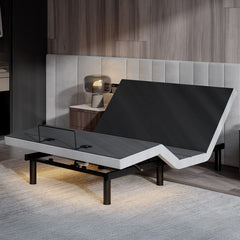
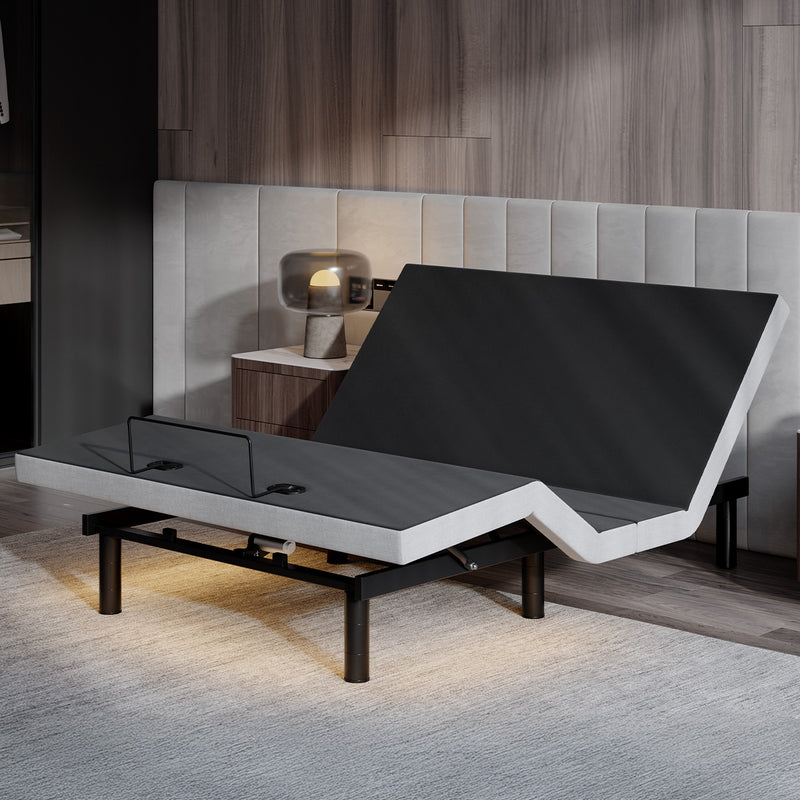
On the SenseSync adjustable bed frame, head and foot run on separate motors, the Anti-Snore preset lifts the head about 15°, and two memory buttons save your own positions. (Disclosure: SweetNight makes the SenseSync base.) A clip-on retainer bar at the foot keeps the mattress from sliding when the head is up; it does not stop you from sliding, which is still the job of a small foot-section lift. The Split King version is two Twin XL bases that can move separately or together. There is no standard King.
The costs beyond the price tag are real. A base needs a compatible mattress, and SweetNight specifies SenseSync for all-foam memory foam mattresses 12 or 14 inches thick only, so a coil mattress means buying a new mattress too (our adjustable bed mattress guide explains why). It needs an outlet, it weighs far more than a wedge, and your sheets have to cope with a bending mattress. If you are still deciding, our piece on whether adjustable beds are worth it walks through the full trade-off.
Whichever you choose, the incline is a comfort and positioning tool. Frequent heartburn or loud snoring with gasping or breathing pauses deserves a doctor's evaluation before any purchase.
FAQ
What is a wedge pillow?
A wedge pillow is a triangular block of foam that holds your upper body, or your legs, on a slope. Most are about 6 to 12 inches tall at the high end and 20 to 24 inches long and wide. People use them for nighttime acid reflux, snoring, reading in bed and raising swollen legs. It replaces a stack of pillows with one stable ramp.
How do you sleep on a wedge pillow?
Place the low edge of the wedge at your lower back or hips so the slope supports your whole torso rather than only your head and neck. Use a thin pillow or none on top. If you are using it for reflux, lie on your left side. A pillow under your knees helps you stay in place and takes strain off your lower back.
How do I stop sliding down my wedge pillow?
Put a firm pillow or bolster under your knees so your hips have something to rest against, choose a lower or longer wedge with a gentler slope, and push the wedge against the headboard or wall so it cannot creep. A wedge with a grippy cover on a fitted sheet slips less than a slick cover on a smooth sheet. An adjustable base can raise the knee section instead.
Is a wedge pillow as good as an adjustable bed for acid reflux?
For raising the torso, a well-placed wedge can do the same basic job, and wedges have been tested in reflux trials while consumer adjustable bases have not. Small studies found wedges reduced nighttime acid exposure and, added to a morning PPI, matched a second evening dose for nighttime symptoms. A base is easier to fine-tune and share, but it is not more proven.
What size wedge pillow is best for acid reflux?
Aim for a wedge that raises your head about 6 to 8 inches, the range NIDDK and Cleveland Clinic suggest. On a typical 24-inch-long wedge, 7 to 8 inches gives a slope of roughly 16 to 18 degrees. Taller wedges feel more like sitting up and make sliding more likely. Pick one wide enough that you can lie on your left side without rolling off.