
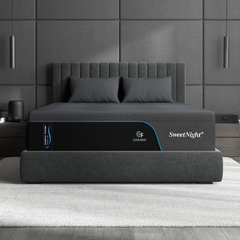
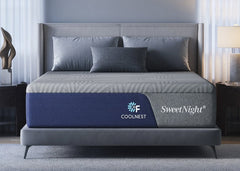
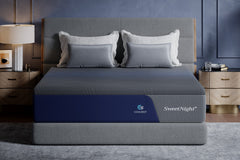
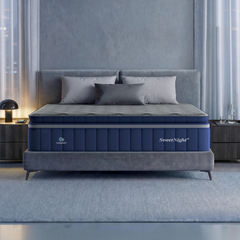
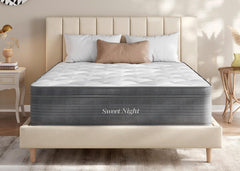
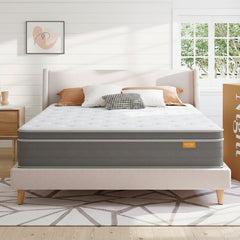
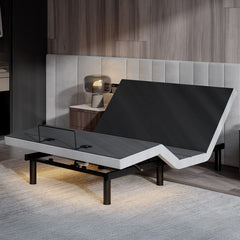






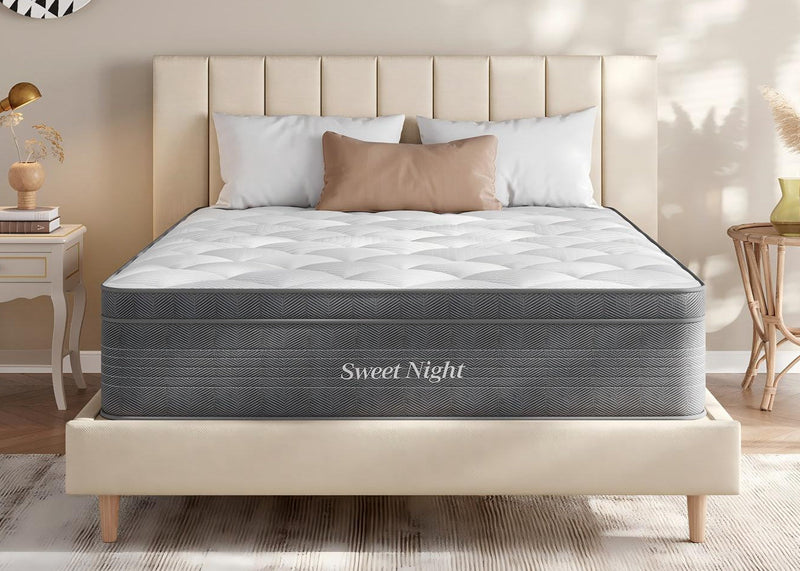
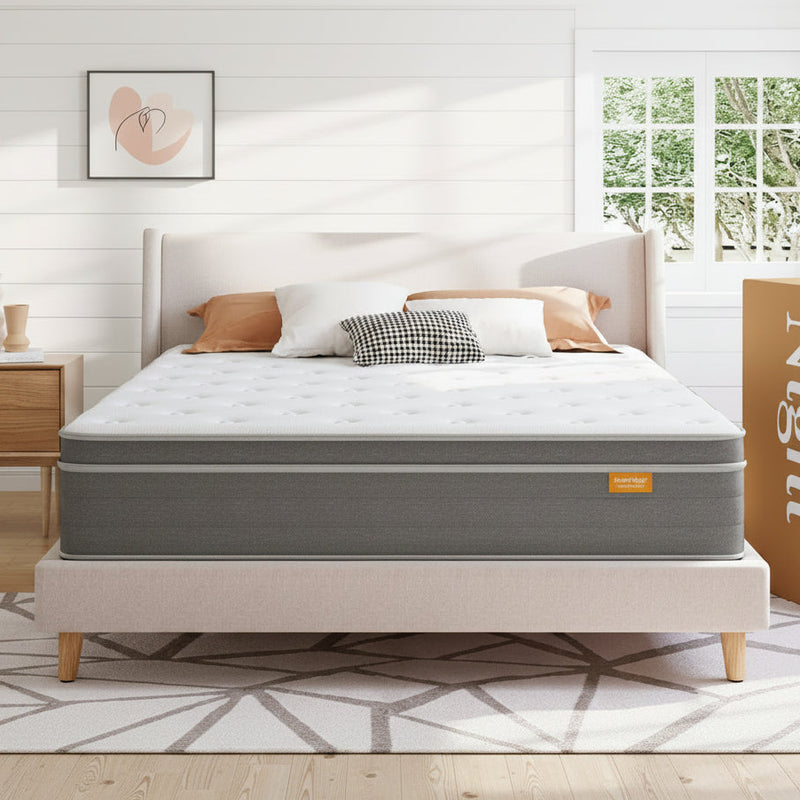
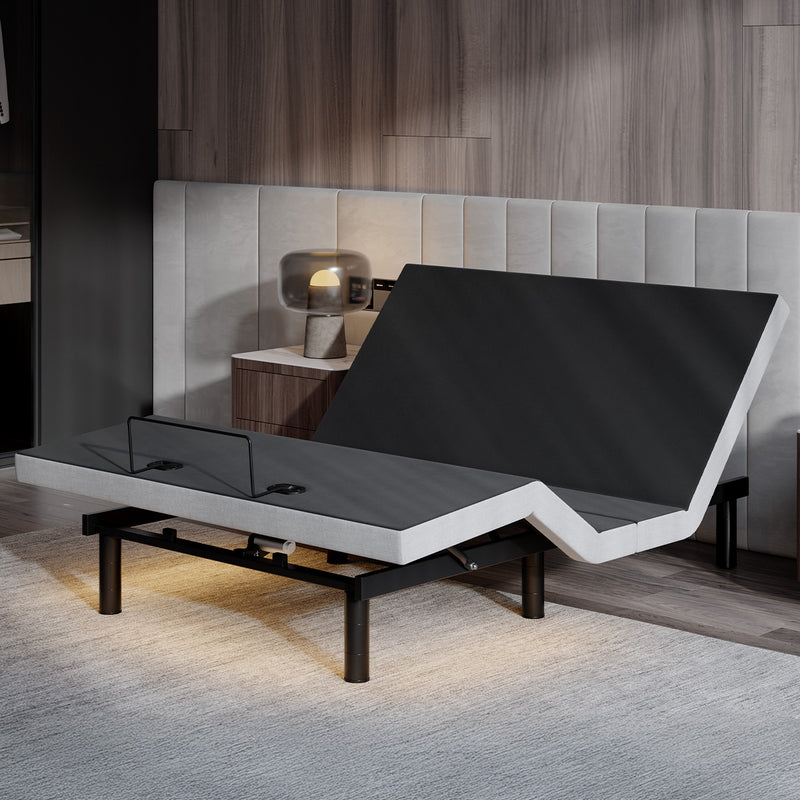





No, you don't need a mattress made only for adjustable beds, but you do need one that can bend. Most memory foam and latex mattresses handle a moving base well, many pocketed-coil hybrids do, and traditional innersprings with wired-together coils are the type most likely to fight the fold. Before you buy, check two things: that the mattress maker approves adjustable use, and that the thickness suits the base you're buying.
That's the short answer. The rest of this guide explains what the hinge does to a mattress, gives a verdict for each mattress type, decodes the "adjustable-base compatible" label, and covers the warranty clause that catches people out. If you already know you want the mechanics of coils and thickness, jump to our deep dive on whether you can put a hybrid mattress on an adjustable bed.
What an Adjustable Base Actually Does to Your Mattress
A flat bed asks very little of a mattress. It lies there and carries weight straight down. An adjustable base asks for three extra things.
First, it bends. The deck is split into sections joined by hinges, and when the head or foot rises, the mattress has to fold at those hinge lines. Depending on the setting, that can be a gentle 15° tilt for reading or a steep sit-up angle. The top of the mattress gets squeezed on the inside of the fold while the bottom is pulled around the outside. It happens every time you press the remote, often several times a day.
Second, it has to follow the deck. When the head section rises, the mattress should rise with it rather than stay stiff and bridge the gap like a plank. A mattress that won't follow lifts off the deck in places, which leaves unsupported spots under your back and makes the base work harder.
Third, it has to stay put. Raising the head pushes the mattress toward the foot of the bed, which is why most bases ship with a retainer bar at the foot. The mattress needs enough grip and enough stiffness at its end to rest against that bar without buckling.
Sleep Foundation's testers sum up why foam copes so well: foam can compress when the base bends and regain its shape when the bed is flat. Every other mattress type is judged on how close it gets to that behavior.
Can You Use Any Mattress on an Adjustable Bed? Verdict by Type
Not any mattress, but most types have at least some models that work. The table below reflects what Sleep Foundation and Good Housekeeping's testing teams report, plus the practical reason behind each verdict. "Usually" means you still need to confirm the specific model with its maker.
| Mattress type | Works on an adjustable base? | Why | What to check |
|---|---|---|---|
| Memory foam (all-foam) | Yes, the easiest fit | Compresses at the fold and recovers when flat; Good Housekeeping rates foam the most flexible type | Thickness; warranty wording |
| Latex | Usually | Springs back after compression, but is less flexible than foam, so it may not reach the steepest angles | Maker approval; whether you'll use high angles |
| Pocketed-coil hybrid | Often, model by model | Individually wrapped coils can move on their own, but some spring units can't bend without damage | A written adjustable-base statement for that model and height |
| Connected-coil innerspring (Bonnell, continuous) | Generally a poor fit | Coils are wired together, so the whole unit resists the fold and the coils take the stress | Usually better kept on a flat foundation |
| Air / adjustable-firmness | Usually | Air chambers flex, and Sleep Foundation says most airbeds work with adjustable bases | The maker's base instructions, hoses and pump placement |
| Box spring (as a foundation) | No | It's a rigid support, not a mattress; the adjustable base replaces it | Retire it or move it to another bed |
Two points in that table cause the most confusion. Sleep Foundation's main adjustable-bed guide says most foam, latex, airbed and hybrid mattresses are compatible, which is true as a general statement. The same page adds that some mattresses may simply be too thick. And its adjustable bed guide for seniors is stricter, warning that hybrid and innerspring models may become damaged if they aren't used on a flat surface. Both are fair: hybrids vary a lot, and a general "most work" doesn't tell you whether yours does.
On innersprings, Sleep Foundation calls interconnected-coil models "generally less conducive" to adjustable frames because of the stress placed on the coils. That's not the same as "never." Good Housekeeping notes that innersprings with individually pocketed coils can work. What separates them is how the coils are joined, which is exactly where the fold puts its stress. If you're choosing between foam and coils for other reasons too, our memory foam vs hybrid mattress comparison covers feel, motion transfer and heat.
Can You Use a Regular Mattress on an Adjustable Bed?
Often, yes. "Regular" usually means the mattress you already own, and many of those will work. There's no special adjustable-bed mattress category with its own construction standard. What matters is how the mattress is built and what its maker says, not whether the product page carries an "adjustable" badge.
To judge the mattress you have, find its law tag or the original product page and answer three questions:
- What's inside? All-foam and latex are good signs. "Hybrid" or "pocketed coils" means you need to check further. "Bonnell," "continuous coil" or an older innerspring with no coil detail listed is a warning sign.
- How thick is it? Good Housekeeping's testers found that tall mattresses, especially those over 14 inches, often don't work well on bases. A 10- to 14-inch mattress is in easier territory.
- What does the warranty say? This one decides more cases than the other two; see the warranty section below.
If the answers look good, there's one more test you can do at home: lift the head end of the mattress about a foot off the bed with the rest lying flat. An all-foam mattress drapes into a smooth curve. A stiff coil unit tends to lift as a board, with a kink where it finally gives. It's crude, but it tells you roughly how the mattress will behave on the first lift.
What "Adjustable-Base Compatible" Really Means
There's no industry certification behind the phrase. When a mattress brand says a model is compatible with adjustable bases, it's making its own statement that the mattress can bend on a base without being damaged and without voiding the warranty. How much that statement covers varies more than people expect.
Some statements are brand-to-brand only: a mattress company may say its mattresses work on its own bases and make no promise about anyone else's. Some are height-specific. Good Housekeeping points out that on one well-known innerspring line, only the 11.5-inch version is approved for adjustable use. Others are simply "generally compatible," which reads well on a product page but doesn't say much when you need to make a claim.
Read the label as a starting point, then look for the same promise in the warranty document, because the warranty is where it counts. The coil guide linked above walks through the exact phrases to look for, with real examples from base makers.
Does an Adjustable Base Ruin a Mattress?
A suitable mattress on a correctly set-up base shouldn't be ruined by normal use. Foam is expected to compress at the fold and recover when you go flat, and that's what it's designed to do. The damage stories usually come from one of four situations.
- The wrong construction. Sleep Foundation notes that some hybrids have springs that can't bend without being damaged. A wired innerspring folded daily is the classic case.
- Too much weight. Sleep Foundation warns that exceeding the base's weight limit can damage the frame or its motors. The limit includes the mattress itself, so a very heavy mattress eats into the allowance for sleepers.
- Poor support underneath. Putting a box spring, a sagging frame or loose slats under a base means the deck flexes and the mattress sags with it.
- Sliding. Without a retainer bar, a mattress creeps toward the foot every time the head rises, and the edge that hangs past the deck gets crushed and creased.
The warranty angle
Here's the risk most people miss. Sleep Foundation's box spring guide points out that a mattress warranty often requires a specific type of support, and that using the wrong foundation may void it. If your mattress maker doesn't approve adjustable bases, a sag or a failed coil may not be covered, even if the base had nothing to do with it.
Before you buy a base for an existing mattress, open the warranty and search for "adjustable," "foundation" and "support." If adjustable use is approved, good. If the document is silent, email the maker and keep the reply. It's a ten-minute job that can save you the cost of a mattress.
What Kind of Mattress for an Adjustable Bed? A Quick Checklist
If you're buying a mattress for a base, or deciding whether to keep the one you have, run through this list. Anything that fails the first three is a reason to look at another mattress.
- Construction bends evenly. All-foam first; latex or pocketed coils only with the maker's approval; skip wired-coil innersprings.
- Thickness matches the base. Stay within what the base maker specifies. Where they don't say, Good Housekeeping's line about mattresses over 14 inches is a sensible caution.
- The warranty allows adjustable use, in writing.
- Size matches the base. A split king base takes two Twin XL mattresses, not one king.
- The combined weight fits. Mattress plus every sleeper must stay under the base's capacity.
- You have sheets that will stay on. Bending pulls fitted sheets off corners; our guide to sheets for adjustable beds covers pocket depth and straps.
Two more factors are about comfort rather than compatibility: how cool the mattress sleeps when your hips sink into the fold, and how well the cover grips the deck. We score mattresses on both in our best mattress for adjustable bed guide, along with specific picks by sleeper type and base size.
Do You Need a Special Mattress for a Split King Adjustable Bed?
You need two mattresses, not a special one. A split king base is two Twin XL bases side by side, and each half folds independently, so each needs its own Twin XL mattress. Good Housekeeping's split king buying guide states it plainly: split king adjustable beds require two Twin XL mattresses rather than one king-size mattress. A single king mattress can't bend two ways at once; if one side raises the head while the other stays flat, the mattress would twist along its middle.
Two practical notes. Buy both mattresses in the same model and thickness so the surfaces line up when both sides are flat. And expect a seam down the middle, which you can soften with a king-size topper. Our split king adjustable bed guide covers the gap, sheets and pairing the two remotes.
The SenseSync Rule: All-Foam, 12 or 14 Inches
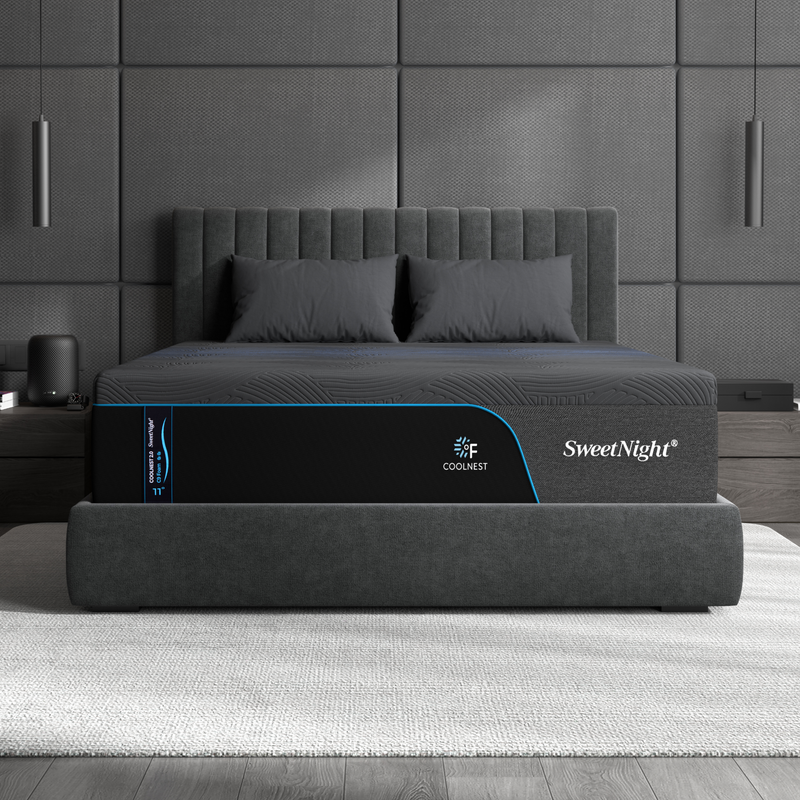
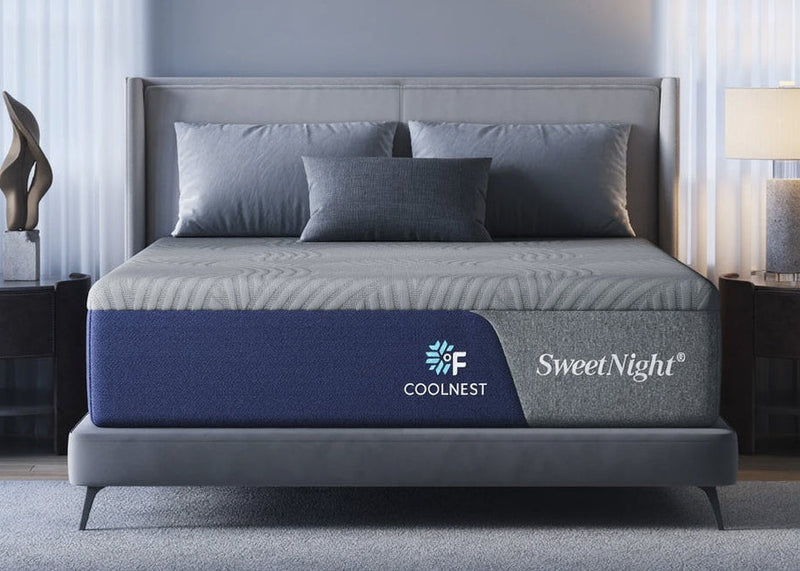
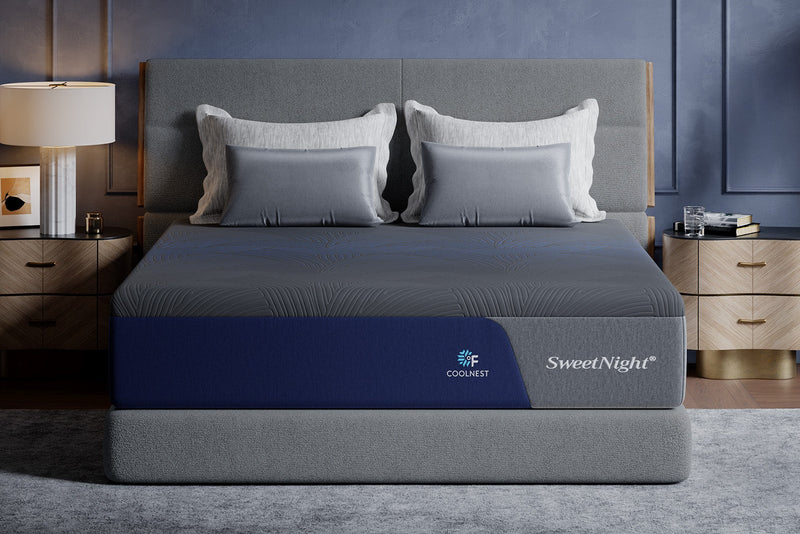
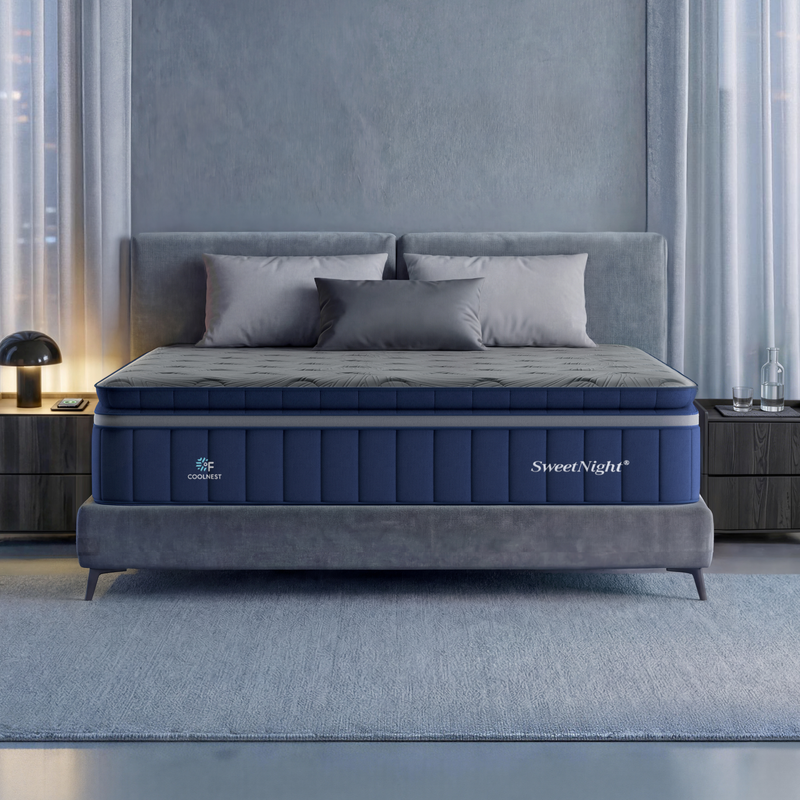
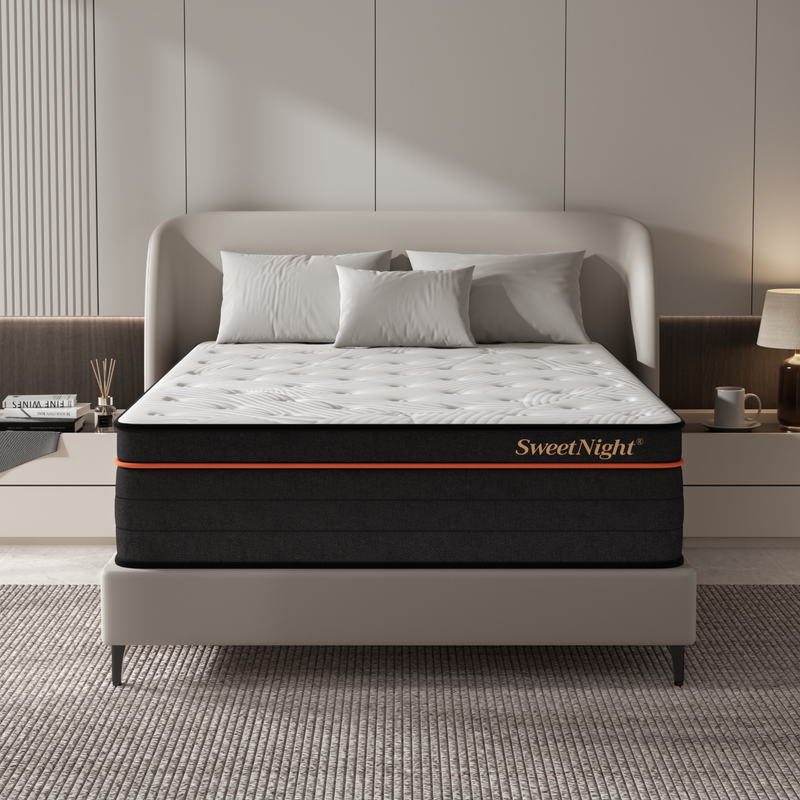
For our own base we set a narrower rule than the general guidance above. The SenseSync adjustable bed base is specified for all-foam memory foam mattresses 12 or 14 inches thick, and nothing else. No hybrid, innerspring or pocket-coil mattresses, no latex, and no 16-inch mattresses. A Split King takes two Twin XL memory foam mattresses in 12 or 14 inches. (Disclosure: SweetNight makes the SenseSync base and the CoolNest mattresses mentioned here.)
That's stricter than "most mattresses work," and deliberately so. The base folds the mattress at its hinge points every time it moves. All-foam bends evenly along that line; a coil unit resists it, can lift away from the deck and puts load on the coils and the motors. A 16-inch mattress is much stiffer across the fold and changes how the angles and the retainer bar behave. Plenty of hybrids are sold as compatible with adjustable bases in general, and we're not saying those claims are wrong. We specified SenseSync around the mattress that bends most predictably, so that's the pairing we stand behind. The hybrid mattress deep dive shows the mechanics and the thickness math.
In practice: on a Full or Queen base, the CoolNest memory foam mattress in 12 or 14 inches fits the rule, and the Queen also pairs with the CoolNest Pro and CoolNest Ultra. SweetNight doesn't make a Twin XL mattress, so for a Twin XL or Split King base, choose any all-foam Twin XL memory foam mattress at 12 or 14 inches. Our SenseSync specs and fit rules page has the frame requirements and weight limits.
FAQ
Can you put a memory foam mattress on an adjustable bed?
Yes. Memory foam is the easiest mattress type to use on an adjustable bed because it compresses where the base folds and recovers when the bed goes flat. Good Housekeeping's testers call foam the most flexible type. Check the thickness and the warranty wording, but an all-foam mattress is the default safe choice for a moving base.
Can you use a box spring with an adjustable bed?
No. The adjustable base replaces the box spring, so the mattress sits directly on the base's deck. A box spring cannot bend, so putting one between the base and the mattress stops the setup from working. Some bases, including SenseSync, are also not designed to sit on top of a box spring, so check the base manual and plan to retire it or move it to a guest room.
Can you put a latex mattress on an adjustable base?
Usually, yes. Sleep Foundation says most latex mattresses are compatible with adjustable beds because latex springs back after compression. Good Housekeeping adds that latex is less flexible than foam, so you may not reach the base's full incline. Confirm with the maker. For the SenseSync base specifically, SweetNight recommends all-foam memory foam only, not latex.
Will an adjustable base void my mattress warranty?
It can if the mattress maker does not approve adjustable use. Mattress warranties often require a specific type of support, and Sleep Foundation warns that the wrong foundation may void coverage. Search your warranty for the words adjustable, foundation and support before you buy the base. If the wording is vague, ask the manufacturer to confirm in writing.
Do you need a special mattress for a split king adjustable bed?
You need two Twin XL mattresses, one on each half, because each side of a split king folds on its own. A single king mattress cannot bend in two different directions at once. For a SenseSync Split King, SweetNight specifies two all-foam Twin XL memory foam mattresses in 12 or 14 inches thick.