
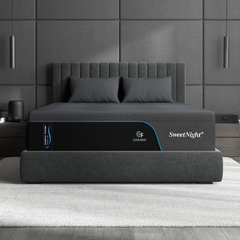
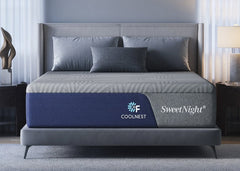
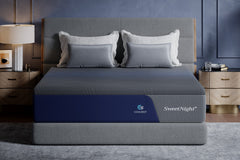
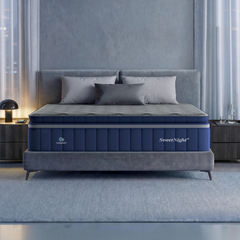
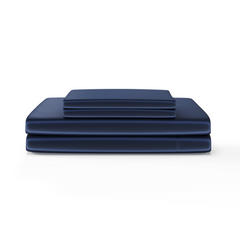
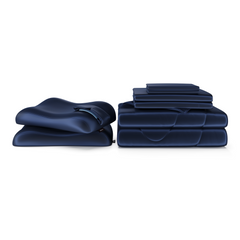
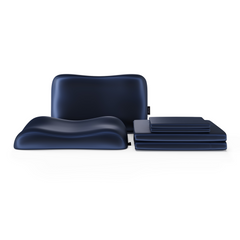
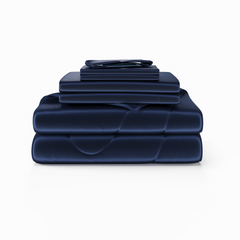
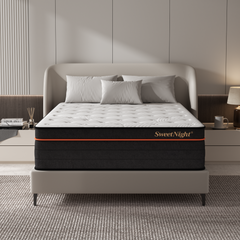
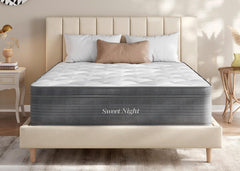
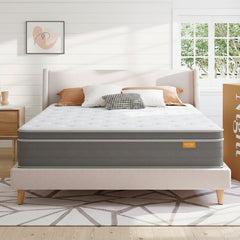
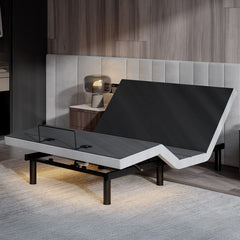


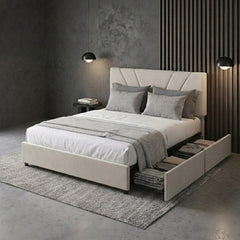
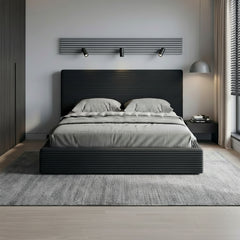
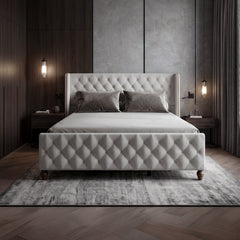
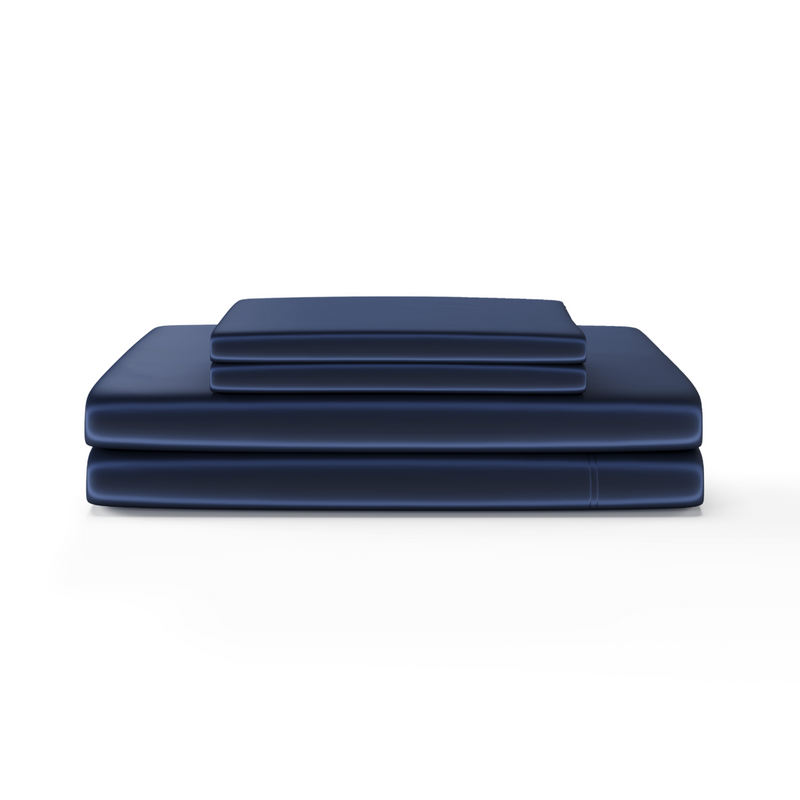
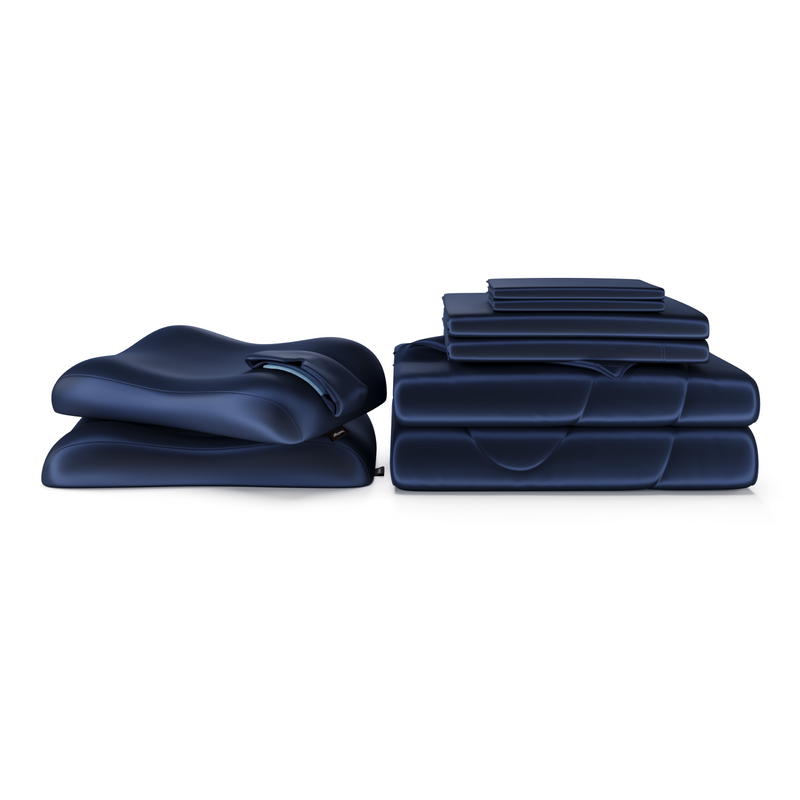
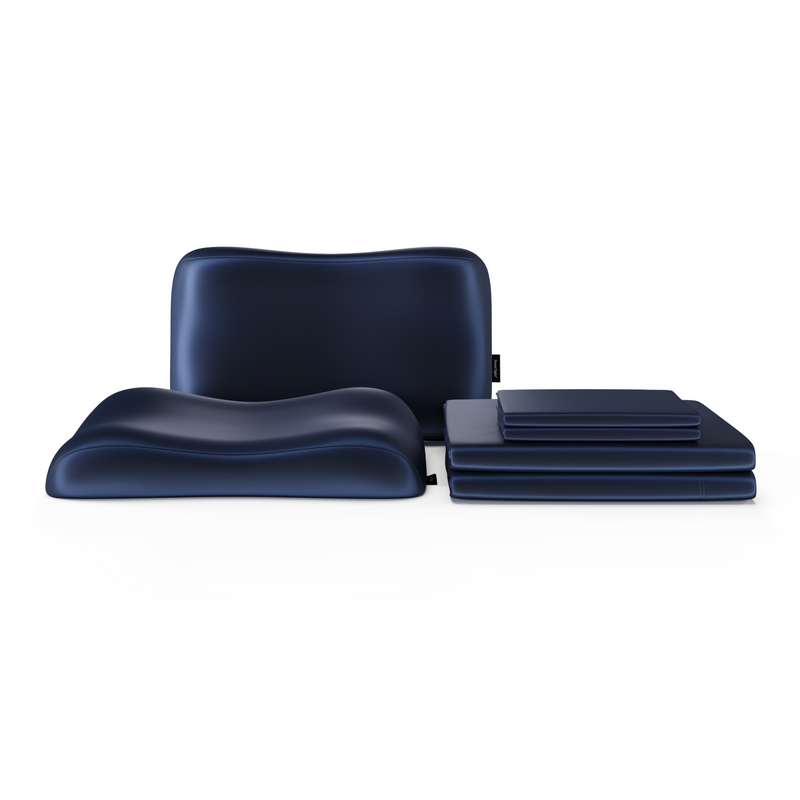
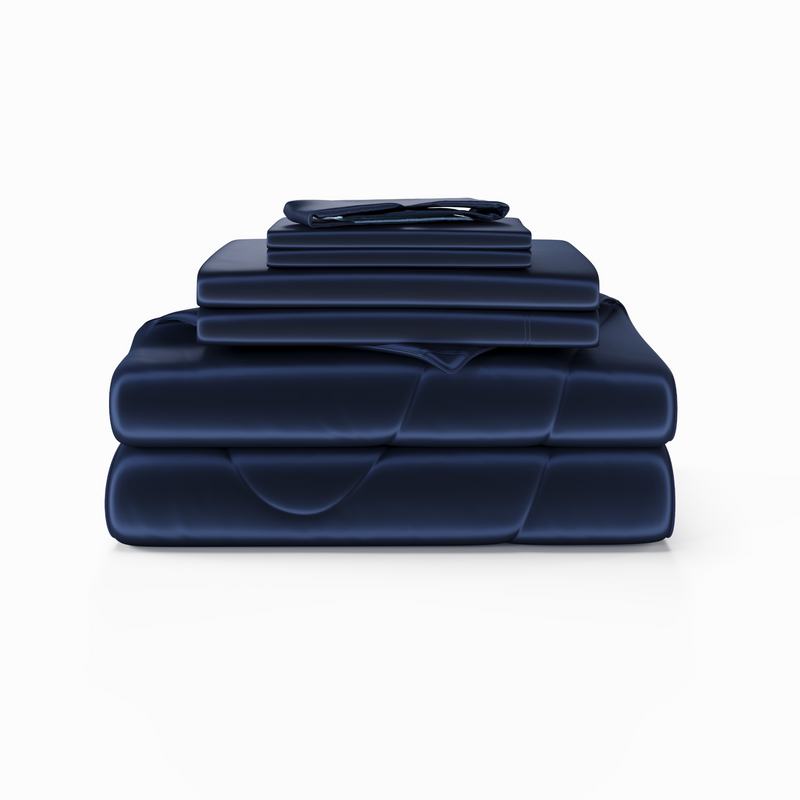
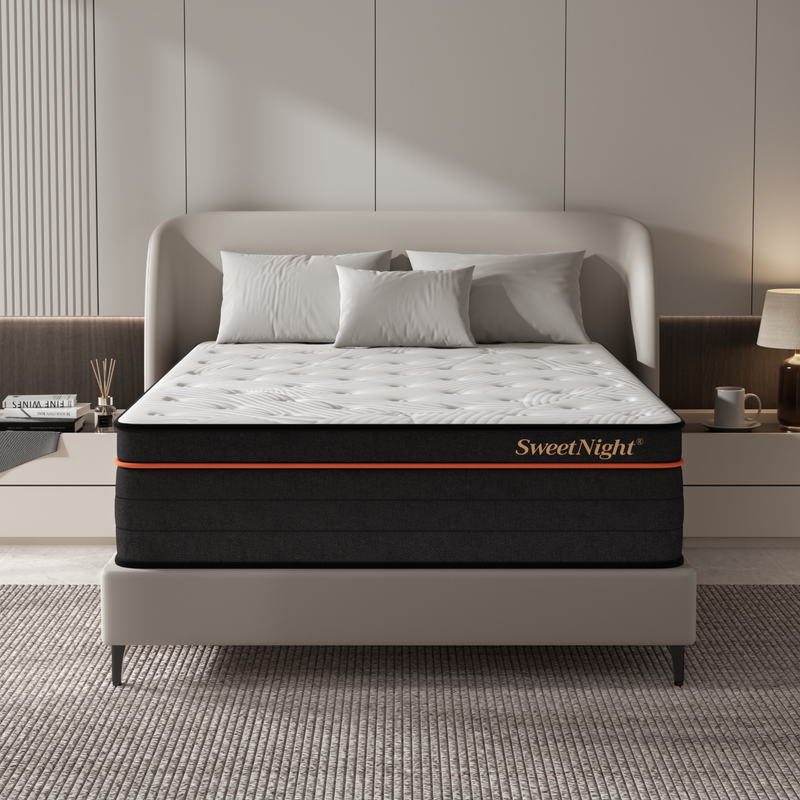
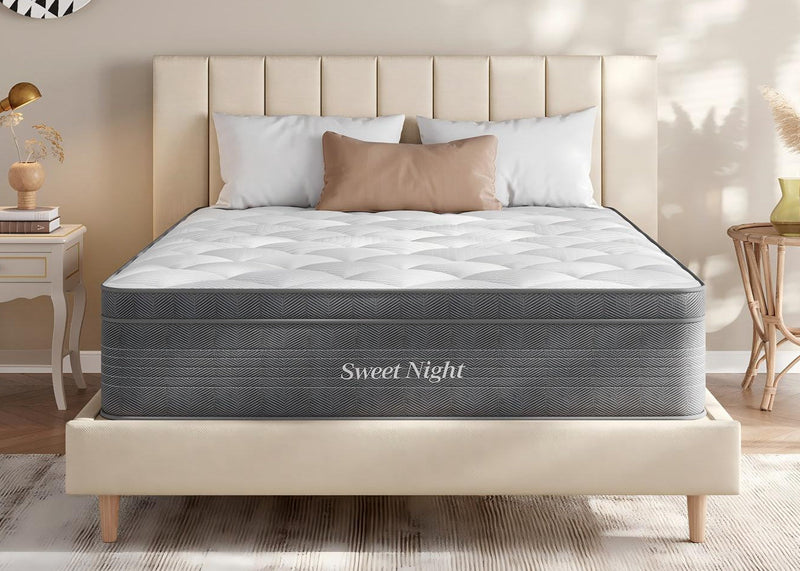
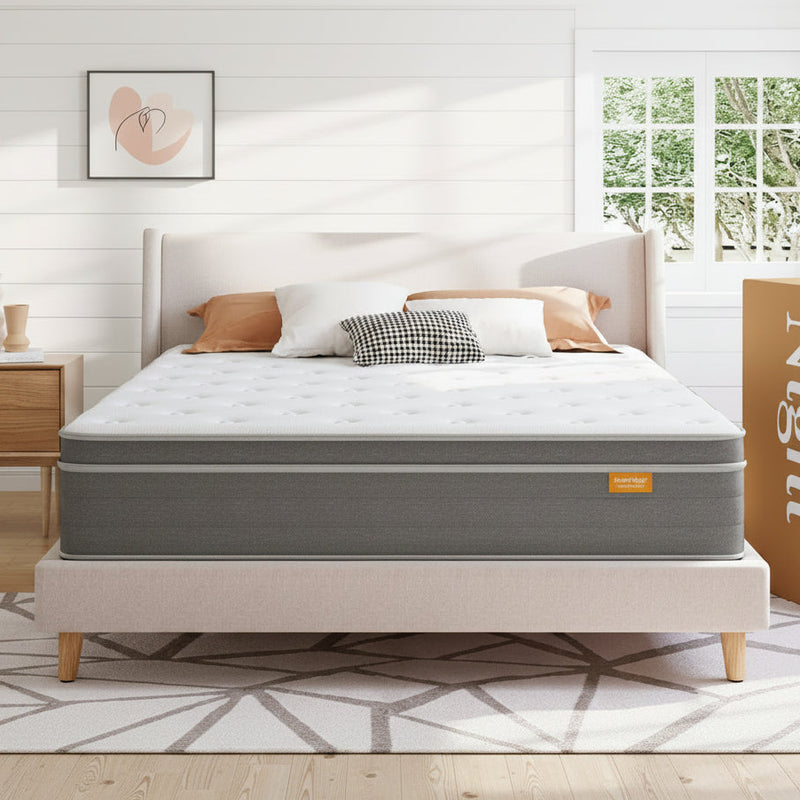
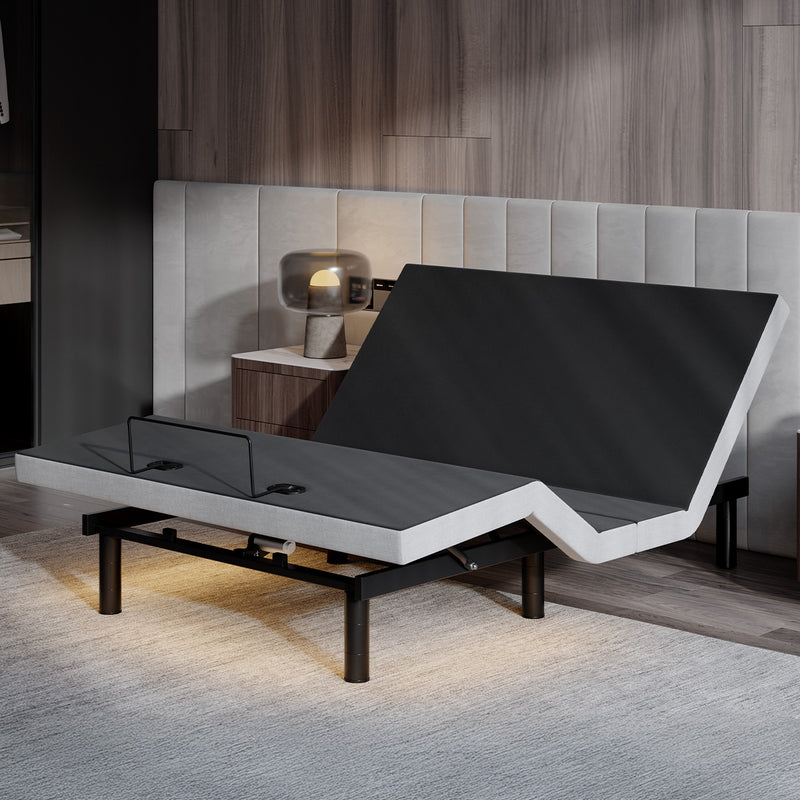


You don't need sheets labeled "for adjustable beds," but you do need a fitted sheet whose pocket depth is at least as deep as your mattress, and ideally elastic that runs all the way around the hem rather than just at the corners. For a 12-inch mattress that means a pocket of 12 inches or more; for a 14-inch mattress, look past "standard" sheets to deep-pocket ones. A split king takes two Twin XL fitted sheets, not one king.
The reason sheets misbehave on an adjustable base is mechanical, and once you see it, the fixes make sense. Here's why it happens, how to size the pocket, what actually holds a sheet in place, and how to handle Twin XL and split king beds.
Why Fitted Sheets Pop Off an Adjustable Bed
A fitted sheet on a flat bed has an easy life. The mattress sits on the tucked-under edges and pins them to the foundation. Nothing moves.
An adjustable base breaks that arrangement in three ways.
First, the mattress folds. When the head section rises, the mattress bends at the hinge, and the top and bottom surfaces no longer run the same distance: the top, on the inside of the fold, gets shorter, while the bottom follows the deck. The sheet has to shift to follow that change, and the thicker the mattress, the bigger the difference. Each shift is small. Repeated every night, with the foot section folding too, it walks the corners loose.
Second, the head end lifts off whatever was pinning it. With the head section up, the corners of the sheet at the head end are held by elastic alone, and the weight that normally traps them is resting further down the bed.
Third, the mattress itself tends to creep toward the foot when the head is raised. Many bases fight that with a bar at the foot; the SweetNight SenseSync™ Adjustable Bed Base has a clip-on steel retainer bar for exactly this (disclosure: SweetNight makes the SenseSync base). If the mattress slides anyway, it drags the fitted sheet with it, and the head corners are the first to go.
Good Housekeeping's textile testers see the same thing: on adjustable frames, sheets don't stay as tight or secure because the mattress shifts, and their advice centers on pocket depth and stronger elastic.
Do You Need Special Sheets for Adjustable Beds?
Not necessarily. "Adjustable bed sheets" is a marketing category, not a size. What those sets usually do differently is add elastic all the way around the fitted sheet, use thicker elastic, or include straps. Good Housekeeping's pros recommend sheets made for adjustable beds for that reason, and point to the elastic bands that hold them in place.
A regular fitted sheet can work just as well if it passes three checks:
- The pocket depth is at least your mattress height, plus any protector or topper.
- The elastic runs the whole perimeter, or at least is wide and firm at the corners.
- The fabric has some give, so the sheet can follow the fold instead of fighting it.
Where a special set earns its price is a thick mattress, a sheet you've already lost the battle with, or a split king, where you need an unusual combination of sizes in one package.
Pocket Depth for 12- and 14-Inch Mattresses
Pocket depth is the height of the fitted sheet's side panel: the thickest mattress the sheet is made to wrap. Sleep Foundation's rough ranges are that regular sheets typically fit mattresses 7 to 14 inches thick, deep pocket sheets up to about 15 inches, and extra-deep pocket sheets roughly 16 to 24 inches. It also notes that many sheet sets offer a pocket of 14 inches or less.
Two cautions about those numbers. The ranges overlap, and neither "deep" nor "extra deep" is a standard; one brand's deep pocket is another's regular. Read the pocket depth in inches on the package and ignore the label. And measure your actual mattress, because a real "12-inch" mattress can come in a little over or under.
Good Housekeeping's rule is simple: look for a pocket depth equal to or greater than your mattress height. On an adjustable bed we'd add a little margin for the fold and for a protector. Here's how that works out for the setups SenseSync supports, since the base is paired only with all-foam memory foam mattresses 12 or 14 inches thick.
| Bed | Fitted sheet size | Mattress | Pocket depth to look for | Notes |
|---|---|---|---|---|
| Twin XL | Twin XL (38" × 80") | 12" | 13–15" | Regular twin sheets are 5" too short |
| Twin XL | Twin XL | 14" | 15–16" | Usually sold as deep pocket |
| Full | Full (54" × 75") | 12" | 13–15" | A regular sheet at 14" can work |
| Full | Full | 14" | 15–16" | A 14" regular sheet has no spare |
| Queen | Queen (60" × 80") | 12" | 13–15" | Most common setup |
| Queen | Queen | 14" | 15–16" | Add the protector's thickness |
| Split King | Two Twin XL | 12" or 14" each | Same as Twin XL | Plus one king flat sheet |
The "look for" column is our margin, not an industry rule. The logic: a 14-inch mattress sits right at the top of Sleep Foundation's regular range, so a regular sheet has nothing left over once the mattress folds or a protector goes on. On the other hand, a pocket that's far too deep, say an extra-deep sheet on a 12-inch mattress, leaves loose fabric that bunches under you. That's where all-around elastic earns its keep; Good Housekeeping found one set fit mattresses from 8 to 16 inches and stayed secure on adjustable bases thanks to all-around elastic. Our deep pocket sheets guide goes further into measuring and pocket labels.
How to Keep Sheets on an Adjustable Bed
Start with the cheap fixes and work up. Most beds are sorted by the first three.
1. Get the pocket depth right
Measure the mattress with its protector on, then use the table above. A sheet that's two inches short will never stay on, whatever else you do.
2. Choose all-around elastic over corner elastic
Corner-only elastic grips at four points. When the head rises and one corner loses its grip, the rest of that edge has nothing holding it. Elastic that runs the full hem pulls the whole sheet edge under the mattress, so no single corner carries the load. Good Housekeeping's pros also suggest thicker elastic bands for a stronger hold.
3. Keep the mattress from sliding
A sheet can't stay put on a mattress that's moving. Make sure the retainer bar at the foot is fitted. On SenseSync it's a clip-on steel bar, and it's easy to leave in the box during setup. If the mattress still creeps sideways, especially on a split king where each half moves on its own, Tempur-Pedic suggests a non-slip mat or carpet backing between each mattress and the base to add friction.
4. Add sheet straps
Sheet straps, sometimes sold as sheet suspenders, are elastic bands with clips at each end. They fasten to the sheet's edges under the mattress, either across a corner or from one side to the other, and hold the edges under tension. They work well on thick mattresses. On an adjustable bed, run them under the mattress only and keep them clear of the base's hinges and mechanism.
5. Make the bed with the base flat
Put the fitted sheet on with the base flat, head corners first, then foot corners, then smooth the sides so the elastic sits fully under the mattress. After that, raise and lower the head once and re-seat the head corners. It's the corners that pull loose first.
Split King Sheets for Adjustable Beds
A split king is two Twin XL mattresses side by side on two bases. Sleep Foundation's explainer puts the total at 76 by 80 inches, the same as a king, and says a split king sheet set usually contains two twin XL fitted sheets and one king top sheet, along with pillowcases.
That combination is the right one for a split king adjustable bed, for a simple reason: each mattress moves independently, so each needs its own fitted sheet. A single king fitted sheet stretched over two mattresses fights every movement of either side. The shared flat sheet and king-size comforter on top are fine, because they only lie over the bed. If one of you raises the head and the other stays flat, the top layers slide a bit toward the raised side. Most couples live with that; some use two Twin XL flat sheets and two blankets instead.
Buying separately works too: two Twin XL fitted sheets with the right pocket depth, plus any king flat sheet. That also lets each side pick its own fitted sheet if one of you sleeps hot. For more on the setup itself, including the gap down the middle, see our split king adjustable bed guide.
Split king vs split-top king sheets
You'll also see sheets sold as "split top" or "Flex Top King." These are for a different setup: a single king mattress that is divided only through the head section, so each side's head can rise while the foot stays joined. Tempur-Pedic's version is called Split Head, and it requires two Twin XL bases used together. We couldn't find a neutral, standard definition of the split-top size, and the naming differs by brand, so check the sheet maker's diagram against your mattress before ordering. A split-top sheet is not what a split king needs. The SenseSync Split King uses two separate Twin XL memory foam mattresses, so it takes split king sheets.
Twin XL Fitted Sheets for an Adjustable Bed
Twin XL and twin are the same width but not the same length. Sleep Foundation's comparison puts Twin XL at 5 inches longer, at 80 inches, with the same width of 38 inches (sometimes 39). A regular twin fitted sheet on a Twin XL mattress will be short, and on an adjustable bed a short sheet comes off at the first head raise.
Twin XL is the size for most single adjustable beds and the half of every split king (our adjustable bed size chart compares all of them), so it's worth buying good ones. Look for the pocket depth in the table above, all-around elastic and a fabric with some stretch. If you have a split king, buy matching pairs so both sides fit and wear the same.
Best Sheets for Adjustable Beds: Fabric and Stretch
Once the size is right, fabric decides how well the sheet copes with the fold.
- Knit fabrics, such as jersey, stretch in both directions and follow a bending mattress easily. They're the forgiving choice for an adjustable bed.
- Woven fabrics, such as percale and sateen, have little stretch. They can still work well, but they depend more on a generous pocket and strong elastic.
- Blends with a small amount of elastane or spandex add stretch to a woven or knit sheet.
If you sleep hot, the fabric's feel matters as much as its stretch. If you have a Queen SenseSync with a Queen mattress, the CoolNest cooling sheet set comes in Queen; check its listed pocket depth against your mattress and protector before you order. It's sold in Queen and King only, so it isn't an option for a Twin XL, Full or Split King SenseSync. A King fitted sheet won't fit a split king's two separate mattresses.
Mattress Protectors and Toppers on an Adjustable Bed
A protector goes on before the fitted sheet and follows the same rules. Choose a fitted protector with a deep skirt and elastic all around, not one with four corner bands. It needs to follow the mattress through the fold without bunching, and any bunching under a sheet becomes a ridge you feel.
Both a protector and a topper add height, and the fitted sheet has to cover all of it. Measure the full stack, not just the mattress. A thick topper can also slide on a raised head section, so on an adjustable bed a thin protector is the easier layer to live with.
The mattress underneath matters most of all, because a sheet can only follow a mattress that bends evenly. The SenseSync adjustable bed base is paired only with all-foam memory foam mattresses 12 or 14 inches thick, never 16 inches, and the reasons are in our guide to choosing a mattress for an adjustable bed.
FAQ
Do you need special sheets for an adjustable bed?
Not necessarily. Any fitted sheet can work if its pocket depth is at least your mattress height, including any protector, and its elastic is strong, ideally running all the way around the hem. Sheets sold for adjustable beds usually add that all-around elastic, thicker bands or straps. They're worth buying for thick mattresses, split kings, or when regular sheets keep coming off.
How do you keep sheets on an adjustable bed?
Buy a fitted sheet with enough pocket depth for your mattress plus protector, prefer elastic all the way around the hem, and make sure the mattress can't slide, using the base's retainer bar and a non-slip mat if needed. If corners still pull loose, add sheet straps under the mattress, kept clear of the hinges. Put the sheet on with the base flat.
What pocket depth do I need for a 14-inch mattress?
At least 14 inches, and preferably 15 to 16 inches on an adjustable bed, so there's margin for the fold and a mattress protector. Sleep Foundation says regular sheets typically fit mattresses 7 to 14 inches thick and deep pocket sheets up to about 15 inches, but labels vary by brand, so read the pocket depth in inches rather than the name.
What sheets do you need for a split king adjustable bed?
Two Twin XL fitted sheets, one for each mattress, with pocket depth to match, plus one king flat sheet on top. That's what split king sheet sets usually contain, along with pillowcases. A single king fitted sheet doesn't work, because each mattress moves on its own base. Split-top or Flex Top King sheets are for a different mattress design.
Can you use regular twin sheets on a Twin XL adjustable bed?
No. Twin and Twin XL are the same width, about 38 inches, but a Twin XL is 80 inches long and a twin is 75, so a twin fitted sheet is 5 inches short. On an adjustable bed it will pop off the first time the head rises. Buy Twin XL fitted sheets with a pocket deep enough for your mattress.