
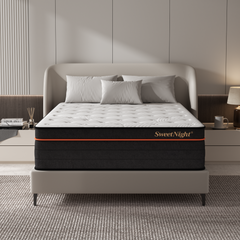


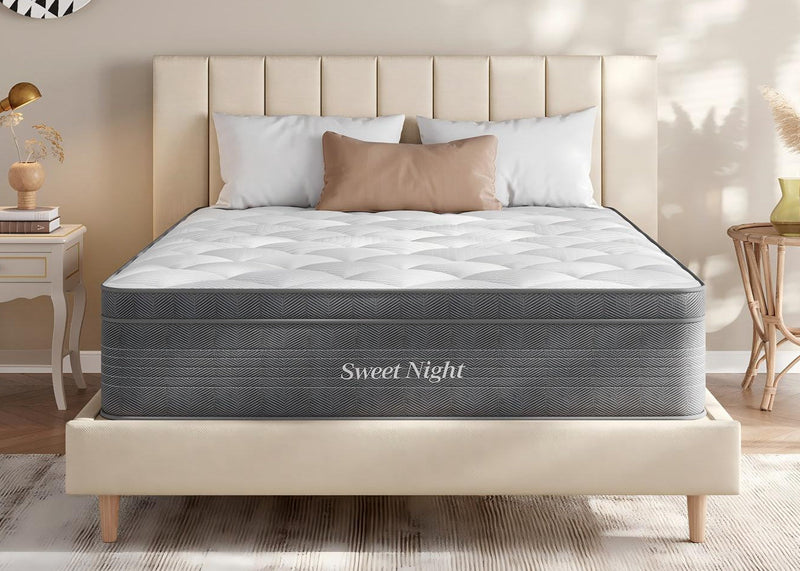
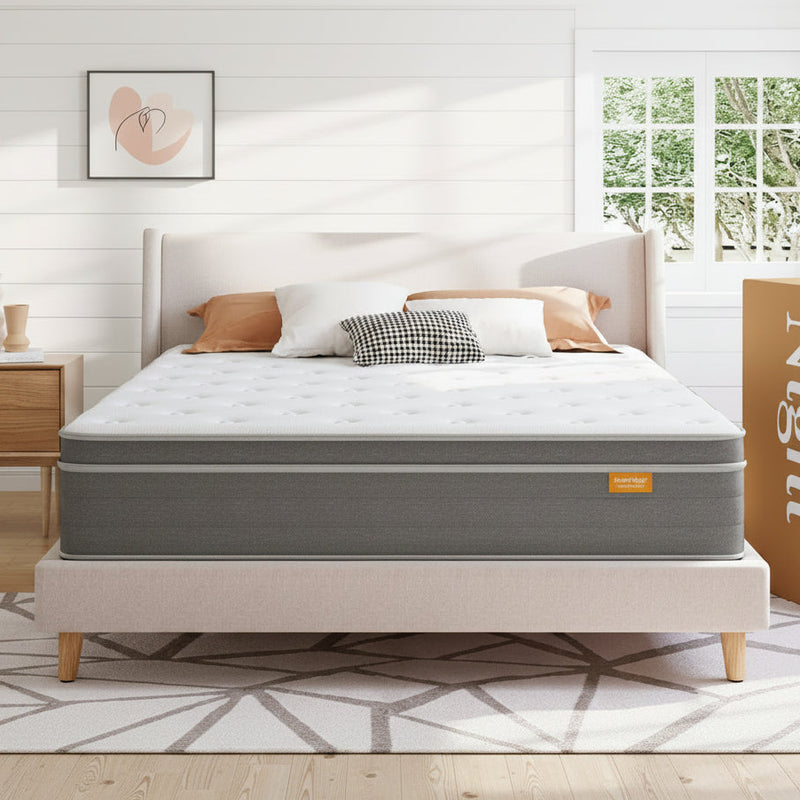
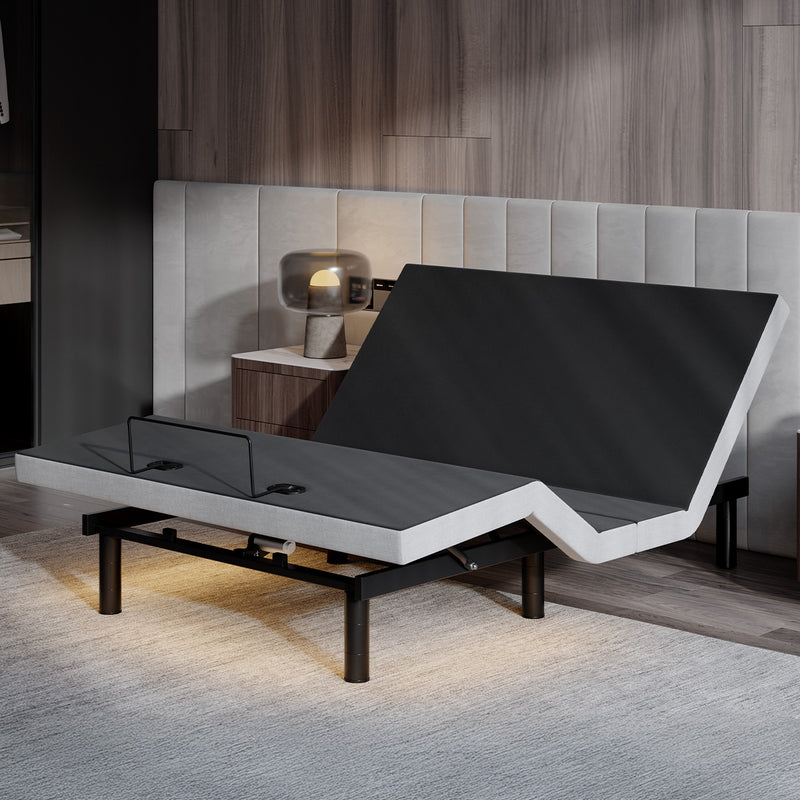

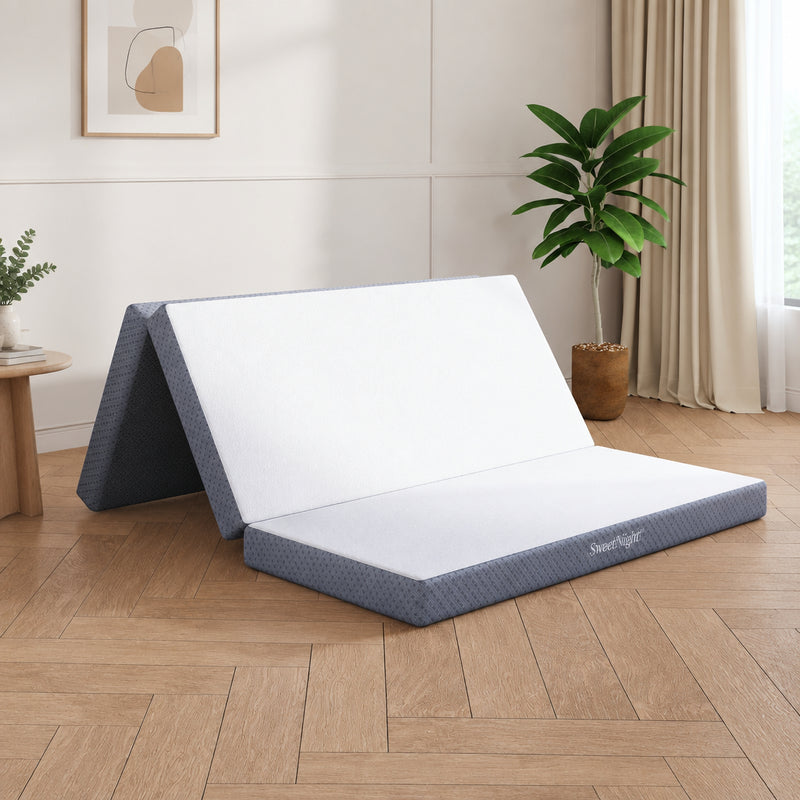
The best mattress for an adjustable bed is one that bends evenly at the hinge, stays within the base maker's thickness limit, keeps you supported and cool where your hips sink into the fold, and grips the deck instead of sliding. For most people that means an all-foam memory foam mattress of 14 inches or less. Latex and pocketed-coil hybrids can work on many bases, but they need more checking model by model.
Below are the six criteria we'd use to judge any mattress for a base, then specific picks from SweetNight's CoolNest line mapped to sleeper types and to each size of our SenseSync base, including what to do for Twin XL and Split King, where we don't make a mattress. If you haven't yet decided whether your current mattress will work, start with do you need a special mattress for an adjustable bed.
What Makes the Best Mattress for an Adjustable Bed: 6 Criteria
A mattress on a flat frame only has to support you. On a base it has to support you in several shapes, dozens of times a week. These are the six things that separate a good pairing from a frustrating one.
| Criterion | Why it matters on a base | What to look for |
|---|---|---|
| 1. Material | Decides how evenly the mattress folds | All-foam first; latex or pocketed coils only with the maker's approval |
| 2. Thickness | Taller mattresses resist the fold far more | Within the base's spec; 14" or less as a general ceiling |
| 3. Flex and recovery | The mattress must follow the deck and return flat | Softer upper foams, no stiff border rod, no wired coils |
| 4. Support zoning | Your hips land in the crease when the head is up | Zoned support that stays firm under the pelvis |
| 5. Cooling at the fold | Compressed foam around the hips traps heat | Open-cell or perforated foam, a cool-to-touch cover |
| 6. Cover and grip | Raising the head pushes the mattress toward the foot | A cover that doesn't slide on the deck, plus a retainer bar |
1. Material: all-foam bends most predictably
Good Housekeeping's testers put it bluntly: foam mattresses are the most flexible of the bunch, so they work best on an adjustable bed. The same team found latex less flexible than foam, which can stop you reaching the base's full incline, and rated coil-based beds less malleable than all-foam even when the coils are pocketed. Sleep Foundation is a little more generous, saying most latex and many hybrids are compatible. Both views hold: foam is simply the option with the fewest ways to go wrong. Why coils and edges fight the hinge is covered in our guide to putting a hybrid mattress on an adjustable bed.
2. Thickness: taller isn't better on a base
Good Housekeeping warns that tall mattresses, especially those over 14 inches, often don't work well on bases. The base maker's specification always wins over general guidance. On a flat frame a 16-inch mattress can feel plush and substantial; on a base, that extra height is extra material to crush and stretch at every fold.
3. Flex and recovery: follow the deck, then return flat
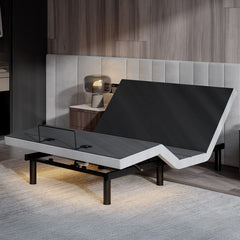
Watch a mattress as the head section rises. A good one drapes over the hinge in a smooth curve and stays in contact with the deck. A poor one lifts as a stiff plank and leaves a gap under your lower back. Then it has to recover: when you go flat, the crease should disappear. Sleep Foundation credits foam with exactly that ability to compress when the base bends and regain its shape when flat. Dense, firm foam stacks and steel edge rods are the usual culprits when a mattress won't follow.
4. Support zoning: the crease lands at your hips
When the head rises, your weight shifts toward the pelvis, which sits right where the mattress folds. That's the spot most likely to sink too far and leave your lower back rounded. A zoned mattress, with firmer support in the middle third and softer areas under the shoulders, holds the pelvis up better in both flat and inclined positions. Zoning also matters for stomach sleepers, who, as Sleep Foundation notes, tend to need a flat, even surface; they'll sleep with the base flat most nights, so the mattress has to be right lying flat too.
5. Cooling where the fold compresses the foam
This one rarely makes buying guides. Compressed foam holds less air, and when the head is raised, the most compressed part of the mattress is the crease under your hips and lower back. Heat that would normally escape through open foam has fewer paths out. If you run warm or plan to spend evenings reading at an incline, favor perforated or open-structure foams and a cover that feels cool to the touch.
6. Cover and grip: stop the slow slide
Raise the head and gravity pushes both you and the mattress toward the foot. Research on raised hospital beds found that sliding about 10 cm toward the foot cost roughly 9° of torso angle at a 30° head setting, so the body ended up flatter than the bed. That study was in hospital beds, not consumer bases, but the lesson carries: a mattress that creeps also takes you with it. Use the base's retainer bar every time, and if the mattress still shifts, Tempur-Pedic's help center, writing about split king mattresses that drift apart, suggests a non-slip mat or carpet backing between mattress and base for extra friction.
Best Memory Foam Mattress for an Adjustable Bed: SweetNight Picks by Sleeper Type
Here's how our own all-foam mattresses map onto those criteria when paired with the SenseSync adjustable bed frame. (Disclosure: SweetNight makes both the base and these mattresses, so weigh our picks accordingly.) All three use CertiPUR-US certified foams and OEKO-TEX STANDARD 100 fabric, and come with a 100-night trial and a 10-year limited warranty. For SenseSync, choose the 12-inch or 14-inch version only.
| Mattress | Support | Cooling | Best for | SenseSync sizes |
|---|---|---|---|---|
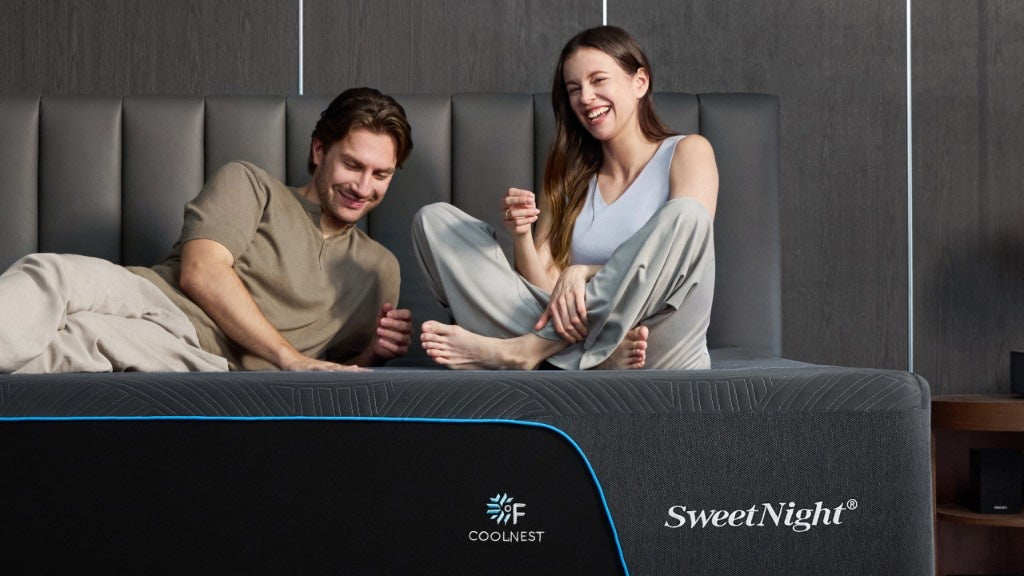
| CoolNest | 5-zone support, PCMflux foam | CoolNest System feels up to 8° cooler; 3D-weaving cover | Full-size setups, back sleepers, guest or second bedrooms, value | Full, Queen (12" or 14") |
| CoolNest Pro | Contour-cut 7-zone ergonomic support | Gradient cooling ice-silk cover; triple-perforated foam layers | Side and combination sleepers who want more shaping under shoulders and hips | Queen (12" or 14") |
| CoolNest Ultra | Refined 7-zone support; AirMesh breathable foam | Feels up to 11° cooler; gradient ice-silk cover (Qmax 0.25) | Hot sleepers, couples who run warm, long reading sessions at an incline | Queen (12" or 14") |
CoolNest: the straightforward pick, and the only one for a Full base
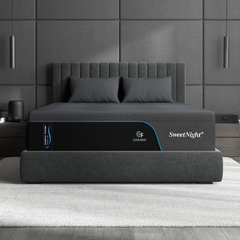
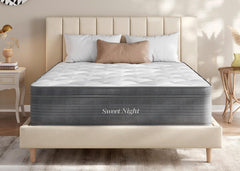
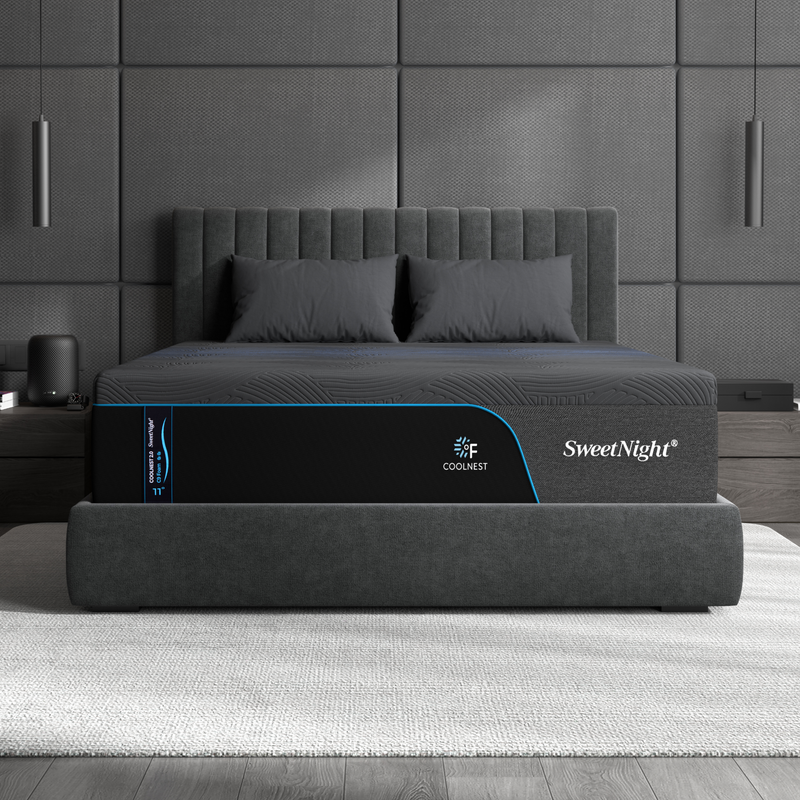
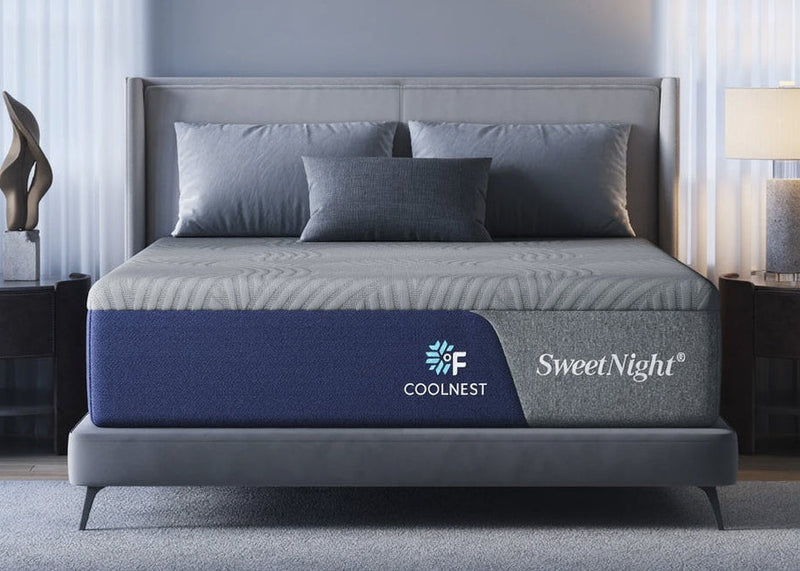
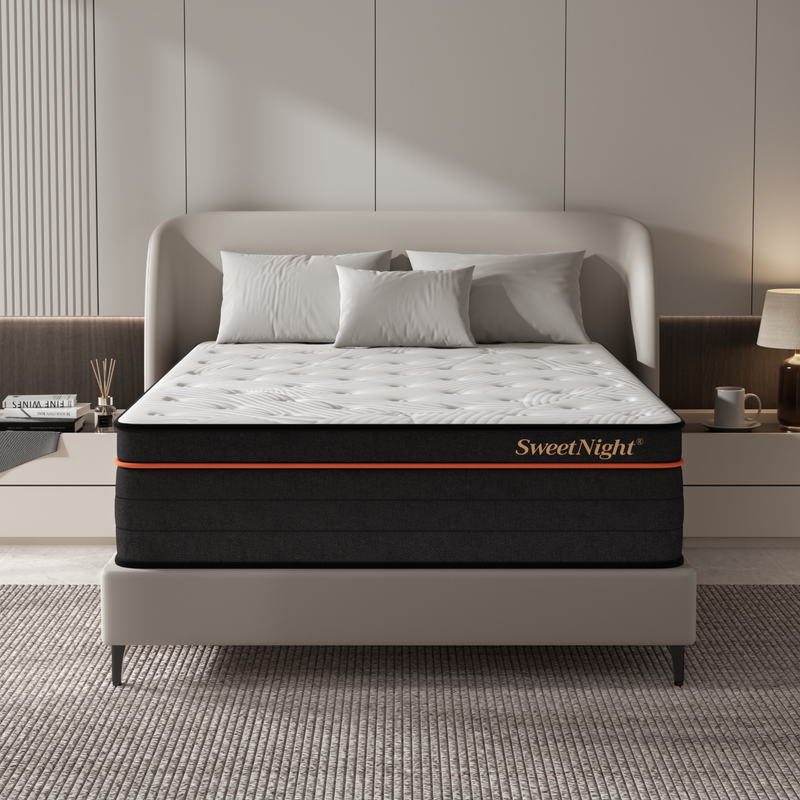
The CoolNest memory foam mattress is the simplest of the three: 5-zone support on PCMflux high-resilience foam under a 3D-weaving cover, with a CoolNest System that feels up to 8° cooler. It's the only one of the three sold in Full, so if you're buying a Full base, it's the pairing. It also makes sense on a Queen for back sleepers who don't need extra contouring, or for a second bedroom where the budget matters more than the last increment of cooling.
CoolNest Pro: for side sleepers who change position
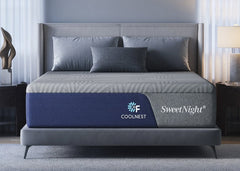
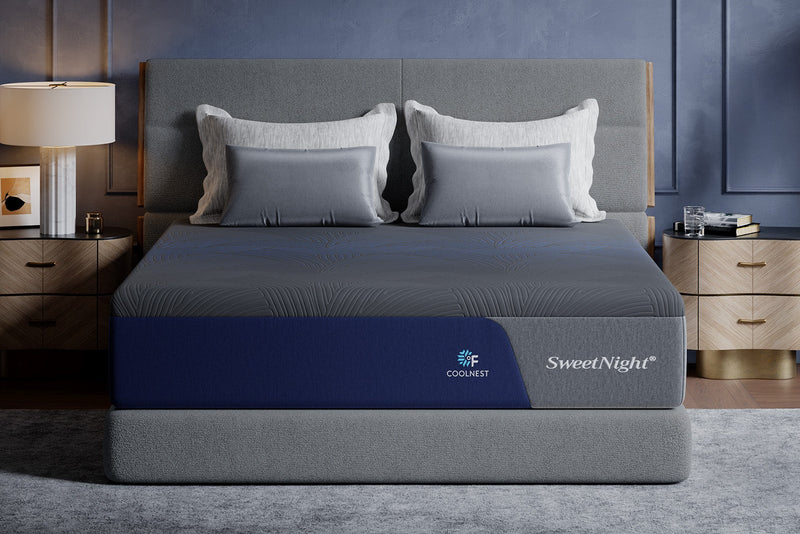
The CoolNest Pro memory foam mattress steps up to contour-cut 7-zone support, which gives more variation along the body than five zones. That suits side and combination sleepers, whose shoulders and hips press in at very different depths, and people who start the night reading at an incline and finish it on their side with the base flat. Triple-perforated foam layers and a gradient ice-silk cover help with airflow at the fold.
CoolNest Ultra: for hot sleepers
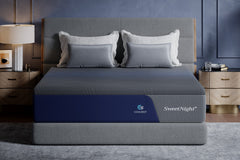
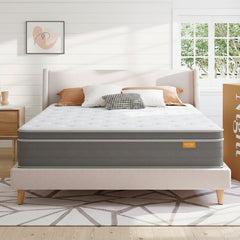
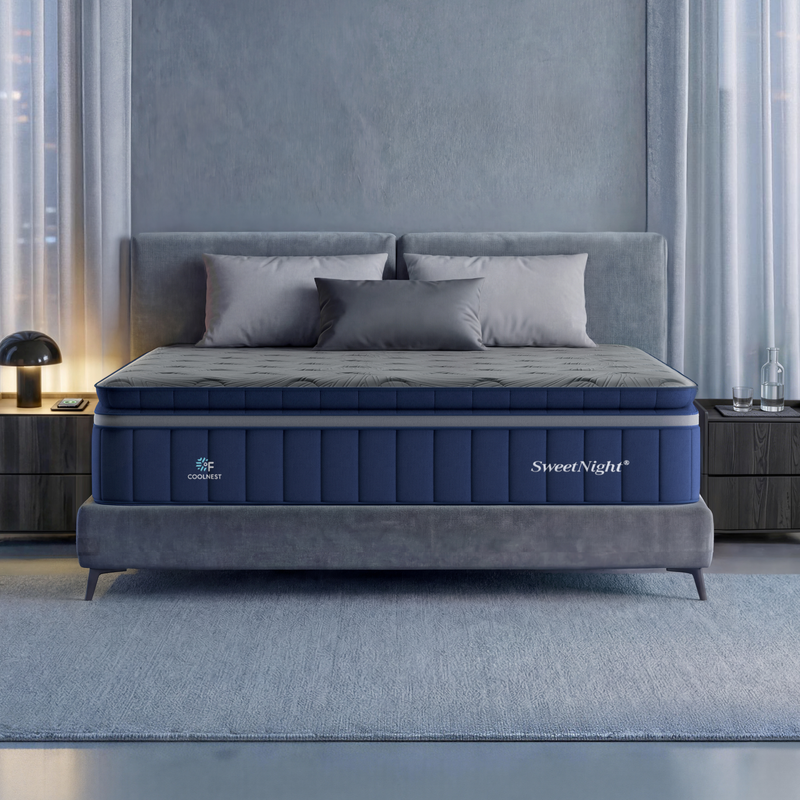
The CoolNest Ultra cooling memory foam mattress is SweetNight's coolest all-foam model, feeling up to 11° cooler, with AirMesh breathable foam and refined 7-zone support. If you sleep hot, share the bed with someone who does, or spend long stretches with the head raised, where criterion 5 bites hardest, this is the one we'd pick. For a side-by-side on feel and materials, including the Hybrid, see our CoolNest vs Pro vs Ultra vs Hybrid comparison.
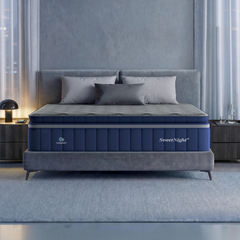
What about the CoolNest Hybrid? It's a good mattress on a static platform or slatted frame, but we don't pair it with SenseSync, and the same goes for every 16-inch version in the line. The base is specified for all-foam memory foam at 12 or 14 inches, for the mechanical reasons in the hybrid guide linked above.
Best Mattress for a Full or Queen Adjustable Bed
If you're building a SenseSync setup, this is the whole matrix:
| SenseSync size | SweetNight mattress options | Thickness | Capacity (mattress + sleepers) |
|---|---|---|---|
| Full | CoolNest only | 12" or 14" | 750 lb |
| Queen | CoolNest, CoolNest Pro or CoolNest Ultra | 12" or 14" | 750 lb |
| Twin XL | None from SweetNight; any all-foam Twin XL memory foam | 12" or 14" | 400 lb |
| Split King | Two all-foam Twin XL memory foam mattresses | 12" or 14" | 400 lb per side |
The capacity column includes the mattress, so it isn't only about the people. On the Full and Queen there's plenty of room for a foam mattress and two adults. On a Twin XL, 400 pounds is shared between the mattress and one sleeper, and the weight should be spread evenly across the base rather than concentrated at one end. It's worth checking a Twin XL mattress's listed weight before you buy.
Buying the base and mattress together makes it easier to line up delivery and trial periods; you can see current mattress and bed base deals before you decide.
Best Twin XL Mattress for an Adjustable Bed (and for Split King)
SweetNight doesn't currently make a Twin XL mattress, and we'd rather tell you that than stretch a Queen recommendation to fit. For a SenseSync Twin XL, or a Split King made from two Twin XL bases, choose any all-foam Twin XL memory foam mattress that is 12 or 14 inches thick. When you compare Twin XL models from other brands, apply the same six criteria and add four checks:
- It's all-foam. Many Twin XL mattresses sold for adjustable beds are hybrids. Read the construction list, not the headline.
- The warranty allows adjustable bases in writing, for that model and that height.
- For a Split King, buy two of the same model and thickness. Mismatched heights leave a step down the middle when both sides are flat.
- Certified foam and a real trial. Certifications such as CertiPUR-US and a home trial long enough to test a few weeks of use at different angles.
Split King setups have their own quirks, including the seam between mattresses and the sheet set you need, which our split king adjustable bed guide covers in detail.
12-Inch or 14-Inch: Choosing Thickness for a Mattress for an Adjustable Bed
Both thicknesses are within the SenseSync rule, so this is a comfort decision, not a compatibility one.
Choose 12 inches if you're lighter, mostly sleep on your back or stomach, or want the mattress that bends most easily. A 12-inch mattress is also lighter, which matters on a Twin XL with its shared 400-pound limit, and it sits comfortably inside the range Sleep Foundation gives for regular fitted sheets, which typically fit mattresses 7 to 14 inches thick.
Choose 14 inches if you're heavier or a dedicated side sleeper and want more comfort depth before your shoulders and hips reach the firmer support layers. Plan on deep-pocket sheets with strong elastic, because 14 inches is at the top of the standard range and a bending base pulls fitted corners loose.
Neither is "better" for the base itself. Going past 14 inches is where the trade-off turns against you on an adjustable bed.
Best Adjustable Bed Mattress Mistakes to Avoid
- Keeping an old innerspring "to see how it goes." Wired coils are the type most likely to fight the fold, and the mattress warranty may not cover adjustable use.
- Buying the tallest version. On a base, extra height is extra stiffness at the hinge.
- Skipping the retainer bar because the mattress feels heavy enough to stay put. It won't, over weeks of raising and lowering.
- Putting a box spring or bunkie board between base and mattress. The base replaces the foundation; the mattress sits directly on the deck.
- Mixing mattresses on a Split King. Two different models age and soften differently, and the seam gets worse.
FAQ
What is the best type of mattress for an adjustable bed?
All-foam memory foam is the most forgiving type. It compresses where the base folds and recovers when the bed goes flat, and Good Housekeeping's testers rate foam the most flexible mattress type. Latex and pocketed-coil hybrids can work on many bases with the maker's approval, but they need more checking. Whatever you choose, stay within the base maker's thickness specification.
What is the best twin XL mattress for an adjustable bed?
Look for an all-foam memory foam Twin XL that bends evenly, sits within the base's thickness limit and is approved for adjustable use in its warranty. For a SenseSync Twin XL or Split King, that means any all-foam Twin XL memory foam mattress 12 or 14 inches thick. SweetNight does not currently make a Twin XL mattress.
Which SweetNight mattress works with the SenseSync base?
The CoolNest, CoolNest Pro and CoolNest Ultra memory foam mattresses in 12 or 14 inches. On a Full SenseSync base, the CoolNest is the option. On a Queen, all three fit. The 16-inch versions and the CoolNest Hybrid are not recommended for SenseSync; the Hybrid suits a static bed frame.
Should I get a 12-inch or 14-inch mattress for an adjustable bed?
Choose by body and sleep position. A 12-inch mattress is lighter, bends more easily and fits a wider range of standard sheets. A 14-inch mattress gives heavier bodies and side sleepers more comfort depth before they reach the firm support layers. Both are within SweetNight's SenseSync specification; anything taller is not.
How do you keep a mattress from sliding on an adjustable bed?
Use the base's retainer bar at the foot every time, since raising the head pushes the mattress toward the foot. If it still creeps, Tempur-Pedic's help center suggests, for split king setups, a non-slip mat or carpet backing between mattress and base for extra friction. A mattress with a grippy underside cover also helps keep it aligned with the deck.