

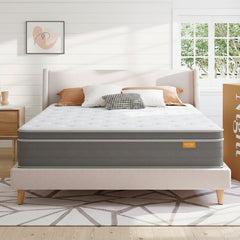
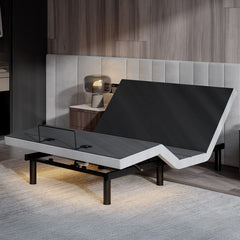




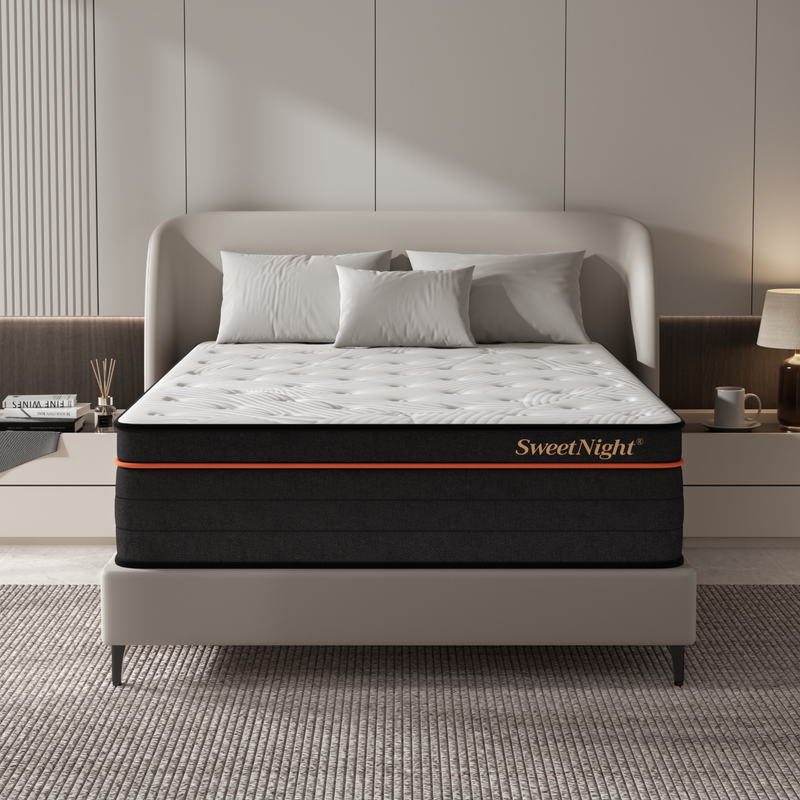
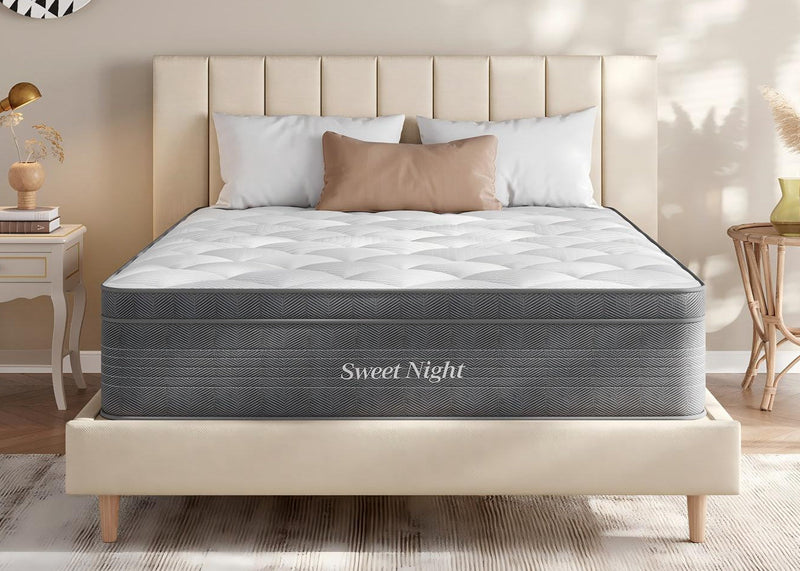
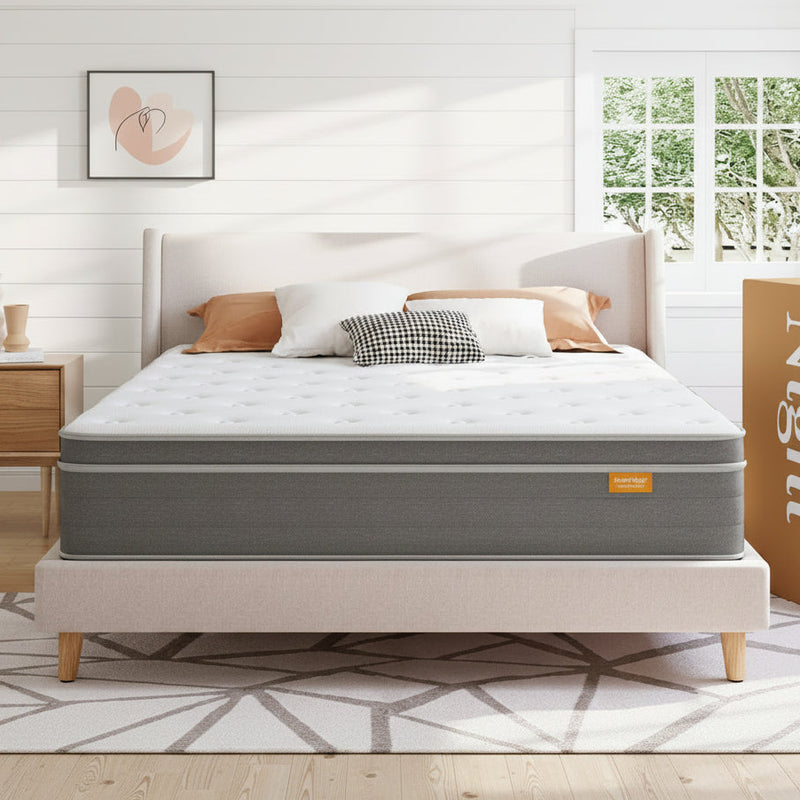
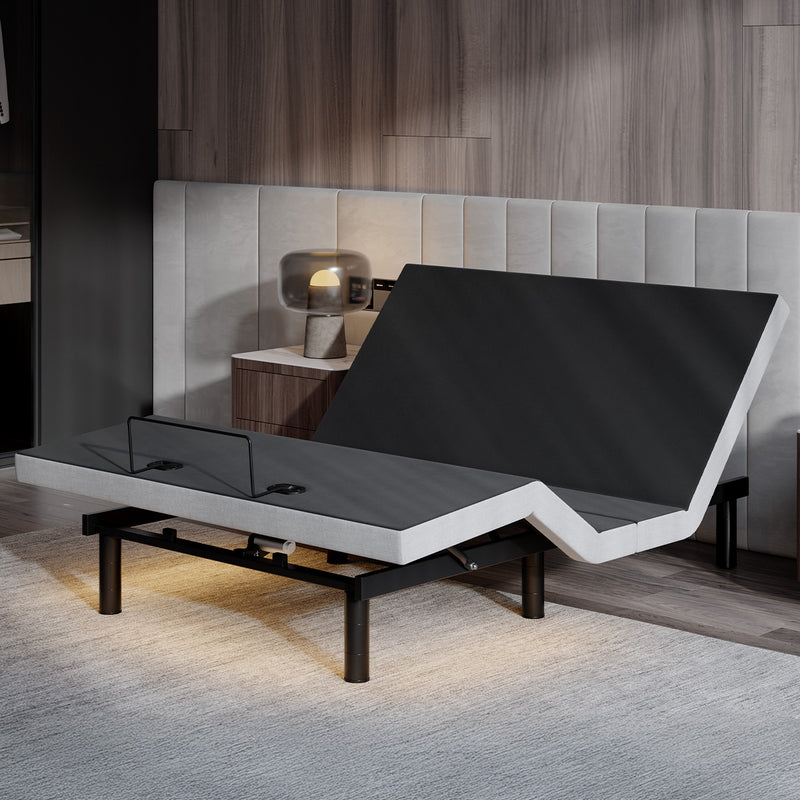
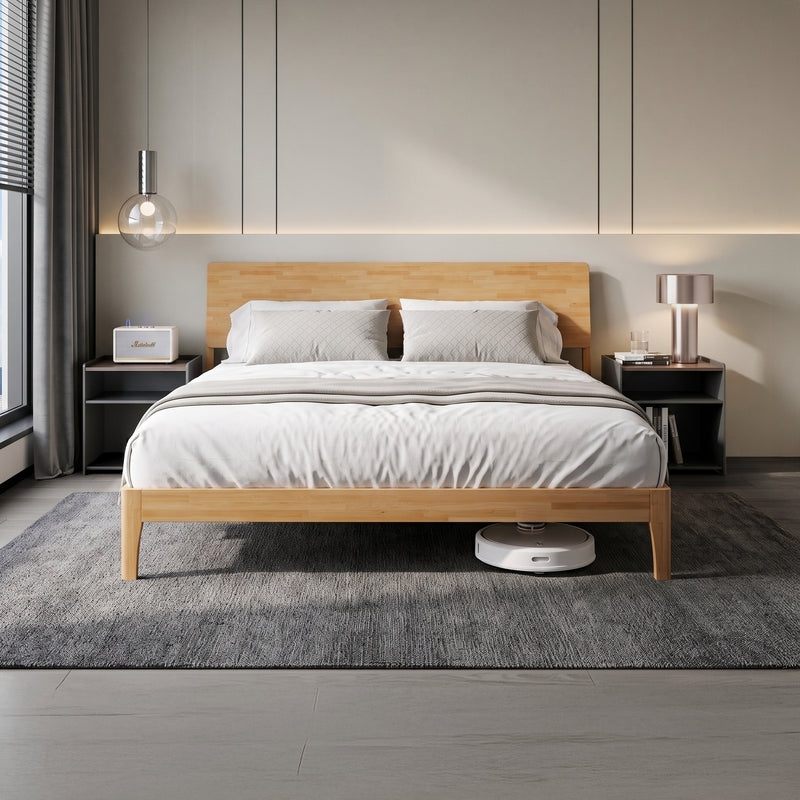



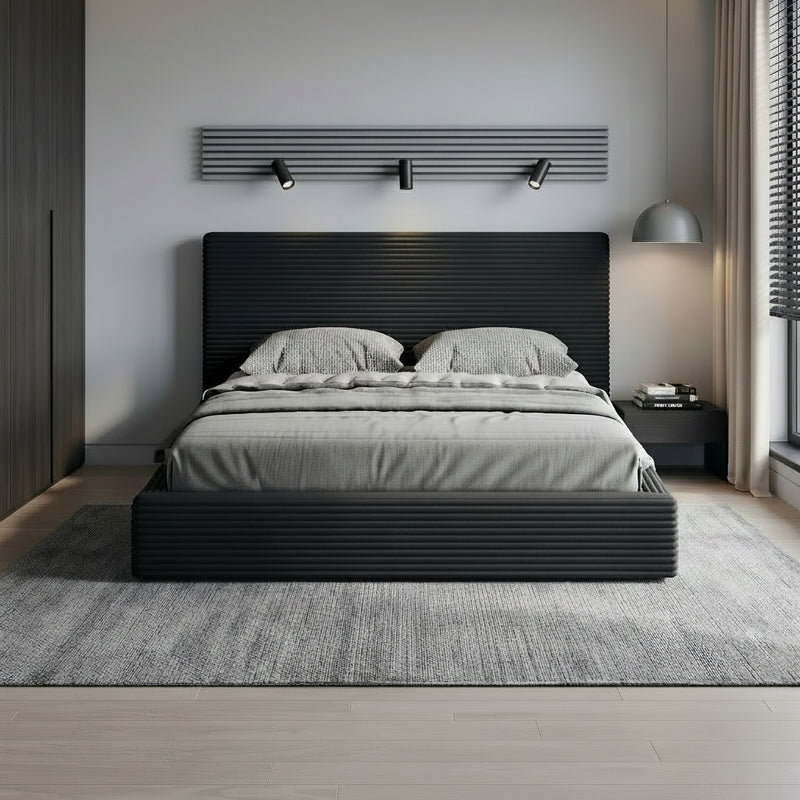
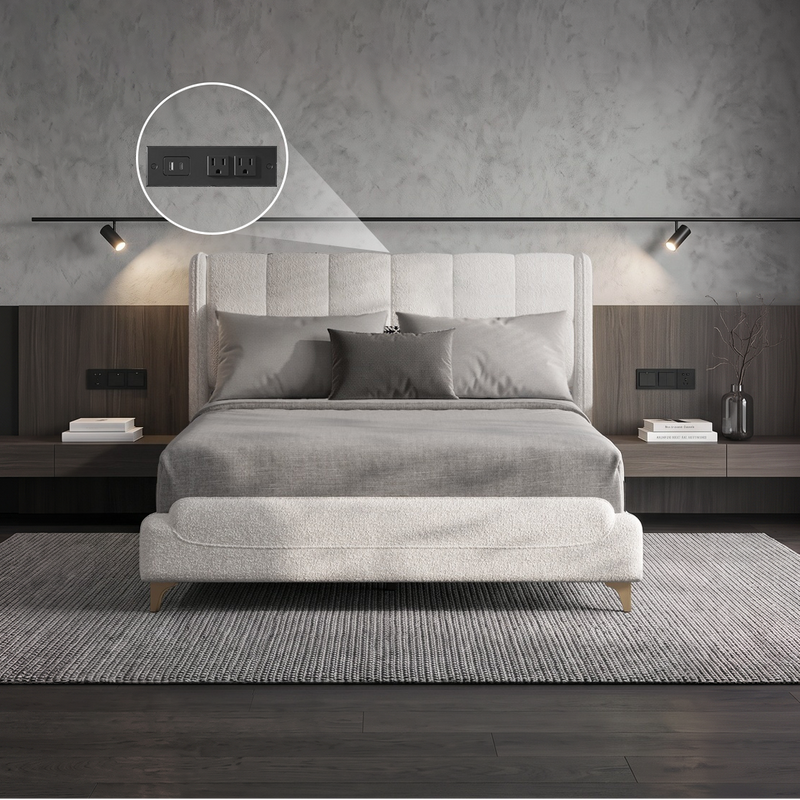
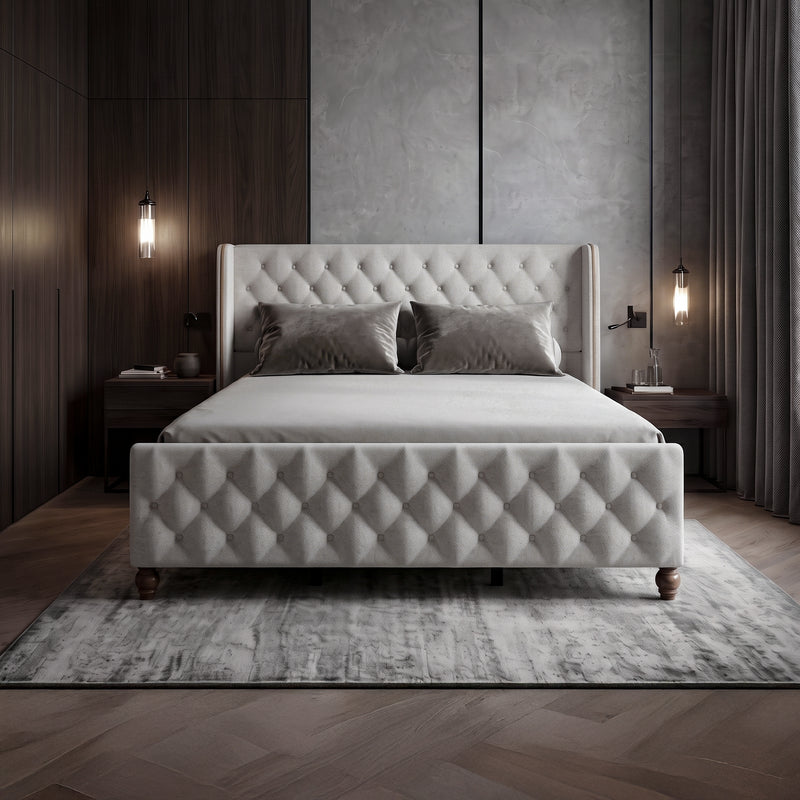
An adjustable bed is worth it when you have a specific, recurring reason to lie at an angle: nighttime reflux, snoring that happens mostly on your back, legs that swell by evening, trouble sitting up, or hours of reading and TV in bed. If you sleep well flat, sleep on your stomach, or would touch the remote once a month, it usually isn't. The base is also only part of the bill, because it can pull in a new mattress, new sheets and a different headboard plan.
Who Is an Adjustable Bed Worth It For?
Five groups get value they can feel most nights.
People with nighttime reflux
This is the strongest case, and the one with the most research behind it. The American College of Gastroenterology suggests raising the head of the bed for nighttime GERD symptoms, although it grades that advice as conditional and based on low-quality evidence. The logic is gravity: with your whole torso on a slope, stomach contents have to travel uphill. Sleep Foundation advises raising the top of the bed itself by at least 6 inches, not just the pillows, and names an adjustable frame as one easy way to do it. Mayo Clinic goes further and says raising your head with extra pillows isn't effective, because pillows bend you at the neck and waist instead of tilting the torso.
A base gives you that tilt on demand and flattens again in the morning. It does not replace medical care. Heartburn more than a couple of times a week, trouble swallowing, or symptoms that persist on medication are reasons to see a doctor first. Our guide to using an adjustable bed for acid reflux covers angles, meal timing and the left-side trick.
Back sleepers who snore
Snoring often gets worse on the back, where gravity lets the tongue fall toward the throat. A modest head lift helps some people. In a 22-person pilot study, a bed that automatically lifted the trunk to 20 degrees stopped about two out of three individual snoring episodes, yet total snoring across the night did not drop significantly. Treat that as decent odds of a quieter bedroom, not a cure. On the SenseSync adjustable bed base, the Anti-Snore preset lifts the head about 15 degrees, which sits between the 10- and 20-degree angles that pilot tested. (Disclosure: SweetNight makes the SenseSync base.)
One caution matters more than any preset. The American Academy of Sleep Medicine says snoring is likely a sign of sleep apnea when it is followed by silent breathing pauses and choking or gasping sounds. If your partner describes that, book a sleep evaluation before you buy furniture. More detail is in our piece on adjustable beds for snoring and sleep apnea.
People who read, watch TV or work in bed
This is the least medical reason, and probably the one that gets a base used most often. A raised back section with the knees slightly bent holds you in place, while a stack of pillows slowly slides out from behind you. The honest caveat: sleep specialists advise keeping the bed for sleep and sex. If you already lie awake for long stretches, turning your bed into a better office can work against you.
Legs that swell or ache by evening
Cleveland Clinic advises people with chronic venous insufficiency to lift the legs above heart level, often for 30 minutes or longer at least three times a day. Pillows under the calves can do this, but they shift and flatten. A base's foot section holds the angle while you read or nap. The same Cleveland Clinic page lists sleeping in a chair or recliner as a risk factor, which is a legs-down position, so the point is raising the legs, not just sitting back. New swelling, swelling in one leg, or swelling with shortness of breath needs a doctor, not a bed.
Anyone who struggles to sit up
With stiff hips, after surgery, late in pregnancy or with dizziness on standing, sitting up is the hardest part of getting up. A powered back section does it for you. CDC advice for people prone to dizziness is to get out of bed in stages: sit up, sit on the edge, then stand. A base makes step one easier. Medicare will not usually help pay: its coverage manual treats power bed-lounges as a comfort or convenience item and covers prescribed hospital beds instead.
When an Adjustable Bed Isn't Worth It
These are the buyers we would talk out of it, or at least toward a cheaper test first.
- Stomach sleepers. Sleep Foundation notes that stomach sleepers tend to need a flat, even surface for spinal alignment. You would run the base flat nearly every night and pay for motors you don't use.
- Good sleepers hoping for better sleep in general. We found no research showing that a base improves sleep for people who already sleep comfortably flat. The zero-gravity preset borrows a NASA description of how a relaxed body settles in weightlessness; we found no trials testing its sleep benefits in consumer beds.
- Couples with opposite needs on one mattress. On a Queen or Full base, both sides rise together. If one of you wants the head up and the other wants flat, only a split king solves it, and that means a king-width room, two bases and two Twin XL mattresses.
- People attached to a coil mattress. Interconnected-coil innersprings are generally a poor fit, and some bases are specified for foam only. If yours won't work, the real price includes a new mattress.
- Frequent movers and walk-up apartments. Most bases are heavy and are not designed to be moved by one person.
- Anyone with one symptom that a wedge already fixes. If a foam wedge controls your reflux and you don't mind it, a base is a comfort upgrade, not a necessity.
Adjustable Beds Pros and Cons
Most pros and cons come in pairs: the motor that lifts your head also needs power, makes noise and may eventually need a warranty claim.
| Area | The upside | The downside | What to check |
|---|---|---|---|
| Positioning | Head and foot angles on demand, flat again in seconds | Shared bases move both sleepers | Split king if your needs differ |
| Health use | Whole-torso incline for reflux or snoring; legs above heart | Evidence is from small studies; not a treatment | Talk to a doctor about persistent symptoms |
| Daily comfort | Reading, TV, sitting up without pillow piles | Can pull screens and work into bed | How many nights a week you'd actually use it |
| Weight | A heavy base is usually a stable base | Roughly 140 to 250 lb; two-person move | Stairs, doorways, box size |
| Power | Presets, massage, light, USB | Stuck at an angle in an outage without backup | Battery backup, and whether batteries are included |
| Noise | Silent when not moving | Motor hum during adjustment | A published decibel spec |
| Warranty | Frame terms are often 10 years or more | Motors and electronics usually a few years | The year electronics coverage ends |
| Bedroom setup | Works on legs, in many frames, or on the floor | Headboard gap; nightstand drifts out of reach | Headboard brackets, wall-hugging |
The Real Disadvantages of Adjustable Beds
They are heavy
Sleep Foundation says most models weigh between 140 and 200 pounds and are not designed to be moved by a single person, and Tempur-Pedic's moving guide puts bases at roughly 150 to 250 pounds. Tempur also says damage from moving isn't covered by its warranty. Plan the route through the house before delivery day.
They need power, and outages happen
A raised base with no power stays raised. Many bases have a battery backup that lowers the bed slowly to flat. Check whether yours has one and whether the batteries are in the box. SenseSync, for example, has a 9V battery clip for outages, but the battery is not included, so buy one on day one and put it in.
The motors make noise
Sleep Foundation notes that noise from an adjustable bed usually happens only while the motors are moving, and that creaky coils or crinkling foam in the mattress can add to it. A few seconds of hum when you raise the head is normal. Grinding, clicking or noise when the base isn't moving is not, and is worth a warranty call.
Split king has a seam
Two Twin XL mattresses side by side leave a line down the middle. Lying flat, most people don't feel it, but cuddling across it is awkward, and when one side is raised the halves separate visually. Our split king adjustable bed guide covers the gap fixes, from connectors to toppers.
Electronics coverage drops off early
The same Sleep Foundation page says the typical frame warranty is 10 years, while coverage of mechanical and electrical parts tends to be limited to a few years. Headline numbers like 20 or 25 years usually describe the frame; the motors, control box and remote get far less. Read the tiers, not the headline.
Your nightstand moves away
When the head section rises on most bases, your upper body moves toward the foot of the bed and away from the wall. Wall-hugging designs shift the base backward to compensate, but many bases, including Nectar's, Serta's and SenseSync, don't have that feature. Test the reach to your lamp and phone charger with the head raised.
Hidden Costs of an Adjustable Base
The sticker price is the base alone. These are the items that most often turn a $750 decision into a $1,500 one.
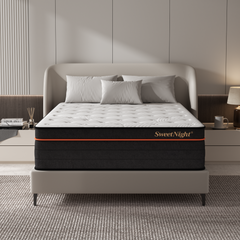
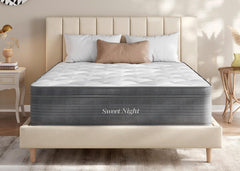
- A compatible mattress. If yours is an innerspring, a coil hybrid your base maker doesn't approve, or taller than about 14 inches, budget for a replacement. For a split king, that means two Twin XL mattresses. See whether you need a special mattress for an adjustable bed before assuming yours will work.
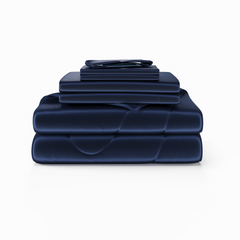
- Sheets that stay on. Bending a mattress pulls fitted sheets off the corners. Look for a pocket depth at least equal to your mattress height and elastic all the way around. Split king needs two Twin XL fitted sheets.
- A headboard plan. Some brands sell headboard brackets separately; others, SenseSync included, have none. That leaves a bed frame that surrounds the base, a wall-mounted headboard, or a freestanding one.
- Delivery and setup. Some brands include white-glove setup; Nectar lists it at $199 for two items. If you install it yourself, you need a second person.
For list prices by tier and size, see our breakdown of how much an adjustable bed costs.
Is an Adjustable Base Worth It for You? Score Yourself
Add the points for every statement that is true for you, then subtract the negatives. The weights are our editorial judgment, based on how directly each reason is served by a powered base. They are not a clinical tool.
| Statement | Points |
|---|---|
| I have nighttime heartburn or reflux at least weekly, and pillows haven't solved it | +3 |
| I struggle to sit up from flat or to get out of bed | +3 |
| My partner says I snore mostly on my back, with no gasping or pauses | +2 |
| My legs or ankles swell or ache most evenings | +2 |
| I read, watch TV or work in bed four or more nights a week | +2 |
| I would use a preset daily, not occasionally | +1 |
| I mostly sleep on my stomach | −3 |
| My mattress won't work on a base and a new one isn't in the budget | −2 |
| My partner wants flat and a split king won't fit the room or budget | −1 |
| I expect to move within a year, up stairs, without help | −1 |
Scoring: 5 or more means a base is likely to earn its place. 3 or 4 means run the two-week test below first. 2 or less means your money probably does more as a better mattress, a wedge, or both. If you are a strong candidate, our guide to choosing an adjustable bed spec by spec is the next step.
Test Before You Buy: The Two-Week Wedge and Pillow Trial
Most of what an adjustable base does can be roughly imitated for the cost of a wedge and a couple of pillows. The imitation is clumsy, and that is the point: if the clumsy version helps, the real one will help more comfortably. If it doesn't help at all, a base at the same angle probably won't either.
- Pick your one main reason. Reflux, snoring, swelling, reading or getting up. Test that, not everything at once.
- For reflux or snoring, raise the whole torso. Use a foam wedge long enough to start under your upper back, or put blocks under the head-end legs of the bed; Mayo Clinic suggests raising the head end 6 to 9 inches. Don't stack pillows under your head alone.
- For swelling, put firm pillows under your calves so your feet sit above heart level for 30 minutes in the evening.
- Log 14 nights: symptoms, sleep, and whether your partner noticed a difference.
Then read the log honestly. If the wedge helped but you hated it because you slid down, couldn't lie flat for your partner, or had to take it off the bed every morning, that is the best argument for a base. If nothing changed, save the money. Our comparison of wedge pillows and adjustable beds goes deeper on when a wedge is enough.
One more check before you order: the return policy. Tempur-Pedic, for example, says its power bases cannot be returned, and some brands list no trial for bases at all. If you can't return it, try one in a showroom first.
Are Adjustable Beds Worth the Investment Over Time?
Think of cost per year of use, not the sticker. Sleep Foundation puts typical adjustable beds at $1,000 to $3,000, though simpler bases list for less. Used nightly for reflux, that is cheap per night; used twice a month for TV, it is an expensive TV chair.
The warranty tells you how the maker expects the costs to fall. Frame coverage is usually long; motor and electronics coverage is usually short, so budget as if a motor or control box repair after the first few years is yours to pay. SenseSync's own structure is typical of that pattern: a 10-year limited warranty with full replacement of defects in year 1, defective parts including electronics in year 2, and frame-only coverage (metal frame and legs) in years 3 through 10. SweetNight estimates that its 15,000-cycle fatigue test equals roughly 10 years of regular use, but that is the company's estimate, not a guarantee.
FAQ
Are adjustable beds worth the money?
They are worth it when you have a recurring reason to sleep or sit at an angle: nighttime reflux, back-sleeping snoring, legs that swell by evening, trouble sitting up, or long stretches of reading and TV in bed. If you sleep well flat or sleep on your stomach, the base will mostly sit flat and the money is better spent on a good mattress.
What are the disadvantages of adjustable beds?
They are heavy, often 140 to 250 pounds, and awkward to move. They need an outlet, so an outage can leave you stuck at an angle unless there is a battery backup. Motors make noise while moving. Split king setups have a center seam. Warranties usually cover motors and electronics for only a few years, and you may need a new mattress, deeper sheets and a different headboard setup.
Is an adjustable base worth it for couples?
On a shared Queen or Full base, both sides rise together, so it works best when both partners want the same angle or one partner simply tolerates it. If one of you wants the head up and the other wants to lie flat, you need a split king, which is two Twin XL bases and two Twin XL mattresses, and that roughly doubles the base cost and needs a king-width room.
Can you use your existing mattress on an adjustable bed?
Often, but not always. All-foam mattresses bend most easily. Many hybrids are sold as compatible, while interconnected-coil innersprings are generally a poor fit, and Good Housekeeping flags mattresses over 14 inches as often working badly. Check both the mattress maker's statement and the base maker's rules. SweetNight specifies all-foam memory foam mattresses 12 or 14 inches thick for its SenseSync base.
Do adjustable beds help you sleep better?
For people with a specific problem, such as nighttime reflux, positional snoring or evening leg swelling, raising the head or legs may help, and there is small-study evidence for reflux and snoring. We found no research showing that an adjustable base improves sleep for people who already sleep comfortably flat, so it should not be bought as a general sleep upgrade.