
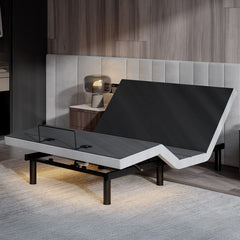



An adjustable bed base typically costs $1,000 to $3,000, according to Sleep Foundation, with the average Queen at around $1,500. Prices listed on brand sites in September 2026 were wider than that: a Queen base ran from $599 for a head-only model to $2,699 for a smart base with app control and automatic snore response. Most people who want independent head and foot lift, presets and massage can get them for roughly $750 to $1,000 in a Queen. A split king costs about 1.6 to 1.9 times the Queen price, before the second mattress.
All prices below are as listed on each brand's own website on September 24, 2026, base only, before promotions. They change often, so treat them as a snapshot for comparing tiers, not a quote.
How Much Is an Adjustable Bed? Prices Listed in September 2026
Sleep Foundation's reviewers say adjustable beds typically range from $1,000 to $3,000, and put the average queen adjustable frame at around $1,500. Good Housekeeping narrows the Queen range to $1,000 to $2,000 for most bases, with simpler models under $1,000 and smart models over $3,000. Those are fair ranges for the premium brands. Direct-to-consumer bases sit lower, as the table shows.
| Base (as listed Sept 2026) | Queen | Split king | What moves | Headline warranty |
|---|---|---|---|---|
| Serta baselogic Bronze | $599 | $1,158 (Split Cal King) | Head only | 20-year limited |
| Nectar Classic | $649 | $1,198 | Head and foot | 2 years |
| Nectar Premier | $749 | $1,398 | Head and foot | 2 years |
| SweetNight SenseSync (list price at launch) | $749.99 | $1,199.99 | Head and foot | 10-year limited |
| Nectar Luxe | $899 | $1,798 | Head, foot, lumbar | 2 years |
| Serta baselogic Silver | $899 | $1,698 (Split Cal King) | Head and foot | 20-year limited |
| Tempur-Pedic Ease | $999 | $1,798 | Head and foot | Not collected |
| Serta baselogic Gold | $1,299 | $2,398 (Split Cal King, out of stock) | Head and foot | 20-year limited |
| TEMPUR-Ergo Power Base | $1,699 | $3,198 | Head, foot, lumbar | 25-year limited |
| Serta baselogic Platinum | $1,799 | $3,398 (Split Cal King) | Head, neck, foot | 20-year limited |
| TEMPUR-Ergo Smart Base | $2,199 | $4,198 | Head, foot, lumbar | 25-year limited |
| TEMPUR-Ergo ProSmart Base | $2,699 | $5,198 | Head, foot, lumbar | 25-year limited |
Two notes on the numbers. Serta's per-size prices came from the product pages' structured data; the same pages also showed "starting at" figures about $100 lower, so you may see a slightly different price at checkout. Serta listed Split Cal King rather than Split King for these models. The SenseSync figures are SweetNight's list prices at launch on September 30, 2026. (Disclosure: SweetNight makes the SenseSync base.)
Adjustable Bed Price Tiers: What Each Tier Adds
Price only loosely tracks features across brands. A $899 base can list fewer features than a $749 one, because brand, warranty length and delivery service are priced in too. Here is what tends to change as you move up.
Under $700 for a Queen: the lift
At the bottom, you are buying motion and little else. Serta's Bronze lists head adjustability only, with a wired remote. Nectar's Classic adds independent foot lift and one-touch Zero Gravity and flat presets, but its compare data shows no massage, no under-bed light and no USB. If your only goal is a reflux incline or propping up to read, this tier can do the job. Check that the foot section moves if leg elevation matters to you.
$700 to $1,000: the feature-rich middle
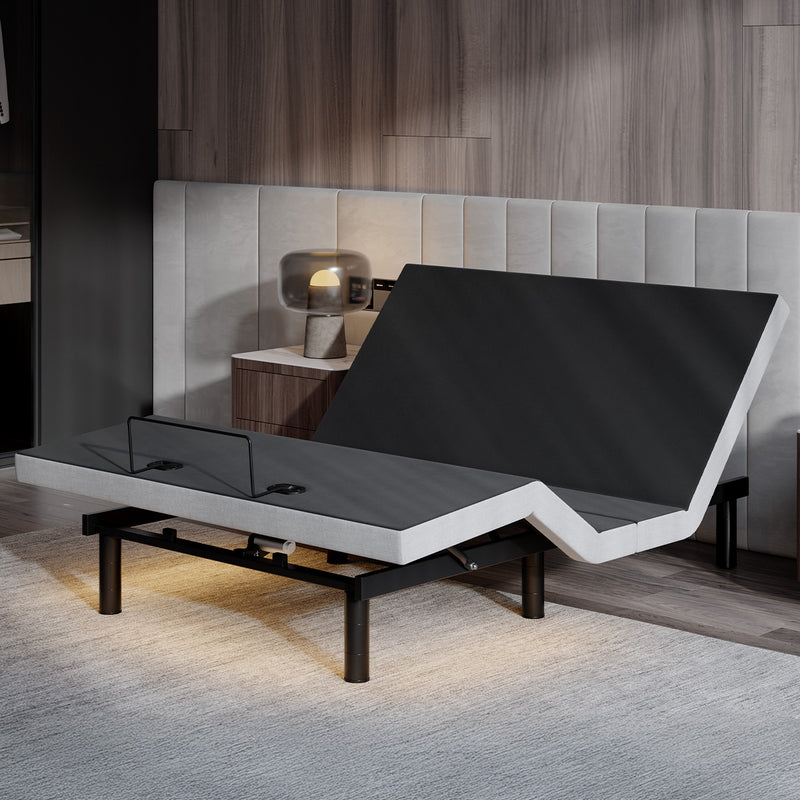
This is where most direct-to-consumer bases compete, and where feature lists get long. Nectar's Premier lists anti-snore, TV and reading presets, programmable memory, three massage intensities, under-bed lighting and four USB ports. The SenseSync adjustable bed base at $749.99 for a Queen lists dual motors with 4,000N of thrust, Zero Gravity, Anti-Snore and TV presets, two memory positions, head and foot massage at three levels, a white/warm under-bed light, USB-A and USB-C, and a 750 lb capacity. Nectar's Luxe adds a lumbar panel at $899. Serta's Silver, at $899, lists head and foot lift with a wireless remote but no massage or USB, which shows how much brand and warranty terms move the price.
$1,000 to $2,000: premium brands and longer electronics coverage
Tempur's Ergo Power Base and Serta's Gold, Pearl and Platinum live here. You get features, but the bigger differences are service and paperwork: white-glove delivery included, electronics parts coverage through year 5, King and California King sizes, and extras such as Tempur's lumbar section (raising up to 6 inches), Serta Platinum's automatic pillow tilt and built-in white, pink or brown noise.
$2,000 and up: smart bases
Tempur's Ergo Smart and ProSmart add Wi-Fi app control, sleep tracking, Alexa compatibility and automatic snore response, which raises the bed about 12 degrees once when it detects snoring. That feature is the clearest reason to pay this much. A 22-person pilot study of an automatic anti-snoring bed found that lifting the trunk stopped many individual snoring episodes but did not significantly cut total snoring, so it is a comfort feature with modest evidence, not a treatment.
How Much Does a Split King Adjustable Bed Cost?
Good Housekeeping notes that split king bases are typically more expensive because each side needs its own motors. In practice a split king is two Twin XL bases, and brands price it at about 1.6 to 1.9 times the Queen:
- SenseSync: $1,199.99 split king vs $749.99 Queen at launch list price, about 1.6 times.
- Nectar Premier: $1,398 vs $749, about 1.9 times. Nectar's King is also two Twin XL bases, priced the same as its Split King.
- TEMPUR-Ergo Power: $3,198 vs $1,699, about 1.9 times.
The base is only half of the split king bill. You need two Twin XL mattresses instead of one King, and Sleep Foundation puts most split king mattress sets at $1,000 to $4,000. You also need split king sheets, which usually means two Twin XL fitted sheets and a King top sheet. Our split king adjustable bed guide covers whether the independence is worth that premium for your household.
Cheap Adjustable Beds: What to Check Before You Save
A lower price is not proof of a worse base, and a famous name is not proof of a better one. But lower prices have to come from somewhere. These are the places to look, on any base at any price.
- What actually moves. Some entry bases lift the head only. If you want leg elevation or Zero Gravity, confirm there is a separate foot motor.
- Total and per-person weight limits. Sleep Foundation says most bases hold 600 to 1,000 lb including the mattress and sleepers. Tempur's Ergo Power manual adds a per-person limit of 250 lb. A base can pass on total capacity and still fail you on the per-person figure.
- Electronics coverage in years, not the headline. See the next section.
- A published noise figure. Many brands say "whisper-quiet" without a number. SweetNight publishes 48 dB or less with no load and 50 dB or less under load for SenseSync, which gives you something to hold it to.
- Remote type. Wired remotes are cheaper and can't get lost, but they tether you to one side.
- Battery backup for outages, and whether the battery is included. SenseSync has a 9V battery clip; the battery is not included.
- Returns. Tempur-Pedic says its power bases cannot be returned. Nectar lists a 60-night trial, though one FAQ on the same page says 50 nights. We found no stated trial for Serta's bases. A cheap base you can return is less risky than an expensive one you can't.
Hidden Costs of an Adjustable Bed
These rarely appear next to the base price, and they can add up to more than the gap between two tiers.
- A compatible mattress. Good Housekeeping flags mattresses over 14 inches as often working poorly on bases, and interconnected-coil innersprings are generally a poor fit. SweetNight specifies all-foam memory foam mattresses 12 or 14 inches thick for SenseSync. Read whether you need a special mattress for an adjustable bed before pricing a new one.
- Sheets that stay on when the bed bends: pocket depth at least equal to the mattress height, elastic all the way around.
- Headboard hardware. Tempur and Serta sell headboard brackets separately; some bases have none, which pushes you toward a surrounding frame or a wall-mounted headboard.
- Delivery and setup. Tempur lists free white-glove delivery with its power bases, and Serta includes it on base orders delivered by its carrier. Nectar ships free and charges $199 for white glove covering two items, plus $49 per extra item. Self-install needs two people, since most bases weigh well over 100 lb.
- Small parts: a 9V battery if your base uses one, a non-slip pad if the mattress creeps.
Cost Per Year: Read the Warranty Before the Price Tag
The headline warranty number is the frame. The parts that are most likely to fail, the motors, control box and remote, are covered for far less time. A fairer comparison is the price divided by the years those electronics are covered.
| Queen base | List price | Motors and electronics covered | Price per covered year |
|---|---|---|---|
| SenseSync | $749.99 | 2 years (year 1 full replacement, year 2 parts) | about $375 |
| Nectar Premier | $749 | 2 years (full) | about $375 |
| Serta baselogic Gold | $1,299 | 5 years (years 1–2 full, 3–5 parts only) | about $260 |
| TEMPUR-Ergo Power | $1,699 | 5 years (years 1–3 parts and labor, 4–5 parts only) | about $340 |
By this measure, the premium bases buy more coverage per dollar, and SenseSync is not the leader. Tempur's Ergo warranty states plainly that except for the 25-year frame warranty, there is no warranty at all after five years. Serta's manuals describe a 2-year full warranty, parts only in years 3 to 5, then a prorated 20-year limited tier that excludes motors, control box and remotes.
The other way to look at it is self-insurance. A Queen SenseSync at list price costs $549 less than a Serta Gold and $949 less than a Tempur Ergo Power. If you set that difference aside, it is your repair fund for years 3 to 5. SenseSync's own structure is a 10-year limited warranty: full replacement of defects in year 1, defective parts including electronics in year 2, and frame-only coverage (metal frame and legs) in years 3 through 10. Neither approach is wrong. Pick the one that matches how you handle risk. For a closer look at each pairing, see SenseSync vs Tempur Ergo, SenseSync vs Nectar adjustable base and SenseSync vs Serta baselogic.
Is a More Expensive Adjustable Bed Worth It?
Pay more when the extra money buys something tied to your reason for owning a base:
- You need a King, California King or Split Cal King base. Not every brand offers them; SenseSync, for example, comes in Twin XL, Full, Queen and Split King only.
- You want a lumbar section or automatic snore response, and you've read the modest evidence behind them.
- Nobody in the house can carry a 100 lb-plus box, and white-glove setup is included rather than extra.
- You want longer motor and electronics coverage and prefer paying for it upfront.
Don't pay more for a longer headline warranty that only covers the frame, for app features you won't open after the first week, or for massage if you are buying the base for reflux. If you're still deciding whether any base makes sense, start with are adjustable beds worth it; if you're comparing specs, our adjustable bed buying guide walks through them one at a time.
Timing matters too. Brands run frequent promotions and bundle offers; Tempur's page, for example, showed a $300 instant gift with a qualifying mattress set purchase. Our current mattress and bed base deals page lists SweetNight's.
FAQ
How much is an adjustable bed?
Sleep Foundation puts typical adjustable beds at $1,000 to $3,000 and the average queen base at around $1,500. Brand sites in September 2026 listed Queen bases from $599 for a head-only model to $2,699 for a smart base with app control. Most buyers who want independent head and foot lift plus massage can find it between roughly $750 and $1,000 for a Queen.
How much does a split king adjustable bed cost?
A split king is two Twin XL bases, so it typically costs about 1.6 to 1.9 times the Queen version of the same model. Listed split king prices in September 2026 ran from about $1,200 for entry and mid-range bases to more than $5,000 for Tempur's smart models. You also need two Twin XL mattresses and split king sheets, which adds to the total.
Are cheap adjustable beds worth it?
They can be, if you check what the lower price leaves out. Look at whether the foot section moves, the total and per-person weight limits, how many years motors and electronics are covered, whether a decibel figure is published, the remote type, battery backup, and the return policy. A low price with short electronics coverage is fine if you keep the savings as a repair fund.
Does Medicare pay for an adjustable bed?
Generally no. Medicare's coverage manual treats power bed-lounges as a comfort or convenience item. Medicare Part B may cover a hospital bed when a provider prescribes it as medically necessary for home use and the supplier is Medicare-enrolled, after which you pay 20% of the approved amount. Medicare Advantage plans can differ, so ask your plan directly.
What extra costs come with an adjustable bed?
The common ones are a compatible mattress if yours is a coil model or too thick, deep-pocket or adjustable-bed sheets, headboard brackets or a new headboard setup, delivery or white-glove setup, a battery for outage lowering, and for a split king, a second Twin XL mattress. Budget for these before comparing base prices.