



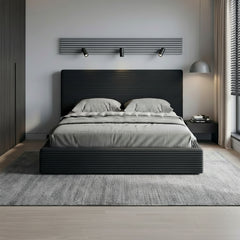
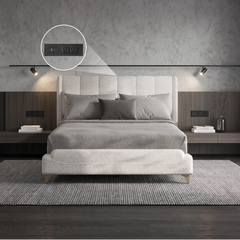
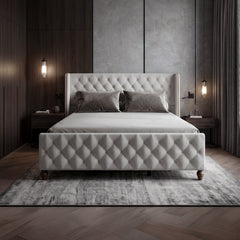



An adjustable bed can help some people with lower back pain, mainly by holding two positions that sleep and spine experts already recommend: lying on your back with the knees supported, and lying with the upper body slightly raised. It won't fix the cause of back pain, and no study has directly tested bed incline as a back pain treatment. What it does well is make the helpful positions easy to find, easy to repeat and easier to get out of in the morning.
Below is how to match the settings to how your back behaves, which angles to start with, how to get out of bed with less strain, and why the mattress on top matters as much as the base.
Are Adjustable Beds Good for Your Back?
They can be, with a clear caveat. The Sleep Foundation's guide on how to sleep with lower back pain says some people find that raising the upper portion of an adjustable bed is a comfortable way to sleep, and notes you can get the same effect with a wedge pillow. That's a fair summary of where the evidence sits. The benefit comes from the position, not from the bed itself.
Back pain is common enough that this matters. Cleveland Clinic notes that more than 20% of people have chronic lower back discomfort, and morning stiffness is one of the most familiar complaints.
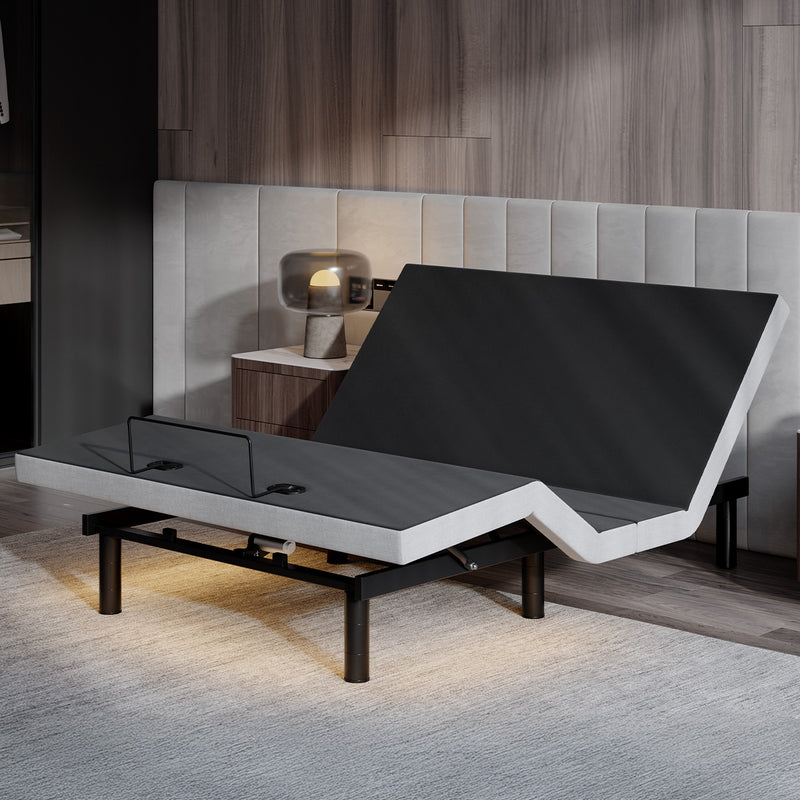
Where a base earns its place is consistency. A pillow under the knees slides out by 3 a.m. A wedge can't lift your knees and your head at the same time. A base holds both angles all night, lets you change them in small steps, and can help you sit up without a painful twist. Whether that's worth the money depends on whether those positions actually ease your pain, and you can test that with pillows before you buy anything.
Best Sleeping Positions for Lower Back Pain
The expert advice is consistent across sources, and it's the foundation for every adjustable bed setting below.
- Side-lying with bent knees. The Sleep Foundation ranks side sleeping with a slight bend in the knees and a pillow between them as the best position for lower back pain. Cleveland Clinic explains that the knee pillow stops the upper leg from pulling forward and twisting the torso.
- Back-lying with knee support. Sleeping on your back is the next best option, with a pillow under the knees or a slightly reclined torso to reduce strain. Cleveland Clinic sleep specialist Dr. Foldvary-Schaefer says people with back or neck pain can often get relief sleeping on their back with a pillow as a bolster under the knees.
- Stomach sleeping is the one to move away from. A 2025 review of six observational studies linked back sleeping with lower rates of low back pain and stomach sleeping with more, which the authors attribute to strain on the lumbar spine.
That review is small and observational, so it can't prove that switching positions will change your pain. Treat it as support for what clinicians already advise.
| Position | Common expert advice | Adjustable bed equivalent |
|---|---|---|
| Back, knees supported | Pillow under the knees | Small foot-section lift, head flat or slightly up |
| Back, torso reclined | Slightly elevated upper body (adjustable bed or wedge) | Low head lift plus a small knee lift |
| Side, knees bent | Pillow between the knees | Keep angles low; the knee pillow still matters |
| Stomach | Try to transition away | A base adds little; keep it flat |
If you want the mechanics behind why position affects the lower back, our article on why sleep position causes lower back pain goes deeper.
Adjustable Bed Settings for Lower Back Pain
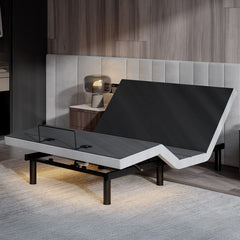
The single most useful setting is also the least dramatic: a small lift at the knees. Cleveland Clinic describes a small pillow under the knees as a little lift that works with the spine's natural curve and takes some pressure off the lower back. Lying flat with straight legs lets the lower back arch away from the mattress for many people. Bending the knees lets the hips relax and the lower back settle. The foot section of an adjustable base does exactly this, and it doesn't slide away.
From there, add head elevation only if it helps. Here are starting points, not prescriptions. Adjust a few degrees at a time and give each setting a few nights.
| Goal | Head section | Foot section | Notes |
|---|---|---|---|
| Back sleeping with knee support | Flat to slightly raised | Small lift | Closest to the pillow-under-knees advice |
| Reclined back sleeping | Low incline | Small lift | The foot lift also stops you sliding down |
| Side sleeping | 5–8° | 5–12° | SweetNight's side-sleeper starting point; keep a pillow between the knees |
| Reading in bed without slumping | 35–55° | 0–10° | SweetNight's reading tip; the small foot lift keeps the hips from sinking |
| Resting before sleep | Slightly raised | Raised | A zero gravity preset: knees bent, legs raised above heart level |
The zero gravity position deserves a mention because many back pain sufferers like it. The bent knees and slightly raised upper body resemble the reclined, knee-supported positions above. There's no trial evidence that it treats back pain, and some people find it too much for a full night, so it often works better as a wind-down setting than a sleeping one.
Once you find angles that work, save them. On the SenseSync adjustable bed base the M1 and M2 buttons store positions (press and hold to save, press to recall), which matters more than it sounds. (Disclosure: SweetNight makes the SenseSync base.) On a bad-pain night you don't want to fiddle with a remote to rebuild a setting. Our adjustable bed positions guide covers the settings for reading, TV and work.
Adjustable Bed for Spinal Stenosis, Sciatica and Other Pain Patterns
Back pain doesn't all respond to the same position, and paying attention to what makes yours better or worse is more useful than any generic angle chart. This isn't a way to diagnose yourself. It's a way to pick sensible settings and give your doctor or physical therapist better information.
If sitting or leaning forward eases the pain
This pattern is typical of lumbar spinal stenosis, a narrowing of the spaces in the spine. Mayo Clinic notes that stenosis symptoms often come on with standing or walking and get better when bending forward or sitting. For sciatica caused by stenosis, Cleveland Clinic's guide on how to sleep with sciatica suggests a slightly rounded, bent-forward sleep position and names an adjustable bed with the head elevated as one way to get there.
On a base, that means raising the head more than you would for general back pain and pairing it with a knee lift, so the lower back rounds gently instead of arching. Start low and increase in small steps. If the numbness or leg pain gets worse, lower it again.
If sitting or bending makes the pain worse
Some people have the opposite pattern: sitting hurts, and standing or lying flat feels better. We couldn't find a sourced sleep-position rule specific to this pattern, so we won't invent one. The cautious default is to keep the head section flat or nearly flat, use only a small knee lift if it feels good, and ask a physical therapist what they want you to avoid. For this group, a steep head angle can feel like sitting in a chair all night.
If you're not sure
Keep a simple log for a week: the setting, how you slept, how your back felt on waking. Patterns show up quickly, and the log is useful to a clinician. The whole point of an adjustable base here is that you can test positions without buying five different pillows.
How to Get Out of Bed With Back Pain
For many people with back pain, the worst moment of the night is the first minute of the morning. Sitting straight up from flat, like a sit-up, loads the lower back at the point when it's stiffest. The common alternative is the log roll: bend your knees, roll onto your side as one unit without twisting, let your lower legs drop over the edge of the bed, and push yourself up with your arms.
An adjustable base lets you start that move from a better position. SweetNight's product team suggests this order:
- Lower the foot section flat first, so your legs aren't trapped in a raised position.
- Raise the head slowly, from about 30 degrees up to about 50 degrees.
- Bend your knees, turn toward the edge, and swing your legs out while using your arms to push up.
- Sit on the edge for a moment before standing.
SenseSync also has a 60° Assisted Sitting position designed to make sitting up take less core effort, which some people prefer on high-pain mornings. Getting in works the same way in reverse: sit on the edge, lie down on your side, then roll onto your back and lower the head.
Best Mattress for an Adjustable Bed When You Have Back Pain
People searching for the "best adjustable mattress for back pain" usually mean one of two things: a mattress that works on an adjustable base, or an air bed with adjustable firmness. For a base, the mattress has two jobs. It has to support your spine when the bed is flat, and it has to bend cleanly at the hinges without bunching or pulling away from the deck.
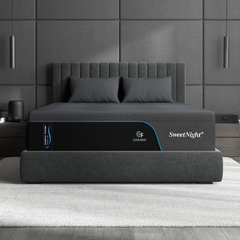
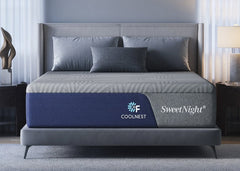
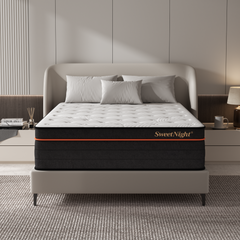
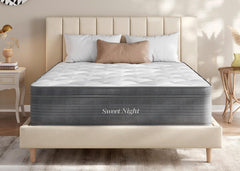
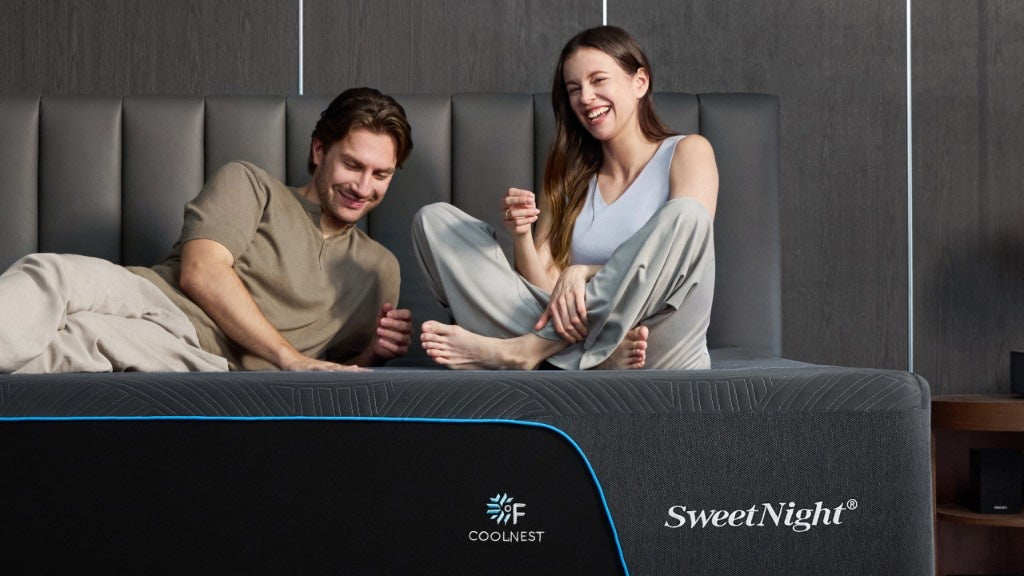
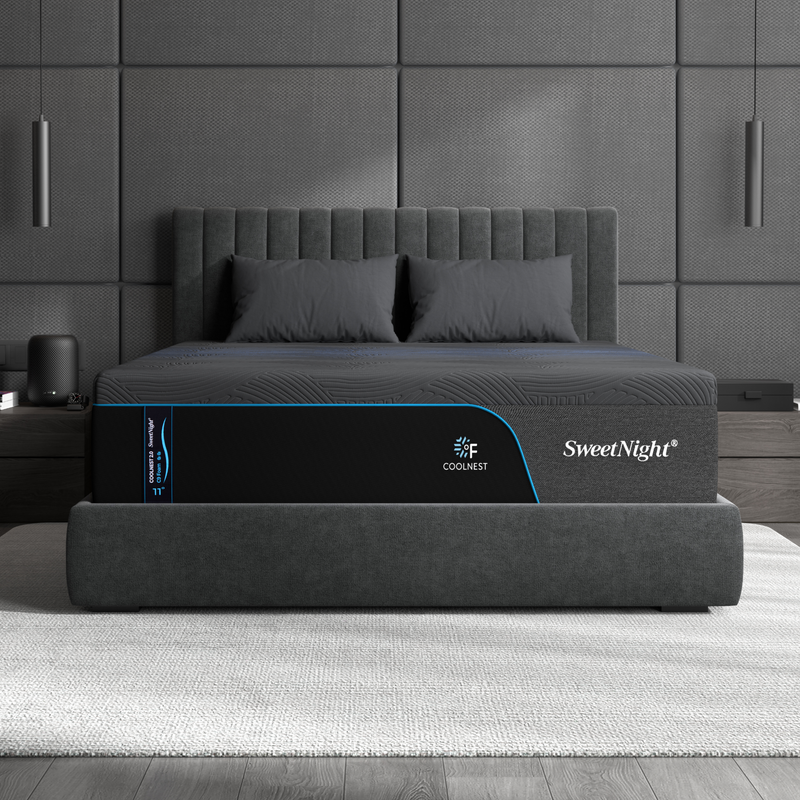
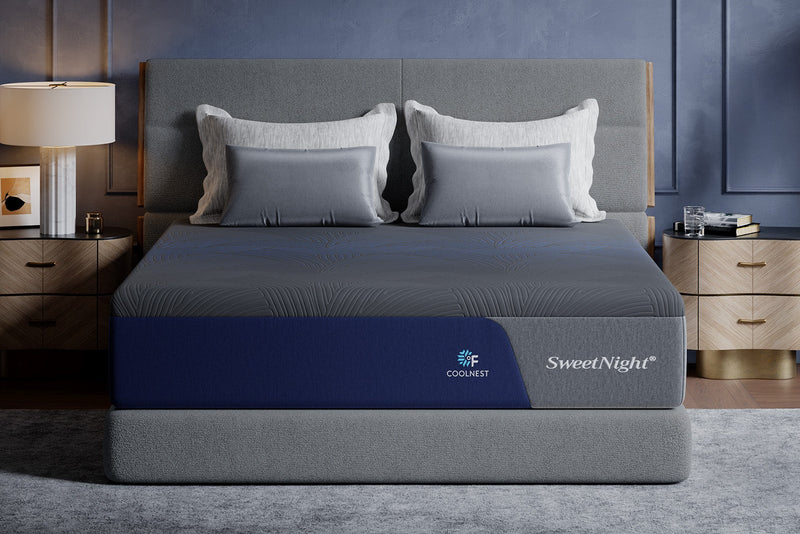
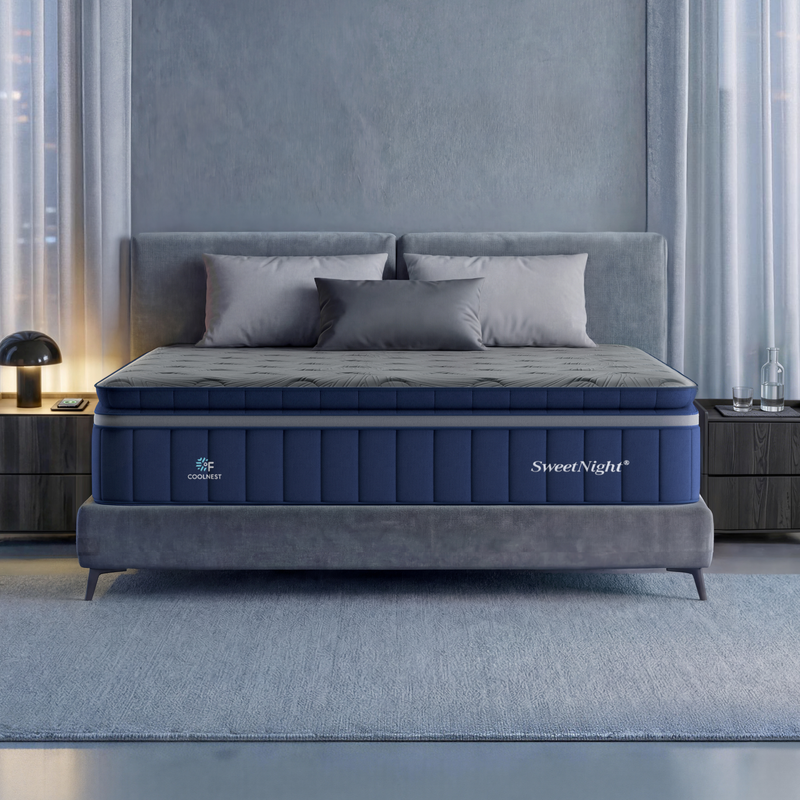
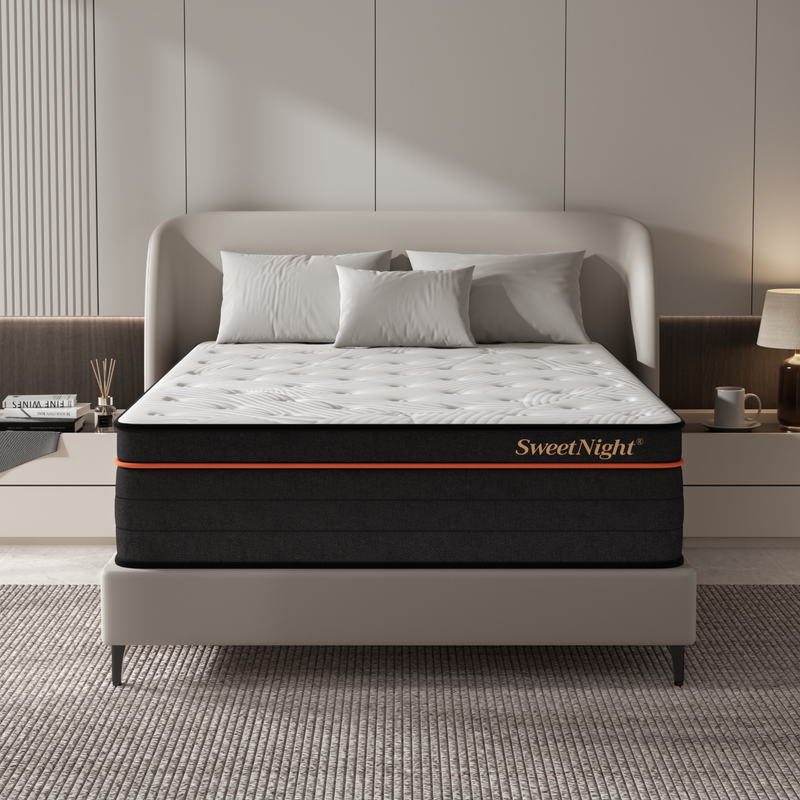
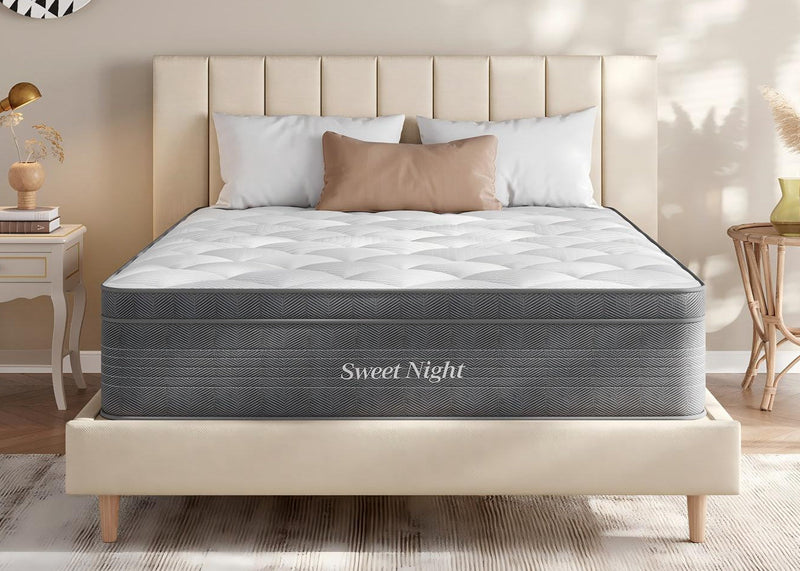
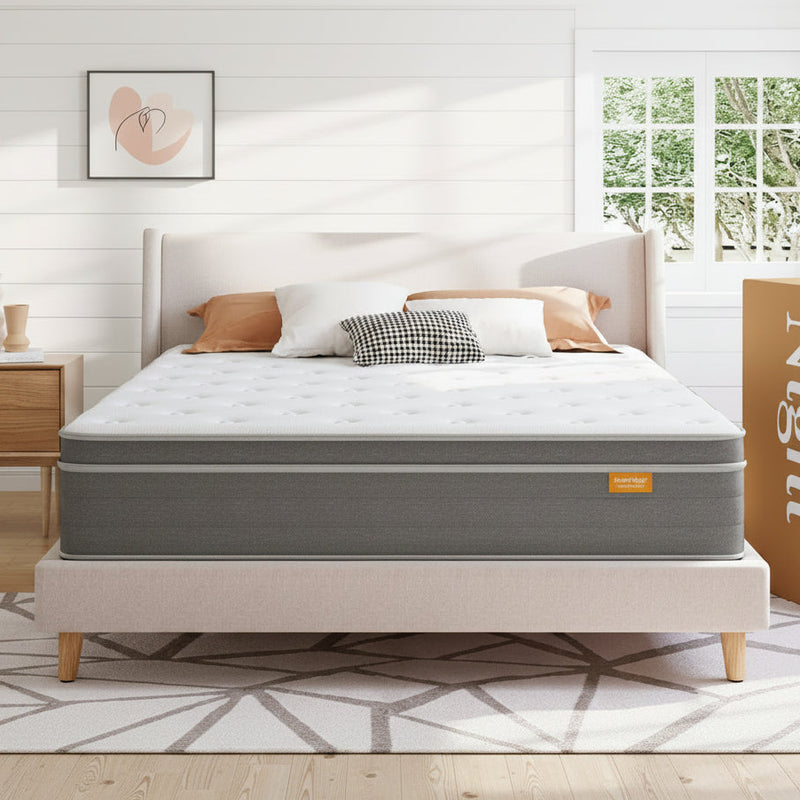
SweetNight specifies the SenseSync base only for all-foam memory foam mattresses 12 or 14 inches thick. All-foam bends evenly at the hinge points, while coil units resist the fold and can strain both the coils and the motors. Hybrid, innerspring and 16-inch mattresses aren't recommended on this base. If you're pairing a SweetNight mattress, the CoolNest memory foam mattress has 5-zone support and comes in 12- and 14-inch Full and Queen, and the CoolNest Pro memory foam mattress adds contour-cut 7-zone support in Queen. For Twin XL or Split King setups, SweetNight doesn't make a Twin XL mattress, so any all-foam Twin XL memory foam mattress at 12 or 14 inches fits the rule.
For more on what "support" actually means for the spine, see our guide to choosing a mattress for spine alignment. The wider compatibility question is covered in our best mattress for adjustable bed guide.
Best Adjustable Bed for Back Pain: Features That Actually Matter
We won't rank beds we haven't slept on. What we can do is point out which features matter specifically for back pain and which are marketing.
- Independent head and foot motors. The knee lift is the setting that matters most, so you need to raise the foot without raising the head.
- Memory presets. Being able to recall a working position in one press is worth more than a long list of named presets.
- An assisted-sitting position and smooth, slow movement, for the mornings described above.
- Stability. A base that wobbles when your partner turns over is irritating when you're sore. Look for a wide footprint, and consider a zero-clearance setup on the floor or a platform if the design allows it.
- Split sides if you share the bed. On a Queen or Full base both sleepers get the same angle. A Split King (two Twin XL bases) lets each person set their own.
Massage is the feature most often sold to back pain buyers. Bed massage means vibration motors in the head and foot sections, not kneading. Some people enjoy it as part of winding down, but we'd call it a nice extra rather than a reason to buy, and vibration isn't the same as hands-on therapy.
What an Adjustable Bed Won't Fix
An adjustable base changes your position. It doesn't change the reason your back hurts. Pain from a disc problem, arthritis, a muscle strain or stenosis still needs the right diagnosis and, often, exercise or physical therapy. A comfortable night can make that easier to stick with, which is a real benefit, but it isn't a treatment.
Skip the purchase, or at least wait, if:
- You haven't tried a knee pillow or wedge yet. If those positions don't help, a motorized version probably won't either.
- You sleep mostly on your stomach and plan to keep doing so.
- Your pain is new, severe or getting worse. See a clinician first.
Get medical attention promptly if back pain follows a fall or injury, keeps waking you, or comes with leg weakness, numbness, fever or unexplained weight loss. Numbness in the groin or loss of bladder or bowel control needs emergency care.
FAQ
Are adjustable beds good for your back?
They can be for some people. Sleep Foundation and Cleveland Clinic both say a slightly raised upper body or a pillow under the knees can ease lower back strain, and an adjustable base holds those positions all night. No study has directly tested bed incline for back pain, so treat it as a comfort tool rather than a treatment.
What is the best position on an adjustable bed for lower back pain?
For back sleepers, a small knee lift with the head flat or slightly raised is the usual starting point, because it copies the pillow-under-the-knees advice from Cleveland Clinic. If your pain eases when you sit or lean forward, a bit more head elevation may feel better. Side sleepers should keep angles low and use a pillow between the knees.
Is zero gravity good for back pain?
Many people with lower back pain find it comfortable because the knees are bent and the upper body is slightly raised, which resembles the reclined, knee-supported positions that sleep experts suggest. There is no trial evidence that zero gravity treats back pain. If it eases your pain, use it; if it makes it worse, go back to flatter settings.
How do you get out of bed with back pain?
Avoid sitting straight up from flat. Bend your knees, roll onto your side as one unit, let your legs drop over the edge, and push up with your arms. On an adjustable bed, lower the foot section flat first, then raise the head slowly to around 30 to 50 degrees before you swing your legs out.
When should I see a doctor about back pain at night?
See a doctor if the pain keeps waking you, is getting worse, follows a fall or injury, or comes with numbness, leg weakness, fever or unexplained weight loss. Loss of bladder or bowel control or numbness in the groin needs emergency care. A new bed should not delay an evaluation.