
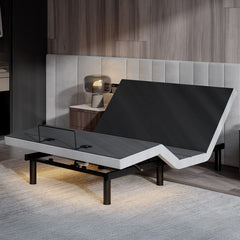




The best adjustable bed position depends on the job. For reading in bed, raise the head to roughly 35 to 55 degrees and lift the foot a touch. For TV, a 30-degree lounge suits most rooms. A laptop needs you more upright, around 45 to 60 degrees, with your knees up. For sleep, most people are happiest flat or with a small lift of about 15 degrees at the head. Below are the angles for each activity, why they work, and one honest caveat about how much time you spend awake in bed.
Adjustable Bed Positions at a Glance
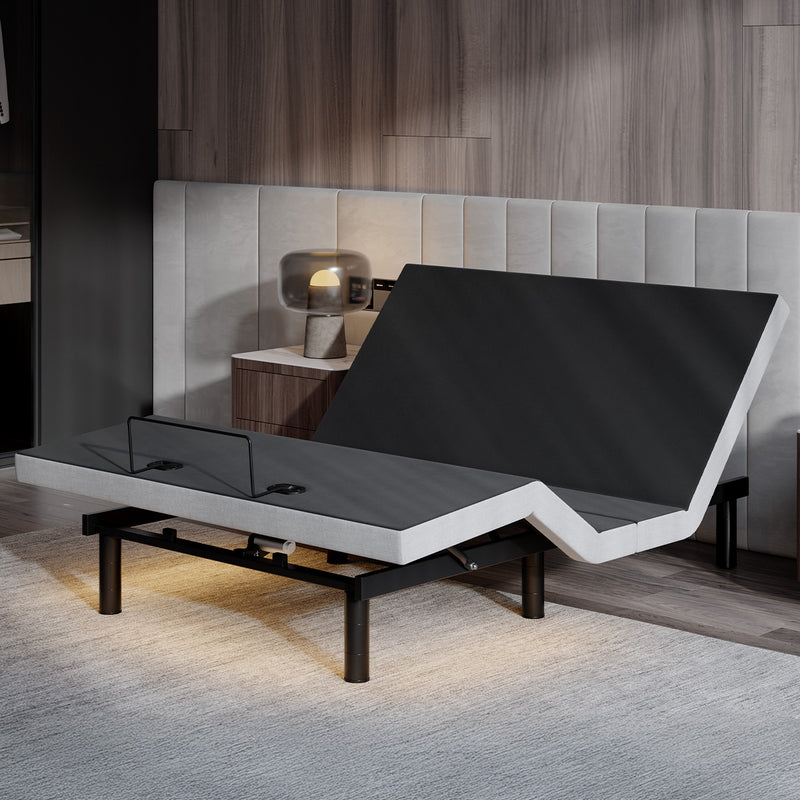
The angles in this table come from SweetNight's position guide for its SenseSync base (disclosure: SweetNight makes the SenseSync base). They work as starting points on most dual-motor beds. Many remotes don't show degrees, so calibrate by feel: 15° is a noticeable tilt, 45° is an armchair-like recline, and 60° has you close to sitting up.
| Activity | Head | Foot | Why it works |
|---|---|---|---|
| Scrolling, light reading | about 15° | flat | Supports head and neck without pulling you out of a lying posture |
| Reading a book | 35–55° | 0–10° | The small foot lift stops your hips sinking and sliding |
| TV, music, podcasts | about 30° | to taste | Reclined with the whole back supported |
| Laptop on your lap | 45–60° | 15–25° | Raised knees create a stable lap and keep you from slumping |
| Breakfast, conversation | about 45° | to taste | Takes you from lying to a comfortable seat |
| Sitting up, in-bed dining, recovery | about 60° | to taste | Less core effort to sit upright |
| Heavy or swollen legs | flat | 20–35° | Legs higher than the rest of the body |
| Winding down, naps | slight | legs above heart | Zero gravity: weight spread across shoulders, back, hips and legs |
| Side sleeping | 5–8° | 5–12° | A soft bend that doesn't roll you onto your back |
Two rows need more context than a table cell allows. The zero gravity row is its own topic, with NASA angles and a lot of overblown claims attached; our zero gravity position guide separates the two. Snoring and reflux settings are covered further down.
Best Position for Reading in Bed
Most people who read in bed do it badly on a flat bed: two pillows jammed behind the shoulders, the lower back unsupported, the chin folded down. An adjustable base fixes the structure, but only if you lie in the right spot.
Put your hips at the hinge
Slide down until your hips sit roughly where the head section bends. If you lie too low, the head section lifts your shoulders while your lower back hangs in the gap. If you lie too high, the bend lands under your ribs. Getting this right matters more than the exact angle.
Raise the foot a little
SweetNight's product team suggests a head angle of 35 to 55° with the foot at 0 to 10°. That small foot lift sounds cosmetic. It isn't. With the head raised and the foot flat, gravity pulls you toward the foot of the bed and your hips sink into the fold. A few degrees at the knees gives your weight somewhere to stop.
Hold the book higher than you think
Resting a book or tablet on your stomach pulls your chin toward your chest, which is the neck ache you feel after a long chapter. Prop your elbows on pillows at your sides and hold the page closer to chest height. At 45° and above, a small pillow behind the lower back fills the gap that some mattresses leave when they fold.
Paper vs. screen
What you read on matters as much as how you sit. Sleep Foundation's advice on reading before bed is that printed books may be better for sleep than e-books, because every e-reader emits at least some blue light. In a 2015 PNAS study of light-emitting e-readers, people reading on a lit screen took longer to fall asleep, secreted less melatonin and were less alert the next morning than when they read a printed book. It was a small lab study with hours of evening reading, and how much that translates to twenty minutes on a phone is debated. Still, if you read to get sleepy, paper is the safer bet.
Best Position to Watch TV in Bed
Start at about 30° with the knees slightly raised. That is SweetNight's "Relaxed Lounge" position, and it holds the whole back rather than propping you on a pillow ledge.
The right angle also depends on where the TV sits. The flatter you lie, the higher the screen needs to be for your eyes to meet it comfortably. The more upright you sit, the lower it can go. For reference, NASA's Human Integration Design Handbook puts the normal line of sight about 10° below horizontal in Earth gravity. Eyes like to look slightly down. So a TV mounted high on the wall suits a deeper recline, while a TV on a dresser suits a more upright setting. If you find yourself tipping your head back to see the screen, raise the head section. If your chin drifts down, lower it.
One pattern to watch: dozing off in the TV position and staying there. A TV angle keeps you fairly upright, and once your muscles relax in sleep your head falls forward or to one side. If that is you, save a sleep position to a memory button and switch to it when the TV goes off.
Working From Bed: Laptop Angles and Their Limits
For a laptop, go more upright: head at 45 to 60° and the foot raised 15 to 25°. The raised knees turn your thighs into a stable, slightly angled desk, and the steeper back section keeps you from sliding into a slump over the keyboard. A lap desk that lifts the screen will do more for your neck than any angle change, because a laptop flat on your thighs forces you to look sharply down.
Now the part most bed brands skip. Sleep Foundation's guidance on technology in the bedroom is blunt: "Don't work in bed." The reasoning is that a bed reserved for sleep and sex trains your brain to associate lying down there with sleep. Answering email at 11 p.m. with your knees up teaches the opposite association. A base makes working from bed more comfortable, which also makes it easier to do too often. Use the 45° position for a sick day, a slow Sunday or a quick check of tomorrow's calendar. Don't make it your office.
Using Your Bed for More Than Sleep: The Screen Caveat
The American Academy of Sleep Medicine's healthy sleep habits include three lines worth knowing before you plan your evenings around a reclining bed: "Use your bed only for sleep and sex." "Turn off electronic devices at least 30 minutes before bedtime." And if you haven't fallen asleep after 20 minutes, get out of bed and do something quiet and dim, especially not on electronics. Sleep Foundation goes further and suggests an hour or more away from screens.
AASM notes that sleep hygiene is part of cognitive behavioral therapy for insomnia, the most effective long-term treatment for chronic insomnia. How strictly you apply it depends on how you sleep. A reasonable way to split it:
- If you have trouble falling or staying asleep, follow the AASM advice strictly. Read and watch TV in a chair, and treat the bed's reading and TV positions as something for sick days and mornings.
- If you fall asleep easily, reading a printed book in bed is a low-risk habit. Keep screens to earlier in the evening and put the phone down before you lower the bed.
- Either way, make the switch from awake to asleep physical. Read or watch in an upright position, then press your saved sleep position or Flat when you are done. The change of posture gives the evening a clear end point, which a pillow pile never did.
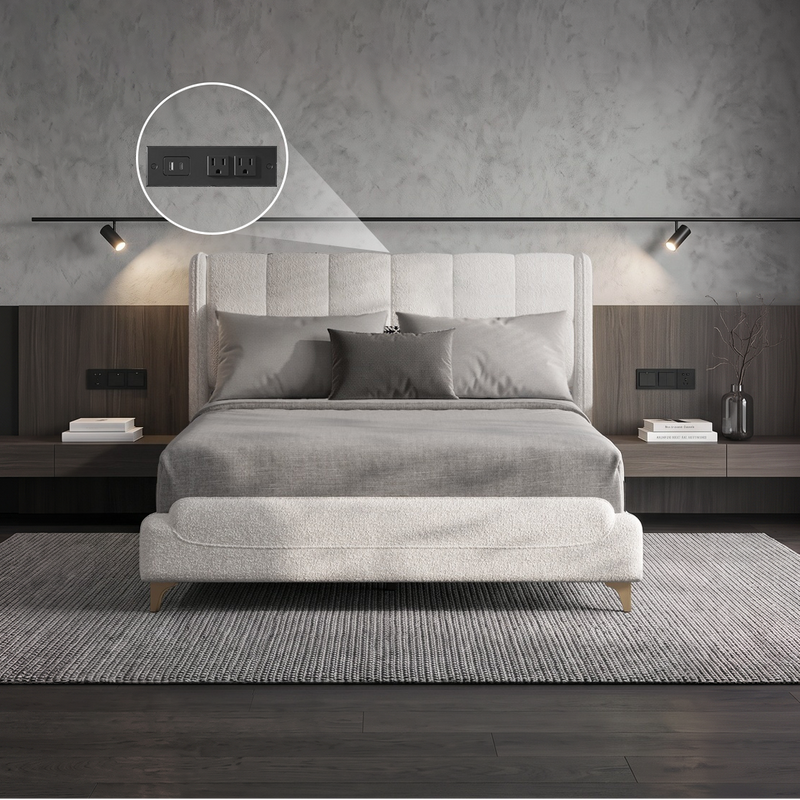
A small irony worth mentioning: the SenseSync base has USB-A and USB-C charging ports on its left side, which makes it very easy to keep a phone within reach all night. Convenient for an alarm, and not a great idea for anyone who can't resist one more scroll. Charge it, then set it face down.
Best Position for Adjustable Bed Sleep
For most people with no specific complaint, flat or nearly flat is still the best sleeping position. A reclining bed earns its keep for sleep when you have a reason to change the angle:
- Snoring: a gentle head lift of about 15° is SweetNight's anti-snore starting point. Loud snoring with gasps or pauses in breathing needs a sleep evaluation, not a bed setting; our guide to an adjustable bed for snoring and sleep apnea explains what incline studies found.
- Nighttime reflux: a steady torso incline, not a pillow stack. Around 15° is a starting point and many people need 15 to 20° or more. See our best sleeping position for acid reflux guide for the evidence and the left-side trick.
- Side sleeping: head at 5 to 8° and foot at 5 to 12°. Enough to ease pressure, not enough to roll you back.
- Tired legs: a leg lift before bed rather than all night, head flat and foot at 20 to 35°.
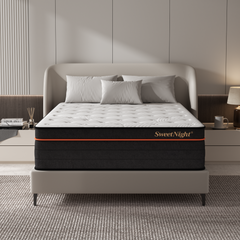
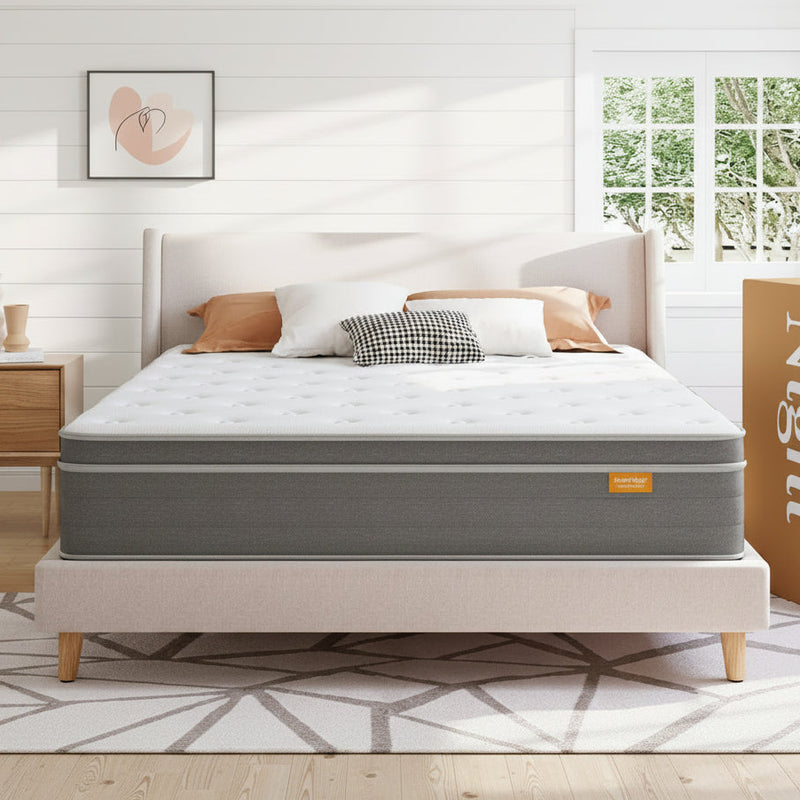
Keep sleep angles modest. The steeper the head section, the harder it is to stay in position once you relax, and the more you slide toward the foot of the bed. The mattress matters here too: the base bends it at the hinges every time it moves, which is why SweetNight pairs SenseSync only with all-foam memory foam mattresses 12 or 14 inches thick.
Sitting Up and Getting Out of Bed: The 60° Position
The 60° Assisted Sitting position is the least glamorous and, for some households, the most used. It takes most of the core effort out of sitting up, which matters for older adults, anyone recovering from surgery or illness, and later pregnancy (our guide to the best sleeping positions during pregnancy covers the sleep side of that). It is also the position for eating in bed without spilling.
Getting out of bed has its own sequence. SweetNight suggests lowering the foot to flat first, then raising the head slowly from about 30° to 50°, then swinging your legs out. That lines up with the CDC's advice for people who get dizzy on standing: "First sit up, sit on the side of the bed, then stand up." A raised head section makes the first step easier; the CDC doesn't mention adjustable beds, but the staged approach is the same.
Saving Positions and Sharing the Bed
Most people end up using two positions a night: one for winding down and one for sleep. Presets cover the common cases, and memory buttons cover yours. On the SenseSync remote you set the head and foot where you want them, press and hold M1 or M2 to save, and press once to recall. A setup that works for many readers: M1 for reading (head around 45°, foot a few degrees up), M2 for sleep (flat or a small anti-snore lift). Two buttons replace a lot of fiddling in the dark. The full list of presets is on the SenseSync adjustable bed frame page.
Couples are where positions get political. On a single Queen or Full base, both sides move together, so one person's reading angle is the other person's sleeping angle. There are three workable fixes:
- Agree on a shared routine: read together at 30 to 45°, then go flat together.
- Let the early sleeper choose the sleep position, and have the reader use a clip light rather than the overhead one.
- Split the bed. A split king adjustable bed is two Twin XL bases, each with its own remote, that can also be paired to move as one.
If different bedtimes and angles have already pushed one of you to the couch, you're far from alone; our piece on sleep divorce and couples sleeping apart covers the options couples try before separate rooms.
FAQ
What is the best position for an adjustable bed?
It depends on what you are doing. For sleep, most people do best flat or with a small lift, around 15 degrees at the head if they snore. For reading, raise the head to 35 to 55 degrees with the foot slightly up. For TV, a 30-degree lounge works for most rooms. Save your two favorites to memory buttons so you are not hunting for them every night.
What angle is best for reading in bed?
A head angle of about 35 to 55 degrees with the foot raised 0 to 10 degrees is a good starting point. The small foot lift stops your hips sinking and sliding toward the foot of the bed. Lie with your hips near the hinge of the head section so the bed bends at your waist, not your shoulders, and hold the book at chest height rather than on your stomach.
Is it bad to watch TV or use your phone in bed?
For people with insomnia, sleep experts advise against it. The American Academy of Sleep Medicine says to use your bed only for sleep and sex and to turn off electronic devices at least 30 minutes before bedtime. If you fall asleep easily, occasional reading or TV in bed is a lower-stakes habit, but a printed book is kinder to sleep than a bright screen.
Can you sleep in the TV position on an adjustable bed?
You can, but it is rarely the best sleeping shape. A TV angle holds you fairly upright, which is hard to sustain once your muscles relax in sleep, and your chin can drop toward your chest. If you often doze off watching, save a gentler sleep position to a memory button and switch to it, or press Flat, when you turn the TV off.
How do you get out of an adjustable bed safely?
Lower the foot section to flat first, then raise the head slowly from about 30 to 50 degrees so you are sitting up, then swing your legs over the side. Sit on the edge for a moment before you stand. The CDC gives the same staged advice to people who get dizzy when standing: sit up, sit on the side of the bed, then stand.