






















You’ve tried the stretches. You’ve foam-rolled, you’ve iced, maybe you’ve even bought a new mattress. And your lower back still aches most mornings. Before you spend another dollar, it’s worth looking at something you do for a third of your life without thinking about it: the position you sleep in.
Sleep posture gets far less attention than daytime posture, which is strange when you consider that you hold a sleep position for seven or eight hours straight — longer than you hold any single position at your desk. If that position pulls your spine out of its natural line, you’re essentially giving your back a slow, gentle injury every single night. The good news is that this is one of the most fixable causes of lower back pain there is, because it costs nothing to change and you start feeling the difference within a week or two.
Here’s how your sleeping position affects your lower back, which positions help or hurt, and how to work with your mattress instead of against it.
How Sleep Position Affects Lower Back Pain
Your spine has natural curves — a slight inward curve at the lower back, a gentle outward curve at the upper back. Those curves are load-bearing architecture, and your body is happiest when they’re maintained. The moment a sleeping position forces your spine to flatten, twist or sag away from those curves, the muscles and ligaments around it have to work to compensate. Do that for eight hours and they wake up strained and inflamed.
The reason position matters so much overnight is simple: you’re not moving. During the day, if you slump, you shift a minute later. Asleep, you can hold a spine-torturing angle for hours without your brain telling you to correct it. That’s why a position that feels fine when you’re falling asleep can still leave you stiff and sore by morning.
It helps to appreciate just how much pressure runs through your lower back even at rest. The discs in your lumbar spine are under load all day, and while lying down relieves most of that, a poor position can keep a surprising amount of it concentrated in one place. Hold that for the length of a full sleep cycle — roughly ninety minutes — and you’ve pressed on the same structures four or five times over before morning. Nothing dramatic happens on any single night. The damage is cumulative, which is exactly why position-related back pain sneaks up on people slowly and then feels like it appeared out of nowhere.
There’s a second layer, too. Your sleep position determines where your body weight concentrates. Lie in a way that dumps your weight onto your lumbar spine, and pressure builds exactly where you don’t want it. Lie in a way that spreads your weight evenly, and no single structure takes the brunt. Most morning back pain that isn’t caused by injury comes down to this: eight hours of uneven load on a spine that wasn’t held in a neutral line. Fix the line, and the load takes care of itself.

Is Sleeping on Your Stomach Bad for Your Back?
If you sleep on your stomach and wake up with a sore lower back, the two are almost certainly related. Stomach sleeping is widely considered the worst position for back pain, and the reasons are mechanical, not opinion.
When you lie face-down, your midsection sinks into the mattress more than the rest of you, which pushes your lower back into an exaggerated arch. That over-extends the lumbar spine and compresses the small joints at the back of it. At the same time, you have to turn your head to one side to breathe, which twists your neck and upper spine for the entire night. It’s a lot of strain to ask your back to absorb.

That said, if you’ve slept on your stomach your whole life, you’re not going to flip to your back overnight, and forcing it often just leaves you awake and frustrated. A more realistic approach: slide a thin, flat pillow under your hips and lower belly. That small lift takes the extreme arch out of your lower back and immediately reduces the strain. Use a very thin pillow (or none) under your head to ease the neck twist. From there, if you want to transition to side sleeping, hugging a body pillow gives your arms and legs something to wrap around and makes the new position feel less exposed. Small steps beat willpower here.
The Best Sleeping Position for Lower Back Pain
If you asked ten spine specialists for the best sleeping position for lower back pain, most would point you toward one of two answers: on your side with a pillow between your knees, or on your back with a pillow under your knees. Both keep the spine close to its neutral, standing-tall alignment.
It’s worth naming the specific conditions where these positions matter most, because the “best” position shifts a little depending on what’s going on. People with a herniated or bulging disc often feel best on their side with knees drawn up, which opens the disc spaces. Those with spinal stenosis frequently prefer the same curled side position for the same reason. People with general muscular or arthritic lower-back pain tend to do well flat on their back with the knees supported. And during pregnancy, side sleeping — especially on the left — is almost always recommended, both for the back and for circulation. If you have a diagnosed condition, that’s worth factoring in rather than chasing a one-size-fits-all rule.
Side sleeping tends to win for the widest range of people, especially anyone with disc-related pain or hip discomfort. Pulling your knees up slightly toward a loose fetal position opens the space between vertebrae and takes tension off the lower back. It’s also the friendliest position for pregnancy and for people who snore.
Back sleeping is the other strong choice, because it distributes your weight across the widest surface and keeps your head, neck and spine in one line. The catch is that flat back-sleeping can leave a gap under your lumbar curve, which is exactly why the pillow under the knees matters — it tilts the pelvis just enough to let your lower back settle onto the mattress instead of hovering above it.

Neither position works on its own if your mattress isn’t cooperating, which is the part most advice skips. You can lie in a textbook-perfect side position, but if your mattress is too firm to let your shoulder and hip sink in, your spine still bows upward and you still wake up sore. Position and surface are a package deal.
How Side Sleepers Can Protect the Lower Back
Side sleeping is the most popular position in the world, and done right it’s great for the back. Done wrong, it quietly creates the very pain people are trying to escape.
The biggest mistake side sleepers make is letting the top leg slide forward and down onto the mattress. When that happens, it rotates your pelvis and twists your lower spine into a corkscrew for hours. The fix is almost embarrassingly simple: a firm pillow between your knees. It keeps your top leg stacked over your bottom leg, your hips level, and your spine straight. Many people report their morning back pain dropping noticeably within a few nights of adding this one pillow.
There’s also the question of what to do with your bottom arm, which side sleepers rarely think about until it goes numb. Tucking it straight under your body or under the pillow can compress the shoulder and cut off circulation, leaving you with pins and needles that wake you and, over time, a cranky shoulder joint. A better setup is to bring that arm out in front of you, resting on the mattress or lightly hugging your head pillow, so your shoulder isn’t pinned under your full body weight. It keeps the arm comfortable and lets your top shoulder roll slightly forward, which actually helps your spine stay in a more natural line. These are the small, unglamorous adjustments that separate side sleeping that heals your back from side sleeping that trades one ache for another.

The second issue is shoulder and hip pressure. On your side, your shoulder and hip are the two points carrying most of your body weight against the mattress. If the surface is too firm, those points get jammed and your waist has no support, so your spine sags in the middle. You want a mattress with enough give at the shoulders and hips to let them nestle in, paired with enough support at the waist to keep everything level. This is precisely what zoned mattresses are built for — softer where your shoulders and hips press, firmer through the middle to stop the sag. Get that balance and side sleeping becomes the back-friendly position it’s meant to be.
Back Sleeping and Spinal Alignment: What to Know
Back sleeping has a great reputation for spinal alignment, and deservedly so — but it’s not automatically safe just because you’re facing the ceiling. The details decide whether it helps or hurts.
The number one adjustment is a pillow under your knees. Lying dead flat pulls your pelvis into a slight forward tilt and flattens the natural curve of your lower back against the mattress, which some people find aggravating. A pillow (or a small rolled towel) under the knees relaxes the hip flexors, lets the pelvis settle into neutral, and supports the lumbar curve so it isn’t left straining.
Back sleepers also benefit from paying attention to their arms. Throwing both arms overhead — the “starfish” — can pull on the shoulders and upper back and aggravate existing shoulder issues over a long night. Resting your arms down at your sides or on your stomach keeps the shoulders in a more neutral, relaxed position. Small details like this are the difference between back sleeping that heals and back sleeping that quietly creates a new complaint somewhere up the chain.
Your head pillow matters more than you’d think on your back. Too tall a pillow shoves your chin toward your chest and throws off the whole line of your spine from the neck down. On your back you want a thinner pillow that keeps your head level, not propped.

The mattress needs to hold your hips from sinking. If a soft, worn bed lets your pelvis drop, your lower back arches downward all night and you wake up feeling like you’ve been doing backbends in your sleep. A medium-firm, supportive surface keeps your hips level with your ribcage and shoulders, which is the whole point. Back sleeping done properly on the right mattress is about as close to a neutral, weightless spine as you’ll get.
Why a Pillow Between Your Knees Reduces Back Pain
It sounds too small to matter, but a pillow between your knees is one of the most effective, lowest-effort fixes for position-related back pain, so it’s worth understanding why it works.
Your legs are heavy. When you’re on your side and your top leg collapses forward onto the bed, all that weight drags your pelvis into a twist. Your lower spine, connected to that pelvis, twists with it — and holds the twist all night. A pillow fills the gap between your knees and thighs so your top leg stays parallel to the bottom one. Your pelvis stays square, your spine stays straight, and the rotational strain simply disappears.

For back sleepers, the same principle applies with the pillow under the knees instead of between them: it keeps the pelvis from tilting and the lumbar spine from flattening. Either way, you’re using a cheap pillow to do the alignment work your muscles would otherwise fight to do on their own all night.
A few practical notes: a firmer pillow holds its shape better than a squashy one, so it keeps working through the night instead of flattening by 2 a.m. A dedicated knee pillow or a small firm cushion works well. And give it more than one night — it can feel slightly odd at first, then quickly becomes the thing you can’t sleep without.
How Your Mattress and Sleep Position Work Together
Here’s the truth that gets lost in most “best sleep position” articles: your position and your mattress can’t be judged separately. They either cooperate or they sabotage each other.
Picture a side sleeper on a mattress that’s too firm. They’re doing everything right — knees bent, pillow between the legs — but the surface won’t let their shoulder and hip sink in, so their spine bends upward at the waist. Textbook position, painful result. Now put a back sleeper on a mattress that’s too soft. Their hips sink into a valley, their lumbar curve collapses, and they wake up aching no matter how neutral their intended posture was.
The surface has to match the position. Side sleepers generally need a bit more give so their shoulders and hips can settle in while the waist stays supported. Back and stomach sleepers usually do better with a firmer feel that stops the hips from sinking. Combination sleepers — most of us — need a surface responsive enough to support all of those positions as they roll through them.

Adjustable bases are worth a mention here, because they let you change the geometry of your sleep position without changing your mattress. Raising the head slightly can ease pressure for people with certain lower-back or reflux issues, and lifting the knees on an adjustable frame mimics that pillow-under-the-knees position automatically, holding your pelvis in neutral all night. They’re not a cure and they’re not necessary for most people, but if you’ve dialed in your position and firmness and still want finer control over how your spine is supported, the ability to tilt the surface is a genuinely useful lever. Just make sure your mattress is flexible enough to work on an adjustable frame, which most modern foam and hybrid beds are.
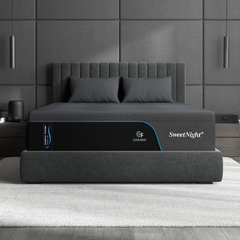
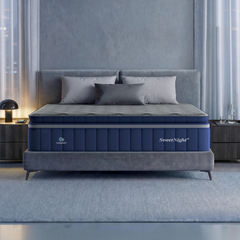
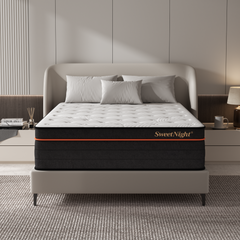
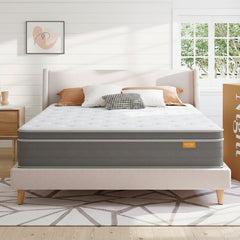
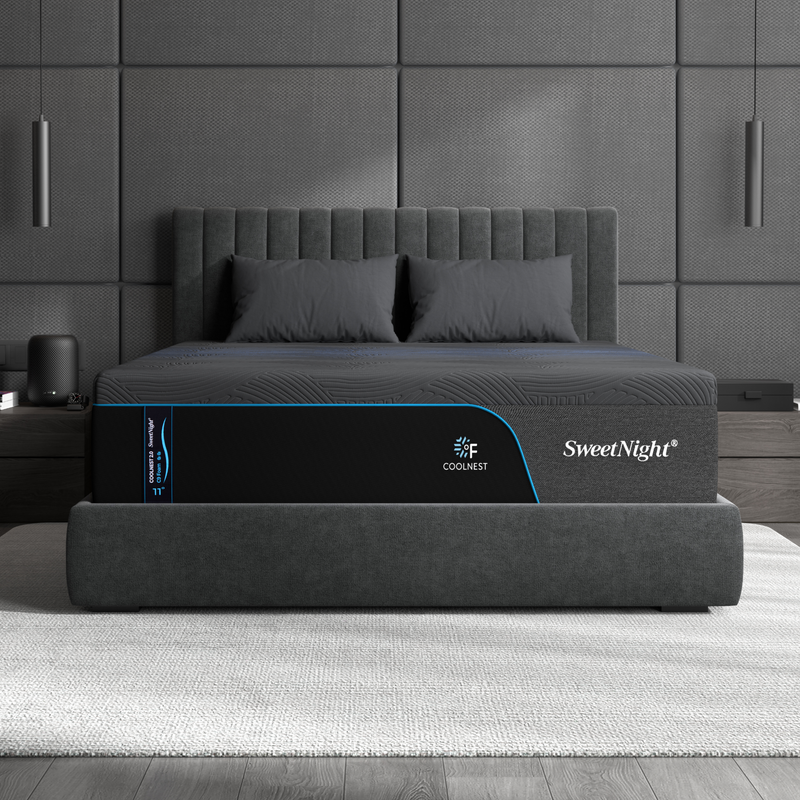
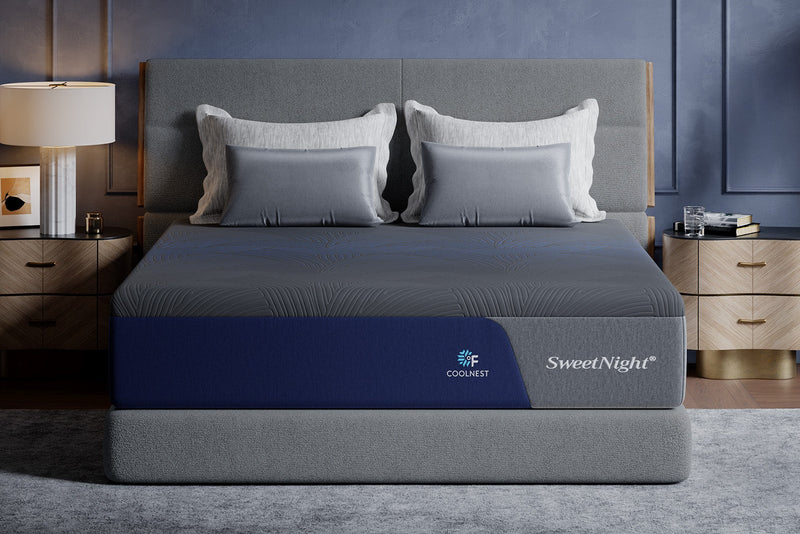
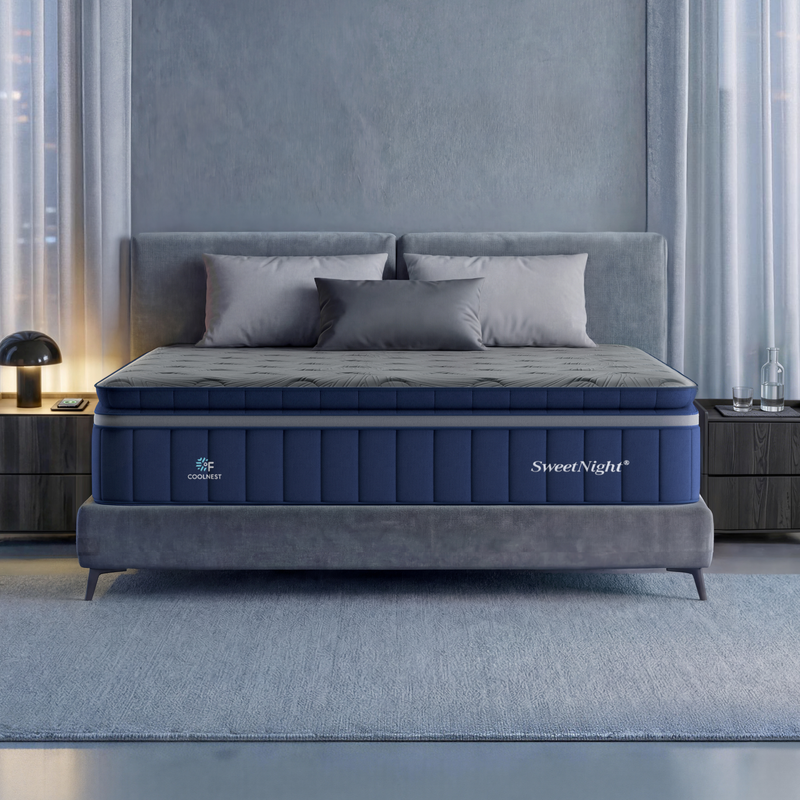
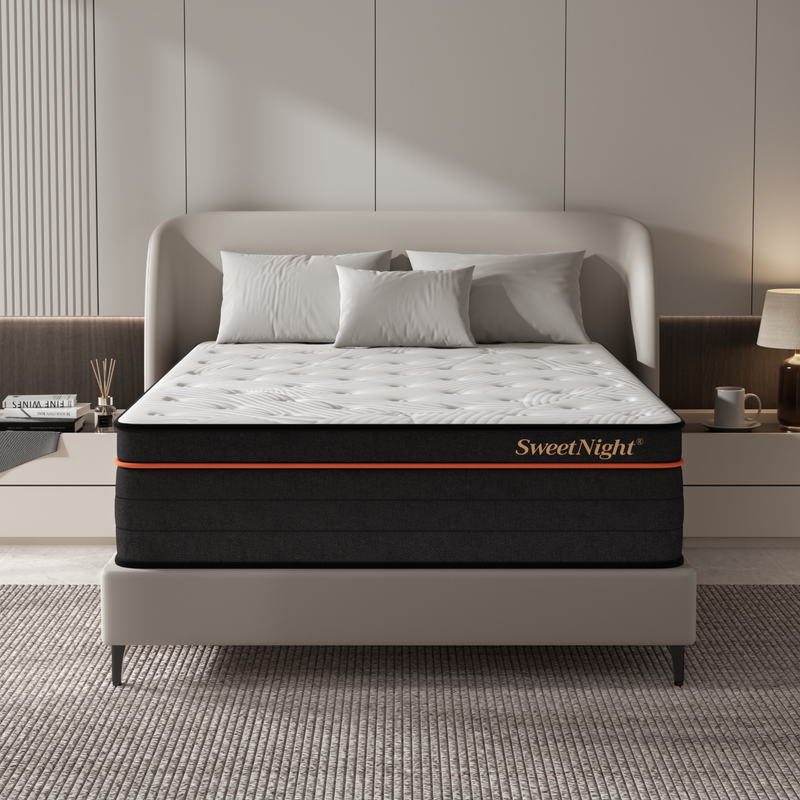
This is where a multi-zone design pulls ahead of a single, uniform firmness. A mattress like the 7-zone CoolNest® Ultra is engineered to be softer where your shoulders and hips land and firmer under the lower back, so it keeps your spine aligned across every position rather than favoring just one. If you share a bed with a partner who sleeps differently than you do, that kind of adaptability is the difference between one of you being comfortable and both of you being comfortable.
The Best Mattress Firmness for Back Pain Relief
When people search for the best mattress firmness for back pain, they’re usually hoping for a single word — firm, or soft. The honest answer is medium-firm for most people, with adjustments for your body and position.
The research keeps landing in the same place: medium-firm mattresses relieve lower back pain more consistently than very firm ones. A too-firm surface leaves your lumbar curve unsupported and hammers your pressure points; a too-soft one lets you sink into misalignment. Medium-firm gives your body enough contour to fill the gaps and enough support to hold the line.
From that baseline, adjust:
- Heavier sleepers tend to need it firmer, since more weight sinks further into any given surface.
- Lighter sleepers often want it a touch softer, or the mattress simply won’t contour enough to support their curves.
- Side sleepers usually prefer slightly softer than back sleepers, to let the shoulder and hip sink.
- Back and stomach sleepers generally want it firmer to keep the hips level.

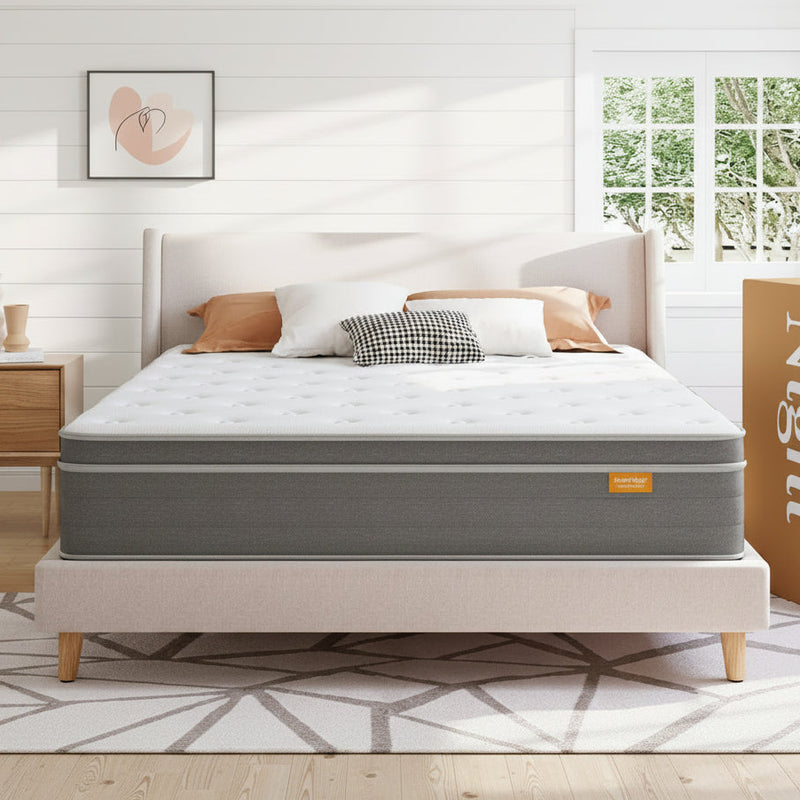
If you and a partner disagree on firmness — the classic couple’s standoff — a medium-firm zoned mattress is often the peace treaty, because it adapts to two different bodies better than a bed committed to a single hardness. Browse options built specifically around spinal support in SweetNight’s back-pain collection if this is where your search has landed.
How to Retrain Your Sleep Position to Ease Back Pain
Knowing the best position is one thing; actually staying in it while you’re unconscious is another. You can’t consciously control how you sleep, but you can nudge your body toward better habits with a few tricks.
- Use props as guardrails. A body pillow to hug encourages side sleeping and stops you rolling onto your stomach. A pillow wall behind your back discourages rolling flat if that’s your problem position.
- Set up the good position perfectly before you fall asleep. Knees bent, pillow between or under the knees, head pillow at the right height. Starting well means more of the night is spent well.
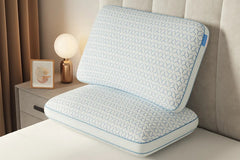
- Fix the head pillow. The wrong pillow height sabotages even a perfect body position. Side sleepers need a taller pillow to fill the shoulder gap; back sleepers need a thinner one.
- Give it two to three weeks. New sleep positions feel strange at first. Push through the awkward phase and your body adapts.
- Get the surface right. No amount of retraining beats a mattress working against you. If your bed is old, sagging, or the wrong firmness, sort that out in parallel.
It also helps to keep a simple two-week log — just a note each morning on how your back feels from one to ten and what position you woke up in. Patterns jump out fast. Maybe you’re fine on the nights you start on your side and sore on the nights you drift onto your stomach. Maybe the knee pillow nights are consistently better. That kind of cheap self-experiment tells you more about your specific back than any general article can, because it’s data from the one body that matters. Once you can see the pattern, you know exactly which habit to reinforce.

Position changes are free, they’re fast, and they target one of the most common hidden causes of morning back pain. Pair a back-friendly position with a supportive, well-zoned mattress and a properly chosen pillow, and you’ve addressed the three things that decide how your spine spends the night. For a lot of people, that combination is the difference between waking up braced for pain and waking up genuinely rested. Start with the pillow between your knees tonight — it’s the cheapest experiment in this whole article, and it’s often the one that surprises people most. Then, if your bed is old or fighting you, upgrade the surface so your good habits actually have something to work with. A body that sleeps in alignment on a mattress that holds that alignment is a body that stops dreading the morning. That’s the whole goal, and it’s more achievable than years of aching mornings might have led you to believe.