
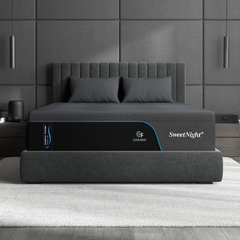
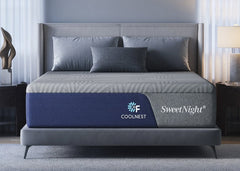
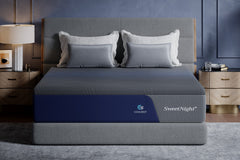
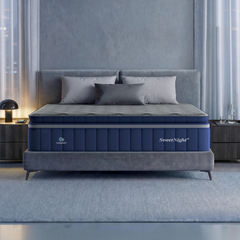
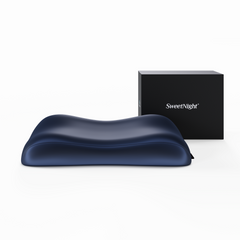
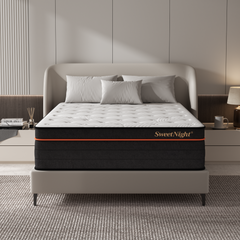
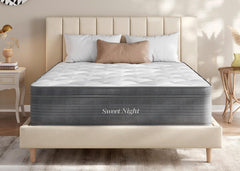
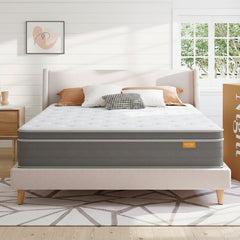


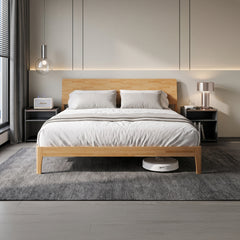




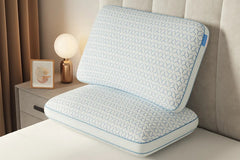
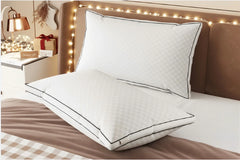
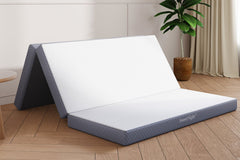
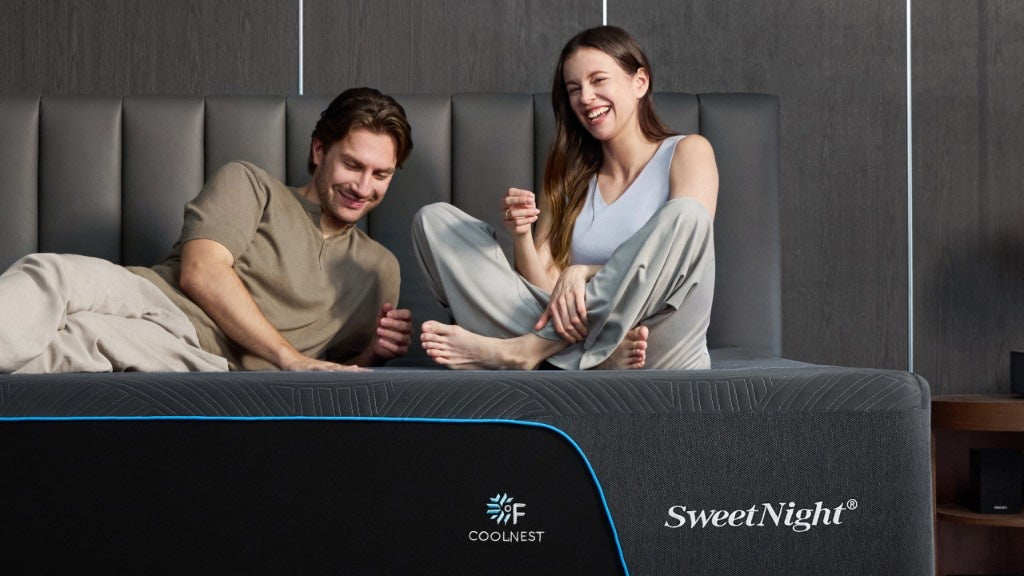
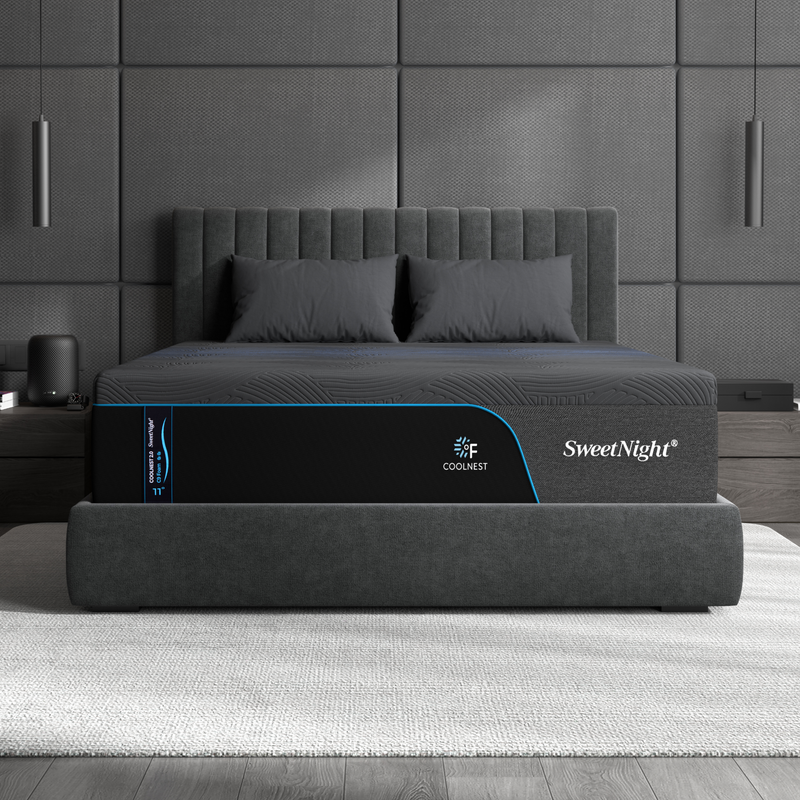
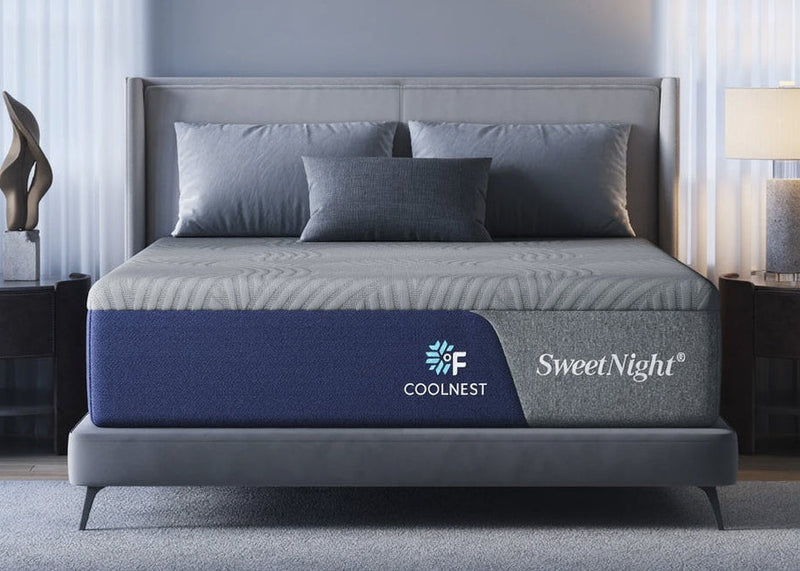
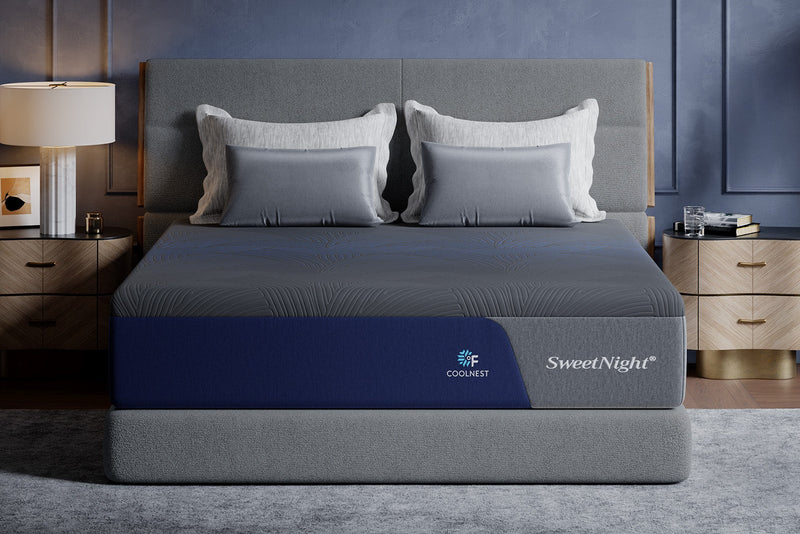
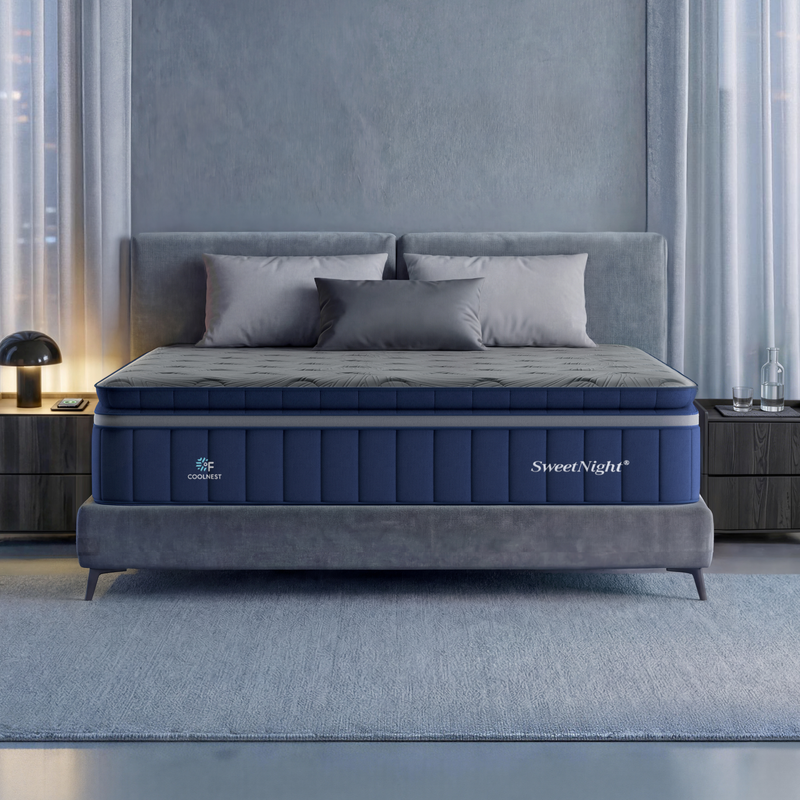
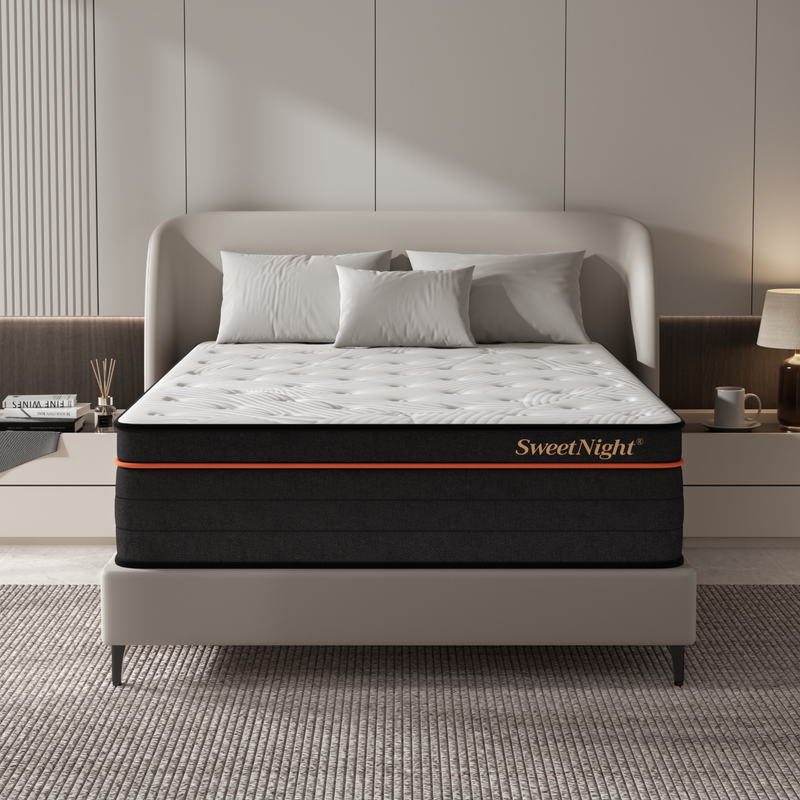
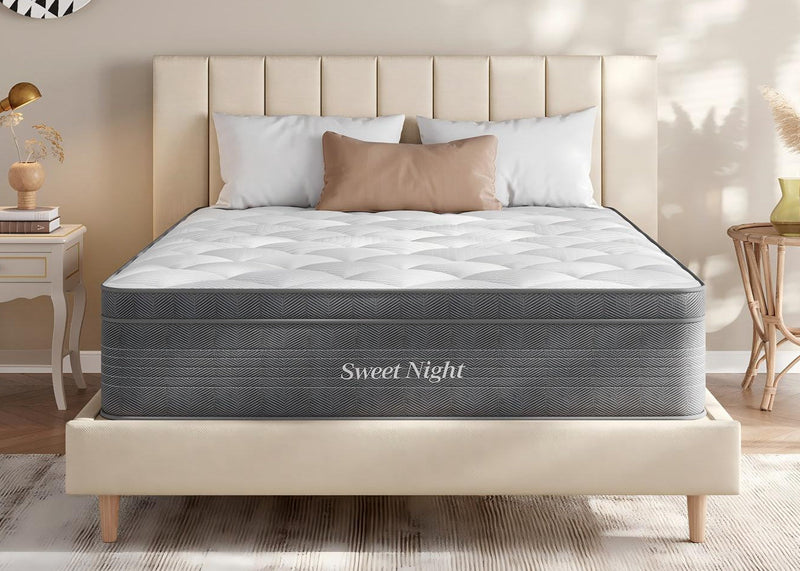
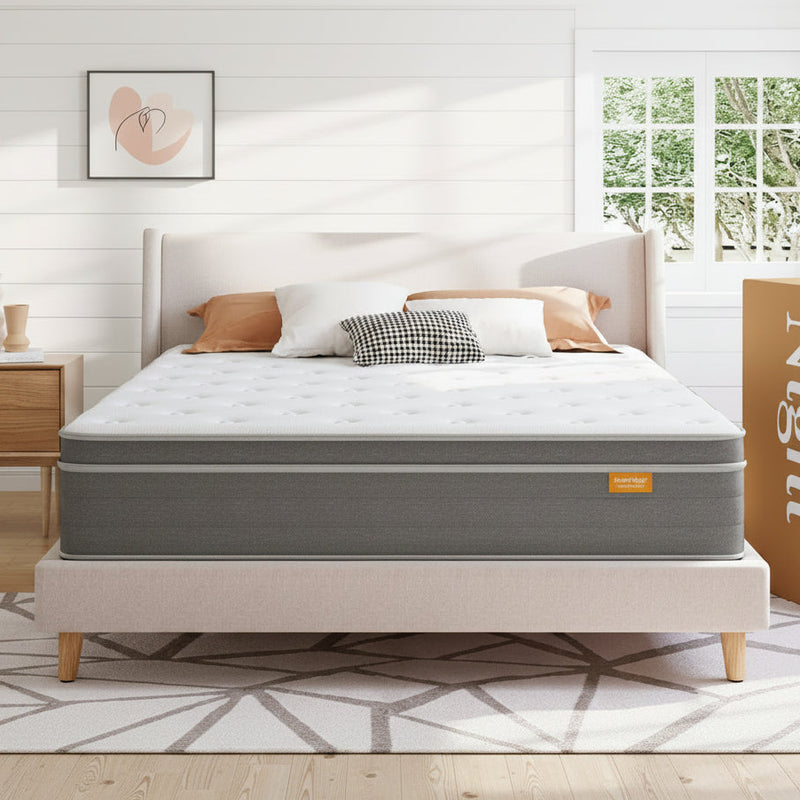
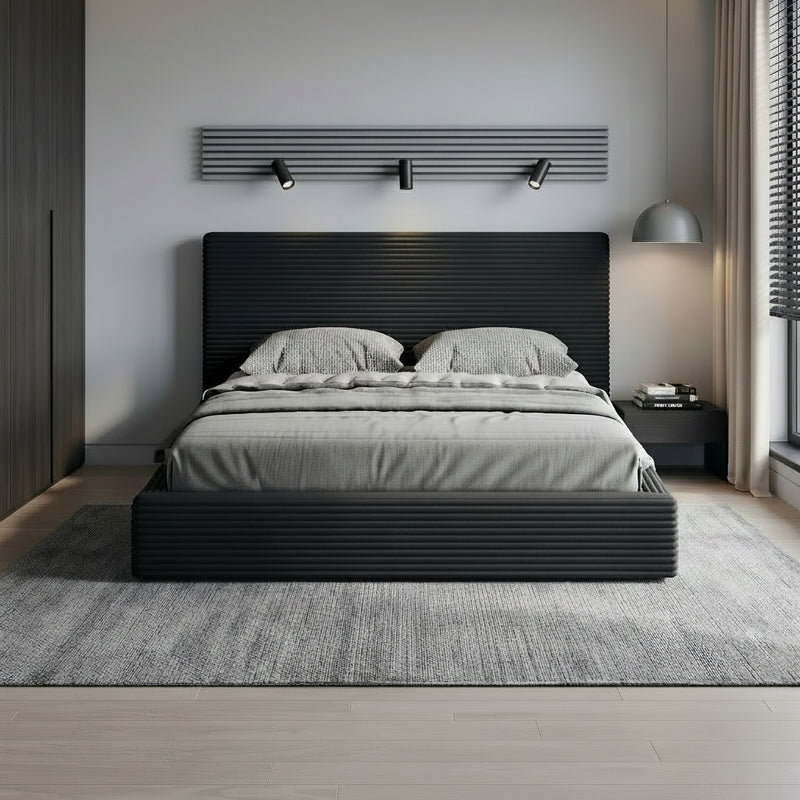
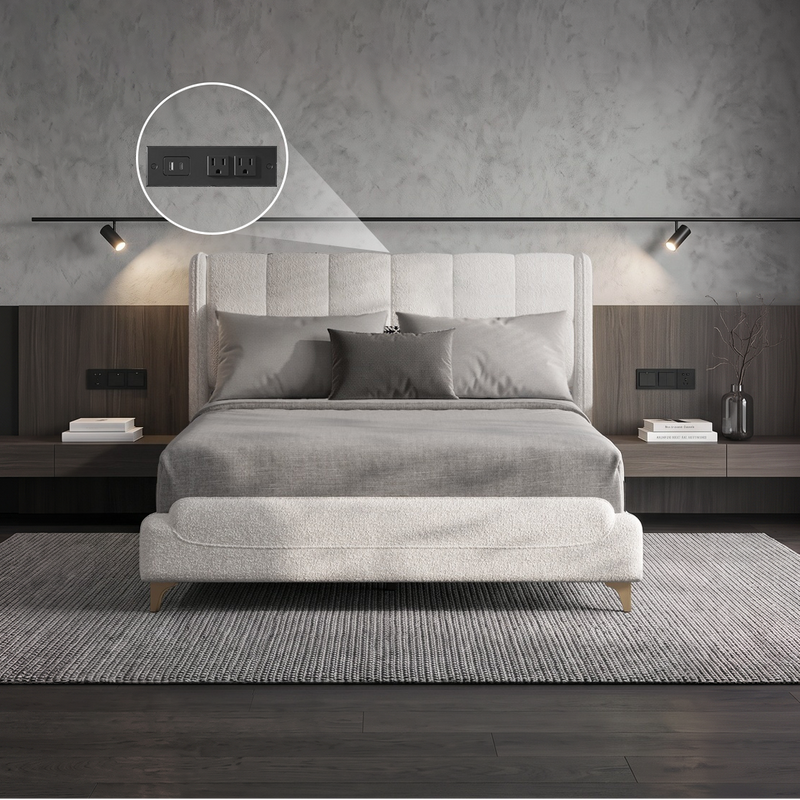
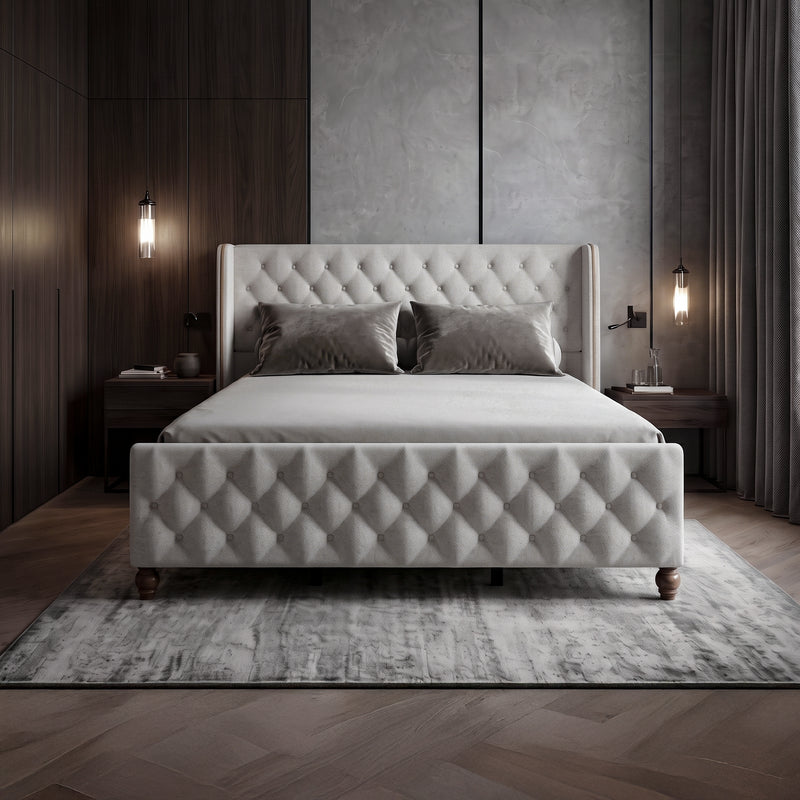
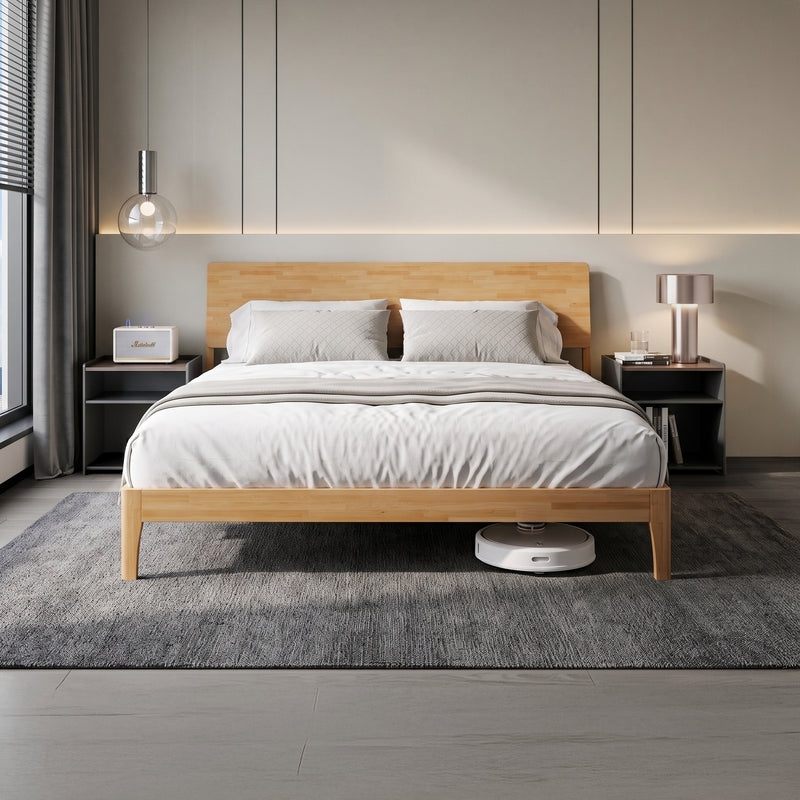



We have tested a lot of foam beds that promised to sleep cool, and most of them cooled down for about twenty minutes before turning into a warm sponge. So when SweetNight sent over its new flagship and claimed it feels up to 11° cooler than a traditional memory foam bed, we were skeptical. This SweetNight CoolNest Ultra review is the result of six weeks of real sleeping, surface-temperature readings, and a fair amount of arguing about firmness between two testers who never agree on anything. Here is exactly what we found.
What the CoolNest Ultra is, and why this review exists
The CoolNest Ultra is the top of SweetNight's cooling memory foam line, sitting above the original CoolNest, the Hybrid, and the Pro. It is an all-foam bed built around three ideas the brand keeps repeating: the Advanced CoolNest Ultra System with 5-stage cooling, refined 7-zone support for spinal alignment, and pressure relief that holds up night after night. Those are easy claims to print on a box. Testing whether they hold up is the whole point of this SweetNight CoolNest Ultra review.
We asked for the 14-inch model in Queen because that is the size and height most couples land on. It showed up compressed in a box a little taller than a golf bag, which is normal for a bed-in-a-box. What is not normal is the price-to-spec ratio: at $729.99 for a Queen, a 14-inch foam bed with a five-stage cooling system and zoned support undercuts the obvious comparisons by a wide margin, so part of what we wanted to know was whether the cooling was real or just marketing paint.
Before we get into numbers, one honesty note. We slept on this bed in a bedroom that runs warm on purpose, around 73°F (23°C) at night with no air conditioning running, because a cooling mattress is useless if it only works in a cold room. Every reading and every impression below comes from that hot-room setup, which is where a hot sleeper actually needs help.
Unboxing and off-gassing: the first 72 hours
Expansion was quick. Within an hour the CoolNest Ultra had puffed up to roughly its full 14 inches, and by morning the last soft spots near the corners had filled in. We have unboxed foam beds that needed three days to stop looking lumpy, so this was a good start for anyone impatient to sleep on it the same night it arrives.
Off-gassing was mild but present. There was a faint chemical smell for the first day, the kind you get from any freshly unwrapped foam, and it was gone by the third morning with a window cracked. Every foam layer in the bed is CertiPUR-US certified, meaning it is made without ozone depleters, heavy metals, formaldehyde, or prohibited phthalates and is tested for low VOC emissions, which is the certification that governs exactly this part of the experience. The cover carries OEKO-TEX STANDARD 100 certification on top of that. If you are sensitive to smells, unbox it in a ventilated room and give it a day before you put sheets on.
The cover is worth a paragraph on its own. This is not the 3D knitted nylon you get further down the CoolNest range. The Ultra uses a gradient cooling ice silk cover rated at a Qmax of 0.25 J/(cm²·s), the highest in the family, and it genuinely feels cold when you first lie down, not in a gimmicky way but in the way a tile floor feels cold in summer. That instant surface effect fades once your body warms it, which is expected, and that is exactly why the four layers underneath it matter more than the cover. We will get to whether they deliver.

How cool it sleeps: testing the "up to 11° cooler" claim
This is the headline claim and the reason most people read a CoolNest Ultra review in the first place, so we tested it two ways. First, with an infrared thermometer we measured the sleeping surface before lying down and again after 30 minutes of contact. On a standard gel foam bed we keep for comparison, the surface climbed steadily over that half hour and kept creeping up. On the CoolNest Ultra, the surface rose far less and then plateaued, staying markedly cooler at the contact point.
The gap between the two beds at the half-hour mark landed close to the advertised figure at the point where your torso presses down, which is where heat pools worst. Read the claim correctly, though: SweetNight is describing how much cooler the surface feels against your body compared with a traditional memory foam mattress, not a promise to chill the room. Understood that way, the number held up better than we expected.
What is actually doing the work is a five-stage system rather than any single trick, and living with the bed makes the division of labor obvious. The ice silk cover handles the first thirty seconds. PCMflux high-resilience foam handles the next several hours, absorbing excess heat as your body warms and releasing it as you cool, which is what flattens the 3 a.m. temperature spike that wakes people up sweating. Underneath that, AirMesh breathable memory foam, a ventilated gel memory foam layer, and a 3D open-channel structure vent the heat out of the mattress instead of letting it pool. SweetNight rates the AirMesh layer at up to six times the breathability of conventional memory foam, and while we cannot verify a lab multiplier, the practical effect is real.

The lived experience matched the instrument. Neither tester woke up with the damp, overheated lower back that a normal foam bed produces by 3 a.m. The bed does not blow cold air at you, and it is not a substitute for air conditioning in a genuinely hot climate. What it does is stop the heat trap, so you are not sleeping in a pocket of your own warmth. For a hot sleeper, that difference is the entire ballgame.
Humidity told the same story as temperature. One reason a foam bed feels hot is that trapped moisture cannot evaporate, so you wake up clammy even when the air is not that warm. On the CoolNest Ultra the surface stayed dry to the touch through the night, which we credit to the open-channel structure moving damp air out rather than sealing it against our backs. Dry-and-cool beat the cheaper gel bed we compared against, which could feel cool for a while yet still leave a sweat outline by morning.
7-zone support and spine alignment in practice

Cooling gets the headlines, but the refined 7-zone support is what kept us on this bed past the novelty stage. The support core uses a wavy-cut contour design that is firmer under the hips and lower back and more yielding under the shoulders, so the parts of you that need to sink can sink while the parts that need lifting stay lifted. On a back sleeper, that meant the lower back was supported instead of bridging over a gap, which is where morning stiffness usually comes from.
Our side sleeper, who normally wakes with a sore shoulder, noticed the zoning most. The shoulder was allowed to press in without hitting a wall of firm foam, while the hips stayed level rather than dropping into a hammock. We checked spine alignment the low-tech way, lying on our sides and having the other person eyeball whether the spine ran straight, and it read noticeably straighter here than on our flat comparison bed. Worth noting that the Ultra is recognized by the American Chiropractic Association for its ergonomic design, which is not something most boxed foam beds in this price bracket can say.
If zoned support is the reason you are shopping, the CoolNest Ultra makes a strong case, and it is the same reasoning behind a good spine alignment mattress. The takeaway from weeks of sleeping on it: the seven zones are not a spec-sheet detail you forget about. They are the reason a foam bed this plush on top does not wreck your back over a full night.
Motion isolation and edge support
Foam beds usually win on motion isolation and lose on edge support, and the CoolNest Ultra follows that pattern. Motion isolation was excellent. We ran the standard tests, a full glass of water on one side while the other tester climbed in and shifted around, and the water barely registered a ripple. SweetNight lists light sleepers and couples among the people this bed is built for, and that is one claim we would sign off on without reservation. If you share a bed with a restless partner or a dog that treats 2 a.m. as playtime, this is a real strength.
Edge support was the softer spot, literally. Sitting on the very edge to tie shoes, the perimeter compressed more than a hybrid with coils would, and sleeping right at the edge felt slightly less secure than sleeping in the middle. Notably, SweetNight does not market edge support as an Ultra feature the way it does on the Pro and the original CoolNest, so this is a design choice rather than a failure. It was never alarming, and for an all-foam bed it was about average, but couples who use every inch of a Queen should know the usable sleep surface feels a touch smaller than the mattress dimensions suggest.
Neither of these is a dealbreaker, and they are the normal trade you make choosing foam over a hybrid. If rock-solid edges are a priority for you, that leans toward the CoolNest Hybrid in the same family. If a dead-quiet, motion-absorbing surface is what you want, the CoolNest Ultra is one of the better foam beds we have tested for it.
One more note from living with it: the motion isolation changed how our restless tester slept without either of us planning for it. On the old bed, every time one person rolled over the other surfaced just enough to notice. A week into the CoolNest Ultra, those little wake-ups stopped, and the lighter sleeper on our team reported fewer of the groggy mornings that come from broken sleep. It is easy to write off motion isolation as a spec-sheet number, but for couples it quietly shapes the whole night.
Firmness, feel, and who the CoolNest Ultra suits
Firmness depends on which height you buy, and this trips people up. SweetNight rates the 12-inch as a Medium and both the 14-inch and 16-inch as Medium Plush, because the taller builds add comfort foam over a thicker high-density base. Our 14-inch tracked with that: we would put it around a 5.5 on the usual 10-point scale, softer than a classic medium-firm. You get that slow, cradling memory foam response on top, so the pressure relief foam fans love is all there, while the zoned wavy-cut core underneath stops you from feeling stuck or swallowed. This is where our two testers finally agreed: plush enough for a side sleeper's shoulders, structured enough that a back sleeper does not sag.
Stomach sleepers are the group we would flag. A dedicated stomach sleeper usually wants something firmer to keep the hips from dipping, and the Medium Plush comfort layer on the 14-inch will feel too giving in that position over a full night. If you sleep mostly on your stomach, the 12-inch Medium build is the one to look at, since it trades some cushioning for a more balanced, level feel while keeping the same cooling system and the same 7-zone core.
Weight matters too. Lighter sleepers under about 130 pounds will experience it as firmer since they press in less, while heavier sleepers get more of the contouring, and SweetNight specifically pitches this bed at plus-size sleepers who both hold more heat and feel more pressure. For the broad middle, average-weight side sleepers, back sleepers, and combination sleepers who switch all night, this is squarely in the comfort zone.
How the CoolNest Ultra compares to the rest of the family
SweetNight sells four CoolNest beds, and it is easy to overpay or underbuy if you do not know the ladder. The original CoolNest is the budget entry, with triple-stage cooling, a 3D knitted nylon cover at Qmax 0.22, and 5-zone support. The Pro steps up to four-stage cooling, a gradient ice silk cover at Qmax 0.23, and 7-zone support with reinforced edges. The Hybrid swaps some foam for coils, which buys you bounce and stronger edges. The CoolNest Ultra with its 5-stage cooling and refined 7-zone core is the fully loaded all-foam option, and the only one with PCMflux phase-change foam and AirMesh breathable memory foam.
So who should skip the Ultra and save money? If you run only slightly warm and want basic cooling, the cheaper CoolNest does the job for a lot less. If you want coil bounce and reinforced edges, the Hybrid is the smarter buy even though it is not the flagship. If you want 7-zone support and strong cooling but can live without the phase-change layer, the Pro splits the difference. The Ultra earns its spot when you want the strongest cooling SweetNight makes and the refined zoned support together, in one all-foam bed, and are willing to pay for the combination.
Against beds outside the family, SweetNight's own comparison puts a Queen Ultra at $729 next to a Casper Original at $1,295 and a Nectar Classic at $1,999, with pricing the brand says it verified on March 1, 2026. Take competitor comparisons published by a brand with the appropriate grain of salt, but our own shopping backs up the shape of it: plenty of beds do cooling or zoning well, and fewer do both without pushing well past what the Ultra costs.
Price, sizes, trial, and warranty
The CoolNest Ultra comes in three heights, 12, 14, and 16 inches, currently in Queen and King only, with prices running from $729.99 to $1,029.99. Twin and Full are not available yet; SweetNight says they are joining the lineup in November. Height changes the feel more than people expect, since the taller builds add comfort foam over a thicker support base, so the 16-inch sleeps plusher than the 12-inch even though the cooling system and the 7-zone core are the same. We tested the 14-inch and think it is the sweet spot for most adults, deep enough to feel substantial without needing special extra-deep sheets.
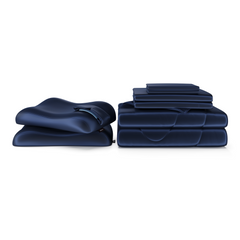
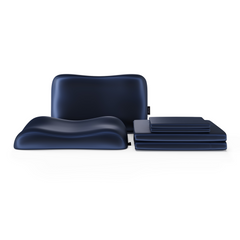
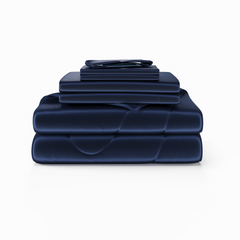
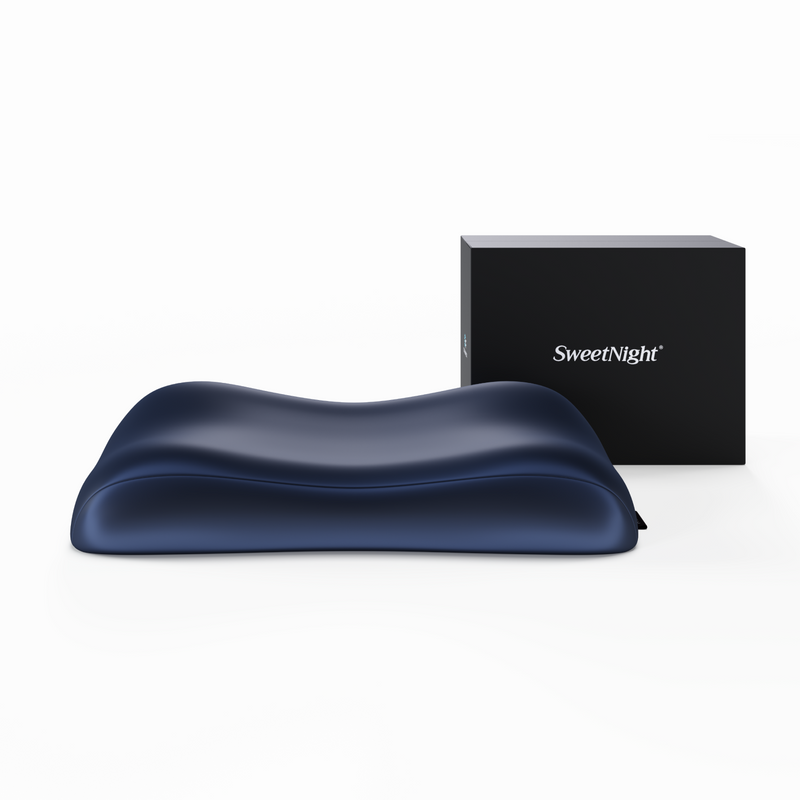
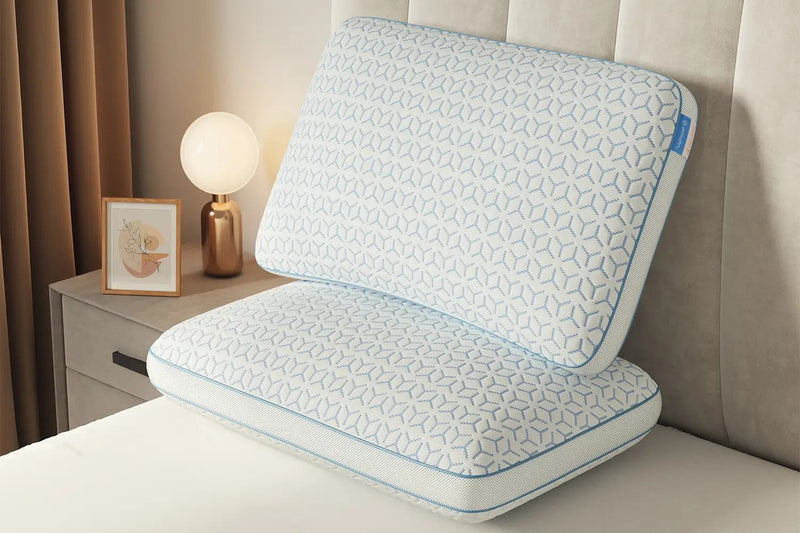
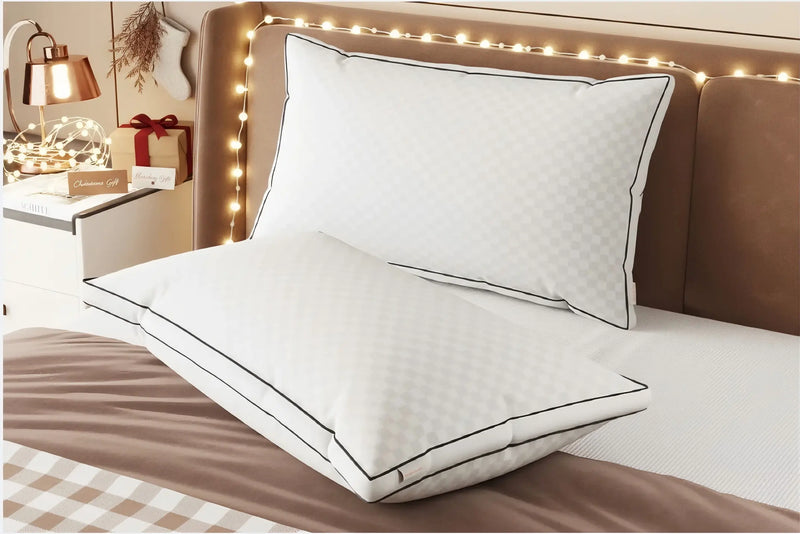
SweetNight backs it with a 100-night risk-free trial and a 10-year warranty that covers sagging over 1.5 inches, and at the time of our testing every mattress shipped with a free cooling pillow set valued at over $100 while supplies last. The trial starts the day the mattress is delivered, not the day you order, and returns are handled with free pickup and a full refund rather than a return shipping bill. SweetNight asks that you give it at least 30 nights before deciding, which is fair: foam takes a couple of weeks to break in and your body takes a couple more to adjust, so a single week is not a fair judge. There is also a separate 30-day full refund policy on unopened items.
On value, this is where the CoolNest Ultra looks strongest. A cooling foam bed with genuine zoned support and a phase-change layer routinely costs more from a legacy brand, sometimes a great deal more, and often without the same cooling spec. Note that the Ultra is currently sold as a pre-order, so check the product page for the shipping window and any early-bird discount code before you buy. If cooling is your reason for shopping at all, it belongs on any short list of the best cooling mattress options in its price bracket.
SweetNight CoolNest Ultra review: quick answers to common questions
Is the CoolNest Ultra good for hot sleepers? Based on our testing, yes, and that is its clearest strength. It held a real temperature gap at the contact point in a warm room and stayed dry through the night, which is exactly what a hot sleeper needs from a foam bed. The combination of the ice silk cover for instant cooling, PCMflux foam for overnight temperature regulation, and AirMesh foam for heat dissipation is a more complete answer than the single cooling gimmick most beds in this price range offer.
How firm is the CoolNest Ultra, and is it good for back pain? It depends on height: the 12-inch is a Medium, and the 14-inch and 16-inch are Medium Plush, which we would put around 5.5 out of 10 on our tested 14-inch. For the common causes of morning back pain, an unsupported lumbar and a sagging pelvis, the refined 7-zone wavy-cut core did measurable work keeping our testers aligned, and the bed carries American Chiropractic Association recognition for its ergonomic design. It is a strong pick for side sleepers and most back sleepers with mild aches, though anyone with a serious back condition should still consult their own clinician.
How long does the CoolNest Ultra take to expand, and does it smell? It reached near-full height within an hour and finished overnight in our test. Off-gassing was mild and cleared within about three days with a window open, which tracks with foams that are CertiPUR-US certified for low VOC emissions and a cover certified to OEKO-TEX STANDARD 100. Unbox it in a ventilated room, give it a day before adding sheets, and by the time you sleep on it the smell should be a non-issue.
Our verdict on the SweetNight CoolNest Ultra
Six weeks in, the CoolNest Ultra did the two things it promised. It slept cool in a hot room, holding a real temperature gap where our bodies pressed down, and its refined 7-zone core kept both a side sleeper and a back sleeper aligned and out of pain. Those are the two failures that send most foam-bed buyers back to the return page, and this bed avoided both.
The honest caveats are the ones we would give for almost any all-foam bed. Edge support is average and is not something SweetNight claims here, the Medium Plush 14-inch and 16-inch builds are too soft for dedicated stomach sleepers who should look at the 12-inch instead, and no mattress will out-cool an air conditioner in a genuinely tropical bedroom. None of that is a surprise, and none of it changed our overall read: for a hot sleeper who wants pressure relief and spine support in one all-foam bed, this is a genuinely strong pick.
Would we buy it with our own money? For the warm-sleeping side sleeper on our test team, yes, without much debate, and the 100-night trial plus the 10-year warranty removes most of the risk if you are on the fence. If you have been waking up hot and stiff on an old foam bed, the CoolNest Ultra is worth a serious look, and the trial period means the only real cost of finding out is the time it takes to sleep on it.