






















Updated: August 11, 2026 · Reviewed by the SweetNight Sleep Comfort Team · 9 min read
Short answer: a pillow helps one kind of snoring and does nothing at all for another. Which is why some people report that a new pillow transformed their nights while others say it changed nothing — they are describing two different conditions with the same symptom.
The useful question is not "which anti-snoring pillow is best." It is "is my snoring positional?" Answer that first, in one night, and you will know whether bedding is your solution or a distraction from one you actually need.
How Snoring Actually Works: The Airway Mechanism
Snoring is a vibration, and vibration needs two things: a narrowed passage and air moving through it fast enough.
When you fall asleep, the muscles holding your upper airway open relax. The soft palate, the uvula, and the base of the tongue all lose tone. If the passage narrows enough, air moving past those soft tissues makes them flutter — that flutter is the sound.
Two facts follow, and they explain nearly everything about what helps:
- Gravity matters enormously. Lying on your back lets the tongue and soft palate fall backward into the airway. The same person can snore loudly on their back and be silent on their side.
- Neck angle changes the diameter. Flexing the neck forward — chin toward chest — compresses the airway. Extending it slightly or keeping it neutral keeps the passage at its widest.
A pillow can influence both of those. What it cannot do is change the anatomy of your airway, reduce the tissue crowding it, or reopen it once it collapses completely. That boundary is the whole subject of this article.
Positional Snoring vs Sleep Apnea: How to Tell
Do this before you buy anything. It takes two or three nights and a phone.
- Record yourself. Any of the free sleep-recording apps will capture audio and flag loud periods. Some will also log position if you keep the phone on the bed.
- Note the position you fell asleep in and, if you wake in the night, the position you were in.
- Ask a partner to note anything alarming — specifically pauses in breathing, gasping, or choking sounds.
Then read the pattern:
| What you find | What it suggests | What to do |
|---|---|---|
| Loud on the back, quiet or silent on the side | Positional snoring | Bedding and position changes work well — read on |
| Similar in every position | Not positional — anatomy, congestion, or apnea | A pillow will not fix it; see the medical section |
| Pauses in breathing, gasping, choking | Possible obstructive sleep apnea | See a doctor. Do not treat this with bedding. |
| Only when congested or after drinking | Situational | Treat the trigger, not the bed |
| Snoring plus daytime sleepiness or morning headaches | Possible apnea regardless of the volume pattern | See a doctor |
Roughly half of people who snore have a strong positional component, so the odds that bedding helps are genuinely decent. But the apnea question has to be settled first, because untreated obstructive sleep apnea is associated with high blood pressure, cardiovascular disease and daytime accidents — and a pillow that quietens the noise without opening the airway can hide the problem rather than solve it.
What Pillow Height Does for Your Airway
Here is where most snoring advice goes wrong: people stack pillows.
Piling up two or three pillows raises your head but not your chest, so your neck bends forward and your chin drops toward your sternum. That flexion narrows the airway at precisely the level where snoring originates. It is a reliable way to make snoring worse while feeling like you are doing something about it.
The distinction that matters:
- Head elevation alone (stacked pillows) → neck flexion → narrower airway → usually worse.
- Whole upper-body elevation (an incline, so head, neck and chest rise together) → neck stays neutral, gravity pulls tissue away from the airway → usually better.
The second is genuinely supported. Research using drug-induced sleep endoscopy — where clinicians can actually watch the airway while a patient sleeps — has found that elevating the head of the bed reduces upper airway collapsibility, meaning the airway stays open at lower pressures than it does lying flat.
How to get real elevation:
- Raise the head of the bed itself by 4–6 inches with bed risers under the top two legs. This is the most effective and the cheapest, and it keeps your spine straight because the whole surface tilts.
- Use a proper wedge pillow — a long gradual incline supporting from hips to head, not a short wedge that bends you at the waist.
- Use an adjustable bed base if you have one; a 30–45 degree head incline is the usual starting range.
What not to do: two pillows under your head and nothing under your shoulders.
Best Pillow Setup for Snoring, by Position
If you snore on your back and want to stay there
Elevate the whole upper body as above, and use a single pillow at the correct loft for back sleeping — around 3–4 inches, ideally contoured with a small ridge supporting the neck and a hollow for the head. That shape keeps the neck neutral rather than flexed. Getting the loft right matters more than any anti-snoring branding; the measuring method is in what is the best pillow.
If you can move to side sleeping (the best option)
Side sleeping does more for positional snoring than any pillow feature. The problem is staying there, and the solution is architectural rather than motivational:
- A body pillow along your back physically blocks the roll and is the single most effective trick here.
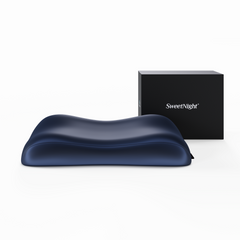
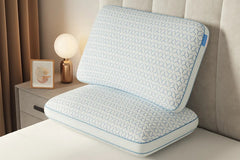
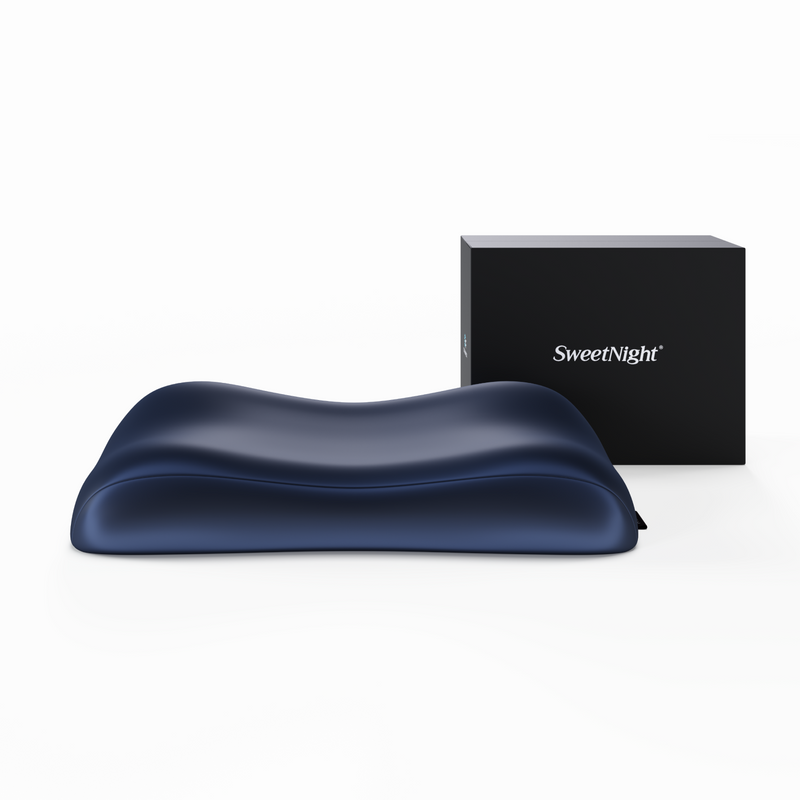
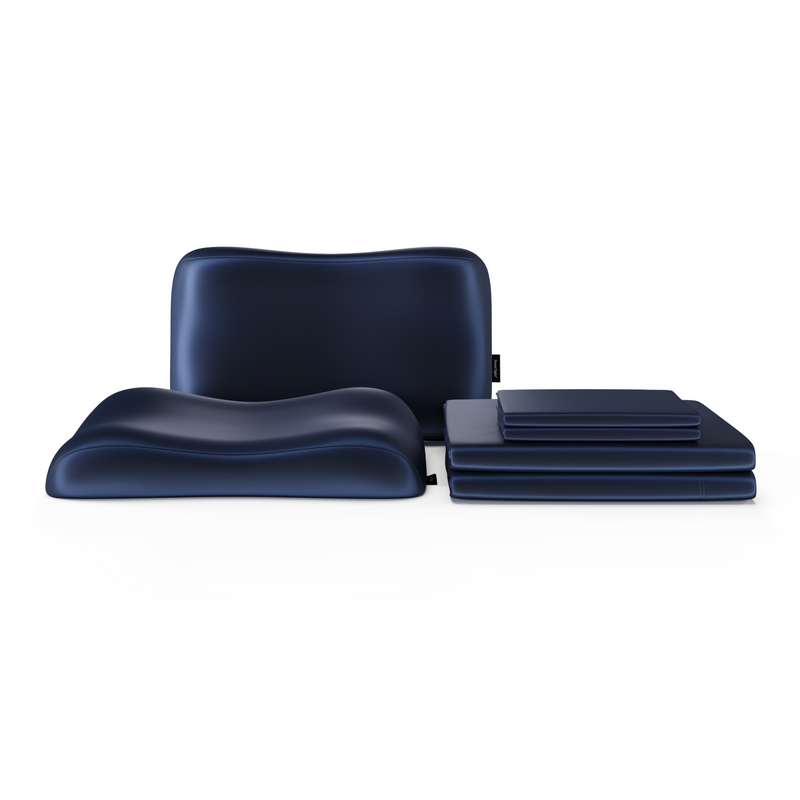
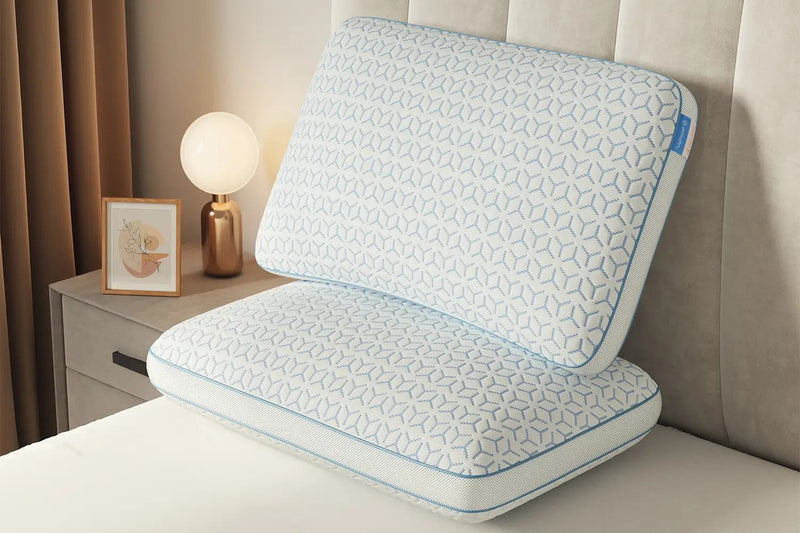
- A higher-loft pillow, 4–6 inches, matched to your shoulder width, so side lying is comfortable enough that you do not seek relief by rolling onto your back. A CoolNest® Ergonomic Cooling Pillow holds that loft through the night rather than compressing flat by 2 a.m.
- A pillow between the knees to keep the hips square, which removes the discomfort that makes people abandon the position.
The old trick of sewing a tennis ball into the back of a sleep shirt does work, but it tends to wake you rather than redirect you. A body pillow achieves the same redirection without the arousal.
If you are pregnant and snoring
Snoring frequently increases in pregnancy because of higher blood volume and nasal tissue swelling. Side sleeping is already the recommendation from 28 weeks, so the two align — the setup is in best sleeping positions during pregnancy. New or worsening snoring in pregnancy is worth mentioning to your midwife, since it is associated with blood pressure problems.
What a Pillow Cannot Fix
Being clear about the limits saves money and, occasionally, more than that.
- Obstructive sleep apnea. The airway repeatedly collapses closed. Positional therapy is a recognised adjunct for supine-predominant cases, but it is prescribed alongside diagnosis, not instead of it. No pillow treats apnea.
- Nasal obstruction. A deviated septum, polyps, or chronic rhinitis force mouth breathing, which drives snoring regardless of position. This is an ENT question.
- Enlarged tonsils or adenoids. Especially relevant in children, where snoring should always be raised with a doctor rather than managed with bedding.
- Alcohol and sedatives. They relax airway muscles beyond what any positioning compensates for. Three alcohol-free evenings will tell you how much of your snoring is this.
- Weight-related airway crowding. Sensitive but real: additional tissue around the neck narrows the airway. Positional measures help less as this factor grows.
Mouth Breathing vs Nose Breathing: The Overlooked Half
Two people can have identically shaped airways and only one of them snores, because of how they breathe rather than how they lie.
Nasal breathing delivers air that has been slowed, warmed and humidified, and it maintains a small amount of back-pressure that helps hold the soft tissues of the throat stable. Mouth breathing loses all of that. Air arrives faster and drier, the jaw drops back, and the tongue loses the forward position it holds when the mouth is closed. That combination narrows the airway and dries the tissues, and dry tissue vibrates more readily than moist tissue — which is why mouth-breathing snorers often sound harsher and wake with a raw throat.
The practical point is that a lot of "untreatable" snoring is actually nasal congestion pushing someone into mouth breathing every night. Before concluding that your anatomy is the problem, rule this out:
- Test one nostril at a time. Close one and breathe through the other, then swap. A clear difference between sides points to a deviated septum or a persistent swelling worth an ENT opinion.
- Try a saline rinse before bed for a week. It is cheap, and if your snoring improves you have found a treatable cause rather than a structural one.
- Check the room's humidity. Very dry air — common with air conditioning or winter heating — dries the airway directly. This is one reason snoring can be seasonal.
- Notice whether you wake with a dry mouth. It is the most reliable sign that you spent the night breathing through your mouth, even if nobody observed it.
Nasal strips and dilators help some people by mechanically widening the nostrils, and they are harmless to try. They do nothing if the obstruction sits further back, which is the usual reason they disappoint.
Other Things That Reduce Snoring
Ranked by effect size for people whose snoring is not apnea:
- Stop sleeping on your back. The largest single lever available.
- Raise the head of the bed 4–6 inches. Cheap, and it works while you sleep in any position.
- No alcohol within 3–4 hours of bed. Often produces an immediate, obvious difference.
- Treat nasal congestion. Saline rinse before bed, or address the allergy driving it. A humidifier helps in dry rooms.
- Keep the bedroom clean and cool. Dust and dry air both aggravate the nasal passages; dust mites and bedding covers the allergen side.
- Regular sleep timing. Sleep deprivation deepens muscle relaxation on the nights you catch up, which makes snoring worse — see how to go to bed early if your schedule is the problem.
When to See a Doctor About Snoring
Book an appointment if any of these apply. None of them are bedding problems.
- Anyone has witnessed you stop breathing, gasp, or choke during sleep.
- You feel unrefreshed no matter how long you sleep.
- You fall asleep unintentionally during the day — particularly while driving.
- You wake with morning headaches or a persistently dry mouth.
- You have high blood pressure alongside snoring.
- Your child snores regularly. Habitual snoring in children always warrants assessment.
- Snoring started suddenly or has clearly worsened without an obvious cause.
Sleep apnea is common and very treatable. The reason to take it seriously is not the noise — it is the repeated drops in blood oxygen and the cardiovascular load that comes with them. A home sleep test is now a straightforward thing to arrange in most places.
This article is general information, not medical advice.
Frequently Asked Questions
Do anti-snoring pillows really work?
The effective ones work by managing position and neck alignment, not through any special mechanism. A well-shaped contoured pillow at the right loft, or a proper wedge, will do what the expensive branded version does. Be sceptical of anything marketed as treating sleep apnea.
Should I sleep without a pillow to stop snoring?
No. Lying flat with no pillow lets the head tilt back and the tongue fall further into the airway, and it usually makes back-snoring worse. Neutral alignment is the goal, not the absence of support.
Can a mattress affect snoring?
Indirectly. A sagging mattress lets your torso dip and your neck angle change, and an uncomfortable one makes you abandon side sleeping. If your mattress is pushing you onto your back, it is contributing — when to replace a mattress covers how to check.
Why do I only snore some nights?
The usual variables are alcohol, congestion, sleep deprivation, and which position you happened to settle into. Snoring that is entirely absent on side-sleeping nights is your positional diagnosis arriving for free.
Does a wedge pillow help with snoring and reflux at once?
Yes, and it is one of the better two-for-one fixes in bedding, since both respond to upper-body elevation. Use a long gradual wedge that supports from the hips up rather than a short steep one that folds you at the waist.
Will losing weight stop my snoring?
It often reduces it substantially where airway crowding is a factor, and it is one of the few interventions that addresses a root cause. It is not guaranteed, because anatomy and nasal issues are independent contributors.
The Bottom Line
Record yourself for a couple of nights before spending anything. If you snore on your back and go quiet on your side, you have positional snoring, and bedding is genuinely the right tool: get off your back with a body pillow, raise the head of the bed 4–6 inches, and use a single correctly-lofted pillow instead of a stack.
If the snoring follows you into every position, or anyone has seen you stop breathing, skip the shopping and book an appointment. That version of snoring is a medical sign, and no pillow has ever fixed one.