




























Updated: August 11, 2026 · Reviewed by the SweetNight Sleep Comfort Team · 11 min read
Almost every "best pillow" guide is organised by fill material — memory foam, down, latex, buckwheat — as though the stuff inside were the thing that decides whether you wake up with a sore neck.
It is not. The variable that decides that is loft: how tall the pillow holds your head. Get loft right with a mediocre fill and you will sleep fine. Get loft wrong with the most expensive memory foam on the market and you will wake up with a stiff neck for as long as you own it.
Loft is also the one specification that depends on your body and your mattress, which is precisely why no article can hand you a single answer. What it can do is give you a way to measure it. That takes about two minutes, and it is what this guide is built around.
What Is the Best Pillow? Loft Is the Answer, Not Material
Your neck has a natural forward curve. The job of a pillow is to hold your head so that this curve stays in the same neutral position it holds when you stand up straight — no more, no less.
When you lie down, a gap opens between your head and the mattress. The size of that gap is what the pillow has to fill:
- On your side, the gap is the full width of your shoulder — the largest gap of any position, often 4–6 inches.
- On your back, it is the much smaller distance from the back of your head to the surface, typically 3–4 inches.
- On your front, it is nearly nothing, which is why stomach sleepers do best with almost no pillow at all.
Fill the gap correctly and your cervical spine stays in line with the rest of your spine. Under-fill it and your head sags toward the mattress, bending the neck sideways or backwards for seven hours. Over-fill it and you push the head the other way. Both produce the same morning symptom, which is why "my neck hurts" alone does not tell you which mistake you are making — you have to look at what your body does to compensate.
Material matters, but it matters second: it determines how the loft feels, whether it stays constant through the night, and how many years it lasts. Those are real considerations. They are just not the first question.
How to Measure Your Ideal Pillow Loft: The Shoulder-Gap Method
You need a wall, a ruler or tape measure, and someone to read the number — or a phone camera on a timer.
For side sleepers
- Stand with your back against a wall, shoulders relaxed in their natural position, not pulled back.
- Have someone measure the horizontal distance from the wall to the outside edge of your shoulder. This is your shoulder width — usually 5–7 inches for adults.
- Now subtract how far your shoulder sinks into your mattress. Lie on your side as you normally sleep and have someone estimate the sink: about 1 inch on a firm mattress, 1.5–2 inches on a medium, 2–3 inches on a soft or plush one.
- Shoulder width minus mattress sink = your target loft.
A worked example: 6-inch shoulder on a medium mattress that lets the shoulder sink 1.5 inches gives a target loft of about 4.5 inches. That is the number to shop against, and it is a far more useful thing to know than whether you prefer foam or down.
For back sleepers
The measurement is simpler: lie on your back without a pillow and have someone measure the gap between the back of your head and the mattress. Add roughly half an inch to account for the pillow compressing under your head's weight. Most people land between 3 and 4 inches.
The mirror check — do this either way
Numbers get you close; alignment confirms it. Lie down in your normal sleeping position with the pillow you are testing, and have someone look at you from the front (side sleeping) or the side (back sleeping):
- Correct: your nose lines up with the centre of your chest, and your head is level — neither tilted up toward the ceiling nor drooping down toward the mattress.
- Loft too low: your head tilts down, and the gap under your neck is visible.
- Loft too high: your head tilts up, chin moving toward your chest.
Two minutes of this beats a hundred reviews written by people whose shoulders are not your shoulders.
Best Pillow for Side Sleepers
Side sleeping is the most common adult position and the most demanding for a pillow, because the gap is the widest and the consequences of getting it wrong are the most immediate.
| Requirement | What to look for | Why |
|---|---|---|
| Loft | 4–6 inches, matched to your shoulder gap | Has to span the shoulder to keep the head level |
| Firmness | Medium-firm to firm | A soft pillow collapses under the head's weight and the effective loft disappears by 2 a.m. |
| Shape | Consistent thickness, or contoured with a raised side edge | You need support under the neck, not just under the skull |
| Fill | Solid memory foam, latex, or a dense shredded fill | Holds loft all night; loose fills migrate away from the pressure point |
The mistake almost every side sleeper makes is buying a pillow that feels wonderfully plush in the shop. Plush means compressible, and compressible means that whatever loft you felt when you pressed it with your hand is not the loft it will hold under 11 pounds of head for seven hours. For side sleeping, resistance to compression matters more than initial softness.
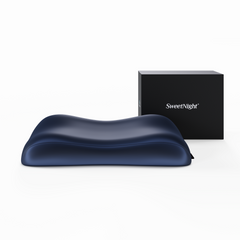
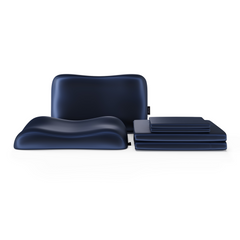
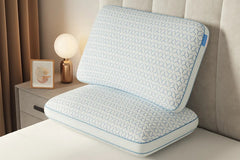
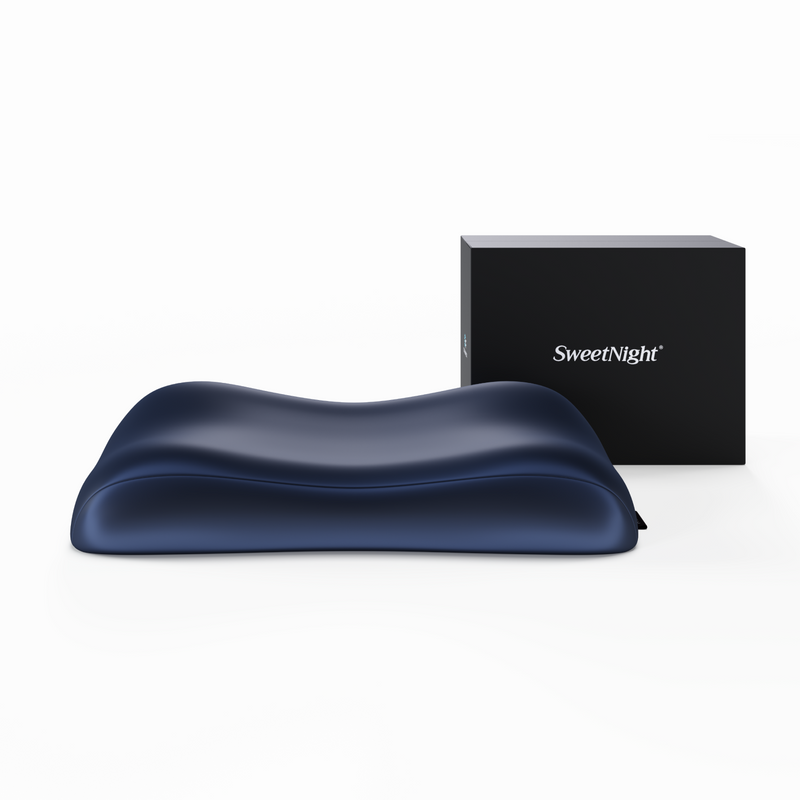
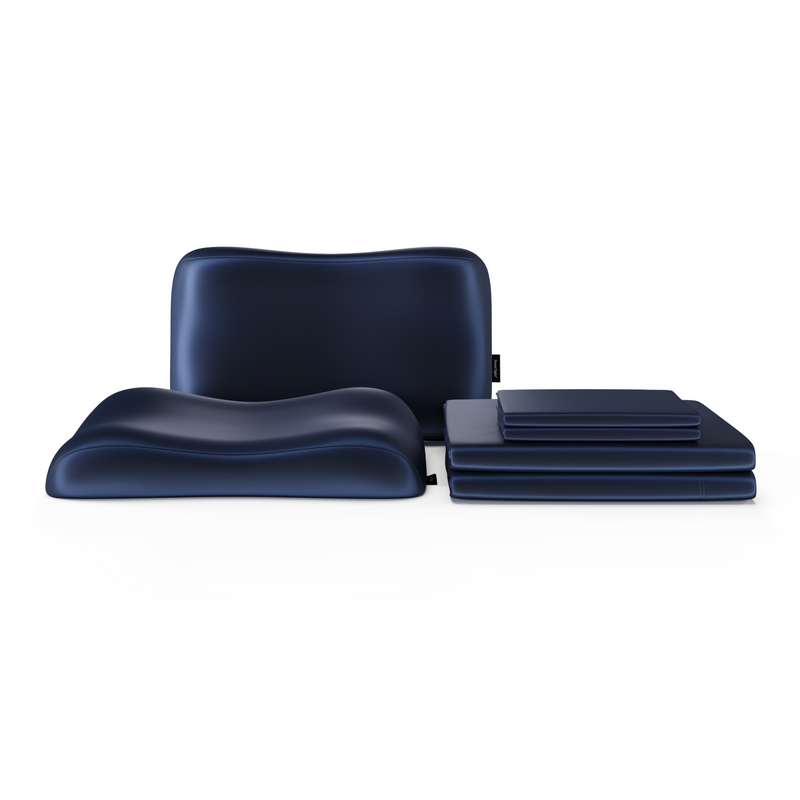
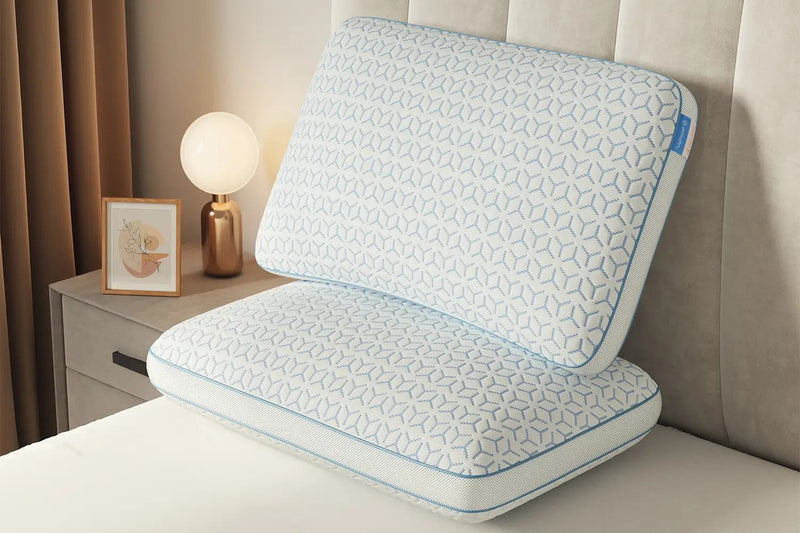
A shaped cervical pillow with a higher edge for side lying and a lower centre for back lying suits people who switch positions overnight, which is most of us. Our CoolNest® Ergonomic Cooling Pillow is built to that profile, and if you sleep hot as well the Cooling Memory Foam Pillow 2-Pack covers the same support with a cooler surface.
If your shoulder itself is what hurts rather than your neck, the pillow is only half the story — the mattress is failing to let the shoulder sink. That mechanism is covered in why shoulder pressure is common among side sleepers.
Best Pillow for Back Sleepers
Back sleepers need roughly a third less loft than they think, and over-lofting is the standard error.
A too-thick pillow pushes your chin toward your chest. That flattens the cervical curve, strains the muscles at the back of the neck, and narrows the airway — which is why an over-lofted pillow can make snoring measurably worse. If you sleep on your back and snore, your pillow height is worth checking before anything else; can a pillow help with snoring goes into the airway mechanics.
What works:
- Loft of 3–4 inches, medium firmness.
- A contoured profile with a slightly raised ridge under the neck and a hollow for the back of the head. This is the position where cervical pillows genuinely earn their keep, because the neck gap and the head gap are different depths.
- A small pillow under the knees. Not a pillow-choice issue exactly, but it reduces the lumbar arch and takes strain off the lower back — see why sleep position causes lower back pain.
Best Pillow for Stomach Sleepers
The honest answer is: as little pillow as you can tolerate, and ideally none.
Lying face-down already forces your neck into 80–90 degrees of rotation for the whole night. Adding loft on top of that extends the neck backwards as well as rotating it, and the two together are why stomach sleepers wake with neck pain more than anyone else.
If you sleep on your front:
- Use a very thin pillow — under 3 inches — or none at all.
- Put a pillow under your pelvis instead. This is the useful one. It stops the lower back from arching, which is the other half of the stomach-sleeping problem, and most people find it makes the position tolerable.
- Consider migrating to side sleeping with a body pillow to hug. Hugging something gives your arms the "front contact" that makes stomach sleeping feel secure, and it is the most reliable way to change position long-term.
If you have wondered whether to drop the pillow entirely, is it better to sleep without a pillow covers who that actually suits.
Pillow Fill Materials Compared
Now that loft is settled, fill decides how that loft behaves — whether it stays constant, how it handles heat, and how long you keep it.
| Fill | Holds loft | Sleeps | Lifespan | Best for |
|---|---|---|---|---|
| Solid memory foam | Excellent — constant all night | Warm unless gel-infused or ventilated | 3–4 years | Side sleepers, neck pain, anyone who wants a fixed loft |
| Shredded memory foam | Good, and adjustable by removing fill | Cooler than solid — air moves between pieces | 3–4 years | People between loft sizes, or unsure of their number |
| Latex | Excellent, more springy than foam | Coolest of the supportive fills | 4–6 years | Hot sleepers who need firm support; allergy-conscious buyers |
| Down / feather | Poor — compresses through the night, needs re-fluffing | Warm | 1–2 years | Stomach sleepers and back sleepers who want low loft |
| Polyester | Poor — clumps and flattens fastest | Warm, traps moisture | 1–2 years | Guest rooms, short-term use |
| Buckwheat | Excellent, fully adjustable | Very cool — constant airflow | 5+ years | People who want firm, precise, adjustable loft and do not mind the rustle |
Two things worth knowing that specification sheets do not say. Adjustable-fill pillows are the safest purchase if you are unsure of your loft, because removing fill is the only way to fix a too-high pillow after you have bought it. And a shredded fill is the practical answer to memory foam running hot, because heat retention in a solid slab is a real problem; if you already know you sleep warm, cooling pillows for night sweats covers what actually helps.
Why Your Mattress Changes Which Pillow You Need
This is the factor that trips people up most often, and it explains one of the most confusing experiences in bedding: a pillow you loved suddenly stops working, and nothing about you has changed.
Your pillow does not fill the gap between your head and the floor. It fills the gap between your head and the mattress surface as it deforms under you. Change the mattress and you change the gap.
| Mattress | Shoulder sinks | Effect on pillow |
|---|---|---|
| Firm | About 1 inch | Gap stays wide — you need more loft |
| Medium | 1.5–2 inches | Mid-range loft |
| Soft / plush | 2–3 inches | Gap partly closed — you need less loft |
Which leads to the practical rules:
- Buy a new mattress, re-check your pillow. A firmer mattress usually means you now need a taller pillow, and vice versa. Budget for it rather than being surprised by a month of neck pain.
- An old sagging mattress fakes a low-loft requirement. If your mattress has a body impression, you are lying in a dip and the gap has shrunk artificially. Fixing the pillow will not fix that; how pillows can fix your mattress problems covers what a pillow can and cannot compensate for.
- Toppers count as a mattress change. Adding a soft topper reduces the loft you need, often by an inch.
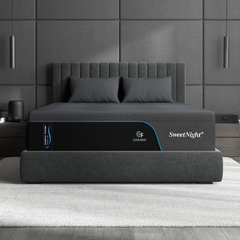
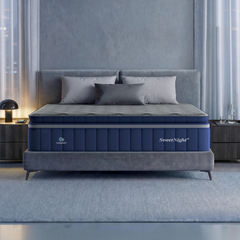
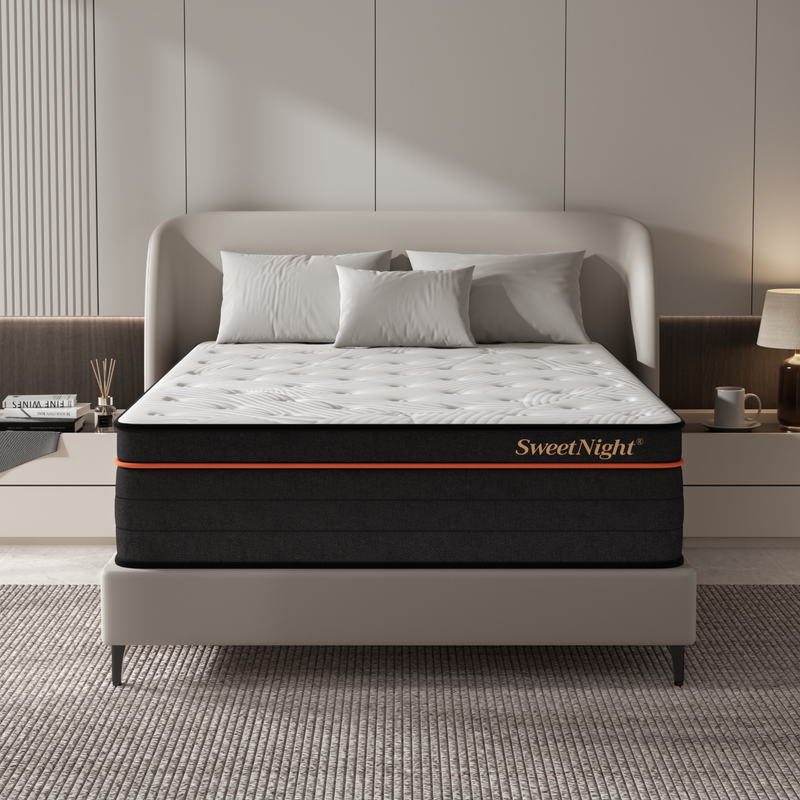
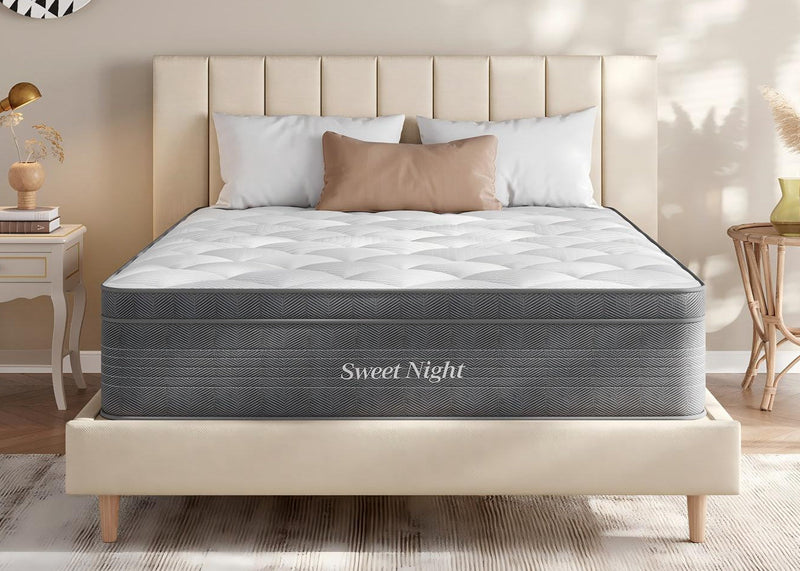
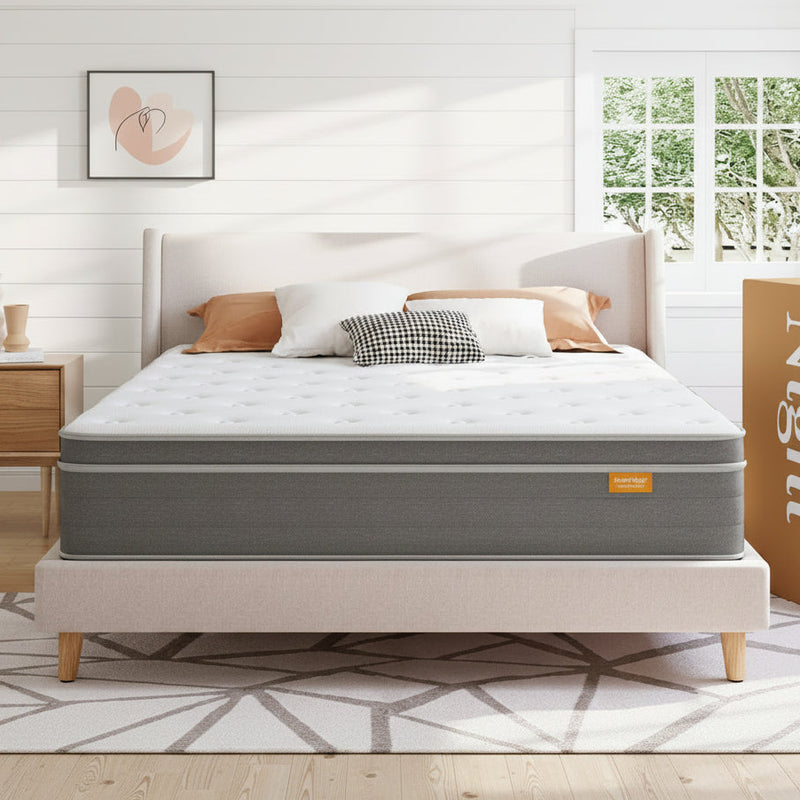
If you are replacing the surface underneath as well, the cooling mattress collection and the current SweetNight deals page are the places to start, and it is worth setting your pillow choice after the mattress arrives rather than before.
Signs You're Using the Wrong Pillow
Your body compensates for a bad pillow while you are unconscious, and those compensations are readable in the morning.
| What you notice | What it means | Fix |
|---|---|---|
| You wake with your arm tucked under the pillow | Loft too low — you are adding height with your arm | Go up an inch; expect the numb-arm mornings to stop too |
| You fold the pillow in half | Loft too low, same compensation | Go up an inch |
| You push the pillow away or wake off it | Loft too high | Go down, or switch to an adjustable fill you can empty |
| Stiff neck on the side you slept on | Lateral neck bend all night — almost always loft | Re-measure the shoulder gap |
| Sore across the tops of the shoulders | Shoulder bearing weight the pillow should carry | Firmer pillow, and check whether the mattress is too firm at the shoulder |
| Morning headaches at the base of the skull | Sustained neck extension — usually too-high loft on the back | Lower loft, or a contoured pillow |
| Waking hot with a damp pillow | Fill and cover trapping heat, not a loft problem | Shredded fill, latex, or a ventilated cooling pillow |
One trap worth naming: a new pillow at the correct loft can feel wrong for the first several nights, because your muscles have adapted to holding your head at the old angle. Give any pillow change a full week before judging it. If it is still uncomfortable after that, it is genuinely wrong — but most people abandon a correct pillow on night two.
How Often Should You Replace Your Pillow?
Pillows fail gradually, which is why people sleep on dead ones for years without noticing. The calendar guide:
- Polyester and down: 1–2 years
- Shredded memory foam: 3–4 years
- Solid memory foam: 3–4 years
- Latex: 4–6 years
- Buckwheat: 5+ years, and the hulls can be replaced rather than the pillow
The fold test beats the calendar. Fold the pillow in half and let go. A pillow with life left springs back. One that stays folded has lost the structure that holds your head up, and no amount of fluffing brings that back.
Two other reasons to replace on schedule: pillows accumulate dust mite allergens over time regardless of washing, and a pillow that has developed a permanent dip is holding your head lower than the loft you chose — which is the same as having bought the wrong pillow. Regular washing extends life; how often you should clean a memory foam pillow covers the method, since foam cannot go through a washing machine.
Frequently Asked Questions
What is the best pillow for neck pain?
A medium-firm contoured pillow at the loft your shoulder gap calls for. The word doing the work there is loft — "cervical pillow" is a shape, and the right shape at the wrong height still bends your neck all night. Persistent neck pain that does not respond to a correctly sized pillow is worth investigating properly rather than treating with bedding; neck pain and pillows covers where the line sits.
Are expensive pillows worth it?
Up to a point. Paying more typically buys denser foam or better latex, which holds loft longer — that is real value over three or four years. It does not buy a better match to your neck. A $40 pillow at your correct loft beats a $200 pillow at the wrong one, every night.
Should couples use the same pillow?
Only by coincidence. Loft depends on shoulder width and sleeping position, and partners rarely match on both. Buying a matching pair is a decorating decision that quietly hands one of you the wrong pillow.
Can one pillow work for multiple sleep positions?
Mostly yes, if you pick for your dominant position and accept a compromise on the others. A contoured pillow with a higher side edge and a lower centre handles side-plus-back switching well. Side-plus-stomach is the hard combination, since the loft requirements sit at opposite extremes — an adjustable fill you can shift is the usual answer.
Do I need a special pillow if I sleep hot?
Prioritise fill and cover over gimmicks. Shredded foam, latex, and buckwheat all breathe far better than a solid foam slab, and a cotton or bamboo cover beats polyester. Gel infusions help at the start of the night and equalise later, so treat them as a bonus rather than the deciding feature.
What size pillow should I buy?
Standard suits most single sleepers. Queen and king sizes matter mainly if you move a lot and keep sliding off, or if you want the pillow to span more of the bed. Size affects convenience; loft affects your neck. Do not let a size upgrade distract from the number that matters.
The Bottom Line
There is no single best pillow, and any article claiming otherwise is telling you about its own shoulders rather than yours.
Measure your shoulder gap. Subtract how far you sink into your mattress. Buy at that loft, firm enough to hold it through the night, and pick a fill that suits how hot you sleep and how long you want it to last. Re-check whenever your mattress changes, and replace when the fold test fails.
Do that and the pillow question is solved — permanently, and usually for less money than the guesswork was costing you.