






You have probably already tried the obvious version of this: decide to go to bed at 10:30, get into bed at 10:30, and then lie there until 12:40 doing arithmetic about how much sleep you are going to get. Three nights of that and you go back to your old bedtime, now with the added belief that you are simply "not a morning person."
The reason that approach fails is that you cannot decide to fall asleep. You can only decide to be in bed. Falling asleep is controlled by a clock in your brain that runs on light, not on intention, and if that clock is set to release melatonin at midnight then 10:30 p.m. is not bedtime — it is just a time you are lying down.
So this guide does not tell you to go to bed earlier. It tells you how to move the clock that decides when you get sleepy, and then let your bedtime follow it. That sequence matters, and it is the part almost every "sleep hygiene" list gets backwards.
Why "Just Go to Bed Earlier" Never Works
Two separate systems decide when you fall asleep, and confusing them is why the willpower approach fails.
Sleep pressure builds up the whole time you are awake. The longer you have been up, the stronger it gets. This is the system people think they are using when they try to force an early night.
Circadian timing is the other one, and it does not care how long you have been awake. It is an internal roughly-24-hour cycle, calibrated primarily by light hitting your eyes, that governs when melatonin is released and when your core temperature falls. The Sleep Foundation's overview of circadian rhythm is a good primer on how tightly light controls this.
Here is the part that explains the 10:30 p.m. staring-at-the-ceiling experience. In the two to three hours before your habitual sleep onset, your circadian system actively produces an alerting signal — researchers call it the wake maintenance zone. It exists to keep you going at the end of the day rather than letting you nod off at dinner. If your clock is set for a midnight sleep onset, that alerting zone sits over roughly 9 p.m. to midnight.
Which means when you climb into bed at 10:30 to "try harder," you are lying down in the middle of the most alert window your body produces all day. That is not weak willpower. That is aiming at the wrong target.
How to Go to Bed Early: Anchor Your Wake Time, Not Your Bedtime
This is the single most important idea on this page, and it is counterintuitive enough that most people skip past it.
Your wake time is the input. Your bedtime is the output.
Your body clock is set mainly by when light first reaches your eyes. That makes wake time the lever you actually control, because you can force yourself out of bed at a set hour, whereas you cannot force yourself to fall asleep at one. Fix the wake time and the light exposure follows, the clock moves earlier, melatonin arrives earlier, and eventually you get sleepy earlier — at which point going to bed early stops requiring any discipline at all.
Practically:
- Pick one wake time and hold it seven days a week. Including Saturday. Especially Saturday.
- Get out of bed at it regardless of how badly you slept. A rough night tempts you to sleep in, which delays your light exposure, which pushes the clock later, which guarantees another rough night. Absorb one tired day to protect the shift.
- Accept a few days of short sleep. Early in the process you will be waking earlier without falling asleep earlier yet. That temporary deficit is doing useful work: it raises sleep pressure, which is what eventually lets you fall asleep at the earlier time.
The weekend point deserves emphasis. Sleeping in until 10 a.m. on Sunday delays your first light exposure by three hours and can undo most of a week of progress in one morning. Researchers call the mismatch social jetlag, and it is the most common reason people plateau at "better on weekdays, wrecked by Monday."
The Light Sandwich: Morning Light In, Evening Light Out
Light is not one lever. It is two, pointing in opposite directions, and you need both.
Morning light pulls your clock earlier
Light in the hours after you wake advances your clock — it makes tomorrow's sleepiness arrive earlier. This is the strongest tool you have. It is also the most under-used, because the dose people imagine is far smaller than the dose that works.
A well-lit indoor room is around 100–300 lux. An overcast morning outdoors is 1,000–10,000 lux. Direct sun is far more. Your circadian system responds to the outdoor numbers, which is why sitting under a kitchen light does nothing and stepping outside for twenty minutes does a great deal. The clinical work on this is consistent: in one controlled study of habitually late-sleeping adolescents, morning bright light on weekends was enough to extend weeknight sleep duration and hold the gain across three weeks.
- Target: 20–30 minutes of outdoor light within 30–60 minutes of waking.
- Cloudy days still count. Overcast daylight is roughly ten times brighter than indoor lighting.
- Through a window is much weaker. Glass cuts intensity substantially; go outside if you can.
- No outdoor option? A 10,000 lux light therapy lamp at arm's length for 20–30 minutes is the standard substitute.
Evening light pushes your clock later
The same system runs in reverse at night. Bright light in the two to three hours before bed delays melatonin release, which is precisely the opposite of what you are trying to do. It is not only about screens — a bright bathroom or kitchen ceiling light does plenty on its own.
- Drop overhead lighting for lamps at eye level or lower in the last two hours.
- Reduce screen brightness rather than relying on colour-shift modes alone; total brightness matters more than the tint.
- Keep the bathroom dark-ish during the last trip before bed — a bright white bathroom at 11 p.m. is a surprisingly large dose.
Do only the evening half and you get modest results. Do only the morning half and evening light fights you. Do both and the clock moves.
The 15-Minute Rule: A Two-Week Schedule to Shift Your Bedtime
Your circadian clock can advance roughly 15–30 minutes per day under good conditions. Ask it for two hours tonight and you get nothing except an hour of lying awake. So move in steps it can absorb.
The rule: shift bedtime 15 minutes earlier every two to three nights, and only take the next step once you are falling asleep within about 20 minutes at the current one. If you are not, hold. A stalled step means the clock has not caught up yet, and pushing further just puts you back to staring at the ceiling.
Here is what moving from a 12:30 a.m. bedtime to 10:30 p.m. looks like — a two-hour shift, which is on the larger side:
| Days | Bedtime | Wake time | What matters most this step |
|---|---|---|---|
| 1–3 | 12:15 a.m. | 7:00 a.m. (fixed from day 1) | Wake time is the whole job right now. Outside for 20 min every morning. |
| 4–6 | 12:00 a.m. | 7:00 a.m. | Start the evening dimming routine at 10 p.m. |
| 7–9 | 11:45 p.m. | 7:00 a.m. | Expect this step to feel easy — sleep pressure is high now. |
| 10–12 | 11:30 p.m. | 7:00 a.m. | First weekend. Hold the wake time within an hour. This is where most people lose it. |
| 13–15 | 11:15 p.m. | 7:00 a.m. | Add the warm shower 90 min before bed (see next section). |
| 16–18 | 11:00 p.m. | 7:00 a.m. | Common stalling point. If you are awake past 20 min, hold here for 4–5 nights. |
| 19–21 | 10:45 p.m. | 7:00 a.m. | Room down to 65–68°F an hour before bed. |
| 22–24 | 10:30 p.m. | 7:00 a.m. | Target reached. Now hold it for two weeks before trusting it. |
Three to four weeks for a two-hour shift. That is slower than any listicle promises and roughly what it actually takes. A one-hour shift lands in the one-to-two week range.
One warning: the last hour of the shift is always the hardest, because you are pushing into the deepest part of the wake maintenance zone. If you stall at 11:00 p.m. for a week, you have not failed. Hold, keep the mornings bright, and it moves.
Revenge Bedtime Procrastination: When It Isn't Your Body Clock
Everything above assumes you are trying to sleep and cannot. For a lot of people the actual situation is different: they are not trying. They are on the sofa at 11:40 p.m. watching one more episode, fully aware they will regret it, and doing it anyway.
This has a name — revenge bedtime procrastination — and the mechanism is not circadian. It is that the hours after everyone else is asleep are the only hours of the day that belong to you. Going to bed early does not feel like rest; it feels like surrendering the only unclaimed time you have. No amount of morning light fixes that, because nothing is broken in your clock.
How to tell which one you have: get into bed at your target time on a night with nothing to stay up for. If you fall asleep within half an hour, your clock is fine and the problem is behavioural. If you lie there wide awake, it is a phase problem and the protocol above applies.
For the behavioural version, the fix is also behavioural:
- Move the reward earlier rather than deleting it. Schedule 45 minutes of genuinely-for-you time at 9 p.m. instead of trying to abolish it. Attempting to cut it entirely reliably backfires.
- Set an end-of-day alarm, not a bedtime alarm. An alarm at 10 p.m. that means "start wrapping up" works far better than one at 11 p.m. that means "you have already failed."
- Put friction on the specific trap. Autoplay off, phone charging in another room. The decision you are trying to avoid is not "should I sleep" — it is "should I start another episode."
- Watch for the 3 p.m. version. If your evenings are the only time you feel free, the real problem may be that your day has no slack in it, and bedtime is where the bill arrives.
Plenty of people have both problems. Treat the clock with light and the behaviour with structure — they do not respond to each other's tools.
The Temperature Window: Why a Warm Shower Helps You Sleep Earlier
The other physiological gate on sleep onset is heat loss. Your core temperature has to fall by roughly 1–2°F for sleep to begin, and how fast that fall happens strongly predicts how quickly you drop off — the thermophysiological sequence behind it is well characterised in the research on the thermoregulatory cascade leading to sleep initiation.
This gives you two practical levers, and one of them looks wrong at first.
A warm shower or bath, 60–90 minutes before bed. Warming the skin dilates the blood vessels in your hands and feet, and once you get out, that opened circulation dumps heat faster than it otherwise would. The net effect is a steeper core temperature drop right when you want it. The timing is the whole trick — a hot shower five minutes before bed just leaves you warm.
A cool bedroom, from before you get in. Most adults do best around 65–68°F. Cooling the room after you are already in bed is too late to help the onset window; start it an hour ahead. We go deeper into the numbers in the best AC temperature for sleeping and what the optimal sleeping temperature is.
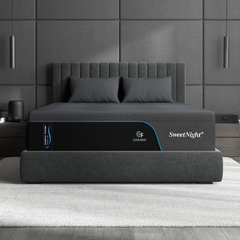
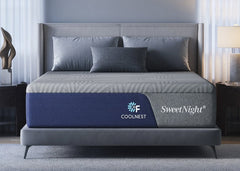
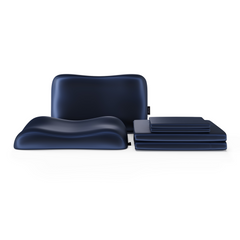
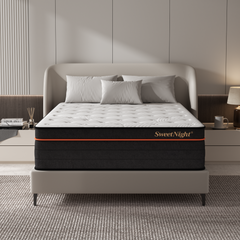
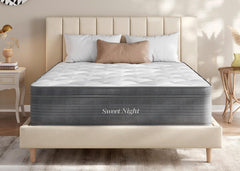
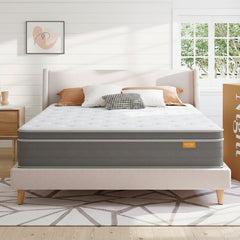
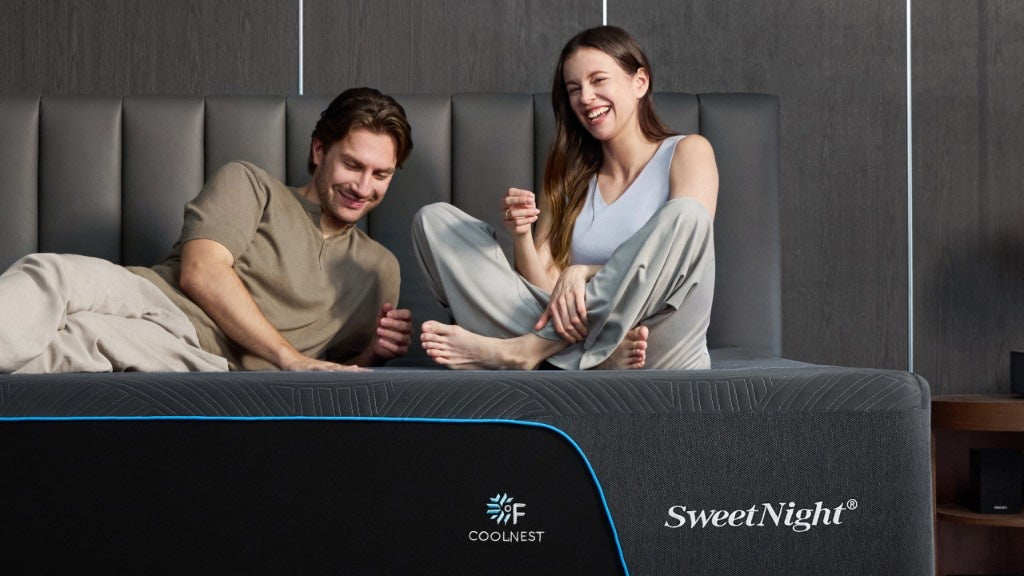
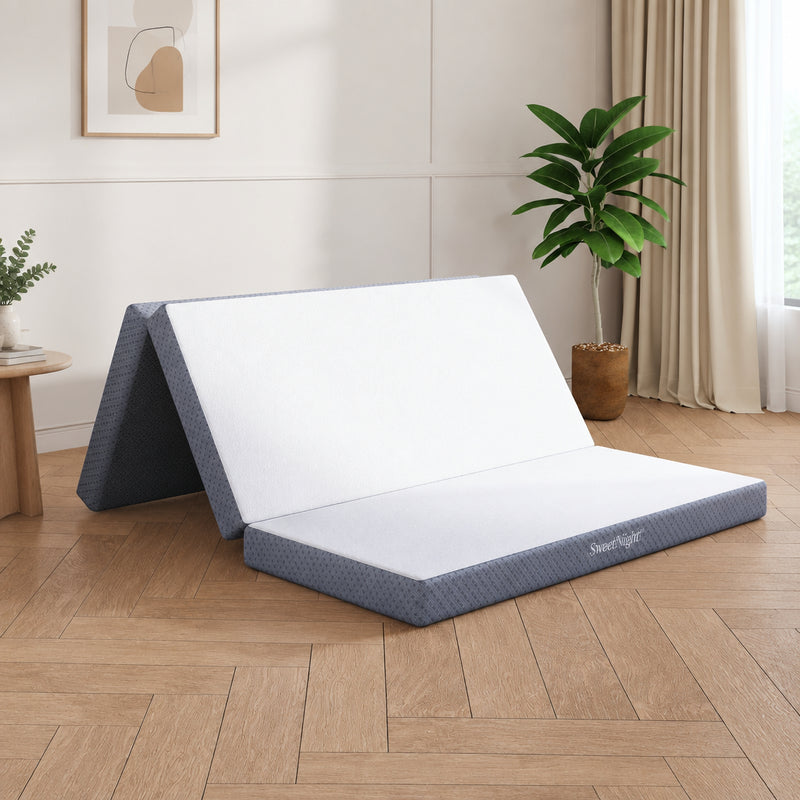
There is a failure mode worth naming here, because it silently defeats the entire protocol. You can do the light work perfectly, hit your bedtime, and still lie there warm and awake because the heat has nowhere to go — the room is cool but the bed is not. A mattress that traps heat against your back blocks the exact temperature fall that sleep onset needs. If you fall asleep fine in a hotel and struggle at home, that is the signature. Room temperature versus mattress covers how to tell which one is your bottleneck, and the CoolNest® Ultra cooling memory foam mattress is built for the case where it turns out to be the bed.
What to Do When You're in Bed Early and Still Awake
You will hit this during the shift. How you handle it decides whether you end up with a new schedule or with insomnia.
The 20-minute rule: if you are still awake after roughly 20 minutes, get up.
This feels like giving up and is the opposite. Your brain builds associations with places. Lie in bed awake and frustrated night after night and it learns that bed is where you are alert — a conditioned response that outlives the original scheduling problem and is a core mechanism behind chronic insomnia. Getting up protects the association.
Do it properly:
- Leave the bedroom if you can. Different room, different chair.
- Keep the lights low — you are trying to avoid a dose of light that pushes your clock back.
- Do something dull and analogue. A dry book, folding laundry. Not your phone, not email, not anything with a plot you care about.
- Go back when you feel genuinely drowsy, not when you decide enough time has passed.
- Repeat as needed. Twice in a night is normal early on.
- Do not move your wake time. Whatever happened overnight, get up at the fixed hour. This is the rule that makes the next night work.
Also: no clock-watching. Turn it away from you. Nothing good comes from knowing it is 1:14 a.m.
When Being a Night Owl Is Actually a Sleep Disorder
There is a real difference between a late schedule and a clinical condition, and it matters because the second one does not respond well to self-directed protocols.
Delayed Sleep-Wake Phase Disorder is a persistent, marked shift of the whole sleep window — typically falling asleep between 2 and 6 a.m. and waking late morning or afternoon — that has been stable for months, resists ordinary schedule changes, and causes real problems with work or school. The distinguishing feature is that sleep is normal when the person is allowed to keep their own hours. They are not sleeping badly; they are sleeping at the wrong time relative to everyone else.
Talk to a clinician or sleep specialist if:
- You have run something like the protocol above for six weeks with no movement.
- Your natural sleep onset is after 2 a.m. and always has been, going back years.
- You sleep well and wake refreshed when nothing forces your schedule, but cannot function on a conventional one.
- You are considering melatonin for phase-shifting. Timing is everything with it and the useful protocol is not the one on the bottle.
- You snore heavily, wake gasping, or feel unrefreshed no matter how long you sleep — that points somewhere else entirely.
Being a genuine evening chronotype is not a disorder, by the way. Chronotype is substantially heritable, and a moderate owl who functions fine on a 12:30–7:30 schedule has nothing to fix. If you are curious where you actually sit, are you an early bird or a night owl walks through it. The protocol on this page is for people whose schedule is out of step with a life they cannot rearrange — not for people who simply prefer late nights and have built a life that accommodates them.
The Bedroom Conditions That Make Early Bedtimes Stick
Once the clock has moved, the environment decides whether the new bedtime survives contact with reality. Three things do most of the work.
- Darkness that starts before you sleep. Blackout the room, and treat the last hour before bed as part of the dark period rather than the lit one. Light leaking in at 5:30 a.m. in summer will also drag your wake time earlier than you want — useful during a shift, less so afterwards.
- Sound that does not spike. Steady sound is far less disruptive than intermittent sound; a fan or white noise raises the floor so the door slamming downstairs does not pull you out of light sleep. This matters more for some people than others — see why light sleepers are more sensitive to their sleep environment.
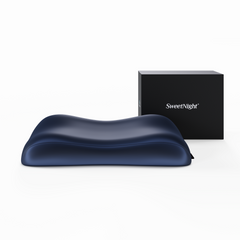
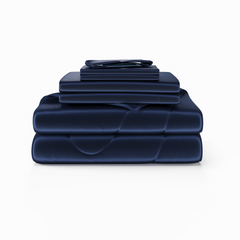
- A surface that lets heat leave. The temperature fall that starts sleep continues through the first cycles. A bed that traps heat produces the 2 a.m. wake-up that shortens your night from the other end, which is a quiet way to lose a schedule you worked weeks to build. Practical fixes are in how to stay cool while sleeping, and current mattress and bedding offers are on the SweetNight deals page.
Frequently Asked Questions
How do I go to bed early if I work nights or rotating shifts?
The protocol above assumes a stable schedule, which shift work removes. The general principle still holds — light controls timing — but the application is different: bright light during your shift, dark glasses on the commute home, and a genuinely blacked-out room for daytime sleep. Rotating shifts in particular are worth discussing with an occupational health clinician rather than self-managing.
Can I catch up on sleep at the weekend?
Partly, and at a cost. An extra hour recovers some sleep debt with little damage. Three extra hours delays your light exposure enough to push your clock back, which is why Sunday nights are so hard. If you are mid-shift, cap the lie-in at an hour and take a short early-afternoon nap instead.
Do blue light glasses help you sleep earlier?
Less than the marketing suggests. They reduce one part of the signal while leaving total light intensity untouched, and intensity is what your circadian system responds to most strongly. Turning the lights down is more effective than filtering their colour. If you like them, use them as an addition to dimming, not a replacement.
How long until going to bed early feels natural?
Falling asleep at the new time usually comes first — a few weeks. Wanting to go to bed at it takes longer, often two to three months, and it is the stage where people relapse, because the schedule works but has not yet become the default. Protect the wake time through that period and it consolidates.
Does exercise help you fall asleep earlier?
Yes, with a timing caveat. Regular daytime exercise deepens sleep and helps the schedule hold. Vigorous exercise in the last hour or two before bed raises core temperature and sympathetic arousal at exactly the wrong moment. Morning exercise outdoors is doubly useful, because you get the light dose at the same time.
Should I nap while I'm shifting my schedule?
A short nap — 20 minutes, before about 2 p.m. — is fine and can keep you functional during the tired first week. Long or late naps bleed off the sleep pressure you need to fall asleep at your new earlier bedtime, so they directly undercut the shift.
The Bottom Line
Going to bed early is not a decision you make at bedtime. It is the result of a clock that has been moved earlier, and that clock moves on light and consistency — not on resolve.
Fix the wake time. Get outside in the morning. Dim the evening. Move bedtime 15 minutes at a time and hold when it stalls. Give it three to four weeks for a two-hour shift, and get out of bed when you find yourself lying awake, because protecting the association between bed and sleep is worth more than any single night.
Do that and the early bedtime stops being something you force. It becomes the time you happen to get sleepy — which is the only version that lasts.