

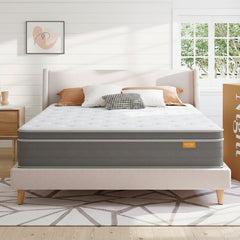
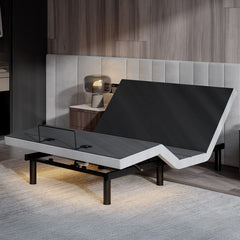






Sleeping upright is not unhealthy in itself. It can help with nighttime acid reflux, some breathing problems and recovery from shoulder surgery. The problems come from doing it for weeks on end in a legs-down position: sitting up for too long raises the risk of deep vein thrombosis, and Cleveland Clinic lists sleeping in a chair or recliner as a risk factor for chronic venous insufficiency. Most people who need their head raised get the benefit from a partial incline, roughly 10° to 30°, lying in a bed rather than sitting in a chair.
This guide covers who benefits, what the risks are, how steep you need to go for each purpose, and how a recliner compares with an adjustable bed.
Is Sleeping Upright Bad for You?
The Sleep Foundation's physical-therapist-reviewed guide to sleeping upright puts it plainly: sleeping upright isn't inherently healthy or unhealthy, as long as you can remain comfortable and get enough quality sleep. The same page adds two important qualifiers. First, sleeping upright should be a temporary measure until you can sleep comfortably in bed. Second, sitting upright for too long can increase the risk of deep vein thrombosis (DVT), a blood clot in a deep vein that can be dangerous.
There is also a practical problem. Your muscles relax during sleep, especially during REM sleep, which makes it hard to hold a seated position. The head drops forward or to the side, the body slumps and slides, and many people wake up with a sore neck and a stiff lower back. A fully upright position fights your body all night; a moderate incline does not.
So the useful question is how much elevation you need, for how long, and in what kind of furniture.
Who Benefits From Sleeping With Your Head Elevated
These are the groups for which our source library has real support, with the angles or heights that were actually tested.
| Reason | What the evidence or guidance says | Elevation used |
|---|---|---|
| Nighttime acid reflux | ACG 2022 guideline suggests raising the head of the bed for nighttime symptoms (conditional recommendation, low level of evidence) | Head raised 6–8 inches (NIDDK, Cleveland Clinic) or bed head end 6–9 inches (Mayo Clinic) |
| Obstructive sleep apnea, especially back-related | Head-of-bed elevation lowered breathing events in small studies, mostly non-randomized | 7.5° and 30° in the studies |
| Snoring | A 22-person pilot stopped about two in three snoring episodes at 20°, without a significant drop in overall snoring | 10°–20° |
| Chronic heart or lung disease, COPD, severe obesity | Cleveland Clinic and the Sleep Foundation note many people breathe and sleep more comfortably with the head raised | Not specified; individual |
| After shoulder surgery | A physical therapist quoted by the Sleep Foundation says many patients find a recliner the only comfortable option at first | Whatever your surgeon advises |
Reflux
Gravity keeps stomach acid where it belongs. The Sleep Foundation notes that sitting upright makes it harder for stomach acid to flow up the esophagus than lying flat. You do not need to sit up to get that effect; a raised torso and lying on your left side is the combination with the best support. Our guide to the best sleeping position for acid reflux covers the evidence and setup.
Sleep apnea and snoring
The American Academy of Sleep Medicine explains that on your back, gravity can let the tongue fall back and narrow the airway. Raising the head counters some of that. In a 2025 multicenter study, 30° head-of-bed elevation cut the apnea-hypopnea index from 25.7 to 17.8 events per hour compared with lying flat on the back, and half of the patients with OSA responded; lying on the side did even better. A 2017 study found that even 7.5° lowered the median index from 15.7 to 10.7 events per hour. These were small studies, and a 2019 Cochrane review found CPAP lowers breathing events more than positional approaches. Elevation is an add-on, not a replacement. Our article on the adjustable bed for snoring and sleep apnea goes deeper.
Heart and lung conditions
Cleveland Clinic's article on the best sleep positions for breathing problems quotes a sleep specialist saying that a lot of people with chronic heart or lung diseases sleep most comfortably with their head elevated. It lists a reclining chair (with your healthcare provider's OK) and an adjustable bed as options, and suggests a pillow or bolster under the knees to reduce stress on the back.
Sleeping in a Recliner: Pros and Cons
A recliner is the default for many people after surgery because it is already in the living room and it is easy to get out of. Those are real advantages for a few nights. As a long-term bed, it has three problems.
1. Your legs stay down
In a typical seated recline, your knees are bent and your feet sit well below your heart. Cleveland Clinic's page on chronic venous insufficiency lists "sleeping in a chair or recliner" among the risk factors, alongside sitting or standing for long periods. The same page advises lifting the legs above the level of the heart to reduce pressure in the leg veins. A recliner does roughly the opposite.
2. You cannot really change position
In bed, people shift position through the night. In a recliner you are mostly locked onto your back in one shape. That makes side sleeping, the best position for reflux and for many people with positional apnea, close to impossible.
3. You slide and slump
Seated sleepers drift down the seat. The only measurements come from hospital beds: in studies of 10 healthy volunteers funded by and affiliated with the bed maker Hill-Rom, sliding 10 cm toward the foot cut the real torso angle by about 9° at a 30° setting, and researchers studying head-of-bed elevation linked that sliding to shearing forces at the tailbone that raise the risk of pressure injuries. For a healthy adult on a short recovery, that is mostly a comfort issue. For someone frail or immobile who sleeps upright every night, it is a skin-safety issue worth raising with a nurse or doctor.
How Upright Should You Sleep? An Angle Guide
Most people who search for "sleeping upright" need far less elevation than they think. The table below lists angles that appear in the research, alongside the head-section angles SweetNight uses for its own preset positions. Treat them as starting points, and remember that the bed's angle is not the same as your torso's if you slide down.
| Head-section angle | Where it comes from | Good for |
|---|---|---|
| 7.5° | OSA studies, including one on an adjustable bed at home | Mild apnea improvement with little change to how the bed feels |
| About 10°–18° | Geometry: roughly a 6–8 inch head rise on a hinged bed, depending on body size | Nighttime reflux |
| 15° | SenseSync Anti-Snore preset; SweetNight's "Head & Neck Relief" position | Snoring, reflux, light reading |
| 20° | Anti-snoring bed pilot study | Snoring episodes (small pilot) |
| 30° | OSA studies; SweetNight's "Relaxed Lounge" position | Apnea studies; reading and TV |
| 45° | SweetNight's "Bedtime Lifestyle" position | Working or eating in bed; not a sleeping angle for most |
| 60° | SweetNight's "Assisted Sitting" position | Sitting up with less effort, meals in bed, getting ready to stand |
One note on sources: the Sleep Foundation's sleep apnea page suggests 30 to 60 degrees for people who cannot stop sleeping on their back. The studies in our library tested 7.5° to 30°, so we would not go past 30° for sleep without a doctor's reason.
If your goal is "less reflux" or "less snoring," start at the low end of the range and go up only if it does not help. Every extra degree makes sliding and hip stiffness more likely.
Recliner vs Adjustable Bed for Sleeping With Your Head Elevated
An adjustable bed exists largely to solve the recliner's problems, so the comparison is lopsided on sleep and closer on cost and convenience.
| Recliner | Adjustable bed | |
|---|---|---|
| Lie fully flat | Usually not | Yes, one button |
| Legs above heart level | Usually not | Yes, with an independent foot section |
| Side sleeping | Very difficult | Possible at moderate angles |
| Fine-tune the angle | Varies by model | Continuous, with saved positions |
| Sleeping with a partner | No | Yes; split bases let each side differ |
| Getting in and out | Easy | Easier with the head raised first |
| Space and cost | You may already own one | Replaces your bed base; needs a compatible mattress |
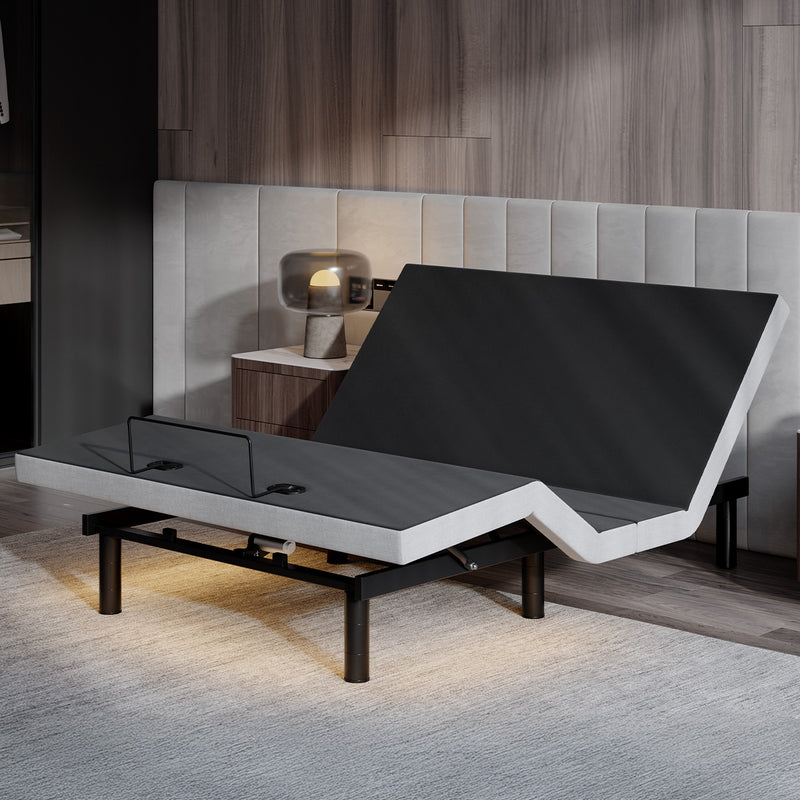
The legs row is the one that matters for long-term use. On the SenseSync adjustable bed base, head and foot run on separate motors, so you can keep your torso raised and still lift your legs. (Disclosure: SweetNight makes the SenseSync base.) Its Zero Gravity preset raises the legs above heart level with the head slightly up; our explainer on the zero gravity position covers what that position can and cannot do. The 60° Assisted Sitting position is meant for sitting up with less core effort, which helps during recovery, but it is a sitting position, not a sleeping one.
A base comes with conditions. SenseSync is designed for all-foam memory foam mattresses 12 or 14 inches thick, not hybrid or innerspring mattresses, and it comes in Twin XL, Full, Queen and Split King. If a short recovery is the only reason you are considering one, a recliner or a wedge for a few weeks may be the sensible choice.
How to Sleep Upright Comfortably When You Have To
After some surgeries, or during a bad stretch of reflux or breathlessness, you may need a steeper angle for a while. These habits make it easier on your body.
- Bend at the hips. In bed, line up the crease of your hips with the hinge so your back stays straight on the slope instead of curling.
- Support the knees. A bolster or slightly raised foot section keeps you from sliding and, per Cleveland Clinic, reduces stress on your back.
- Support the neck. A small, soft pillow or a travel-style neck pillow keeps your head from falling sideways when muscles relax in deep sleep.
- Get the legs up during the day. For people with vein problems, Cleveland Clinic advises raising the legs above heart level for 30 minutes or longer at least three times a day. Our guide to sleeping with legs elevated covers how to do it safely.
- Move when you wake. Flex your ankles and change position whenever you surface during the night.
- Come down in steps. As you recover, lower the angle a few degrees every couple of nights instead of going straight to flat.
Getting out of bed is where people strain themselves. SweetNight's suggested sequence on an adjustable base is to lower the foot section flat first, raise the head slowly from about 30° to 50°, then swing your legs over the side. Follow your surgeon's or therapist's instructions if they differ.
When Needing to Sleep Upright Is a Warning Sign
Choosing to sleep propped up for comfort is one thing. Suddenly needing to sit up to breathe is another. Cleveland Clinic notes that lying flat can leave some people short of breath and that people with chronic heart or lung disease often sleep best with the head raised, so a new or worsening need to sleep upright deserves a call to your doctor rather than a furniture change.
Other reasons to get checked:
- Snoring followed by silent pauses and choking or gasping sounds, which the AASM calls a likely sign of sleep apnea.
- Heartburn most weeks, or reflux that wakes you despite lifestyle changes.
- New swelling or pain in one leg, especially after long periods of sitting.
An adjustable bed or a recliner is a positioning tool. It can make the right position easier to keep, but it does not diagnose or treat any of these conditions.
FAQ
Is it bad to sleep sitting up?
Not in itself. The Sleep Foundation says sleeping upright is neither healthy nor unhealthy as long as you stay comfortable and sleep well. It helps some people with reflux, breathing problems or a recent shoulder surgery. The drawbacks come with doing it for long stretches: sitting upright for too long can raise the risk of deep vein thrombosis, and many people wake stiff or slumped.
Is it OK to sleep in a recliner every night?
For a short recovery period, often yes, with your doctor's agreement. As a permanent habit it has drawbacks. Cleveland Clinic lists sleeping in a chair or recliner as a risk factor for chronic venous insufficiency, and the Sleep Foundation says sleeping upright should be temporary. A recliner also keeps your legs lower than your heart and makes side sleeping difficult.
What is the best angle to sleep with your head elevated?
It depends on why you are raising it. For nighttime reflux, a head rise of about 6 to 8 inches, which is roughly 10 to 18 degrees on a hinged bed, is the usual target. Sleep apnea studies tested 7.5 and 30 degrees. Few people need to sleep steeper than 30 degrees, and angles of 45 degrees and up are better for reading or eating than sleeping.
Can sleeping upright cause blood clots?
The Sleep Foundation warns that sitting upright for too long can increase the risk of deep vein thrombosis, a potentially fatal condition. If you need to sleep upright, keep the legs raised when you can, change position, and move your legs when you wake. Seek care promptly for new swelling or pain in one leg.
Is sleeping with your head elevated good for sleep apnea?
It can reduce breathing events for some people, especially those whose apnea is worse on their back. In one study, 30 degrees of head elevation lowered the average apnea-hypopnea index from 25.7 to 17.8 events per hour. It is not a replacement for CPAP or a sleep evaluation. Snoring with breathing pauses or gasping should be checked by a doctor.