



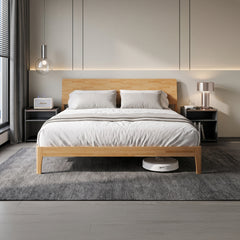



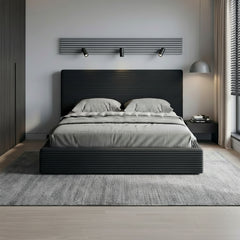
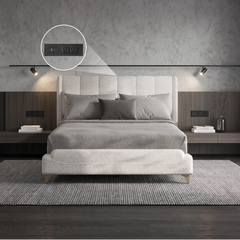

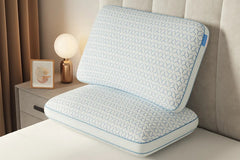








Sleeping with your legs elevated can reduce swelling in the feet, ankles and lower legs, but only if your feet end up above the level of your heart. That's the line Cleveland Clinic and Mayo Clinic both use. For chronic venous insufficiency, Cleveland Clinic says a provider may suggest 30 minutes or more of leg elevation at least three times a day, so a short session in the evening often does more good than propping your feet on a pillow that slides off by midnight.
This guide covers what leg elevation is good for (and what it isn't), how to get the height right with pillows or an adjustable bed, how it compares with the legs-up-the-wall pose, and when swelling needs a doctor rather than a pillow.
What Are the Benefits of Sleeping With Legs Elevated?
The honest list is shorter than most wellness articles suggest. Leg elevation has a clear job, which is moving pooled fluid and blood out of the lower legs. Everything beyond that is either indirect or unproven. Here's how the common claims hold up against the sources we checked:
| Claimed benefit | What the evidence says | Strength |
|---|---|---|
| Less swelling in feet and ankles | Mayo Clinic and Cleveland Clinic both advise raising swollen legs above heart level to help fluid drain | Standard medical advice |
| Less pressure in leg veins (venous insufficiency) | Cleveland Clinic: legs above heart level can reduce pressure in leg veins; 30+ minutes, at least 3 times a day | Standard medical advice |
| Better circulation | One small 1994 study: raising the foot 30 cm above heart level increased skin blood flow by a median 45% in people with venous insufficiency | Limited (15 patients, measures skin blood flow only) |
| Less lower back strain | Back sleepers are often advised to put a pillow under the knees; that is a knee bend, not full leg elevation | Positional advice, different goal |
| Lower blood pressure, fewer headaches | Cleveland Clinic, discussing legs up the wall: no evidence for these claims | Not supported |
| Deeper or better sleep | Not studied in anything we could verify | Unknown |
If your legs don't swell or ache, there's no strong reason to sleep with them raised. If they do, elevation is one of the simplest things you can do, and the details below decide whether it works.
Why Elevating Your Legs Reduces Swelling
When you stand or sit, gravity pulls blood and fluid toward your feet. Your leg veins push blood back up toward the heart with help from one-way valves and the squeeze of your calf muscles. After a long day on your feet, a long flight or hours at a desk, some fluid stays behind in the tissue, and your ankles puff up or your legs feel heavy. When the valves themselves don't close well, the condition is called chronic venous insufficiency (CVI), and blood pools in the lower legs more or less every day.
Raising your legs reverses the slope. With the feet higher than the heart, gravity helps drain the lower legs instead of filling them. A Cleveland Clinic podiatrist explains that elevating your legs above the level of your heart helps drain built-up fluid from the lower extremities.
That's also why the height rule matters so much. A foot rest that keeps your feet below your chest only slows the pooling. It doesn't reverse it. Cleveland Clinic's chronic venous insufficiency guidance lists "sitting or standing for long periods of time" among the risk factors, and it also lists sleeping in a chair or recliner, a position that leaves the legs hanging below the heart for hours.
How High Should You Elevate Your Legs?
Higher than your heart. That's the whole rule, and it's easy to get wrong in bed.
Lying on your back, your heart sits a few inches above the mattress because your chest has depth. A single pillow under the heels usually lifts the feet only to about chest height, which is level at best. You want your ankles visibly higher than your breastbone when you look down the bed.
For a sense of scale, the one physiology study in our sources, Abu-Own and colleagues in the Journal of Vascular Surgery, raised the foot 30 cm (about 12 inches) above heart level and recorded a median 45% rise in skin blood flow in 15 people with CVI. That's an old, small study that measured microcirculation rather than swelling, so don't treat 12 inches as a prescription. It does show the target is well above a single pillow's height.
Support the whole lower leg rather than the heels alone. A pillow wedged under the heels alone leaves the knee straight or pushed back and the calves unsupported, and most people find that uncomfortable within minutes. A slight bend at the knee with the calves resting on a slope is easier to hold.
How Long Should You Elevate Your Legs to Reduce Swelling?
The clearest number comes from Cleveland Clinic's CVI page: a provider may suggest raising the legs above the heart for 30 minutes or longer at least three times per day. Mayo Clinic's edema guidance is looser: hold the swollen part above heart level several times a day, and wearing compression garments can help mild edema too.
What that means in real life:
- Sessions beat occasional moments. Putting your feet up for five minutes during an ad break doesn't meet the 30-minute mark that CVI advice uses.
- Evening is the easiest window to use. Swelling tends to build over the day, and half an hour of reading or TV with your legs above your heart counts as one session.
- Overnight elevation is a bonus, not the main event. Mayo Clinic says raising the swollen area during sleep can "sometimes" help. It's a reasonable thing to try, but the daytime sessions are what the advice is built on.
If a doctor has given you a specific schedule, follow that instead. The numbers above are general guidance for common swelling, not a plan for a diagnosed condition.
Is It OK to Sleep With Your Legs Elevated All Night?
For most people, yes, provided it's comfortable. The trouble is that comfort is often the limiting factor.
Leg elevation works best on your back. Side sleepers roll off pillow stacks within an hour, and even on a base the raised foot section feels odd for someone who likes to curl up. Some people also notice tight hip flexors or a stiff lower back if the knees are held high and bent all night. If you find yourself waking with a sore back, lower the legs a few degrees or move the elevation to a pre-sleep session and sleep flat. Our guide to using an adjustable bed for back pain covers positions that are kinder to the lower back.
A compromise that works for many people: do a solid 30-minute session before lights out, then lower the legs to a gentle angle you can actually sleep in. Your partner matters here too. If they don't want their feet raised, that's a problem on a single-deck bed, which we cover in the setup section.
Legs Up the Wall vs Elevating Your Legs in Bed
Legs up the wall (viparita karani in yoga) means lying on the floor with your hips near a wall and your legs straight up against it. It gets a lot of attention, and Cleveland Clinic's article on the health benefits of legs up the wall gives it a fair hearing. The main benefit, according to the integrative medicine doctor quoted there, is returning fluid stored in the legs to circulation and reducing lower-leg swelling.
The same article is clear about the limits. It recommends holding the pose for up to two to three minutes, once or twice a day, and it notes there's no evidence behind claims that it helps headaches or high blood pressure.
| Legs up the wall | Legs elevated in bed | |
|---|---|---|
| Leg angle | Near vertical | Gentle slope, feet above heart |
| Typical duration | Up to 2–3 minutes, once or twice a day | 30+ minutes per session for CVI advice; can extend into sleep |
| Where | Floor, next to a wall | Bed, sofa or adjustable base |
| Good for | A quick reset after standing or a workout | Longer sessions and daily routines for swelling |
| Downsides | Hard to get up from the floor; not something to sleep in | Needs the right height; pillows shift |
Our take: legs up the wall is a nice few-minute habit, but it isn't a substitute for the longer elevation sessions that venous insufficiency advice describes. If you're older or have trouble getting down to the floor, the bed version gets you the same direction of gravity with far less effort.
Pillows vs an Adjustable Bed for Leg Elevation
Cleveland Clinic's advice is refreshingly practical: prop your legs up on pillows, books or anything else that's available. You don't need special equipment to start. The problems show up when you try to do it every day.
- Pillows compress, slide apart and rarely reach true above-heart height unless you stack several. They're fine for a trial run.
- A leg wedge holds its shape and gives a consistent slope. It's a good middle option, and our wedge pillow vs adjustable bed guide compares the two in more detail.
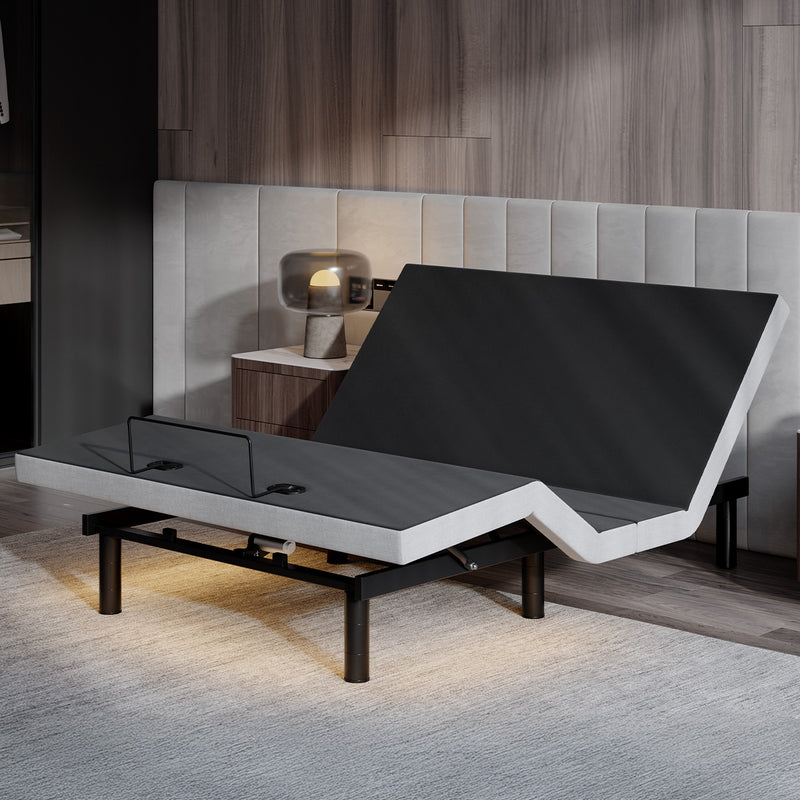
- An adjustable base raises the foot section under the mattress, so nothing shifts overnight and you can fine-tune the angle from the remote.
- A recliner is the one to avoid for this purpose. It keeps the hips bent and the feet below the heart, and Cleveland Clinic lists sleeping in a chair or recliner as a CVI risk factor. If you need to sleep partly upright for another reason, our guide to sleeping upright explains how to do it without leaving your legs hanging down.
One caveat with any base: the foot section lifts the thighs and knees first, and on some designs the feet end up lower than the knees. Check with your own eyes that the ankles are above chest level. If they aren't, a thin pillow under the calves on top of the raised foot section closes the gap.
How to Set Up an Adjustable Bed for Leg Elevation
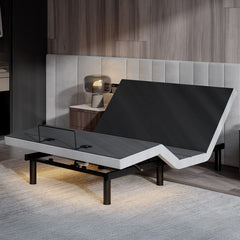
An adjustable base with independent head and foot motors lets you raise your legs while keeping your head flat, which is the position swelling advice describes. On the SenseSync adjustable bed base, head and foot are driven by separate motors, and SweetNight lists a 20° Leg Elevation position aimed at heavy, tired legs after long periods of sitting or standing. (Disclosure: SweetNight makes the SenseSync base.)
- Start with the head flat and raise the foot to about 20 degrees. SweetNight's product team suggests head flat and foot 20–35 degrees for tired or swollen legs.
- Look down the bed. If your ankles aren't clearly above your chest, raise the foot further or add a slim pillow under the calves.
- Stay there for at least 30 minutes if you're following CVI-style advice. Reading or watching something makes the time pass.
- Before sleep, either keep the position if it's comfortable or drop the foot a little to an angle you can sleep in.
- Save the setting. SenseSync's M1 and M2 buttons store positions (press and hold to save, press to recall), so your leg session is one button press the next evening.
The zero gravity position is the other preset people reach for. On SenseSync the Zero Gravity preset raises the legs above heart level with the head slightly raised, which many people find more restful than a flat-head leg lift. For pure swelling, keeping the head flat makes it easier to get the feet above the heart. For relaxing, zero gravity is often more comfortable. Our adjustable bed positions guide lists the other settings.
If you share the bed, remember that a Queen or Full base moves as one piece. A partner who doesn't want their feet raised may prefer a split king adjustable bed, where each side has its own base and remote.
When Swelling Needs a Doctor, Not a Pillow
Mild swelling that builds over a long day and fades overnight is common. Cleveland Clinic's edema overview recommends elevating the legs and feet to help fluid drain as part of everyday care. Some patterns need a medical opinion instead of home care:
- Swelling in one leg only, especially with pain, warmth or redness.
- Swelling that appears suddenly or keeps getting worse.
- Swelling together with shortness of breath or chest discomfort. Treat this as urgent.
- Skin changes on the lower legs, such as discoloration or sores that heal slowly.
- Swelling that doesn't go down overnight or after a few days of elevation.
If you have a known heart, kidney or circulation condition, ask your doctor how high and how long you should raise your legs before you make it a nightly routine. Leg elevation is safe for most people, but some conditions change the advice, and your care team knows your situation.
FAQ
Is it good to sleep with your legs elevated?
It can help if your legs or ankles swell or feel heavy. Mayo Clinic says raising a swollen leg above heart level helps, and that raising it during sleep can sometimes help too. For people without swelling there is little evidence of a benefit, and some find the position uncomfortable for a whole night. Lying flat is perfectly fine if your legs feel normal.
How high should your legs be elevated to reduce swelling?
Above the level of your heart. That is the line Cleveland Clinic and Mayo Clinic both use. Lying on your back, your heart sits a few inches above the mattress, so your feet and ankles need to end up clearly higher than your chest. One small study of people with venous insufficiency raised the foot about 12 inches (30 cm) above heart level.
How long should you elevate your legs?
For chronic venous insufficiency, Cleveland Clinic says a provider may suggest raising your legs above heart level for 30 minutes or longer, at least three times a day. For general swelling, Mayo Clinic suggests several times a day. The legs-up-the-wall yoga pose is much shorter, about two to three minutes once or twice a day.
Is legs up the wall better than elevating your legs in bed?
They do different jobs. Legs up the wall is a short, steep inversion, held for up to two or three minutes, that Cleveland Clinic says can return fluid from the legs. Elevating your legs in bed is gentler and can be held for 30 minutes or more, which is what venous insufficiency advice calls for. Cleveland Clinic adds that there is no evidence legs up the wall helps headaches or blood pressure.
Is sleeping in a recliner good for swollen legs?
Usually not. A recliner keeps your hips bent and your feet below heart level, and Cleveland Clinic lists sleeping in a chair or recliner as a risk factor for chronic venous insufficiency. If you need to sleep partly upright, a bed that also lifts the legs, or lying flat with the legs raised, is closer to what swelling advice describes.