

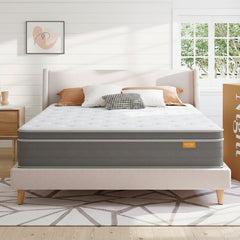
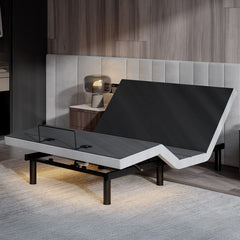
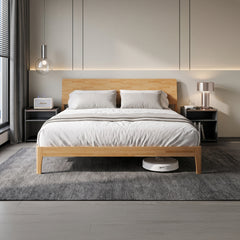




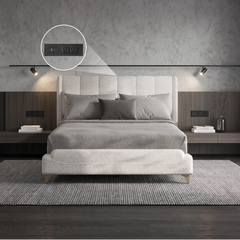









An adjustable bed can be a very good fit for an older adult, mostly for one unglamorous reason: it makes the trip from lying down to standing up slower, easier and more controlled. The motor does the sitting-up work, and because the bed still goes flat, you aren't stuck sleeping in a recliner. It is not a hospital bed, though. Medicare treats consumer power beds as comfort items and doesn't pay for them, and they don't come with the rails or attachments a frail or bedbound person may need.
Below: the getting-up routine we'd program on any base, the features that earn their keep (and the ones that don't), the exact Medicare wording, and when to skip a consumer base altogether.
Are Adjustable Beds Good for Elderly Sleepers?
The people who get the most from a base share a problem rather than an age: getting from flat to sitting takes rolling, pushing and grabbing the headboard. Arthritic shoulders, a weak core after an illness or a back flare-up turn sitting up into a small workout at 3 a.m., when you're least alert.
A few other groups do well too:
- People who read, eat or watch TV in bed on a pile of pillows that collapses by the second chapter.
- People told to sleep with the head raised. The CDC's patient brochure on dizziness when standing suggests you try sleeping with extra pillows to raise your head; a base does that without the pillows sliding apart.
- People whose legs feel heavy and swollen by evening. Our guide to sleeping with your legs elevated covers how high and for how long.
Who gets little from it? Someone who sleeps flat, sits up without effort and never reads in bed. For that person a base is expensive furniture. Anyone who needs turning by a caregiver, needs rails or can't safely work a remote belongs in the hospital-bed discussion further down.
Falls Among Older Adults: Why the Bedside Matters
The CDC's numbers are blunt. Falls among adults 65 and older caused over 43,000 deaths in 2024 and about 4.5 million emergency department visits, making falls the leading cause of injury death in that age group. The same page makes the point that gets lost in those figures: falls can be prevented.
Several risks stack up at the bedside. You're half awake, the room is dark and you're often hurrying to the bathroom. For some people, blood pressure also drops when they go from lying to sitting or sitting to standing, which the CDC calls postural (orthostatic) hypotension. Its advice is very physical: get out of bed slowly, first sit up, then sit on the side of the bed, then stand, with something to hold on to.
No bed prevents falls, and be suspicious of any seller that implies otherwise. A good base makes two parts of that routine easier, the staged sit-up and the lighting. Clutter, footwear, medications and eyesight are still on you.
How to Get Out of an Adjustable Bed Safely, Step by Step
This is the routine we'd set up for a parent. It follows the CDC's sit-up, sit-on-the-edge, then-stand order and lets the motors do the hard part.
- Light first. Turn on the under-bed light or lamp before your feet move. The CDC's home-safety checklist suggests a lamp close to the bed and a nightlight on the path to the bathroom.
- Lower the foot section flat. Raised knees make it hard to swing your legs sideways. Flat legs first, always.
- Raise the head slowly, from around 30° up to roughly 50°, and stay there for a few breaths. That's the "first sit up" step, done by a motor instead of your stomach muscles.
- Swing your legs out and sit on the edge, feet flat on the floor. If you feel light-headed, stay seated.
- Stand with support from something that doesn't move: a heavy nightstand, the walker you already use, or a professionally installed support. Not a table on casters.
- Getting back in: sit on the edge, swing your legs up with the head still raised, then lower the head.
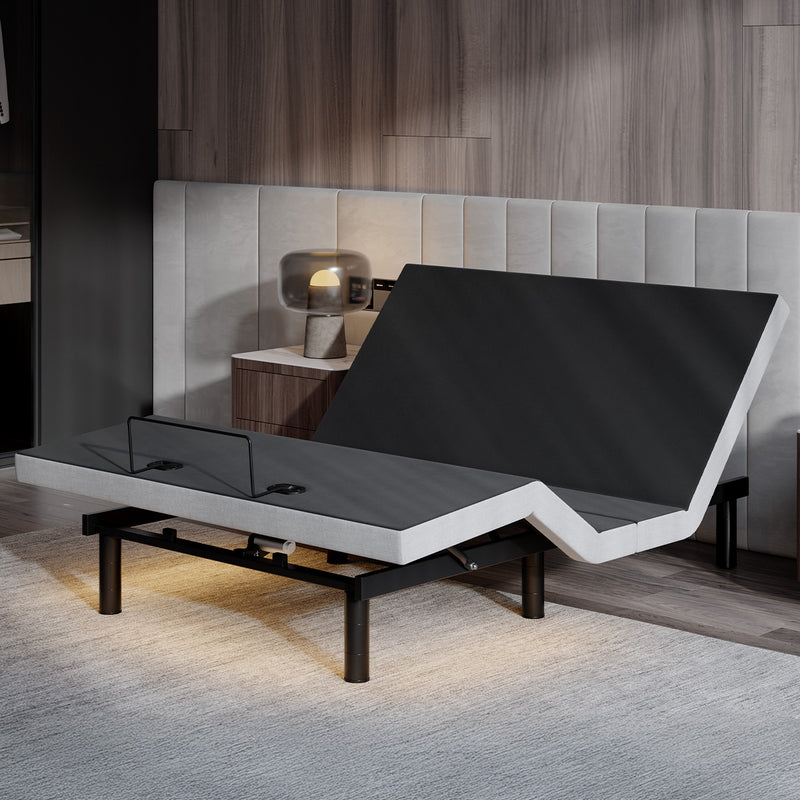
On the SweetNight SenseSync™ Adjustable Bed Base (disclosure: SweetNight makes it), head and foot run on separate motors, so the legs go flat while the head stays put. Once you find the head angle that feels right for sitting up, press and hold M1 to save it, and from then on one button brings you there. SweetNight's positioning guide also lists a 60° "Assisted Sitting" setting for seniors, recovery and in-bed meals. Treat every angle as a starting point; a preset's label can't tell you how your body will feel at it.
Best Adjustable Bed Features for Seniors
Spec sheets lead with massage and presets. For older sleepers, this is the order we'd rank things in, and what to check on any base.
| Feature | Why it matters for older sleepers | What to check |
|---|---|---|
| Separate head and foot motors | The safe getting-up routine needs flat legs with the head up | Two motors, not one driving a linked frame |
| One-touch Flat and a memory button | Fewer decisions at night; a caregiver can save the sit-up position once | Buttons you can find by feel; how saving works |
| Under-bed light with auto-off | Light on the floor before your feet land | Warm light option, brightness control, timer |
| Child lock | Stops grandkids, pets or a stray elbow from moving the bed | Whether it's simple enough to use every visit |
| Obstacle protection | Less risk of trapping a foot, paw or toy under a moving section | Whether the base stops and reverses on resistance |
| Adjustable legs | Sets a sitting height that's easy to stand up from | Leg increments, maximum leg height, zero-clearance option |
| Capacity including the mattress | A caregiver sitting on the edge adds real load | Whether the rating includes the mattress; per-side rating on split kings |
| Power-outage backup | A raised bed in a blackout is awkward to leave | Battery type, and whether it's included |
Two features we'd call overrated for this buyer. Massage is pleasant, but it's a comfort feature, and it adds buttons. Zero gravity is a fine resting position and a poor one to get out of, because your knees are up and your hips are low.
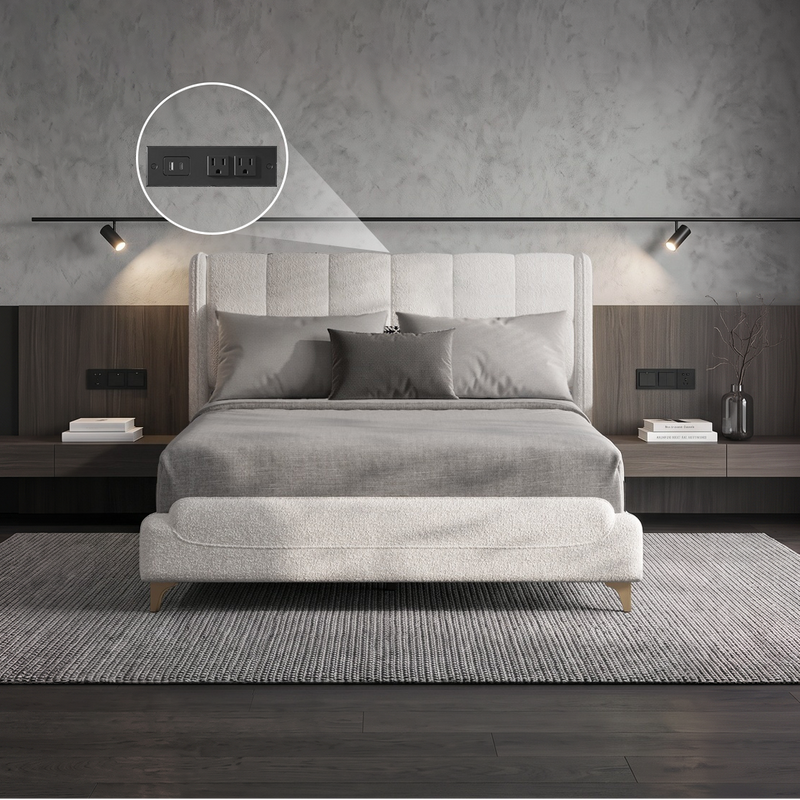
Here's how the SenseSync adjustable bed base answers that list. Dual motors and a one-touch Flat button. An under-bed LED strip that switches between white and warm light, dims, and turns off after 10 minutes. A Child Lock you set by holding Head Down and Foot Down together for 3 seconds. Obstacle protection that stops or reverses the motion on an obstruction. Stackable 3-inch leg segments up to 12 inches, or no legs at all on a floor or platform. A 9V battery clip for lowering the bed in an outage (the battery isn't included, so fit one on setup day). USB-A and USB-C ports on the left side, so the phone charges within reach instead of on a cord across the floor. Capacity is 400 lbs on Twin XL and 750 lbs on Full and Queen, including the mattress and everyone on it.
What it doesn't have: rails, a height-adjustable deck or medical-device status.
Setting bed height for seniors
Aim for a sitting height where both feet rest flat on the floor with the knees roughly level with the hips, so you stand by leaning forward instead of pushing up from a low edge. Measure a chair the person stands up from easily, then match it: leg height plus base plus mattress (a 14-inch mattress sits 2 inches above a 12-inch one of the same design). Check by sitting on the made bed, since memory foam compresses at the edge. Higher isn't automatically safer; dangling feet make getting off harder.
Does Medicare Cover Adjustable Beds?
Short answer: consumer adjustable bed bases are generally not covered. Medicare covers prescribed hospital beds, not comfort furniture.
Medicare.gov says Medicare Part B may cover hospital beds if you're eligible, as medically necessary durable medical equipment (DME) that your provider prescribes for home use. After the Part B deductible you pay 20% of the Medicare-approved amount if the supplier accepts assignment, and the supplier must be enrolled in Medicare.
The phrase "adjustable bed" doesn't appear in the CMS rules. The closest category is in the DME reference list of the CMS National Coverage Determinations Manual: "Beds-Lounges (power or manual) Deny--not a hospital bed; comfort or convenience item; not primarily medical in nature." The same list denies "Bed Lifters (bed elevators)," worth knowing if you were eyeing risers.
Hospital beds need documented medical necessity: a prescription showing the condition requires positioning "in ways not feasible in an ordinary bed," or special attachments an ordinary bed can't take. Electric head and foot adjustment may be covered when the condition calls for frequent or immediate position changes and the patient can operate the controls.
- If a doctor thinks positioning is medically necessary, ask about a prescribed hospital bed from a Medicare-enrolled supplier.
- On a Medicare Advantage or supplemental plan, ask the plan and get the answer in writing. We found no source showing those plans treat consumer bases differently.
- If you buy a consumer base, ours included, budget for it as a household purchase.
Adjustable Bed vs Hospital Bed: Which Does an Older Adult Need?
| Consumer adjustable base | Hospital bed | |
|---|---|---|
| Category | Home furniture | Medical equipment; hospital bed rails are FDA medical devices |
| Medicare | Power or manual bed-lounges denied as comfort items | May be covered under Part B with a prescription and documented need |
| Rails and attachments | Usually none; SenseSync includes no rails | Built to accept rails and special attachments |
| Size and mattress | Standard sizes, including Full, Queen and split king for couples; regular mattresses (SenseSync: all-foam memory foam, 12- or 14-inch) | Designed around one patient |
| Best for | Independent adults who want an easier sit-up and comfort positions | People who need frequent repositioning, hands-on care, rails or attachments |
Go the hospital-bed route, with the doctor or an occupational therapist involved, if the person spends most of the day in bed, needs help turning or transferring, has or is at risk of pressure injuries, needs a rail or other attachment, or is confused at night and can't be trusted with a remote. A consumer base is the wrong tool for those jobs, however nice it looks.
Bed Rails on an Adjustable Bed: A Safety Caveat
Families often want to add a rail once a parent has an adjustable bed. Slow down. The FDA notes that many adult portable bed rails are sold without a prescription, that non-medical rails are consumer products under the Consumer Product Safety Commission, and that both agencies have received many death and injury reports involving entrapment and falls. It urges caution with all bed rails, especially for older adults and people with altered mental status or physical limitations.
An adjustable base adds a complication. As the head rises, the mattress bends and its edge shifts relative to anything clamped alongside it, so a gap that looked safe when flat can open up. SenseSync includes no rails, and nothing on its spec sheet covers fitting one. If someone needs a rail, they probably need an assessment and possibly a hospital bed, not an accessory bought online. For something to hold when standing, a heavy nightstand or a professionally installed support away from the moving deck is the safer start.
Adjustable Twin Bed for Elderly Sleepers: Is Twin XL the Right Size?
For a senior who sleeps alone, Twin XL is usually our pick. It leaves room on both sides for a walker or a caregiver, the sheets are lighter to change, and the extra length suits taller sleepers. A SenseSync Twin XL base measures 79.7 by 37.6 inches, weighs 93.5 lbs and carries 400 lbs including the mattress. There's no standard Twin SenseSync, so if the room only fits a regular twin, look elsewhere. Our guide to adjustable bed sizes and dimensions has every measurement, including why a base is a little smaller than its mattress.
Couples have two sensible options. A Full or Queen base moves as one surface, fine if you like the same positions. A split king adjustable bed is two Twin XL bases side by side, so the partner who gets up at night can raise their half alone. SenseSync's two sides run on separate remotes or pair to move together, at 400 lbs per side.
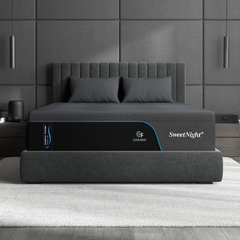
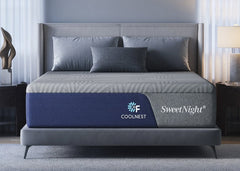
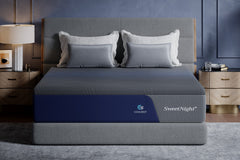
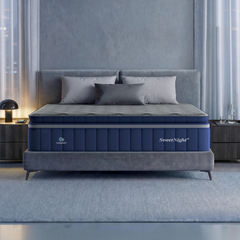
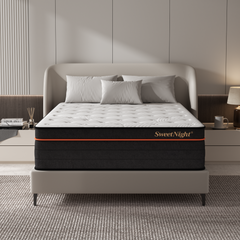
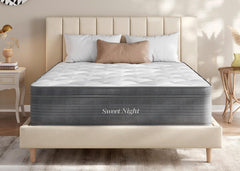
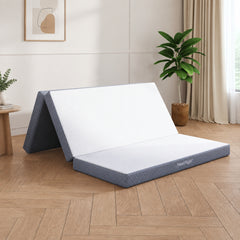
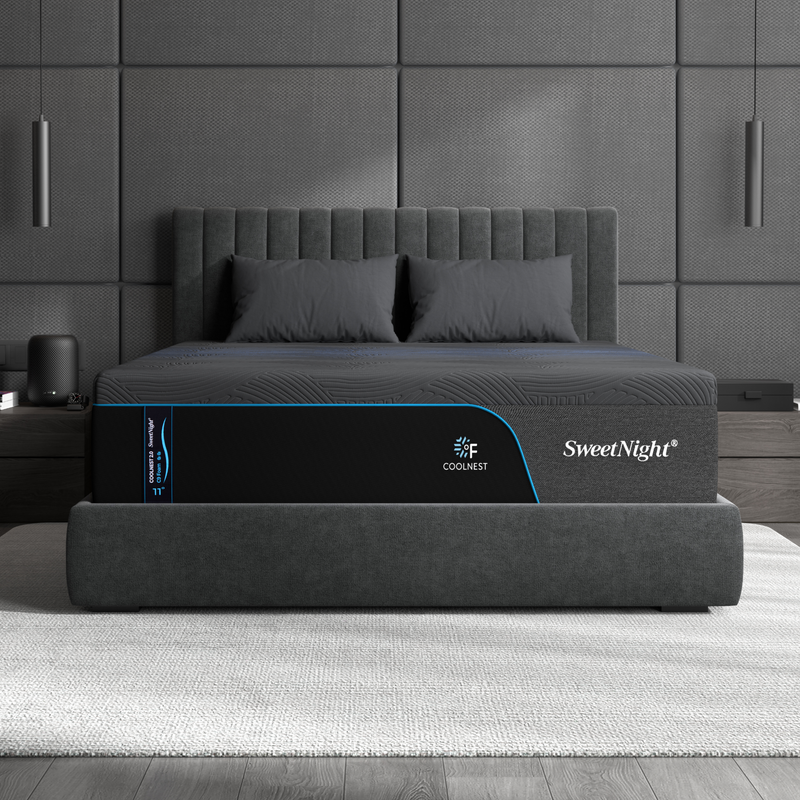
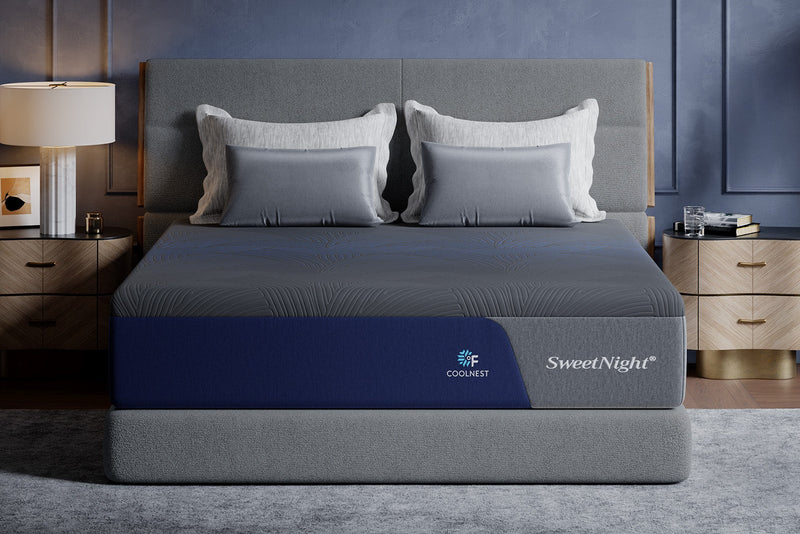
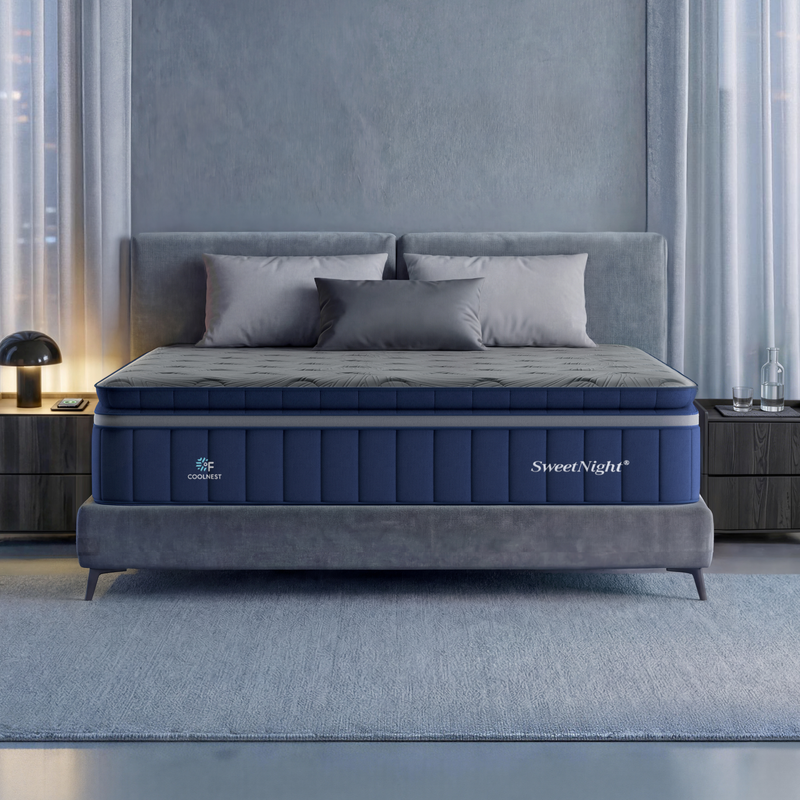
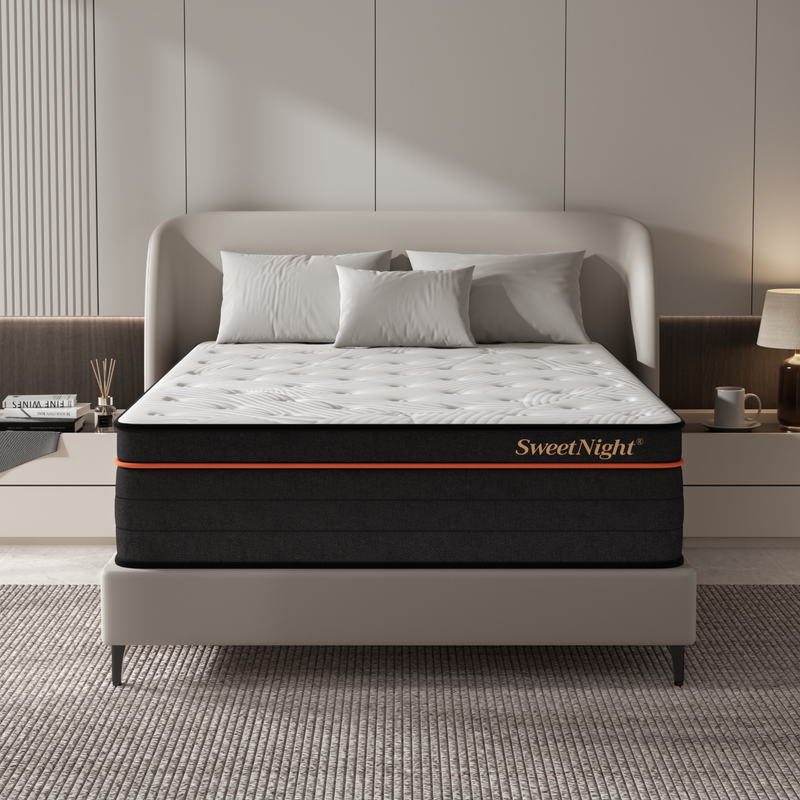
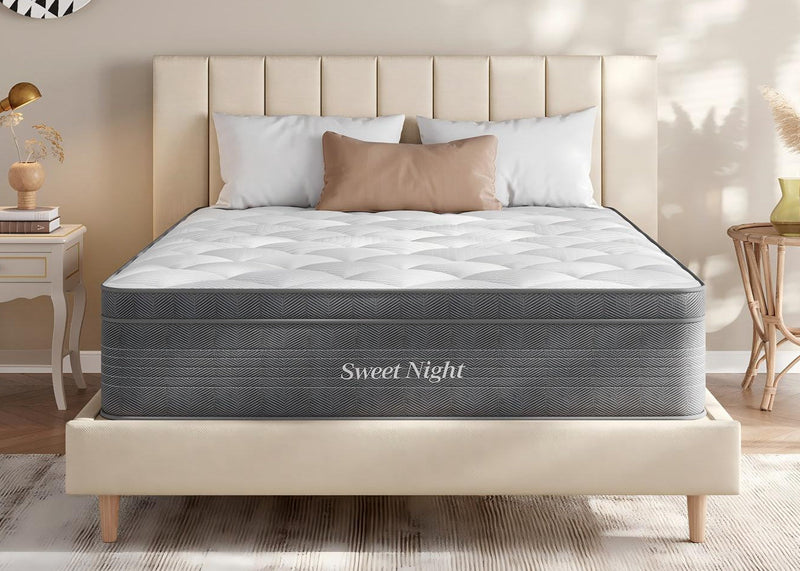
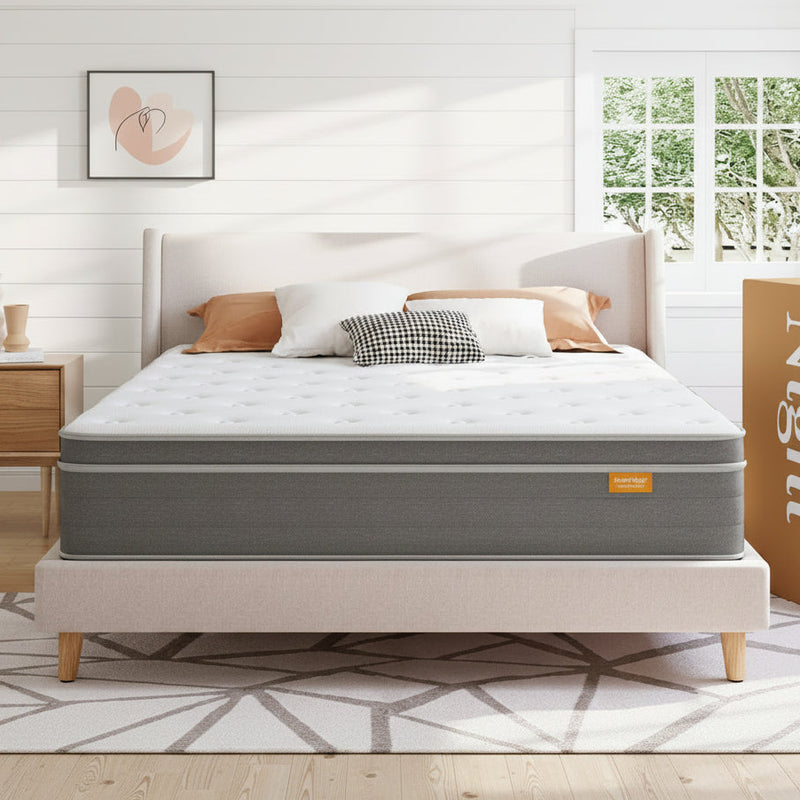
Pair SenseSync only with an all-foam memory foam mattress 12 or 14 inches thick: no coils, no 16-inch models. The base folds the mattress at its hinges every time it moves, and all-foam bends evenly where coils fight the fold. For a Full or Queen, the CoolNest memory foam mattress in 12 or 14 inches fits. SweetNight doesn't sell a Twin XL mattress, so for Twin XL or split king pick any all-foam Twin XL memory foam model in 12 or 14 inches.
Caregiver Tips for the First Week
- Fit a 9V battery in the backup clip and date it with a piece of tape.
- Save the getting-up position to a memory button and rehearse the routine twice in daylight.
- Give the remote one fixed spot within reach of the pillow. A remote lost behind the mattress at 2 a.m. defeats the point.
- Set the light to warm and check that it actually reaches the path to the bathroom.
- Keep the space under and around the base clear. Slippers, cords and the cat all end up there.
- Clip on the mattress retainer bar so the mattress doesn't creep when the head rises.
- Turn on the child lock before grandchildren visit.
Our guide on how to set up an adjustable bed covers delivery, legs versus in-frame installation and the battery backup in detail.
FAQ
Does Medicare pay for adjustable beds for seniors?
Generally, no. Medicare Part B may cover a hospital bed as durable medical equipment when a provider prescribes it as medically necessary for home use and you get it from a Medicare-enrolled supplier; you then pay 20% of the approved amount after the deductible. The CMS coverage manual lists power or manual bed-lounges as a comfort or convenience item and denies them. If you have a Medicare Advantage or supplemental plan, ask the plan directly before you buy.
What is the difference between an adjustable bed and a hospital bed?
A hospital bed is medical equipment: Medicare may cover it with a prescription, it is built to take rails and special attachments, and its rails are FDA-regulated medical devices. A consumer adjustable bed is furniture that raises the head and foot of a normal mattress in a standard size. It suits people who can move and get up on their own but want an easier, more controlled sit-up.
Can you put bed rails on an adjustable bed?
Be careful. The FDA says bed rails should be used with caution, especially with older adults and people with altered mental status or physical limitations, because entrapment and fall injuries have been reported. On an adjustable base the gap between a rail and the mattress changes as the head section moves. If someone needs a rail, ask a doctor or occupational therapist whether a hospital bed is the safer setup.
What size adjustable bed is best for a senior who sleeps alone?
Twin XL is usually the most practical choice for a solo sleeper. It takes up less floor space, which leaves more room beside the bed for a walker or a caregiver, and the sheets and mattress are easier to handle. A Full or Queen makes sense if the person likes to spread out or a partner sometimes shares the bed. Couples who want separate settings can look at a split king.
How high should a bed be for an elderly person?
High enough that, sitting on the edge of the made bed, both feet rest flat on the floor with the knees roughly level with the hips. Measure a chair that feels easy to stand up from and match the top of the compressed mattress to it. Leg height, mattress thickness and how much the foam sinks when you sit all change the result, so test it in person.
Are adjustable beds safe with grandchildren and pets in the house?
They can be, with a few habits. Keep kids and pets off and away from the bed while it moves, keep the space under the base clear, and never let anyone stand or jump on it. Look for a child lock that disables the remote and obstacle protection that stops the motor if something gets in the way. Lock the remote whenever grandkids visit.