


























Nobody has published a reliable average lifespan for adjustable beds. There's no independent study, and none of the major sleep-review sites give a figure. What you can go on is the warranty and any durability testing the maker discloses. Sleep Foundation says frame warranties typically run about 10 years, while motors and electronics are usually covered for only a few years, and that split tells you where a base usually wears out: in the moving and electrical parts, not the steel.
This guide covers what drives that wear, how to read a tiered warranty, what a cycle test like 15,000 lifts means in years (with the math shown), and a troubleshooting flow for when an adjustable bed stops working, including how to lower it without power.
How Long Do Adjustable Beds Last? What the Evidence Actually Says
Search this question and you'll see confident year ranges. We looked for a published source behind them and didn't find one. The review pages we checked describe prices, weight limits and warranties, but not measured service life. So any single number you read is someone's estimate.
Here's what is documented:
- The frame is usually the longest-warrantied part. Sleep Foundation's guide to adjustable beds for seniors says the typical frame warranty is 10 years, and that coverage of mechanical and electrical components "tends to be limited to just a few years."
- Some makers limit how hard the motors can be worked. Tempur's Ergo owner's manual states that its lift motors aren't designed to run continuously for more than two minutes in an eighteen-minute period, about a 10% duty cycle.
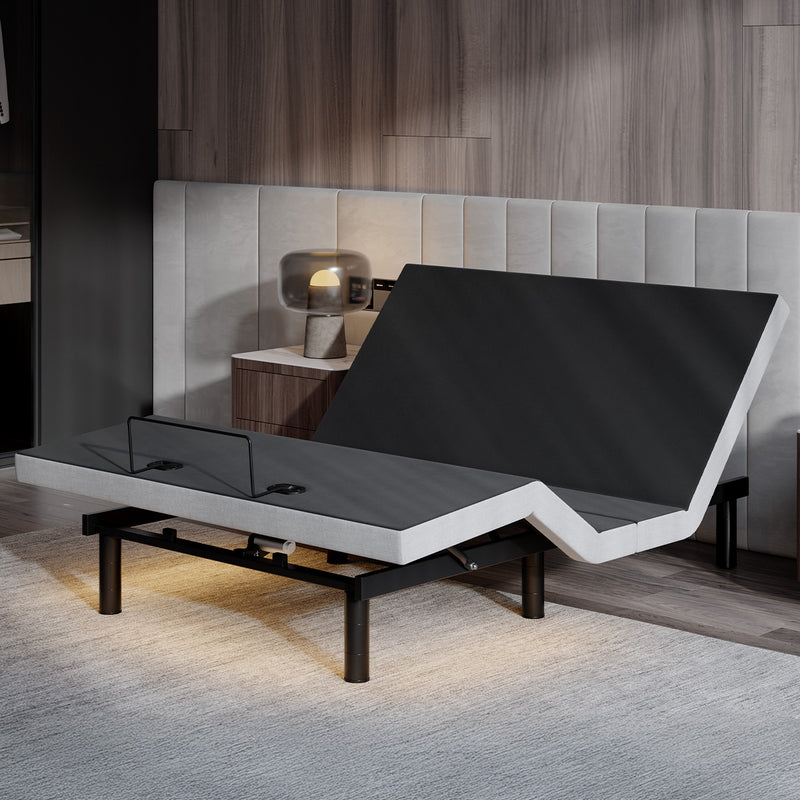
- Some makers publish a fatigue test. SweetNight's SenseSync base passed 15,000 full-load lift cycles in the company's own testing, which SweetNight estimates is roughly 10 years of regular use. That's a manufacturer test and estimate, not an independent result.
Put together, a reasonable expectation is a frame that lasts a long time and moving parts that are the likely point of failure. How soon those parts wear depends mostly on how you use the bed.
What Wears Out First: Motors, Electronics or the Frame?
An adjustable base has three groups of parts that age differently.
The actuators
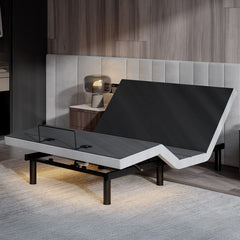
Most bases lift with linear actuators. On the SenseSync base, for example, a DC motor turns reduction gears, which turn a lead screw, which drives a nut and push rod that lifts the deck. Gears, screws and nuts wear with every movement and wear faster under heavy load. That's why thrust headroom matters: a motor lifting near its limit strains on every cycle, while one with capacity to spare moves the same load more easily. SenseSync's motors are rated at 4,000N of thrust, one for the head section and one for the foot.
The electronics
The control box, power supply, remote and wiring don't wear from movement the same way, but they're exposed to power surges, pinched cords and spills. Tempur's troubleshooting page recommends a grounded surge protector, which is cheap insurance for any base.
The frame and deck
Steel frames rarely fail under normal use, which is why makers are comfortable warrantying them for a decade or more. The deck panels and upholstery can wear at the hinge lines, especially if bedding gets pinched there.
What speeds up wear
- Load. Sleep Foundation warns that exceeding the weight limit could damage the frame or its motors. Rated capacity includes the mattress, and Tempur notes that bases aren't built to lift their full rating on the head or foot section alone, so sitting on a raised head section loads it unevenly.
- Duty cycle. Nudging the head up and down for minutes at a time works the motor far harder than a few presses a day.
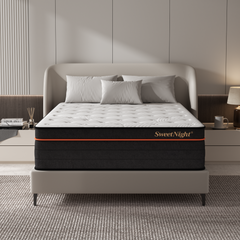
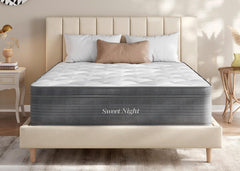
- The mattress. A mattress that resists bending makes the motors work harder on every lift. SweetNight pairs SenseSync only with all-foam memory foam mattresses 12 or 14 inches thick for that reason, and never with hybrids or 16-inch models. Our guide on whether you need a special mattress for an adjustable bed explains the mechanics.
- Moving house. Tempur's moving guide says damage from moving, transport or disassembly isn't covered under its warranty. The same exclusion is common elsewhere.
What 15,000 Lift Cycles Means in Years (With the Math)
A cycle count is only useful once you turn it into your own habits. Here's how we'd do it, with the assumptions stated so you can swap in your own.
Assumptions: one cycle means raising a section and returning it, under load. A typical day might be raising the head to read at night and lowering it to sleep, then raising it to sit up in the morning and lowering it again, plus one foot lift. Call that about four cycles a day.
| Cycles per day | Cycles per year | Years to reach 15,000 cycles | Who this looks like |
|---|---|---|---|
| 1 | 365 | about 41 | Raises the head for reading once, then sleeps flat |
| 2 | 730 | about 20.5 | Reading at night plus sitting up in the morning |
| 4 | 1,460 | about 10.3 | Regular daily use of head and foot |
| 6 | 2,190 | about 6.8 | Two people on one base with different routines |
| 8 | 2,920 | about 5.1 | Heavy use: many adjustments through the day and night |
The arithmetic is 15,000 divided by (cycles per day × 365). At four a day that's 15,000 ÷ 1,460, or about 10.3 years, which lines up with SweetNight's own estimate of roughly 10 years of regular use for the SenseSync base. Treat it as a way to compare, not a promise. The SenseSync spec guide covers the test alongside the motor and frame specs.
Two things cut in opposite directions. The test runs at full load, and most real use is lighter than that, which is in your favor. But a test rig doesn't pour coffee on the control box, push the bed across a room, or run through a power surge, and real bedrooms do. A cycle test tells you the mechanism was designed with margin. It doesn't tell you the electronics will outlast the warranty.
How to Read an Adjustable Bed Warranty
The headline number on an adjustable bed warranty is almost always the frame. The part that tells you more is the year when motors and electronics stop being covered, and whether labor and shipping are included before that. Good Housekeeping describes the general pattern as full coverage for the first few years, then prorated or limited coverage.
Here's how four bases break down, from each brand's published terms as of September 2026:
| Base | Headline | Full coverage | Parts only | Long tail |
|---|---|---|---|---|
| SweetNight SenseSync | 10-year limited | Year 1: defects replaced at no cost | Year 2: defective parts, including electrical and electronic | Years 3–10: metal frame and legs only |
| Tempur-Ergo bases | 25-year limited | Years 1–3: parts and labor | Years 4–5: parts only | Years 1–25: frame only, excluding motors, control box, remotes, power supply |
| Serta baselogic (per manuals) | 20-year limited | Years 1–2: parts, labor, transport | Years 3–5: defective parts only | Prorated limited coverage to year 20, excluding motors and electronics |
| Nectar adjustable bases | 2-year | Years 1–2 | None listed | None listed |
Read that table by the moving parts and the comparison looks different from the headlines. Tempur's Ergo limited warranty says plainly that apart from the frame, "there is no warranty at all after five years," and its frame definition excludes the actuator lift motors, control box and remote. SenseSync covers electronics for two years, the same length as Serta's full tier. None of these warranties cover motors for anything close to the headline figure.
Three conditions void or limit coverage on many bases: going over the weight limit, damage from moving or disassembly, and attaching the base to a bed frame in ways the maker doesn't allow. It's also worth keeping your receipt and buying from the maker or an authorized seller, which Good Housekeeping recommends for warranty claims. For a side-by-side look at one of these, see our SenseSync vs Tempur-Ergo comparison.
Adjustable Bed Not Working? A Troubleshooting Flow
Most "dead" bases turn out to be a power or remote problem. Work from the outlet toward the motor. The steps below follow the order Tempur's help center gives for a base that stops operating. They're one brand's steps, used here as an example; your own manual comes first.
Nothing moves at all
- Look under the bed. Tempur's first step is checking that wired connections are secure and that no cords or bedding are blocking the base.
- Check the control box light, if your base has one. No light usually means no power reaching it; reseat the power and input cords.
- Test the outlet with a lamp, or plug the base into a different outlet. A tripped GFCI or a switched outlet is a common culprit.
- Reset the electronics by unplugging the base for 60 seconds, then plugging it back in.
The base has power but ignores the remote
- Replace the remote batteries.
- Check Child Lock. On the SenseSync base, Child Lock is set by holding Head Down and Foot Down together for 3 seconds, after which the other buttons are disabled. It's easy to trigger by accident; the manual covers turning it off. Tempur notes that a remote can get stuck in a limbo state between lock settings, so the sequence may need a second attempt.
- Re-pair the remote (next section).
One section moves, the other doesn't, or it stops partway
Clear everything from under and around the base. On bases with obstacle protection, SenseSync included, the base stops or reverses when it meets resistance, which can look like a fault. Take weight off the raised section and try again. If one motor still won't run, or runs with grinding, that's a support call. Our guide to adjustable bed wobble and squeaking covers which noises are normal.
How to Reset an Adjustable Bed Remote
Remote pairing is brand-specific, so this is the pattern, not a procedure. Many bases follow the same shape as Tempur's Ease: the remote in the box comes already paired; to re-pair, you unplug the base for a minute, plug it back in, and press the pairing button within about 10 seconds while the control box flashes. The timing window is the part people miss.
Split King bases add a second layer. Each side has its own remote, and most bases can also be linked so one remote drives both. The SenseSync Split King works that way: two remotes can control each side separately, or the two bases can be paired to move together from one remote. If paired bases drift out of step, Tempur's Ease guidance is that pressing Flat resyncs the positions. Serta's baselogic manuals note that synchronized beds may move up to 1.5 seconds apart, which is normal.
How to Lower an Adjustable Bed Without Power
A power cut with the head raised is the scenario people worry about, and it's the reason many bases include a battery backup. Tempur's instructions for an older Ergo model show how these typically work: put 9-volt batteries into an emergency power-down box, then press and hold the button until the base lowers to flat. Tempur notes this is much slower than normal lowering, and its instructions for a related model say to replace the batteries after use.
The SenseSync base has a 9V battery clip so it can be lowered during an outage. The battery isn't included. Fit one when you set the bed up, not during the blackout (it's on the day-one list in our adjustable bed setup guide), and follow the SenseSync manual for the lowering steps. Replacing it every year or so is a sensible habit, since you won't know it's flat until you need it.
If your base has no backup, don't force the deck down by hand. Keep weight off the raised section, and wait for power or call support.
How to Make an Adjustable Bed Last Longer
- Stay within the weight rating, and remember it includes the mattress. Spread weight evenly and don't sit on the edge of a raised section.
- Use presets and memory positions instead of long button holds. It's easier on the motors.
- Plug into a grounded surge protector, and route cords so the deck can't pinch them.
- Keep the space under the bed clear; the base should never lower onto storage boxes.
- Use a mattress the base was designed for. On SenseSync, that means all-foam memory foam in 12 or 14 inches.
- Flatten the base, unplug it and remove the mattress before moving it, and use two people.
- Don't let children or pets ride it while it's moving, and never stand or jump on it.
If you're still comparing bases, give the warranty table above as much weight as the feature list. Our guide to choosing an adjustable bed covers the rest of the specs, and the SenseSync dual-motor adjustable base page lists its full warranty terms. (Disclosure: SweetNight makes the SenseSync base.)
FAQ
How long do adjustable beds last?
There is no independent, published lifespan figure for adjustable beds. The best guides are the warranty and any cycle testing the maker publishes. Sleep Foundation says frame warranties are typically about 10 years, while motors and electronics are usually covered for only a few years. The steel frame tends to outlast the moving and electrical parts, which are the ones that eventually need repair or replacement.
Why is my adjustable bed not working?
Start with power: check that the base is plugged in, test the outlet with another appliance, and look for a loose cord or bedding caught under the bed. Then check the remote batteries and make sure Child Lock is not on. Tempur's support steps also suggest unplugging the base for about a minute to reset the electronics. If none of that works, contact the maker's support.
How do I reset my adjustable bed remote?
On many bases, a reset starts by unplugging the base for about a minute and plugging it back in. Some models then need the remote re-paired within a short window, for example by holding a pairing button while the control box flashes. The exact buttons differ by brand and model, so follow your own manual rather than steps written for another base.
How do you lower an adjustable bed without power?
Use the battery backup if your base has one. Many bases have a 9-volt battery box or clip that powers a slow return to flat during an outage. The SenseSync base has a 9V battery clip for this, but the battery is not included, so fit one when you set the bed up. If there is no backup, keep weight off the raised section and wait for power.
What does a 15,000-cycle test mean for an adjustable bed?
It means the base was lifted and lowered under full load 15,000 times in fatigue testing. How many years that equals depends on how often you move it. At about four cycles a day, 15,000 cycles works out to roughly 10 years, which matches SweetNight's own estimate for the SenseSync base. It is a manufacturer figure, not an independent certification.