





Published: July 21, 2026 · Reviewed by the SweetNight Sleep Comfort Team · 16 min read
Ask the internet whether cooling mattresses work and you get two useless answers: breathless brand copy swearing every bed is a glacier, and cynics insisting it's all foam and marketing. Neither is science. The honest answer sits in between, and once you understand the physiology of falling asleep and the physics of moving heat, you can judge any mattress in the category on the merits — and see exactly where most of them fall short.
This is the deep version: what your body actually does with heat at night, why old memory foam fights that process, the three mechanisms that genuinely move heat, how the cooling technologies compare, and how SweetNight engineers the CoolNest® Ultra cooling memory foam mattress for up to 11° cooler sleep. No hype, no hand-waving — just the mechanism.
Do Cooling Mattresses Actually Work? The Honest, Science-Based Answer
Yes — but not the way the ads imply, and the exact wording matters.
A cooling mattress does not make you cold. It stops trapping the heat your body is already trying to get rid of. That single distinction is the whole truth of the category. Nothing in a passive mattress generates cold; there is no refrigerant and no power. What a well-built one does is remove an obstacle — it gets out of the way of a process your body runs every single night whether you help it or not.
Here is why that obstacle matters so much. When you lie down, roughly half of your skin's surface area is in direct contact with the mattress. That makes the bed the single largest surface your body has to dump heat into. Get a surface that accepts and disperses that heat and you cooperate with your own physiology. Get one that reflects it back and softens around you like warm dough, and you spend eight hours quietly overheating and blaming the weather.
So "do cooling mattresses work" is really two questions. Does the physics hold up? Yes, unambiguously — heat moves from warm to cool through convection, conduction and evaporation, and a mattress can be built to encourage all three. And does any given mattress actually do it? That's where you have to look past the label at the construction, which is what the rest of this guide teaches you to do. If you want the practical buyer's version rather than the science, our best cooling mattress for hot sleepers guide covers how to choose one.
Sleep Thermoregulation Science: Why You Have to Cool Down to Fall Asleep
To understand why a mattress can help or hurt, you have to start with a fact most people never learn: your body cannot fall asleep until it cools down.
Sleep onset is triggered, in part, by a drop in your core body temperature. This isn't a preference or a comfort quirk — it's a hardwired part of your circadian rhythm. As evening comes, your body begins shedding heat to lower its internal temperature, and that cooling is one of the signals that tells your brain it's time to sleep. According to the Sleep Foundation, your core temperature starts dropping about two hours before sleep — timed with the release of melatonin — and continues falling through the night, bottoming out in the early morning before it climbs again to wake you.
The way your body sheds that heat is clever. It pushes warm blood toward the skin, especially at your hands and feet, and radiates heat off those surfaces into the surrounding air and objects. This is why warm feet actually help you fall asleep — dilated blood vessels there are the radiators doing the work. And it is precisely why the surface underneath you is not a passive detail. Your torso, back and hips make up a huge share of the radiating area, and they're pressed into the mattress. If that surface hands the heat back, the whole cooling cascade stalls.
There's a second reason the environment matters. The same source notes that the ideal bedroom for sleep sits around 65 to 68°F (about 15.6 to 20°C), and that your core temperature naturally fluctuates by roughly 2°F across the night. That's a narrow window. A room or a bed that runs a few degrees too warm doesn't just feel unpleasant — it interferes with the temperature signaling your sleep depends on, which fragments the deep sleep that's concentrated in the first half of the night. We break the room side down in the optimal sleeping temperature guide.
There's a quality dimension to this, not just a comfort one. The deepest, most restorative stage of sleep — slow-wave sleep, the phase most associated with physical recovery — is concentrated in the first few hours of the night, exactly when your body is working hardest to shed heat and drive your core temperature down. When a warm surface stalls that process, the cost isn't only that you feel hot; it's that the heat repeatedly nudges you toward lighter sleep and micro-awakenings during the window when deep sleep should dominate. That's the mechanism behind a complaint people can't quite articulate: "I slept eight hours but woke up unrefreshed." You can spend a full night in bed and still be shortchanged on the stage that actually restores you, simply because your bed wouldn't let you cool down on schedule. A surface that clears heat protects that early deep-sleep window — which is why the payoff from sleeping cool shows up as feeling more rested, not just feeling less sweaty.
Hold onto this idea, because everything else follows from it: a cooling mattress isn't a luxury that makes a warm night nicer. It's a tool that removes interference from a biological process your sleep quality literally depends on.
Why Memory Foam Sleeps Hot: The Science of a Heat-Trapping Mattress
If cooling is about giving heat an exit, traditional memory foam is engineered — unintentionally — to seal that exit shut. Understanding why explains the entire cooling-mattress category, because every genuine cooling technology is a direct response to a specific failure of old foam.
Memory foam is viscoelastic. That word is the whole story. It means the foam is temperature-sensitive and pressure-sensitive: it softens where it's warm and molds slowly under load. When you lie down, the foam touching your skin warms to body temperature, goes soft, and flows into the shape of your body. That deep, cradling hug is exactly what memory foam is sold on — and it is exactly what cooks a hot sleeper.
Three things happen at once, and they compound:
- Contact area explodes. Instead of resting on the high points of your body, you sink in and the foam wraps up around your sides. Far more of your skin is now touching foam, and every point of contact is a place where heat is being handed back to you instead of escaping into the air.
- Airflow stops. A block of dense foam has no internal channels. The warm, humid air your body produces has nowhere to travel. It pools in the pocket the foam has molded around you, and because it can't move, fresh cooler air can't move in to replace it.
- Moisture gets trapped. You're always losing a little water through your skin. On a breathable surface it evaporates and carries heat away with it. Sealed against dense foam under a non-breathable cover, it turns the pocket humid — and humid air blocks further evaporation, so you feel even hotter than the actual temperature. We explain that specific effect in why humid nights feel hotter.
You don't feel the mattress "getting hot." You feel your own heat, produced at the same rate as always, building up because it has nowhere to go. That's why the standard advice to "flip to the cool side" only buys a few minutes — you're not cooling the bed, you're just briefly finding a spot that hasn't saturated yet. And it's why the honest test of any mattress is never how it feels for the first minute in a showroom, but whether it keeps letting heat escape across a full night. This is also why some people run hot on foam and others don't; if you're not sure which you are, hot sleeper vs cold sleeper has a quick self-check.
How Do Cooling Mattresses Work? The Three Heat-Transfer Mechanisms
Strip away every trademark and marketing name and there are exactly three ways any object can move heat away from your body. Physics offers no fourth. Every legitimate cooling feature ever built into a mattress is an implementation of one of these, and a genuinely effective bed uses all three together.
1. Convection: moving the warm air out
Convection is heat carried away by a moving fluid — here, air. The warm air trapped under you gets pushed out and replaced by cooler air. In a mattress this is the job of an open coil core, a 3D ventilated structure, or perforated foam that leaves physical channels for air to travel through. Convection is the biggest single lever, because unlike the other two it removes heat in bulk. It's also the mechanism most completely absent from a solid foam block, which is precisely why a hybrid or a properly ventilated foam bed has such a head start on a dense all-foam one.
2. Conduction: pulling heat out of your skin
Conduction is heat moving through direct contact, from warmer to cooler. When your skin touches a material that conducts heat well, that material draws warmth out of you and spreads it sideways, away from the contact point. This is what makes a surface feel genuinely cool to the touch, and it's the mechanism behind gel, graphite and phase-change infusions. Conduction's special value is that it keeps working exactly where convection can't reach — under a compressed shoulder or hip, where the foam is squeezed flat and airflow has effectively stopped, conduction is still quietly moving heat.
3. Evaporation: letting sweat do its job
Evaporation is the most powerful cooling mechanism your body owns. When sweat evaporates it carries a large amount of heat away with it — but only if it can actually leave your skin. That depends entirely on the cover. A breathable, moisture-wicking fabric moves that moisture up and out so it can evaporate; a dense or coated cover traps it against you, and trapped humidity shuts evaporation down. This is the cheapest of the three mechanisms to build well and the one buyers most consistently underrate.
The critical insight is that these three compound. Convection works best when the surface isn't sealed. Conduction works best when the heat it moves has somewhere to go. Evaporation works best when air is circulating to carry the moisture off. Build only one of them and you've built roughly a third of a cooling mattress — which is exactly why single-feature "cooling" beds disappoint. A mattress that can't tell you which of the three mechanisms it uses, and how, is selling you a word.
Cooling Mattress Technology Compared: Gel vs Graphite vs Phase Change Material (PCM)
Within the conduction mechanism there's a real hierarchy of materials, and it explains the price and performance gaps between beds that all print the word "cooling" on the label. Here's what each one actually does, and where it stops.
| Cooling Technology | The Science | Holds Up All Night? |
|---|---|---|
| Plain memory foam | No cooling mechanism at all — viscoelastic foam that softens and seals around you | No. Warms steadily from the moment you lie down |
| Gel-infused memory foam | Gel particles absorb body heat and spread it through the foam — a heat sink | Only partly. Cools well early, then saturates once it's absorbed all it can hold |
| Graphite / copper infusion | Highly conductive particles pull heat away faster and farther than gel | Better than gel, but still bounded by where the heat ultimately goes |
| Open-cell / perforated foam | Physical air passages let heat and moisture escape upward (adds convection) | Yes, and it compounds with everything else |
| Phase-change material (PCM) | Absorbs heat by physically changing state, then releases it as you cool — a regulator, not a sink | Yes. It resets and keeps working across a full night |
Why gel-only mattresses fail at 3am
This is the single most useful thing a shopper can understand. Gel is a heat sink: it has a finite capacity to absorb warmth. It performs genuinely well — right up until it has soaked up all the heat it can hold. After that it sits at the same temperature as your body and does nothing. That is the exact experience behind the world's most common cooling-mattress complaint: "it felt cool when I got in and hot by the middle of the night." Nothing broke. The gel did precisely what gel does, then ran out. This is why gel should never be the headline feature of a bed you're buying specifically to solve overheating.
The science of phase-change material
Phase-change material is a different class of technology, and it's worth understanding because it's the closest a passive material gets to active regulation. PCM is engineered to melt at a temperature tuned close to your skin's. Melting is a phase change, and changing state absorbs a large amount of energy — called latent heat — without the material itself getting hotter. So as your body heat builds, the PCM soaks it up by softening rather than warming. Then, when your surface temperature drops (as it does in the second half of the night, and every time you shift position), the material re-solidifies and releases that stored heat back. It resets. That two-way cycle is why PCM keeps regulating for eight hours instead of saturating in two.
The technology isn't new or exotic — phase-change materials were originally developed with NASA funding to help regulate temperature in spacesuits, where astronauts swing between extreme heat and cold. That heritage is real, and it's the reason PCM shows up in serious cooling bedding today. If you want the full physics, we go deeper in how PCM technology works.
The takeaway when you read any spec sheet: count the mechanisms. One named technology is a feature. Several, working together and each covering the others' blind spots, is a system — and only a system holds up all night.
Passive vs Active Cooling Mattresses: What the Science Actually Supports
There's one more fork worth understanding, because it's where people most often overspend. Cooling mattresses come in two families, and they are not the same thing at all.
Passive cooling is everything described so far: materials, structure and airflow that remove the heat your body produces. It uses no electricity, runs every night with nothing to plug in, adds nothing to your power bill, and has no mechanical part to fail. This is what the vast majority of cooling mattresses — including every model worth buying for most people — actually offer. And the science says passive is enough for the ordinary problem: your body isn't producing an unusual amount of heat, it just needs somewhere for the normal amount to go, and a well-built passive system gives it exactly that.
Active cooling is a different category: a powered unit pumps water or chilled air through channels in the bed to hold it at a set temperature. It is genuinely more forceful, and it can drive a surface below room temperature in a way no passive material can. But it's expensive, it puts a machine and a hose in your bedroom, it hums, and it can break. It makes sense for a narrow set of cases — a medical need, or two partners who simply cannot agree on a temperature — and it's overkill for the average hot sleeper whose real problem is a mattress that traps heat, not one that fails to manufacture cold.
The honest guidance from the science: match the tool to the problem. If your bed traps heat, a strong passive system like a multi-stage cooling mattress solves it without a machine in the room. Reserve active cooling for the genuine edge cases, and don't pay for a compressor to fix a problem a better surface already handles.
Do Cooling Mattresses Work for Night Sweats and Menopause?
This deserves its own honest answer, because it's where expectations most often outrun the science — in both directions.
Start with the limit. Night sweats driven by menopause, hormones, medication or a thyroid condition are generated inside you. They are your body's thermoregulation misfiring, dumping heat on its own schedule. No mattress, however cool, can prevent an internally generated hot flash. Any product implying otherwise is overselling, and it's worth being clear-eyed about that before you spend.
Now the part that genuinely helps. What a cooling mattress changes is everything around the event. On a heat-trapping foam bed, a hot flash dumps heat and sweat into a surface that holds both — so you finish the flash lying in a damp, warm pocket that keeps you wide awake long after the flash itself has passed. That second phase, the soggy aftermath, is often what actually wrecks the night. On a breathable, wicking, non-trapping surface, the heat disperses and the moisture leaves, and you settle back down in minutes instead of an hour.
So for night sweats specifically, the priority shifts. The headline "degrees cooler" number matters less than moisture management — the wicking cover and the ventilated structure that clear sweat fast. That's the feature to weigh most heavily. For the wider picture, menopause, night sweats and sleep and night sweats: causes and how to stop them cover what a mattress can and can't do, and when to talk to a clinician.
The Science of CoolNest®: How SweetNight Engineers Up to 11° Cooler Sleep
Everything above is the theory. This is how SweetNight turns it into a mattress — and, fairly, this is our own product, so treat it as a worked example of the science rather than a neutral referee. The claims below map directly onto the three mechanisms and the material hierarchy, which means you can check them against the physics rather than taking our word.
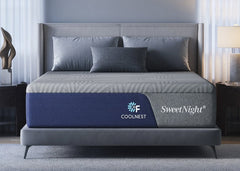
The CoolNest® system is our name for a multi-stage approach built on one principle from the science above: no single material should be asked to carry the whole night. Each stage covers what the others can't.
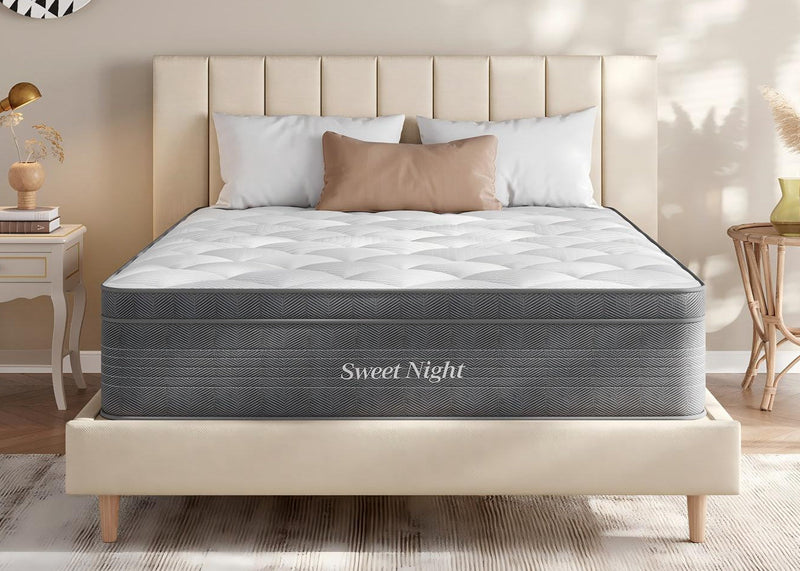
- A conductive, moisture-wicking cover handles the first two mechanisms at the surface — drawing heat off your skin on contact (conduction) and moving sweat up and out so it can evaporate. On the core CoolNest that's a 3D-weave cover engineered to be roughly 3× more breathable than conventional foam covers.
- Conductive comfort foam keeps pulling heat out of you even at compressed contact points, where airflow has stopped — the shoulder and hip a side sleeper drives into the bed.
- Ventilated, open structure gives the absorbed heat a route out instead of letting it bank inside the foam and return — the convection stage that a solid block lacks entirely.
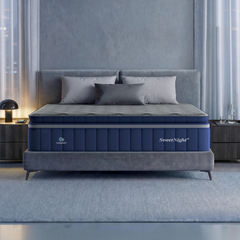
Layered deliberately, that system is engineered to sleep up to 8° cooler than conventional foam. It's the same reasoning behind the whole range — the airflow-led CoolNest® Hybrid for couples, and the PCM-equipped CoolNest® Pro with its gradient ice-silk cover and PCMflux® foam. But the model that takes the principle furthest is the Ultra, and it's worth its own section.
CoolNest® Ultra: The Most Advanced Cooling Memory Foam Mattress We Build
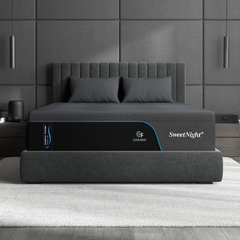
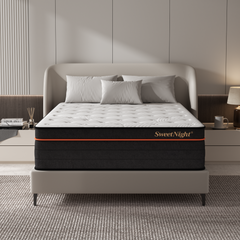
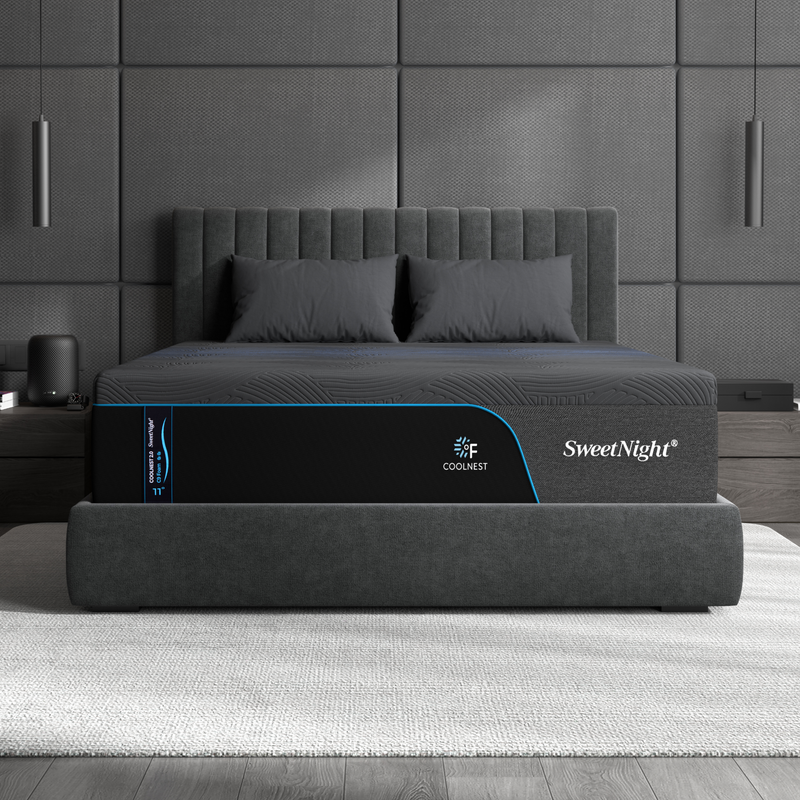
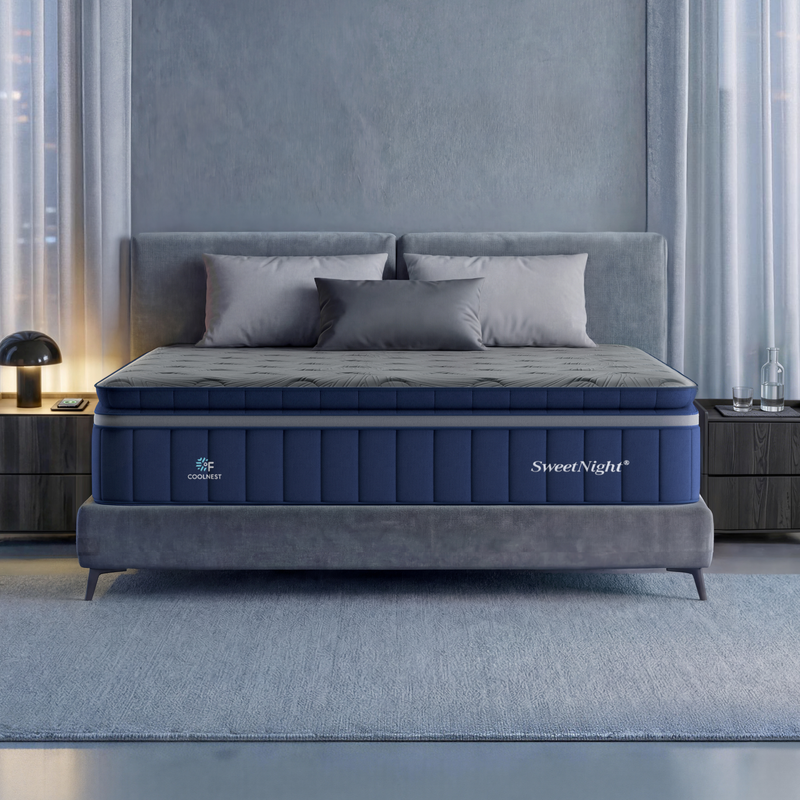
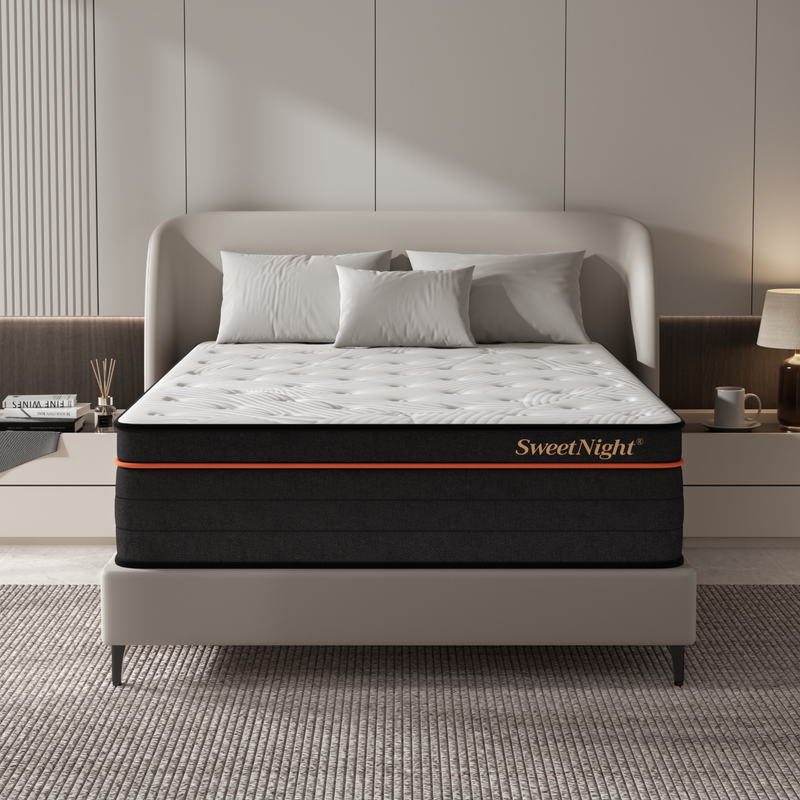
If the science above describes what a cooling mattress should do, the CoolNest® Ultra memory foam mattress is our attempt to do all of it at once. It's the flagship, and the reason isn't marketing — it's that it runs more cooling stages than any other bed we make, so fewer gaps are left for heat to slip through.
Five cooling stages, one for each way heat escapes
The Ultra's 5-stage cooling system is the multi-stage principle pushed to its limit. Rather than one hero material, five stages work in sequence, each catching the heat the previous one couldn't:
- AirMesh™ cover — an open engineered mesh that handles contact-point heat the instant you lie down and keeps moisture moving off the skin, so evaporation isn't blocked by trapped humidity.
- Conductive comfort layer — keeps drawing heat out at the compressed points under your shoulder and hip, where airflow can't reach and conduction is the only mechanism still available.
- 3D ventilated circulation — a structured three-dimensional airflow path running through the mattress, not just across its surface, so warm air keeps leaving the core instead of banking inside it.
- Continuous heat dissipation — the through-depth stage that carries heat down and out for as long as you keep producing it, which is the whole night. This is the difference between a system that has a capacity and one that has a throughput.
- Ventilated support core — clears heat in bulk from the largest volume of the bed and stops the support layers becoming an insulating floor that undoes everything above.
That layering is why the Ultra is engineered for up to 11° cooler sleep against the 8° of the core CoolNest. It isn't a different trick — it's more of the mechanisms that were already working, arranged so heat removed at the surface has a continuous path all the way out.
Why 7-zone support is also a cooling feature
The Ultra pairs that with refined 7-zone precision support, and this is where the science loops back on itself. Recall that the deepest heat trap is full-body immersion — sink in, and contact area explodes while airflow collapses. Zoning is the fix. Seven zones vary the firmness along the bed's length: the shoulder zone lets a shoulder sink in, while the firmer waist and hip zones hold your midsection level. You get deep pressure relief exactly where you need it without your whole body descending into the foam. That keeps your contact area small and keeps you high on the surface where the AirMesh™ cover and ventilated structure can still reach you. Support and cooling, solving the same problem from two directions.
The specs that matter
The Ultra comes in 12", 14" and 16" profiles — and critically, the cooling system is identical in all three, so you're choosing support depth for your body weight, not trading temperature for height. It carries a 100-night trial and a 10-year warranty, which for a cooling claim is the part that counts: temperature is genuinely hard to judge in a store, so the trial is how you confirm the science on your own body across real nights rather than taking a spec sheet's word for it.
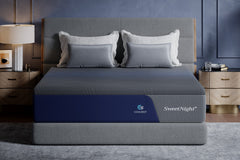
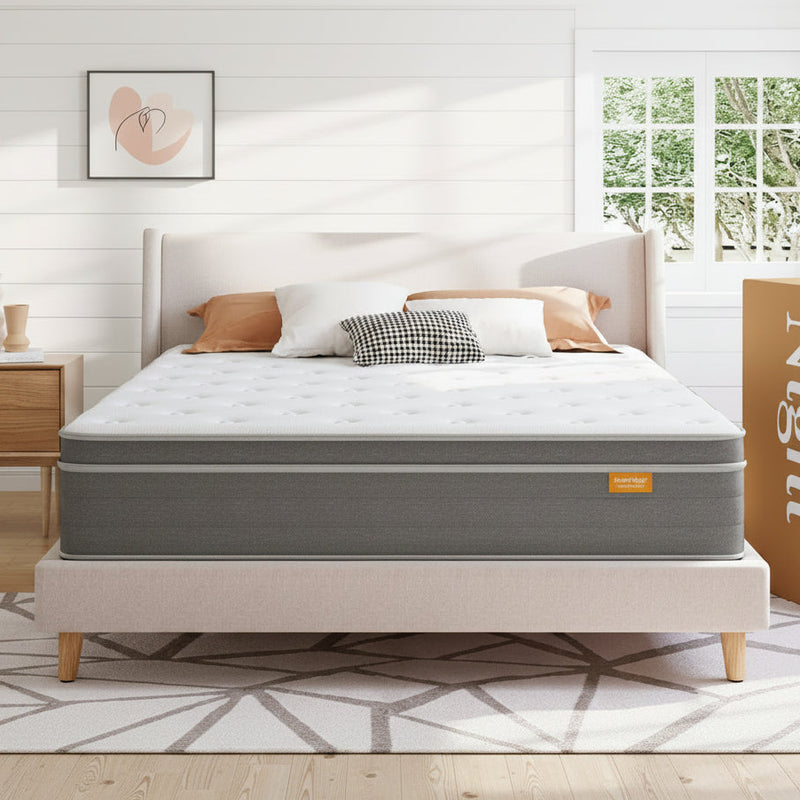
Buy it if you sleep hot enough that the mattress has to lead the solution, if you're a side sleeper who needs pressure relief without the heat penalty, or if you've already been burned by a gel-only bed that faded overnight. If budget leads instead, the original CoolNest® memory foam mattress runs the same core system at 8° and has earned 4.9 stars across 700+ reviews. See the whole lineup in the cooling mattress collection.
☀️ Put the Science to the Test — 100 Nights
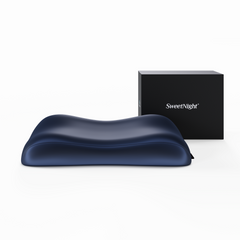
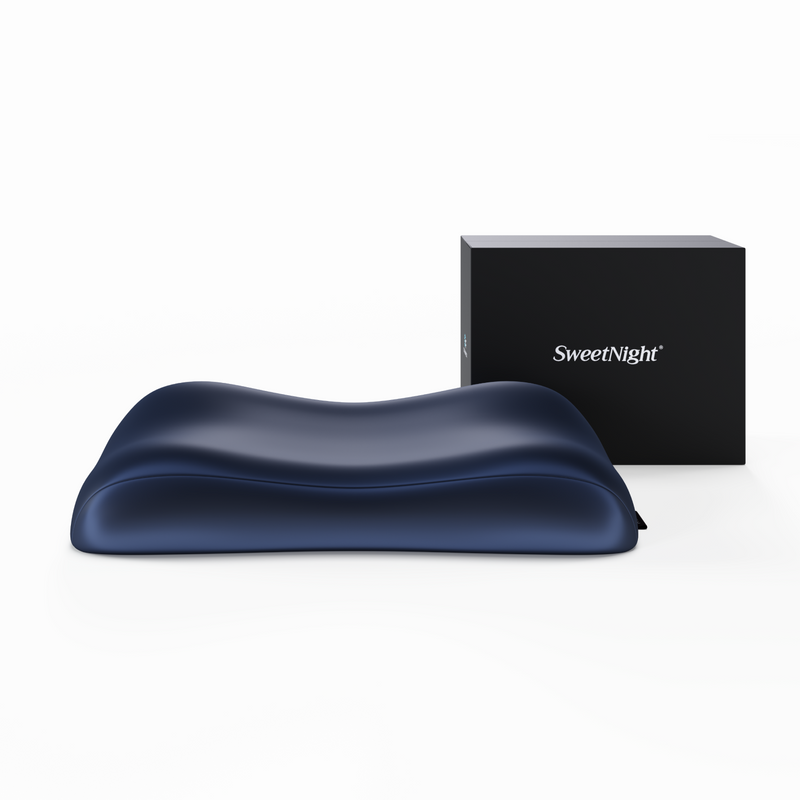
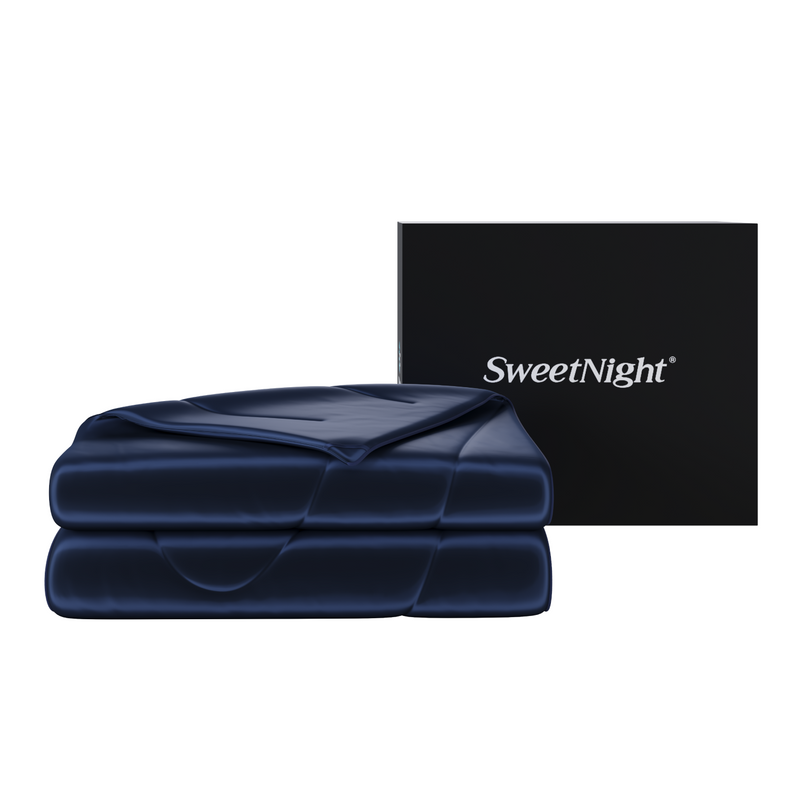
The only honest way to judge a cooling mattress is to sleep on it. The full CoolNest range — including the 11°-cooler CoolNest® Ultra — plus cooling pillows and breathable bedding is on sale now in the SweetNight Cooling Sale, with a 100-night trial and a 10-year warranty so you can prove the cooling in your own bedroom.
How to Make a Cooling Mattress Work Even Better
A cooling mattress does the heaviest lifting because it reaches the one place nothing else can — the heat trapped directly underneath you, where no fan or open window ever gets. But it works inside a system, and the science is clear that the rest of the system either helps it or fights it. The good news is that the rest is cheap.
- Get the room into the 65–68°F window. Your mattress can't lower the air temperature, and the science on sleep onset is unambiguous that ambient temperature matters. How to keep your bedroom cool without AC covers doing it cheaply.
- Match the bedding to the mattress. A breathable bed under a heavy synthetic duvet is a cooling mattress you paid for and then switched off. The cover on your mattress and the sheets on top have to breathe as one system — see cooling sheets compared.
- Never seal it under a waterproof protector. A plastic-backed protector is a vapor barrier laid straight over your breathable cover — it single-handedly cancels the evaporation mechanism. Use a breathable one.
- Fix the pillow. Your head and neck run hot, and the pillow is a separate cooling problem the mattress can't solve — see do cooling pillows work.
- Warm your feet, oddly enough. Because your body sheds heat through dilated blood vessels in your extremities, warm feet actually speed up core cooling and help you drop off — one of the counterintuitive findings that falls straight out of the thermoregulation science.
For a full routine that ties the mattress, room and bedding together, how to stay cool while sleeping is the companion piece.
Do Cooling Mattresses Actually Work? Your Questions, Answered
Do cooling mattresses actually work, or is it marketing?
The physics is real; the marketing is where it gets abused. A mattress genuinely can move heat away from you through convection, conduction and evaporation, and on a warm night the difference between a heat-trapping foam bed and a well-built cooling one is obvious and repeatable. What's "marketing" is any cooling claim with no named mechanism behind it. Judge the construction, not the adjective.
How do cooling mattresses work scientifically?
Three heat-transfer mechanisms working together: convection (coils or ventilated channels move warm air out), conduction (gel, graphite or PCM pull heat from your skin and spread it), and evaporation (a breathable cover lets sweat leave). None of them generate cold — they remove the obstacle to heat your body is already trying to shed.
Why does memory foam sleep so hot?
Because it's viscoelastic: it softens at skin temperature and molds tightly around you. That increases contact area, blocks airflow, and traps humidity against your skin — three heat-trapping effects at once. It's the exact opposite of what the thermoregulation process needs.
Is PCM better than gel foam for cooling?
For all-night performance, yes. Gel is a heat sink that saturates once full, which is why gel-only beds cool at bedtime and warm by the early hours. PCM changes state to absorb heat and resets as you cool, so it keeps regulating. The best beds use both plus airflow.
How much cooler does a CoolNest mattress actually sleep?
The core CoolNest system is engineered for up to 8° cooler than conventional foam; the CoolNest® Ultra for up to 11° via its five-stage system. These are engineering specifications, and the 100-night trial exists so you can confirm them on your own body.
Do cooling mattresses help you sleep better, not just feel cooler?
Yes, and the science explains why. Because core-temperature drop drives sleep onset and protects the deep sleep concentrated early in the night, removing heat interference means fewer overheating wake-ups and less fragmented sleep. People often describe it as "I slept the same hours but felt more rested" — that's the mechanism.
How can I tell if a cooling mattress is actually working for me?
The honest test runs over weeks, not minutes. Ignore how the surface feels in the first few minutes — a cool-touch panel means nothing by hour six. Instead, track one number across the first month: how many times a week you wake up hot. If that count drops on a warm night, the bed is doing its job, whether or not it ever feels dramatically cold. That's why a 100-night trial matters more than any showroom impression — cooling is something you can only verify on your own body, across real nights and changing weather.
Can a cooling mattress replace air conditioning?
No. It removes the trapped heat you're lying on — which is the heat a fan and open window can't reach — but it can't lower the temperature of the room air. The two solve different halves of the problem and work best together.
The Bottom Line: The Science Says Cooling Mattresses Work — If They're Built Right
Do cooling mattresses actually work? Understood correctly, yes. Not because they chill you — nothing passive does that — but because falling and staying asleep depends on your body shedding heat, and the mattress is the single largest surface it sheds into. A bed built to move heat through convection, conduction and evaporation cooperates with that process. A dense foam bed that seals heat in fights it for eight hours a night.
So the real question was never "does the category work." It's "does this mattress name and combine the mechanisms the science demands, or does it just print the word." Count the mechanisms. Look for airflow you can point to, conductive material where your skin actually touches, a cover that lets sweat evaporate, and ideally phase-change regulation that resets instead of saturating. Then hold whichever bed you choose — ours or anyone's — to the only test that matters, which is a run of real nights on your own body.
That's exactly what the CoolNest system is engineered around, and the CoolNest® Ultra cooling memory foam mattress is the fullest expression of it — five cooling stages, 7-zone support, up to 11° cooler, and a 100-night trial that lets the science prove itself where it counts.