
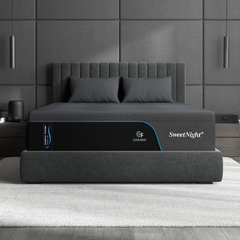
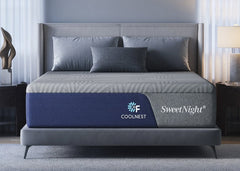
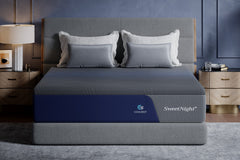
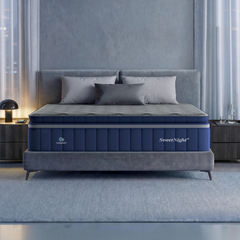
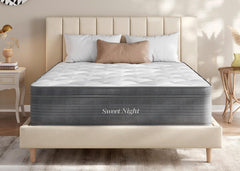
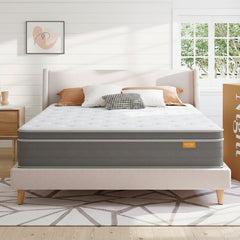

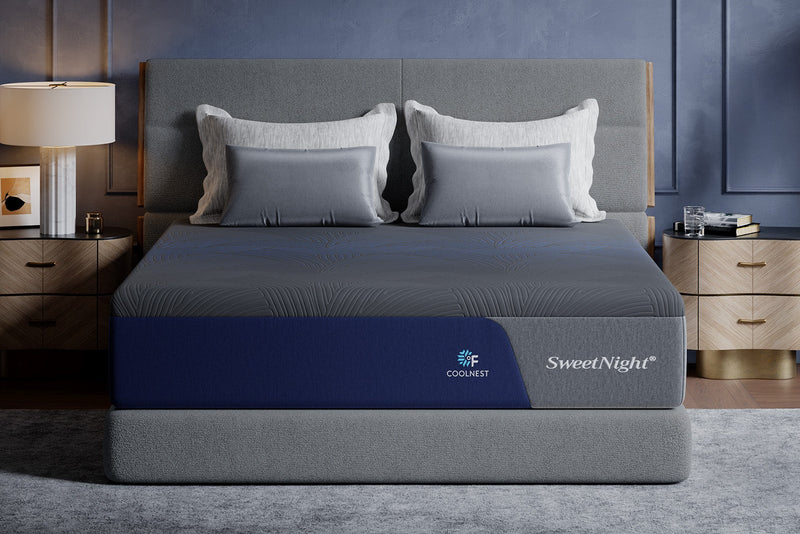
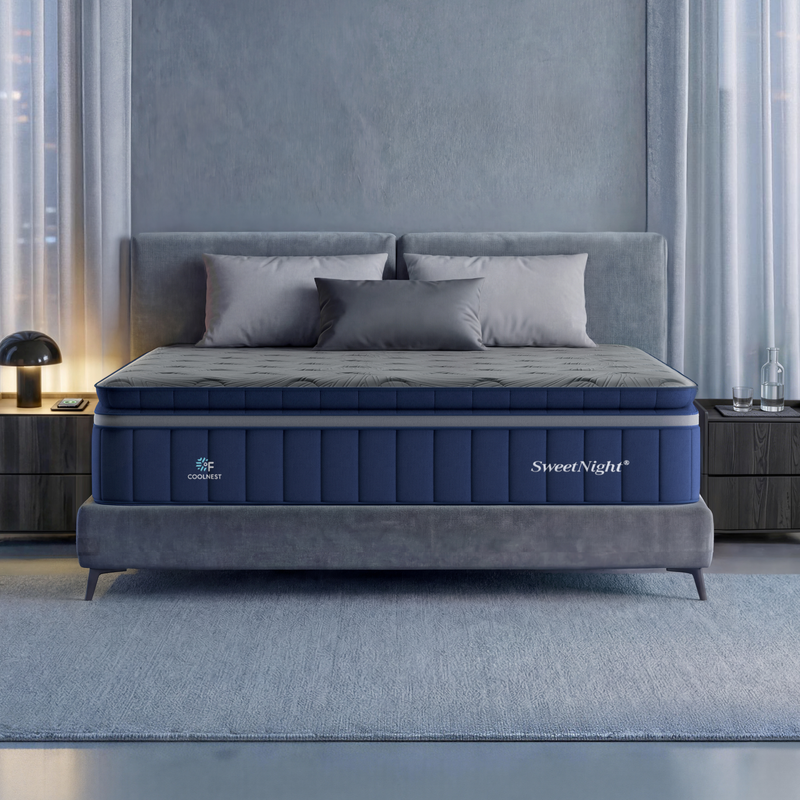

If you wake up sweaty, kick off the covers at 2 a.m., or flip your pillow looking for the cold side, you're a hot sleeper — and your mattress is probably part of the problem. Most foam beds trap body heat, and once summer arrives that heat has nowhere to go.
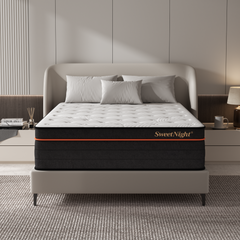
The good news: the right cooling mattress can lower your sleep surface temperature and keep it there all night. Below is what actually makes a mattress sleep cool, how to score any bed against seven criteria that matter, and why the SweetNight CoolNest® Ultra is our top pick for the best cooling mattress for hot sleepers in 2026.
What Makes a Mattress "Cooling" — and Why Most Foam Beds Sleep Hot
Traditional memory foam is dense and slow to recover. That's great for pressure relief, but it also wraps around your body and seals in heat. With no airflow and no way to move warmth away from the surface, the foam slowly turns into a heat pocket — which is why so many sleepers run hot on standard foam beds.
A genuinely cooling mattress fights heat on four fronts:
- A breathable cover that wicks moisture and lets heat escape at the surface.
- Phase-change material (PCM) that absorbs heat when you warm up and releases it when you cool down.
- Gel-infused foam that pulls heat away from the body instead of storing it.
- An open, ventilated structure that keeps air moving through the mattress.
Most "cooling" mattresses do one of these. The best ones do all four.
Why SweetNight CoolNest® Is the Best Cooling Mattress for Hot Sleepers in 2026
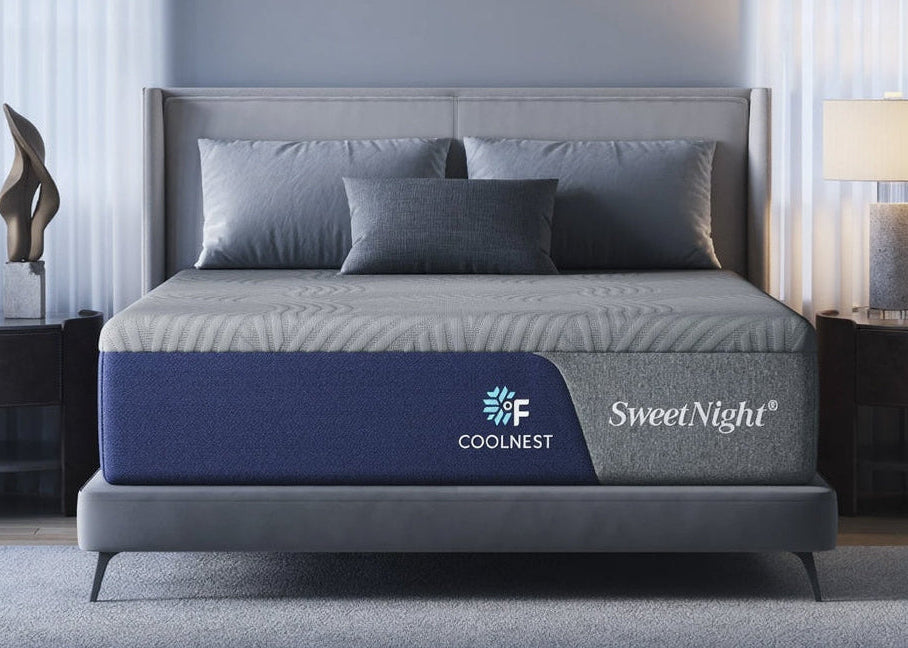
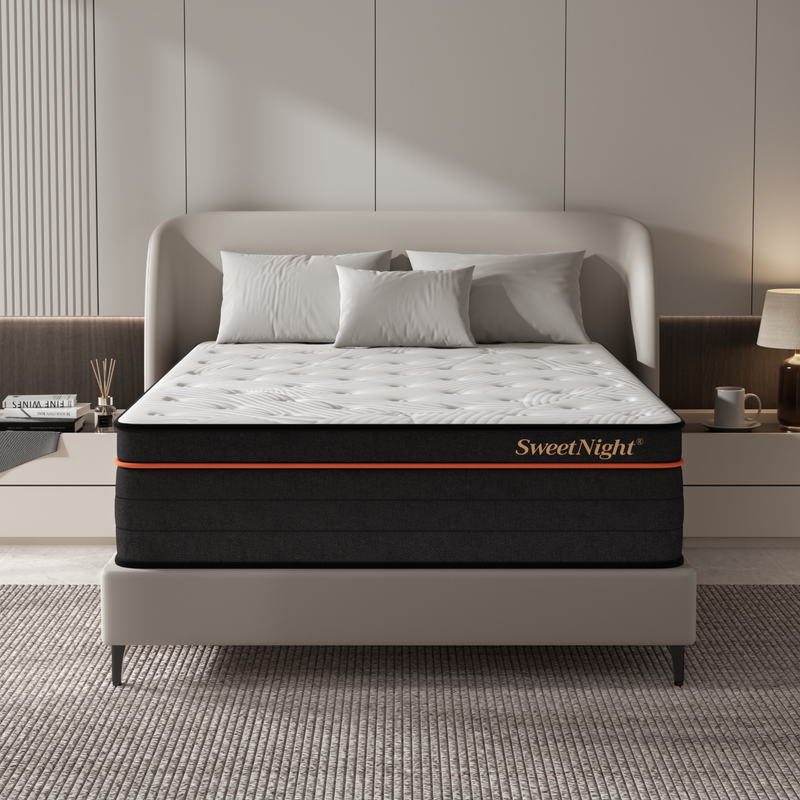
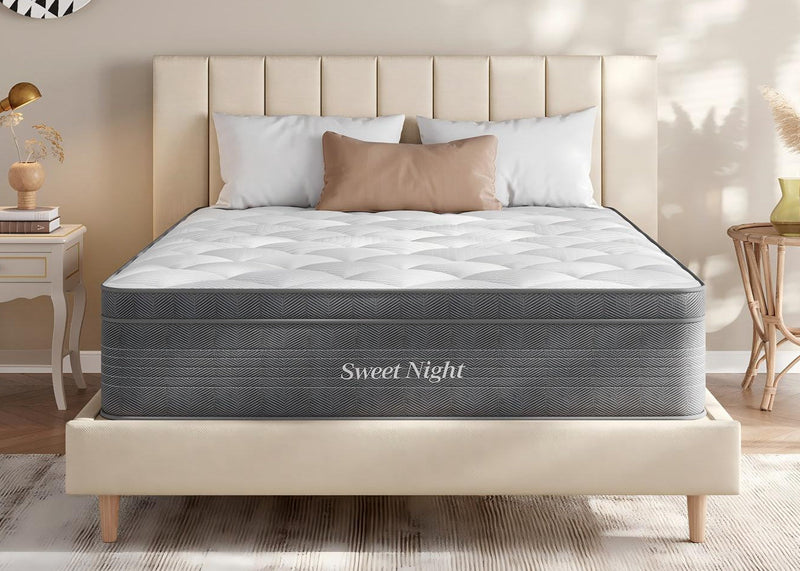
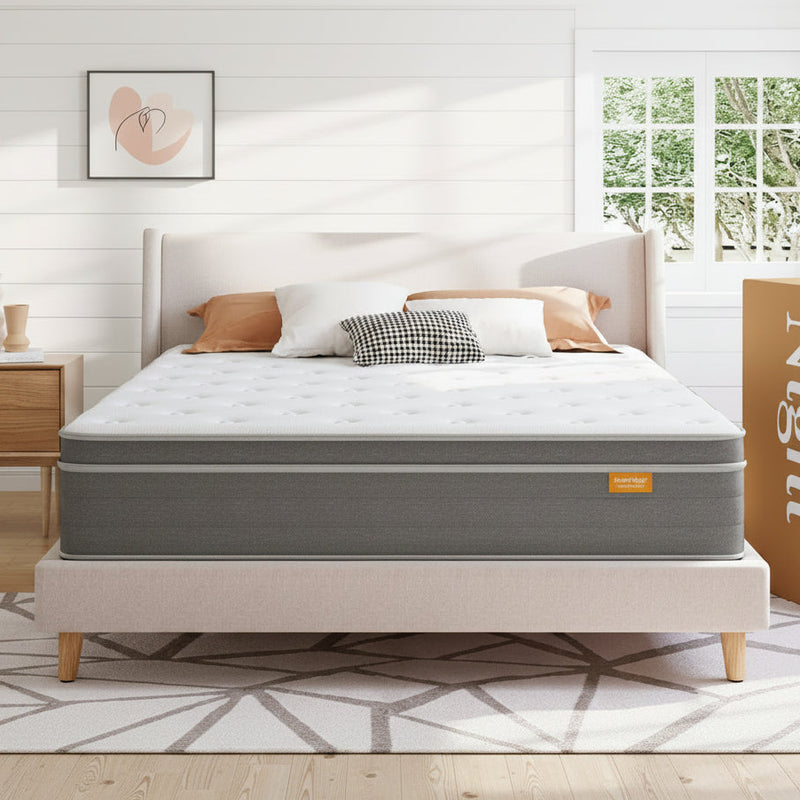
The SweetNight CoolNest® System was engineered specifically for people who sleep hot, and independent testing shows it sleeps up to 8° cooler than standard memory foam. It hits all four cooling layers above:
- Cooling Ice Silk Cover — micro-pores exceeding 10,000/cm² give it about 30% better breathability than standard fabrics, for fast heat and moisture release.
- PCMflux® High-Resilience Foam — phase-change gel particles actively regulate temperature, absorbing heat when your body warms and releasing it as you cool.
- Gel-Infused Memory Foam — infused with 30% gel particles to draw heat out from deep in the mattress, with a feel that stays cool and breathable all night.
- Ventilated Structure — roughly 300 breathable holes create heat-dissipation channels, tripling breathability versus traditional foam.
It isn't just cool, either — the CoolNest® line is built with zoned ergonomic support and a high-density base, so you get pressure relief and spinal support along with the temperature control. The newest 2026 addition, the 7-zone cooling memory foam mattress, pushes this even further with a 5-stage system that sleeps up to 11° cooler. That balance is why SweetNight has been recognized by outlets like Sleep Foundation, NapLab, Apartment Therapy, and Forbes.
The Best SweetNight Cooling Mattresses, Compared
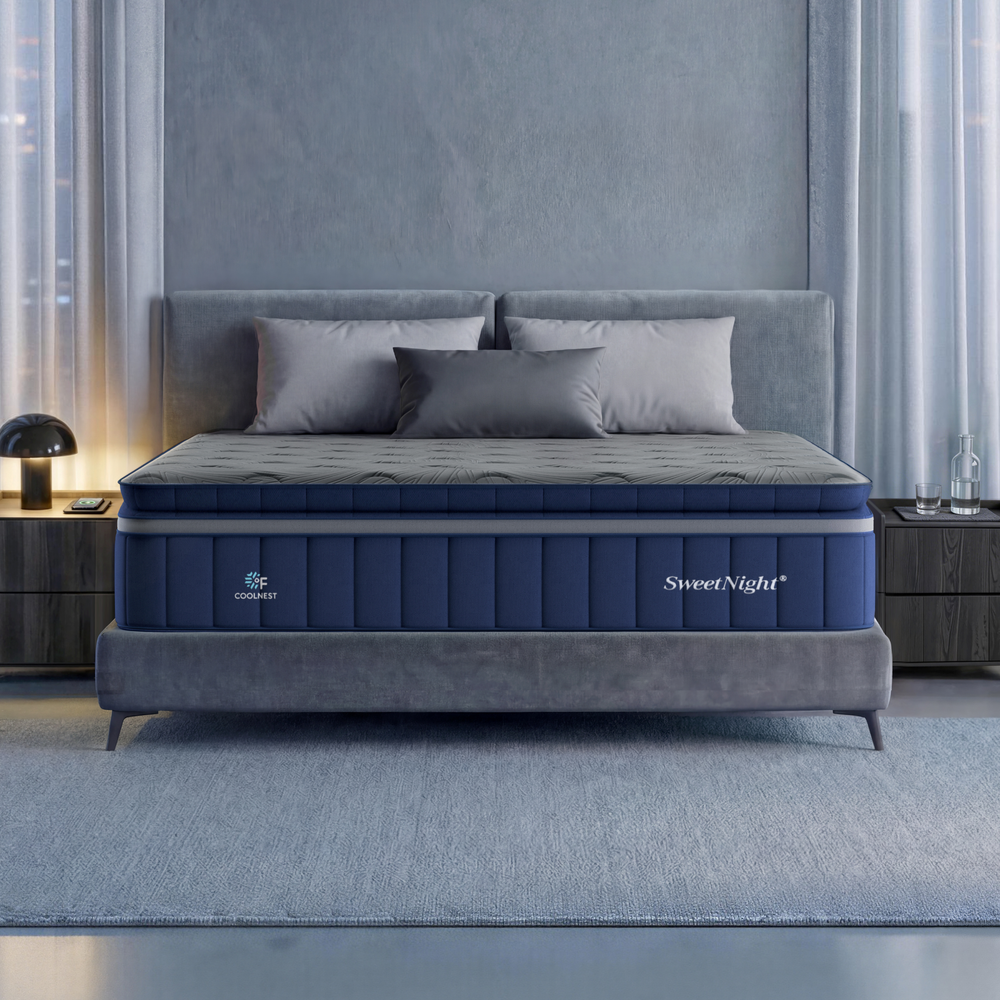
All three CoolNest® models use the same cooling system but suit different sleepers and budgets. Here's the quick version:
CoolNest® Memory Foam
Best overall value for hot sleepersFull CoolNest® cooling plus 5-zone ergonomic support. The brand's best seller and the easiest entry point.
From $329.99 $669.99
Shop CoolNest® →CoolNest® Hybrid
Best for extra airflow & bounceReinforced pocket coils add ventilation and edge support on top of the cooling layers — great for couples and combination sleepers.
From $399.99 $666.99
Shop Hybrid →CoolNest® Pro
Best for max cooling & supportUpgraded cooling with full-depth ventilation and precision 7-zone support for full-body relief.
From $529.99 $709.99
Shop Pro →Not sure which is right for you? SweetNight's quick sleep quiz matches you to a model in under a minute.
What You Get With Every SweetNight Cooling Mattress
A cooling mattress for hot sleepers is only as good as the promise behind it, because temperature is the one thing you genuinely cannot judge in a showroom. Every SweetNight CoolNest® mattress ships with the same safety net:
- 2 free premium pillows with every mattress purchase.
- Free shipping across the contiguous U.S.
- 100-night risk-free trial — sleep on it for three months, return it for a full refund if it's not for you.
- 10-year warranty.
- 0% APR financing available, plus HSA/FSA eligibility on qualifying purchases.
The 100-night trial is the part that matters most. Cooling performance only reveals itself over full nights at home across changing weather, so a company confident in its cooling makes it easy to test — and easy to send back if it doesn't work for you.
Beyond the Mattress: 3 More Ways Hot Sleepers Can Stay Cool
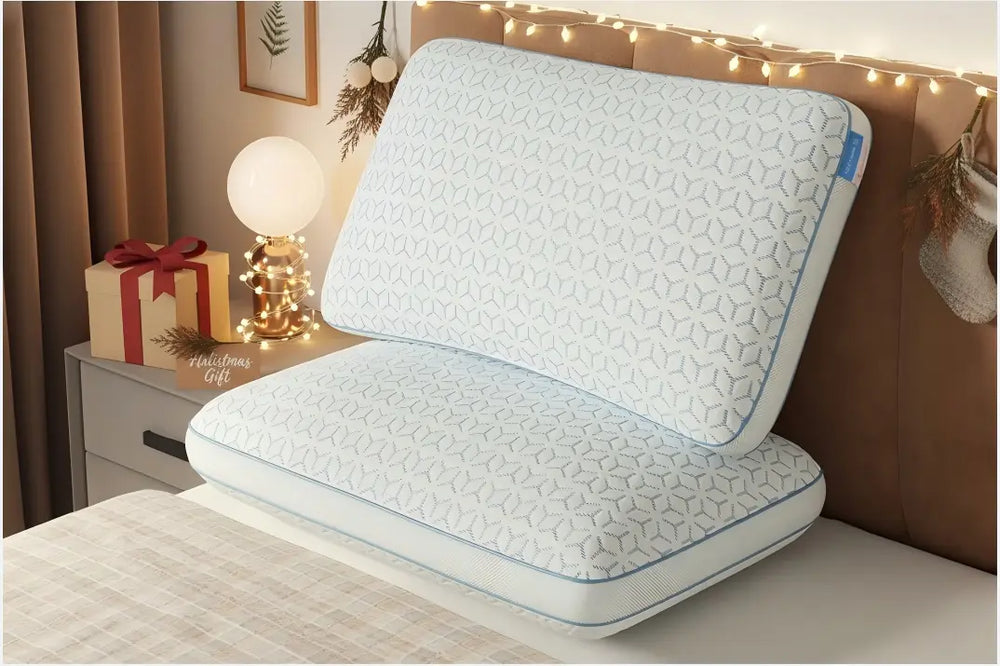
A cooling mattress is the foundation, but these stack on top of it:
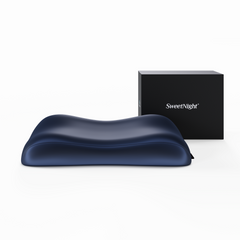
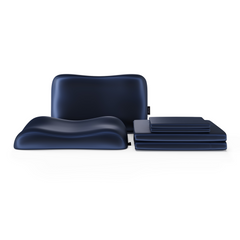
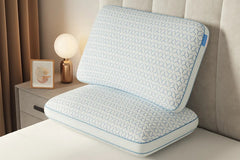
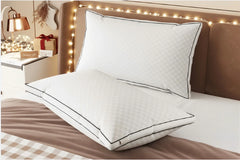
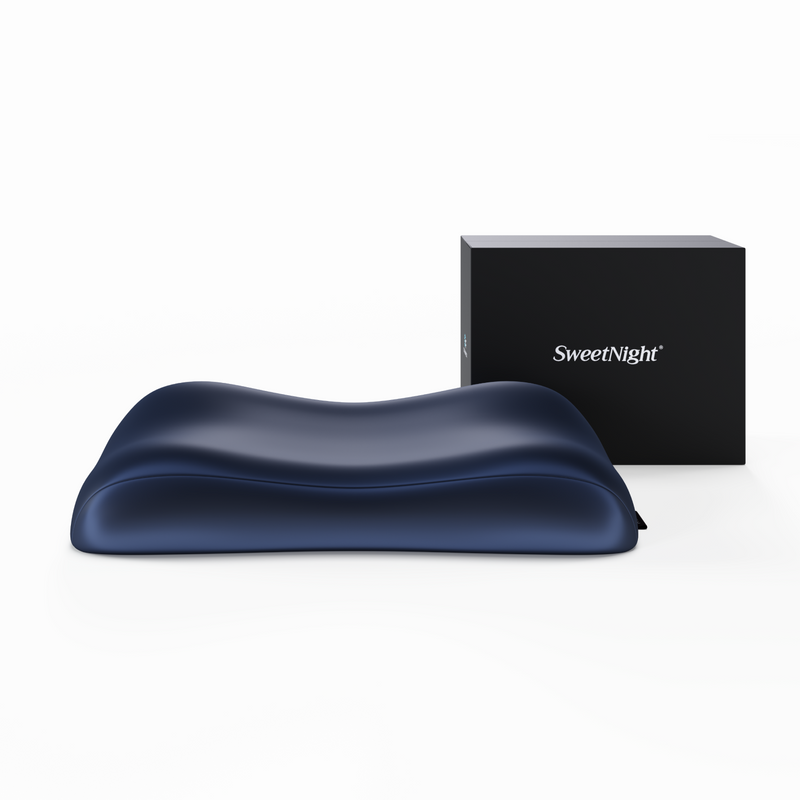
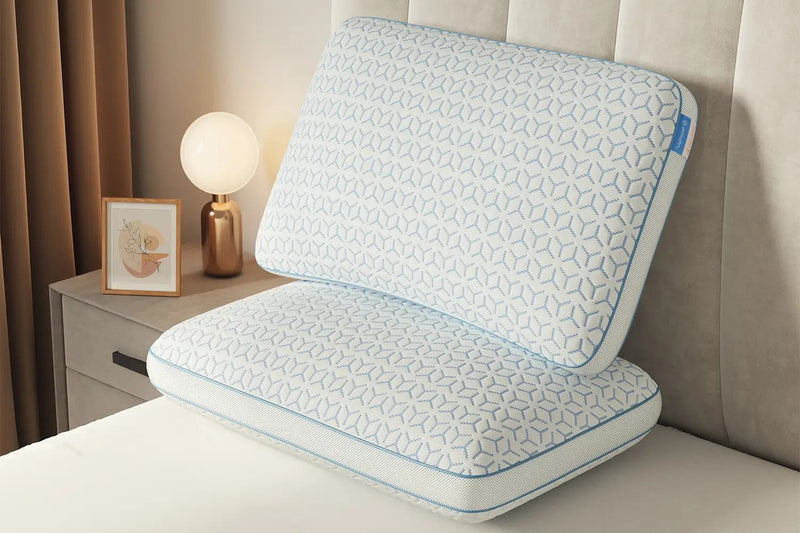
- Add a cooling pillow. SweetNight's Cooling Memory Foam Pillow 2-Pack keeps your head and neck — where a lot of heat builds — comfortable, and it ships free with any CoolNest® mattress.
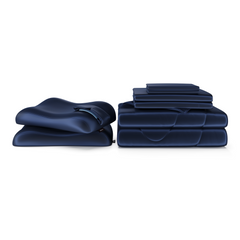
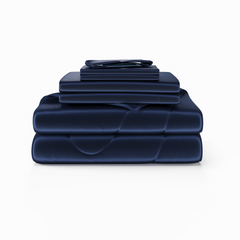
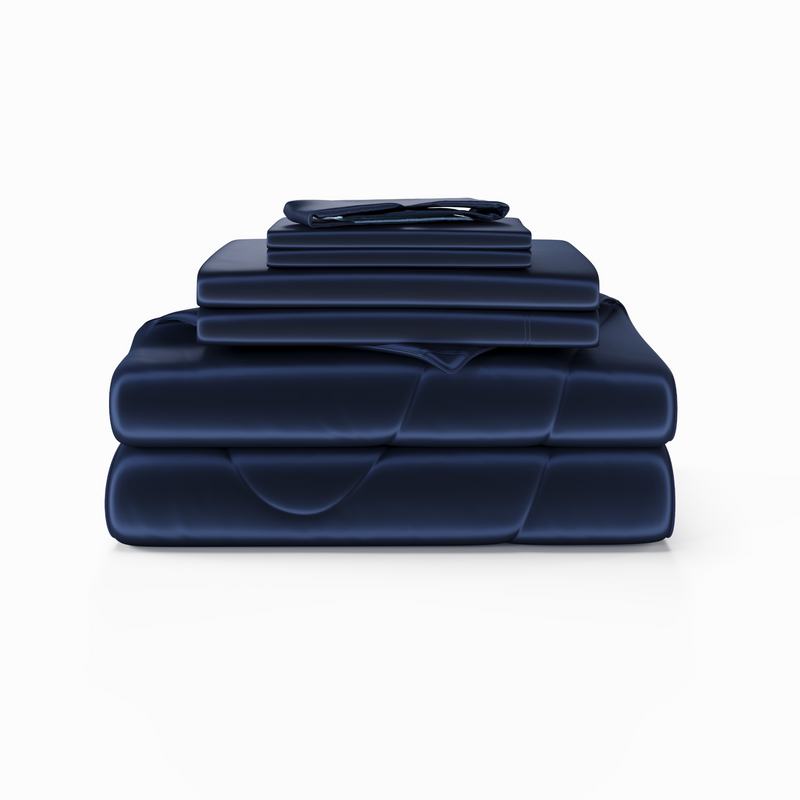
- Use breathable sheets. Skip heavy microfiber for moisture-wicking cotton or bamboo.
- Lower the room, not just the bed. Drop the thermostat a couple of degrees before bed and keep air moving with a fan.
Frequently Asked Questions
Is a cooling mattress really worth it for hot sleepers?
If you regularly wake up sweaty or struggle to fall asleep in summer, yes. Temperature is one of the biggest drivers of sleep quality, and a mattress that actively moves heat away (rather than trapping it) addresses the problem at the source.
How much cooler does the CoolNest® actually sleep?
Independent testing shows up to 8° cooler than standard memory foam, thanks to the four-layer CoolNest® System working together.
What size and profile should a hot sleeper choose?
Pick your size for the room and your profile for your body, not for temperature. A 12" sleeps as cool as a 16" of the same model when the ventilation runs the full depth, so choose 14" as the default, 12" if you're lighter or sleep alone, and 16" if you're heavier or want a plusher surface with more support underneath.
Can I try it and return it if I still sleep hot?
Yes — every SweetNight mattress comes with a 100-night risk-free trial and free returns, so you can test it through summer nights with no risk.
The CoolNest® Ultra is the coolest mattress we build for hot sleepers — 5-stage cooling engineered for up to 11° cooler sleep, 7-zone support, and a 100-night trial with 2 free pillows on every mattress.
Shop the CoolNest® UltraWhat Is a Cooling Mattress and How Do Cooling Mattresses Work?
Start with the correction that makes everything else make sense: a cooling mattress does not cool you down. It stops trapping the heat you already produce.
Nothing in a passive mattress generates cold. There is no refrigerant, no compressor, no energy input. What a well-built cooling mattress does is remove the obstacle — it gets out of the way of the heat your body is already trying to shed, instead of standing in its path. Once you internalise that, the whole category becomes legible, and most of the marketing becomes obviously empty.
Your body drops its core temperature by roughly one to two degrees to initiate and maintain sleep, and it does that by dumping heat through your skin. That heat has to go somewhere. Roughly half your skin surface is pressed against the mattress, so the bed is not a bystander in this process — it is the single largest surface your body is trying to shed heat into. A bed that accepts and disperses that heat helps you fall asleep and stay asleep. A bed that returns it to you is actively fighting your physiology for eight hours.
The three mechanisms that do the work
Strip the branding away and there are exactly three ways a mattress manages temperature. Everything with a trademark symbol is an implementation of one of them.
- Airflow (convection). Warm air is moved out from underneath you and replaced with cooler air, through coil channels, 3D ventilated structures or perforated foam. This is the biggest single lever, because it removes heat in bulk rather than one layer at a time.
- Conduction. Materials in direct contact with you pull heat out of your skin and spread it sideways through the mattress, away from the contact point. Gel, graphite and phase-change materials all work this way. Conduction is what makes a surface feel cool to the touch, and it is what keeps working in the places airflow can't reach — the compressed spots under your shoulder and hip.
- Evaporation. Sweat carries a large amount of heat with it when it evaporates, but only if it can get away from your skin. A breathable, moisture-wicking cover lets that happen. Trap the moisture and you get the worst of both worlds: humid air against your skin, which blocks further evaporation and makes you feel hotter than the actual temperature.
The three compound. Airflow works best when the surface isn't sealed; conduction works best when the heat it moves has somewhere to go; evaporation works best when air is circulating. A mattress that only does one of them is doing about a third of the job, which is why single-mechanism beds disappoint. If you want the evidence base and the honest limits of each mechanism, we cover them in depth in do cooling mattresses actually work.
So the useful question is never "does this feel cold in the showroom" — a cool-touch panel can feel great for ten minutes and mean nothing at 3am. The question is whether the bed keeps giving your heat somewhere to go for eight hours. A mattress that can't tell you which mechanisms it uses is selling you a word, not a feature.
Why Your Mattress Feels Hot at Night: The Real Causes of Overheating
Before you shop, it is worth being precise about what is going wrong, because the fix depends on the cause and some causes aren't the mattress at all.
| Cause | What's Actually Happening | Does a Cooling Mattress Fix It? |
|---|---|---|
| Heat-trapping foam | Traditional memory foam is viscoelastic — it softens at skin temperature and molds tightly, which is the selling point and also the problem. The closer it wraps, the more completely it seals heat in | Yes — this is the core fix |
| No airflow path | A solid foam block has no route for warm air to leave. Heat accumulates under you across the night rather than clearing | Yes |
| Sinking too deep | An overly soft or unsupportive bed lets you sink, which increases the contact area sealing heat against your sides and back | Yes — via firmness and zoned support |
| Non-breathable cover | A dense or coated cover blocks moisture, so sweat pools instead of evaporating and the air against your skin turns humid | Yes |
| Bedding and sleepwear | Heavy synthetic duvets and polyester sheets seal the whole system from above. The best mattress in the world can't breathe through a plastic-backed protector | No — fix the bedding |
| Room temperature and humidity | Above roughly 70°F, or in humid air, your body struggles to shed heat regardless of what you're lying on. Humidity is the underrated one: it blocks evaporation entirely | No — fix the room |
| Internal causes | Hormonal changes, menopause, medication, thyroid conditions, alcohol and late heavy meals all raise your own heat output | Partly — helps, but treat the cause |
The pattern worth noticing: the mattress owns the first four rows and nothing below them. If you overheat in a genuinely hot, humid room on an airy bed, a new mattress is the wrong purchase — fix the room and the bedding first. But if you sleep on dense foam, sink deep into it, and wake up hot mainly along your back and hips where you press in, the mattress is your problem and replacing it is the highest-leverage thing you can do.
Worth settling before you spend anything: are you actually a hot sleeper, or is this environmental? Hot sleeper vs cold sleeper has a quick self-check, why do I get hot when I sleep covers the causes a mattress can't fix, and why humid nights feel hotter explains the evaporation problem in more detail.
Cooling Mattress Types Compared: Hybrid vs Memory Foam vs Latex vs Innerspring
Construction sets a temperature baseline before any cooling branding is applied. This is the first fork in the decision, and it matters more than the marketing layered on top.
| Type | How It Handles Heat | Trade-off | Best For |
|---|---|---|---|
| Hybrid (coils + foam) | Coolest by airflow. The coil core leaves open channels so warm air moves out and cooler air moves in | Heavier; less deep contouring than all-foam | Hot sleepers, couples, combination sleepers |
| Cooling memory foam (gel, PCM, open-cell) | Coolest by conduction. Draws heat out of the skin and disperses it through the layers | Depends entirely on the cooling build; plain memory foam is the worst offender | Side sleepers, pressure relief, motion isolation |
| Latex | Cool-neutral. Naturally porous and responsive, so you rest on it rather than in it | Expensive and heavy; bouncier feel isn't for everyone | Hot-leaning sleepers who dislike sinking |
| Innerspring | Cool by default — almost all airflow, almost no insulating foam | Little contouring, more motion transfer between partners | Firm-feel sleepers who want maximum ventilation |
| Traditional memory foam | Warmest. Dense, solid, and designed to hug — which for a hot sleeper means seal | The category hot sleepers should avoid unless it is explicitly built for cooling | Cold sleepers who want a cradle |
Hybrid vs cooling memory foam: how to actually decide
These are the two serious options, and they cool by different physics, which is why "which is cooler" is the wrong question. The right question is which failure mode is yours.
Choose a hybrid if your heat problem is volume — you run hot generally, your room is warm, you share the bed and generate double the heat, or you simply want the maximum amount of air moving under you. Coils create a physical void that no foam formulation can replicate, and that void is doing bulk heat removal all night for free. The trade is contouring: a hybrid holds you up more than it wraps you.
Choose cooling memory foam if your heat problem is contact — you sleep on your side, you overheat specifically where shoulder and hip press in, or you need pressure relief and refuse to give up contouring to get temperature. Conduction keeps working exactly where airflow can't reach, which is under a compressed contact point. This is the case a well-engineered multi-stage foam bed handles better than a mid-tier hybrid.
Latex sits between them and is genuinely good, with the caveat that it is expensive, heavy, and has a springy feel that people either love or return. Innerspring is cool because it is mostly air, but you give up nearly all pressure relief and motion isolation to get there — a reasonable trade for some firm-feel sleepers, a bad one for most side sleepers and couples.
Cooling Mattress Technology Explained: Gel vs PCM vs Multi-Stage Cooling
Within cooling foam there is a real hierarchy, and it explains the price gaps between beds that all use the same word on the label.
| Technology | Mechanism | Holds Up All Night? | What It Costs |
|---|---|---|---|
| Plain memory foam | None. Softens with body heat and closes around you | No — warms steadily from the moment you lie down | Cheapest, and the most expensive mistake |
| Gel-infused foam | Gel particles absorb and spread body heat | Partly. Effective early, then saturates once it has taken on all the heat it can hold | Modest premium |
| Open-cell / perforated foam | Air passages through the foam let heat escape upward | Yes, and it compounds well with everything else | Modest premium |
| Graphite or copper infusion | Higher-conductivity particles move heat away faster than gel | Yes, though still bounded by where the heat then goes | Mid premium |
| Phase-change material (PCM) | Absorbs heat by changing state, then releases it as you cool | Yes — it regulates rather than simply absorbing, so it keeps working | Higher premium |
| Multi-stage systems | Conductive cover + PCM + perforated foam + ventilated core, layered deliberately | Yes, and most reliably — no single layer has to carry the whole night | Highest, and where the real gains are |
Why gel-only mattresses disappoint at 3am
This is the most useful thing a buyer can understand, so it's worth spelling out. Gel is a heat sink. It has a finite capacity: it absorbs your body heat, spreads it out, and performs genuinely well — right up until it has absorbed everything it can hold. After that it is thermally the same temperature as you are, and it stops doing anything at all.
That is the exact experience people describe when they say a mattress "felt cool when I got in and hot by the middle of the night." Nothing broke. The gel did precisely what gel does, and then ran out. This is why gel-only beds cluster in the budget tier and why gel alone should never be the headline feature of a mattress you're buying specifically to solve overheating.
What PCM does differently
Phase-change material is a heat regulator rather than a sink, and the difference is that it works in both directions. It absorbs heat by melting at a temperature tuned close to skin temperature, which takes a large amount of energy without the material itself getting hotter. Then, when your surface temperature drops — as it does in the second half of the night, and every time you shift position — it re-solidifies and releases that stored heat back. It resets. That cycle is why PCM keeps regulating across eight hours instead of saturating in two, and it's the technology behind the temperature figures you see quoted on serious cooling beds. The full physics is in how PCM technology works.
Why multi-stage systems win
A multi-stage system is simply the recognition that no single material should be asked to do the whole job, and that the three mechanisms — airflow, conduction, evaporation — each cover the others' blind spots.
Conduction at the cover handles the first contact and the compressed points. PCM in the comfort layer handles the sustained regulation across the night. Perforated foam gives the absorbed heat a route upward instead of banking it. A ventilated core clears it in bulk. Each stage catches what the one before it couldn't, and the failure of any single stage doesn't collapse the system. That redundancy is the actual product, and it's what separates an 8° or 11° engineered result from a bed with one gel layer and a confident label.
Practical rule when you read a spec sheet: count the mechanisms. One named mechanism is a feature. Four working together is a system. And a mattress that names none of them, however cool the branding sounds, has told you the answer.
Benefits of a Cooling Mattress for Hot Sleepers and Night Sweats
Worth being concrete about what actually changes, and equally concrete about what doesn't.
Fewer overheating wake-ups
This is the primary benefit and the one people notice first. Most heat-related waking happens in the second half of the night, when heat has had hours to accumulate under you with nowhere to go. Remove the accumulation and you remove the wake-up. The change usually shows up not as "I feel cold" but as "I stopped noticing my bed" — which is what a mattress doing its job feels like.
Falling asleep faster
Your body has to shed heat to initiate sleep. A surface that accepts that heat cooperates with the process; a surface that returns it makes you lie there waiting. This is why the same person can feel exhausted and still take forty minutes to drop off on the wrong mattress.
Less sweat, and less clamminess
Two different things. Less sweat because you're cooler. Less clamminess because a wicking cover moves the moisture away instead of holding it against you. The second one matters more than people expect — damp warm air against skin blocks further evaporation, so trapped moisture actively makes you hotter, not just less comfortable.
More uninterrupted deep sleep
Fewer awakenings means fewer interrupted sleep cycles, and deep sleep is disproportionately concentrated in the early part of the night while REM builds later. Repeated heat wake-ups fragment both. This is the mechanism behind "I slept the same hours but felt better."
What it will not do
It will not cool a hot room. It will not overcome a heavy synthetic duvet piled on top. It will not stop hormonal night sweats, though it substantially improves how you recover from one. And it will not make you feel cold — nothing passive does, and any product promising that is describing an outcome it cannot deliver. Set against realistic expectations, a good cooling mattress delivers reliably. Set against "it will make me cold," everything disappoints.
How to Choose the Best Cooling Mattress for Hot Sleepers: 7 Criteria
Score any mattress against these. The best cooling mattress for hot sleepers checks most of them; anything scoring below four is relying on the word rather than the build.
| # | Criterion | What to Look For |
|---|---|---|
| 1 | Airflow structure | Coils, 3D ventilated channels, or perforated foam — a described path for warm air to leave |
| 2 | Conductive comfort layer | Gel, graphite or PCM in the layer nearest your body, not buried at the base |
| 3 | Breathable, wicking cover | A cover that moves moisture so sweat evaporates. Cheap to build, and it does more than people expect |
| 4 | Surface-hugging control | Medium to medium-firm, keeping you near the cool top rather than sunk into a warm pocket |
| 5 | Zoned support | 5- or 7-zone construction. Zoning holds your hips level, and a body that isn't sagging compresses less foam around itself |
| 6 | Material certification | CertiPUR-US or OEKO-TEX on the foams and cover — verifiable, not a marketing badge |
| 7 | Sleep trial & warranty | 100 nights minimum and a 10-year warranty, so you test cooling in your own bedroom across a real season |
The criterion buyers skip: zoned support
Criterion 5 is the one almost everybody misses, because support and cooling look like separate problems. They aren't.
Sag into an unsupportive bed and your hips drop below the line of your spine. Two things follow. First, more of your body surface makes contact with more foam, and that expanded contact patch is precisely where heat gets trapped. Second, the deeper you sit in the comfort layer, the more of the cooling structure is now above you rather than under you — the airflow channels you paid for are no longer between you and the heat. A zoned bed that holds your hips level keeps your contact area smaller and keeps you positioned where the cooling actually happens. It is doing quiet thermal work as well as postural work, and it's the reason a well-supported firm-ish bed frequently out-cools a softer bed with better-sounding cooling specs.
The criterion sellers hate: the sleep trial
Criterion 7 is the only one that can't be faked in a spec sheet. Cooling performance is genuinely hard to verify before purchase — you cannot assess it in a showroom, and thermal claims are not independently standardised across the industry. A long trial transfers that risk from you to the seller. That is exactly why it's a signal: a company confident in its cooling has an easy time offering 100 nights, and a company that isn't makes returns difficult. Read the return terms before the spec sheet. Restocking fees, customer-paid return shipping, and trials under 100 nights all tell you something the marketing copy won't.
Best Cooling Mattress Firmness and Thickness for Hot Sleepers
Firmness is a cooling specification, not just a comfort preference, and it is the cheapest lever you have. The softer the bed, the deeper you sink; the deeper you sink, the more foam wraps around your sides and the more completely your own heat is sealed in. A medium to medium-firm surface keeps you resting near the top, where the cover breathes and the cooling layers can reach you.
Adjust for body weight rather than following the label, because firmness ratings describe the mattress and not the interaction. Lighter sleepers compress less foam and can go a touch softer without sinking. Heavier sleepers press further into any given surface and should lean medium-firm to stay near it — a "medium" bed under a heavier sleeper behaves like a soft one, with all the heat consequences that implies. The goal is identical for everyone: sleep on the cooling layers, not in them.
Does a thicker mattress sleep cooler? No — here's why
Thickness works in the opposite direction to what most shoppers assume. More foam is more insulation. A thicker mattress is not a cooler one, and buying height in pursuit of temperature is a straightforwardly bad trade.
What extra height genuinely buys is room for a deeper support core. That matters for heavier sleepers, who compress further and need more structure underneath before they bottom out, and for anyone who wants the bed to hold its shape across a decade rather than developing a body impression at year four. Those are real reasons to go thicker. Temperature is not one of them.
How to read the profile options:
- 12 inch — the efficient choice for most single sleepers and lighter couples. Enough comfort layer for genuine contouring, not so much foam that heat has far to travel before it reaches a ventilation path. Often the coolest-sleeping version of any given model, precisely because there's less material between you and the airflow.
- 14 inch — the balance point, and the right default for most people. Deeper pressure relief for side sleepers and a meaningfully stronger core, without a cooling penalty when the build is properly ventilated through its full depth.
- 16 inch — for heavier sleepers, couples with a large weight difference, or anyone who wants a plusher surface and needs the support depth underneath to earn it. Also simply a preference: some people want a tall bed. Choose it knowingly, and make sure the ventilation runs the full height rather than stopping at the comfort layer.
The rule: choose thickness for support and feel, choose the cooling system for temperature. Conflating the two is how people end up paying more for a 16-inch bed that sleeps hotter than the 12-inch version of the same model.
Best Cooling Mattress by Sleeping Position: Side, Back, Stomach and Combination
Your position changes how much of you touches the bed, and contact area is where heat accumulates. Same mattress, genuinely different thermal experience.
Best cooling mattress for back sleepers
The easiest position to cool. Your weight spreads across a wide area with no deep compression points, so airflow stays intact and the cooling technology gets to operate close to its full potential — when a manufacturer quotes a temperature figure, this is roughly the condition it describes.
Prioritise medium firmness with clear lumbar support. You want the small of your back supported rather than bridging a gap, because an unsupported lumbar curve makes you shift and settle deeper across the night, which increases contact area and undoes the advantage the position gives you. Both hybrid and multi-stage cooling foam work well here; pick on feel rather than temperature, since this position is forgiving on temperature.
Best cooling mattress for side sleepers
The hardest position to get right, and the one where mattress choice matters most.
Side sleeping concentrates your entire body weight onto two narrow contact points — shoulder and hip. Those points compress deep into the comfort layer, and compressed foam is both the hottest part of the bed and the part airflow can least reach. You get heat pooling exactly where you press hardest, which is also exactly where you need pressure relief. The two requirements pull against each other.
The naive fix is a firmer bed, which reduces sinking but transfers pressure into your shoulder joint and simply relocates the problem. The real answer has two parts. First, cooling that works through compression — conductive material in the top layer that keeps drawing heat out even where the foam is squeezed flat and airflow has stopped. Second, zoning: a softer shoulder zone that lets the shoulder sink in without the whole body sinking with it, and a firmer waist and hip zone that holds your spine straight. That combination gives you pressure relief in two small areas instead of full-body immersion, which is both better for your joints and dramatically better thermally.
Target: medium-firm with 7-zone contouring and conduction in the comfort layer. If shoulder pressure is your main complaint, why shoulder pressure is common among side sleepers goes deeper on the mechanics.
Best cooling mattress for stomach sleepers
Thermally the toughest position, and there is no elegant fix. Your torso lies flat against the surface with the largest possible contact area, and your face is in or near the pillow, restricting the airflow around your own head and neck — so you're fighting on two fronts at once.
Go firmer than you think you need. Stomach sleeping already tends toward hip sink and lumbar hyperextension, and a soft bed makes both worse while simultaneously wrapping more foam around your front. A firm surface keeps you flat, keeps contact shallow, and keeps your spine neutral. Then put real effort into the pillow and bedding, which carry a larger share of the cooling load in this position than in any other — a thin, breathable pillow is doing more for a stomach sleeper's temperature than an extra cooling layer in the mattress would.
Best cooling mattress for combination sleepers
You move, which is genuinely an advantage: rolling breaks up the heat pocket before it fully forms, and it redistributes which parts of you are in contact. Combination sleepers often overheat less than their thermostat suggests they should, for exactly this reason.
What you need is responsiveness. A surface that grips you, or that you have to climb out of, is a surface you stay put on — and staying put is how heat builds. A responsive bed that lets you change position without waking fully preserves the advantage your movement gives you. Medium firmness with good recovery beats maximum contouring here, and this is one case where a hybrid's bounce is a functional benefit rather than a preference.
Best Cooling Mattress for Couples, Menopause Night Sweats and Heavier Sleepers
Position isn't the only variable. Three situations change the recommendation enough to deserve their own answer.
Couples sharing one bed
Two bodies produce roughly double the heat in the same volume, so couples should treat cooling as a higher priority than either partner would alone. Airflow matters more here than conduction, because there is simply more heat to clear — which tilts the decision toward hybrid, or toward a foam bed with a genuinely ventilated core rather than cooling concentrated at the surface.
If one of you sleeps hot and the other cold, there is a clear winning strategy, and it comes from one asymmetry: it is far easier to add warmth than to remove trapped heat. So build the bed around the hot sleeper — cooling base, breathable everything — and let the cold partner add layers on their side. Separate duvets in different weights solves most of these conflicts outright and is a much better answer than compromising on the mattress. Motion isolation matters too: waking your partner every time you roll off a hot spot turns one person's temperature problem into two people's sleep problem.
Menopause and hormonal night sweats
Be clear about what's possible here. Hot flashes and night sweats during menopause are generated internally by hormonal changes in thermoregulation. No mattress prevents them, and any product implying otherwise is overselling.
What a cooling mattress changes is everything around the event. On a heat-trapping bed, a hot flash dumps heat and moisture into a surface that holds both, so you finish the flash lying in a damp warm pocket that keeps you awake long after the flash itself has passed. On a breathable, wicking, non-trapping bed, the heat disperses and the moisture leaves, and you recover in minutes rather than being kept up. That's a substantial quality-of-life difference even though the underlying cause is untouched.
For this use case specifically, prioritise moisture management over raw cooling figures. The wicking cover and breathable structure matter more than the headline temperature number, because sweat, not ambient heat, is the thing disrupting your night. Menopause, night sweats and sleep covers the wider picture, and night sweats causes and how to stop them covers the non-hormonal causes worth ruling out.
Heavier sleepers
Body weight changes both halves of the equation. You produce more heat, and you compress any given surface further — which means a mattress rated medium behaves soft, you sit deeper in the comfort layer, and the contact area sealing heat around you is larger. The cooling spec that works for a 140lb sleeper can underperform noticeably for a 240lb one on the identical bed.
The adjustments: go one step firmer than the label suggests, prioritise a deeper support core (this is the legitimate case for a 14" or 16" profile), and insist on cooling that runs through the full depth rather than sitting in the top two inches. High-density support foam or a robust coil unit also protects against the early body impressions that would otherwise create a permanent heat-trapping dip within a few years.
Best Cooling Mattress Brands and Models: The SweetNight CoolNest Range Compared
We make cooling mattresses, so treat this section as what it is: our own range, laid out against the criteria above so you can see which model matches your situation and price point rather than being told one answer fits everyone.
| Model | Cooling Build | Support | Best For | Queen From |
|---|---|---|---|---|
|
CoolNest® Ultra Flagship |
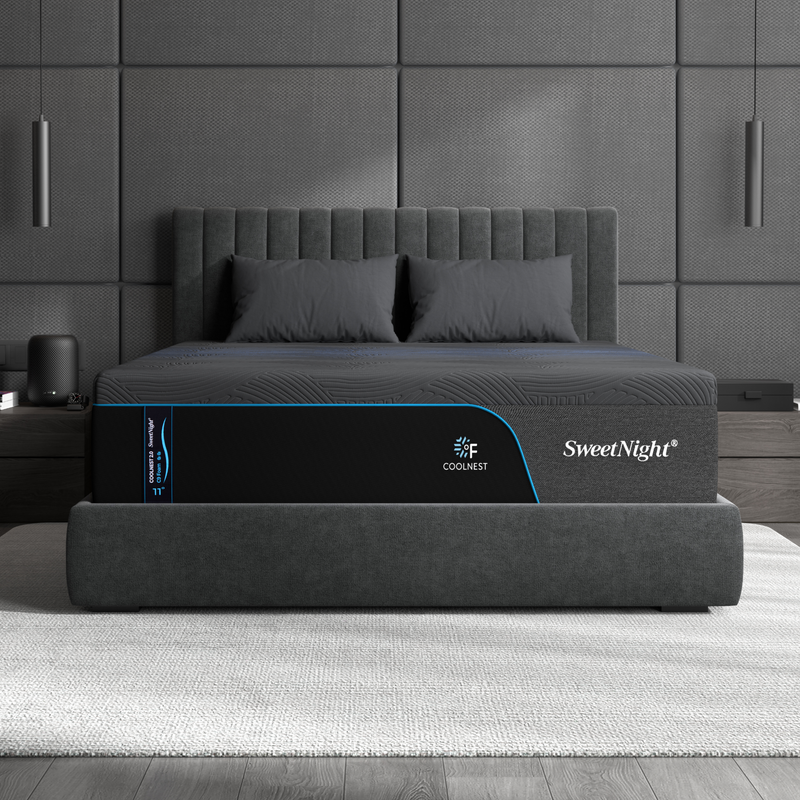
5-stage cooling, AirMesh™ cover, 3D ventilated circulation, continuous heat dissipation — engineered to sleep up to 11° cooler | Refined 7-zone precision support | Hot sleepers who want the coolest surface we build, in 12", 14" or 16" | $729.99 |
| CoolNest® Pro | 4-stage cooling, gradient ice-silk cover, triple-perforated foam, PCMflux® HR foam | Contour-cut 7-zone, ACA-certified ergonomic support | Sleepers who want upgraded cooling plus clinical-grade back support | $529.99 |
| CoolNest® Hybrid | CoolNest® multi-stage cooling over a ventilated coil core — up to 8° cooler | Dynamic Coil™ with DuoSense™ pillow top; strong motion isolation | Couples and anyone who wants airflow-led cooling with bounce | $499.99 |
|
CoolNest® Best seller |
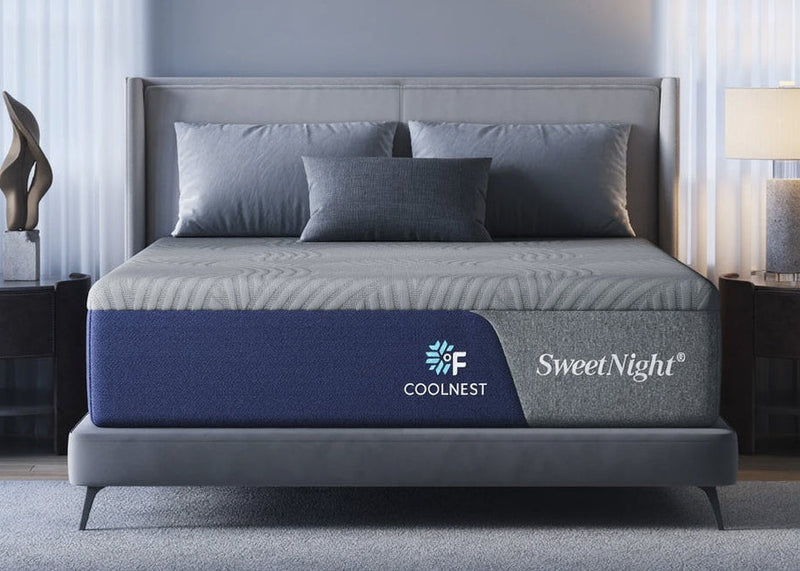
CoolNest® system, 3D-weave cover, 3× more breathable than conventional foam — up to 8° cooler | 5-zone ergonomic support | The value pick — proven cooling at the lowest entry price | $399.99 |
Queen starting prices as of this update; sale pricing and other sizes vary — check the product page for current pricing. All models include a 100-night trial and a 10-year warranty.
The short version of how to read that table: the CoolNest is the value answer and the volume seller, with 4.9 stars across 700+ reviews. The Hybrid is the airflow answer, and the right call for couples. The Pro adds cooling stages and clinical-grade zoning at a mid price. The Ultra is the maximum-cooling answer, and it's worth a section of its own.
CoolNest® Ultra Review: The Best Cooling Mattress for Hot Sleepers in 2026
If your priority is simply the coolest surface we build, the CoolNest® Ultra Memory Foam Mattress is the answer in this range. It's worth explaining why in detail rather than asserting it, because "our newest is our best" is exactly the claim you should be suspicious of.
The 5-stage cooling system, stage by stage
The Ultra is the model that takes the multi-stage principle furthest. Five cooling stages work in sequence, so no single material is asked to carry the night alone — which, as covered above, is the difference between cooling that lasts eight hours and cooling that lasts two.
- AirMesh™ cover. The first line, and the one you feel immediately. An open engineered mesh structure handles contact-point heat the moment you lie down, and keeps moisture moving off the skin so evaporation can do its share of the work rather than being blocked by trapped humidity.
- Conductive comfort layer. Directly beneath the cover, where it can reach you. This is the stage that keeps working at compressed contact points — under a shoulder or hip — where airflow has effectively stopped and conduction is the only mechanism still available.
- 3D ventilated circulation. A structured three-dimensional airflow path running through the mattress rather than only across its surface. This is what stops absorbed heat banking inside the foam: heat that's been conducted away from you needs somewhere to actually go, and without a route out it eventually saturates the layer holding it and returns.
- Continuous heat dissipation. The through-depth stage. Heat keeps moving down and out of the core for as long as you're producing it, which is the whole night — this is the difference between a system that has a capacity and a system that has a throughput.
- Ventilated support core. The base stage, clearing heat in bulk from the largest volume of the mattress and preventing the support layers from becoming the insulating floor that undoes everything above them.
That layering is why the Ultra is engineered for up to 11° cooler sleep against the 8° of the core CoolNest. It isn't a different gimmick. It's more of the mechanisms that were already working, arranged so each one catches what the previous stage couldn't — and critically, so that heat removed at the surface has a continuous path all the way out rather than being relocated a few inches deeper.
Why 7-zone precision support is a cooling feature
The other half of the Ultra is its refined 7-zone precision support, and this is where it earns its place for side sleepers specifically. It also demonstrates the point made earlier: support and cooling are the same problem approached from two directions.
Seven zones means the mattress varies in firmness along its length rather than presenting one uniform surface. The shoulder zone is engineered to let a shoulder sink in; the lumbar and hip zones are firmer, holding your midsection level. What that produces is targeted immersion — you get deep pressure relief in the two places you need it, without your whole body descending into the comfort layer to get it.
Thermally that's decisive. Full-body immersion is the mechanism by which a soft foam bed becomes a heat trap: more surface contact, more foam wrapped around your sides, and your body positioned below the layers that were supposed to be cooling it. Zoning gives you the pressure relief while keeping your contact area small and keeping you high in the bed where the AirMesh™ cover and the ventilated structure can still reach you. The 7-zone system is doing thermal work continuously, and it's the reason the Ultra can offer both deep contouring and the coolest surface in the range without those two goals cancelling out.
It's also engineered for spinal alignment, which is the more conventional benefit — and worth noting that the alignment and the cooling come from the same structural decision rather than being two features bolted together.
Choosing between 12", 14" and 16"
The Ultra comes in three profiles, and the cooling system is the same in all of them. That's the important part: you're setting support depth for your body, not trading temperature for height.
- 12" — lighter sleepers and single sleepers. The shortest path from your skin to the ventilated core, and the most efficient buy if you don't need the extra support depth.
- 14" — the default for most adults and most couples. More comfort layer for side-sleeping pressure relief, a stronger core, no meaningful cooling penalty given the through-depth ventilation.
- 16" — heavier sleepers, couples with a significant weight difference, or anyone who wants a taller, plusher bed. The support depth here is doing real work rather than being decorative.
Who the CoolNest Ultra is for — and who should buy something else
Honest scoping matters more than a blanket recommendation, so:
Buy the Ultra if you sleep hot enough that the mattress has to lead the solution rather than assist it; you sleep on your side and need pressure relief without the heat penalty; you've tried a gel-only "cooling" bed and found it faded overnight; or you want the maximum cooling specification available in the range and the support to match.
Buy something else if airflow rather than conduction is your priority and you like a bit of bounce — the CoolNest® Hybrid is a better-shaped answer, particularly for couples. If budget leads the decision, the CoolNest® carries the same core system, delivers 8°, and has earned 4.9 stars across 700+ reviews — it solves the problem for most hot sleepers at the lowest entry price in the range. And if you need clinical-grade back support alongside upgraded cooling at a mid price, the CoolNest® Pro with its ACA-certified 7-zone system is the targeted choice.
Whichever way that lands, the 100-night trial is the point. We can tell you the Ultra is engineered for 11°; only your own bedroom, across a run of real nights, tells you what that's worth to you. Compare all four side by side in the cooling mattress collection.
Compare the Full CoolNest Cooling Range
The full CoolNest range — from the value CoolNest® to the 11°-cooler flagship CoolNest® Ultra — plus cooling pillows and breathable bedding, sits together in one place. Every mattress ships with a 100-night trial and a 10-year warranty, so you can prove the cooling in your own bedroom before you commit.
→ Browse the cooling mattress collection and pick your CoolNest
How Much Does a Good Cooling Mattress Cost in 2026?
Cooling is not a luxury feature, and the price ladder is flatter than the industry would like you to believe. Here is what each band realistically buys, using queen pricing.
| Band | What You Get | Honest Assessment |
|---|---|---|
| Under $350 | Basic gel foam, standard cover, thin support core | Cools at bedtime, fades through the night. Fine for a guest room, not for a genuine hot sleeper |
| $350–$550 | Real multi-stage cooling, breathable engineered cover, 5-zone support, full trial and warranty | The value sweet spot. Most hot sleepers are fully solved here |
| $550–$900 | Additional cooling stages, PCM, 7-zone contouring, upgraded covers and thicker profiles | Worth it if you sleep very hot, sleep on your side, or need serious support alongside cooling |
| $900–$1,200 | Maximum profile depth, premium materials and finish | You are buying support depth and build quality more than a further temperature drop |
| Over $1,500 | Brand positioning, luxury materials | Cooling performance has plateaued well below this. Spend the difference on bedding and a good pillow instead |
The pattern to notice: the curve is steep at the bottom and flat at the top. Moving from a $250 bed to a $450 one changes your nights, because that's the jump from one cooling mechanism to several. Moving from a $900 bed to a $1,800 one mostly changes your receipt — above roughly $1,000 the additional spend goes into thickness, materials and finish rather than into the mechanisms that determine surface temperature.
One further way to frame it: a mattress is used for about 3,000 hours a year and lasts eight to ten years when well built. A $450 mattress and an $1,800 mattress differ by roughly $170 a year over that life. That's not an argument for spending more — it's an argument for buying the right construction and not compromising on the trial, because the annualised difference between tiers is small and the difference between the right bed and the wrong one is every single night.
Cooling Mattress Buying Mistakes to Avoid
These are the errors that cost people a hot summer, in rough order of how often they happen.
- Judging by the first touch. A cool-touch panel feels cold for ten minutes because it is drawing off the heat sitting on your skin. Once it matches your body temperature it has nothing left to give. Ten minutes in a showroom tells you nothing about hour six at home.
- Buying dense memory foam because it felt cozy in the store. That enveloping hug is the single most reliable way to overheat. It felt good for ninety seconds; it will seal heat against you for eight hours a night for the next decade.
- Going too soft. Softness sells itself in a two-minute test and costs you every night after. Sinking is the mechanism by which heat gets trapped — there is no soft-and-cool combination that beats medium-firm-and-cool.
- Buying thickness instead of technology. A 16-inch bed with one cooling layer sleeps hotter than a 12-inch bed with four. Thickness is a support decision, not a temperature one.
- Treating support as unrelated to cooling. An unsupportive bed lets your hips sag, which increases contact area and drops you below the cooling layers. They are not two problems.
- Trusting a claim with no named mechanism. "Advanced cooling technology" with nothing behind it is a phrase, not a feature. If a brand won't tell you what its cooling actually is, assume the answer is nothing.
- Smothering a good mattress. A breathable bed under a heavy synthetic duvet, polyester sheets and a plastic-backed protector cannot do its job. The whole stack has to breathe — see cooling sheets compared.
- Ignoring the return terms. Restocking fees, customer-paid return shipping and 60-night trials are all ways of making it expensive to discover you were wrong. Read them before you read the spec sheet.
- Skipping or wasting the sleep trial. Cooling only reveals itself over full nights at home, across changing weather. A 60-night trial barely covers the adjustment period. Take the 100 nights and actually use them.
How to Test a Cooling Mattress During Your 100-Night Trial
Most people use a sleep trial passively — they sleep on the bed, form a vague impression, and either keep it or don't. You'll get a much better decision out of it by testing deliberately, because temperature is exactly the kind of thing memory is bad at.
Weeks 1–2: adjust, don't judge
Every new mattress feels wrong at first. Your body has adapted to the specific dips and support profile of the old bed, and it takes a couple of weeks to recalibrate — some people even report mild aches during this window on a mattress that turns out to be right for them. A new bed is also still fully expanding and off-gassing early on. Note how it feels, but don't decide anything.
Weeks 3–6: start counting
Now the useful data arrives. Track one number: how many times a week you wake up hot. Not how the surface feels, not whether you like it — wake-ups. That single count is the thing you're buying a cooling mattress to change, and it's concrete enough to compare against your memory of the old bed.
Two things to watch alongside it: whether you're still flipping the pillow all night (if so, the pillow is your bottleneck, not the mattress), and whether you wake up damp (which points to the cover and bedding rather than the mattress core).
Weeks 7–14: test the hard nights
Any bed performs on a mild night. What you need is data from the difficult ones — the hottest and most humid nights in your trial window are the real test, and they're the reason a 100-night trial spanning a change of season beats a 60-night one that doesn't.
Also test the whole system by elimination. If you're still overheating, change one variable at a time: lighter duvet for a week, then breathable sheets, then room temperature down to 65–68°F. If any of those fixes it, the mattress was never the limiting factor. If none of them do, you have a clear answer and a return window still open.
Before the window closes
Decide with the count, not the feeling. If your hot wake-ups dropped substantially, the bed is working, regardless of whether it ever felt dramatically "cold" — that's not the outcome a passive mattress produces. If they didn't change at all after you've ruled out the room and the bedding, return it. That's what the trial is for, and a company confident in its product will make it easy.
Cooling Mattress Care, Bedding and Certifications
A cooling mattress does the heaviest lifting because it addresses the heat you cannot otherwise reach — the heat trapped underneath you, where no fan reaches. But it works inside a system, and the rest of the system is cheap to fix.
Get the room and the bedding right
- Set the room. 65–68°F is the target range for most adults. The optimal sleeping temperature covers how it shifts by age, and how to keep your bedroom cool without AC covers doing it without air conditioning.
- Match the bedding. Breathable sheets and a lighter duvet. A cooling mattress under a heavy synthetic quilt is a cooling mattress you paid for and then switched off.
- Fix the pillow. Your head and neck run hot, and you flip the pillow all night for a reason — see do cooling pillows work.
- Choose the protector carefully. This is the most common self-inflicted wound. A waterproof plastic-backed protector is a vapour barrier laid directly over your breathable cover — it undoes the ventilation you just paid for. Use a breathable protector.
- Consider the base. A solid platform or a slatted base with gaps under about 3 inches supports the mattress properly; airflow underneath helps as well, which is one reason a slatted frame generally beats a solid box.
Keeping the cooling working over years
- Rotate head to foot every three to six months. Even wear keeps the airflow structure and support behaving as designed, and prevents the body impression that would otherwise become a permanent heat-trapping dip.
- Air it out. Strip the bed and leave the mattress uncovered for a few hours occasionally. Foam holds moisture, and moisture degrades both comfort and breathability.
- Keep it dry. Humidity in the bedroom raises the sleeping temperature you actually experience and slows evaporation from the mattress itself. A dehumidifier in a damp room does more for perceived coolness than most people expect.
- Wash the cover as directed. Body oils and skin cells gradually clog the weave of a breathable cover, which measurably reduces the airflow it was engineered for.
Certifications worth checking
Two are meaningful, because they're independently administered rather than brand-invented. CertiPUR-US certifies the foams — covering emissions, content restrictions and durability testing. OEKO-TEX certifies the cover fabric against harmful substances. Neither tells you anything about cooling performance directly, but they tell you the materials in contact with your skin for eight hours a night have been tested by somebody other than the seller. A brand-specific "eco badge" with no issuing body behind it tells you nothing at all.
For a complete routine beyond the bed itself, see how to stay cool while sleeping, and how to sleep during a heatwave for the extreme nights.
Cooling Mattress FAQs for Hot Sleepers
What is the best type of cooling mattress for hot sleepers?
There is no single winner, but two builds lead. A hybrid moves the most air, because the coil core leaves open channels under you that no solid foam block can match — that suits sleepers who overheat in a warm room. A multi-stage cooling memory foam bed conducts heat away rather than moving air, and pairs that with closer contouring, so it suits side sleepers and anyone who wants pressure relief without the heat trap of old memory foam. Match the build to why you overheat.
How do cooling mattresses actually work?
Through three mechanisms together. Airflow moves warm air out from underneath you via coils, ventilated channels or perforated foam. Conduction pulls heat out of your skin into gel, graphite or PCM that disperses it sideways. Evaporation lets sweat leave through a breathable, wicking cover instead of pooling. None of them generate cold — they remove the obstacle to heat your body is already trying to shed.
Is PCM cooling better than gel foam?
For all-night performance, yes. Gel disperses heat well at first but eventually absorbs as much as it can hold, which is exactly why gel-only beds feel cool at bedtime and warm by the early hours. PCM absorbs heat by changing state and releases it again as you cool, so the regulation resets and continues. The strongest designs use both, plus airflow, rather than betting the night on one mechanism.
What firmness is best for a cooling mattress?
Medium to medium-firm for most hot sleepers. Firmness controls how deep you sink, and sinking is how heat gets sealed in. Lighter sleepers can go slightly softer without sinking; heavier sleepers should lean medium-firm to stay near the surface, since a bed rated medium behaves soft under more weight.
Does a thicker mattress sleep cooler?
No — more foam is more insulation. Extra height buys room for a deeper support core, which matters for heavier sleepers and long-term durability, but it doesn't lower surface temperature. Choose thickness for support and feel; choose the cooling system for temperature.
Is a hybrid or memory foam mattress cooler?
A hybrid is cooler by default, because coils create airflow channels that solid foam cannot replicate. But a well-engineered multi-stage cooling foam bed can beat a mid-tier hybrid outright, because conduction keeps working at compressed contact points where airflow has stopped. If you sleep on your side, that distinction usually favours cooling foam; if you sleep hot generally or share the bed, it usually favours hybrid.
How much should a cooling mattress cost?
Genuine cooling starts well below premium pricing. Around $350–$550 for a queen gets you real multi-stage cooling and zoned support. $550–$900 adds cooling stages, PCM and finer zoning. Above roughly $1,000 you are mostly buying profile depth, materials and finish rather than a lower surface temperature. Judge construction and the sleep trial, not the price tag.
Which SweetNight cooling mattress is the coolest?
The CoolNest® Ultra. It runs a five-stage cooling system with an AirMesh™ cover, 3D ventilated circulation and continuous heat dissipation, engineered for up to 11° cooler sleep against the 8° of the core CoolNest, with refined 7-zone precision support in 12", 14" and 16" profiles.
Is a cooling mattress good for menopause night sweats?
It helps significantly but it isn't a cure. Hormonal night sweats are generated internally, so no mattress prevents them. What changes is the recovery: on a breathable, wicking bed the heat and moisture of a hot flash disperse in minutes instead of leaving you in a damp warm pocket for the rest of the night. For this use case, prioritise moisture management over headline cooling figures.
Can a cooling mattress stop night sweats completely?
It removes the biggest environmental trigger — the heat trapped between your body and the bed — and where overheating is caused by a heat-sealing surface the difference is substantial. It cannot cool a hot room, and it cannot resolve sweating driven from inside you. Pair it with a cool room and breathable bedding, and talk to a clinician if you still overheat in a cool bedroom on a breathable bed.
How long does it take to feel the cooling?
The surface behaves differently from night one, but the honest judgement takes longer. Any new mattress feels unfamiliar at first, and a bed still settling isn't showing you its final feel. Give it two to four weeks, and judge it on how often you wake up hot rather than how it feels in the first minute. That's what the 100-night trial is for.
What certifications should a cooling mattress have?
CertiPUR-US on the foams and OEKO-TEX on the cover. Both are independently administered and verifiable, unlike brand-invented badges. They don't measure cooling, but they confirm that the materials against your skin for eight hours a night have been tested by someone other than the seller.
Do cooling mattress toppers work as well as a cooling mattress?
A topper helps and costs far less, but it works against whatever sits underneath it. If your current bed is a dense foam block that traps heat, the topper improves the surface while the heat sink stays in place. Toppers make sense as an interim fix or on a bed that is already reasonably breathable — see best cooling mattress topper.
How long does a cooling mattress stay cool?
The mechanisms behave differently over years. Airflow structures — coils, ventilated channels, perforated foam — are structural and last as long as the mattress holds its shape, which is the main argument for rotating it. Conductive infusions like gel, graphite and PCM are embedded in the foam and don't wash out or expire. What actually degrades cooling over time is the foam developing a body impression, which creates a permanent dip that traps heat, and a cover whose weave gradually clogs with body oils. Both are largely preventable with rotation and washing, which is why care matters more than people assume.
The Bottom Line: Choosing the Best Cooling Mattress for Hot Sleepers
The best cooling mattress for hot sleepers is the one that gives your body heat somewhere to go, all night, in the position you actually sleep in. That comes down to a small number of things: an airflow structure you can point to, conductive material in the layer nearest your skin, a cover that lets sweat evaporate, a firmness that keeps you near the surface, and zoned support that stops you sagging into a heat trap. Count the mechanisms, not the adjectives.
Match it to your situation rather than to a generic ranking. Side sleepers need cooling that survives compression and zoning that permits targeted immersion. Couples need airflow volume. Heavier sleepers need firmness one step up and cooling that runs the full depth. Menopause sleepers need moisture management above raw temperature figures. The right answer genuinely differs, and any guide that gives everyone the same product isn't answering the question.
Then hold whichever bed you choose — ours or anyone's — to a real test. Sleep on it through changing weather, count how often you wake up hot, rule out the room and the bedding, and use the full 100 nights. A brand that is confident about its cooling has no reason to make that difficult.
If you want the coolest surface we build, that is the CoolNest® Ultra, with five cooling stages and 7-zone precision support. If you want the smartest value, it is the CoolNest®. If you share the bed and want airflow-led cooling, it is the CoolNest® Hybrid. Either way, buy the construction, not the claim.
Updated 2026: Our coolest pick for hot sleepers is now the CoolNest® Ultra — 5-stage cooling, AirMesh™ airflow and 7-zone support. Browse all cooling mattresses.