

































You swing your legs out of bed, go to stand up, and there it is — that deep, achy tightness across your lower back that makes you move like you aged forty years overnight. For a few minutes you shuffle around the bedroom until things loosen up, and by the time you’ve had your coffee you’ve mostly forgotten about it. Then it happens again the next morning. And the next.
If that sounds familiar, you’re in a very big club. Morning back stiffness is one of the most common complaints people bring to their doctor, and for a lot of us the trigger is sitting right underneath us for eight hours a night. The frustrating part is that stiffness that fades within thirty minutes usually isn’t a sign of serious damage — which is exactly why so many people ignore it for years instead of fixing the handful of things actually causing it.
Let’s walk through why your back locks up overnight, how to tell whether your bed is the culprit, and what actually helps — based on what sleep researchers, chiropractors and physical therapists actually recommend, not just the usual “buy a new mattress” reflex.
What Causes Back Stiffness in the Morning?
Here’s the thing most people miss: your spine is designed to move. Cartilage, discs and the small joints in your back all rely on motion to circulate fluid, deliver nutrients and clear waste. When you lie still for seven or eight hours, that circulation slows to a crawl. Fluid pools, the discs swell slightly overnight, and the tissues around your spine stiffen up simply because nothing has moved them for a long stretch.
That’s the normal, mechanical reason almost everyone feels a little tight first thing. It’s the same reason your back feels better after a walk than after a long car ride. Movement is lubrication.
On top of that baseline stiffness, a few things make it noticeably worse:
- An unsupportive or sagging mattress that lets your hips sink and pulls your spine out of its natural line.
- The wrong firmness for your body weight and sleep style, so your muscles quietly work all night to hold you in position.
- Weak or tight core and hip muscles, which force your lower back to do more than its share.
- Inflammation from arthritis, an old injury or general wear, which tends to feel worst after a period of rest.
Age plays a quiet role too. As we get older the discs between our vertebrae lose some of their water content and don’t rebound as quickly, and the small facet joints in the spine develop a bit of wear. That doesn’t mean stiffness is inevitable — plenty of people in their sixties wake up looser than stressed-out desk workers in their thirties — but it does mean the margin for a bad mattress gets thinner with each passing decade. What a twenty-five-year-old’s spine forgives, a fifty-year-old’s spine remembers.
Most morning back stiffness is a mix of that unavoidable overnight stillness and one or two things you can actually control. The goal isn’t to never feel tight — it’s to wake up loose within a few minutes instead of hurting for an hour.
Why Back Pain Feels Worse in the Morning
A lot of people notice their lower back pain is worse in the morning and better by afternoon, then assume they’re imagining it. They’re not. There’s real biology behind the pattern.
Overnight, your discs rehydrate. They’re like sponges that soak up fluid while you’re lying down, which means they’re at their fullest and stiffest right when you wake up. A fuller disc is slightly less flexible, so bending forward to tie your shoes at 7 a.m. feels tighter than the same move at 3 p.m.
Your body’s natural anti-inflammatory hormone, cortisol, also runs low in the early hours and climbs after you get up and moving. So inflammation that was simmering quietly all night has less to keep it in check first thing in the morning. Add the fact that you haven’t stretched, walked or warmed up in eight hours, and the deck is stacked toward stiffness the moment your feet hit the floor.

How you get out of bed matters too, and almost nobody thinks about it. Bolting upright and twisting to swing your legs out puts a sharp load on a spine that’s at its stiffest and most vulnerable. The gentler method physical therapists teach is the “log roll”: roll onto your side first, drop your legs off the edge of the bed, and use your arms to push your torso up so your back stays neutral instead of bending and twisting under load. It takes three extra seconds and spares your lumbar spine the exact jarring motion that turns morning stiffness into a genuine tweak.
This is why the fix is rarely one single thing. You’re working with sleep posture, mattress support and a bit of morning movement all at once. The good news is that when you get the sleep surface right, that first-thing-in-the-morning window of misery usually shrinks from thirty painful minutes to five easy ones.
Is Your Mattress Causing Morning Back Stiffness?
Before you blame your bed, it’s worth being honest about whether it deserves it — because sometimes it does and sometimes it doesn’t. A quick way to check: if you sleep noticeably better on a hotel bed or a friend’s spare room, that’s a strong hint your mattress is part of the problem.
Signs your mattress is contributing to a stiff back in the morning:
- Visible sagging or body impressions. Roll a hand across the surface. Dips deeper than an inch or so mean the foam or coils have given out, and your spine is now sleeping in a hammock.
- It’s old. Sleep specialists generally suggest replacing a mattress every 7 to 10 years. Support degrades slowly, so you often don’t notice until your back starts complaining.
- You wake up sore but feel fine after moving. Pain that’s worst in bed and eases once you’re up points to the surface, not an internal injury.
- You’ve changed and the bed hasn’t. Weight gain or loss, pregnancy or a new sleeping partner can all change what your mattress needs to do.
There’s a simple at-home test worth trying. Lie on your back on the floor for ten minutes. If your back feels better on the hard floor than it does in your bed, your mattress is almost certainly too soft or too worn to support you. If the floor feels worse, your bed probably isn’t the main villain and you should look harder at posture and daytime habits.

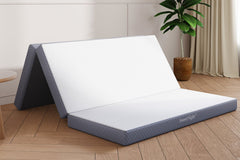
If you’ve confirmed the bed is the problem but a new one isn’t in the budget this month, a firm 2–3 inch memory foam or latex topper can buy you time by adding a layer of support and evening out minor dips. It’s a stopgap, not a cure — a topper can’t rescue a genuinely sagging mattress, because the broken support underneath still wins. But it can make the next few months a lot more bearable while you plan a proper replacement.
If your mattress is sagging or well past a decade old, no amount of stretching will fully fix your mornings. But if it’s only a few years old and still flat and supportive, the issue is more likely your firmness choice or your sleep position — both of which we’ll get to.
How Your Sleep Position Affects a Stiff Back
Your mattress and your sleeping position are a team, and if one of them is off, your back pays for it. The position you spend most of the night in decides how much your spine has to fight to stay aligned.
Stomach sleeping is the toughest on your lower back. It flattens the natural curve of your spine and cranks your neck to one side for hours. If you’re a committed stomach sleeper who wakes up stiff, that habit is worth breaking — a thin pillow under your hips can reduce the strain while you transition.
Side sleeping is easier on the back for most people, but only if your hips and shoulders are properly supported. Tuck a pillow between your knees to keep your top leg from rotating your pelvis and torquing your lower spine. This one small change fixes a surprising number of stiff mornings.
Back sleeping distributes your weight evenly and keeps your spine neutral, especially with a pillow under your knees to support the natural lumbar curve. It’s often recommended for back pain, though it can worsen snoring, so it’s not for everyone.

Most people aren’t loyal to one position — they’re combination sleepers who start on their side and roll onto their back or stomach through the night. That’s completely normal, and it’s another reason a responsive, well-zoned surface matters. If your mattress only supports you well in one position, every time you roll into another you drift out of alignment for hours without knowing it. A bed that keeps your spine neutral in all three positions is quietly doing its job every time you turn over.
Notice how every one of these depends on the mattress holding your hips and shoulders at the right height. That’s where zoned support earns its keep — firmer under the hips, softer at the shoulders — so your spine stays in one straight line no matter which way you turn.
The Best Mattress Firmness for Back Stiffness and Pain
If there’s one evidence-backed answer to the firmness debate, it’s this: medium-firm mattresses tend to reduce lower back pain more reliably than very firm ones. Studies comparing sleepers on hard versus medium-firm surfaces have repeatedly found that the rock-hard camp reports poorer sleep and more discomfort.
The logic is simple. A mattress that’s too soft lets your hips sink and your spine bow downward. A mattress that’s too firm won’t let your shoulders and hips press in at all, so your lumbar curve is left unsupported and your pressure points take a beating. Medium-firm sits in the sweet spot — enough give to cradle your curves, enough push-back to keep your spine level.
That said, “medium-firm” isn’t identical for everyone. Heavier sleepers usually need a touch firmer to avoid sinking; lighter sleepers often prefer a hair softer so the surface actually contours to them. Side sleepers generally want slightly softer than back sleepers because their shoulders and hips need room to sink in.
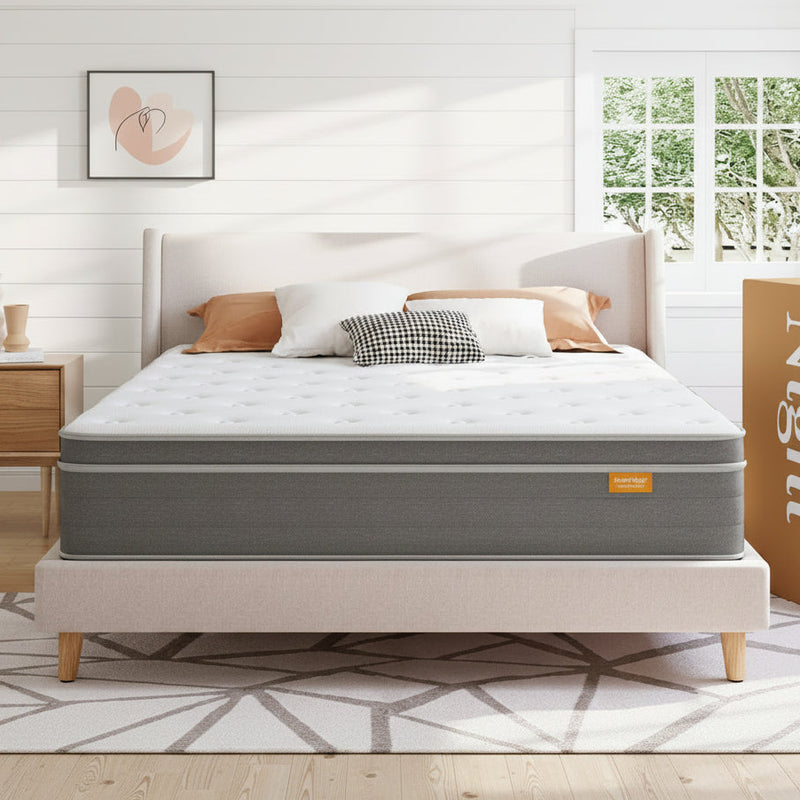
The material matters as much as the number on the firmness scale. Memory foam contours closely and fills in the gap under your lower back, which is why so many people with back pain gravitate toward it — it supports the lumbar curve instead of leaving it hanging in mid-air. The trade-off is that cheaper all-foam beds can sleep warm and feel a little “stuck.” Hybrids add a coil layer for more push-back and airflow, which heavier sleepers and hot sleepers often prefer. Neither is universally better; what matters is that the surface keeps your spine level and relieves pressure at the hips and shoulders.
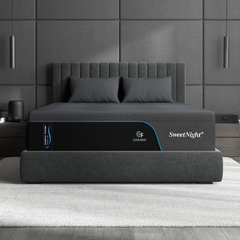
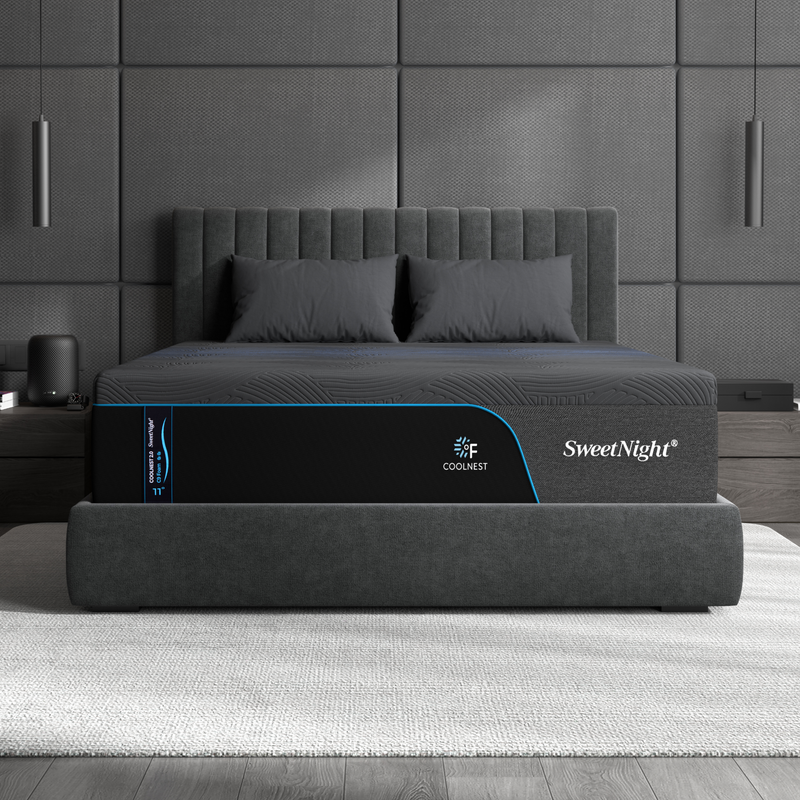
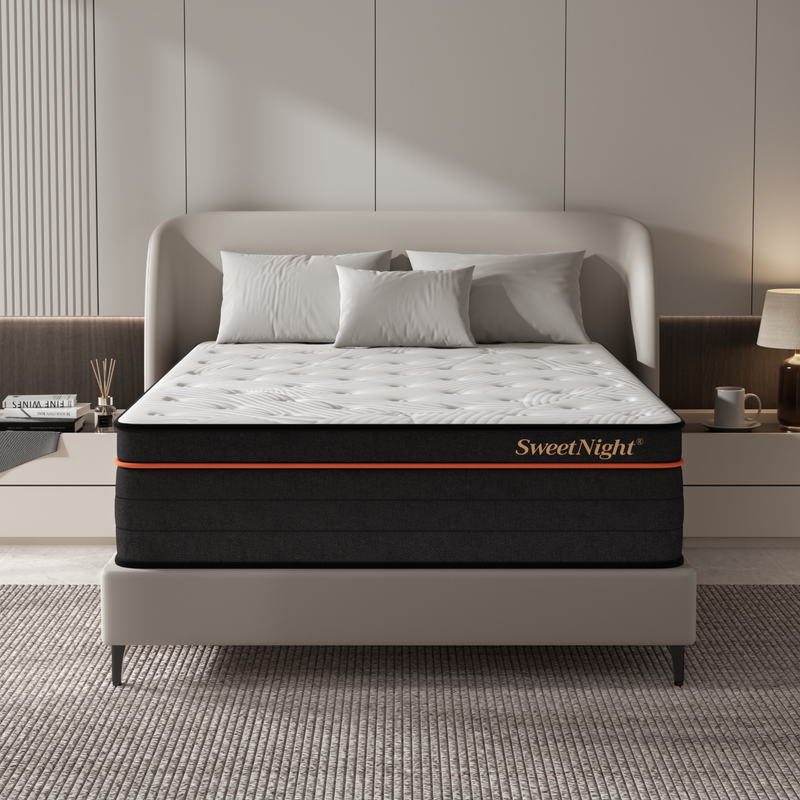
A quality mattress built for back pain pairs that medium-firm feel with targeted support zones. The 7-zone design in the CoolNest® Ultra, for example, firms up under the lumbar region and hips while easing off at the shoulders, so your spine holds its natural line whether you sleep on your back or your side. That kind of zoning does more for morning stiffness than chasing a single firmness number ever will.
Morning Stretches to Relieve a Stiff Lower Back
Even with the perfect bed, you’ll still feel a little tight after eight hours of stillness — that’s normal. A few minutes of gentle movement before you fully start your day is the fastest way to flush that stiffness out. You don’t need a yoga mat or thirty minutes. Five will do.
- Knee-to-chest, done in bed. Lie on your back, pull one knee gently toward your chest, hold for twenty seconds, switch. This eases the lower back before you even stand.
- Gentle spinal twist. Still on your back, drop both knees to one side while keeping your shoulders down. Breathe. Switch sides.
- Cat-cow on all fours. Slowly arch and round your back for a minute. It wakes up the joints and gets fluid moving.
- Standing back extension. Hands on your hips, lean back slightly, and reverse the forward-hunched shape your spine held all night.
The point isn’t to force a deep stretch — cold muscles don’t like that. It’s to gently remind your spine how to move. A warm shower afterward helps too, since heat relaxes tight muscles and boosts circulation. Do this for a week and you’ll notice how much shorter your stiff window gets.
Daily Habits That Reduce Waking Up With Back Pain
What you do during the day quietly sets up how your back feels the next morning. If you sit hunched at a desk for nine hours, your hip flexors tighten and your core switches off, and your lower back inherits all that tension overnight.
A few habits that pay off:
- Move every hour. Stand, walk to the kitchen, roll your shoulders. Long stretches of sitting are as hard on your back as a bad mattress.
- Strengthen your core and glutes. They’re the muscles meant to support your spine. When they’re weak, your lower back does their job and wakes up exhausted.
- Stretch your hip flexors and hamstrings. Tight hips tug on the pelvis and flatten your lumbar curve, which shows up as morning stiffness.
- Watch the late-night alcohol and heavy meals. Both disrupt deep sleep, and restless, fragmented sleep leaves muscles more tense.
- Stay hydrated. Your discs are mostly water. Chronic dehydration doesn’t help them rebound overnight.
Your desk deserves special blame here. Most of us spend the day folded forward over a keyboard, which shortens the hip flexors and trains the spine into a slumped C-shape. By bedtime those tissues are already tight, and a night of stillness just cements them in place. Raising your screen to eye level, sitting back into the chair so your lower back is supported, and standing up on the hour won’t feel dramatic, but over weeks it changes the baseline tension your back carries into bed. A lot of “mattress” stiffness is really desk stiffness wearing a disguise.
None of these replace a supportive mattress, but together they take a real load off your lower back — often enough to be the difference between waking up loose and waking up locked.
When Morning Back Stiffness Is a Sign of Something More Serious
Most morning stiffness is mechanical and harmless. But there are a few patterns worth taking to a doctor rather than a mattress store.
Pay attention if:
- The stiffness lasts longer than 30 minutes every morning and doesn’t ease with movement. Prolonged morning stiffness can point to inflammatory conditions like ankylosing spondylitis or rheumatoid arthritis.
- Pain wakes you in the second half of the night and improves as you get up and move — a classic inflammatory-back-pain pattern.
- You have numbness, tingling or weakness in your legs, which can signal nerve involvement.
- The pain is getting steadily worse over weeks, or comes with fever, unexplained weight loss or night sweats.
These are the exceptions, not the rule — but they’re the reason it’s smart to notice how long your stiffness lasts and whether movement helps. If it eases within a few minutes of getting up, you’re almost certainly dealing with a fixable mix of sleep surface and posture. If it lingers for an hour or wakes you at night, get it checked.
How to Stop Waking Up With a Stiff Back for Good
Putting it all together, here’s the realistic path to fewer stiff mornings — in the order that gives you the biggest return for the least effort.
- Fix the obvious first. If your mattress sags or is over 7–10 years old, that’s your headline problem. A supportive, medium-firm bed with proper zoning is the single change most likely to transform your mornings.
- Match firmness to your body and position. Side sleepers slightly softer, back and heavier sleepers slightly firmer, medium-firm as the default. Look for a mattress that keeps your spine level, not one that’s just “hard.”
- Dial in your position. Pillow between the knees for side sleepers, pillow under the knees for back sleepers, and wean yourself off stomach sleeping if you can.
- Move for five minutes before your day starts. A short stretch routine plus a warm shower shrinks the stiff window fast.
- Support your spine during the day. Stronger core, looser hips, fewer marathon sitting sessions.
If your bed is the weak link, a mattress engineered for spinal support and pressure relief does the heavy lifting for you. The 7-zone CoolNest® Ultra and the rest of SweetNight’s back-support range are built around exactly this problem — holding your hips and shoulders in line so you stop waking up stiff and start waking up ready to move. Get the surface right, add a few good habits, and those brutal first-thirty-minutes mornings quietly become a thing of the past.
One last thing worth setting straight: give any change a fair trial. A new mattress has a break-in period, and your body has an adjustment period too — usually two to four weeks before a supportive surface feels normal and your muscles stop bracing out of old habit. People often judge a bed on the first night, panic, and miss the point that their spine is still unlearning weeks of compensating for a bad one. Track how you feel over a month, not a morning. If your stiff window is shrinking week over week, you’re on the right track. If it’s not budging at all despite a good bed, good positioning and daily movement, that’s your cue to loop in a doctor or physical therapist rather than buying yet another mattress.