










Published: July 21, 2026 · Reviewed by the SweetNight Sleep Comfort Team · 14 min read
You had a great session. Heavy legs, a long run, a brutal metcon — the kind of day you're supposed to sleep like a rock after. Instead you're lying there at 1 a.m., kicked the duvet off, flipped the pillow twice, and you can feel the heat coming off your own legs. By morning the sheets are damp and you're weirdly unrested, like the training didn't “stick.” If that's you, this isn't bad luck and it isn't in your head. It's physiology, and it's specific: a hard training day loads your body with heat at the exact moment sleep needs you to cool down. That collision is why you wake up hot, and it's quietly stealing the recovery you trained for. This article is about that collision — why it happens, what it costs your muscles, and the single biggest lever most athletes never touch to fix it.
Why Am I Hot After a Workout at Night? The Delayed Heat Nobody Warns You About
Let's start with the question people actually type into Google at midnight: why am I hot after a workout at night? The intuitive answer — “I exercised, exercise makes you hot” — is only half of it, and the missing half is the interesting part.
During training your working muscles generate enormous amounts of heat. Only about a quarter of the energy you burn becomes actual movement; the rest is released as heat, which is why your core temperature climbs during a session. That part you expect. What catches people off guard is that the heat doesn't switch off when you rack the last weight. Your body stays warmer than baseline for hours, because it's still doing work you can't see: repairing micro-damaged muscle fibers, restocking glycogen, clearing metabolic byproducts, and running an elevated metabolism to pay back the oxygen debt of the session. All of that is metabolic activity, and metabolic activity produces heat.
So the warmth you feel at 1 a.m. isn't leftover heat from the gym that should have dissipated by now. It's new heat your body is producing right now as it recovers. On an easy day this barely registers. On a hard training day — a long run, a heavy lower-body session, a race — the recovery workload is big enough that your internal furnace is still running when your head hits the pillow. Layer on a warm bedroom or a mattress that holds heat, and you've got a body trying to cool down while sitting on top of its own exhaust. That's the sensation of waking up hot after training, and understanding it is the first step to fixing it, because the fix isn't “train less.” It's “stop trapping the heat.”
Sleep and Muscle Recovery: The Repair Work Happens While You're Out Cold
Here's the reframe that changes how you think about training: the workout doesn't make you stronger. The workout makes you weaker — it breaks muscle down, drains fuel, and creates the damage. You get stronger during recovery, and the biggest block of recovery you get all day is sleep. That's the real relationship between sleep and muscle recovery: training is the stimulus, sleep is the adaptation.
Most of the heavy repair work is concentrated in deep, slow-wave sleep — the deepest stage of non-REM sleep, usually front-loaded into the first half of the night. This is when your body releases the bulk of its daily growth hormone, the signal that drives tissue repair and muscle protein synthesis. It's when blood flow to muscle increases, when energy stores get topped back up, and when the nervous system that fired all day finally powers down. Skip it or fragment it, and you don't just feel groggy — you literally spend less time in the state where your body rebuilds. The stimulus of training lands, but the adaptation never fully fires.
This is why two athletes doing identical programs can get completely different results. It's rarely the program. It's what happens in the eight hours after the last one. An athlete who reaches deep sleep and holds it turns training into strength efficiently; one whose deep sleep is chopped up by heat, restlessness, or too few hours leaves gains on the table every single night. And crucially — here's the thread that runs through this whole article — the thing most likely to fragment that deep sleep on your hardest days is the exact thing we just described: heat. Which brings us to the mechanism nobody connects.
Core Body Temperature and Sleep: The Drop That Switches Recovery On
To see why training heat is such a problem, you have to understand how tightly core body temperature and sleep are wired together. Falling asleep isn't just about being tired. It's a thermal event with a trigger, and the trigger is your core temperature falling.
As bedtime approaches, your body actively sheds heat to lower its core temperature, and that drop is part of what initiates sleep. Sleep Foundation describes the mechanism directly: the body cools itself through vasodilation, in which the circadian clock increases blood flow to the hands and feet so heat can radiate away from the core, and this drop “starts about two hours before you go to sleep, coinciding with the release of the sleep hormone melatonin.” In plain terms, cooling down is the on-switch. Your core temperature keeps falling through the night, bottoms out in the early morning, and climbs again as you wake. That descending temperature curve isn't a side effect of sleep — it's part of the machinery that produces deep sleep.
Now put the two facts side by side. Deep sleep — the stage that does most of your muscle repair — depends on your core temperature dropping. And a hard training day keeps your core temperature and metabolism elevated for hours after you finish. You can probably already see the crash coming. The recovery your muscles desperately need is gated behind a temperature drop that your own training just made harder to achieve. It's a beautifully cruel bit of physiology, and almost no training plan accounts for it. For the deeper version of how heat suppresses sleep stages, we broke down the full mechanism in how heat affects sleep quality.
The Collision: How Hard Training Days Sabotage the Cooldown Sleep Needs
Let's name the thing directly, because once you see it you can't unsee it. On a hard training day, two systems your body runs collide head-on:
- System one wants to cool down. Your circadian clock is trying to drop your core temperature to open the door to deep sleep. This is non-negotiable — no temperature drop, no easy path to slow-wave sleep.
- System two is still heating up. Your post-training metabolism is elevated, damaged muscle is inflamed and warm, and your body is burning fuel to repair itself. All of it produces heat, and all of it peaks in the hours right after a big session — which, for most people, is the evening.
The result is a tug-of-war fought inside your body while you're trying to sleep. Your body wants to offload heat; your recovery is generating it. When your surroundings help — a cool room, breathable bedding, a mattress that releases heat — the cooling side wins, your temperature drops, and you sink into the deep sleep that actually rebuilds you. When your surroundings fight you — a warm room, a heat-trapping foam mattress that stores every degree you dump and hands it back — the heating side wins. Your temperature stays stubbornly high, deep sleep gets shallow and broken, and you surface again and again through the night feeling hot. The training that should have driven the best sleep of your week instead drives the worst.
This is the core insight of this whole guide, and it reframes “why am I hot after a workout” from an annoyance into a recovery problem: the heat isn't just uncomfortable, it's actively blocking the deep sleep your muscles need to repair. Feeling hot after training and recovering poorly from training aren't two problems. They're the same problem wearing two faces. And that means the fix for one is the fix for the other — help your body win the cooling side of the tug-of-war, and you solve the discomfort and the recovery deficit in a single move.
What the Research Says: Sleep, Muscle Recovery, and Athletic Performance
If this sounds like it might be a rounding error — a degree here, a few minutes of deep sleep there — the performance research says otherwise. The link between sleep and athletic performance is one of the better-documented findings in sports science, and the numbers are not subtle.
On the upside, extending sleep produces measurable gains. In a well-known Stanford study cited by Sleep Foundation, basketball players who extended their sleep toward ten hours a night improved their shooting accuracy by at least 9% on free throws and three-pointers, and ran faster sprints. Tennis players who increased sleep to at least nine hours saw serve accuracy climb “significantly from about 36% to nearly 42%.” Swimmers who extended sleep got faster reaction times off the blocks and quicker turns. More sleep, better output — from the same bodies running the same training.
The downside is just as stark. Per the same source, sleep-deprived tennis players had serve accuracy decrease by up to 53% compared to their well-rested performance. Sprint times got slower. Runners and volleyball players reached exhaustion faster. And it isn't only about today's performance: research found that a chronic lack of sleep is associated with increased rates of injury in young athletes — the recovery deficit compounds into broken-down tissue that finally gives. Even the timing of lost sleep matters; judo athletes who lost early-morning sleep showed decreased power and muscle strength. The takeaway isn't “sleep is nice.” It's that sleep is a performance and durability variable on the same tier as your programming and your nutrition — and unlike a lot of marginal gains, it's free. The catch is that broken, overheated sleep doesn't count. You need the deep, unbroken kind, which loops us right back to temperature.
EPOC and the “Afterburn”: Why Your Metabolism Runs Hot Long After You Stop
To fix the heat, it helps to know exactly why it lingers, because this is the piece most people get wrong. They assume that once they've cooled off and showered, the heat is gone. It isn't — there's a slow-burning engine that keeps running for hours, and it has a name.
It's called EPOC: excess post-exercise oxygen consumption, better known as the “afterburn.” After a demanding session, your body keeps consuming extra oxygen and burning extra energy to return to its resting state — replenishing fuel, restoring oxygen levels, repairing tissue, and clearing metabolic byproducts. That elevated metabolism is literally why you continue burning calories after a workout, and every one of those calories throws off heat as a byproduct. The harder and more intense the session — heavy resistance training, HIIT, long endurance efforts — the bigger and longer-lasting the afterburn. For an intense workout it can keep your metabolism raised for many hours, well into the night.
Stack the heat sources and the picture is complete: elevated baseline metabolism from EPOC, plus localized inflammation and warmth in the muscles you damaged, plus the ordinary heat of digestion if you ate a big recovery meal. On a hard day, all three overlap in the evening. This is the physiological answer to why you feel hot hours after exercise — not poor fitness, not doing something wrong, just a recovering body doing exactly what it should, at exactly the wrong time for sleep. You can't and shouldn't try to shut the afterburn off; it's a feature of getting fitter. What you can do is stop your bedroom and your bed from trapping the heat it produces, so your core temperature can still fall on schedule while the recovery furnace runs underneath.
Working Out at Night: Evening Exercise, Body Temperature, and Sleep
A fair question at this point: if training heats you up and heat wrecks sleep, should you just stop training at night? For most people, no — the evidence is more nuanced and more forgiving than that, and the fix is rarely to move your whole life around.
Exercise is a powerful sleep aid overall. Sleep Foundation notes that moderate to vigorous exercise can increase sleep quality by reducing the time it takes to fall asleep, and that people who exercised in the evening actually experienced more slow-wave (deep) sleep. Even late training holds up: “the majority of people who exercise at 8 p.m. or later fall asleep quickly, experience an adequate amount of deep sleep, and wake up feeling well rested.” So evening exercise is not the villain. If your only training window is after work, keep it.
The real caution is narrow and specific: intensity in the final hour before bed. The same source flags that a “higher core temperature — which can occur after intensive workouts — was associated with lower sleep efficiency and more time awake after sleep onset,” and that vigorous workouts in the hour leading up to bed can cut into sleep efficiency and total sleep time. In other words, the problem was never “exercise at night.” It's “still radiating peak heat when you lie down.” That reframes the whole fix. You don't have to abandon evening training. You have to give your core temperature a runway to come down — leave a buffer, cool down deliberately, and, above all, sleep on a surface that helps heat leave your body instead of one that pins it against you. For a fuller take on how physical activity and sleep interact, our overview of exercise and sleep covers the timing question in more depth.
🏋️ Recover Harder — Cooling Mattresses for Athletes on Sale
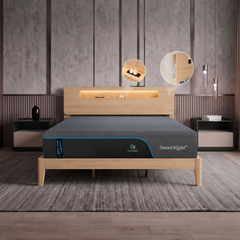
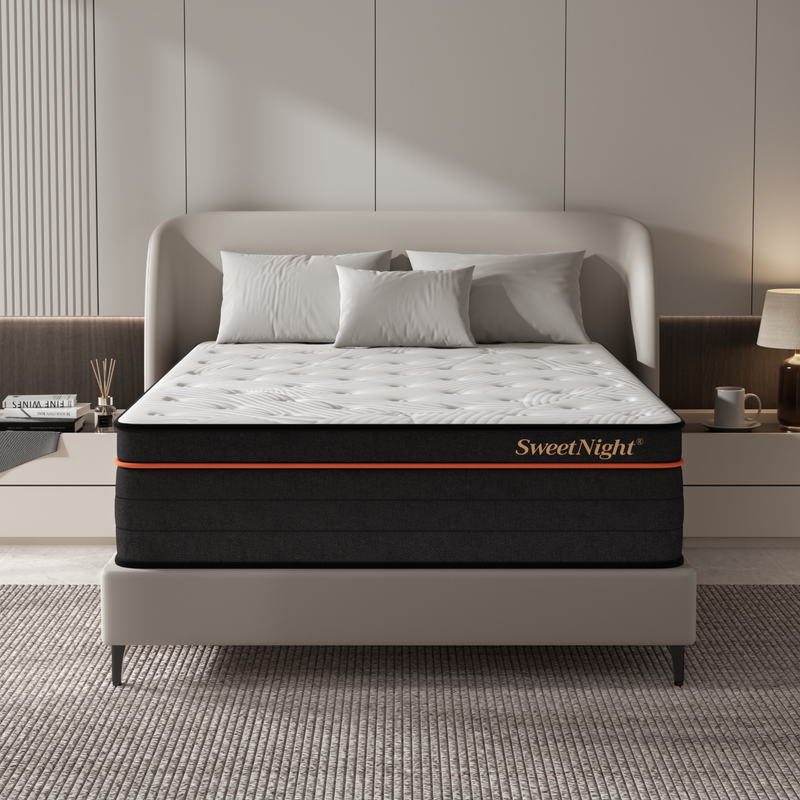
If your training deserves real recovery, your bed shouldn't be fighting it. SweetNight's cooling mattresses for athletes — gel-infused, ventilated, and engineered to keep releasing body heat all night — are on sale now in the SweetNight Cooling Sale, with a 100-night trial, 10-year warranty, and CertiPUR-US foam.
Why Your Mattress Is the Missing Link in Sleep and Muscle Recovery
Athletes obsess over the controllables: macros, mobility, foam rolling, the right shoes, a smart program. Then they hand eight hours of recovery — a third of the whole equation — to whatever mattress happened to be on sale five years ago. If there's one under-optimized variable in most training lives, it's the surface you recover on. And it matters for a reason that's now obvious from everything above: your mattress sits directly in the path of the heat you're trying to shed.
Think about where your body dumps the most heat and where the recovery furnace burns hottest — your torso, hips, and the big muscle groups of your legs and back. Those are exactly the areas pressed hardest into the mattress all night. A conventional solid memory foam mattress is, thermally, close to a worst case: it softens and wraps around you as it warms, sealing off airflow at the contact point and storing the heat your body releases like a battery, then radiating it right back. On an ordinary night that's merely uncomfortable. On a hard training night, when your core is already fighting to drop and the afterburn is running, that stored heat is enough to keep you above the threshold for deep sleep — the mattress literally holds you out of the recovery state.
A genuinely cooling mattress flips that. Instead of storing heat, it keeps releasing it — ventilated structure and conductive materials carry heat away from your body continuously, so your core temperature can keep falling even while the recovery furnace runs underneath. That's not a comfort nicety for an athlete; it's the difference between reaching deep sleep and hovering just above it. The mattress is the largest, most constant surface touching your body all night, which makes it the single biggest lever you have over sleep temperature — bigger than the pillow, bigger than the sheets, bigger than the thermostat, because it's the one that's actively trapping or releasing heat right where your body is trying to offload it.
Best Mattress for Athletes: The Two Jobs It Has to Do at Once
So what actually makes the best mattress for athletes, as opposed to the best mattress for anyone? It comes down to a demand most sleepers don't have: an athlete's mattress has to win on two fronts simultaneously, and most beds are built to win on only one.
Job one: temperature regulation. Everything above makes the case — you're carrying a bigger heat load into the night than a sedentary sleeper, so the surface has to release heat aggressively and continuously to let your core drop into deep sleep. A bed that merely feels cool for the first minute doesn't cut it. You need one that's still moving heat away from you at hour six.
Job two: support and pressure relief for worked bodies. Recovery isn't only thermal. Muscles you trained hard are inflamed and tender; joints took a pounding; your spine wants to decompress. A mattress that keeps your spine aligned and relieves pressure on your shoulders, hips, and lower back lets those tissues rest in a neutral position instead of being propped at angles that keep small muscles working all night. Too soft and you sag into misalignment; too firm and you get pressure points that make you toss. Athletes — who often carry more muscle mass than average — usually need firmer, more supportive surfaces that hold them level rather than letting them sink.
Here's the trap: those two jobs often pull against each other in cheap mattresses. The plush, deep-contouring foam that relieves pressure is usually the same foam that wraps around you and traps heat. The firm, breathable surface that sleeps cool can be punishing on sore joints. The best mattress for athletes resolves that tension instead of forcing you to pick — it delivers cooling and zoned support in one build, so you're not trading recovery temperature for spinal alignment or the other way around. That combination, not any single spec, is the whole game. If back and joint recovery is your priority, our guide to the best cooling mattress for hot sleepers digs deeper into how cooling and support layer together.
Cooling Technology for Athletes: What Real Heat Release Looks Like
“Cooling” is the most abused word in the mattress industry, so let's be precise about what actually helps a recovering athlete, because the marketing and the mechanism are often two different things.
There are two ways a mattress can be “cooling,” and only one of them survives a hard training night. The first is contact cooling — a cool-touch cover or a thin gel layer that feels cold when you first lie down because it briefly conducts heat off your skin. It holds a small amount of heat and then it's full. Within minutes it warms to your body and does nothing more. For a sedentary sleeper on a mild night that first impression might be enough; for an athlete with an afterburn running until 2 a.m., it's useless exactly when it's needed, because the heat keeps coming long after the surface has saturated.
The second is continuous heat dissipation — the design that actually matters for recovery. Instead of absorbing a fixed dose of heat, it refuses to trap heat at all: ventilated foam structures and 3D air channels keep airflow moving through the mattress as you sink in, and gel-infused or open-cell materials conduct heat away from your body on an ongoing basis. There's no dramatic cold hit when you touch it — which is precisely why it works all night. It's not trying to feel cold; it's trying to never let heat build up. For an athlete, that distinction is everything. You don't need a mattress that feels like an ice pack for ninety seconds. You need one that quietly keeps your personal microclimate from climbing, hour after hour, while your body does its repair work. If you want the full physics of passive versus active cooling and why the touch test misleads people, we covered it in do cooling mattresses actually work.
Firmness, Support, and Pressure Relief for Sore, Heavy Muscles
Cooling gets an athlete into deep sleep. Support is what keeps them there without waking up stiff and sore in new places. This is the second job, and it's where firmness and zoning earn their keep.
The goal of support is spinal alignment: your spine should hold its natural curve whether you sleep on your back, side, or stomach, with no section sagging or propping. When the mattress gets that right, the small stabilizing muscles around your spine and joints can actually switch off and rest — which is a real part of recovery, because muscles that spend the night subtly bracing against a bad surface never fully relax. Get it wrong and you undo some of the recovery the deep sleep was providing.
Two features matter most for a trained body. The first is zoned support: firmer support under the heavier midsection (hips and lower back, where you'd otherwise sink) and more give under the shoulders. This is what keeps a muscular frame level instead of hammocking in the middle, and it's why a well-zoned mattress feels supportive and pressure-relieving at the same time rather than uniformly hard or uniformly soft. The second is appropriate firmness for your mass and position. Athletes tend to be denser — more muscle per inch — so they generally need a touch firmer than a lighter sleeper to stay aligned; heavier and back or stomach sleepers lean firmer still, while side sleepers need enough give at the shoulder and hip to avoid pressure points. The best mattress for athletes pairs that firm, aligned support with a surface that still cushions the specific joints you beat up in training — supportive underneath, forgiving on top. Nail both and sore muscles rest in a neutral position all night instead of being nudged awake every time you roll.
The CoolNest® Ultra: A Recovery Mattress Built to Sleep 11° Cooler
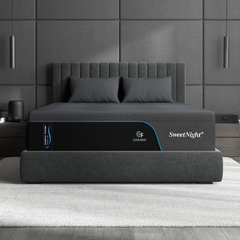
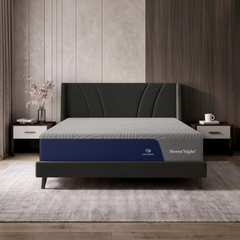
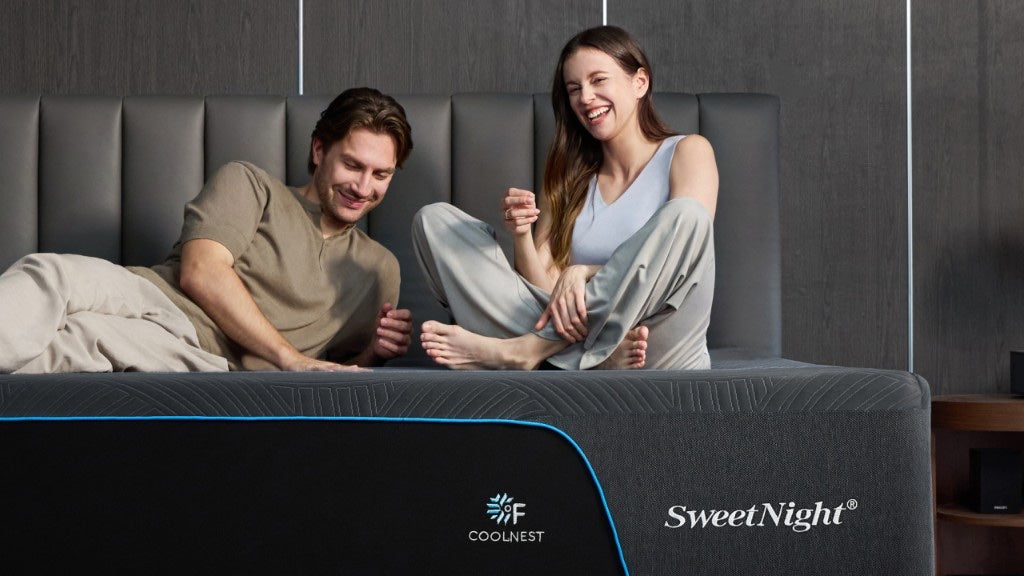
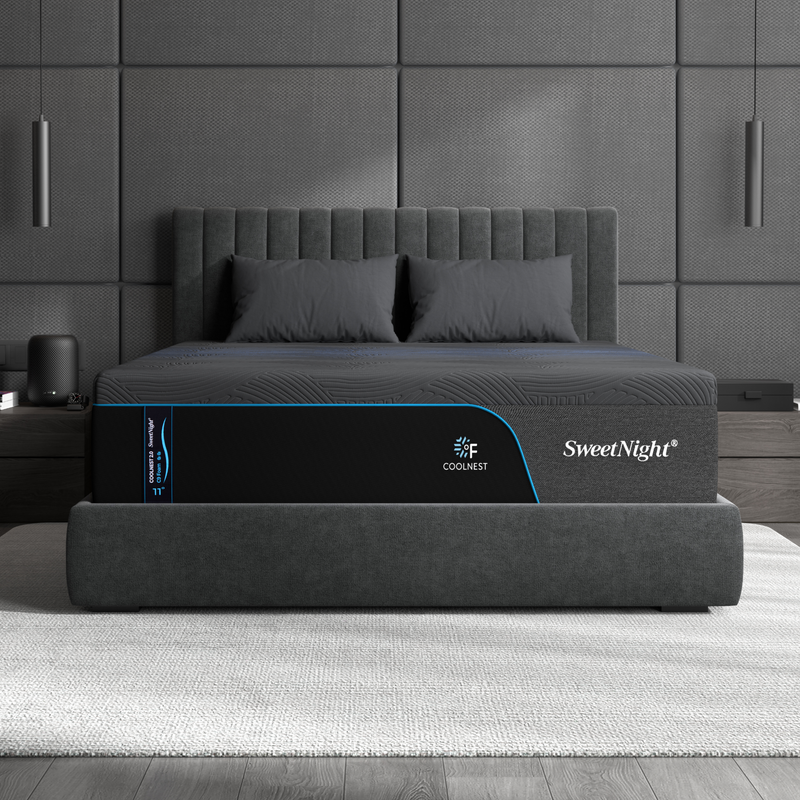
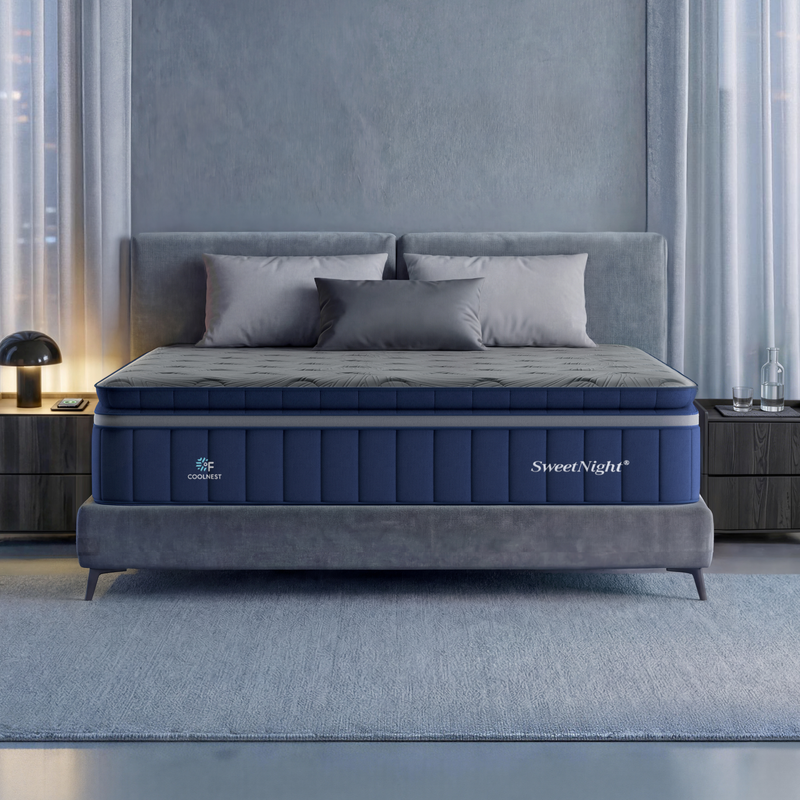
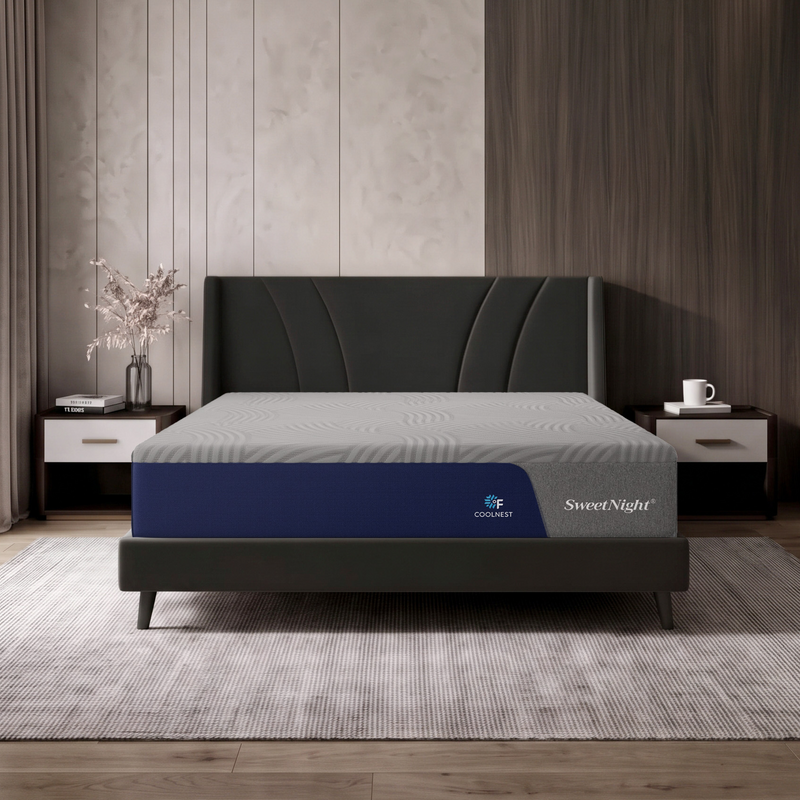
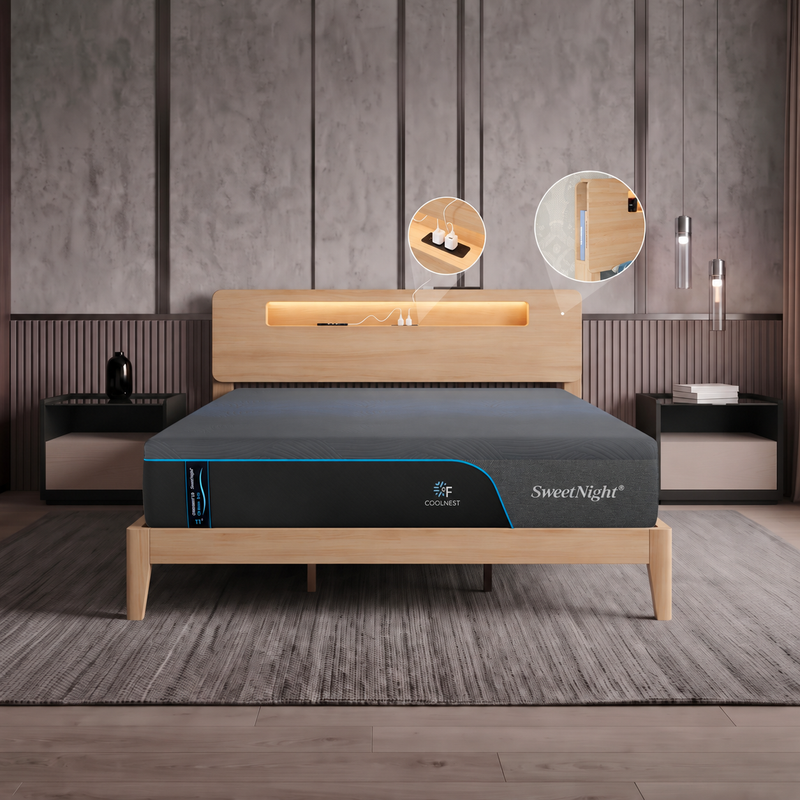
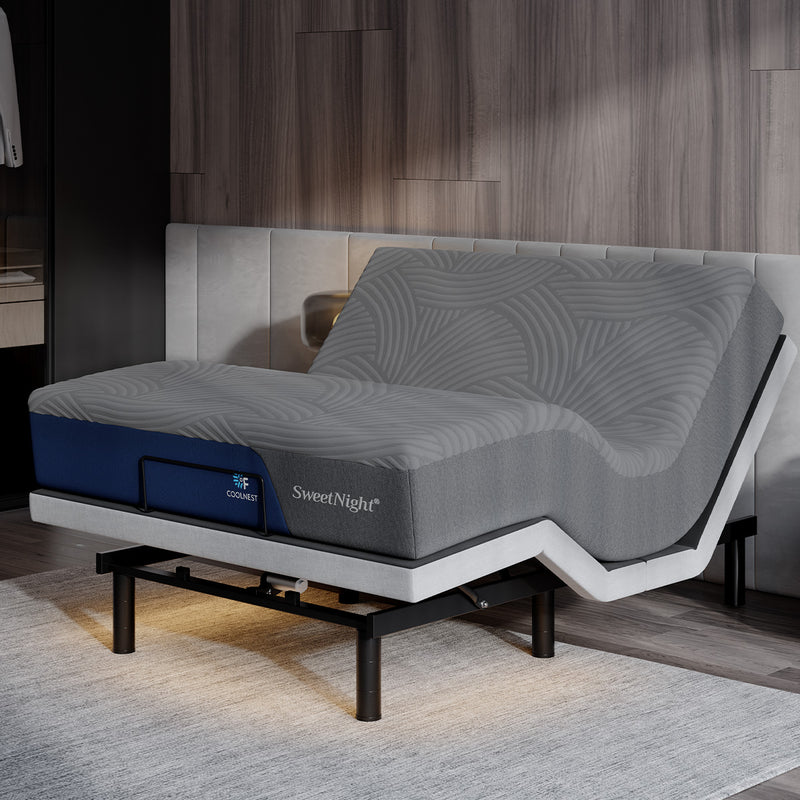
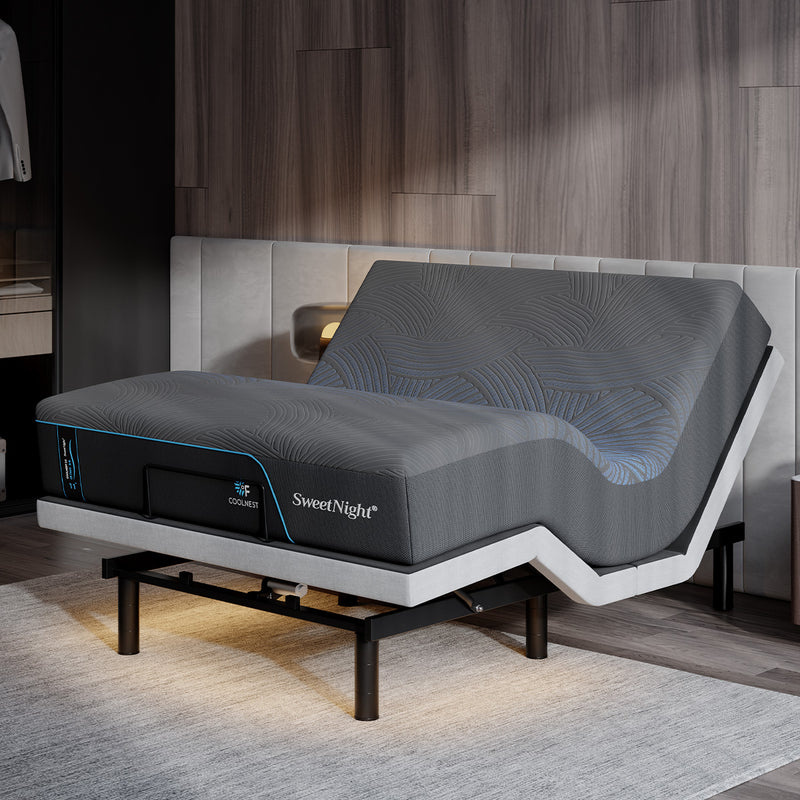
Everything above describes a spec sheet most mattresses can't hit, because they're built to do one job well. SweetNight's CoolNest® Ultra cooling memory foam mattress was engineered around exactly the two-job problem an athlete's body creates — drop my temperature and support my worked muscles — which is why it's the pick we'd hand someone whose main complaint is waking up hot and recovering slow.
On the temperature side, it's built for continuous heat release rather than a cold first touch. It's engineered to sleep up to 11° cooler through a stack of cooling features working together: instant cooling comfort at the surface, 3D ventilated circulation that keeps air moving through the mattress as you settle in, and continuous heat dissipation designed to keep releasing body heat all night — the “all-night thermal balance” that lets your core temperature keep falling even while your post-training afterburn is running. That's the difference between a surface that saturates by midnight and one that's still working at 5 a.m. An 11° cooler CoolNest Ultra mattress is designed to keep the heavier heat load of a training day from ever stacking up into a hot, restless night.
On the support side, it's built for a body that trains. Refined 7-zone precision support firms up under the hips and lower back while giving at the shoulders, and ergonomic spinal alignment keeps a muscular frame level instead of sagging — so sore muscles and joints rest in a neutral line rather than propped at angles that keep them working. It comes in 12″, 14″, and 16″ profiles and Queen and King sizes, so heavier or taller athletes can size up to a thicker, more supportive build. And because recovery is something you can only judge over real nights, it's backed by a 100-night trial, a 10-year warranty, and CertiPUR-US certified foam — enough runway to test it across a full training block, hard days and all, and feel whether you're waking up cooler and less broken down. It's not a cold gimmick for the showroom; it's a recovery surface for the body you're actually building.
How to Sleep Better After a Workout: A Post-Training Cooldown Routine
The mattress is the biggest lever, but it works best inside a routine that helps your core temperature fall on schedule. If you train hard and want to stop waking up hot, stack these — none of them are heroic, and together they move the needle a lot.
- Leave a buffer between hard training and bed. You don't need hours, but lying down while you're still radiating peak heat is the one timing mistake the research actually flags. Give your core temperature a runway to start dropping — even 60 to 90 minutes of winding down helps.
- Take a warm (not hot) shower before bed. It sounds backwards, but a warm shower draws blood to your skin and helps you shed core heat afterward through vasodilation — the same cooling mechanism sleep relies on. A blasting-hot shower right before bed does the opposite. We unpacked the timing in warm shower vs cold shower before bed.
- Set the room to the sleep sweet spot. Sleep Foundation recommends a bedroom around 65°F (about 18°C). On a hard training night, err toward the cooler end — you're carrying extra heat in. Our guide to the optimal sleeping temperature covers the full range.
- Hydrate for thermoregulation, not just thirst. You can't sweat efficiently — your body's main cooling tool — if you finished the session dehydrated. Rehydrate through the evening so your cooling system has something to work with.
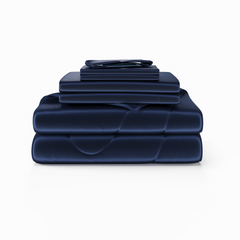
- Build the whole bed to breathe. A cooling mattress under heat-trapping sheets is a half-fix. Pair it with breathable, moisture-wicking bedding so heat and sweat can actually leave. Our playbook on how to stay cool while sleeping lays out the full stack.
None of these replace the mattress — they compound with it. The surface does the heavy lifting all night; the routine makes sure you're not fighting it at the door.
Why You Wake Up Hot Mid-Night After Training — and How to Stop It
There's a specific version of this problem worth its own note, because it's the one that fools people: you fall asleep fine, then jolt awake at 2 or 3 a.m. drenched and overheated. It feels like a night-sweat episode, and if you're doing everything else right it can be maddening. On a training night, though, it usually has a simpler cause than it seems.
Remember the temperature curve: your core is meant to keep dropping through the first half of the night, bottoming out in the early morning. But your afterburn is fighting that curve, producing heat as your metabolism keeps repairing. If your sleep surface stored the heat you dumped in the first few hours, that stored heat plus the ongoing recovery heat can push you back over the deep-sleep threshold in the middle of the night — you surface, and now you're aware of how hot you are. In other words, the mid-night wake-up isn't random; it's the moment the trapped heat and the recovery heat finally overwhelm your body's cooling. This is why the fix isn't “drink water and tough it out” but “stop the surface from banking heat in the first place.” A mattress that dissipates heat continuously never lets that reservoir build, so the 3 a.m. spike has nothing to feed it. If you also sweat heavily at night beyond training, it's worth ruling out other causes — we cover them in why do I get hot when I sleep.
How Much Sleep Do Athletes Need for Recovery?
All of this raises the obvious follow-up: how much sleep do athletes need to actually recover? More than the standard advice, and for a concrete reason — you've given your body more to repair, so you need more time in the repair state.
Sleep Foundation notes that recommendations for athletes range between seven and nine hours nightly, and that elite athletes should aim for at least nine hours — more than the general adult baseline. That extra hour or two isn't indulgence; it's recovery volume. And it tracks with the performance studies, where athletes who deliberately extended sleep toward ten hours were the ones who got faster, more accurate, and more durable. The heavier your training load in a given week, the higher your sleep need climbs — a deload week and a peak week shouldn't have the same sleep target.
But hours are only half the prescription, and this is where most athletes quietly fail. Nine hours of hot, fragmented sleep — surfacing every time your trapped heat spikes — delivers far less deep sleep than eight hours of cool, unbroken sleep. You can be “in bed” for nine hours and still shortchange the deep-sleep window that does the repair. So the real target is two numbers, not one: enough time in bed and a high enough quality that you actually reach and hold deep sleep. Quantity you fix with your schedule. Quality — on a training night — you fix mostly with temperature. Which is why the athlete who protects both sleeps seven efficient hours and out-recovers the one who spends nine sweating.
If you're comparing mattresses after reading this, here's where each CoolNest® model fits:
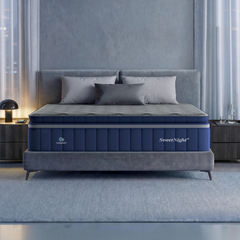
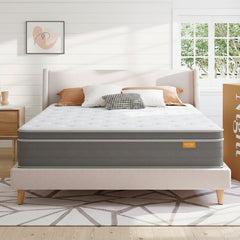
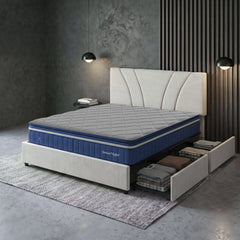
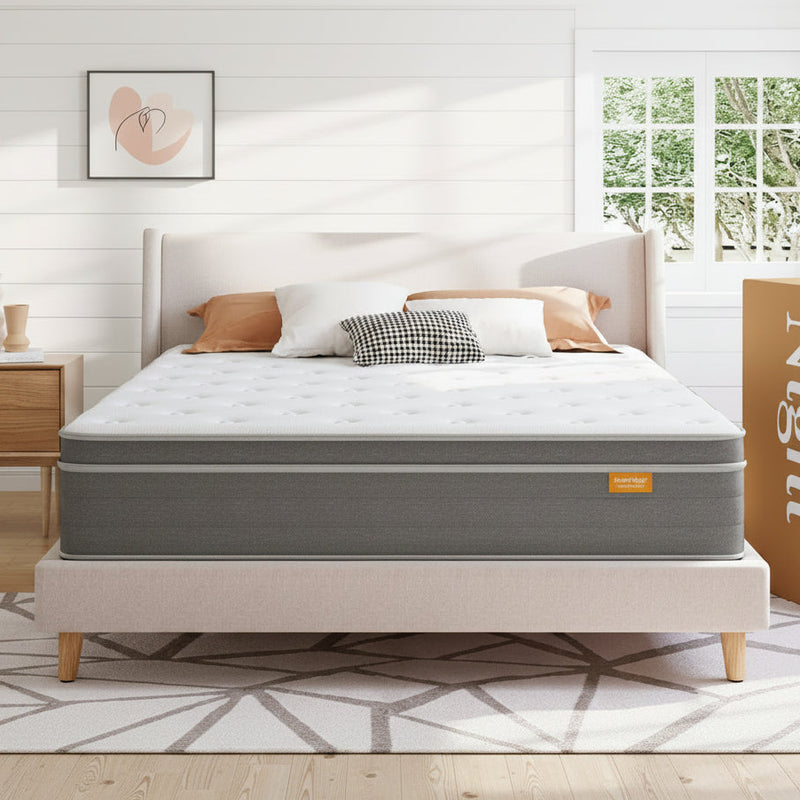
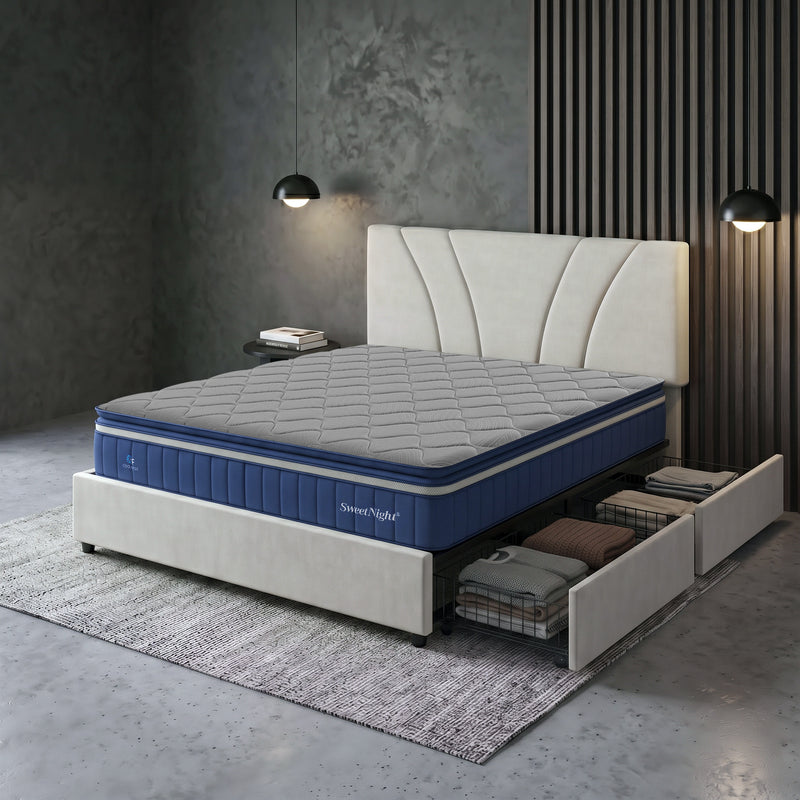
- CoolNest® Hybrid Mattress: pocketed coils under a DuoSense™ pillow top. Pick this one if you want bounce, firm edges and less partner motion.
- CoolNest® Memory Foam Mattress: the lowest-priced model in the range, all-foam with 5-zone support and a breathable 3D-woven cover.
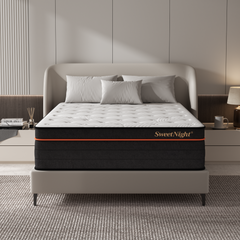
- CoolNest® Pro and CoolNest® Ultra: the step-up foam models, with PCMflux® temperature-regulating foam and 7-zone support. Ultra adds AirMesh™ foam and feels up to 11° cooler.
- Current prices on every size and thickness are on the Fall Sale page, or browse all mattresses.
The Bottom Line: Sleep Temperature Is a Training Variable
Here's the shift worth walking away with. If you train seriously, you already track load, intensity, nutrition, and rest days. Sleep temperature belongs on that same list, because it directly gates how much of your training actually converts into strength. The chain is tight and physical: hard training loads your body with heat that lingers for hours → deep sleep, where most muscle recovery happens, requires your core temperature to drop → the lingering heat blocks that drop → deep sleep fragments → you recover less from the exact session that was supposed to make you better. Feeling hot after training and recovering slowly from training are the same problem, and the biggest, most constant lever over it is the surface you sleep on.
You can't switch off the afterburn, and you shouldn't want to — it's the sound of adaptation happening. What you can do is stop trapping the heat it makes, so your body wins the cooling side of the nightly tug-of-war and drops into the deep sleep that turns training stress into results. Fix the room, fix the routine, and above all fix the surface: a genuinely cooling, well-supported bed like the CoolNest® Ultra cooling memory foam mattress is what lets a hard training day end in real recovery instead of a hot, restless night. Train hard, then let your bed do its half of the work.
Related reading: How heat affects sleep quality · Best cooling mattress for hot sleepers · The optimal sleeping temperature.