




















Two mattress sizes account for most of the beds sold in kids' rooms, guest rooms, studio apartments, and first apartments in America: the twin and the full. They cost about the same to ship, they fit through the same doorways, and they're often displayed a few feet apart in the same showroom — which is exactly why so many people buy the wrong one.
The short version: a twin and a full are the same length. The full is about 16 inches wider. That single number decides almost everything else — whether a nightstand still fits, whether a growing teen has to be re-shopped for in three years, whether a guest can bring a partner, and whether your sheets budget doubles.
This guide covers the full comparison: exact measurements, square footage, room-size minimums, frame compatibility, the twin XL and "double" naming confusion, and the specific situations where each size wins.
Twin vs Full: The 30-Second Answer
If you only read one section, read this one.
| Twin | Full | |
|---|---|---|
| Width | 38 inches | 53–54 inches |
| Length | 75 inches | 75 inches |
| In feet | 3'2" × 6'3" | ~4'6" × 6'3" |
| Sleep surface | 2,850 sq in (19.8 sq ft) | ~4,050 sq in (28.1 sq ft) |
| Width per person (2 sleepers) | 19 inches each | ~27 inches each |
| Minimum room size | 7' × 10' | 10' × 10' |
| Best for | Kids, bunk beds, small guest rooms, dorms, studios | Solo adults, teens, guest rooms that host couples occasionally |
| Also called | Single | Double |
Choose a twin if the room is under 100 sq ft, if the sleeper is a child under roughly 10, if you need two beds in one room, or if the bed has to share space with a desk.
Choose a full if one adult sleeps in it every night, if the sleeper is a teenager who is still growing, if a pet joins them, or if you want a guest room that can host a couple in a pinch.
Choose neither — go queen — if two adults will share it every night. A full gives each partner about 27 inches of width. A standard crib is 28 inches wide. That comparison is not a joke, and it's the single most common regret in this category. For reference, a queen works out to roughly 30 inches per person and a king about 38 inches each.
Twin Bed Measurements and Full Bed Measurements, Side by Side
Standard twin bed measurements are 38 inches wide by 75 inches long. This number is consistent across essentially every manufacturer, and it's what twin sheets and twin frames are cut to.
Full bed measurements are 54 inches wide by 75 inches long as the US industry standard — but this is the one size where real products genuinely vary.
Worth knowing before you buy: full mattresses are built anywhere from 53 to 54 inches wide depending on the manufacturer. SweetNight's own full-size mattresses measure 53" × 75". Standard full/double sheets are cut to accommodate this range, so a 53-inch full still takes normal full bedding — but if you're building a frame, a headboard, or a fitted platform yourself, measure the actual mattress rather than trusting the category name. This is also why "is a full 53 or 54 inches" is a question worth asking a retailer directly.
Here's the comparison against every other common size, because "twin vs full" almost never gets decided in isolation:
| Size | Width | Length | Area (sq ft) | Typical sleeper count |
|---|---|---|---|---|
| Twin | 38" | 75" | 19.8 | 1 |
| Twin XL | 38" | 80" | 21.1 | 1 (tall) |
| Full / Double | 53–54" | 75" | 27.6–28.1 | 1 adult, or 2 in a pinch |
| Queen | 60" | 80" | 33.3 | 2 |
| King | 76" | 80" | 42.2 | 2 + kids or pets |
| California King | 72" | 84" | 42.0 | 2 tall adults |

A full has roughly 40% more sleep surface than a twin while occupying only 15–16 more inches of floor width. Pound for pound, twin-to-full is the most efficient size jump in the entire mattress lineup — you gain nearly half again as much bed for a footprint most bedrooms can still absorb.
For a visual breakdown of every size, SweetNight's mattress size guide and dimensions chart shows all six standard sizes at scale.
How Long Is a Twin Mattress? Why Length Is the Number People Get Wrong
A twin mattress is 75 inches long — exactly the same as a full. This surprises people constantly, because the two beds look so different in a showroom that the eye assumes the bigger one must also be longer.
It isn't. Twin mattress length and full mattress length are identical. Every inch of the difference between these two sizes lives in the width.

That matters because 75 inches is 6 feet 3 inches. Subtract a pillow and a headboard, and a sleeper who is 6 feet tall is already close to hanging off the end. Neither a twin nor a full solves a height problem. If the sleeper is over 6 feet:
- Twin XL (38" × 80") adds five inches of length while keeping the narrow footprint — the standard in college dorms for exactly this reason.
- Queen (60" × 80") adds both length and width.
- A full is the wrong answer for a tall sleeper who doesn't need extra width. It buys you nothing where you need it.
This is the single most common sizing mistake in guest rooms: someone upgrades a twin to a full for a 6'2" nephew, and he still can't stretch out.
How Wide Is a Full Mattress? The 16 Inches That Decide Everything
A full mattress is 53 to 54 inches wide. A twin is 38 inches. The difference is roughly 16 inches — about the width of a laptop, a pillow, or a medium-sized dog.
Sixteen inches is more consequential than it sounds:
For one sleeper. On a twin, an adult who sleeps on their back with arms at their sides is using nearly the full width. Roll over once and you're at the edge. On a full, the same person can sprawl, shift positions, sleep diagonally, or throw an arm out without touching air. Combination sleepers — anyone who changes position more than a few times a night — feel this difference immediately.
For a sleeper plus a pet. A 40-pound dog occupies 18 to 24 inches when stretched out. On a twin, that's most of the bed. On a full, there's room for both.
For two adults. Fifty-four inches split two ways is 27 inches per person — less than a standard crib is wide. Couples can share a full, and plenty do in small apartments, but it's a compromise measured in nightly sleep quality, not a solution.
For the room. Sixteen inches is often the difference between a nightstand fitting and not fitting on one side of the bed.

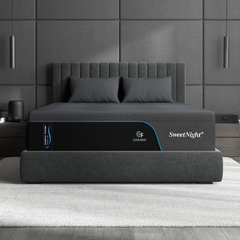
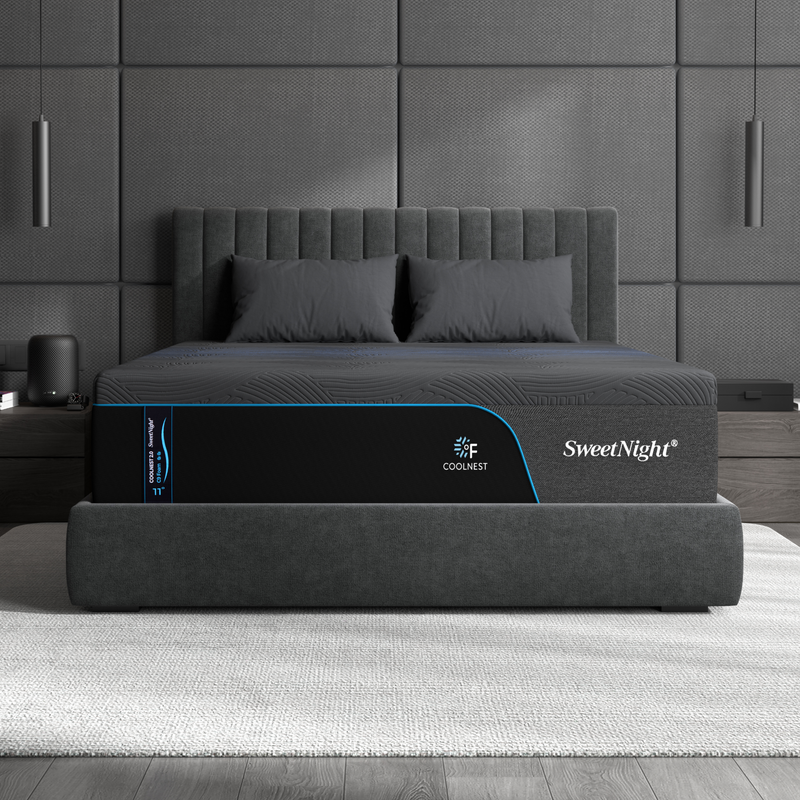
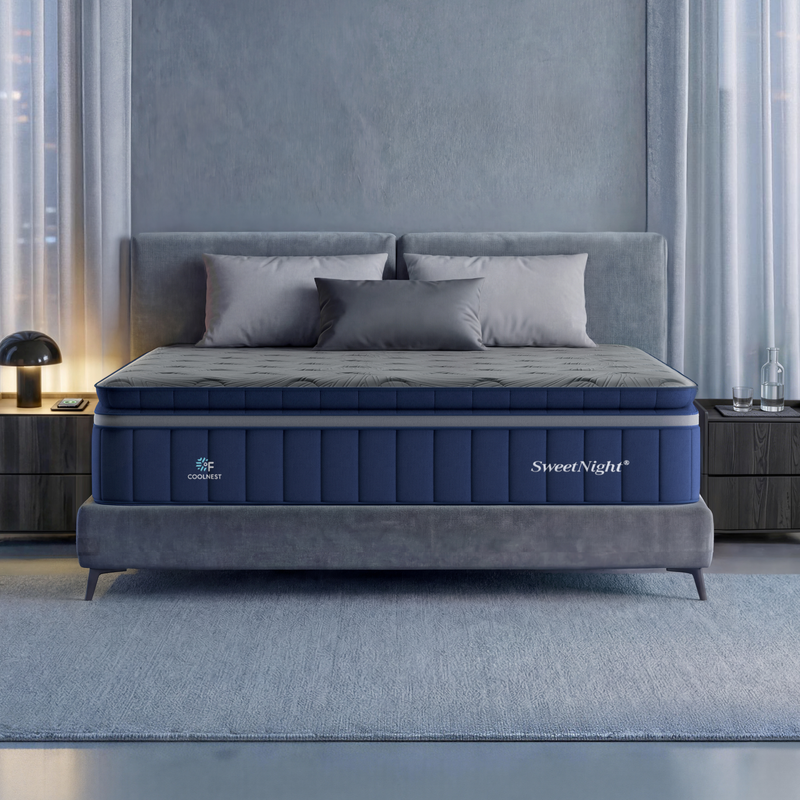
One thing that changes how much of that 54 inches you actually get to use: edge support. A mattress that collapses at the perimeter effectively shrinks itself by several inches on each side, which erases a meaningful share of what you paid to upgrade for. SweetNight's CoolNest® Hybrid Mattress — available in full — reinforces its perimeter with a 10 cm band of high-density foam around individually pocketed coils, specifically so the usable sleep surface extends closer to the edge. On a full-size bed, that's the difference between 54 inches of mattress and 54 inches of bed.
Is a Full Bigger Than a Twin? Yes — Here's Exactly How Much
Yes. A full is bigger than a twin — about 16 inches wider, and roughly 40% larger in total sleep surface. They are the same length.
Put in concrete terms:
- A full gives you roughly 1,100–1,200 additional square inches of sleeping surface (about 8 sq ft).
- Per sleeper, that's a jump from 38 inches of personal width to 53–54 inches.
- In floor space, a full bed frame typically occupies about 6 to 7 additional square feet of your bedroom once you account for the frame overhang.
The question "which is bigger, a twin or a full" gets asked constantly, and the reason is that the names give you nothing to go on. "Twin" sounds like it might mean two. "Full" sounds like it might mean complete. Neither name describes the size. The historical logic: "twin" beds were sold in matching pairs for hotel and guest rooms, and "full" was the standard adult bed before queens and kings existed. The names are inherited, not descriptive.
Is Twin Smaller Than Full? What the Gap Feels Like in Practice
A twin is smaller than a full by about 16 inches of width — but the felt experience varies enormously by who's sleeping in it.
| Sleeper | Twin | Full |
|---|---|---|
| Child under 10 | Ample | Generous, will grow into it |
| Teen, average build | Workable, feels tight by 15 | Comfortable through college |
| Adult under 5'8", still sleeper | Adequate | Comfortable |
| Adult, combination sleeper | Cramped | Comfortable |
| Adult over 6' | Too short and too narrow | Too short |
| Adult + pet | Too narrow | Workable |
| Two adults | Not viable | Tight; queen recommended |
The pattern: a twin is smaller in a way that only shows up over time. A twin bed feels fine on night one. The complaints start at month three, when the sleeper has learned they can't roll over without recalculating.
What Is a Twin Bed, and What Is a Full Mattress?
A twin bed is the smallest standard adult mattress size in the US at 38" × 75". It's the default for children transitioning out of a toddler bed, the standard for bunk beds and trundles, and the most common size in shared kids' rooms because two of them fit where one larger bed would. It's also the lightest and easiest size to move — a real consideration for renters and anyone navigating a narrow stairwell.
A full mattress — also sold as a "double" — is 53–54" × 75". It's the step up that solo adults most often land on: enough width to sleep like an adult, small enough to fit in a room that also has a dresser and a door that opens. In guest rooms, it's the size that quietly signals "you can bring your partner" without committing an entire room to a queen.
Is a Twin XL the Same as a Full? And Is a Full the Same as a Double?
Two naming questions cause more returns than any other in this category.
Is a twin XL the same as a full? No — and they're not even close.
| Twin XL | Full | |
|---|---|---|
| Width | 38" | 53–54" |
| Length | 80" | 75" |
A twin XL is about 16 inches narrower but 5 inches longer than a full. They solve opposite problems. Twin XL solves height. Full solves width. Sheets are not interchangeable, frames are not interchangeable, and a twin XL mattress on a full frame leaves a 16-inch gap.
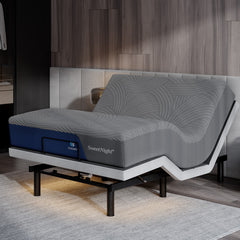
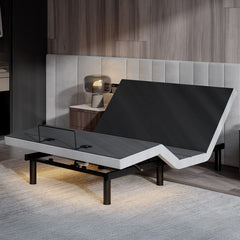
The one place twin XL earns special mention: two twin XLs pushed together measure 76" × 80" — exactly a king. That's the "split king" setup, and it's why adjustable bases are so often sold in twin XL pairs.
Is a full the same size as a double? Yes. "Full," "double," and "full/double" all refer to the same mattress. The term "double" is more common in the UK, Canada, and older American furniture catalogs. If a listing says double, expect a full.
Is a full the same as a queen? No. A queen is 60" × 80" — six to seven inches wider and five inches longer. For two adults sleeping together nightly, that extra width is the difference between sharing a bed and negotiating one.
Do 2 Twin Mattresses Equal a Full? The Math Behind a Persistent Myth
No. Two twin mattresses pushed together measure 76 inches wide by 75 inches long. A full is 53–54 inches wide. Two twins are more than 22 inches wider than a full — closer to a king (76" × 80") in width, though five inches shorter.

This myth persists because "twin" sounds like half of something. It isn't. If you have two twin mattresses and were hoping to combine them into a full-size setup, the arithmetic doesn't work in either direction:
- Two twins side by side ≈ king width, not full width.
- Two twin XLs side by side = exactly a king (76" × 80").
- One twin does not equal half a full. Half of a full is about 27 inches; a twin is 38.
If the goal is a shared bed built from two mattresses, twin XL is the size that produces a clean result. Everything else leaves you with a gap, an overhang, or a seam in the wrong place.
Twin vs Full vs Queen: Where Each Size Actually Belongs
Most "twin vs full" decisions are really three-way decisions that got narrowed too early. Here's the honest allocation:
Twin (38" × 75") — Kids' rooms, bunk and loft beds, trundles, daybeds, dorms, studio apartments where the bed doubles as seating, and any room under about 100 square feet. Also the right call when you need two sleeping surfaces in one room.
Full (53–54" × 75") — The default for a single adult with a normal-sized bedroom. Teenagers who'll keep the bed through college. Guest rooms that occasionally host a couple. Anyone who shares a bed with a dog or a cat. First apartments where a queen would swallow the room.
Queen (60" × 80") — Two adults, every night, non-negotiable. Also the right size for a single adult over 6 feet, or one who wants a genuinely luxurious amount of space. It's the best-selling size in America for a reason, and it's where SweetNight's most advanced construction lives: the CoolNest® Pro Memory Foam Mattress, with four-stage cooling and 7-zone contour-cut support, is built in queen and king only.
If you're within striking distance of a queen and the room can take it, the queen is almost always the size nobody regrets.
Is a Twin Bed Big Enough for an Adult? Height, Build, and Sleep Position
It depends on three things, and they're all measurable.
Height. A twin is 75 inches — 6'3". Allowing for a pillow, an adult up to about 5'10" is comfortable. Between 5'10" and 6'0" it's workable. Above 6 feet, a standard twin is too short, and so is a full. Go twin XL or queen.
Build. Shoulder width is the number that matters. A person with a shoulder span over about 20 inches will find 38 inches restrictive, because they need clearance on both sides to roll.
Sleep position. Back and side sleepers who stay put do fine on a twin. Stomach sleepers who splay their arms, and combination sleepers who change position five or more times a night, will feel the walls closing in. If you wake up with an arm hanging off the mattress, you've outgrown the size.
The honest answer: a twin is adequate for many adults and comfortable for fewer. It's a legitimate choice for a small room, a temporary living situation, or a guest bed used a dozen nights a year. It's rarely the right choice for someone's primary bed over years, if a full will fit.
One thing that makes a twin more livable for an adult: pressure relief. On a narrow bed you can't move away from a pressure point, so the mattress has to do that work for you. The CoolNest® Memory Foam Mattress uses a 5-zone ergonomic support layer built with nine comfort bars to cushion hips and shoulders directly — which matters considerably more across 38 inches than across 60.
Room Size: How Much Space a Twin vs Full Bed Actually Needs
Furniture retailers quote room minimums; here's how to check it yourself in five minutes.
The 30-inch rule: leave at least 24–30 inches of walking clearance on every side of the bed you need to access. Thirty inches lets you walk comfortably and make the bed. Twenty-four is the minimum for a side that's only used occasionally.
Twin bed: minimum room 7' × 10'. With walkways on one side plus the foot, a twin works in a 70 sq ft room. Two twins in one room need roughly 10' × 10' with a shared aisle between them.
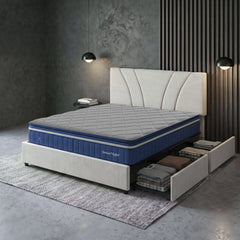
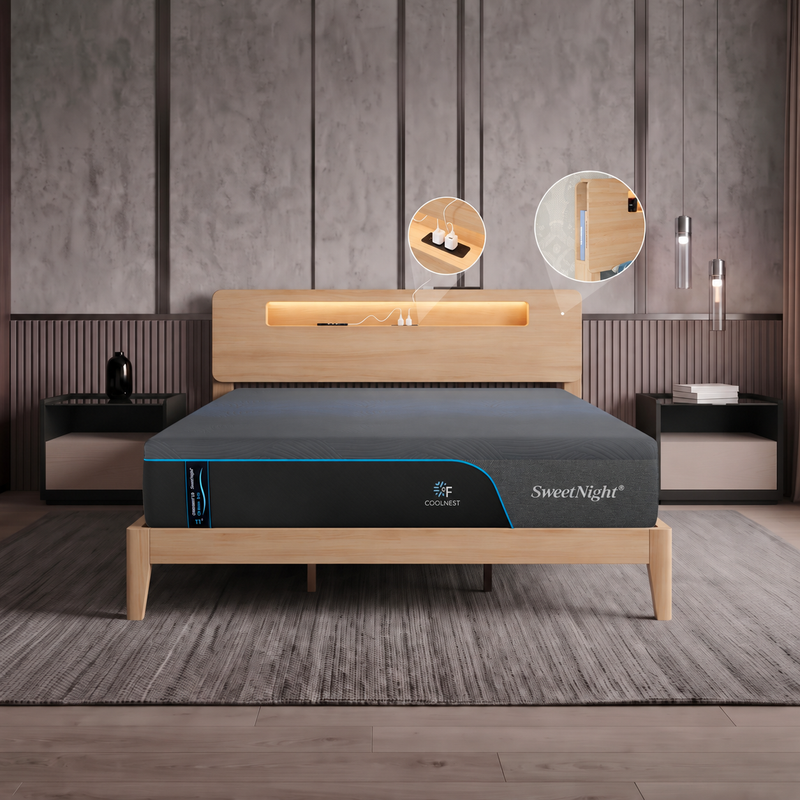
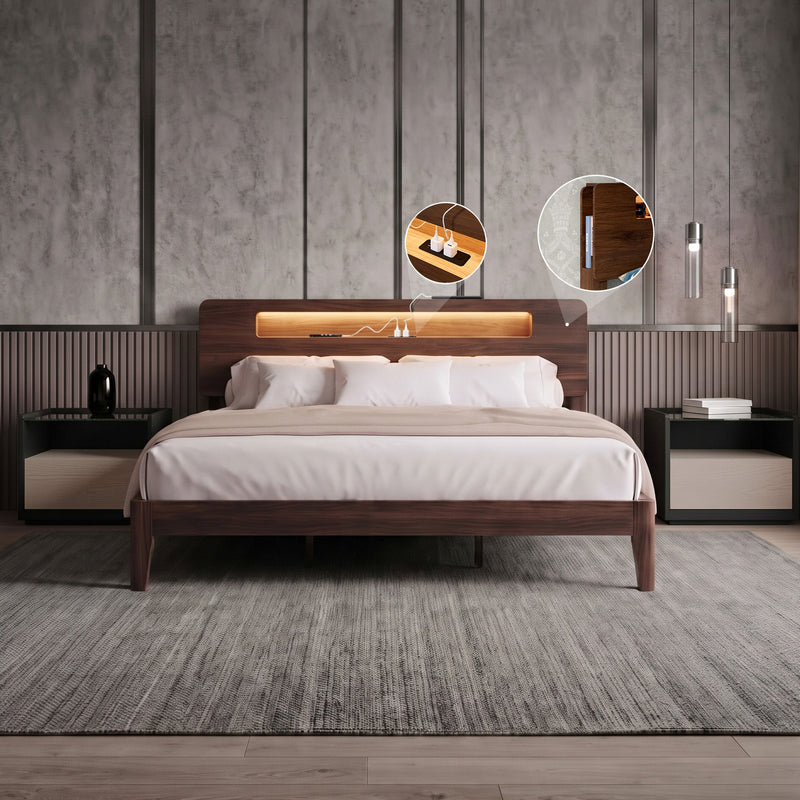
Full bed: minimum room 10' × 10'. And here's the number most guides omit — you have to plan around the frame, not the mattress. A full-size upholstered platform frame is meaningfully bigger than the mattress inside it. SweetNight's full-size Storage Bed Frame with RGB LED Lights and Charging Headboard, for example, has an external footprint of 79.8" long × 57.9" wide — nearly five inches wider and five inches longer than the mattress it holds. Add 30 inches of clearance on each side of that and you need 118 inches, just under 10 feet, before any other furniture.

Do this before you order:
- Measure the wall the headboard will sit against.
- Tape the frame's outline on the floor — not the mattress outline.
- Open every closet and bedroom door and check the swing path.
- Check radiators, vents, and window sills at mattress height.
That taped rectangle answers the twin-vs-full question faster than any chart.
Can a Twin Mattress Fit on a Full Frame? Bed Frame Compatibility Rules
No — and it's not a small mismatch. A twin on a full frame leaves a 16-inch gap, which is a hazard, not an inconvenience. The mattress will slide, the exposed slats become a trip and pinch risk, and fitted sheets won't hold their shape.
Going the other direction is worse: a full mattress will not fit on a twin frame. Eight inches will overhang on each side with no support underneath. The edges compress permanently, the foam breaks down at the perimeter, and most warranties treat improper support as a coverage exclusion.

The workable compatibility rules:
- Match the size exactly. A full mattress needs a full frame; a twin needs a twin frame.
- Twin/full convertible frames exist. Some metal frames are sold as adjustable "twin/full" models with repositionable side rails. These are legitimate — they physically resize.
- Slat spacing matters more than frame size. For foam and hybrid mattresses, slats should be no more than 3 inches apart. Wider gaps cause sagging between slats regardless of whether the size matches.
- You do not need a box spring with a platform frame. Foam and hybrid mattresses — including SweetNight's entire range — are built to sit on platform beds, slatted bases, box springs, or adjustable frames, as long as the surface is flat and sturdy.
If you're switching sizes, budget for the frame at the same time. Buying a full mattress and hoping the old twin frame will do is the most expensive way to save money in this category.
Full Platform Bed Frame and Storage Options: Getting Floor Space Back
Here's the argument that changes a lot of twin-vs-full decisions: a full platform bed frame with storage can give back more floor space than the larger mattress takes.
A full mattress footprint is about 28 square feet of floor. Put four drawers under it and you've recovered the equivalent of a dresser — typically 3 to 5 square feet of floor, plus the clearance those drawers need to open. In a small bedroom, that can be a net gain even after sizing up the mattress.

Options worth weighing:
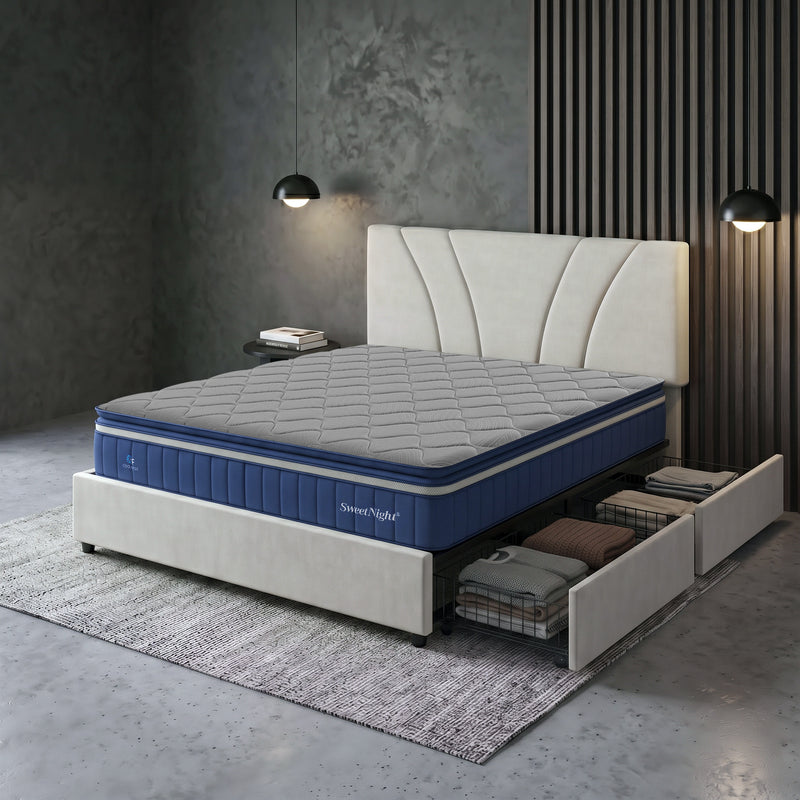
- Storage platform frames. Under-bed drawers replace a dresser outright. SweetNight's storage frame adds lockable drawers, an integrated charging headboard with AC, USB, and USB-C outlets, and LED lighting — useful in a teen's room or a studio where the bed is the only large piece of furniture. Note that it starts at full: there is no twin version, which is itself an argument for sizing up if storage is the goal.
- Low-profile metal platforms. Minimal footprint beyond the mattress. The right call when the room is tight and every inch of walkway counts.
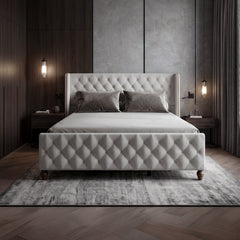
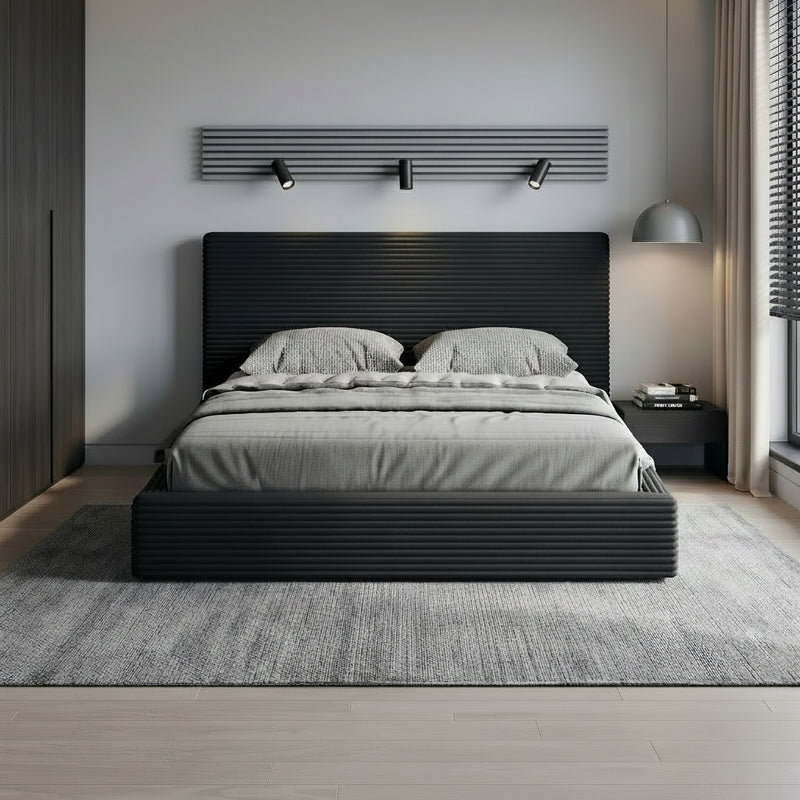
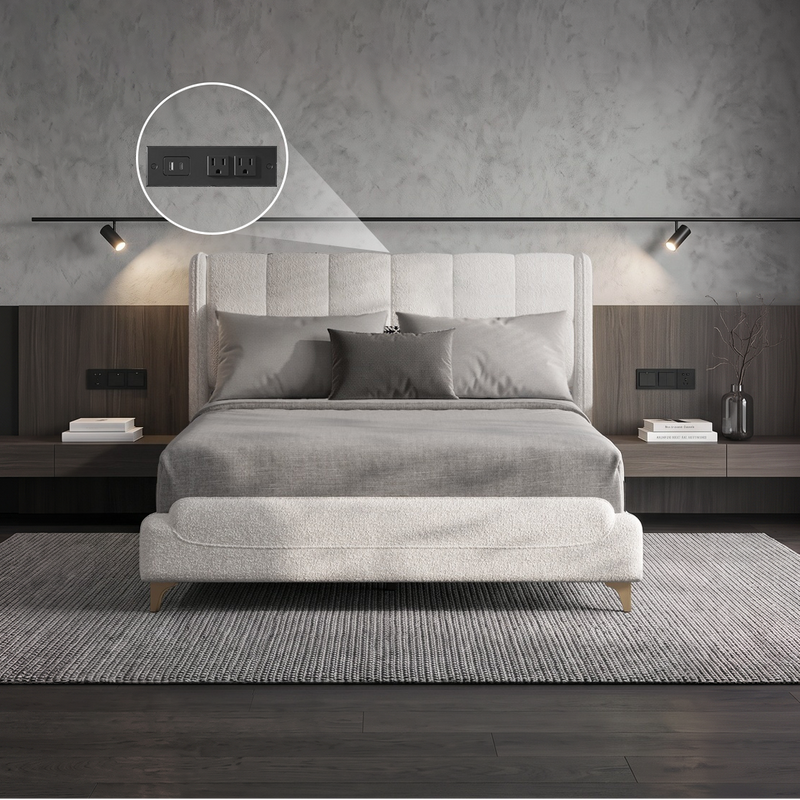
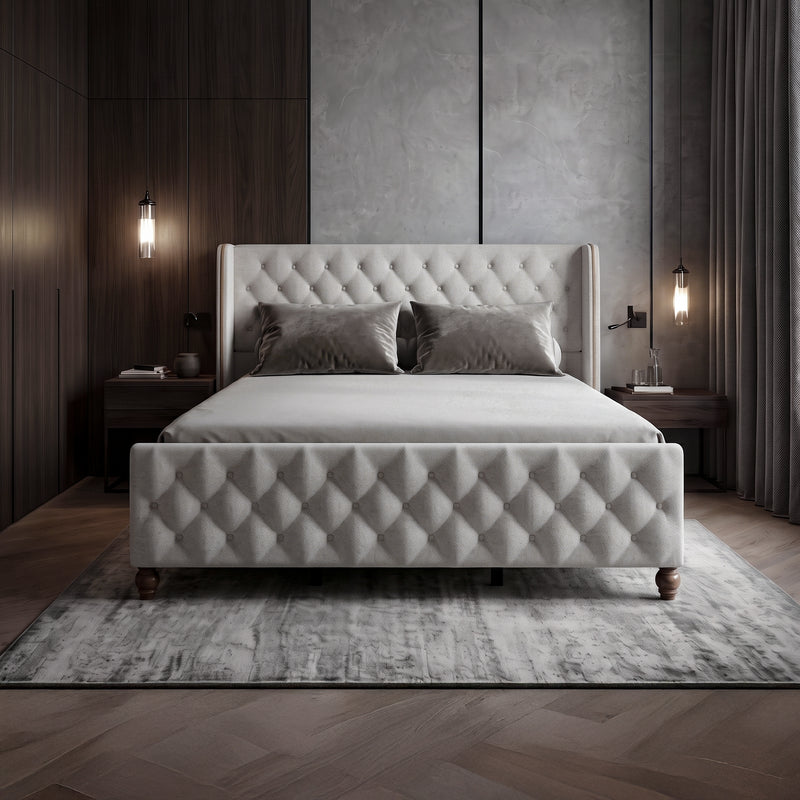
- Upholstered frames with headboards. Add several inches per side, as the measurements above show. Beautiful, but measure first — this is where a full bed tips a room from comfortable to cramped.
- Adjustable-headboard wood frames. Practical for anyone who reads or works in bed, which is itself an argument for the wider size.
You can compare footprints and functions across SweetNight's bed frame collection, and the bed frame buying guide covers slat spacing and support requirements in more depth.
When to Switch From a Twin to a Full Bed
There's no fixed age, but there are reliable signals. Make the switch when:
- The child is around 10 to 12. Most kids outgrow a twin's width before they outgrow its length. Age 10 is the typical inflection point.
- They're within 12 inches of the footboard. Kids grow faster than parents re-measure. Once there's less than a foot of clearance, the clock is running.
- They're waking up crowded. Blankets on the floor every morning is the diagnostic sign. It means they're running out of room while asleep.
- Sleepovers are a regular thing. A full accommodates two kids; a twin requires an air mattress every time.
- You're buying a bed you want to last through college. Buying a full at 12 costs one purchase instead of two.

A note on skipping the twin entirely: if the room can hold a full and the budget allows, going straight from a toddler bed to a full is often the cheaper path over a decade. You buy one mattress, one frame, and one set of bedding instead of two of each.
The counter-case: for a first apartment or a rented room where you don't yet know the dimensions, a twin is nearly guaranteed to fit, it's easier to move up a stairwell, and it's cheaper to replace when your situation changes.
The Real Cost Difference Between Twin and Full
Most guides say the price gap is "modest" and leave it there. Here's an actual, checkable example — SweetNight's 12-inch CoolNest® Memory Foam Mattress, the same model in both sizes:
| Size | Price | Difference vs twin |
|---|---|---|
| Twin | $329.99 | — |
| Full | $349.99 | +$20 (+6%) |
| Queen | $399.99 | +$70 (+21%) |
| King | $449.99 | +$120 (+36%) |
Twenty dollars. That's the mattress cost of 40% more sleeping surface, on the size step that people agonize over most. The gap between full and queen is larger, but still smaller than most shoppers assume.
Where the money actually goes is everything around the mattress:
| Item | Twin → Full |
|---|---|
| Mattress | ~+6% |
| Bed frame | Often +10–30%, and many storage frames have no twin option at all |
| Sheet sets | +20–40% per set |
| Comforter / duvet | +25–50% |
| Mattress protector | +15–25% |
Bedding is the sneaky one, because you buy it repeatedly. Two or three sheet sets over a few years, plus a comforter, can easily exceed the mattress price difference on their own.
Two ways to keep the total sensible:
- Buy the size you'll still want in five years, once. Repurchasing at year three costs far more than the $20 you saved at year one.
- Check trial and warranty terms before price. SweetNight mattresses ship with a 100-night risk-free trial and a 10-year warranty covering sagging over 1.5 inches — which means a size decision made on paper has three months to be tested in practice.
Which SweetNight Mattress Comes in Twin, and Which Comes in Full?
This is worth checking before you fall in love with a model, because size availability is not uniform across the range. Verified July 2026:
| Model | Twin | Full | Queen | King | Cal King |
|---|---|---|---|---|---|
| CoolNest® Memory Foam | ✅ | ✅ | ✅ | ✅ | ✅ |
| CoolNest® Hybrid | — | ✅ | ✅ | ✅ | ✅ |
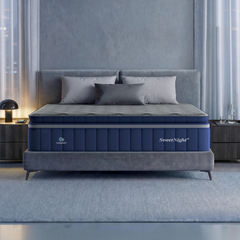
| Island Hybrid | — | ✅ | ✅ | ✅ | ✅ |
| CoolNest® Pro Memory Foam | — | — | ✅ | ✅ | — |
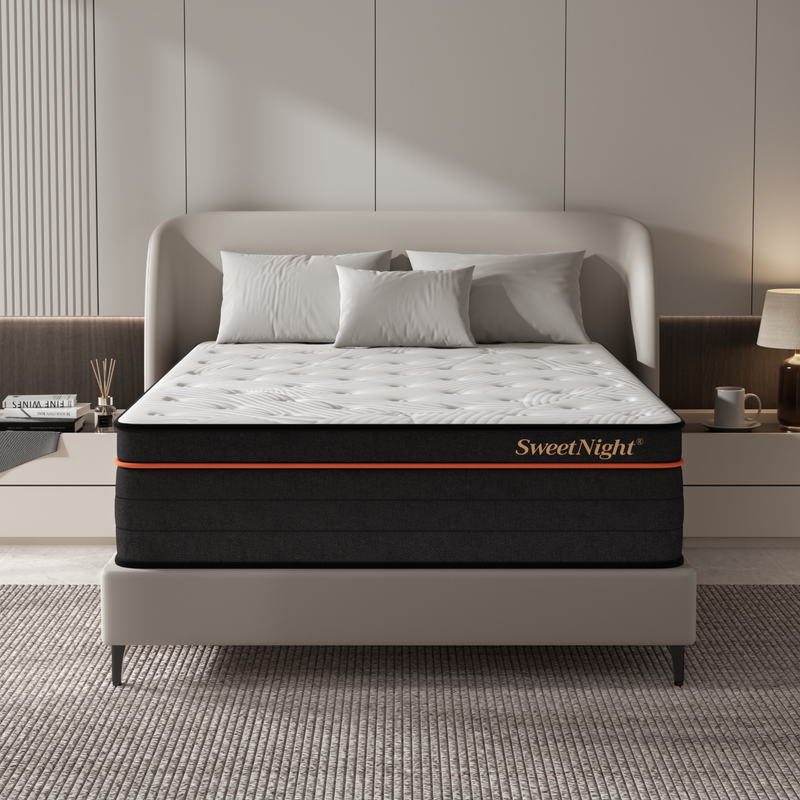
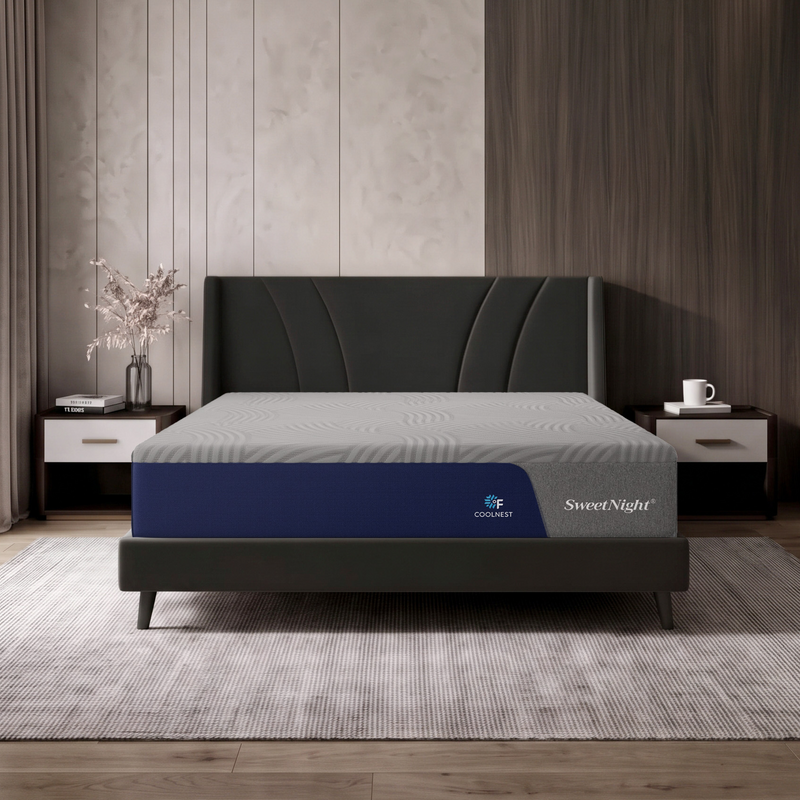
If you're buying a twin, the CoolNest® Memory Foam Mattress is SweetNight's twin-size option — and it's a sensible one for the use case, since narrow beds reward pressure relief over everything else. It uses 5-zone ergonomic support with nine comfort bars, a medium feel around 6.5/10, and the CoolNest® cooling system. Being all-foam, it's also light enough to maneuver up a stairwell or into a bunk frame, and it's available in 12" and 14" profiles. CertiPUR-US® certified foams, OEKO-TEX® STANDARD 100 cover, ACA-endorsed.
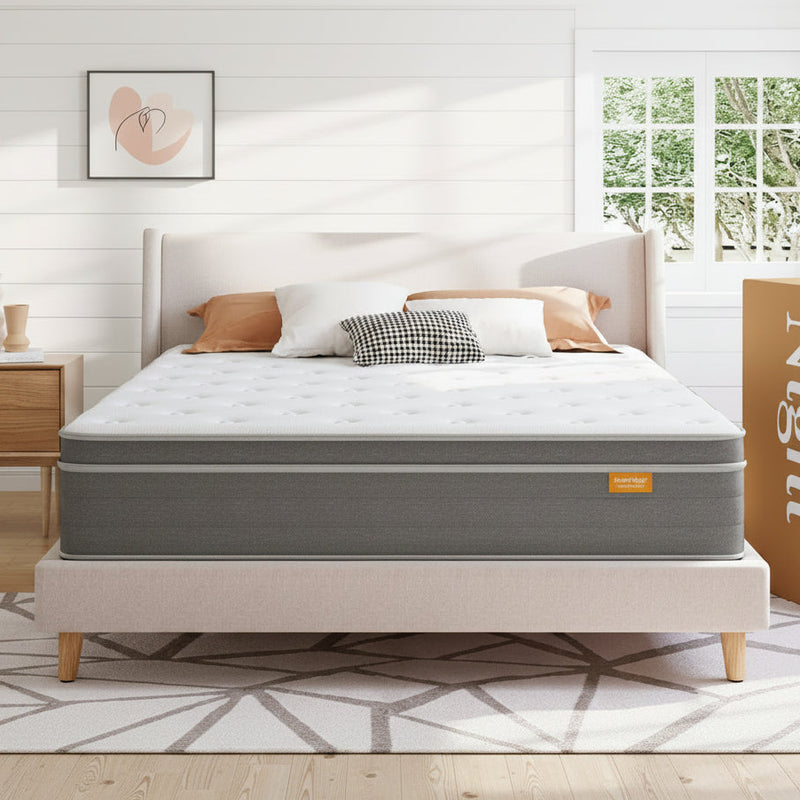
If you're buying a full for a solo adult or a growing teen, you have a choice of feel. The same CoolNest® Memory Foam comes in full for a cradling, motion-absorbing all-foam experience. The CoolNest® Hybrid Mattress adds individually pocketed Dynamic Coil™ springs, a DuoSense™ pillow top, and the reinforced 10 cm edge band discussed above — a medium-firm feel that keeps the full 53 inches usable, which matters more on a full than on a queen.
If the answer is really "go queen," the CoolNest® Pro is the upgrade tier, with four-stage cooling and 7-zone contour-cut support. It's built in queen and king only — so if you're leaning toward it, the size decision is already made for you.
Still deciding on feel rather than size? SweetNight's mattress buying guide walks through foam versus hybrid, and the full mattress collection lets you filter by type.
Twin vs Full: Frequently Asked Questions
Which is bigger, a twin or a full? A full. It's 53–54 inches wide versus a twin's 38 inches — about 16 inches wider and roughly 40% more total sleep surface. Both are 75 inches long.
Is a twin bed the same length as a full? Yes. Both are 75 inches long. The entire difference between the two sizes is width.
How wide is a full mattress? The US standard is 54 inches, though many manufacturers build to 53 inches — SweetNight's full mattresses measure 53" × 75". Either way, that's about 27 inches per person if two people share it.
How long is a twin mattress? Seventy-five inches, or 6 feet 3 inches. A twin XL is 80 inches for taller sleepers.
Do two twin mattresses equal a full? No. Two twins side by side measure 76 inches wide — more than 22 inches wider than a full, and nearly the width of a king.
Is a twin XL the same as a full? No. A twin XL is 38" × 80" and a full is 53–54" × 75". The twin XL is narrower but longer. Their sheets and frames are not interchangeable.
Is a full the same size as a double? Yes. "Full" and "double" are two names for the same mattress size.
Can two adults sleep on a full? They can, but each person gets about 27 inches — narrower than a standard crib. A queen gives roughly 30 inches each and a king about 38, so for couples sharing nightly, a queen is the recommended minimum.
Can a twin mattress fit on a full frame? No. It leaves a 16-inch gap, the mattress shifts, and exposed slats create a safety hazard. Match the mattress and frame sizes exactly, or use a convertible twin/full frame designed to resize.
What room size do I need for a full bed? At least 10' × 10'. Measure the frame, not the mattress — a full-size upholstered platform frame can run close to 58 inches wide and 80 inches long, and you still need roughly 30 inches of clearance on each side you walk on.
When should a child move from a twin to a full? Typically around age 10 to 12, or sooner if there's less than 12 inches between their feet and the footboard, or if blankets end up on the floor most mornings.
Is a twin bed big enough for an adult? For an adult under about 5'10" who sleeps in one position, yes. For combination sleepers, larger builds, anyone over 6 feet, or anyone sharing with a pet, a full or larger is the better call.
The Bottom Line
Twin versus full comes down to one number: about 16 inches of width, at identical length.
Buy the twin when the room is small, the sleeper is young, or you need two beds where one larger bed would go. Buy the full when a single adult sleeps in it nightly, when a teenager is still growing, when a pet shares the bed, or when a guest room needs to be flexible. Skip to a queen when two adults will share it every night — no amount of good mattress engineering makes 27 inches per person feel like enough.
Measure the room, tape the frame's outline on the floor, check the door swing, and buy the frame in the same order as the mattress. Then pick a mattress with a trial period long enough that a size decision made on paper can be corrected in practice.
Explore SweetNight mattresses in twin, full, queen, and king →