











Published: July 21, 2026 · Reviewed by the SweetNight Sleep Comfort Team · 13 min read
If you're a plus-size sleeper, you've probably shopped for two mattresses in your head: a supportive one, so your back stops aching, and a cooling one, so you stop waking up sweaty. Here's the thing almost every buyer's guide gets wrong — those aren't two problems. They're one. The reason a heavier body sinks too deep and loses support is the exact same reason it overheats: you're being swallowed by the mattress instead of held on top of it. Fix the sinking and you fix the heat, because they share a single root cause. This guide is built around that idea, because once you see it, you stop shopping for two mattresses and start looking for the one spec that solves both.
Do Heavier People Sleep Hotter? The Science of Weight and Body Heat
Mostly, yes — and it's worth understanding why, because it's not just “more body, more heat.” There are three things stacking up.
First, falling asleep is a cooling event. Your core temperature has to drop for sleep to begin, and it does that by moving heat outward to your skin. Sleep Foundation describes the mechanism: the body cools itself through vasodilation, sending blood to the surface so heat can escape, with the drop starting about two hours before bed alongside the release of melatonin. If that heat can't leave your skin, you don't cool down, and you don't fall — or stay — asleep easily.
Second, a larger body has more insulating tissue between its core and its surface and generates more metabolic heat to begin with. So there's more heat to shed and a longer path for it to travel. That's the part people assume, and it's real.
There's a moisture layer to this, too. Heat you can't shed as dry warmth, your body dumps as sweat, and a heavier sleeper enclosed in foam is also sealing that humidity against the skin with nowhere to evaporate. Damp, warm air trapped at the surface feels hotter than the thermometer says and is exactly what wakes people at 3 a.m. clammy and overheated — so a surface that manages moisture and airflow, not just temperature, is what a heavier body actually needs.
Third — and this is the part that gets ignored — is the mattress itself. A heavier body pushes deeper into the surface. The deeper you sink, the more of your body gets surrounded by mattress instead of resting on top of it. Foam that wraps up around your sides is foam that has sealed off the airflow you rely on to release heat. So the exact same sinkage that people notice as “my hips are dropping” is also cutting off your body's cooling exits. You can be lying in a 65-degree room and still bake, because the heat has nowhere to go once the foam closes around you. That's why plus-size sleepers so often run hot even in a cool bedroom: it isn't the room, it's how far they're sinking into the bed.
Why Heat and Support Are the Same Problem for Plus-Size Sleepers
Let's make the thesis explicit, because it changes how you shop. For heavier sleepers, poor support and hot sleep are two symptoms of one disease: deep sinkage.
Picture what happens when a 280-pound body lies on a soft, low-density mattress. The surface gives way. Your heaviest parts — hips and shoulders — press down until the comfort layer compresses as far as it can go. Two things happen simultaneously, from the same cause:
- The support failure: your midsection drops into the dip while your lighter parts stay higher, so your spine bows into a hammock instead of staying neutral. That's the morning back pain. In extreme cases you “bottom out,” feeling the hard base through a comfort layer that has nothing left to give.
- The heat failure: as you sink, foam rises up around your torso, hips, and shoulders, dramatically increasing how much of your body is in contact with (and enclosed by) the mattress. That enclosure kills airflow and traps body heat and moisture against your skin.
Same sinkage, two failures. And here's the payoff: the fix is also the same. A surface engineered to keep a heavier body buoyant — high-density, appropriately firm, thick enough, and actively cooling — holds your spine in line and keeps your body up in the moving air where heat can escape. You do not need to trade support for cooling or cooling for support. The best mattress for plus-size sleepers refuses the trade by attacking the shared root cause. Any guide that hands you a “coolest mattress” list and a separate “most supportive” list is treating one problem as two.
What Happens When a Heavy Person Sinks Too Deep Into a Mattress
It's worth slowing down on the mechanics of sinkage, because they explain nearly every complaint heavier sleepers have — and they're the yardstick for judging any mattress.
Contact area balloons. A lighter person rests on a mattress; a heavier person sinks into it. As you sink, the surface conforms up and around you, so instead of touching the bed across your back and hips, you're enveloped along your sides too. More contact area means more of your skin is pressed against heat-trapping material and less of it is exposed to air. This is the single biggest reason a foam mattress that feels fine for a 150-pound partner sleeps like an oven for a 260-pound one.
Airflow gets sealed off. The channels of air that would normally move around a body lying on top of a surface disappear once the surface closes over you. Heat and humidity that your body is actively trying to release get held right at the skin. No amount of “cooling gel” on the surface helps if the surface has wrapped around you and stopped breathing.
The spine loses its line. Support is about keeping your spine in the same gentle S-curve it holds when you stand. Deep, uneven sinkage lets the heavy middle of your body fall while the ends stay up, curving the spine and straining the lower back, shoulders, and neck.
The mattress wears out faster. Every night, heavier weight compresses foam harder and further. Low-density foam that's constantly pushed to its limit breaks down and takes a permanent set — the body impression and sag that shows up in a year or two — after which the sinking (and the heat, and the back pain) only gets worse. Durability isn't a separate concern; it's how long the mattress keeps solving the sinkage problem before it becomes the problem.
Weight, Sleep Apnea, and Why Cool, Supported Sleep Raises the Stakes
Before the buying specs, it's worth naming why getting this right matters more for heavier sleepers than the average shopper — because the stakes aren't just comfort.
Higher body weight and poor sleep feed each other. Sleep Foundation notes that people with obesity are more likely to report insomnia or trouble sleeping, and that obstructive sleep apnea is “seven times more common” among people who are obese. It's a two-way street: losing sleep nudges the hormones that govern hunger (leptin and ghrelin) in the wrong direction, and carrying more weight disrupts sleep — a loop that's hard to break from either side.
A mattress can't treat sleep apnea, and nothing here is medical advice — if you snore heavily, gasp at night, or wake unrefreshed, that's a doctor's conversation. But the sleep surface is one of the few variables you fully control, and it feeds directly into the two things that most disrupt a heavier sleeper's night: overheating and unsupported, painful positioning. A bed that keeps you cool and holds your spine level removes two of the biggest reasons you'd surface out of deep sleep. It also supports better sleep posture: many people with apnea sleep better on their side, and a supportive surface that keeps a heavier body from rolling into a sagging dip makes side-sleeping sustainable. In other words, the same buoyancy-and-cooling target that fixes back pain and night sweats is also the version of “control what you can” that helps most. That's why it's worth spending on the mattress specs below rather than treating them as luxuries.
Best Mattress Firmness for Heavy People (and Why Too Soft Fails Twice)
Firmness is the first dial to get right, and heavier sleepers should err firmer than the generic advice you'll read — most do best in the medium-firm to firm range. But it's crucial to understand why, because “firm” is widely misunderstood as “hard and uncomfortable.”
Firmness, for a plus-size sleeper, isn't about a hard sleeping surface. It's about buoyancy — how well the mattress pushes back and keeps you near the top instead of letting you sink through. A soft mattress fails a heavier body twice, from the same flaw: it lets you sink, which drops your spine (support failure) and wraps you in foam (heat failure). A firmer, supportive surface stops the sink, which keeps your spine level and keeps your body up in the air. One choice, both problems solved.
The nuance is that firmness has to come from real support, not just a stiff top layer. A thin firm surface over weak foam still collapses under concentrated weight; you want firmness that's backed by a dense, high-quality support core (more on that next). Think of it as being held up evenly, not lying on a plank. When people say a firm mattress “hurt their back,” they usually slept on something firm but unsupportive that still let their hips punch through. Done right, a firmer feel is what finally makes a heavier sleeper feel cradled and cool rather than stuck in a hot ditch.
Signs Your Mattress Is Too Soft for Your Weight
If you're not sure whether your current bed is the culprit, run this checklist. These are all symptoms of the same thing — a surface that's letting a heavier body sink too far — and if several sound familiar, your mattress is failing you on support and heat at once.
- You wake with lower-back pain that eases after you're up a while. That's the overnight hammocking of an unsupported spine, not a mattress that's “too hard.” Too-soft beds cause far more heavy-sleeper back pain than too-firm ones.
- You feel a distinct dip or “valley” where you sleep. A visible or felt body impression deeper than an inch or so means the foam has taken a set and is now actively steering you into the sink.
- You sleep hot even in a cool room. If the bedroom is at 65°F and you're still sweating into the surface, you're likely enveloped by foam that's sealed off your airflow — a sinkage signal, not a thermostat one.
- Rolling over takes effort, and you feel “stuck.” That quicksand feeling is a sunk-in body having to climb out of a foam pocket. It also means you're deep enough to be trapping heat.
- The edges collapse when you sit. If sitting on the side to put on shoes feels like the edge is caving, the whole surface is likely under-built for your weight.
None of these are cosmetic. Each one is the deep-sinkage problem announcing itself, and each one gets worse as the foam continues to break down. If you're checking multiple boxes, no topper or mattress pad will truly fix it — a topper adds softness on top of a surface that's already too soft, which usually makes the sinking worse, not better.
Mattress Thickness and Density for a 300 lb Person
If firmness is the feel, thickness and density are the substance behind it — and they matter far more for heavier bodies than for lighter ones. This is where a lot of budget mattresses quietly fail a 300-pound sleeper.
Thickness. A heavier body needs more material between it and the floor. Aim for a minimum of 12 inches, and step up to 14 or 16 inches as weight climbs toward and past 300 lbs. Two reasons: a deeper comfort layer means you can get pressure relief without compressing straight through to the hard base, and a taller support core has more room to push back and hold your spine. On a thin mattress, a heavy sleeper compresses the whole thing and effectively sleeps on the foundation.
Density. This is the spec that separates a mattress that lasts from one that sags in a year. Density measures how much material is packed into the foam. High-density foam resists compression, holds its shape under concentrated weight, keeps you buoyant, and lasts far longer before it takes a permanent impression. Low-density foam feels okay in the showroom and then collapses. For heavier sleepers, density is non-negotiable — it's what makes firmness real and durability possible.
The practical translation: a plus-size sleeper wants a genuinely thick mattress (14″ or 16″ is ideal at higher weights) built on high-density, supportive foam, tuned medium-firm to firm. That combination is what physically prevents the deep sinkage at the root of both the heat and the support problems. It's also, not coincidentally, exactly the spec sheet you should be matching when you compare models — for example, the CoolNest® Ultra comes in 12″, 14″, and 16″ profiles precisely so heavier sleepers can pick enough mattress to stay on top of it.
Mattress for a 300 lb Person: Sizing by Weight Tier
Generic advice falls apart at the extremes, so here's a more honest, weight-tiered way to translate the firmness-thickness-density rules into a spec you can actually shop. Treat these as starting points, adjusted for your build and sleep position — broad shoulders or a side-sleeping style push you toward more thickness and a touch more give in the top layer.
| Sleeper weight | Target firmness | Thickness | What to prioritize |
|---|---|---|---|
| Up to ~230 lbs | Medium to medium-firm | 10″–12″ | Standard rules apply; most quality beds work if the cooling is real |
| ~230–280 lbs | Medium-firm to firm | 12″–14″ | Buoyancy and high-density comfort layers; airflow becomes critical |
| ~280–350 lbs (incl. the 300 lb sleeper) | Firm | 14″–16″ | Deep, high-density support core; active cooling; strong edges; durability |
| 350 lbs and up | Firm, heavy-duty | 16″+ | Maximum support-core density and a reinforced foundation; consider a hybrid |
Notice the pattern as weight climbs: firmer, thicker, denser, and more actively cooled — every dial turns the same direction, because every dial serves the same goal of keeping you buoyant and ventilated. A 300-pound sleeper on a 16″, firm, high-density, cooling mattress is being set up to stay on top of the bed; the same sleeper on an 10″, plush, low-density one is being set up to sink, hammock, and overheat. This is also why couples with very different body weights should size the mattress to the heavier partner and rely on zoning and a supportive core to keep it comfortable for both — a bed that's under-built for the heavier sleeper fails them on every line of the table.
Foam vs Hybrid: Best Mattress for Heavy People, Honestly
This is the debate every heavy-sleeper guide stages, usually to sell you coils. Here's the honest version: the foam-versus-hybrid label is not the thing that matters. Density, firmness, thickness, and active cooling are. Both constructions can succeed or fail a heavier body depending on how they're built.
The case for hybrids is real: a coil support core pushes back hard, resists deep sinkage naturally, and the spaces between the coils create built-in airflow. For very heavy sleepers, a well-made hybrid with a sturdy coil unit is a genuinely strong choice, and we cover that route in depth for couples in best back support mattress for heavier sleepers in shared beds.
The case for modern all-foam is just as real, and it's the part the coil-sellers skip. A high-density, firm, zoned foam mattress that's thick enough will keep a heavier body buoyant — and a foam bed engineered to dissipate heat, rather than relying on the passive airflow of coils, solves the very problem heavier sleepers actually have. The old knock on foam for big-and-tall sleepers was that it slept hot and sank; that was a knock on cheap, soft, low-density foam, not on foam as a category. A dense, firm, actively cooled foam surface eliminates both objections. It also isolates motion better than coils, which matters if you share the bed, and it has no springs to eventually squeak or lose tension.
So don't shop by construction; shop by behavior. Ask the only question that matters: does this mattress keep a body my weight up on top, in the air, with its heat moving out? A great hybrid does that. So does a great cooling foam mattress. A bad version of either doesn't.
🛏️ Built to Hold You Up and Keep You Cool — On Sale Now
Stop choosing between support and cooling. SweetNight's cooling mattresses for heavier and plus-size sleepers — high-density, zoned, and engineered to release body heat — are on sale now in the SweetNight Cooling Sale, with a 100-night trial and a 10-year warranty so you can prove it out at home.
How to Stop a Mattress From Sleeping Hot Under a Heavier Body
Because heavier sleepers can't count on the passive airflow that lighter people get from resting on top of a surface, a cooling mattress for heavy people has to actively manage heat rather than hope air finds its way around a sunk-in body. Here's what actually moves the needle, in order of impact.
- Keep the body buoyant (again). This is the biggest cooling lever and it's the same lever as support. The less you sink, the more of your body stays exposed to air. Everything below is secondary to not being swallowed by the mattress in the first place.
- Choose a surface engineered to dissipate heat, not just feel cool. Look for ventilated or open-structure foam that keeps channels for heat to move through, and materials designed for continuous heat dissipation rather than a thin cool-touch layer that saturates. Contact-cool gimmicks fail fast under a body that's producing a lot of heat.
- Mind the cover and the layers you add. A breathable, moisture-wicking cover pulls heat and sweat off the surface. Then don't undo it — a thick, sealed mattress protector or heavy foam topper can trap heat and cancel out a cooling mattress underneath.
- Set the room to about 65°F. Sleep Foundation's recommended sweet spot works with your body's natural cooling; it can't fix a mattress that's wrapping around you, but it helps once the mattress lets your heat escape. More in the optimal sleeping temperature.
One myth worth killing: a colder bedroom alone will not rescue a hot mattress under a heavier body. If the surface has wrapped around you and sealed off airflow, the trapped heat at your skin barely feels the room. Airflow at the sleep surface beats ambient temperature every time for a plus-size sleeper. For the deeper mechanics of how a surface actually pulls heat away from a body, we broke it down in do cooling mattresses actually work. The short version for plus-size sleepers: cooling starts with buoyancy and ends with a surface built to keep releasing heat all night.
Do Cooling Mattress Toppers and Pads Help Heavy People?
It's the tempting shortcut: rather than replace the bed, just add a cooling topper or pad. For a heavier sleeper the honest answer is “rarely, and it depends entirely on what's wrong.” A topper changes the top inch or two of feel; it cannot add support a sagging or under-built mattress lacks.
- If your mattress is too soft or already sagging — the common plus-size complaint — a soft cooling topper makes it worse. You're stacking more give on a surface that's already letting you sink, deepening the hammock and the heat trap. No cooling cover on top survives being wrapped around a body that's now sinking even further.
- If your mattress is genuinely supportive but sleeps a bit warm or a touch too firm, a breathable, heat-dissipating topper can take the edge off. The key word is breathable: a dense memory-foam topper adds insulation and can trap more heat than it relieves, while a ventilated or naturally cool material can help airflow at the surface.
- A cooling mattress pad or protector is the lower-risk add-on, but choose a thin, moisture-wicking one. A thick, waterproof, plasticky protector is one of the fastest ways to cancel out a cooling mattress underneath by sealing heat in — a real concern for anyone already running hot.
The takeaway: a topper is a tuning tool for a good mattress, not a rescue for a bad one. If you're checking boxes on the “too soft for your weight” list above, spend on the mattress and base, not on a topper that treats the symptom while feeding the cause.
Durability: The Most Durable Mattress for Heavy People Won't Sag
Durability deserves its own section for heavier sleepers because it's the difference between a mattress that solves your problems for years and one that becomes the problem in months. Under heavier weight, every weakness accelerates.
The failure mode is always the same: soft, low-density foam gets compressed past its limit night after night, takes a permanent set, and develops the body-shaped dip and sagging edges that reintroduce deep sinkage — which, as we've established, brings back both the back pain and the heat. A mattress that sags is a mattress that has started swallowing you again.
What protects against it: high-density foams that resist compression, a robust support core sized for the weight, and honest construction rather than a thick pillow-top hiding weak base foam. Two proxies you can check before buying: the warranty (a 10-year warranty signals the maker expects the materials to hold up) and the trial period (a 100-night trial lets you confirm it isn't already softening under you). Buy density up front and you buy years of the mattress actually doing its job.
Do Plus-Size Sleepers Need a Special Bed Frame or Foundation?
This is the step people skip, and it quietly sabotages an otherwise great mattress. A mattress can only be as supportive as what it sits on. Put the best high-density bed on a weak foundation and the foundation sags first, dragging the mattress into exactly the dip you paid to avoid — and, on most warranties, a sag caused by inadequate support isn't covered.
For heavier sleepers, the base matters as much as the bed:
- Slat spacing. If you use a slatted frame, the slats should be close together — generally no more than about 2.75 inches apart. Wide-spaced slats let the mattress bow down between them under concentrated weight, creating soft spots and voiding many warranties. Add a bunkie board or extra slats if the gaps are wide.
- Frame strength and center support. Queen and king frames need a sturdy center rail with a leg to the floor. Heavier sleepers — and heavier couples — put real load on that midline; a frame without center support is the classic cause of a bed that sinks in the middle regardless of the mattress.
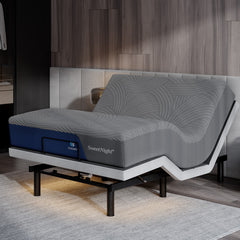
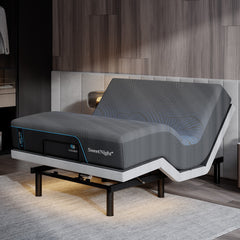
- Solid platforms and adjustable bases. A solid platform or a quality adjustable base gives even, full support and pairs well with a foam mattress. If you like reading or elevating your head, an adjustable base is a genuinely nice upgrade — just confirm the mattress is rated to flex on one.
The rule of thumb: spend on the base in proportion to your weight. It's the cheapest insurance that the support and cooling you bought actually last, and it keeps your warranty intact.
Edge Support and Motion Isolation for Plus-Size Sleepers and Couples
Two more specs punch above their weight for heavier sleepers, especially couples.
Edge support is how well the perimeter holds up when you sit or sleep near the edge. For a plus-size sleeper it's a daily quality-of-life issue: weak edges collapse when you sit on the side to dress or get up, and they shrink your usable sleeping space because rolling toward the edge feels like rolling off. Strong edges let you use the whole mattress and make getting in and out easier — which matters more, not less, as weight increases.
Motion isolation matters if you share the bed. Heavier bodies create bigger movements, so when one partner shifts or gets up, the other feels it more. A dense foam surface absorbs and localizes that motion so it doesn't travel across the bed — one of the quiet advantages foam holds over coils for couples. If you're navigating two different body weights and sleep styles in one bed, the shared-bed support trade-offs are worth reading in full in our guide for heavier sleepers in shared beds.
The Best Cooling Mattress for Plus-Size Sleepers: Our Pick
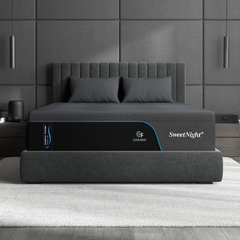
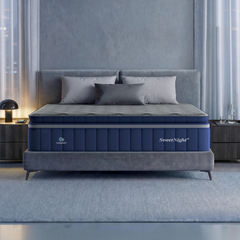
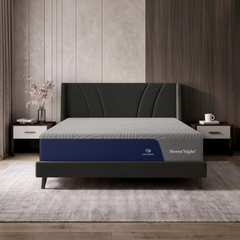
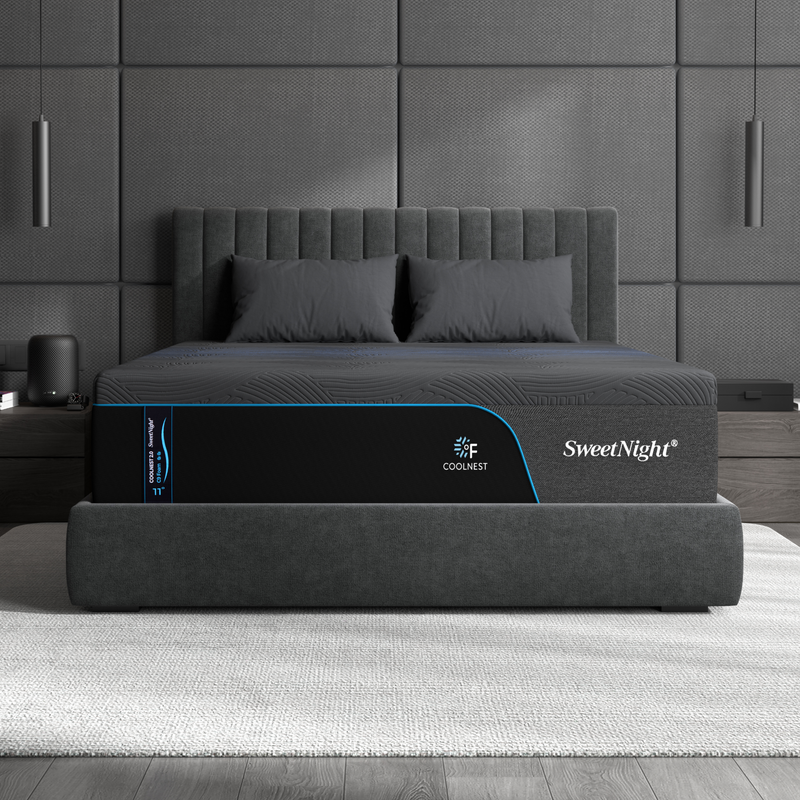
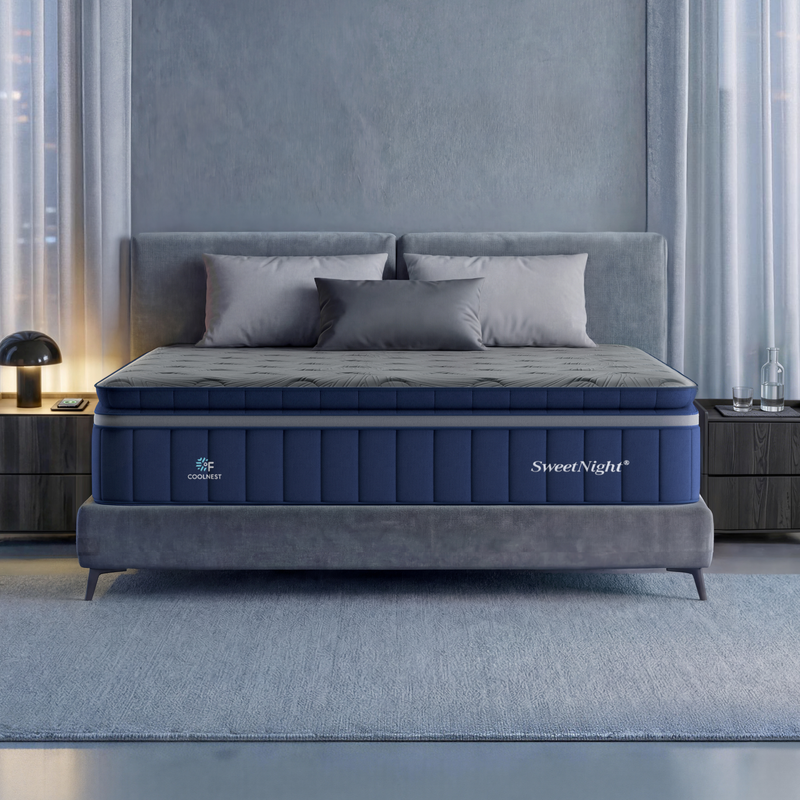
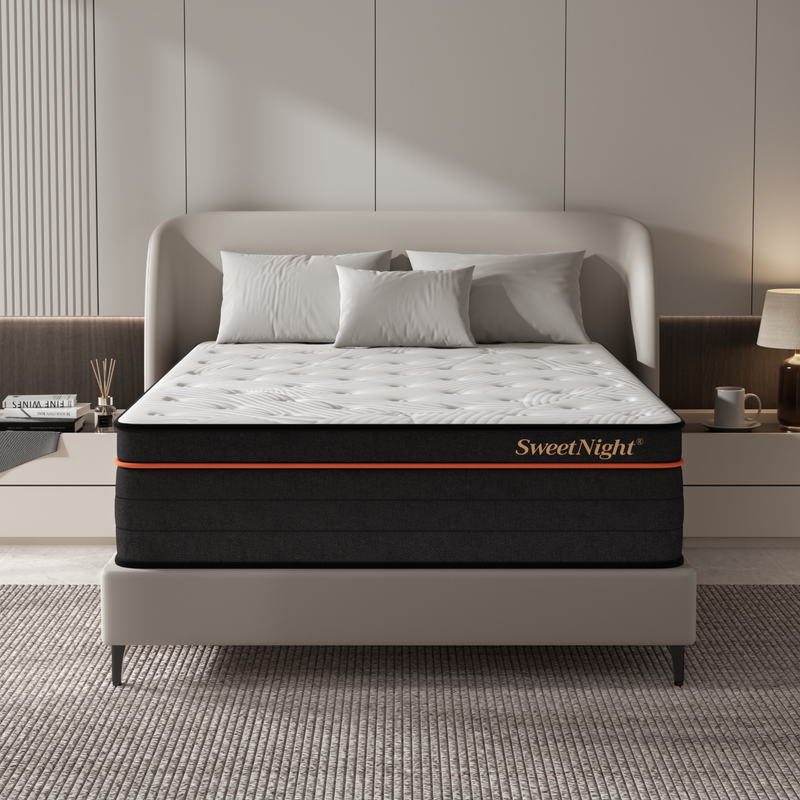
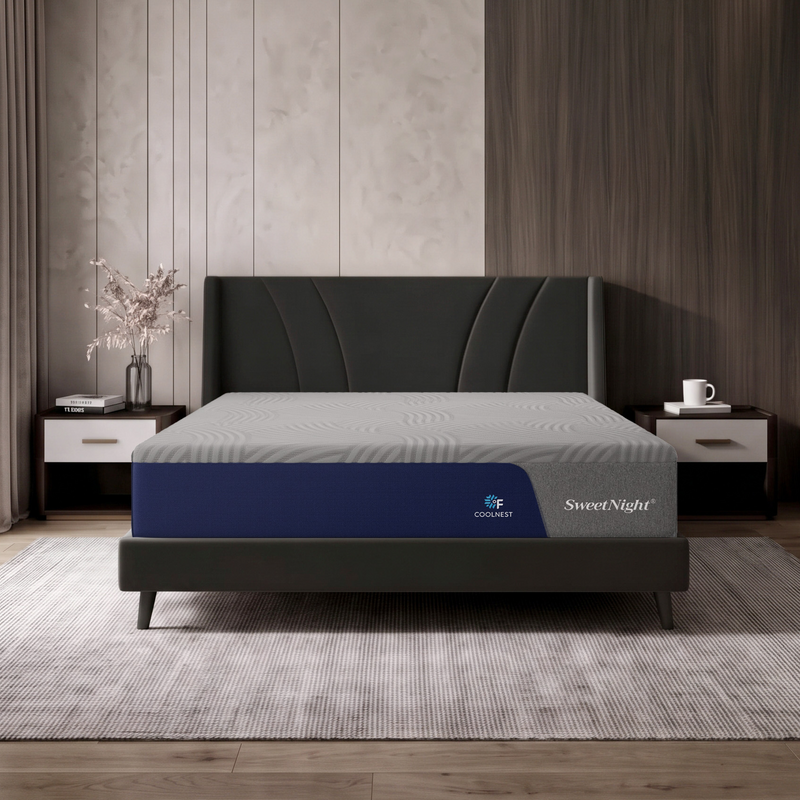
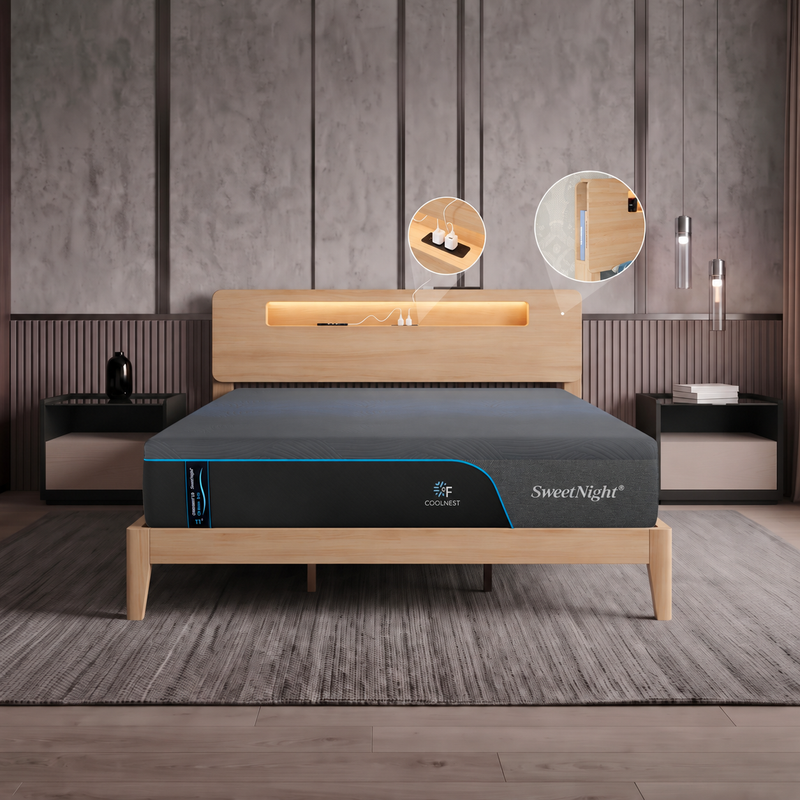
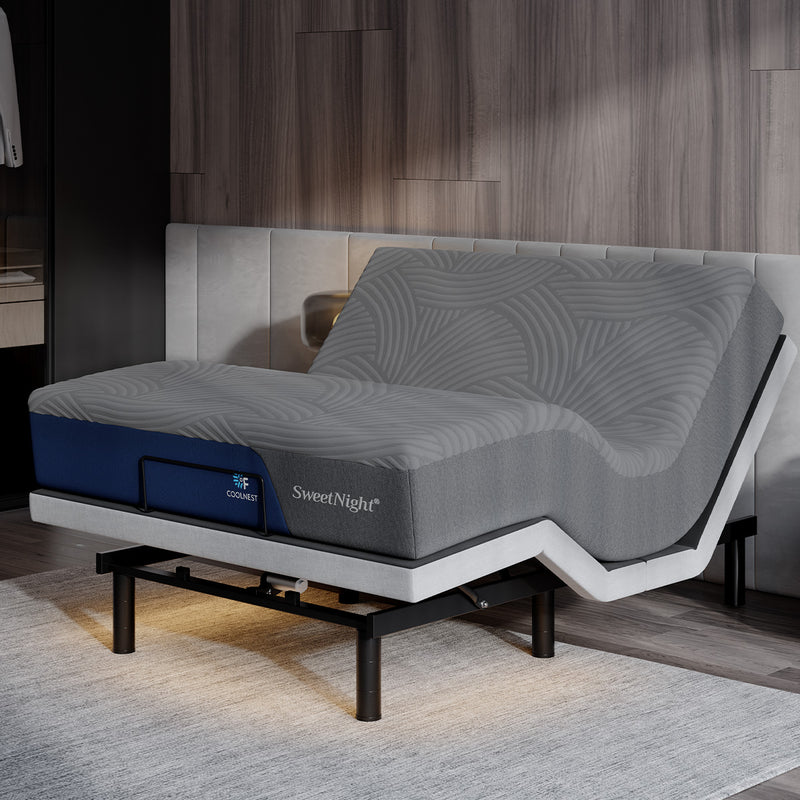
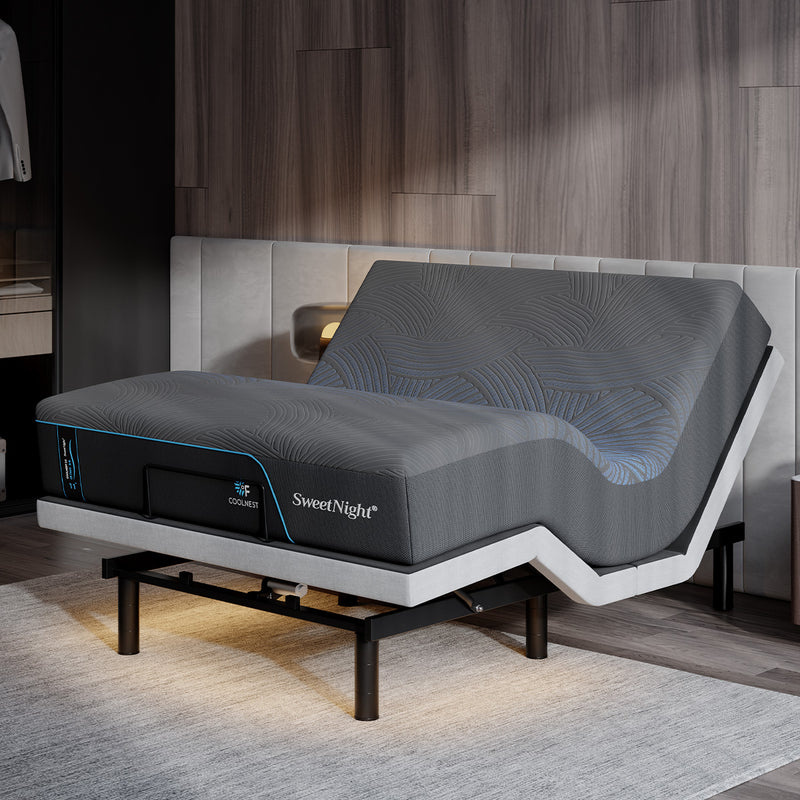
Put the whole framework together — buoyancy that fixes support and heat at once, real firmness backed by density, enough thickness to stay on top, and active heat dissipation — and it points to a specific kind of mattress. In SweetNight's lineup, that's the CoolNest® Ultra cooling memory foam mattress.
Here's why it fits plus-size sleepers on the exact specs that matter. It's built for 7-zone precision support and ergonomic spinal alignment, which is the buoyancy that keeps your hips from dropping into a hammock — firmer and more supportive under the heavy middle, so your spine stays in line. It comes in 12″, 14″, and 16″ profiles, so heavier sleepers can choose enough mattress (we'd point most plus-size sleepers to the 14″ or 16″) to avoid bottoming out. And it's engineered to sleep up to 11° cooler with 3D ventilated circulation and continuous heat dissipation — active cooling that keeps working even when a heavier body is pressed into the surface, which is precisely when passive “cool-touch” beds quit. In other words, an 11° cooler CoolNest Ultra mattress attacks the deep-sinkage root cause and the heat symptom together, which is the whole point of this guide.
It ships with a 100-night trial, a 10-year warranty, and CertiPUR-US certified foam, so you can test the support and the cooling under your own weight, over real nights, before you commit — which matters more for heavier sleepers than anyone, because the only real proof a mattress stays buoyant and cool under you is a few weeks of sleeping on it. One practical tip: give the trial its full run rather than judging the first couple of nights, when a new firm surface can feel unfamiliar; your back and your sleep temperature tell the real story by week two or three. And if you're rebuilding the bed, note that SweetNight currently includes free cooling pillows with every mattress, so you can cool your head's contact point and the surface under your body in one purchase — the whole-system approach a heavier sleeper benefits from most.
How to Choose the Best Mattress for Plus-Size Sleepers: A Checklist
Bring it all home with a buying checklist you can run against any mattress, ours or anyone else's. If a bed can't clearly answer these, it isn't built for a heavier body.
- Firmness: medium-firm to firm, so you stay buoyant rather than sinking through. Softer is a trap that fails on both support and heat.
- Thickness: 12″ minimum; 14″–16″ as you approach and pass 300 lbs, so you don't compress to the base.
- Density: high-density foams (or a sturdy coil unit) for real support and long life. This is what makes firmness and durability true.
- Active cooling: ventilated, heat-dissipating construction — not a thin cool-touch surface — because you can't rely on airflow around a sunk-in body.
- Support that holds your spine level: zoned or reinforced under the hips, so your midsection doesn't drop.
- Edge support and motion isolation: especially if you share the bed or sit on the edge daily.
- Durability signals: a 10-year warranty and a real 100-night trial, so you can verify it stays supportive and cool under your weight.
Notice how many of these boxes are really the same box wearing different labels — firmness, density, thickness, and support all serve buoyancy, and buoyancy serves both your back and your temperature. That's the through-line. Related reading if you're comparing options: best cooling mattress for hot sleepers and hot sleeper vs cold sleeper.
The Bottom Line on the Best Mattress for Plus-Size Sleepers
Here's the reframe worth remembering: for plus-size and heavier sleepers, sleeping hot and losing support aren't two problems to solve with two purchases. They're one problem — deep sinkage — showing up in two ways. Get swallowed by a soft, low-density, thin mattress and your spine hammocks and your body cooks. Stay buoyant on a firm, high-density, thick, actively cooled surface and your spine stays level and your heat escapes. The context is real, too: with 2.5 billion adults worldwide overweight and 890 million living with obesity as of 2022, this is most sleepers, not a niche — and poor sleep and higher weight reinforce each other, which makes getting the mattress right matter more, not less. Stop shopping for a cooling mattress and a supportive mattress separately. Buy one that keeps you on top — a genuinely supportive, genuinely cooling bed like the CoolNest® Ultra cooling memory foam mattress — and you solve both at once.