





Published: July 21, 2026 · Reviewed by the SweetNight Sleep Comfort Team · 12 min read
If you have ever peeled your head off a soaked pillow at 2 a.m., flipped it, and been sweating into the “cool side” twenty minutes later, you already know the thing most buyer's guides won't tell you: a pillow cannot stop night sweats. The sweat is coming from inside you. What a pillow can do — and what separates the ones worth buying from the ones that just feel cold in the store — is change what happens after the sweat starts. This guide is written for that reality. Not “here are ten pillows with cold gel,” but how a cooling pillow actually behaves during a night-sweat episode, which materials survive it, and how to pick one that leaves you dry instead of drenched.
What Causes Night Sweats — and Why a Cooling Pillow Alone Won't Stop Them
Night sweats are common. Sleep Foundation reports that up to 40% of people who visit their primary care doctor report experiencing night sweats, with people in their 40s and 50s affected most. The list of triggers is long: menopause and other hormonal shifts, an overactive thyroid, fever and infection, anxiety, some medications, and a range of medical conditions.
Here is the part that reframes how you shop. According to that same source, true night sweats “persist even in a cool, comfortable sleeping environment… they're usually not caused by external temperature but by internal factors.” In plain terms: your thermostat isn't the culprit, and neither is your pillow. Your body is dumping heat and moisture on a schedule your bedding doesn't control.
So why buy a cooling pillow at all? Because the trigger and the outcome are two different things. You can't talk your hormones out of a 3 a.m. flash, but you absolutely control whether your head is resting on a material that traps that heat and sweat against your scalp or one that carries it away. A dense, solid foam pillow turns a two-minute flash into a wet, hot half-hour because it holds everything your head just released. A breathable, moisture-managing pillow lets the episode pass and lets you fall back asleep. That distinction — managing the aftermath rather than preventing the cause — is the entire job of the best cooling pillows for night sweats, and it's why the cheap “ice-cold-to-the-touch” ones fail the people who need them most. (If your night sweats are frequent, severe, or come with daytime symptoms, that's a conversation for a doctor, not a shopping cart.)
Do Cooling Pillows Work for Night Sweats? How They Actually Cool
Yes — the right ones — but you have to understand the mechanism, because “cooling pillow” describes two products that behave nothing alike.
The first kind cools by contact. A thin gel pad or a cool-touch panel feels cold when you first lie down because it conducts a little heat off your skin into itself. That's it. It holds a small amount of heat and then it's full. Within a few minutes it warms to your body temperature and stops doing anything. For a night-sweats sufferer this is the worst possible design, because the moment you actually need it — mid-flash, when your head is pouring out heat and moisture — the gel is already saturated and now it's a warm, damp plastic surface pressed to your neck.
The second kind cools by breathing and wicking. Instead of absorbing heat, it refuses to trap it. Air moves through ventilated or shredded fill, moisture passes off your scalp into a wicking cover, and heat conducts away continuously rather than in one quick burst. This kind has no “cold” party trick when you first touch it, which is exactly why people leave it on the shelf — and exactly why it's the one that works at 3 a.m. When someone says cooling pillows “don't work for night sweats,” they almost always bought the contact-cool kind and judged it by the first thirty seconds instead of the whole night.
For a deeper look at the physics of why your head sheds so much heat and how each cooling type holds up, we broke it down in do cooling pillows actually work. The short version for night sweats: buy for airflow and moisture, never for the initial cold touch.
How Your Body Sheds Heat at Night — and Why the Head Is Ground Zero
To buy the right pillow, it helps to know how sleep and body temperature are wired together, because it explains why the head is where cooling pays off most.
Falling asleep isn't just about being tired — it's a thermal event. Your core temperature has to drop for sleep to begin, and it does so by moving heat from your core out to your skin and extremities. Sleep Foundation describes the mechanism plainly: the body accomplishes this cooling through vasodilation, where the circadian clock increases blood flow to the extremities so heat can dissipate from the core, and the drop “starts about two hours before you go to sleep, coinciding with the release of the sleep hormone melatonin.” In other words, cooling down is the on-switch for sleep.
Your head and neck are a major exit ramp for that heat. They carry dense blood flow close to the surface, so a large share of the heat your body offloads leaves through them. That's great when the heat can escape into the air — and a disaster when a pillow seals it back in. Now layer a night sweat on top: your body is already trying to dump heat, a flash spikes it further, and the one region doing the most offloading is pressed into a material that either carries the heat away or traps it against your skin. This is why the pillow punches above its size for night sweats. It sits on the exact spot where your body is working hardest to cool itself. Help that process and you sleep through the flash; fight it and you're up flipping the pillow. Everything in the framework below is really about keeping your head's exit ramp open.
The 3 Things the Best Cooling Pillow for Night Sweats Must Do
Most “best cooling pillow” roundups score pillows on how cold they feel and how comfortable they are. Those miss the two axes that decide a night-sweat night. Here's the framework we use, and it's worth applying to any pillow you're considering.
- 1. Breathability — it can't trap heat as you sink in. A pillow compresses under your head. A solid memory foam block closes its cells as it softens with your body heat, sealing off airflow right at the contact point. Ventilated foam, shredded fill, and latex keep channels open even under pressure. This is the difference between a pillow that gets hotter the longer you lie on it and one that stays neutral.
- 2. Moisture management — it has to move sweat, not soak it. This is the axis night-sweat guides skip entirely, and it's arguably the most important one. During a flash you don't just produce heat, you produce water. A pillow that wicks moisture off your scalp and dries quickly keeps you from waking in a wet spot; one that absorbs and holds sweat becomes clammy and cold as it evaporates, which is its own kind of miserable. Cover fabric and fill both matter here.
- 3. Recovery speed — it has to reset between episodes. Night sweats come in waves. What you need is a pillow that returns to neutral quickly after each one, so the next time you roll onto it, it isn't still holding the last flash. Breathable, low-mass materials recover in minutes. A saturated gel pad or a damp down pillow recovers... whenever it dries, which might be morning.
Score any pillow on these three, not on the showroom cold-touch, and you'll stop buying the wrong ones. Nearly every material choice below comes back to this framework.
Best Cooling Pillow Materials for Night Sweats, Compared
Fill type is the single biggest predictor of how a pillow handles a sweat episode. Here's how the common ones actually perform on the three axes that matter.
| Fill | Breathability | Moisture handling | Best for night sweats? |
|---|---|---|---|
| Shredded / ventilated gel memory foam | High — air moves through the gaps, gel conducts heat away | Good — especially with a wicking cover; adjustable fill airs out | Yes — top pick. Airflow plus gel plus adjustable loft |
| Latex (ventilated / shredded) | Very high — open cell structure, springy, resists heat build-up | Good — naturally breathable, dries fast | Yes. Excellent if you want firmer, bouncier support |
| Solid memory foam | Low — seals around your head as it softens | Poor — holds heat and moisture at the contact point | No — the classic “sleeps hot” pillow |
| Down / feather | Medium — lofty but insulating | Poor — absorbs sweat, slow to dry, can clump | Not ideal — warm and slow to recover |
| Down alternative (poly) | Low–medium — tightly packed synthetic insulates | Poor–medium — depends on cover | Weak — tends to trap heat |
| Buckwheat | Very high — hulls leave constant air gaps | Good airflow, but hulls don't wick | Situational — cool and firm, but heavy and noisy |
| Thin cool-touch gel pad | N/A — usually over solid foam | Poor — saturates in minutes | No — the showroom trap |
The pattern is obvious once you line them up: the materials that win are the ones that stay open under pressure and let moisture escape. A few deserve a closer look, because the label on the box rarely tells you which version you're actually getting.
Shredded and ventilated gel-infused memory foam is the default recommendation for night sweats, and it's worth understanding why. Solid memory foam sleeps hot because it's a continuous block that closes off as it warms and conforms. Shred that same foam into pieces and you've turned a sealed block into a mesh of air gaps that survive compression, so airflow keeps moving even under a heavy head. Add gel to conduct heat away and a ventilated design to keep channels open, and you've hit all three axes at once. The adjustable versions add a fourth advantage specific to sweating: pull a handful of fill out and you simultaneously lower the loft and increase the airflow. No other fill lets you tune cooling by hand.
Latex is the close runner-up and the better pick if you like a firmer, springier feel that doesn't “sink.” Its open-cell structure is naturally breathable and it resists heat build-up without needing gel, and it dries quickly after a sweat. The trade-offs are weight and price — latex is heavy and usually costs more — and some people simply prefer the slow-conforming hug of memory foam. For pure temperature performance, though, latex is genuinely excellent.
Buckwheat is the wild card. The hulls never pack down, so airflow is outstanding and the pillow stays cool — but the hulls don't wick moisture, the pillow is heavy, and it rustles when you move. It suits people who run hot and want firm, adjustable support and don't mind the noise. Down, down alternative, and solid foam sit at the bottom for a reason: they either insulate you or soak up sweat and dry slowly, both of which turn a short flash into a long, clammy stretch. If you already own one of these and love the feel, the fastest upgrade is a breathable, wicking cover — but you're fighting the fill, not working with it. Everything below the halfway line either insulates you or soaks you.
Gel Cooling Pillow vs Memory Foam: Which Is Better for Sweating?
This is the comparison people search most, and the honest answer is that it's a false choice as usually framed. “Gel” and “memory foam” aren't opposites — gel is something you add to foam. What actually matters is how the gel is used.
A thin gel layer laminated on top of a solid memory foam pillow is the contact-cool trap from earlier. The gel gives you a cold first impression, the solid foam underneath traps heat all night, and during a sweat episode you get the worst of both: a saturated gel surface over a heat-holding block. Avoid it.
A gel-infused, ventilated or shredded memory foam pillow is a different animal. Here the gel is distributed through breathable foam whose structure already moves air. The gel's job isn't to feel icy on contact; it's to conduct head heat away and slow how fast the foam warms up, while the ventilation and shredding keep airflow going. That combination — conduction plus airflow plus moisture-wicking cover — is what keeps a pillow neutral through a flash and lets it recover between them.
So the real matchup isn't gel versus memory foam. It's breathable, gel-infused foam versus solid foam with a gel gimmick on top. For night sweats, pick the former every time, and ignore the marketing that leads with how cold it feels in the first ten seconds.
🌙 Wake Up Dry — Cooling Pillows & Mattresses on Sale
Night sweats are hard enough without a pillow that traps every drop of them. SweetNight's breathable cooling pillows for night sweats, gel-infused and hybrid cooling mattresses, and moisture-wicking bedding are on sale now in the SweetNight Cooling Sale — 100-night trial, 10-year warranty, CertiPUR-US foam.
The Best Cooling Pillowcase and Cover for Night Sweats
Here's the mistake that quietly ruins a good cooling pillow: people obsess over the fill and ignore the layer between their skin and the pillow. During a sweat episode, moisture has to pass through the pillowcase and cover before the fill can do anything. Put a great breathable pillow inside a slick polyester or satin case and you've sealed a lid over it. The sweat pools on the surface, feels clammy, and never reaches the airflow underneath.
For night sweats, prioritize the cover and pillowcase as much as the fill:
- Bamboo (viscose) and Tencel/lyocell: excellent wicking and a naturally cool hand-feel; they pull moisture off your scalp and release it fast. Two of the best cooling pillowcase fabrics for sweating.
- Cotton percale: a crisp, breathable weave that stays cool and dries quickly. A classic for a reason. (Cotton sateen is smoother but warmer — percale wins for heat.)
- Avoid satin, silk, and tightly woven polyester against your skin for night sweats. They feel luxurious but trap moisture and heat right where you don't want it.
- Washable, removable covers matter. Sweat-soaked pillows need frequent washing; a zip-off wicking cover keeps the setup hygienic and keeps the cooling working.
If you're rebuilding the whole sleep surface, the same logic runs through your sheets — we compared the coolest weaves in cooling sheets: cotton vs bamboo vs linen vs Tencel. The one-line takeaway for pillows: a wicking case over breathable fill beats a fancy fill under a sweaty case, every time.
Signs Your Pillow Is Making Your Night Sweats Worse
Before you shop, it's worth confirming the pillow is actually part of the problem — because for a lot of people it is, and they blame the room or the sheets instead. Here's the quick diagnostic. If several of these sound familiar, your current pillow is amplifying every sweat episode you have.
- You flip to the cool side, and it works — for a while. If flipping helps at all, your pillow is storing heat rather than shedding it. A breathable pillow has no meaningfully warmer “used” side to flip away from.
- You wake with a damp or sweat-ringed spot on the pillow. That's absorbed, un-wicked moisture. A pillow that manages sweat moves it off the surface and dries; one that traps it leaves the evidence.
- Your head feels hotter the longer you lie still. Classic solid-foam behavior: it warms and seals as it conforms. Breathable fill stays roughly neutral because it isn't accumulating heat.
- The pillow felt cold when you bought it and never does anymore. You bought a contact-cool gel pad. It did its one trick on night one and has nothing left for a flash.
- It smells even after a wash, or yellows fast. Trapped sweat and slow drying breed odor and staining — a sign the materials hold moisture instead of releasing it.
None of this means your night sweats are “caused” by the pillow — the trigger is still internal. It means the pillow is turning a manageable episode into a soaked, wakeful one, which is precisely the part you can fix by switching materials.
Cooling Pillows for Menopause Night Sweats and Hot Flashes
Menopause is the single most common reason people go looking for a cooling pillow for night sweats, so it deserves its own note — because the pattern of the sweat is different, and that changes what you should prioritize.
Menopausal night sweats arrive as hot flashes: sudden, intense, and short. Sleep Foundation notes these episodes typically last two to four minutes and are often accompanied by profuse sweating, and that night sweats tend to become more frequent and intense as a person nears menopause. Interestingly, the same source points out that it's often the waking up that makes you notice the flash, not the flash that fully wakes you — which means anything that helps you stay comfortable enough not to fully rouse is doing real work.
For a flash-driven pattern, recovery speed becomes the top of the three axes. You need a pillow that dumps the heat and moisture of a two-minute burst and is neutral again before the next one — not one that holds the warmth of every flash until they stack up into a soaked, sleepless night. That's ventilated gel foam or latex with a fast-drying wicking cover, ideally an adjustable-loft design so you can keep the airflow generous. Skip anything that traps: solid foam, down, satin cases.
Perimenopause is worth flagging too, because it often catches people off guard: night sweats can begin years before periods actually stop, and they can be just as drenching. If you've started waking up hot in your late 30s or 40s and can't pin it on the weather, the same pillow logic applies — and it's worth mentioning to your doctor, since there are treatments beyond bedding. One more practical tip for flash-driven sweats: keep a spare wicking pillowcase within reach of the bed. Swapping a damp case for a dry one after a bad flash takes ten seconds and is the fastest way back to sleep when the pillow itself is fine but the surface got wet. If menopause is your reason for shopping, our dedicated guide goes deeper on cooling the whole bed and the routine around it: menopause night sweats and sleep.
How to Choose a Cooling Pillow for Night Sweats: Loft, Position, and Firmness
Cooling is only half the pillow's job. It still has to hold your neck in a neutral line, and a cool pillow at the wrong height wrecks your neck just as thoroughly as a warm one. Choose on both. Here's the buying framework.
- Start with airflow, confirm with the cover. Ask exactly how the pillow cools. If the answer is only “cool-touch gel surface,” expect it to quit mid-flash. You want breathable fill plus a wicking cover, in that order.
- Match loft to your sleep position. Side sleepers need a taller, firmer pillow to fill the gap between shoulder and ear — a thin pillow drops your head and strains your neck. Back sleepers want medium loft to keep the natural curve. Stomach sleepers need the thinnest pillow they can find, or none. Combination sleepers are the best argument for an adjustable pillow.
- Choose adjustable fill if you can. Shredded-foam pillows you can add or remove fill from let you tune loft and airflow — take a handful out and you get more air moving, which is a direct win for night sweats.
- Firmness follows position and preference. Firmer keeps its shape and its air channels under a heavy head; softer conforms but can seal off. For hot sleepers, err slightly firmer so the pillow doesn't collapse airtight around you.
- Insist on a washable, wicking cover. With night sweats you will wash it often. Make that easy from day one.
Run a candidate through this list and the three-axis framework together, and you'll know within a minute whether it's built for sweating or built for a showroom.
The SweetNight Cooling Pillow Pick for Night Sweats
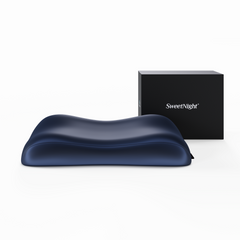
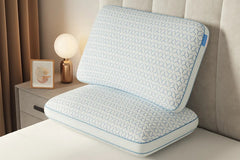
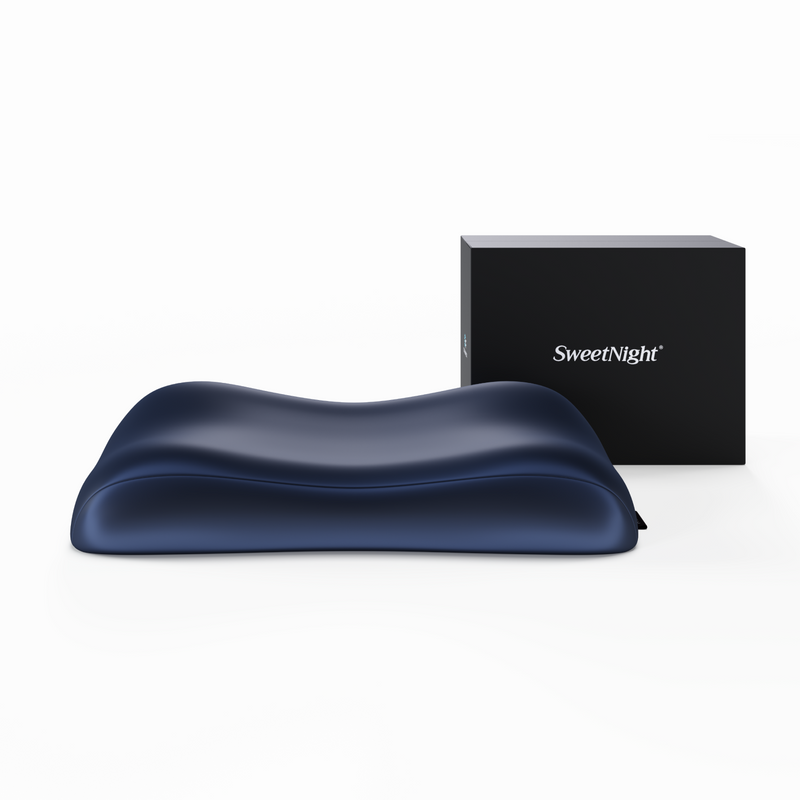
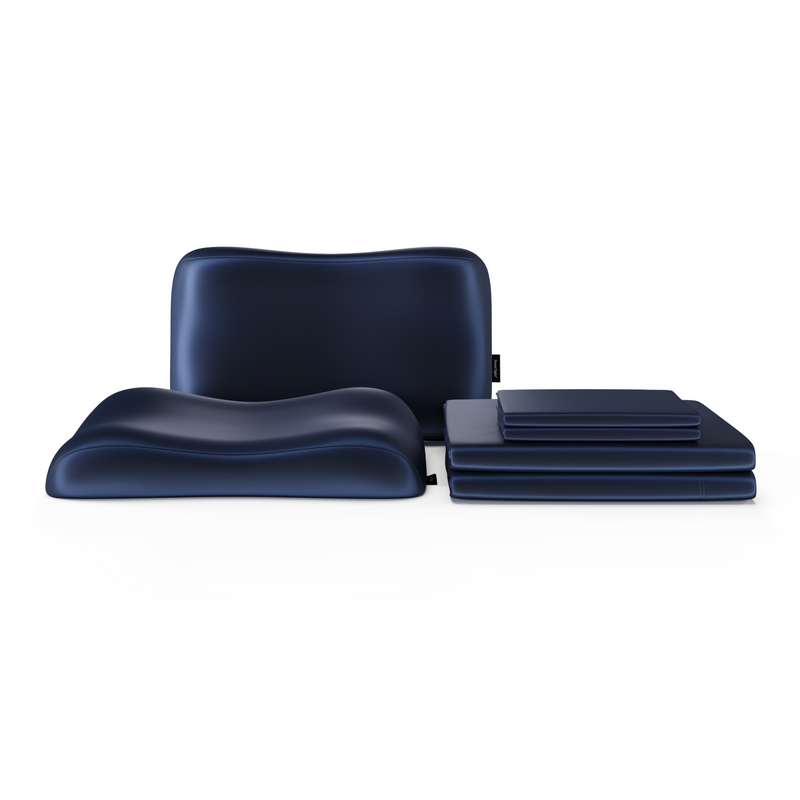
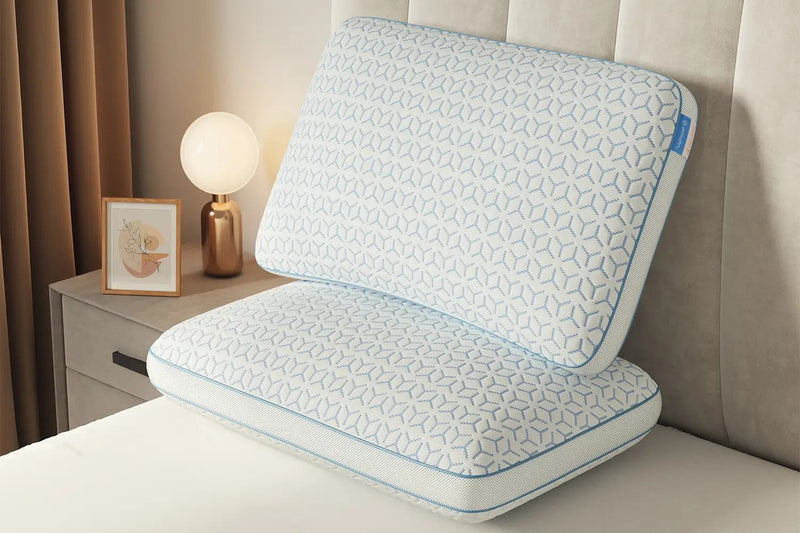
Putting the framework to work, this is what we'd hand someone whose main complaint is waking up hot and damp. SweetNight's cooling memory foam pillows are built around the three axes that decide a night-sweat night rather than a cold first touch: breathable gel-infused memory foam that keeps air moving as you sink in, a soft moisture-wicking cover that pulls sweat off your scalp and dries fast, and a shape that supports the neck instead of collapsing airtight around it. They come as a two-pack, back the purchase with a 100-night trial and a 10-year warranty, and use CertiPUR-US certified foam — so you can actually test them across a few real sweaty nights instead of judging by the first thirty seconds in a store.
A practical note on getting the most from them: pair the pillow with a wicking protector and case from day one, keep the fill on the airier side if you sleep hot, and give the trial its full run — a cooling pillow proves itself over a week of real nights, not one. If it isn't leaving you drier and flipping less by then, it isn't the pillow for you, and that's exactly what the 100-night window is for.
One nice bit of math for anyone rebuilding the whole bed: SweetNight is currently including free cooling pillows with every mattress during the summer sale, which makes the pillow-plus-surface upgrade below a lot easier to justify — you can fix your head's contact point and the surface under your body in a single purchase.
How to Care for a Cooling Pillow When You Sweat at Night
This is the part almost every buyer's guide leaves out, and it's the difference between a cooling pillow that lasts and one that quietly turns into a warm, smelly sponge in three months. When you sweat into a pillow night after night, care isn't optional maintenance — it's what keeps the cooling working.
- Use a washable, wicking pillow protector, not just a case. A zip-on protector under your pillowcase takes the brunt of the sweat and washes easily, so moisture never reaches and degrades the fill. For night sweats it's the single highest-value five-dollar upgrade you can make.
- Wash the cover weekly, the pillow on schedule. Sweat feeds odor and, over time, dust mites, which is a problem if you're also prone to allergies. Wash removable covers weekly in cool or warm water. Shredded-foam and down-alternative pillows can often be machine washed on gentle and, crucially, must be dried completely — a foam pillow that goes back on the bed even slightly damp is a mildew risk.
- Air it out between washes. A trapped-moisture pillow benefits enormously from a few hours of airflow. Strip the case in the morning on sweaty stretches and let the pillow breathe rather than sealing the damp back under a bedspread.
- Never machine-dry solid memory foam or latex. Heat breaks them down. Air-dry flat, out of direct sun. Follow the tag — but as a rule, high heat is the enemy of foam.
- Know when to replace it. Even a good pillow has a lifespan; foam that no longer springs back, clumped fill, and persistent odor after washing all mean the material has stopped managing heat and moisture the way it should. A pillow that's lost its structure has also lost its airflow. Most foam and latex pillows are due for replacement every two to three years — sooner if you sweat heavily into them.
Treat the pillow like the moisture-handling tool it is, and a genuinely breathable one will keep earning its place through years of sweaty summers instead of one.
Why the Best Cooling Setup for Night Sweats Starts With Your Mattress
Here's the thing a pillow-only guide won't admit: your pillow handles the heat from one contact point — your head and neck — while the biggest heat trap in the bed is the surface under your torso and hips. If you have night sweats and you're only fixing the pillow, you've solved maybe a third of the problem. Plenty of people upgrade to a great cooling pillow and still wake up soaked because they're lying on a solid memory foam mattress that stores every degree their body dumps and hands it right back.
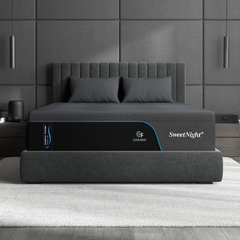
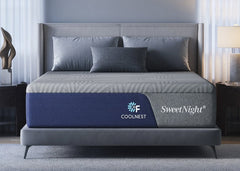
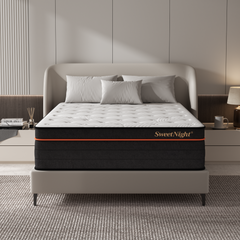
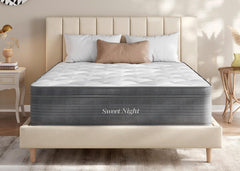
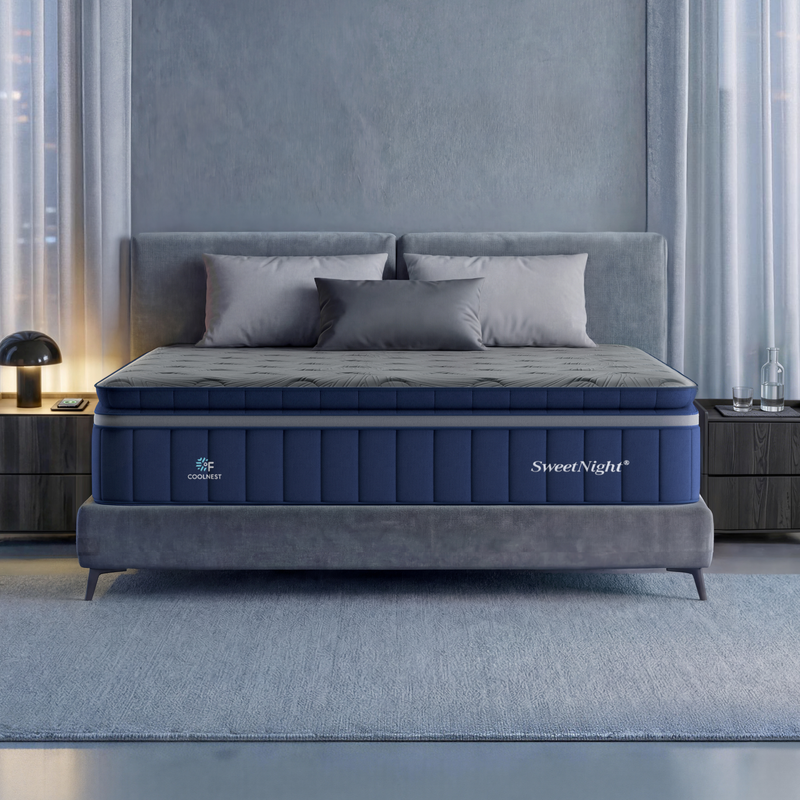
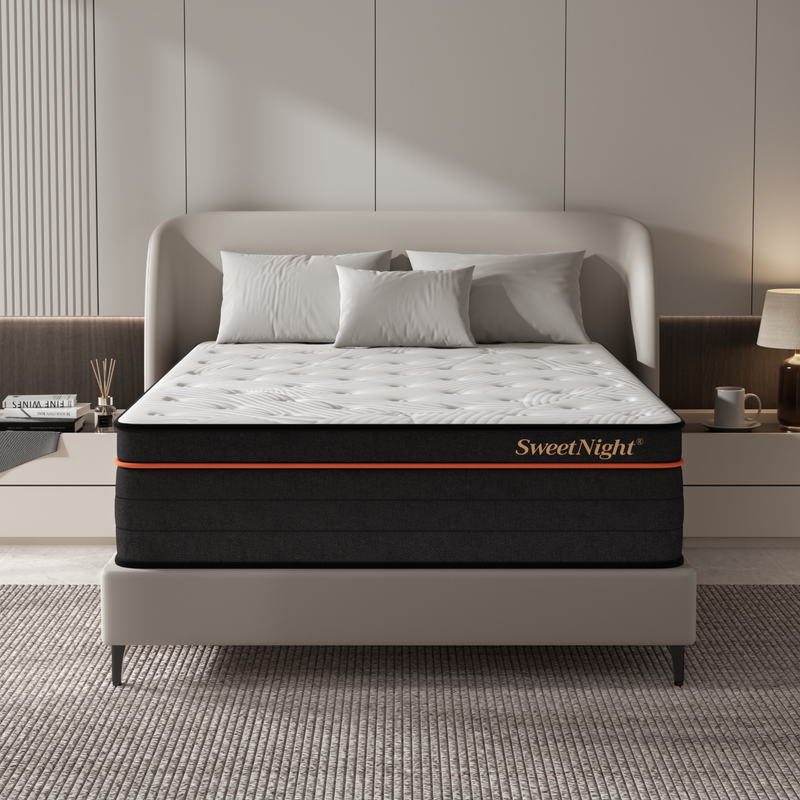
For night sweats specifically, the pillow and the mattress are one system, and the surface is the heavier lever. The strongest option in SweetNight's lineup is the CoolNest® Ultra cooling memory foam mattress, engineered to sleep up to 11° cooler so the surface beneath you keeps releasing heat all night instead of storing it. Paired with a breathable pillow that handles your head, an 11° cooler CoolNest Ultra mattress is what turns a two-minute flash into a two-minute flash — not an hour of flipping and re-soaking. It carries the same 100-night trial, 10-year warranty, and CertiPUR-US foam, and it currently ships with free cooling pillows, so you get the whole system in one move.
Want to compare the full cooling range first? Browse the best cooling mattress collection, or read how a cooling surface actually manages body heat in best cooling mattress for hot sleepers.
Cooling Pillow vs Cooling Pad, Topper, or Bed Chiller: What's Worth It?
Once people start hunting for night-sweat relief, they run into a whole category of cooling gadgets, and it's fair to ask where the pillow fits and what's actually worth the money. Here's how the main options stack up specifically for someone who sweats at night.
- Cooling pillow: the highest value-per-dollar fix, because it targets the head and neck — your biggest heat-exit ramp — for the least money. It's where almost everyone should start.
- Cooling mattress topper or pad: a breathable topper adds airflow to a hot mattress you're not ready to replace. A passive gel pad has the same limitation as a gel pillow pad — it saturates — so favor a ventilated foam or fiber topper that breathes rather than one that only feels cold at first. Useful as a bridge, not a cure for a genuinely heat-trapping mattress underneath.
- Water-cooled bed systems and chillers: these actively pump cool water through a pad and can be very effective, but they're expensive, need maintenance, add a pump and hoses to your bed, and run a running cost. For internally driven night sweats they help, but they're overkill for most people until the cheaper, passive fixes have been tried.
- A cooling mattress: the biggest lever, because it fixes the largest heat-trapping surface permanently rather than layering a patch on top. If your mattress is the problem, a topper only masks it.
The sensible order for most night-sweat sufferers is: fix the pillow first, add wicking sheets and a protector, and if you still wake up hot, address the mattress — either with a breathable topper as a stopgap or a cooling mattress as the real solution. Chillers are the last resort, not the first purchase.
How to Stop Night Sweats: What to Do Beyond the Pillow
A cooling pillow and mattress manage the discomfort; they don't address the trigger. If you want to reduce how often and how badly night sweats hit, work the whole environment and routine — and, when it's warranted, the medical side.
- Set the room to the sleep sweet spot. Sleep Foundation recommends a bedroom around 65°F (about 18°C), because falling asleep depends on your core temperature dropping. A cooler room won't stop internally driven sweats, but it stacks the deck in your favor and helps you fall back asleep faster after one. More on the ideal range in the optimal sleeping temperature.
- Build the bed to breathe top to bottom. Wicking sheets, a breathable mattress, and a cooling pillow work together; one heat-trapping layer undermines the rest. See our full playbook on how to stay cool while sleeping.
- Manage the pre-sleep routine. Alcohol, spicy food, and a warm bedroom close to bedtime can all provoke sweating; a lukewarm (not hot) shower before bed helps your body shed heat. Loose, breathable sleepwear beats going without — fabric that wicks is better than skin against a trapping sheet.
- Know when it's medical. Frequent, drenching night sweats — especially with fever, weight loss, or daytime symptoms — deserve a doctor's visit. Hormonal, thyroid, medication, and other causes are treatable, and no pillow substitutes for that.
Bedding is the comfort layer. Fix the trigger where you can, and let a breathable pillow-and-mattress system handle the nights the trigger still wins.
The Bottom Line on the Best Cooling Pillows for Night Sweats
Night sweats come from the inside, so no pillow — and no marketing claim — will switch them off. What the best cooling pillows for night sweats do is change the outcome: they refuse to trap the heat your head releases, they wick the sweat off your skin, and they recover fast between episodes so a flash stays a flash. Buy for breathability, moisture management, and recovery speed — ventilated or shredded gel-infused memory foam or latex, under a wicking bamboo, Tencel, or cotton cover, at the right loft for how you sleep. Ignore the cold-to-the-touch gel pads; they're built for the showroom, not for 3 a.m. And remember the pillow is one contact point — pairing it with a cooling surface like the CoolNest® Ultra cooling memory foam mattress is what finally gets you through a sweaty night dry.
Related reading: Night sweats: causes and how to stop them · Do cooling pillows actually work? · Menopause night sweats and sleep.