
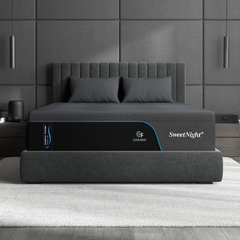
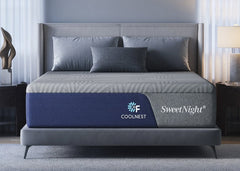
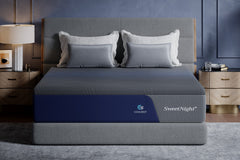
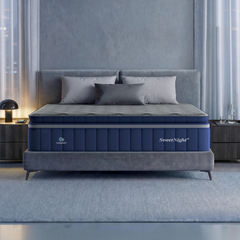




Short answer: Open-cell memory foam sleeps cooler than closed-cell foam because its cells are interconnected and let warm air move out instead of trapping it against your body — but cell structure is only one part of a mattress's real-world temperature, so read the whole build, not just the marketing word "open-cell.
The short version, if you're skimming:
- The core difference: Open-cell foam has cells that connect to each other, so air passes through. Closed-cell foam has sealed pockets that hold air — and heat — in place.
- Temperature: Open-cell breathes and dissipates body heat faster; closed-cell is denser, firmer, and insulates more.
- It's not the whole story: Cover fabric, gel or phase-change layers, ventilation channels, and how deeply you sink all shape how hot a bed actually feels.
- Trade-off: The airier feel of open-cell can come with a slightly softer, less rigid surface, so support depends on how the layers are engineered.
- For hot sleepers: Look for open-cell construction plus at least one active cooling feature, and don't assume "memory foam" automatically means "sleeps hot" anymore.
Why Traditional Memory Foam Sleeps Hot
Push your palm into an old memory foam mattress and hold it there. Within a minute your hand feels warm, almost clammy. That small experiment explains the entire complaint people have had about memory foam for years: the material is built to wrap around you, and wrapping around you is exactly what makes it warm.
Memory foam is a viscoelastic polyurethane foam. It softens in response to body heat and weight, then molds to whatever presses into it. The upside is obvious — deep contouring, pressure relief at the shoulders and hips, and excellent motion isolation. The downside is baked into the same behavior. When the foam conforms closely, it surrounds a larger share of your body with insulating material. Instead of resting on top of a surface, you settle into a pocket, and that pocket keeps your own body heat close to your skin.
Heat has to go somewhere. Your body sheds warmth all night, most of it through your skin and the surface you're lying against. On a breathable surface, that heat moves away and disperses. On a dense, sealed foam, it has nowhere to travel, so it builds up in the layer right beneath you until the surface temperature rises and you start to feel sticky. For anyone who runs warm to begin with, that's the difference between sleeping through the night and waking up to flip the pillow.
Older memory foam made this worse in two ways. First, the formulas were denser and more tightly structured, so airflow through the material was poor. Second, the whole point of the design was maximum "hug," which meant maximum surface contact and minimum ventilation. The result was a mattress that felt luxurious for the first ten minutes and warm by hour three. If you want the full chemistry behind that sensation, we break down why memory foam feels hot during sleep in a dedicated guide, but the short version is that density and close contouring, not some flaw in the material itself, are what trap the warmth.
Here's the part that matters for the rest of this article: heat retention is not an unavoidable law of memory foam. It's a consequence of how the foam is built at the cellular level. Change the cell structure and you change how the whole mattress handles temperature. That's the entire reason the open-cell versus closed-cell distinction exists, and it's where the real cooling difference starts.
Open-Cell vs. Closed-Cell Foam: The Core Difference
Every foam is a solid material shot through with gas bubbles. When the foam is manufactured, tiny pockets of air form throughout the mixture as it expands and cures. What separates one foam from another is what happens to the walls of those pockets. That single detail — whether the bubble walls are open or sealed — is the difference between open-cell and closed-cell foam.
In open-cell foam, the cell walls are broken or incomplete, so the individual air pockets connect to one another. Picture a sponge or a loofah: a web of interconnected chambers with passages between them. Air can travel from one cell to the next and eventually work its way out of the material entirely. Because the cells are linked, the foam is generally softer, more flexible, and lighter for its size. It also compresses more easily, since squeezing it just pushes air out through the connected channels.
In closed-cell foam, each air pocket is sealed inside its own complete wall. The cells sit next to each other but don't share passages, so trapped air can't move freely from one to the next. Think of bubble wrap, where every bubble is its own isolated capsule. That sealed structure makes closed-cell foam denser, firmer, and more rigid. It also makes it a much better insulator, because the trapped pockets of still air resist the flow of heat — which is precisely why closed-cell foams are used in things like flotation devices and insulation panels, and precisely why they sleep warmer.
A useful way to hold the distinction in your head: open-cell foam lets air through, closed-cell foam holds air in. One is designed to breathe; the other is designed to insulate and seal. Neither is "good" or "bad" on its own — they're just built for different jobs. The problem is only that the sealing job, so useful in a cooler or a wetsuit, works against you in a mattress you're trying to sleep on when you run hot.
Most memory foam mattresses today lean toward open-cell construction for the comfort layers, precisely to fight the heat complaint. But the term gets used loosely. A foam can be "more open" or "less open" along a spectrum rather than being purely one or the other, and manufacturers know "open-cell" reads as "cool," so the label sometimes outruns the actual structure. That's why understanding what the words describe matters more than trusting that they were applied honestly.
It's also worth clearing up a common mix-up: open-cell is not the same thing as gel-infused. Gel infusion adds a cooling material into the foam; open-cell describes the physical architecture of the foam itself. A mattress can be one, the other, both, or neither. We'll come back to how those approaches compare, because people constantly conflate them and end up disappointed when a "gel foam" bed still sleeps warm.
How Cell Structure Controls Airflow & Breathability
Breathability in a mattress comes down to one question: can air move through the material, carrying heat and moisture away from your body? Cell structure is the first and biggest factor in answering that, because it determines whether the foam is a pathway or a wall.
When you lie down, you're not just radiating heat — you're also compressing the foam. On an open-cell surface, that compression does something useful. As your weight presses into the foam, air is pushed out through the interconnected cells, and when you shift or lift a limb, air is drawn back in. Every movement, even the small unconscious ones, works like a slow bellows, exchanging warm stale air near your skin for cooler air from around and beneath you. The foam effectively pumps heat away as you move.
Closed-cell foam can't do that. Because each pocket is sealed, compressing the foam doesn't move air through it — the trapped air just gets squeezed and springs back in place, like pressing on bubble wrap without popping it. There's no exchange, no pumping, no pathway out. The heat your body produces stays parked in the layer against your skin, and the sealed cells actively slow its escape. That's the insulation property working exactly as designed, in the one situation where you don't want it.
Three things flow from this cellular difference:
- Heat dissipation. Open-cell foam gives body heat a route to travel out of the mattress instead of accumulating at the surface. Closed-cell foam holds it in.
- Moisture and humidity. You lose water vapor through your skin all night. A breathable, open structure lets that humidity move away so the surface stays drier; a sealed one lets it linger, which reads as that clammy, muggy feeling even when the room is cool.
- Recovery of fresh air. As you shift position, open-cell foam refills with cooler ambient air. A sealed surface has no such reset, so it tends to feel progressively warmer the longer you lie in one spot.
There's a nuance worth being honest about. Cell structure sets the potential for airflow, but it doesn't guarantee it on its own. A genuinely open-cell foam still needs the rest of the mattress to cooperate. If you cap a beautifully breathable core with a thick, dense, tightly woven cover, or bury it under a sealed layer, you choke off the very airflow the open cells were supposed to provide. Breathability is a system property. The cells open the door; the other layers decide whether air actually walks through it.
This is also why simply feeling a slab of foam in a showroom tells you less than you'd think. A small sample compresses and rebounds in your hand, but that's not the same as eight hours of body weight, body heat, and a full mattress stack sitting on top of it. The structural difference is real, but how much of it you actually feel depends on the whole build working together.
Does Open-Cell Foam Really Sleep Cooler?
Yes — but let's be precise about what "cooler" means and where the effect has limits, because overselling this is how people end up frustrated.
Compared directly against a traditional closed, dense memory foam, an open-cell foam sleeps cooler for a straightforward reason: it doesn't trap heat as aggressively, and it lets your body's warmth disperse rather than pooling at the surface. If the only variable you changed was cell structure — same cover, same thickness, same everything else — the open-cell version would feel less hot over the course of a night. That part isn't marketing; it follows directly from how the material handles air and heat.
The honest caveats are where most of the confusion lives.
First, "sleeps cooler" is relative, not absolute. Open-cell memory foam is cooler than old-style closed memory foam. That doesn't automatically make it the coolest surface you can buy. A breezy innerspring or a well-ventilated hybrid may still move more air simply because it has open space and coils instead of a solid foam core. Open-cell construction closes the gap with those cooler categories; it doesn't always leapfrog them. If your priority is the single coolest possible sleep surface regardless of feel, foam of any kind is competing uphill against beds with literal air gaps in them.
Second, the effect is about heat dissipation, not active cooling. Open cells help warmth leave; they don't generate a chill or pull heat out the way a gel or phase-change layer aims to. A room that's too warm will still feel warm. Open-cell foam gives your body heat an exit, but it can't fight the ambient temperature of a hot bedroom on its own. Get your room temperature and bedding right first — a good open-cell mattress works with a cool room, not instead of one.
Third, contouring still matters. Part of what made classic memory foam warm was how much of your body it surrounded. An open-cell foam that's very soft and lets you sink deeply can partially cancel out its own breathability advantage, because you're once again wrapped in material. The coolest-sleeping foam builds tend to pair an open structure with enough support to keep you closer to the surface rather than buried in it.
So the accurate statement is this: open-cell foam meaningfully reduces heat retention versus closed-cell foam, and it's the single most important structural upgrade for a cooler-sleeping memory foam. It is not a magic fix that overrides the cover, the room, or how deep you sink. Treat it as the foundation of a cool build, then look at what's stacked on top of it.
Open-Cell Foam vs. Gel Infusions vs. Ventilation
Once you accept that cell structure is the foundation rather than the whole house, the next question is how the other cooling methods compare — and whether you need them on top of open-cell foam. There are three broad approaches, and they work in genuinely different ways.
Open-cell structure is a passive, always-on property of the foam itself. It doesn't wear out, doesn't get "used up" partway through the night, and doesn't depend on a starting temperature. Its job is to let heat and moisture escape continuously. The limitation is that it's passive: it facilitates heat leaving but doesn't actively pull heat away or absorb it. It's the baseline every cooling foam should start from.
Gel infusions take a different tack. Gel beads or swirls are mixed into the foam to add thermal mass — material that can absorb heat and feel cool to the touch, at least early on. When you first lie down, gel foam often feels noticeably cooler than plain foam because the gel soaks up that initial rush of body heat. The catch is capacity. Once the gel warms up to your body temperature, it stops pulling heat and can even hold it, so the cool-to-touch sensation fades as the night goes on unless there's also airflow to carry the absorbed heat away. Gel and open-cell aren't rivals; they're complementary. Gel handles the initial contact feel, open cells handle the ongoing exhaust. If you want the mechanics of the initial effect and its limits, we cover how gel memory foam works separately — it's the clearest example of a feature that helps at bedtime but needs support to last until morning.
Ventilation is the most physical approach: literal channels, holes, or 3D structures built into the foam or the layers around it to create pathways for air. Perforated foam, aeration holes, and open mesh layers all fall here. Ventilation amplifies what open cells start — it gives the air that the open structure frees up somewhere organized to actually go, and it helps pull fresh air back in as you move. On its own, ventilating a closed, dense foam helps only a little, because the sealed cells still won't release much heat into those channels. Layered over open-cell foam, ventilation multiplies the effect.
The takeaway is that these aren't competing choices where you pick one. The best cooling mattresses stack them, and the order of importance is roughly: get the cell structure right first, then add a cool-touch surface for the initial feel, then add ventilation and active temperature management to keep the effect going all night. A bed that only has gel but a dense, closed core will feel great for the first hour and warm after that. A bed with open cells and ventilation but no cool-touch cover may feel neutral at first and stay comfortable — a better outcome for most hot sleepers, even if the showroom "wow" is smaller.
One more benefit of a genuinely breathable, drier surface that rarely gets mentioned: it's less hospitable to the things that thrive in warm, humid bedding. Airflow that carries moisture away doesn't just keep you cooler; it keeps the surface drier, which matters for more than comfort. If that angle interests you, we get into how a breathable, moisture-managing build relates to cooling mattresses and dust mites and why a drier surface is a healthier one.
Feel & Support Trade-offs
Cooling isn't the only thing cell structure changes. The same properties that make open-cell foam breathe also shape how it feels and how it supports you, and it's worth understanding the trade-offs before you assume "more open" is always better.
Open-cell foam is, by nature, softer and more flexible. The interconnected cells compress more readily, so the surface tends to feel more giving and a touch slower to firm up. For a lot of sleepers that's a plus — it's part of the plush, cradling comfort people buy memory foam for in the first place. But softness has a ceiling. A foam that's too open and too soft can let you sink further than you want, and deep sinkage is bad news on two fronts: it can compromise spinal alignment, and it partially undoes the cooling benefit by wrapping more of your body in material.
Closed-cell foam sits at the other end. Its sealed, dense structure makes it firmer and more rigid, with more immediate push-back. That firmness has real uses. Closed-cell foams are often found in support and base layers precisely because they resist compression and hold their shape under load. The problem is only that this firmness and density come bundled with heat retention, so you rarely want a closed-cell foam as the surface you actually sleep against.
This is why the layer arrangement of a mattress matters as much as the foam type. A well-designed bed doesn't force you to choose between breathability and support — it assigns different jobs to different layers:
- Comfort layers near the surface lean open-cell, so the part touching your body breathes and contours.
- Transition and support layers beneath can be firmer and denser to keep your spine aligned and stop you from bottoming out.
- Zoned support adds another dimension: firmer foam under the hips and lower back where you need it, softer foam under the shoulders where you want give. This lets a mattress feel plush and supportive at the same time, in different places.
Firmness, by the way, is a separate dial from cell structure, even though they're related. You can have a medium-plush feel that still sleeps cool, if the plushness comes from an open, breathable comfort layer over a supportive core rather than from a thick slab of soft, dense foam. When you're evaluating a mattress, treat "how does it feel" and "how does it breathe" as two questions with two answers, not one. A bed can absolutely be contouring and cool at once — that's exactly what the layered approach is for — but only if the engineering puts the right foam in the right place.
The practical warning: don't chase the softest, most sink-in feel and expect it to also be the coolest. Those two goals pull against each other past a certain point. The sweet spot for most hot sleepers is enough contouring to relieve pressure, with enough support to keep you near the surface where the airflow is. That's a medium-plush target, not a marshmallow.
How to Spot a Breathable Foam Mattress
All the theory is useful, but eventually you're staring at a product page or a showroom tag trying to figure out whether a mattress will actually keep you cool. Here's how to read the build instead of trusting the adjectives.
Start with the comfort layer's structure. Look for language describing open-cell foam, and be a little skeptical — "open-cell" alone is nearly a default claim now. The stronger signal is when a maker describes how the foam breathes: interconnected cells, continuous heat dissipation, a specified breathability advantage over standard foam, or a 3D ventilated structure. Specifics beat vibes.
Check the cover. The fabric touching your skin is the first thing between you and the foam, and it can make or break breathability. A cool-to-touch cover with a genuinely breathable weave helps; a thick, dense, plush-quilted cover can smother an otherwise breathable core. Cool-to-touch, by the way, is an initial-contact feel — useful at bedtime, but it needs airflow underneath it to matter at 3 a.m.
Look for stacked, complementary cooling, not a single gimmick. Based on everything above, the strongest builds combine three things: an open, breathable core for continuous heat exit; a cool-touch surface for the initial feel; and active temperature management — a phase-change material that absorbs and releases heat — to buffer the middle of the night. A bed with only one of these is relying on one trick.

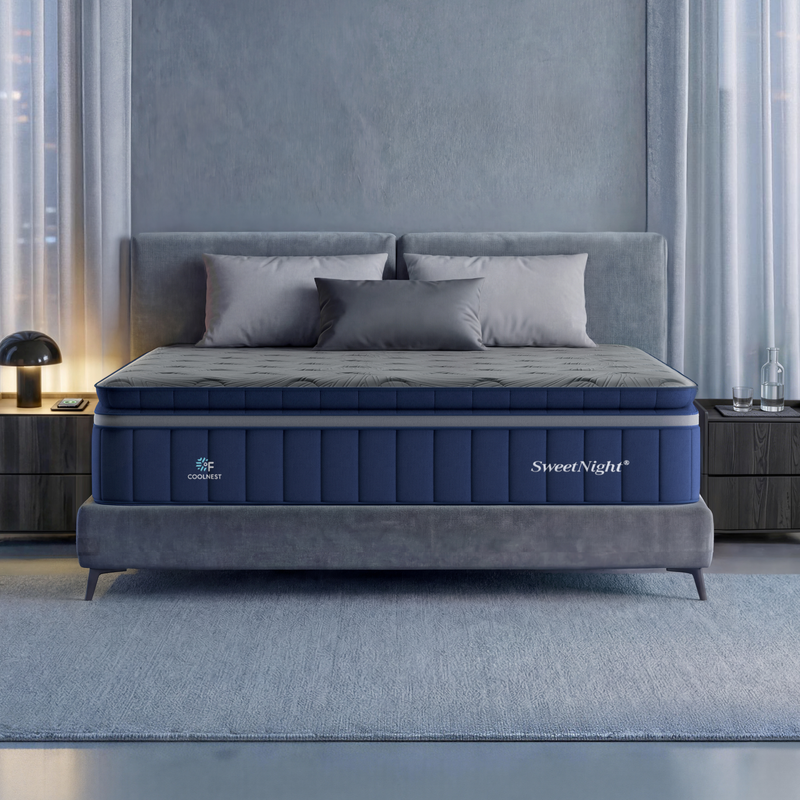
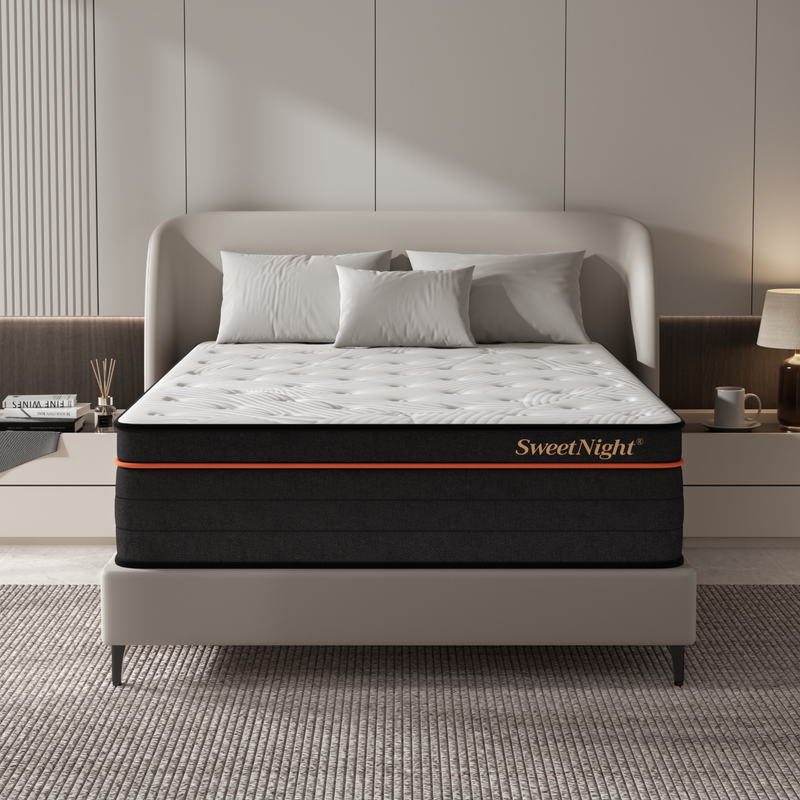
A useful reference point for what a fully stacked cooling build looks like is the CoolNest® Ultra memory foam mattress. It layers a Gradient Ice Silk cover for instant cool-to-touch over PCMflux® phase-change foam that balances temperature through the night, sitting on an AirMesh™ core built for high breathability and 3D ventilated airflow — roughly six times the breathability of standard foam — with 7-zone support underneath so you stay near the surface instead of sinking into the heat. It's a clean illustration of the principle this whole article has been building toward: cell structure as the foundation, then cool-touch and active cooling stacked on top, tuned to a medium-plush feel rather than a bottomless one. Whether or not that specific bed is right for you, the pattern is what to look for — breathable core plus surface feel plus active buffering, working as a system.

Watch the density and firmness signals. Very soft, very dense foam is a warm-sleeping combination even if it's technically open-cell, because you sink in and stay wrapped. A medium-plush feel with clear support layering is a better bet for temperature than the plushest option on the floor.
Use the trial. Cell structure and cooling claims genuinely can't be judged in a five-minute test. Surface temperature builds over hours, and the difference between "felt cool in the store" and "slept cool all night" only shows up in your own bedroom over a week or two. A real risk-free trial — something on the order of 100 nights — exists precisely because temperature is a lived experience, not a showroom impression. If a mattress doesn't come with a meaningful trial window, you're being asked to gamble on the one property you can't verify quickly.
Put those together and you have a checklist: breathable open-cell core described in specifics, a cover that breathes, complementary active cooling stacked on top, a sensible medium feel rather than the softest possible, and a trial long enough to actually test heat. Hit those and you've filtered out most of the beds that talk cool but sleep warm.
Bottom Line for Hot Sleepers
If you take one idea away, make it this: the open-cell versus closed-cell distinction is the real, physical reason some memory foam sleeps hot and some doesn't. Closed cells seal air and heat in place; open cells let both move out. Everything else — gel, ventilation, cool-touch covers, phase-change layers — builds on that foundation or fails to compensate for its absence.
For a hot sleeper shopping today, that reframes the whole decision. The old wisdom was "memory foam sleeps hot, so avoid it." The accurate modern version is "dense closed-cell foam sleeps hot, and you can avoid that without giving up the hug and pressure relief you like about foam." An open-cell core, paired with a breathable cover and at least one active cooling feature, gets you most of the way to the cool sleep you'd otherwise have to chase with latex or coils.
Answer three questions and you'll know what to look for. Does the comfort layer breathe — is it genuinely open-cell, described in specifics rather than slogans? Does the build stack complementary cooling instead of leaning on one gimmick? And does the feel keep you near the surface, medium-plush rather than bottomlessly soft, so the airflow can actually reach you? Three yeses point to a foam bed that stays comfortable at 3 a.m. instead of one that only impresses in the showroom.
Cell structure is quiet engineering. It isn't the headline on most product pages, but it's doing more for your night's temperature than almost anything louder — and now that you know what the words mean, you can read past the marketing and pick a foam that actually earns the word "cool."
Frequently Asked Questions
Is open-cell foam the same as gel memory foam?
No. Open-cell describes the physical architecture of the foam — interconnected cells that let air pass through. Gel memory foam is standard foam with a cooling gel mixed in to absorb heat. They're different tools that solve different parts of the problem, and the best cooling beds often use both: open cells to let heat escape continuously and gel to handle the initial cool-to-touch feel. A mattress can have one without the other.
Can closed-cell foam ever be used in a good mattress?
Yes, just not usually as the surface you sleep on. Closed-cell foam's firmness and rigidity make it well suited to support and base layers, where resisting compression matters more than breathing. The issue is only using a dense, sealed foam as the comfort layer against your body, where its insulating property works against you. In a support role beneath a breathable comfort layer, it's doing a legitimate job.
Does open-cell foam wear out or lose its cooling over time?
The open-cell structure itself is a permanent physical property, so its airflow doesn't "run out" the way a gel layer's initial coolness fades each night. What can change over years is the foam softening and letting you sink more deeply, which can slightly reduce the cooling benefit by wrapping more of your body. A supportive base and occasional rotation help any foam mattress hold its shape, and its cooling, longer.
I run really hot. Is any memory foam enough, or should I switch to latex or a hybrid?
It depends on how hot and how much you value foam's contouring. A well-built open-cell memory foam with a breathable cover and active cooling will satisfy most warm sleepers and keeps the pressure relief and motion isolation foam is known for. If you sleep extremely hot and don't care about the deep hug, a latex or ventilated hybrid with actual air gaps may edge it out on pure airflow. For most people the modern cooling foam build is enough — and a genuine sleep trial is the only way to know for sure in your own bedroom.