








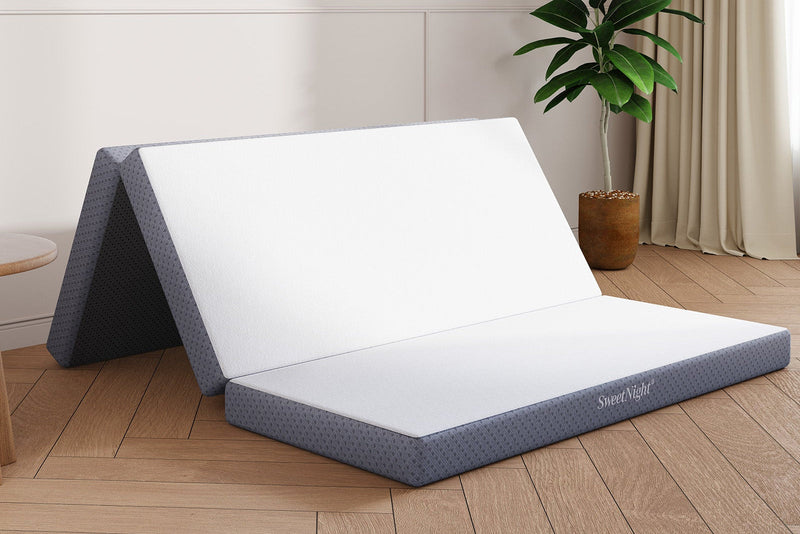

The guest bed problem is really a storage problem. Almost nobody has a spare room that exists only for guests, and the beds designed for the job — a sofa bed, a folding frame, an air mattress — each solve one part of it while creating another.
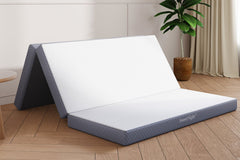
A tri-fold foam topper is a different answer: real foam to sleep on, folded into a block that lives in a closet the other three hundred and sixty days. It is not a mattress and it is not pretending to be. Here is what it does well, where it runs out, and how it compares with the alternatives.
Short Answer: When a Folding Topper Beats a Guest Mattress
It is the right choice when: guests come occasionally rather than weekly; you have no room to store a full mattress flat; you want something you can also throw in a car; you need a floor surface for kids, sleepovers or a nap; or you want to add softness to an existing bed some of the time and take it away the rest of the time.
It is the wrong choice when: someone needs to sleep on it every night; a guest has mobility limits and cannot get up from floor level; you have a dedicated spare room where a real mattress would simply live; or you need a firm, high-support surface for a heavy sleeper.
The core trade is depth for portability. Four inches of foam is genuinely comfortable for a few nights and it folds into a block you can carry with one hand. Ten inches of mattress is comfortable indefinitely and it never goes anywhere.
The Guest Bed Problem: Space, Cost and How Often You Actually Use It
Count the nights honestly. Most households host guests somewhere between five and twenty nights a year. That number should drive the decision and rarely does.
The usual options each fail differently. A sofa bed occupies its space permanently, costs the most, and delivers the worst sleep of any of them because of the bar under the mattress. A folding metal frame bed sleeps acceptably and is awkward and heavy to store. An air mattress stores beautifully and loses pressure overnight, transmits every movement to the person next to you, and punctures eventually. A full spare mattress sleeps best and needs a room to live in.
A folding foam topper lands in a gap none of them cover: real foam, flat storage in a closet, and a price closer to bedding than to furniture. For fifteen nights a year that arithmetic is hard to argue with, and it is why cooling bedding shoppers so often end up buying one alongside sheets rather than instead of a bed.
There is also a use case people discover after they buy: the surface that gets used for everything else. Floor seating during a film, a spot for a toddler, a place to do stretches or yoga, a landing pad when someone is unwell and sleeping downstairs.
Tri-Fold Construction: How the Hinge Works
A tri-fold is three separate foam sections that fold accordion-style into a stack. What holds them together varies by product, and it is the detail worth checking.
The best version, and the one our 4-Inch Tri-Folding Mattress Topper uses, is three distinct foam modules joined by a zipper inside a single continuous cover. That construction gives you three things a glued or sewn hinge does not: the sections stay aligned when you lie across them, the seams flex where they should instead of creasing the foam permanently, and the cover comes off in one piece for washing.

The design constraint on any folding foam product is that a hinge is a place where the foam is interrupted. The reason it works in practice is that gel memory foam is compliant enough to close the gap under body weight, and a fitted sheet stretched across the top pulls the sections together. What you feel is a soft transition rather than an edge.
It also folds in a specific direction. Fold it the wrong way repeatedly and you set creases into the foam where the manufacturer did not intend them. Note which way it comes out of the box.
Four Inches: Is It Enough on the Floor?
The honest answer depends on body weight and sleeping position, and it is worth being specific because this is the question that decides whether a guest sleeps well.
Four inches of memory foam over a hard floor works well for most adults under roughly 180 pounds, and well for almost any child. Above that, and especially for side sleepers, the hip is the pressure point that finds the floor first, because side sleeping concentrates a large share of body weight on a small area.
Sleeping position matters as much as weight. Back sleepers distribute load over the largest area and do best on a thin foam layer. Stomach sleepers also do reasonably well. Side sleepers ask the most of it, since shoulders and hips both need to sink.
Two things that help meaningfully. Put it on carpet rather than hardwood if you have the option — even a thin carpet and pad adds compliance underneath. And let the foam warm up: memory foam is temperature-sensitive and is noticeably firmer in a cold room, so a topper unrolled in a chilly spare room at 11 p.m. feels harder than the same topper at noon.
If a guest is a heavy side sleeper and staying a week, be realistic. Four inches on a floor is a compromise, and the alternative is a real bed.
On a Bed vs on the Floor: Two Different Jobs
The same product does two things and they call for different expectations.
As a topper on an existing mattress, it is adding four inches of foam to a surface that already provides support. This is the easier job. It softens a mattress that is too firm, adds a fresh comfort layer over a bed that has lost some of its own, and can be removed the moment you decide you preferred the bed as it was. The main caution is sizing: adding four inches of depth means your fitted sheets almost certainly no longer fit, which people discover at bedtime.
As a standalone bed on the floor, it is doing the entire job on its own: comfort layer, support layer and base. That is where the four inch limit shows, and it is why a topper on the floor feels firmer than the same topper on a bed.
If what you actually want is a permanent upgrade to a bed you sleep in every night, the topper-versus-new-mattress question deserves its own answer — we worked through it in mattress vs mattress topper, including when a topper is a genuine fix and when it is postponing an inevitable purchase.
Sizes and Folded Footprint
The open dimensions decide who can sleep on it. The folded dimensions decide whether you will actually keep it.
| Size | Open (inches) | Roughly, folded | Suits |
|---|---|---|---|
| Single | 25 x 75 x 4 | 25 x 25 x 12 | Children, tight spaces, a car or van |
| Twin | 38 x 75 x 4 | 38 x 25 x 12 | The standard single guest |
| Twin XL | 38 x 80 x 4 | 38 x 27 x 12 | Taller guests, dorm beds |
| Full | 54 x 75 x 4 | 54 x 25 x 12 | A couple at a squeeze, or one person with room |
| Queen | 60 x 80 x 4 | 60 x 27 x 12 | Two guests, or use as a topper on a Queen bed |
Folded height lands around twelve inches across the range, which is the number that decides where it lives. A foot of depth fits under most beds, on a closet floor, upright behind a door, or in a car boot.
Measure the storage space before you buy, not the room. People choose the size for the guest and then discover the Queen does not fit the closet.
Heat and Airflow When It Sits on the Floor
Foam on the floor has a specific thermal problem: one entire face is sealed against a surface that does not breathe. On a slatted bed base air can move underneath. On laminate or vinyl it cannot.
Two consequences. The topper runs warmer than the same foam would on a bed frame, because heat that would normally dissipate downward has nowhere to go. And moisture — the pint or so of water an adult releases overnight — collects at the underside, which over repeated use can leave the floor side damp.
The product side of the answer is gel-infused foam, which conducts heat away from the sleeping surface better than plain memory foam, plus a breathable removable cover. That handles the top.
The rest is behavioural, and it matters more:
- Put something breathable underneath — a rug, a thin cotton blanket, anything that is not sealed plastic.
- Stand it up between uses. A few hours upright after a guest leaves lets both faces dry.
- Do not store it folded in a sealed bag long-term. Foam that goes into storage even slightly damp comes out smelling of it.
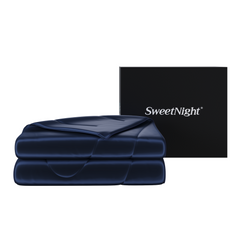
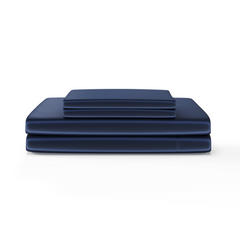
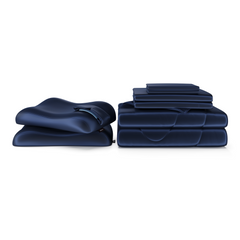
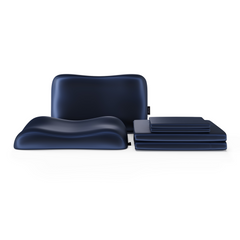
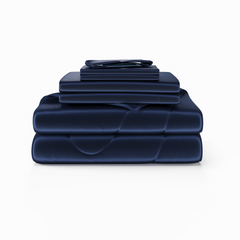
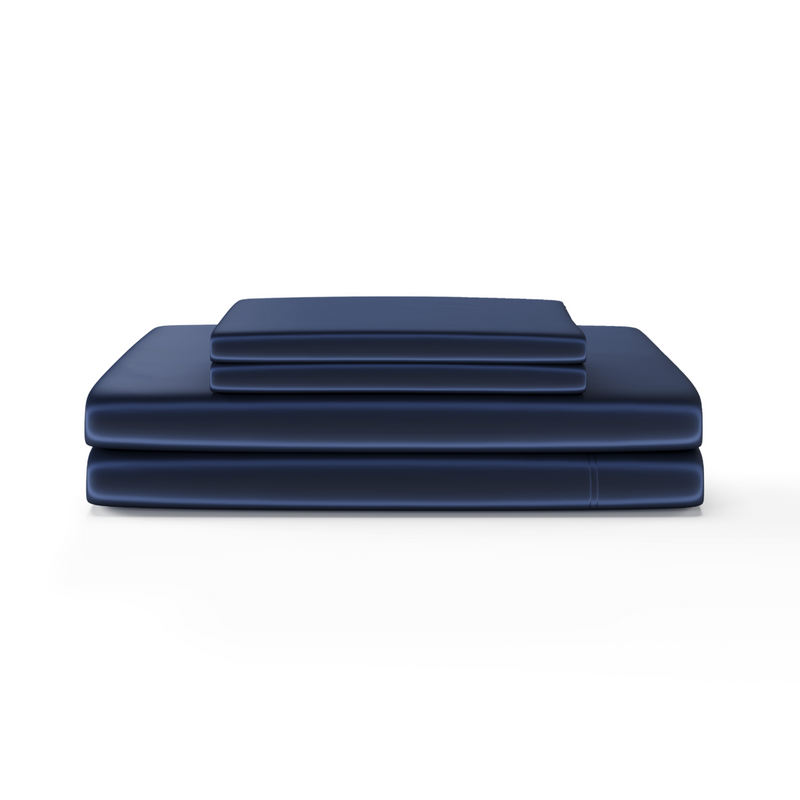
- Use a fitted sheet, which absorbs moisture at the surface and washes easily — a set like our cooling sheet set has enough pocket depth to fit either the topper on its own or a mattress with it stacked on top.

Dorms, RVs, Floor Seating and Yoga
The guest bed is the headline use and rarely the only one.
Dorm rooms. University mattresses are thin, plastic-covered and firm. A four inch topper transforms one, and it folds down when the room has to be cleared at the end of term. Twin XL is the size most dorms use.
RVs, vans and camping. Foam handles vibration and cold ground far better than an air mattress, and it does not deflate at 3 a.m. Folded it takes a defined block of space you can plan around, which is the whole art of packing a van.
Floor seating. Unfolded partially, it becomes a bench; opened flat, it takes several people for a film. This turns out to be the use that justifies it in households with children.
Stretching and yoga. Firmer and more stable than a mattress, softer than a floor mat, and large enough for full-length movements.
Illness and recovery. A temporary sleeping surface downstairs, or on the floor beside a sick child's bed, that packs away when it is no longer needed.
Care: Removable Cover, Odor and Noise
Three practical properties, all of which come up in reviews of cheaper folding foam.
The cover comes off and washes. This is what makes a shared guest surface hygienic. Wash it between guests, and use a fitted sheet on top so the cover itself needs washing less often.
It is odorless. New foam can have an off-gassing smell, and in an enclosed folded product that smell is concentrated in a way it is not in an open mattress. Ours is specified as odorless, and it is made with CertiPUR-US® certified foam alongside OEKO-TEX® and ISPA certification — which is the sort of thing worth checking on any foam that will be stored folded in a cupboard.
It is silent. Foam has no springs and no coated fabric, so it makes no noise when someone turns over. That matters more than it sounds if the guest bed is in a living room or a shared space.
General maintenance is minimal. Unfold it a few hours before use so the foam relaxes flat. Rotate which end takes the head every so often if it is in regular use. And spot clean the foam itself rather than soaking it — foam absorbs water and takes days to dry through.
Folding Topper vs Air Mattress vs Sofa Bed
| Folding foam topper | Air mattress | Sofa bed | |
|---|---|---|---|
| Sleep quality | Good for a few nights | Variable; pressure drops overnight | Often poor — the bar under the mattress |
| Storage | ~12" folded block, in a closet | Smallest of the three | Permanent floor space |
| Setup | Unfold, about a minute | Inflate, a few minutes and a pump | Move the coffee table, unfold the frame |
| Height off floor | 4" | 8–20" depending on model | Normal bed height |
| Durability | Years; foam softens gradually | Punctures and seam failures | Years, but the mattress is thin |
| Motion transfer | Low — foam absorbs it | High — one air chamber | Moderate |
| Other uses | Topper, floor seating, yoga, travel | Camping | Seating |
The one column where the air mattress genuinely wins is height. An older guest, or anyone with knee or hip problems, may find getting up from four inches off the floor difficult, and no amount of comfort compensates for that. If that describes your usual visitors, a raised bed of some kind is the right answer.
Whatever the surface, the layers on top of it still decide how the night goes — our guide to how to build a cooling bed applies just as much to a guest setup, and a spare room is often the hottest room in the house because nobody has thought about airflow in it.
FAQ
Can a folding topper be a permanent bed?
It is built for occasional use. Four inches on a floor supports a lighter adult well for a few nights, but it lacks the depth and zoned support of a real mattress, and heavier sleepers will feel the floor at the hips. Fine for a guest room used a dozen nights a year; wrong as someone's everyday bed.
Do you feel the fold lines?
Least on a flat floor, most on an uneven one. The sections are joined by a zipper inside a continuous cover, so the seams are soft. Unfold it a few hours ahead so the foam relaxes, and put a fitted sheet on — the sheet pulls the sections together.
How much space does it take folded?
About twelve inches deep, with a footprint roughly a third of the open length. A Queen folds to around 60 by 27 inches and a foot tall — a closet floor, under a bed, or a car boot.
Better than an air mattress?
For sleep quality, usually. Air mattresses lose pressure, transmit movement, feel cold from below and eventually puncture. Foam does none of that. Air wins on packed size, price and height off the floor.
Does foam get hot on the floor?
More than on a slatted base, since one face is sealed. Gel-infused foam and a breathable cover help at the surface; putting a rug underneath, standing it up between uses and not storing it sealed help more.
What size should I buy for guests?
Twin at 38 by 75 inches for a single guest, Full or Queen for couples. Measure the folded dimensions against your storage space rather than the open dimensions against the room — storage is the constraint that actually bites.