


Most people who sleep hot try to solve it with one purchase. A cooling pillow, or a fan, or a set of bamboo sheets. It usually helps a little, and then they conclude that cooling products do not work.
The reason a single product underdelivers is that a bed traps heat in layers, and each layer fails differently. The mattress stores it, the sheets conduct it, the comforter holds it in, the pillow concentrates it around your head. Fix one and the other four still do exactly what they were doing before. This is a guide to fixing them in the right order, with an honest account of what each layer is worth — including the changes that cost nothing.
Short Answer: Cool the Layers You Touch, in This Order
If you want the priority list without the reasoning:
- The room — free, and it beats everything else if your bedroom is above 70°F.
- Sheets — the surface your skin is in contact with all night, and the cheapest layer to swap.
- The comforter — the layer that decides how much of your own heat gets recycled back at you.
- The pillow — small, but it surrounds the part of your body that dumps the most heat.
- The mattress — the largest thermal mass in the room and the most expensive thing to change, which is why it goes last in the order of attempts even though it is first in order of impact.
- Light — not a temperature layer at all, but it is the reason a lot of "I keep waking up hot" is actually "I keep waking up."
That ordering is deliberate: cheapest and most immediate first, most expensive last, so you find out where your problem actually lives before you spend serious money. The whole cooling bedding range is built around the same layered idea, and the rest of this guide explains what each layer is really doing.
Why One Cooling Product Rarely Fixes a Hot Bed
Your body loses heat four ways, and a bed interferes with all four at once.
Conduction is heat moving into whatever you are touching. This is the one cooling fabrics act on: a material that conducts heat away quickly feels cold, and one that does not feels warm. The industry measures it as Q-Max, the peak heat flux at the moment of contact. Ordinary cotton sits around 0.13 to 0.17. Anything at 0.4 or above reads as distinctly cold to the skin.
Convection is air carrying heat away. This is why a duvet that traps a still layer of warm air against you feels stifling even when the fabric itself is breathable, and why a fan aimed at the bed does more than most products.
Radiation is heat leaving your skin as infrared. You cannot do much about this one directly, but a heavy comforter reflects it back at you.
Evaporation is sweat turning to vapour, and it is the one people underrate. On a humid night your sweat cannot evaporate, so the cooling mechanism your body is counting on stops working and you feel sticky rather than hot. Fabrics that move moisture away from the skin restore that pathway. This is why "cooling" and "moisture-wicking" are two separate claims and you want both.
A single product only touches one or two of these. Cooling sheets improve conduction and evaporation but do nothing about a comforter that blocks convection. A cooling pillow protects eight inches of a six-foot bed. That is the whole reason a layered approach outperforms a single purchase.
Layer 1: The Mattress Does the Heavy Lifting
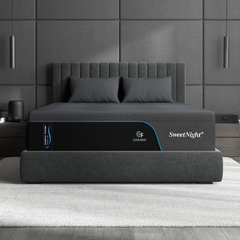
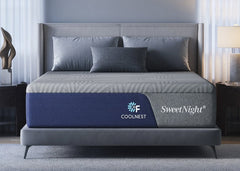
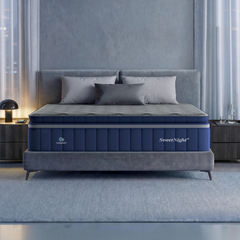
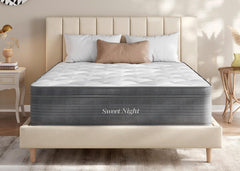
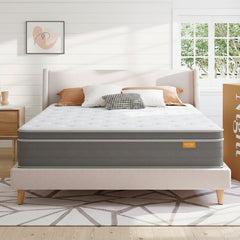
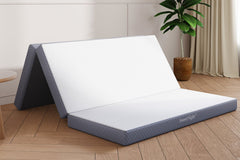
The mattress is the largest object in the equation and the only one that stores heat for hours. Foam is the usual culprit: it is a good insulator by nature, it hugs a large fraction of your body surface, and dense memory foam without any ventilation strategy behaves like a warm blanket underneath you.
You can tell whether the mattress is your primary problem with one test. Put your hand flat on the sheet where you slept, right after you get up. If the surface is noticeably warm and stays warm for several minutes, heat is being stored below the sheet, not just at it. If it cools within a minute, the mattress is not your main issue and you can spend your budget on the upper layers.
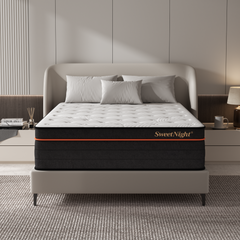
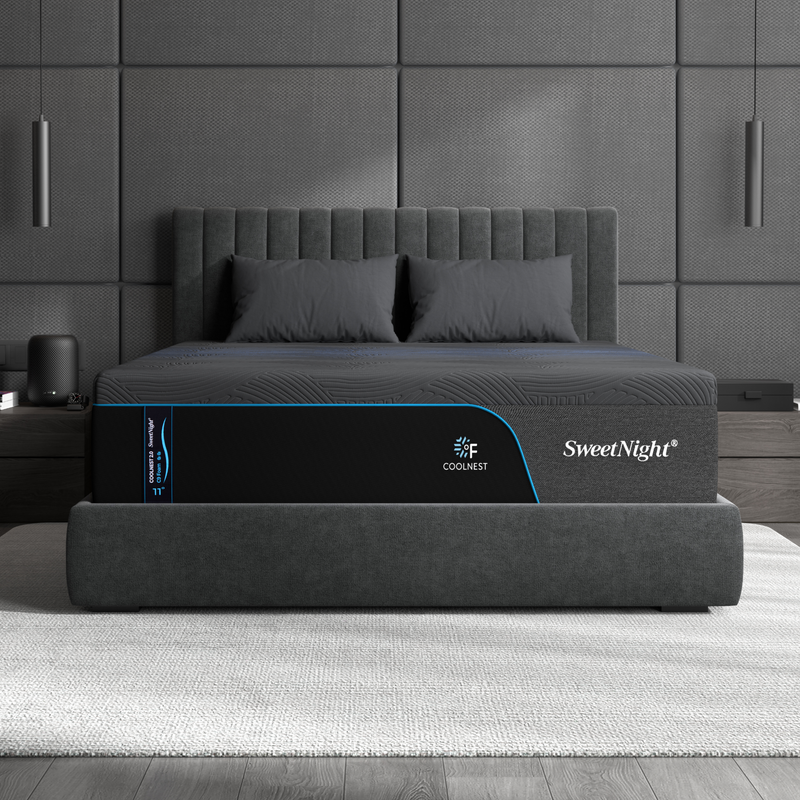
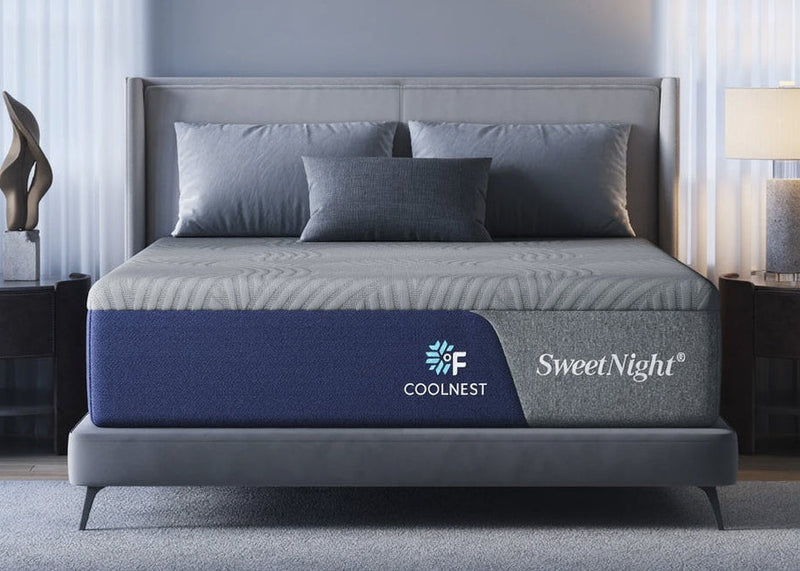
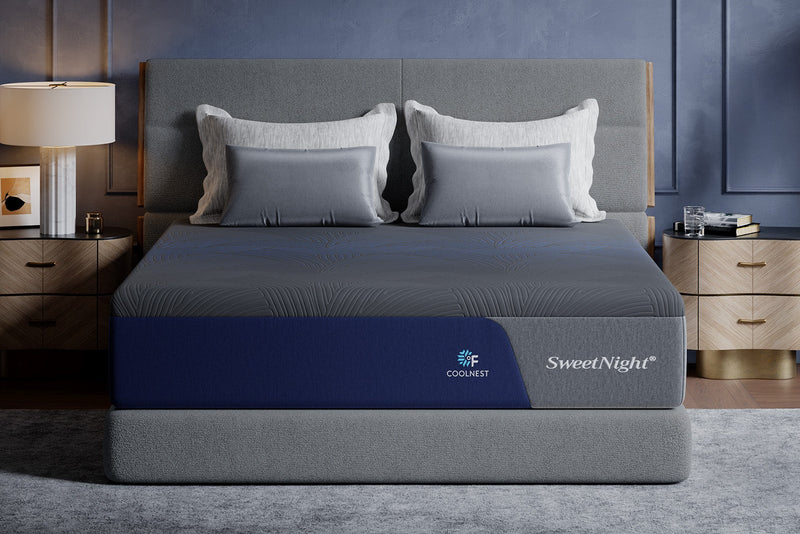
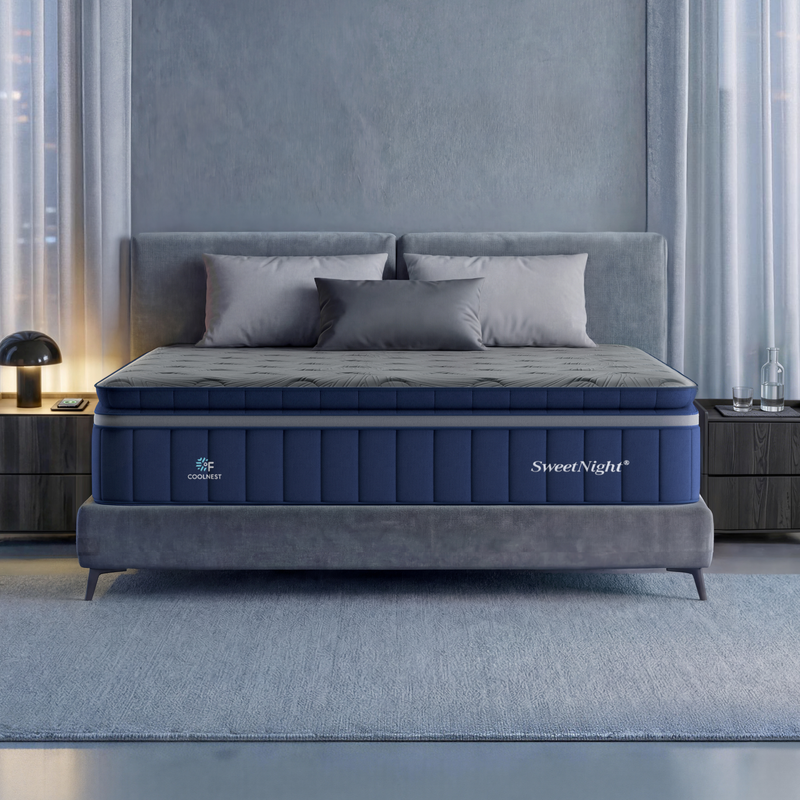
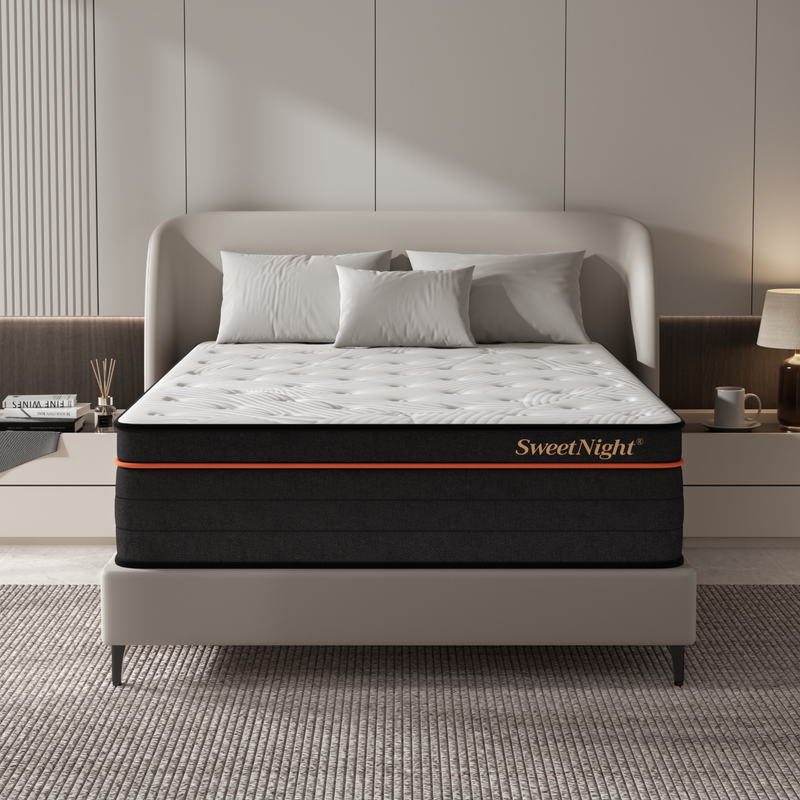
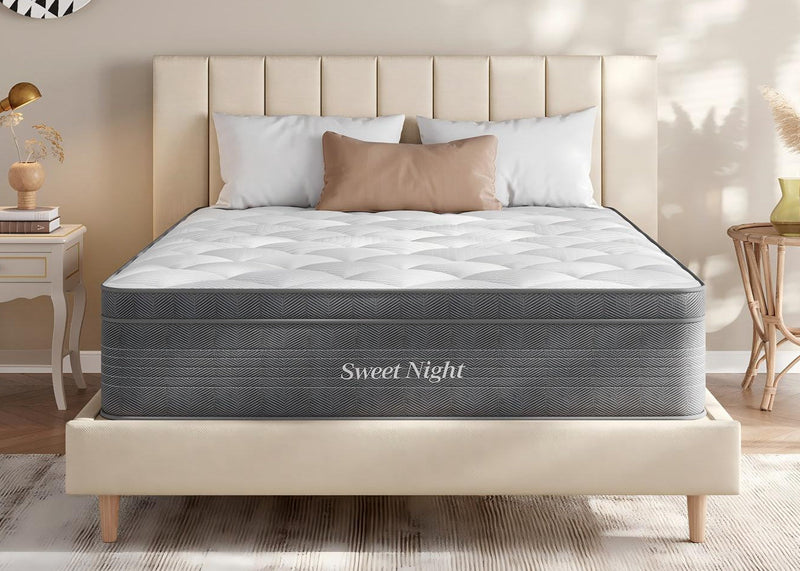
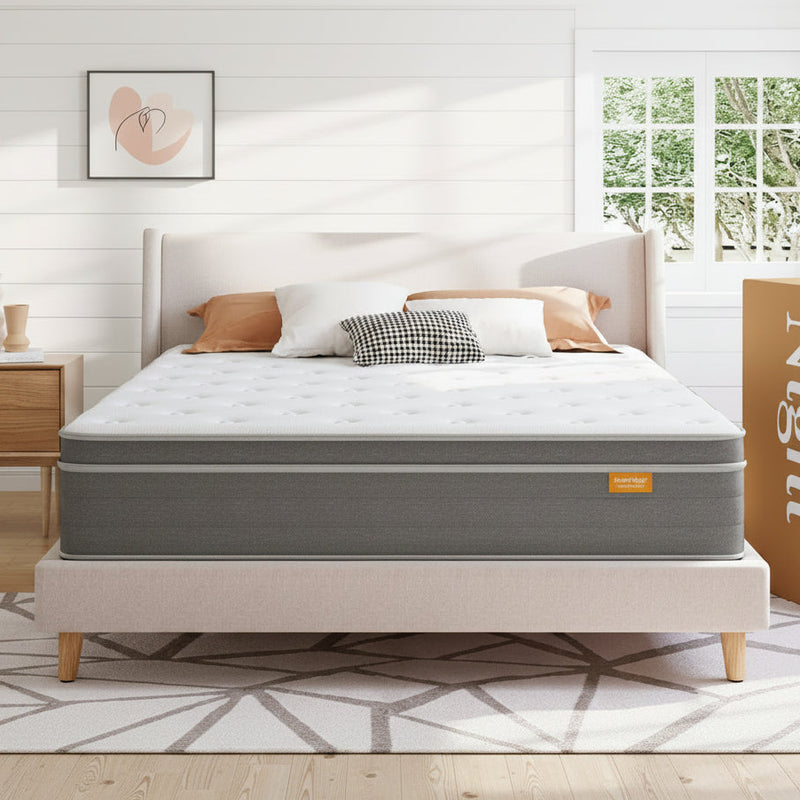
If the mattress is the problem, no amount of bedding fully compensates — you can move surface heat faster, but you cannot stop a mass of foam from storing it. That is a mattress decision, and the honest advice is to treat the best cooling mattress options as their own project rather than trying to patch it with linens.

One middle path worth knowing: a mattress protector can be a hidden offender. Many waterproof protectors are laminated with a plastic film that blocks both airflow and moisture. If you have one on a bed that sleeps hot, take it off for three nights as an experiment. People are regularly surprised by that result.
Layer 2: Sheets Are the Surface You Actually Touch
Everything else in the bed is separated from you by the sheet. That makes it the highest-leverage cheap change in the whole system, and the one you feel the first night.
Two properties decide how a sheet performs. The first is that contact-coolness number, and the second is how much of the sheet is actually touching you. A fitted sheet that wrinkles, slides and bunches makes intermittent contact, so the cool surface only reaches part of your skin. That is why fit is a thermal issue and not just a tidiness issue — a sheet that has slipped off two corners cannot conduct heat away from a body it is no longer touching.
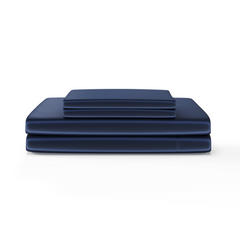
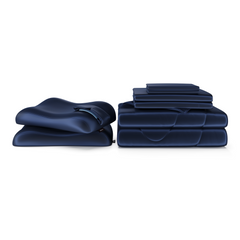
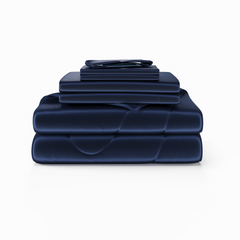
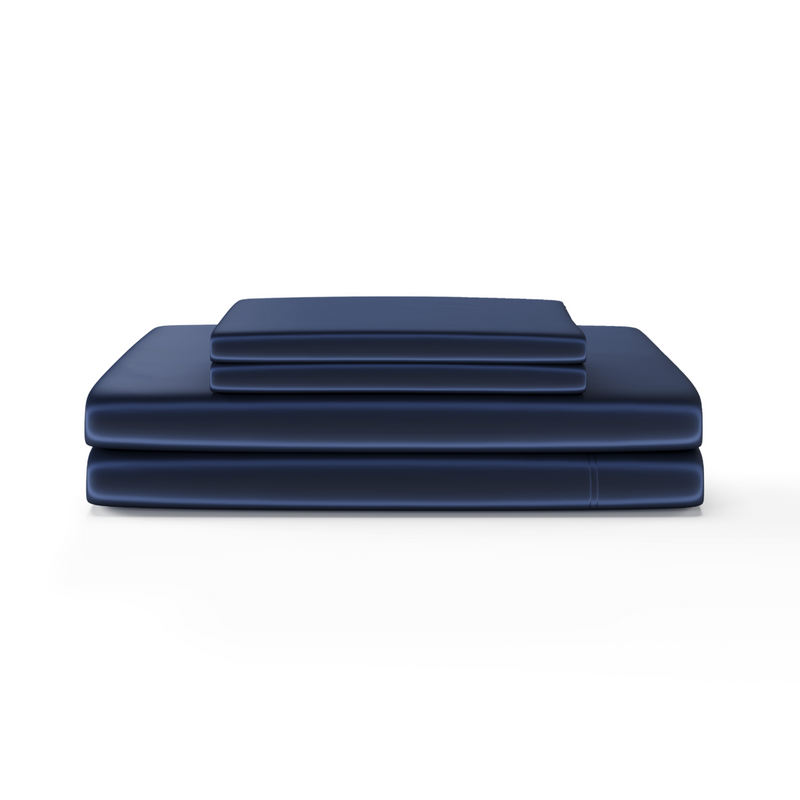
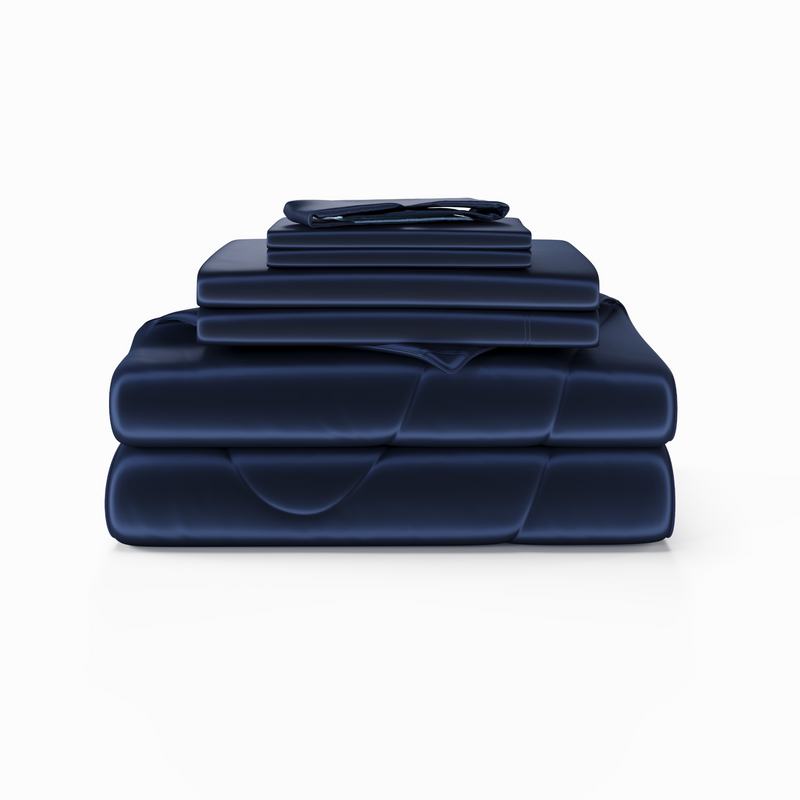
Our cooling sheets are built for both: CoolGlide™ fabric with a Q-Max value of 0.4 for the contact-cold feel, and a deep-pocket fitted sheet that grips mattresses up to 16 inches so the surface stays flat against you rather than migrating overnight. The set includes a fitted sheet, a flat sheet and two pillowcases, and it is sold in Queen and King between $159.99 and $179.99.

Two practical notes that apply whatever you buy. Skip fabric softener — it deposits a film that blocks moisture transfer, which quietly undoes the wicking you paid for. And keep the flat sheet, even in summer. A thin flat sheet between you and the comforter gives you a layer you can throw off at 3 a.m. without going from covered to uncovered in one step.
Layer 3: The Comforter Decides How Much Heat Gets Trapped
A comforter is an insulator by design. The question is whether it is an insulator that lets moisture and warm air escape, or one that seals them in.
Three variables matter. The shell fabric decides how it feels the moment it lands on your skin. The fill decides how much air the comforter traps and how well moisture moves through it. The weight decides how much of your own radiated heat comes straight back to you. Down is warm precisely because it is superb at trapping air, which makes it the wrong choice for someone who overheats. Cheap solid polyester batting is the other extreme: it holds heat without breathing, which is why a budget comforter often feels swampy rather than cosy.

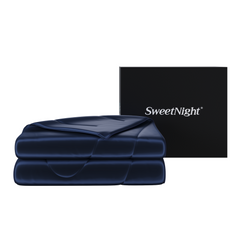
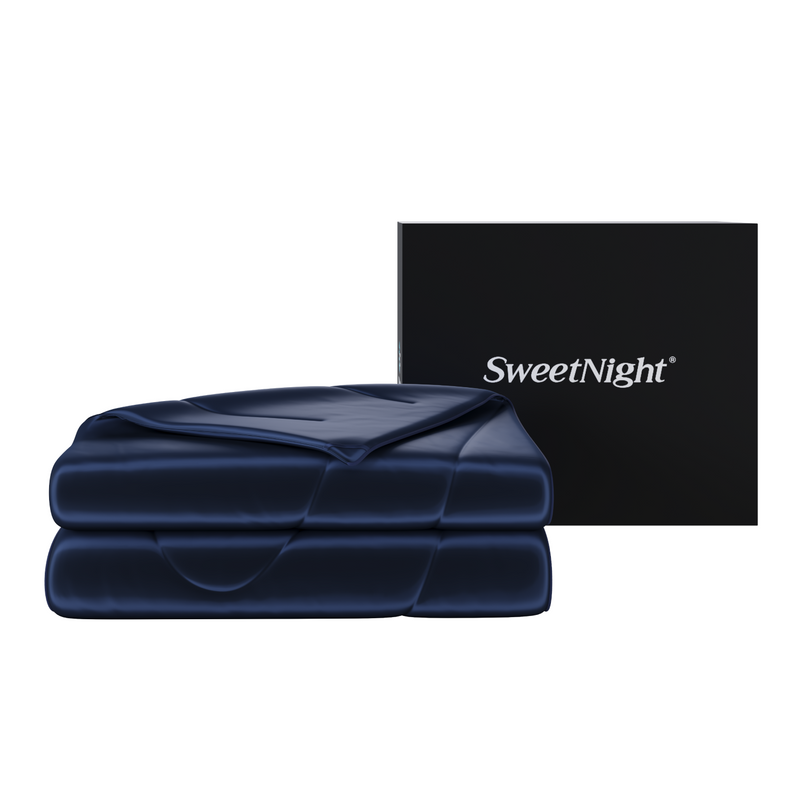
The CoolNest® Cooling Comforter attacks both halves. The shell is CoolGlow™ cooling fabric in a nylon and spandex blend with a Q-Max above 0.4, so it reads cold on contact instead of warm. The fill is a three-part blend — plant-based viscose, Sorona® fiber and a highly breathable polyester — chosen to move moisture out rather than bank warmth, and it comes in Queen at 90 by 90 inches and King at 106 by 90 inches for $129.99 to $149.99.
If you want the full decision framework rather than one product, we have written a longer piece on choosing a cooling comforter for hot sleepers that covers fill types, weight and how washing changes performance.
Layer 4: The Pillow Is the Hottest Eight Inches of the Bed
Your head is a heat source with an unusually good blood supply, and unlike the rest of you it is not under the covers, so people assume it takes care of itself. Then they spend all night flipping the pillow to the cool side.
Two things make a pillow run hot. Memory foam is a good insulator with a large contact area, so the heat has nowhere to go. And a pillow is pressed against you continuously in a way a mattress is not — you shift your hips and shoulders through the night, but your head stays in roughly one spot for hours.
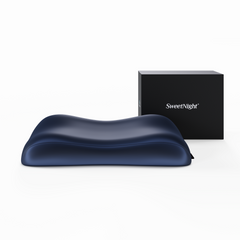
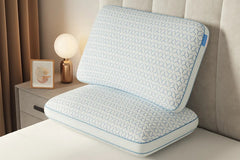
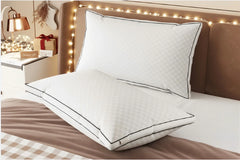
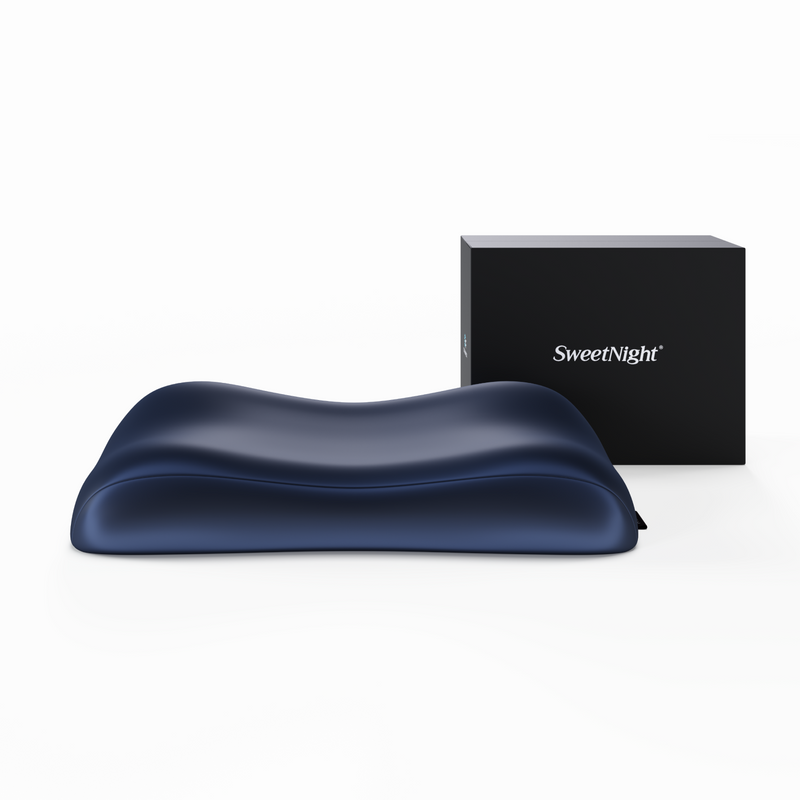
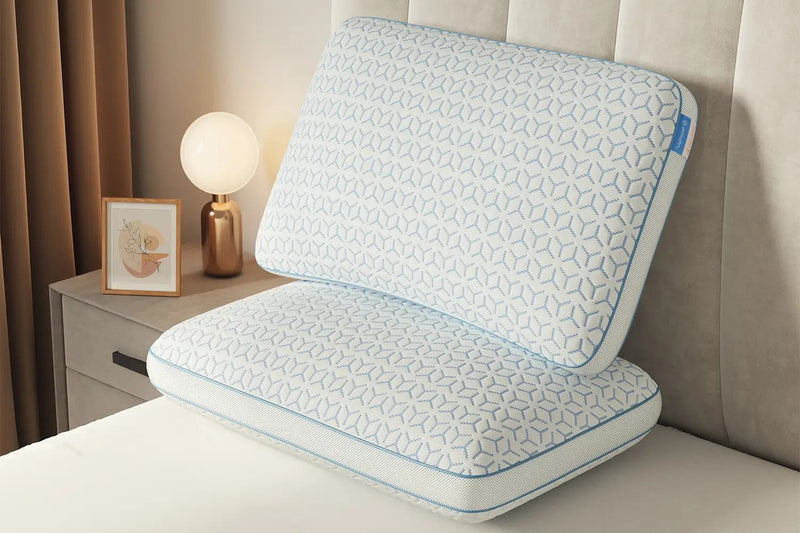
The fix is airflow plus conduction, in the same combination the other layers use. A cool-touch cover handles first contact, a mesh or open layer keeps air moving between the cover and the core, and gel or phase-change elements in contact with the core pull heat away from the surface. Our cervical pillow guide gets into how those layers interact with contour support, because on a shaped pillow heat is not just a comfort question — every time you flip the pillow you leave the alignment the contour was built to hold.
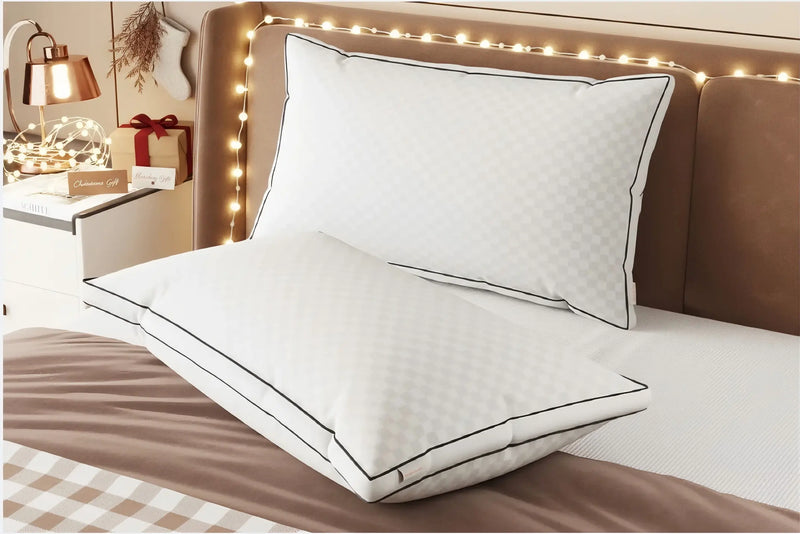
If you share a bed, buy pillows separately. Loft is a function of shoulder width and sleeping position, and two people rarely need the same one. A matched pair on the bed looks tidy and serves one of you.
Layer 5: Light and the Eye Mask
Light does not change your temperature, so it is easy to leave out of a cooling guide. Leave it out and you may misdiagnose the problem entirely.
Here is the pattern to watch for. You wake up at 4 a.m., you feel hot, and you conclude the bed is too warm. Often what actually happened is that you surfaced from deep sleep for an unrelated reason — streetlight through a gap in the curtains, a partner's alarm, dawn arriving at 5:20 in June — and once awake, you noticed a level of warmth you had been sleeping straight through. Reduce the awakenings and the same bed stops feeling hot.

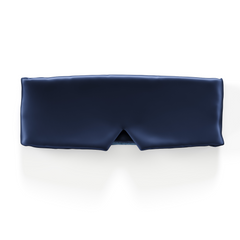
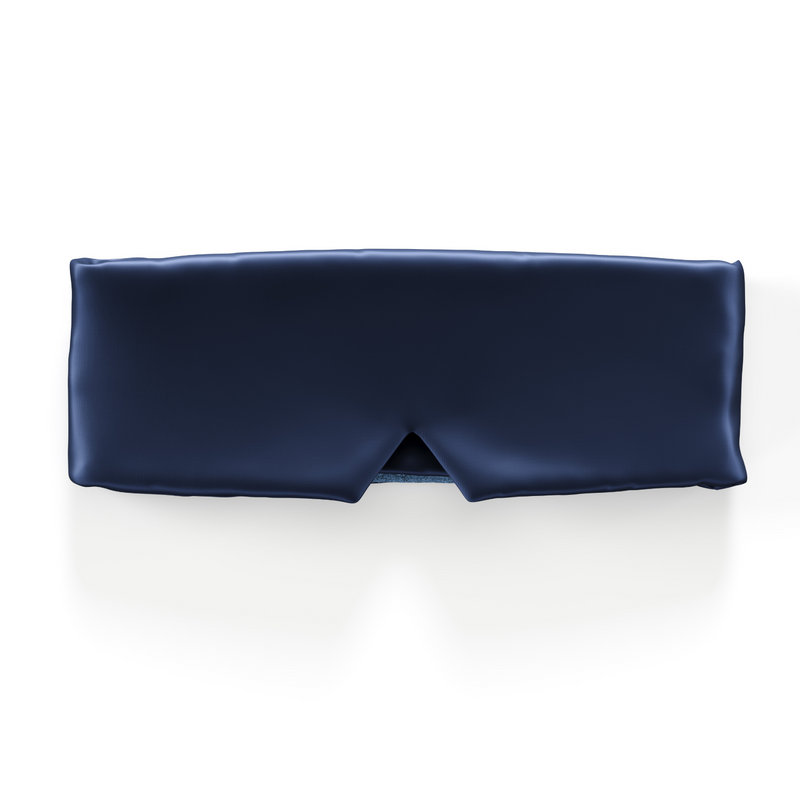
That is why a blackout mask sits in this system even though it is not a thermal layer. The CoolNest® Cooling Eye Mask uses a 3D contoured shape that blocks light without pressing on the eyes, with a friction-free silky face so it does not tug at the skin around the eyes, and it is certified to OEKO-TEX® Standard 100 along with ISPA, Sorona®, ISO 9001 and BSCI. At $4 to $9 it is the cheapest intervention in this entire guide, and for shift workers, day sleepers and anyone whose bedroom faces east it is frequently the most effective one.
The Room: Three Free Changes That Beat Any Product
Before you spend anything, spend three nights on these. If your bedroom is warm, they will outperform every product on this page.
Get the room below about 68°F if you can. Body temperature has to fall for sleep to begin and stay low for it to continue, and a warm room fights that directly. Most sleep guidance lands in the 60 to 68°F range. If air conditioning is not an option, cooling the room in the hours before bed matters more than cooling it at bedtime.
Move air, do not just chill it. A fan does two jobs: it strips the still layer of warm humid air sitting against your skin, and it speeds evaporation so your own sweat starts working as intended. A fan on low aimed across the bed rather than at your face usually beats a colder thermostat setting.
Cool yourself down before you get in. A warm shower an hour before bed causes blood vessels near the skin to dilate and dump heat, so your core temperature drops afterwards. Same logic with the classic trick of cooling your wrists and feet — both have a dense supply of surface blood vessels.
Two more that cost nothing: take off the waterproof mattress protector if you have one, and stop sleeping in heavy sleepwear you would not wear in a warm room during the day.
Two Sleepers, Two Temperatures
This is the most common version of the problem, and it does not have a single-product answer, because the two people need opposite things from the same bed.
The rule that solves most of it: split what you can split, and set the shared layers for the hotter sleeper.
The comforter is the layer most worth splitting. Two smaller comforters on one bed — standard practice across northern Europe — lets each person choose their own weight and warmth, and it ends the 2 a.m. tug-of-war as a side effect. Pillows split naturally, and should. Sleepwear splits.
Sheets and the mattress cannot be split, so they should be set for whoever runs hot, because it is far easier for the colder sleeper to add a layer than for the hotter one to remove heat that has nowhere to go. A cool-touch fitted sheet plus a light throw on one side beats a warm sheet plus a fan aimed at one half of the bed.
One physical fact worth knowing: two adults in one bed generate roughly twice the heat in the same space, and the area between you gets almost no airflow. Some of the "we sleep hot together" experience is not either person's thermostat, it is the geometry of two bodies eighteen inches apart under one comforter. Sizing up the comforter, or splitting it, changes that geometry.
Build It in One Go or Upgrade One Layer at a Time
There are two sane strategies, and which one is right depends on whether you already know where your heat is coming from.
Upgrade one layer at a time if you are not sure. Start with sheets, live with them for two weeks, then decide whether you still have a problem. This is slower but it is diagnostic: you learn which layer was actually responsible, and you avoid replacing a comforter that was never the issue. It also spreads the cost.
Build it in one go if you already know the bed as a whole is wrong — you are moving, the linens are worn out, you just bought a mattress, or you have been through the single-product cycle twice already and it did not stick. Buying the layers together also means the fabrics behave consistently: mixing a cool-touch sheet with a warm shell comforter produces a bed that feels cold in one place and hot in another, which is a strange and unsatisfying result.

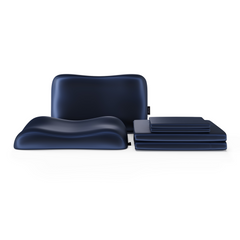
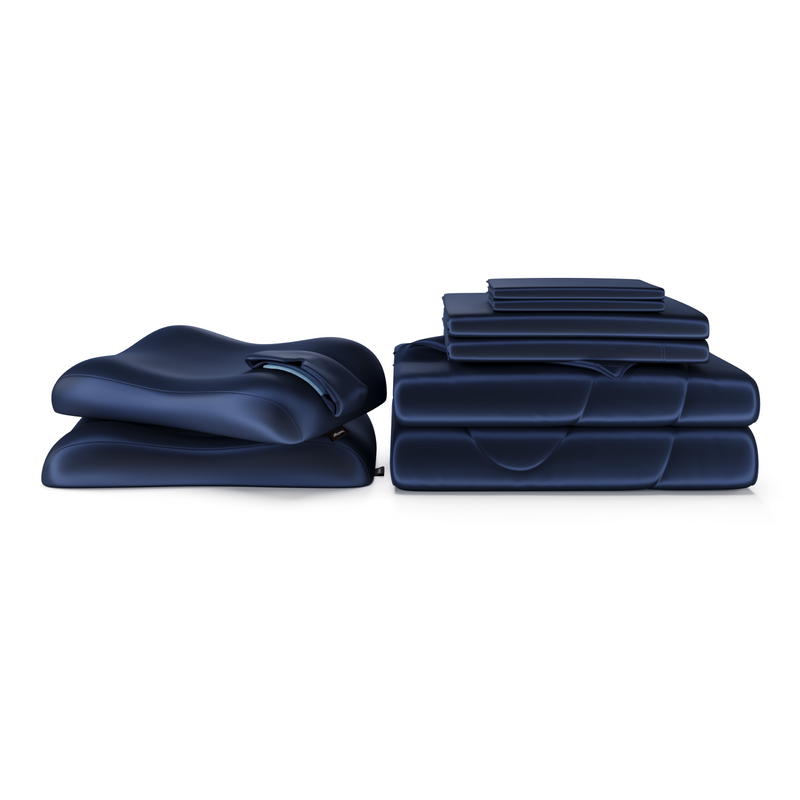
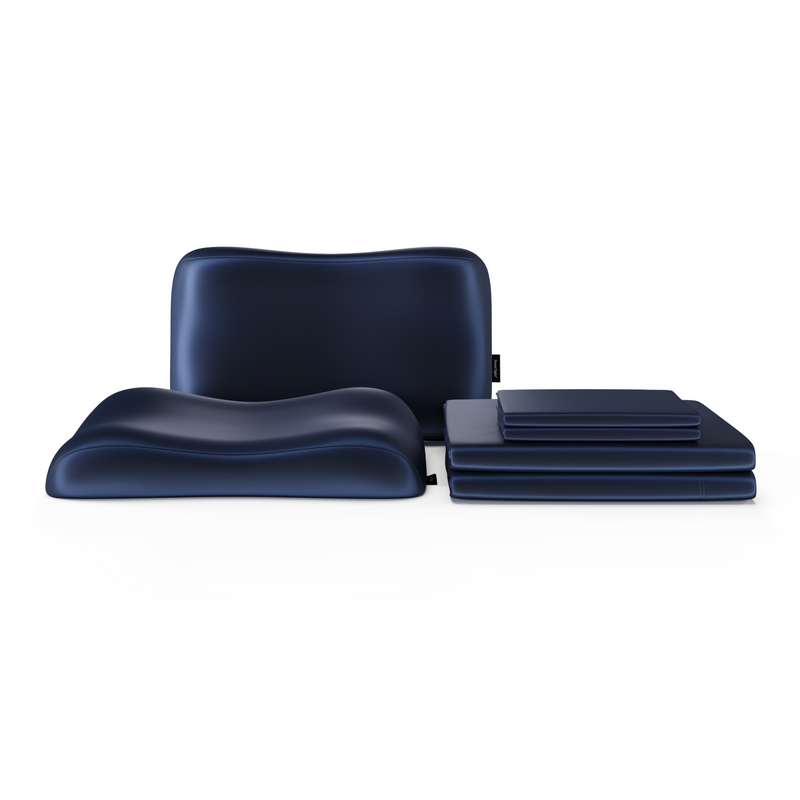
If you go the all-at-once route, the CoolNest® Complete Bedding & Pillows Set is the full stack in one box: a cooling comforter, two ergonomic cooling pillows with two pillowcases, a fitted and flat sheet, and a blackout eye mask included as a free gift. Certifications across the set include OEKO-TEX® Standard 100, CertiPUR-US®, ISPA, Sorona®, SGS, BSCI, ISO 9001 and RoHS.
A Complete Cooling Bed, Priced Out
Three honest configurations, using our own current prices so the numbers are checkable.
| Build | What is in it | Approx. cost | Best for |
|---|---|---|---|
| Starter | Cooling sheet set + eye mask | $164 – $189 | Finding out whether the surface layers were the problem, at the lowest possible spend |
| Upper body | Sheet set + 2 ergonomic cooling pillows + 2 pillowcases | $259.99 – $279.99 as a set | Sleepers whose heat problem is concentrated around the head, neck and shoulders |
| Whole bed | Comforter + 2 pillows + 2 pillowcases + fitted & flat sheet + eye mask | $449.99 – $489.99 as a set | Replacing everything at once, or a new mattress that deserves matching layers |
Two things that table does not include, and should shape your budget. The mattress is not in it — if the surface is still warm minutes after you get up, that is where the money belongs and no combination above will fully fix it. And the free changes are not in it either: room temperature, airflow and a pre-bed shower cost nothing and routinely outperform a $150 purchase in a bedroom that sits at 75°F.
Buying the layers as a set rather than individually is the cheaper path if you were going to replace them anyway, and it removes the mismatch problem. Buying one layer at a time is the smarter path if you are still diagnosing.
FAQ
Which layer should I replace first if I sleep hot?
Sheets, unless the mattress is obviously the problem. It is the layer touching your skin all night, it is the cheapest to change, and you feel the difference the same evening. Comforter second, pillow third, mattress last — biggest impact, biggest cost, so confirm the cheap layers are innocent first.
Does cooling bedding actually work, or is it marketing?
Both. Cooling fabrics do not cool the room or lower your core temperature. They conduct heat away from your skin faster than cotton or polyester — measurable as Q-Max, where 0.4 reads as distinctly cold and typical cotton sits near 0.15 — and they move moisture so you do not feel clammy. Real at the surface, not air conditioning.
Will the cooling effect wash out?
Not if you wash it properly. The feel comes from fiber and yarn structure rather than a coating, but heat and chemistry damage the finish. Gentle cycle below 104°F, tumble dry low below 130°F, no dry cleaning, ironing or bleach. Fabric softener is the quiet killer — it leaves a film that blocks moisture movement.
Can you use cooling bedding in winter?
Yes, and most hot sleepers do. Cool-touch fabric feels cold for the first minute and then equalises with your skin. What changes with the season is comforter weight and sleepwear, not the sheets. If the initial cold contact bothers you in January, a flat sheet between you and the comforter takes the edge off.
My partner and I need different temperatures. What actually works?
Two separate comforters on one bed. It is the single most effective change and it ends duvet tug-of-war as a bonus. Set the shared layers — sheets and mattress — for the hotter sleeper, since it is much easier for the colder one to add a throw than for the hotter one to shed heat with nowhere to send it.
How do I match sizes across a full set?
The fitted sheet follows your mattress size and depth, the comforter is sized to drape over the sides rather than to match the mattress footprint, and pillowcases follow the pillow rather than the bed. Queen comforters are commonly 90 by 90 inches and King 106 by 90. If your mattress is thicker than about 14 inches, check the pocket depth of the fitted sheet before anything else.