











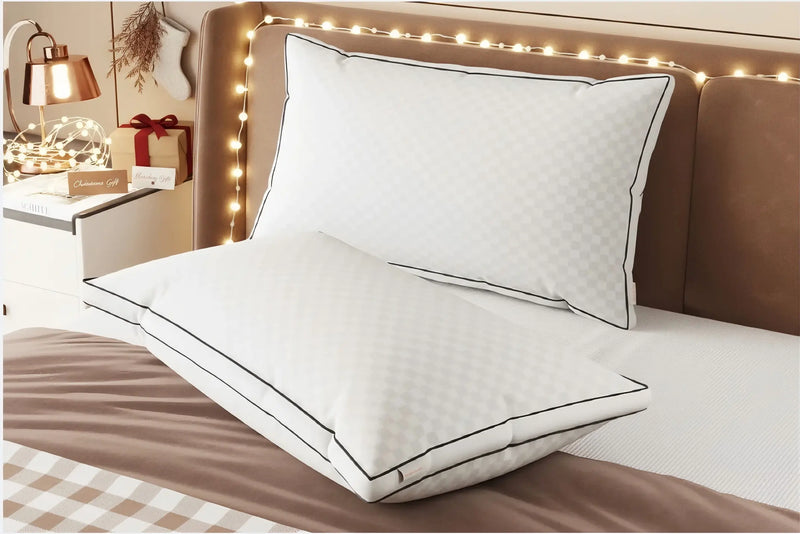

Bedding fails slowly, which is why almost everyone keeps it too long. There is no day on which a pillow stops working. It gives up about five percent of its support every few months, your neck adapts, and two years later you are sleeping on something that would horrify you if you tried it new.
Here are the timelines, the tests that beat the timelines, and the habits that decide which end of the range you land on.
Short Answer: Replacement Timelines at a Glance
| Item | Typical life | With good care | What usually fails first |
|---|---|---|---|
| Fiber-fill pillow | 1–2 years | 2 years | Fill clumps and stops recovering |
| Solid memory foam pillow | 2–3 years | 3 years | Foam softens; loft quietly drops |
| Shredded fill pillow | 2–4 years | 4 years+ | Fill compacts — but can be topped up |
| Fitted sheet | 2–3 years | 4–5 years | Elastic, almost always before the fabric |
| Flat sheet | 3–4 years | 5 years+ | Thinning where it is handled |
| Pillowcase | 1–2 years | 2–3 years | Surface roughening and staining |
| Comforter | 5–10 years | 10 years+ | Fill migrates; loft stops recovering |
| Pillow protector | 1–2 years | 2 years | Zip and seams |
Treat these as a prompt to check rather than an instruction to buy. A three year old pillow that passes the tests below is fine. A one year old pillow that fails them is finished.
The Fold Test and Other 60-Second Checks
The fold test (pillows). Fold the pillow in half and let go. A healthy pillow springs open by itself. One that stays folded, or unfolds slowly and only partway, has lost the resilience that holds your head up. For memory foam, look at the crease afterwards — a line that stays is foam that has broken down.
The lift test. Pick the pillow up in the middle and hold it horizontally. If the ends droop toward the floor rather than staying roughly level, there is not enough structure left.
The shoulder test. Lie in your usual position and have someone look at your neck from the front. If your head tips toward the mattress on your side, or your chin points at the ceiling on your back, the loft has dropped below what you need.
The daylight test (sheets). Hold the middle of the fitted sheet up to a window. Thinning shows as a brighter patch where the fabric has worn. Thin areas become holes within a few more months.
The corner test (fitted sheets). Stretch a corner and let it go. Elastic that stays stretched, or feels loose and papery, is done — even if the sheet looks perfect.
None of these take longer than a minute, and doing all five once a year is a better system than any calendar reminder.
Memory Foam Pillows: What "Worn Out" Actually Looks Like
Memory foam does not tear or thin. It softens, and softening is invisible.
The material is a network of cell walls that resist compression. Under hundreds of hours of load those walls fatigue and stop pushing back as hard. The pillow keeps its shape and its dimensions on a ruler, and it holds your head an inch lower than it did. Since your neck adapts a fraction at a time, nothing announces the change.
What to look for. A permanent dent where your head goes, still visible half an hour after you get up. Slower recovery — press your palm in for ten seconds and count how long it takes to return; foam that used to take five seconds and now takes fifteen has changed. Crumbling when you handle it, which means the foam is breaking down physically. And morning stiffness that came back after a period of not having it, which is often the earliest signal of all.
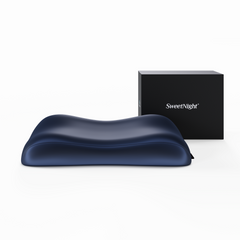
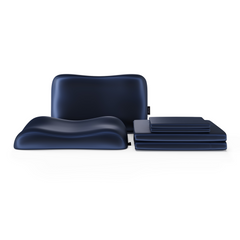
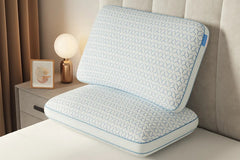
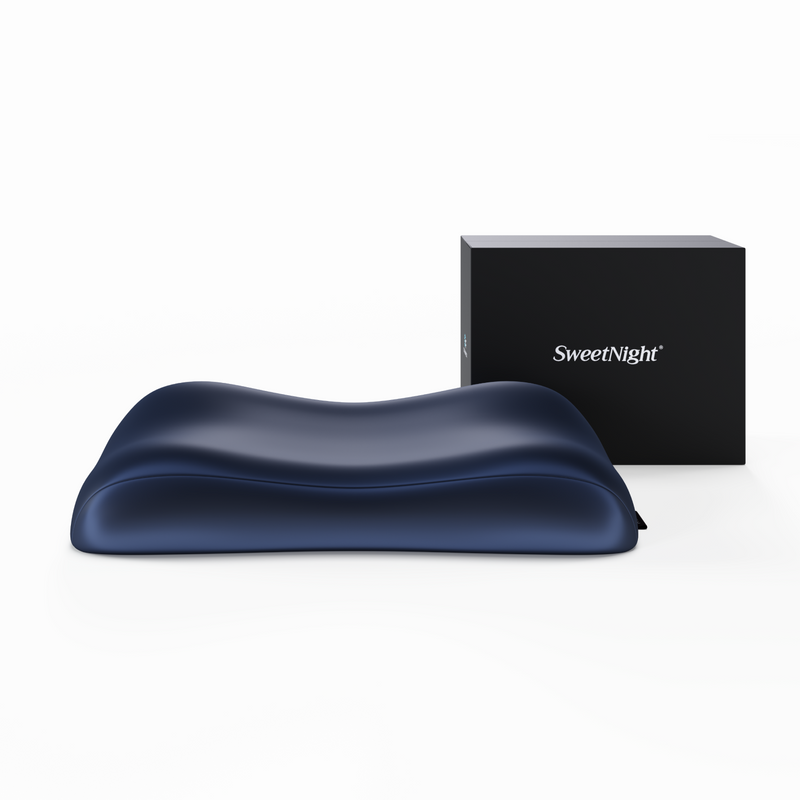
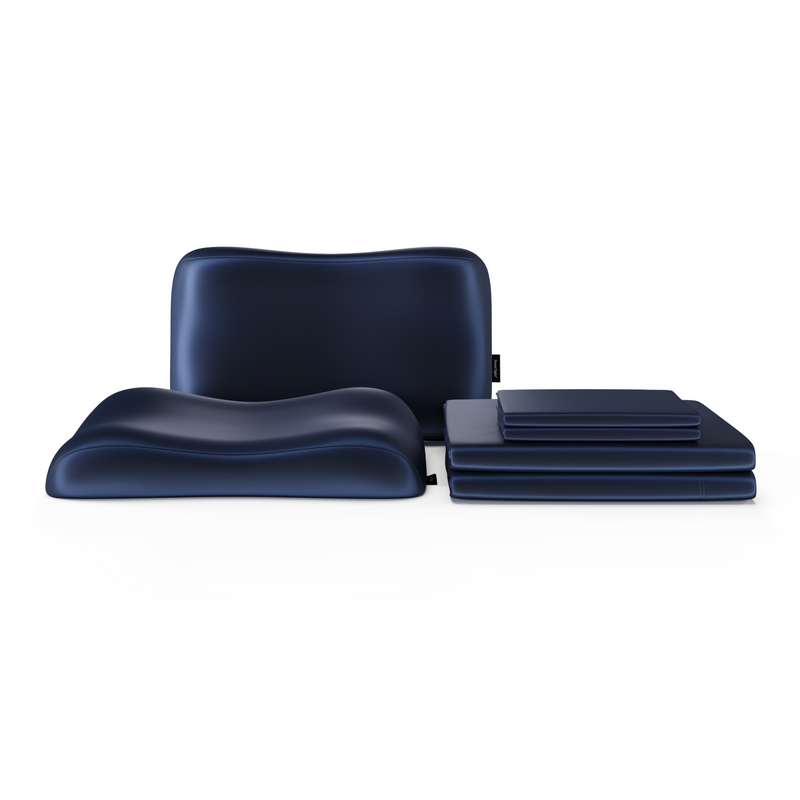
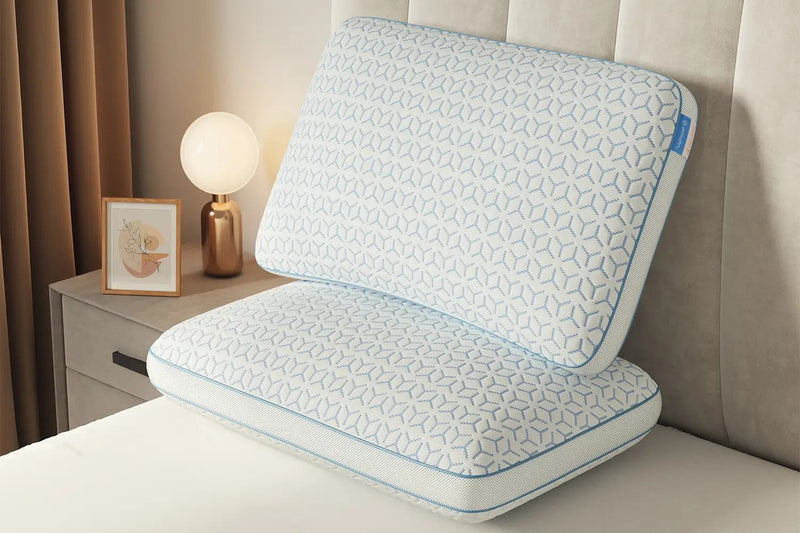
Shredded fill behaves differently and better. It compacts rather than fatiguing, and compaction is reversible: open it up, break the clumps apart, redistribute, and add a handful of the fill you kept. An adjustable pillow such as our Cooling Memory Foam Pillow 2-Pack can be brought back to height several times over its life, which is why it sits at the longer end of the table above.

The end point for shredded fill is when redistribution stops working: the pieces stay dense and crumbly no matter what you do. At that stage the foam itself has degraded.
Fiber-Fill Pillows: Clumping and Permanent Flattening
Fiber pillows fail visibly, which at least makes the decision easy.
Polyester fill works by trapping air between crimped fibers. Two things destroy that over time. Compression gradually straightens the crimp, so the fibers pack flat instead of springing apart. And moisture — sweat, humidity, incomplete drying after laundering — makes fibers stick to each other, which is what produces the hard lumps in an old pillow.
The signature failure is a pillow with dense clumps at the edges and almost nothing in the middle, which is exactly the opposite of what you need. Once the fill has migrated and matted, no amount of shaking brings it back.
Fiber pillows also gain weight as they age, absorbing moisture and everything it carries. A pillow that feels noticeably heavier than it did when it was new is telling you something.
Gusseted pillows hold out longer than flat ones, because the side wall keeps the fill in defined volumes rather than letting it migrate freely to the perimeter. It slows the process; it does not stop it. One to two years is realistic for most fiber pillows in nightly use, and the honest way to check is to compare yours with a new one rather than with your memory of it.
Sheets: How Long Do They Really Last
Sheets have two separate lifespans and people track the wrong one.
The fabric can last for years. Pilling, thinning at the centre of the bed and colour fading are gradual and mostly cosmetic until a thin patch becomes a hole.
The elastic in a fitted sheet is usually finished long before that. It is a rubber or spandex core inside a fiber sheath, and every hot wash and hot dry cycle degrades it. The sheet looks new and no longer grips, which people blame on the mattress or on the sheet having always been too shallow.
Realistic numbers: two to three years for a set in weekly rotation, four to five if you alternate two sets. Hot washing and hot drying can halve those.
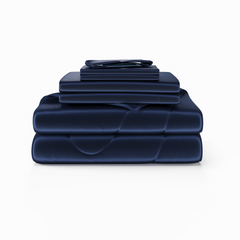
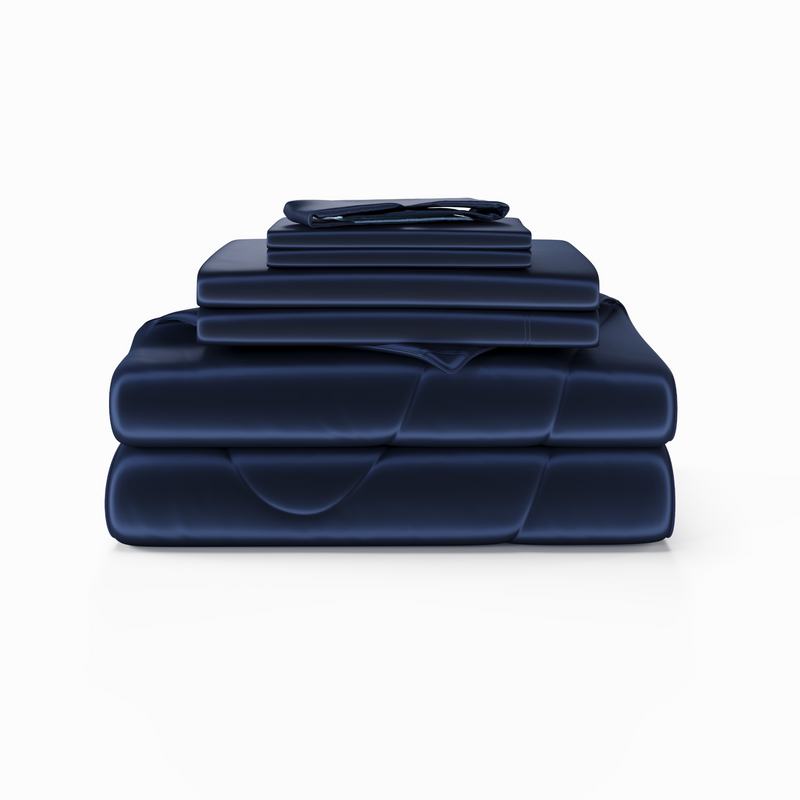
Technical fabrics deserve one extra note. A cool-touch finish depends on the yarn and surface structure, so heat damage shows up as a loss of performance before it shows up as visible wear. If a set like our CoolNest® Cooling Sheet Set stops feeling cold on contact while still looking new, the cause is almost always wash temperature rather than age — below 104°F on a gentle cycle and below 130°F in the dryer is what protects it.

Signs You Are Overdue (That Are Not About Looks)
The most reliable signals have nothing to do with how the bedding appears.
- Neck or shoulder stiffness has come back after a period without it, with no other change. Loft has dropped.
- You are folding or doubling the pillow at night without deciding to. Your body is compensating for missing height.
- You are turning over more. Restlessness increases when a surface stops distributing pressure.
- The fitted sheet comes off within a night or two of being put on, on a mattress that has not changed.
- The fabric feels scratchy where it used to feel smooth. Fibers have broken and roughened.
- It stops feeling cool on a fabric that used to. The finish has been damaged.
- Something smells faintly even straight out of the laundry. That is moisture and residue deep in the fill, and it does not come out.
- You sleep noticeably better away from home in an ordinary hotel bed. That comparison is more informative than any test in this article.
What Shortens the Life of Bedding
Most bedding dies of heat, and almost all of it is avoidable.
High wash temperatures degrade elastic, damage technical finishes and set stains into fibers. Hot water is only necessary in specific circumstances; the rest of the time it is destroying the product to no benefit.
Hot tumble drying is worse than hot washing, because the damage is repeated over an hour rather than minutes. Low heat, longer, is gentler on everything.
Bleach attacks fibers directly. It whitens by breaking things down, and the strength goes with the stain.
Fabric softener is the quiet one. It deposits a film that blocks moisture transfer, which dulls smooth surfaces, makes cooling fabric feel clammy and gradually stiffens fiber fill.
Direct sunlight weakens fibers. Drying outside is fine; leaving bedding in full sun for hours repeatedly is not.
Going without protectors. A pillow protector under the case is the highest-return purchase in this entire article. It keeps sweat and oils out of the fill, which is what determines whether a pillow reaches the end of the table above or the start of it.
Maintenance Buys Time, It Does Not Reset the Clock
This distinction is worth being firm about, because it is where people go wrong in both directions.
Laundering removes what has accumulated on and in the fibers. It restores freshness, and for fiber fill a proper cycle followed by thorough drying can genuinely recover some loft that had been lost to matting. That is real and worth doing on schedule — if you want the method for pillows specifically, we have written it up in how to wash pillows in a washer, including the drying step that ruins most attempts.
What it cannot do is rebuild anything structural. Fatigued foam cell walls do not recover. Straightened fiber crimp does not re-crimp. Stretched elastic does not shorten. Worn fabric does not thicken.
Practically: if a pillow fails the fold test, laundering will not change that verdict. If a fitted sheet has lost its grip, no cycle brings the elastic back. And a smooth pillowcase that has been through a hot dryer has lost its finish permanently, which is a different problem from being dirty — we go into what that surface is actually doing for your skin and hair in our guide to the right pillowcase for hair and skin.
Rotation: How to Make One Set Last Longer
Two sets in rotation outlast two sets used one after the other, and the arithmetic is not subtle.
The dominant wear mechanism on sheets is the laundry cycle, not the nights of use. Alternate two sets and each goes through half as many cycles per year, so both last close to twice as long. You also always have a clean set on hand, which matters more than it sounds at 11 p.m. when a bed needs changing.
Rotation works within an item too. Flip and turn pillows so the same face is not always underneath. Rotate a comforter end for end so the fill does not always settle the same way. Alternate which pillowcase goes on which pillow, since the case you sleep on takes far more wear than the one behind it.
One habit worth adopting: write the purchase date on a laundry tag in permanent marker. It removes the guesswork completely, and guessing is why most people keep pillows for five years.
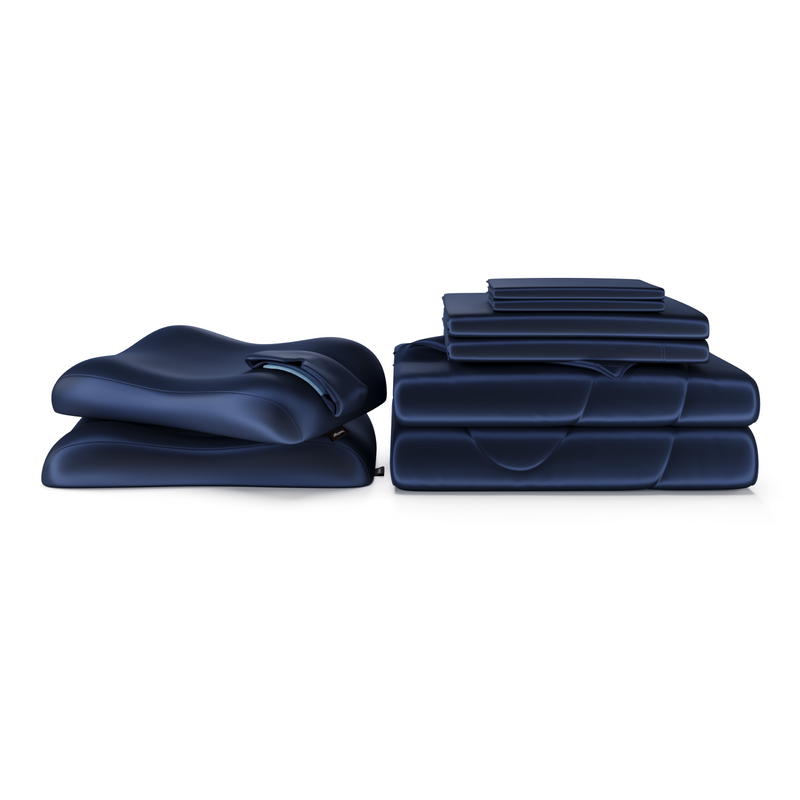
The other half is buying deliberately. Pillows are almost always bought in pairs, sheets in sets, and cases in multiples — which is why most of the cooling bedding range is sold that way rather than as single items.
What to Do With the Old Ones
Bedding is bulky, and most of it does not need to go in a bin.
Animal shelters take old sheets, blankets and pillows, including ones that are stained or misshapen but not soiled. Call first, because policies vary and some cannot take foam.
Textile recycling accepts natural fibers such as cotton in many areas. Blended and synthetic fabrics are harder to place, so check what your local scheme actually takes rather than assuming.
Reuse at home is the easiest route. Old flat sheets become dust covers for furniture, drop cloths for painting, and packing material for moving. Old pillows become floor cushions, pet beds, or padding.
Foam is the hardest to place. Shredded fill can be reused as stuffing for cushions and pet beds; solid foam cores rarely have a second life and usually need to be disposed of.
What not to do is keep them "for guests." A pillow that failed the fold test for you fails it for a visitor too, and the guest bed is where old bedding goes to be quietly inflicted on other people.
FAQ
How often should you replace pillows?
Fiber fill one to two years, solid memory foam two to three, shredded fill two to four since it can be topped up. The tests matter more than the calendar: a pillow that no longer holds your head at the right height is finished whatever its age.
How long do sheets last?
Two to three years in weekly rotation, four to five if you alternate two sets. The elastic in a fitted sheet almost always goes before the fabric, which is why a set can look perfect and still not stay on.
What is the fold test?
Fold the pillow in half and let go. One with life left springs back open on its own. One that stays folded, or opens slowly and partway, has lost its resilience. On memory foam, a crease that stays means the foam has broken down.
Is it worth owning two sets of sheets?
Yes. Each set goes through half the laundry cycles, so both last considerably longer, and you always have a clean set ready. Two sets rotated usually outlast two sets bought one after the other.
Can you just replace the pillowcase?
Only if the pillow still supports you. A new case fixes the surface and changes nothing about loft. If the pillow fails the fold test or you are waking stiff, a case will not help.
How often should a comforter be replaced?
Five to ten years, much longer than pillows because it is not compressed under concentrated weight. Watch for fill that has clumped permanently leaving cold spots, loft that no longer recovers after airing, and thinning at the edges. A cover or a flat sheet underneath extends that considerably.