
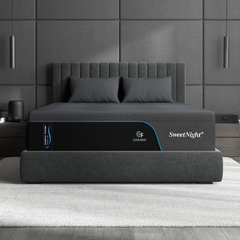
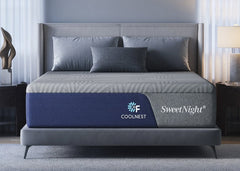
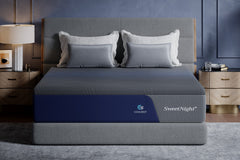
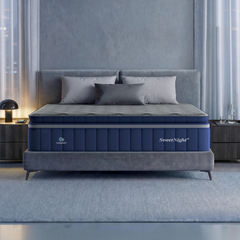

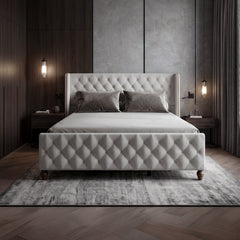
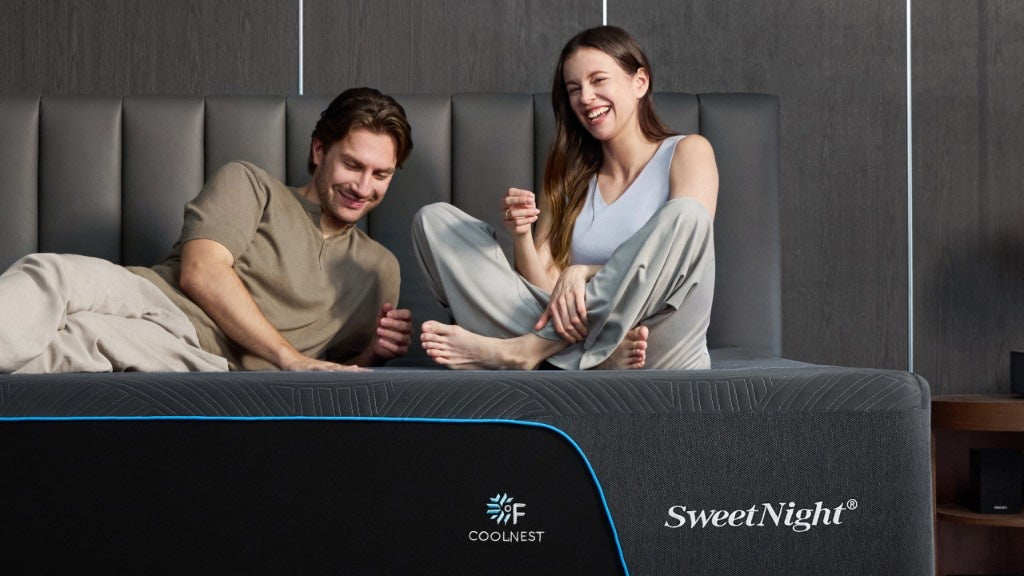
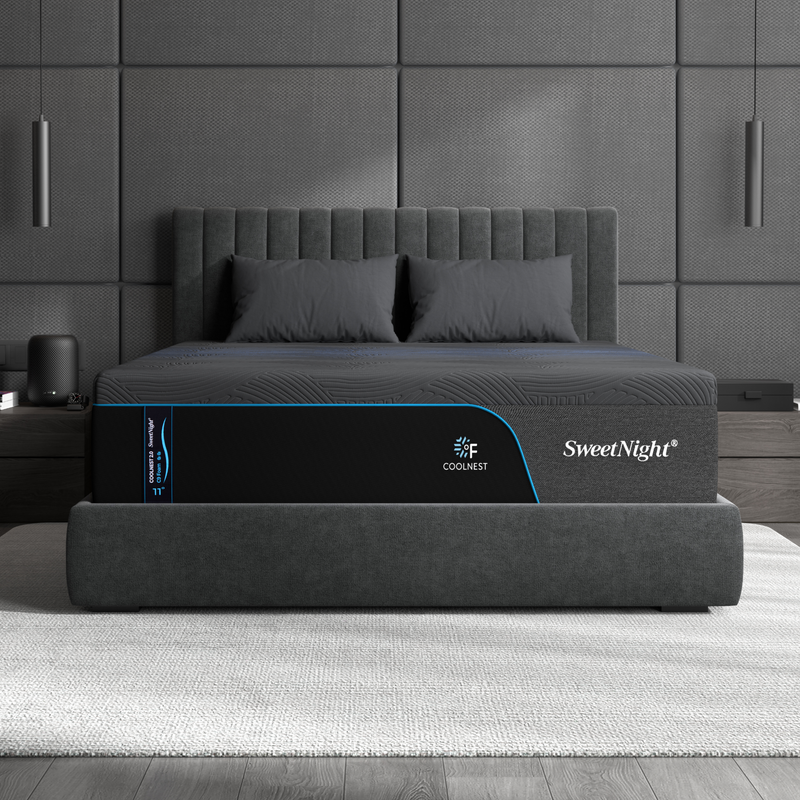
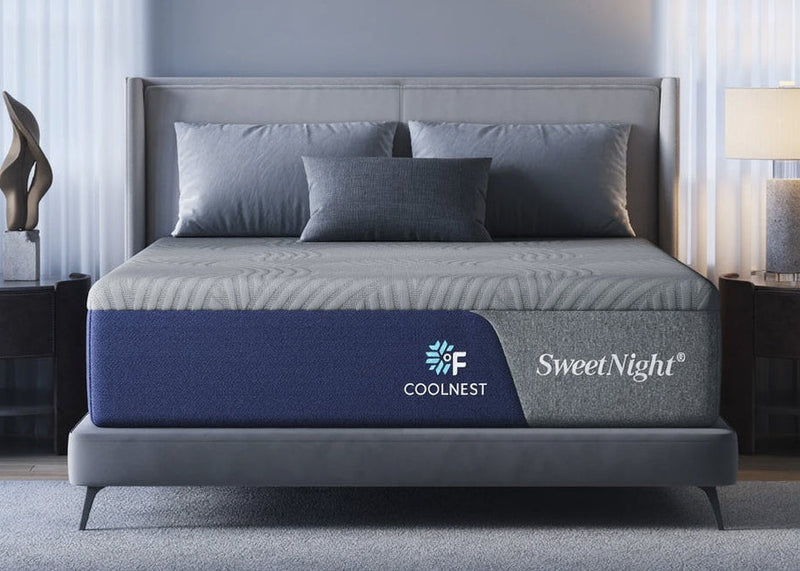
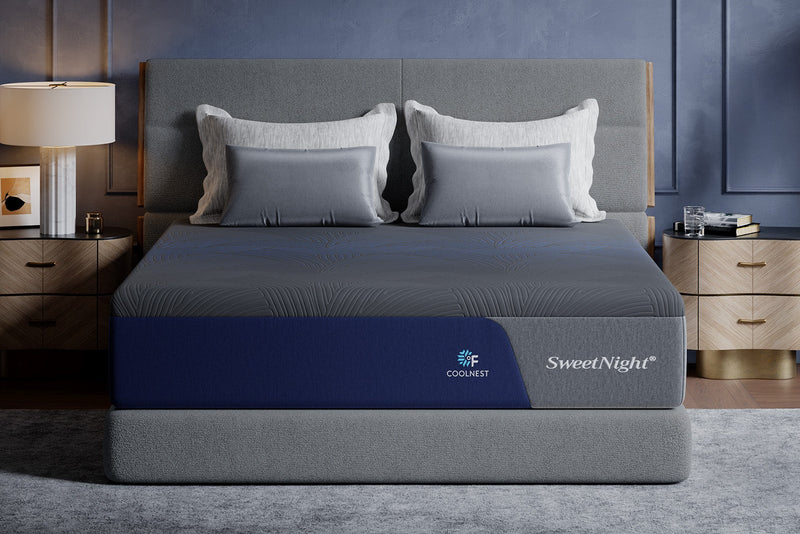

The massage on an adjustable bed frame is vibration. Motors in the base buzz the head and foot areas of the deck, and the mattress passes that hum through to your back and legs. It is pleasant and can help some people relax at bedtime. It is not a massage in the hands-on sense, and the research linking vibration to better sleep is small and weak. Buy a base for its positions, and treat massage as a bonus you might use a few nights a week.
What Is the Massage on an Adjustable Bed, Exactly?
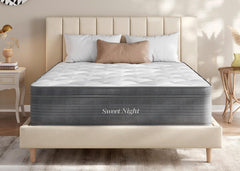
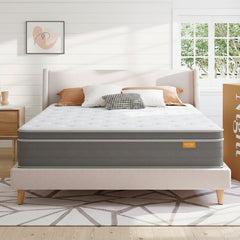
Strip away the product names and every adjustable massage bed does roughly the same thing: vibration motors under the head end and the foot end of the deck, an intensity control, and usually a timer. Spec sheets differ mainly in the number of zones, the number of intensity levels and whether there is a timer. None of them knead, press or target a specific muscle the way hands do. What reaches you has also passed through the mattress, 12 or 14 inches of foam on a memory foam model, so it feels more like a steady hum spread across your upper back or calves than pressure on a knot.
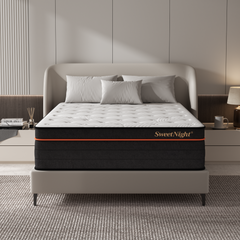
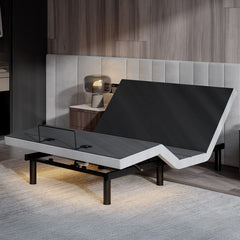
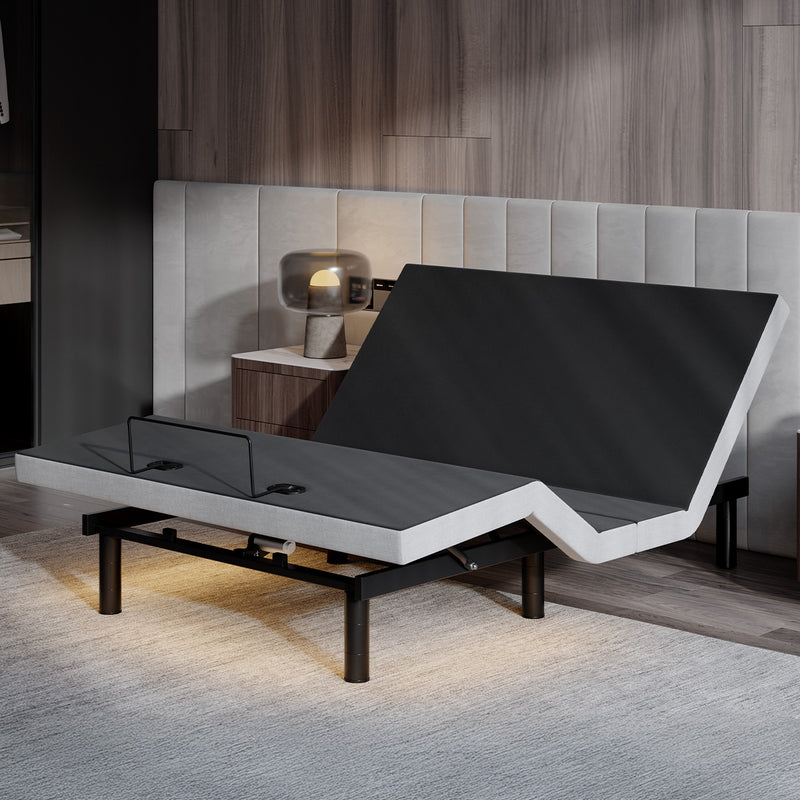
As an example of a typical setup, the SweetNight SenseSync™ Adjustable Bed Base (disclosure: SweetNight makes it) has head and foot vibration, three intensity levels and an automatic shut-off after 30 minutes. That is the whole feature. We would rather tell you that plainly than dress it up as "therapy."
Adjustable Massage Bed vs. Real Massage
People searching for an "adjustable massage bed" often picture something closer to a massage chair or a session with a therapist. It helps to put the three kinds of motion people talk about side by side.
| Hands-on massage | Adjustable bed "massage" | Rocking beds in sleep research | |
|---|---|---|---|
| What moves | A therapist's hands press and knead muscle | Motors vibrate the deck under the head and foot areas | The whole bed sways slowly |
| Pressure on muscle | Targeted and adjustable | Very little; filtered through the mattress | None |
| Speed | Varies with technique | A fast buzz | Very slow, one sway about every 4 seconds (0.25 Hz) |
| Sleep evidence | Low-certainty evidence, mostly in hospital ICU patients | No direct studies found | Small studies of 18 or fewer people |
| Best use | Muscle tension, recovery | Winding down, a relaxing ritual | Not available as a consumer feature we could verify |
The middle column is the one you are buying. Keep it in mind whenever a product page borrows language from the other two.
Do Massage Beds Work? What the Research Actually Shows
Most "massage improves sleep" claims lean on a handful of studies that tested something quite different from a bed-frame vibration motor. Here is what each one found, and how far it stretches.
Slow rocking: the strongest results, and the least relevant
In a 2019 Current Biology study of a whole-night rocking bed, 18 young adults slept on a bed that swayed gently at 0.25 Hz. Compared with a still night, rocking shortened the time to reach non-REM sleep, lengthened deep N3 sleep and cut arousals. An earlier 2011 paper in the same journal, titled "Rocking synchronizes brain waves during a short nap," found similar effects during an afternoon nap. Interesting science. But this is slow, whole-body motion, like a hammock, and it is a different stimulus from a motor buzzing under your shoulders.
Low-frequency vibration: gentler worked better
A 2017 study of a sleep-inducing vibration bed tested an engineering prototype on 10 people. Vibration shortened the time it took to fall asleep compared with no vibration. The detail that matters for shoppers: motion so small people could barely feel it (2.4 mm amplitude) worked better than motion they clearly felt (7.5 mm). The prototype also moved at a slow 0.5 Hz. If anything, this study argues against turning a bed massage up to its highest setting at bedtime.
Vibration for insomnia: a trend, not a finding
The closest match to a bed massage is a 2021 pilot of beat-frequency vibration in people with insomnia. With 14 participants with mild to moderate insomnia, it found a trend toward falling asleep sooner, with a p-value of 0.068. That misses the usual 0.05 cut-off for statistical significance. It is a reason for a bigger study, not a reason to buy a bed.
Hands-on massage: low-certainty evidence in hospital patients
A 2023 review and meta-analysis of massage and sleep quality covered 10 randomized trials with 569 participants and found that massage, especially foot reflexology, improved how critically ill patients rated their sleep. The authors graded the overall certainty of evidence as low. These were people in intensive care receiving massage from a person, which tells us little about healthy adults lying on a vibrating base at home.
So what can you honestly expect?
Put together, the research supports a modest statement: a gentle, pleasant sensation at bedtime may help some people relax. It does not show that bed massage helps you fall asleep faster, sleep deeper or wake less. Any seller claiming those outcomes for a vibration motor is borrowing results from rocking beds and ICU wards.
How to Use the Massage on an Adjustable Bed
If you already have the feature, or you're weighing a base that includes it, these habits get the most out of it:
- Start low. Given the prototype result above, begin on the lowest intensity. A strong buzz is fun for a minute and more likely to keep you alert than make you drowsy.
- Use it as a wind-down, not a sleep aid. Pair it with the part of the evening when you are already settling: a chapter of a printed book, a podcast, the lights down. Let it be one cue among several that the day is over.
- Let the timer do its job. Most people fall asleep with the massage running at some point. An auto-off timer means it stops without you. On SenseSync the vibration shuts off after 30 minutes; if your base has no timer, set one on your phone.
- Combine it with a position. Massage feels better when your body is supported. Zero gravity, with the knees bent and legs raised, is the popular pairing; our guide to the zero gravity position explains what that preset does and what it doesn't.
- For heavy legs, elevation does the work. After a long day standing, foot-section vibration feels good. The part with medical backing is raising your legs above heart level, which is what drains fluid. See our guide to sleeping with legs elevated for heights and timing.
One more practical note: vibration and a sliding mattress are an annoying combination. If the mattress creeps toward the foot when the head is raised, make sure the retainer bar is fitted.
Noise, Vibration and Your Partner
Two different things can bother a bed partner: sound and motion. Sound is the easier one to measure. SweetNight's specification for the SenseSync base is 48 dB or less with no load and 50 dB or less with a load on it. The spec doesn't list the vibration motors separately, so treat it as a guide to the base overall. For a sense of scale, a Purdue University decibel chart puts a library at around 40 to 44 dB and a quiet suburb or conversation at home at about 50 dB, while the NIH's hearing institute lists normal conversation at 60 to 70 dBA. The Purdue chart relies on older secondary sources, so read it as a rough comparison.
Motion is the bigger issue, and no decibel number captures it. On a single Queen or Full base, the deck is one piece, so vibration under your side reaches your partner through the mattress too. A foam mattress damps some of it; it won't hide it from a light sleeper. For how a partner's movement affects your sleep more generally, see why partner movement disrupts sleep.
The fixes, in order of cost: use massage before your partner comes to bed, keep it on the lowest setting, or choose a Split King. A Split King is two Twin XL bases side by side, each with its own remote, so one side can vibrate while the other stays still. On SenseSync the two bases can also be paired to move together when you both want the same position.
Who Should Skip Bed Massage
Massage is an easy feature to ignore, which is the best thing about it. Still, some buyers get little from it:
- Anyone buying mainly to sleep better. The evidence isn't there. If sleep itself is the problem, a doctor or a behavioral sleep program will do more than any motor.
- Couples on one base with a light sleeper. Unless you can agree on timing, the feature will cause more friction than relaxation.
- People who want real muscle work. For a stiff back or sore calves, a therapist, a foam roller or a handheld massager applies actual pressure. A bed can't.
If you have a health condition, are pregnant or use an implanted medical device, read the product manual's warnings and ask your doctor before using vibration regularly. We didn't find research on bed vibration in those groups, which is a reason to ask, not a reason to assume it's fine.
Is an Adjustable Bed With Massage Worth It?
Our view: massage is a nice extra and a poor reason to pick one base over another. The features you will use every night decide whether a base is any good. Check these first, and let massage break a tie.
| What to check | Why it matters more than massage |
|---|---|
| Independent head and foot motors | Needed for reading, snoring, reflux and leg positions |
| Weight capacity | Must cover the mattress plus everyone on the bed |
| Noise spec in dB | You'll hear the motors every time you adjust |
| Warranty structure | A "10-year" warranty can narrow after the first years; read which parts are covered when |
| Mattress compatibility | The base bends the mattress at its hinges every time it moves |
| Massage: zones, levels, auto-off timer | A timer matters most, since you'll fall asleep with it on |
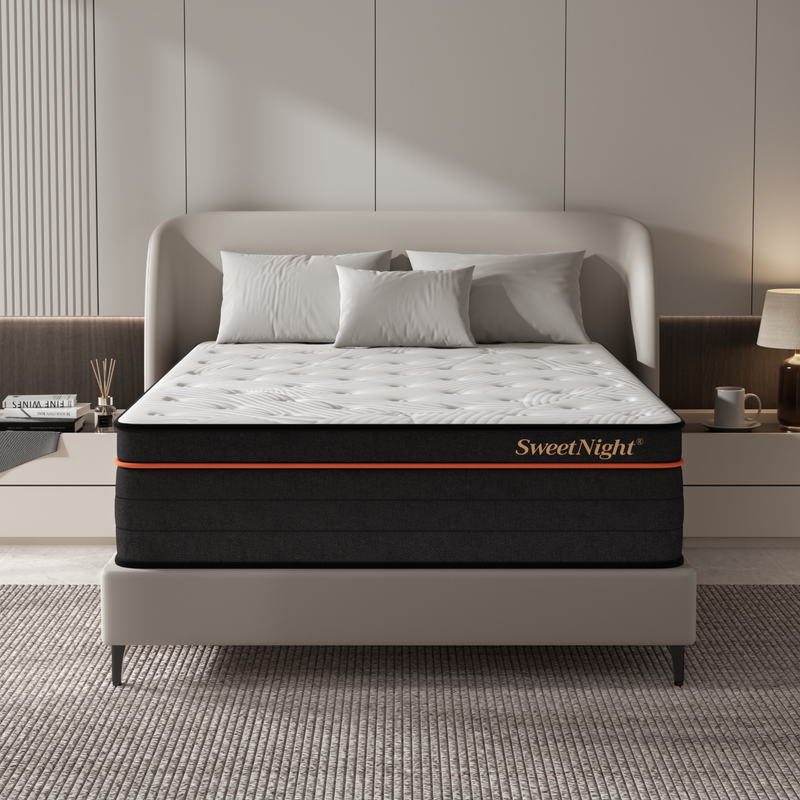
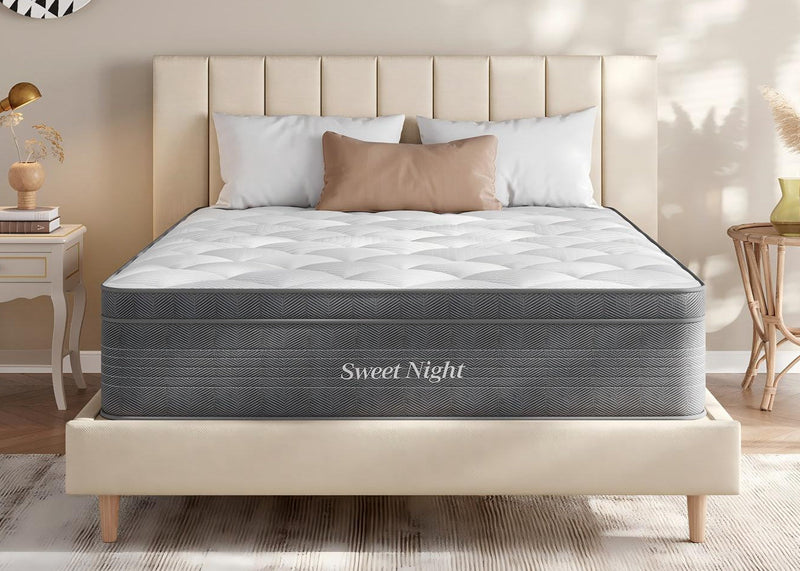
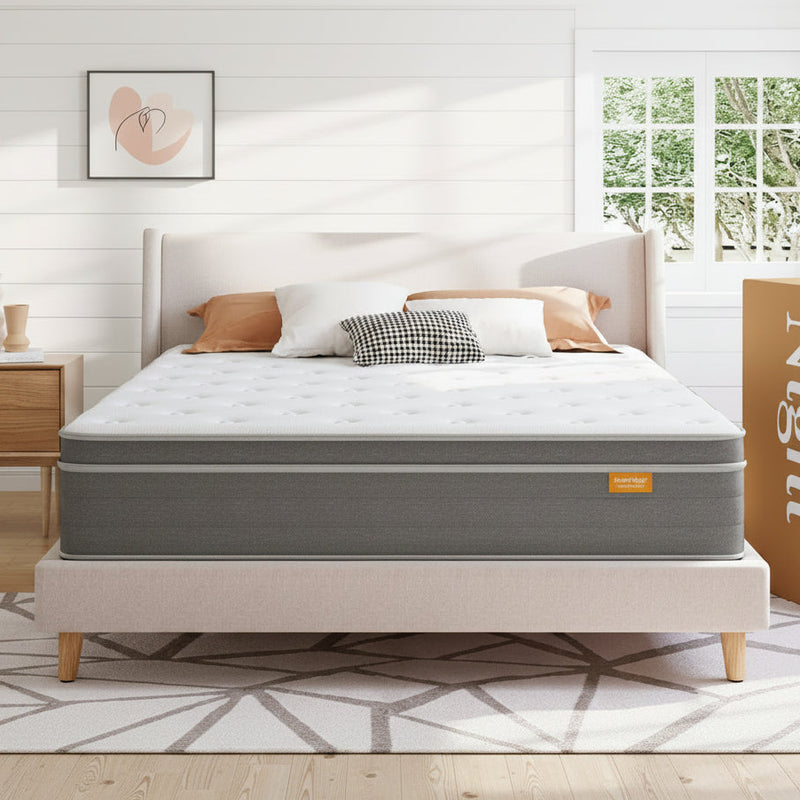
On the mattress point, SweetNight pairs SenseSync only with all-foam memory foam mattresses 12 or 14 inches thick, because foam bends evenly at the hinges. The base itself has two independent motors, 750 lb capacity on Full and Queen (400 lb on Twin XL, per side on Split King), and a 10-year limited warranty in which years 3 to 10 cover the frame only. The massage is there when you want it. The full spec sheet is on the SenseSync adjustable bed base with massage page.
For the rest of the decision, our guide to choosing an adjustable bed goes spec by spec, and are adjustable beds worth it helps you decide if you need one at all.
FAQ
Do massage beds work?
They work as a relaxation feature, not as a sleep treatment. The massage on an adjustable bed is vibration from motors in the base, felt through the mattress. Research on motion and sleep is small and mostly tests slow rocking, not vibration, and a pilot study of vibration in people with insomnia found only a non-significant trend. Expect a pleasant hum that may help you unwind, not deeper sleep.
Is it safe to fall asleep with the massage on?
For most people, falling asleep during a session is the normal use case, which is why a good base shuts the massage off on its own. Look for an automatic timer so the motors don't run all night. If you have a health condition, are pregnant or use an implanted medical device, read the product manual's warnings and ask your doctor before using vibration regularly.
Can the massage on an adjustable bed help you fall asleep faster?
There is no good evidence that it does. The studies that found faster sleep onset used very slow whole-bed rocking or barely perceptible low-frequency motion in small groups of 10 to 18 people. One vibration study found gentler motion worked better than stronger motion. If a low setting relaxes you, use it as part of a wind-down routine, but don't rely on it.
Will adjustable bed massage wake up my partner?
On a single Queen or Full base, your partner will usually feel some vibration through the shared mattress, and that is more noticeable than the sound. Start on the lowest intensity and keep sessions short. If one of you uses massage every night and the other is a light sleeper, a Split King setup with two separate bases and remotes solves the problem.
Is an adjustable bed with massage worth it?
Only as a bonus. Buy an adjustable base for what it does every night: positions for reading, snoring, reflux or tired legs, plus quiet motors, enough weight capacity and a clear warranty. If two bases are otherwise equal, massage with an auto-off timer is a nice extra. Paying a large premium for massage alone rarely makes sense.