















You know the moment. You’ve finally drifted off, and then the mattress dips, the whole surface tilts, and your partner is rolling over or climbing out of bed for a glass of water — and just like that, you’re awake. Maybe they didn’t even make a sound. It wasn’t the noise that got you; it was the movement, that little earthquake traveling across the bed straight into your side. If you’ve ever wanted to lie perfectly still and beg the universe to let your partner just stop moving at night, you already know how much partner movement can wreck otherwise decent sleep.
Here’s the thing worth saying up front: this isn’t you being dramatic, and it’s usually not your partner being inconsiderate. Feeling every roll, shift and exit is a real, measurable property of the bed you’re sleeping on — some mattresses pass movement across the whole surface, and some absorb it so completely that you could sleep through a toddler doing cartwheels on the other side. Understanding why partner movement disrupts sleep, and what actually stops it, is the difference between two people quietly resenting each other at 3 a.m. and two people genuinely sleeping through the night together. Let’s get into it.
Why Does My Partner Waking Up Wake Me Too?

Start with what’s physically happening. A mattress is a big connected surface, and when your partner presses down on one part of it — rolling over, sitting up, getting in or out — that force doesn’t just stay where they are. Depending on what the bed is made of, it can ripple outward, lifting and dropping your body a little as the surface flexes. Your side of the bed literally moves, and your sleeping brain registers that shift the same way it registers a nudge.
Why does such a small motion wake you when a much louder situation during the day wouldn’t? Because sleep runs in cycles, and several times a night you rise close to the surface into lighter stages where the smallest disturbance can tip you all the way awake. A partner rolling over at the wrong moment — right when you’re in light sleep — is perfectly timed to pull you out. Your brain stays partly on watch even while you sleep, and sudden motion reads as something worth checking on.
There’s also a simple math problem: two adults, two different sleep schedules, two bladders, two sets of restlessness. Even a couple who both sleep reasonably well will generate a lot of movement across a night between them — and every single one of those movements is a chance for the other person to surface. So the question isn’t really “why does my partner wake me,” it’s “why does my bed carry their movement to me at all,” and that’s the part you can actually change.
What Is Motion Transfer in a Mattress?
The technical name for the thing ruining your night is motion transfer — how much a mattress passes movement from one part of the surface to another. Its opposite, the property you want, is called motion isolation: a bed with good motion isolation absorbs movement locally, so pressing down on one spot barely disturbs the area a foot away.
You’ve probably seen the marketing demo — a glass of red wine set on a mattress while someone drops a bowling ball or jumps beside it, and the wine doesn’t spill. That’s a slightly theatrical way of showing motion isolation, but the physics is real. On a bed that isolates motion well, energy from a movement gets absorbed and dissipated by the material right where it happens instead of traveling sideways. On a bed with poor isolation, that energy spreads across the whole surface like a ripple in a pond, and everything on the bed — including you — moves with it.

This matters more the closer you sleep to your partner and the lighter a sleeper you are. If you’re a deep sleeper on a king bed with plenty of space between you, motion transfer might barely register. But if you’re a light sleeper, or you’re sharing a smaller bed, or your partner is naturally restless, motion isolation stops being a nice-to-have and becomes the single feature most likely to decide whether you two sleep well together. It’s the property to understand before you blame anything else.
Why Some Mattresses Transfer Movement More Than Others
Whether a bed carries your partner’s every move comes down almost entirely to what’s inside it. Different materials handle a jolt of energy in completely different ways, and this is where a lot of couples unknowingly set themselves up for years of interrupted sleep.
The biggest culprit is a traditional innerspring or an older coil bed where all the springs are wired together into one connected unit. Push down on one coil and it tugs on its neighbors, which tug on theirs, and the movement travels clear across the mattress. That connected-coil design is fantastic at bounce and airflow, but it’s close to the worst-case scenario for motion isolation — it’s practically built to transmit movement. If you’re on an old spring bed and feel every roll, the bed is doing exactly what its structure makes it do.

Firmness and age play a role too. A sagging, worn-out mattress that’s lost its structure tends to move as one floppy unit, so a dip on one side pulls the whole surface. And a very bouncy, springy surface — the kind that pushes back fast — naturally rebounds energy outward rather than swallowing it. The materials that fight motion transfer best are the ones that absorb and slowly release energy instead of snapping it back, which is exactly why the next comparison matters so much.
Memory Foam vs Innerspring: Which Isolates Motion Better?
If you only take one practical thing from this article, make it this: for couples who wake each other up, memory foam is almost always the answer, and it beats a traditional innerspring at motion isolation by a wide margin. This is one of memory foam’s genuine, undisputed strengths — not marketing, just how the material behaves.
Memory foam is viscoelastic, which is a fancy way of saying it responds slowly and absorbs energy rather than bouncing it back. When your partner rolls over, the foam compresses right where their weight lands and quietly absorbs the movement instead of springing it across the bed. Two feet away, on your side, you feel almost nothing. That deadening, motion-swallowing quality is the whole reason memory foam earned its reputation for couples — the same slow-sinking feel that hugs your body also refuses to pass along a jolt.
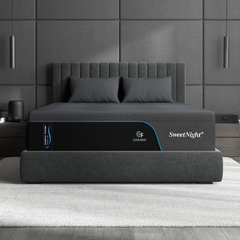
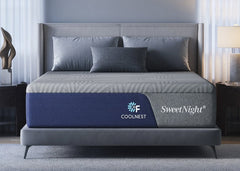
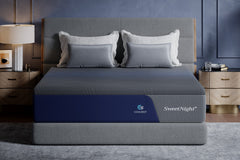
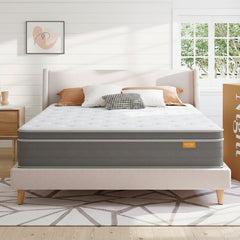
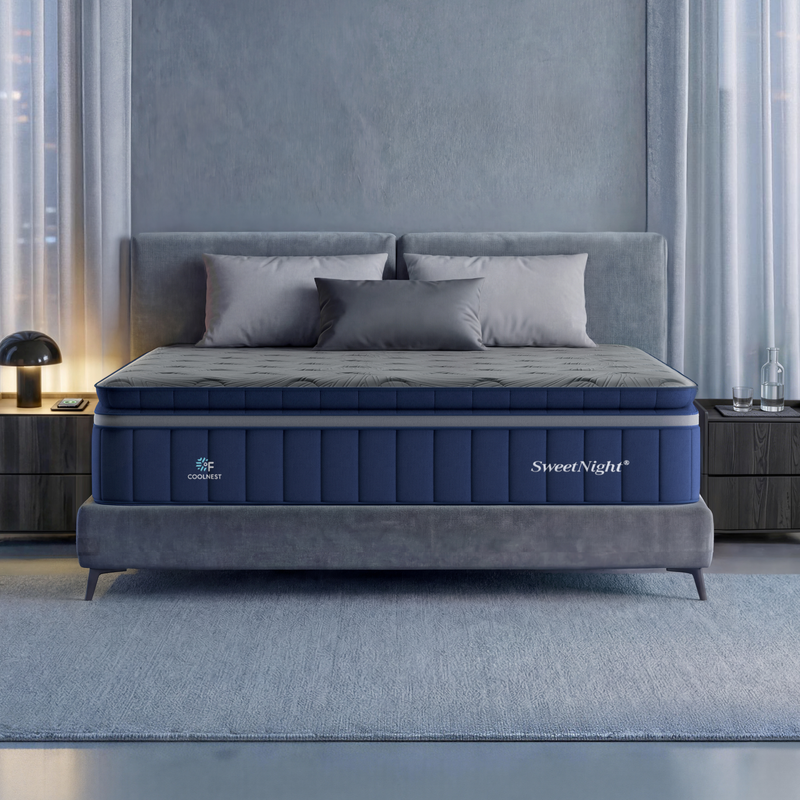
Innerspring beds sit at the opposite end. Their bounce comes from steel coils that store and release energy fast, and connected coils share that energy across the surface. Great for some things; terrible for sleeping next to a restless partner. Hybrids — foam comfort layers over individually wrapped (pocketed) coils — land in the middle: the pocketed coils move more independently than old connected ones, and the foam on top absorbs a lot, so a good hybrid isolates motion far better than a pure innerspring, if not quite as completely as an all-foam bed. If partner movement is your number-one complaint, a quality memory-foam mattress like the ones in the CoolNest® family is the most reliable fix, because it attacks the problem at the material level.
How Partner Movement Affects Light Sleepers and Couples
Motion transfer doesn’t hit everyone equally, and it helps to know where you fall so you can gauge how much it’s actually costing you. The two groups it punishes hardest are light sleepers and mismatched couples, and plenty of people are both.
Light sleepers have a lower waking threshold — smaller disturbances get through, and once awake they’re slower to fall back asleep. For someone like that, a movement a deep sleeper would sleep straight through becomes a full wake-up followed by twenty minutes of staring at the ceiling. If you’re the light sleeper in your relationship and your partner is the one who sleeps like a log and rolls around freely, the bed’s motion isolation is doing more for your sleep than almost anything else, because you’re absorbing the cost of every move they make.

Then there are mismatched schedules and bodies. One partner is a night owl coming to bed hours later; the other is up first for work. One gets up twice a night; the other never stirs. One outweighs the other by fifty pounds, so their movements press deeper and travel further. Every one of those mismatches multiplies the number of disturbances crossing the bed. Couples in this situation often slowly drift toward sleeping badly, snapping at each other, or even talking about separate rooms — when the real problem is a mattress that refuses to keep one person’s movement on their own side. Fix the bed and a surprising amount of that friction just evaporates.
And it’s not only your partner. Anyone or anything that shares the bed adds to the motion load: a dog that circles and resettles three times a night, a cat that stakes out the foot of the mattress, a kid who climbs in at 5 a.m., a pregnant partner shifting constantly to get comfortable. Each of them presses into the surface and sends movement outward the same way an adult rolling over does. Parents and pet owners tend to assume this is just the price of a full bed, but a lot of it isn’t the company — it’s the surface carrying the company’s every move to your side. A bed that isolates motion doesn’t just tame a restless partner; it quietly absorbs the dog, the kid and the 2 a.m. repositioning too, which is why the fix pays off even more in a crowded bed than a two-person one.
Does a Bigger Mattress Help With Partner Movement?
A common instinct — and a reasonable one — is to throw size at the problem: go from a queen to a king and put more space between the two of you. It does help, but it’s worth understanding exactly how much, because size alone doesn’t solve the underlying issue.
More width genuinely reduces disturbance in two ways. First, distance: the farther apart you sleep, the more the ripple from a movement fades before it reaches you, since it weakens as it travels. Second, freedom: on a bigger bed, each person can shift and stretch without crowding the other, so there’s simply less bumping and jostling to begin with. For couples who currently share a full or a queen and feel cramped, sizing up to a king or split king often makes a noticeable difference on its own.
But — and this is the catch — a bigger bed made of the wrong material still transfers motion; it just gives that motion a longer runway to fade over. A king-size innerspring will still carry a hard roll across to your side. The most effective setup is the combination: a mattress size that fits your bodies and sleep styles and a material that isolates motion in the first place. Get both right and you’ve attacked the problem from two directions at once — more distance for the movement to die out, and a surface that kills most of it immediately. Size is a helpful lever, not a substitute for good motion isolation.
How to Stop Feeling Your Partner Move at Night
Let’s turn all of this into an order of operations, from the changes that cost nothing to the one that fixes it for good. Most couples don’t need every step — they need the two or three that hit their situation.
- Add distance where you can. If your bed allows it, sleep a little farther apart, and if you’re on a cramped full or queen and can upgrade, more width buys real relief.
- Look at your current mattress honestly. If it’s an old innerspring or a sagging bed that moves as one floppy unit, no accessory will fully fix the motion transfer — the structure is the problem.
- Try a mattress topper as a stopgap. A few inches of quality memory foam on top of a bouncy bed will absorb some surface motion and take the edge off, buying you time even if it’s not a complete fix.
- Consider a split setup. Split-king configurations, or even two separate mattresses pushed together, let each person’s movement stay entirely on their own side — popular with couples who’ve tried everything else.
- Replace the surface with one built to isolate motion. The permanent fix is a mattress whose materials absorb movement instead of passing it — a memory-foam or foam-heavy hybrid design. This is the step that actually ends the 3 a.m. wake-ups.
Work down the list and notice what changes. For a lot of couples, the topper is a revealing test: if a few inches of foam on top noticeably cuts the disturbance, that’s a strong sign the full fix — a proper motion-isolating mattress — will solve it outright.
What to Look For in a Mattress for Couples Who Wake Each Other
If you’ve decided the bed is the problem, here’s how to choose a replacement that actually addresses partner movement — because “good for couples” on a product page can mean a lot of different things.
Prioritize motion isolation first. That points you toward all-foam beds or hybrids with generous foam comfort layers over pocketed (individually wrapped) coils, and away from traditional connected-coil innersprings. Memory foam is the gold standard here; a well-built foam or foam-topped hybrid will absorb the vast majority of your partner’s movement before it ever reaches you. But motion isolation shouldn’t be the only box you check, because the classic complaint about dense foam is that it sleeps hot — and two bodies already make a bed run warmer, so a heat-trapping foam can trade one problem for another.
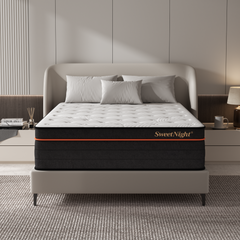
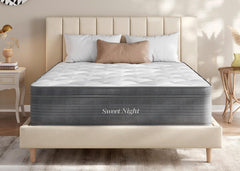
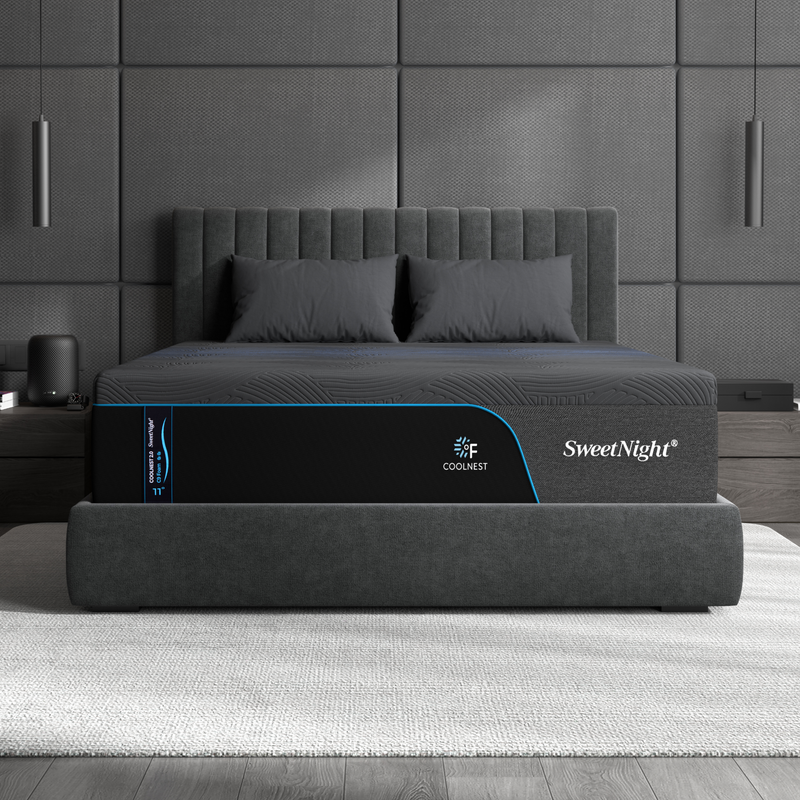
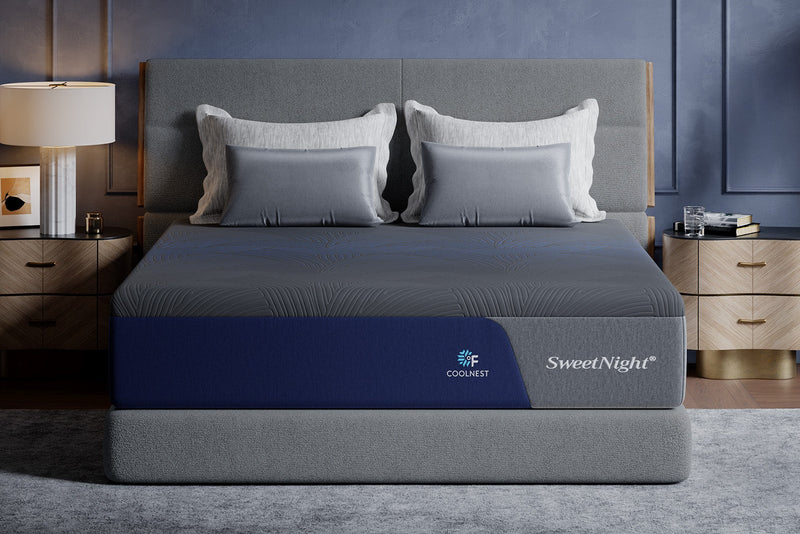
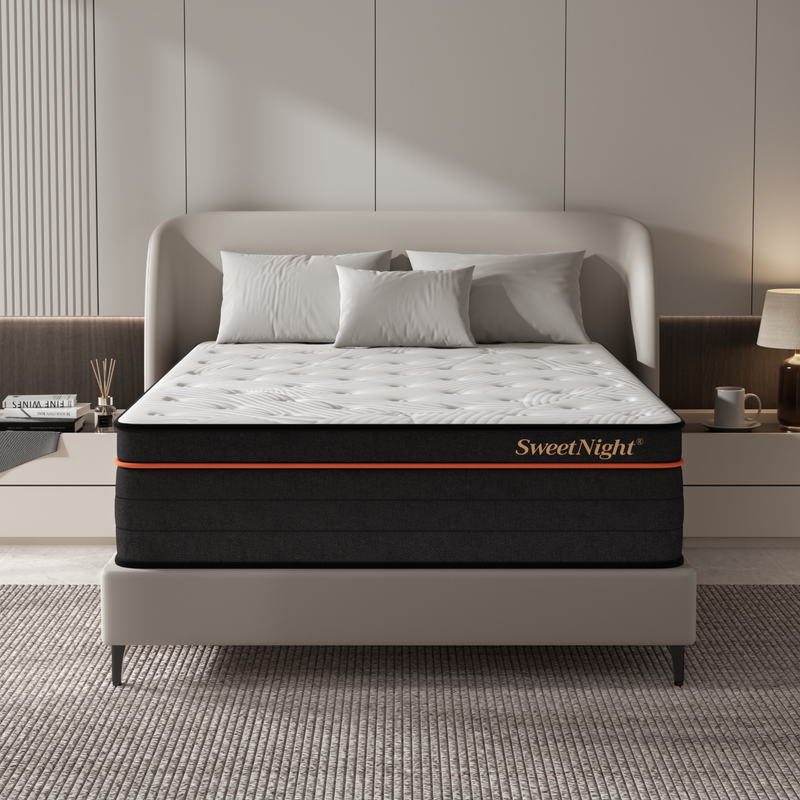
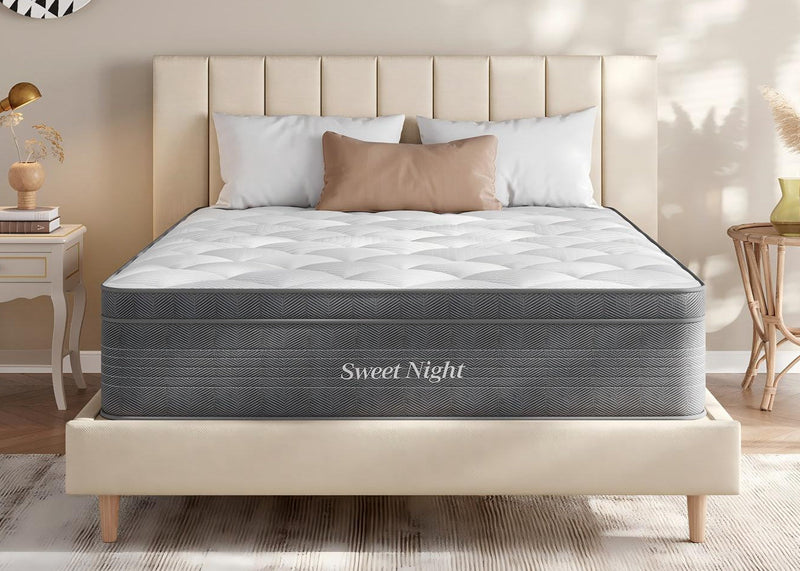
That’s why the sweet spot for couples is a mattress that isolates motion and stays cool. Modern cooling memory foam is engineered to do both: the viscoelastic material swallows movement the way memory foam always has, while gel infusions, ventilation channels and a breathable cover keep the surface from turning into a heat trap. A bed like the CoolNest® Ultra is designed around exactly this pairing — strong motion isolation so a restless partner doesn’t drag you awake, plus multi-layer cooling so sharing the bed doesn’t leave you both sweating. If you share a bed, don’t solve motion and ignore temperature, or vice versa; the mattress that lets couples sleep well handles both at once. It’s worth browsing a focused cooling mattress lineup with couples in mind rather than grabbing the first foam bed you see.
What an independent scorecard found
If you would rather have a third-party read than a brand claim, there is one worth knowing about. Sleep Doctor's product testing team took objective measurements of surface vibrations across all three heights of the SweetNight CoolNest Ultra and gave it a perfect 10 out of 10 for motion isolation, writing that it is "among the strongest we've seen" and that its foam layers "absorb nearly all vibrations big and small." The result held on every version they tested: "each design isolates enough motion to prevent you and your partner from awakening when the other person changes positions during the night."
A second independent outlet reached the same conclusion by a different route. Mattress Nut scored the CoolNest Ultra 84/100 on its Motion Isolation Coefficient as part of a 9.0/10 overall rating, attributing the result specifically to the all-foam structure - no coil layer means no spring system to carry a movement sideways. When two independent teams using unrelated scoring frameworks both put a mattress near the top of this category, that is a more reliable signal than either score alone. Read the Mattress Nut review.
A third team has since measured the same property. NapLab scored motion transfer 8.8/10 within an 8.5/10 overall rating, its highest for any SweetNight mattress. That is high rather than flawless, so 8.8 is the more conservative figure to plan around. Sleep Foundation — part of Sleep Doctor rather than a separate team — repeated the perfect 10 and put it plainly through editor Logan Foley: "It's hard to find a mattress that isolates motion better than the CoolNest Ultra. Whether it's pets or people moving on the other side of the bed, you barely notice any vibrations at all." See all four scorecards.
That "big and small" distinction is exactly the problem this article is about. Plenty of mattresses damp the obvious jolt of someone climbing out of bed and still pass along the small shifts that pull a light sleeper up out of deep sleep without fully waking them. The trade-off the same review flags is edge support, scored 6.0 - a general characteristic of all-foam beds, and worth weighing if you both sleep right out to the sides of the mattress.
When Partner Movement Is a Sign of Something Else
Most partner-movement problems are just a bad mattress meeting a light sleeper, and a better bed fixes them. But once in a while, the movement itself is worth paying attention to, because it can point at something going on with the person doing the moving.
If your partner isn’t just occasionally rolling over but is genuinely restless — thrashing, kicking, jerking their legs repeatedly, or never seeming to settle — that can be a sign of restless legs, periodic limb movements in sleep, or disrupted sleep from something like sleep apnea, where the body keeps surfacing and shifting all night. In those cases the movement is a symptom, and the tossing partner is often sleeping badly too, even if they don’t remember waking. A mattress that isolates motion will protect your sleep from the fallout, which is genuinely worth doing — but it won’t address why they’re moving so much in the first place.
So use a little judgment. If your partner moves a normal amount and your bed just transmits it, that’s a mattress problem, full stop — fix the bed and enjoy the quiet. But if their movement seems excessive, is paired with loud snoring or gasping, or leaves them exhausted despite a full night in bed, it’s worth a gentle conversation and maybe a doctor. You can protect your own sleep with the right mattress and help them look into what’s making them so restless; those aren’t either-or.
Building a Bed Two People Can Actually Sleep Through
Sharing a bed is supposed to be one of the nice parts of being with someone, not a nightly test of how still you can lie. And the frustrating truth is that a huge share of the “we just sleep badly together” problem isn’t about the relationship at all — it’s about a surface that carries every movement from one body to the other and hands you both a fragmented night.
Pull the pieces together and the path is clear. Partner movement wakes you because your mattress transfers motion; the fix is a bed that absorbs it instead — memory foam or a foam-heavy hybrid rather than a bouncy innerspring — ideally with enough size to give each of you room and enough cooling that two bodies don’t overheat. Add the cheap stuff too: a topper as a test, a little more distance, steadier bedtimes. But the anchor of the whole thing is the material under you, because that’s what decides whether your partner’s 3 a.m. trip to the bathroom is a non-event or the start of an hour of you lying awake.

Get that right and something small but real changes. Your partner can roll over, get up, come back, shift a hundred times — and you stay asleep, never knowing it happened. That’s not a fantasy or a marketing promise; it’s just what a bed with good motion isolation does. If partner movement has been quietly stealing your sleep, the most effective move you can make isn’t sleeping farther apart or in another room — it’s putting a surface between you that keeps each person’s movement where it belongs, on their own side, so both of you finally get to sleep the night through together.
If your mattress is part of the problem, here's how the CoolNest® range splits:
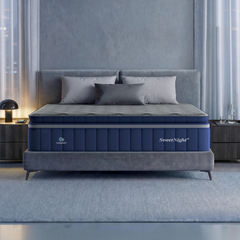
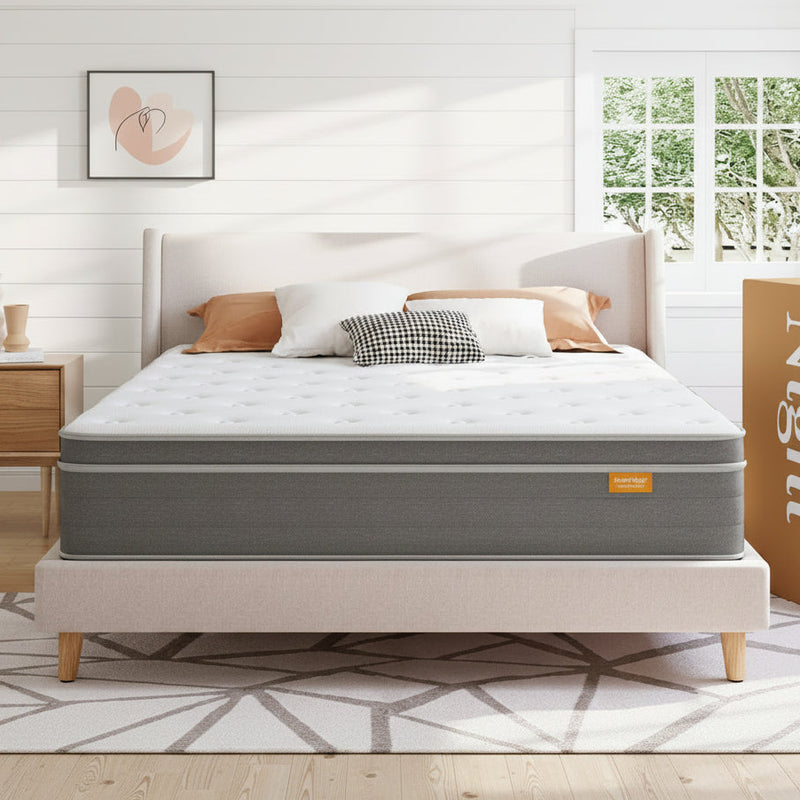
- CoolNest® Hybrid Mattress: pocketed coils under a DuoSense™ pillow top. Pick this one if you want bounce, firm edges and less partner motion.
- CoolNest® Memory Foam Mattress: the lowest-priced model in the range, all-foam with 5-zone support and a breathable 3D-woven cover.
- CoolNest® Pro and CoolNest® Ultra: the step-up foam models, with PCMflux® temperature-regulating foam and 7-zone support. Ultra adds AirMesh™ foam and feels up to 11° cooler.
- Current prices on every size and thickness are on the Fall Sale page, or browse all mattresses.