


















Walk into any mattress conversation and someone will confidently tell you firm is better for your back. Someone else will insist soft is the only way to sleep. They cannot both be right for you, and honestly, they are probably both wrong for you, because mattress firmness is not a quality ranking. It is a fit. A firm bed is not "better" than a soft one any more than a size 11 shoe is better than a size 8. It just depends whose feet, or in this case whose spine, we are talking about.
The trouble is that "soft," "medium," and "firm" are slippery words. One brand's medium is another brand's firm. So instead of chasing labels, let's figure out what each firmness level actually does to your body, how your sleep position and weight change the answer, and how to land on the right one without ordering three mattresses and playing roulette.
What Mattress Firmness Actually Means, and Why the Number Lies
Most companies rate firmness on a 1 to 10 scale, where 1 is a cloud and 10 is the floor. In practice, almost every mattress sold lands between 3 and 8, and the vast majority cluster around 5 to 7. A "soft" bed is roughly a 3 to 5, "medium" is around 5 to 7, and "firm" is 7 to 9. Nice and simple, until you realize there is no industry standard behind those numbers. Each brand decides its own scale, so a "medium-firm 6" from one maker can feel like another maker's "firm 8." It gets more confusing across borders. The 1-to-10 scale you see on U.S. sites is subjective and brand-defined, with no mandatory standard behind it, and it runs from 1 (softest) to 10 (firmest). The European and Chinese standards (EN 1957 and GB/T 43007-2023, which measure a lab value called Hs) run the exact opposite way, where 1 is the firmest and 10 is the softest. Same-looking numbers, reversed meaning, so a firmness rating only tells you something next to the brand and scale it came from.
Here is the part that trips people up most: firmness is not the same as support. Firmness is the immediate feel, how hard or soft the surface is when you first lie down. Support is whether the mattress keeps your spine in a healthy, neutral line all night. A soft bed can be supportive, and a firm bed can be unsupportive, if it is poorly built. You are not shopping for "hard" or "soft" as an end goal. You are shopping for the firmness that lets a well-built mattress hold your spine straight while relieving pressure on your joints.

So treat the firmness number as a rough starting point, not gospel. What actually matters is how a given firmness interacts with your body weight, your sleep position, and where you carry pressure. That is what the rest of this guide is really about.
What Does a Soft Mattress Feel Like, and Who Is It For?
A soft mattress lets you sink in. Lie down and the surface gives way, cradling your shoulders and hips, hugging the curves of your body. That deep, pressure-relieving contour is the whole appeal. For the right person it feels like being gently held, and it takes pressure off the sharp points, shoulders and hips, that otherwise dig into a harder surface.
Soft mattresses shine for side sleepers, especially lighter ones. When you lie on your side, your shoulder and hip stick out and need somewhere to go. A soft surface lets them press in so your spine stays level instead of getting bent upward at the hip. Lighter people also benefit because they simply do not weigh enough to compress a firm bed, so a firmer surface can feel like sleeping on a board, leaving their shoulders and hips aching from unrelieved pressure.

The catch is that a soft bed can let heavier sleepers and back or stomach sleepers sink too far. When your hips drop deeper than your shoulders, your spine bows like a hammock, and that is a recipe for lower back pain. Soft also tends to make moving around and getting out of bed feel like more work, since you have to climb out of the surface. If you love the sink-in feeling and you are a lighter side sleeper, a soft bed can be genuinely perfect, and it is worth browsing a curated soft mattress collection to see the range. Just go in knowing who it is and is not built for.
What Does a Medium Mattress Feel Like, and Why Is It the Safe Bet?
Medium, and especially medium-firm, is the crowd favorite for good reason. It splits the difference: enough give to cushion your shoulders and hips, enough support underneath to keep your spine from sagging. You feel cradled at the surface but held up from below. It is the firmness most sleep guides land on when they have to recommend one thing to a stranger, because it fits the widest range of bodies and positions.
The reason medium works so broadly is that most people are combination sleepers. You start on your side, roll to your back, maybe end up on your stomach for an hour. A medium surface is forgiving across all of those positions. It does not punish you for changing, the way a very soft bed punishes back sleeping or a very firm bed punishes side sleeping. If you genuinely do not know your position, or you switch all night, medium-firm is the statistically smart default.

It is also the firmness that plays nicest with couples who have slightly different preferences, since it is a livable compromise rather than a hard commitment to one extreme. If you are not sure where you fall and you want the lowest-risk starting point, a medium-firm mattress collection is the most sensible place to begin. It is the firmness you pick when you would rather be reliably comfortable than gamble on an extreme. And if you are buying for someone else, a guest room, a teenager, a spare bed that different people will use, medium-firm is almost always the right call, because it is the one setting that keeps the widest range of bodies and sleep styles reasonably happy without knowing anything about them in advance.
What Does a Firm Mattress Feel Like, and When Do You Need One?
A firm mattress keeps you up on top of the surface rather than letting you settle into it. You feel supported, stable, and buoyant. There is minimal sinkage, so getting in, out, and rolling over feels effortless. For the right sleeper, a firm bed feels clean and structured, with your weight spread evenly and no sense of being swallowed.
Firm mattresses are the go-to for stomach sleepers and many back sleepers, and often for heavier sleepers of any position. Stomach sleeping is hard on the lower back because your midsection is the heaviest part and it wants to sag into the bed, arching your spine backward. A firm surface stops that sag and keeps you flat. Heavier sleepers need firmer support because their weight compresses any surface more, so what feels firm to a lighter person can feel medium or even soft to them.

The downside is pressure. If you are a side sleeper or on the lighter side, a firm bed does not let your shoulder and hip sink in, so those joints carry your weight against an unyielding surface and you wake up sore and numb. Firm is support-forward, comfort-second, which is exactly right for some bodies and exactly wrong for others. If you are a stomach or heavier back sleeper who wakes with a sore lower back on softer beds, a firm mattress collection is likely where your fix lives.
Soft vs Medium vs Firm: How Your Sleep Position Decides Firmness
If you take one thing from this whole guide, make it this: your sleep position is the single biggest factor in choosing firmness, bigger than any label or personal preference. Match firmness to position and you are most of the way to a good night. Ignore it and no amount of premium materials will save you.
Side sleepers generally want soft to medium. Your shoulder and hip need room to press in so your spine stays straight from neck to tailbone. Too firm and those joints get crushed; you wake up with a dead arm and an aching hip. Back sleepers usually want medium to medium-firm. You need enough give to fill the curve of your lower back but enough support to stop your hips from sinking and your spine from sagging into a U. Stomach sleepers want medium-firm to firm. Your hips must stay level with your shoulders, and only a firmer surface stops your midsection from dropping and cranking your lower back.
Combination sleepers, who are most of us, should aim for the middle, medium-firm, and prioritize a surface responsive enough to move on without feeling stuck. The trap is buying for the position you think you sleep in versus the one you actually spend the most hours in. Pay attention for a few nights, or ask your partner, before you decide. Your dominant position, not your aspirational one, is what your mattress has to serve.
How Body Weight Changes the Right Mattress Firmness for You
Firmness is relative to the body pressing on it, and this is where a lot of otherwise good advice falls apart. The same mattress feels different under different weights, so two people can honestly give opposite reviews of the same bed and both be telling the truth. Weight changes how deep you sink and therefore how firm the bed effectively feels.
Lighter sleepers, roughly under 130 pounds, do not compress a mattress much, so firm beds feel even firmer, closer to sleeping on the floor. Lighter people usually need to size down in firmness, choosing soft to medium where an average-weight person might pick medium-firm, just to get enough contouring and pressure relief. Average-weight sleepers, roughly 130 to 230 pounds, experience firmness closest to how it is labeled, which is why most firmness ratings are calibrated to them.

Heavier sleepers, roughly over 230 pounds, compress every surface more and sink deeper, so a bed feels softer to them than the label suggests, and they can bottom out on soft beds that would suit a lighter person fine. Heavier sleepers generally need to size up in firmness and, just as importantly, look for genuinely supportive construction with high-density foams or sturdy coils so the bed holds up over years without sagging. If that is you, do not just chase a firmness number; prioritize a bed built for the load, where durability and real support are the whole point rather than a soft surface that bottoms out in a year.
What Firmness Is Best for Back Pain and Spinal Alignment?
This is the question that sends most people searching in the first place, and the internet's answer, "get a firm bed," is one of the most persistent myths in sleep. For decades everyone assumed firmer meant better for backs. Then the research started pointing the other way. Studies on chronic lower back pain have repeatedly found that medium-firm mattresses tend to relieve pain better than very firm ones for most people.
The reason makes sense once you think about spinal alignment instead of hardness. Your spine has natural curves. A good mattress fills in the gaps, like the small of your lower back, while supporting the heavier parts so nothing sags or gets pushed out of line. A rock-hard bed does not fill those curves; it leaves your lower back unsupported and concentrates pressure on your shoulders and hips. A too-soft bed lets your heavy midsection sink until your spine sags. Medium-firm hits the sweet spot for the most people because it does both jobs at once.

That said, "best for back pain" still routes back through your position and weight. A heavier back sleeper may need something firmer to stay aligned; a lighter side sleeper with back pain may need something softer so their shoulder and hip do not force their spine out of line. The goal is never firmness for its own sake, it is neutral spinal alignment for your body. If back pain is your main driver, start from a shortlist built around alignment and pressure relief, like a mattress for back pain collection, rather than defaulting to the firmest thing you can find.
It also helps to figure out what kind of back pain you have, because firmness affects them differently. If you wake up stiff and sore but loosen up within an hour of moving around, that often points to a mattress that is not supporting your alignment well, and adjusting firmness up or down toward that medium-firm sweet spot tends to help. If instead you have sharp pain at a specific spot, or pain that gets worse the longer you lie down, that is more likely a pressure-point problem, and the fix leans toward better contouring rather than more hardness. A firmer bed will not solve a pressure issue; it usually makes it worse. Paying attention to when and how your back hurts tells you which direction to move on the firmness scale, instead of guessing and hoping.
What Couples Get Wrong About Choosing Mattress Firmness
Couples run into a special problem: two bodies, two positions, two preferences, one mattress. The usual mistake is treating it as a battle one person has to win. A 200-pound stomach sleeper and a 130-pound side sleeper genuinely do not want the same firmness, and forcing one to sleep on the other's ideal bed just relocates the misery.
The most common workable answer is medium-firm, because it is the firmness that fails the fewest people. It gives the side sleeper enough contouring and the back or stomach sleeper enough support, so neither is thrilled but neither is suffering. Remember, too, that firmness feels different under different weights: the same medium-firm bed will feel a touch softer to the heavier partner and a touch firmer to the lighter one, which sometimes lands closer to each person's real preference than the label implies.

When preferences are truly far apart, look at split-firmness options, where each side has its own feel, or lean on a good mattress topper to soften one partner's side without changing the other's. And do not forget motion isolation, which matters just as much as firmness for couples; a bed that absorbs movement means one partner's tossing does not wake the other regardless of the firmness you settle on. If you are shopping as a pair, look specifically for a bed built for couples so motion isolation and dual comfort are baked in from the start, not an afterthought.
Firmness vs Feel: Why Two Medium Mattresses Feel Different
You have probably lain on two beds rated the same firmness and thought one felt totally different, and you were not imagining it. Firmness is only one dimension of "feel." Two medium-firm mattresses can feel like different worlds depending on what they are made of and how they respond, which is why the number on the label only gets you partway.
Memory foam feels slow and hugging; it molds to you and you sink in gradually, so a medium-firm memory foam bed feels enveloping. Latex and springy foams feel bouncy and responsive; they push back and keep you on top, so a medium-firm hybrid feels buoyant even at the same firmness rating. Coils add lift and a sense of floating; dense foam adds a planted, grounded feel. Same firmness number, completely different experience against your skin and your spine.
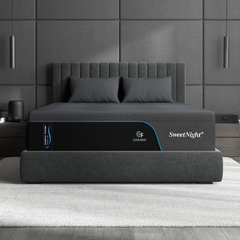
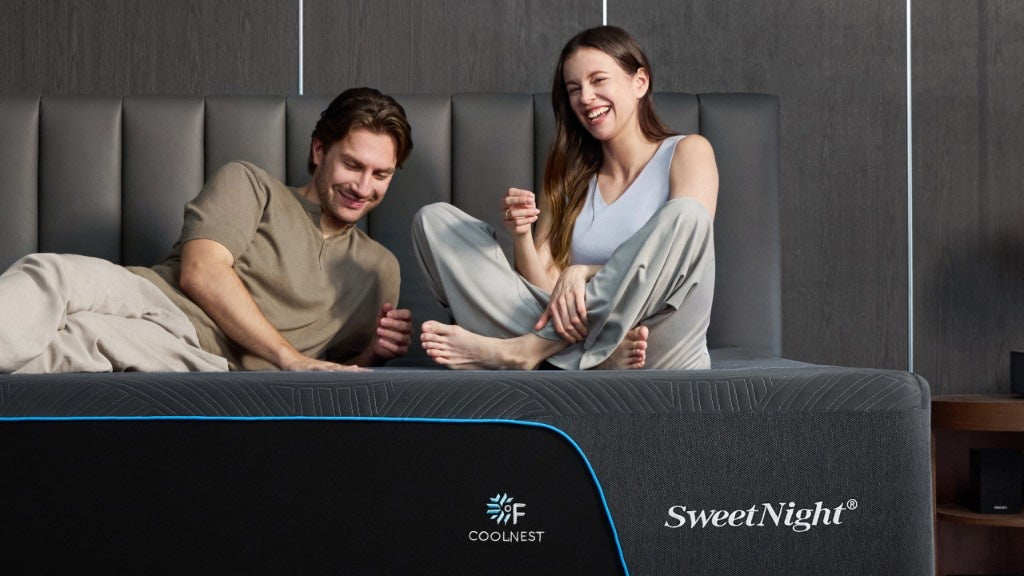
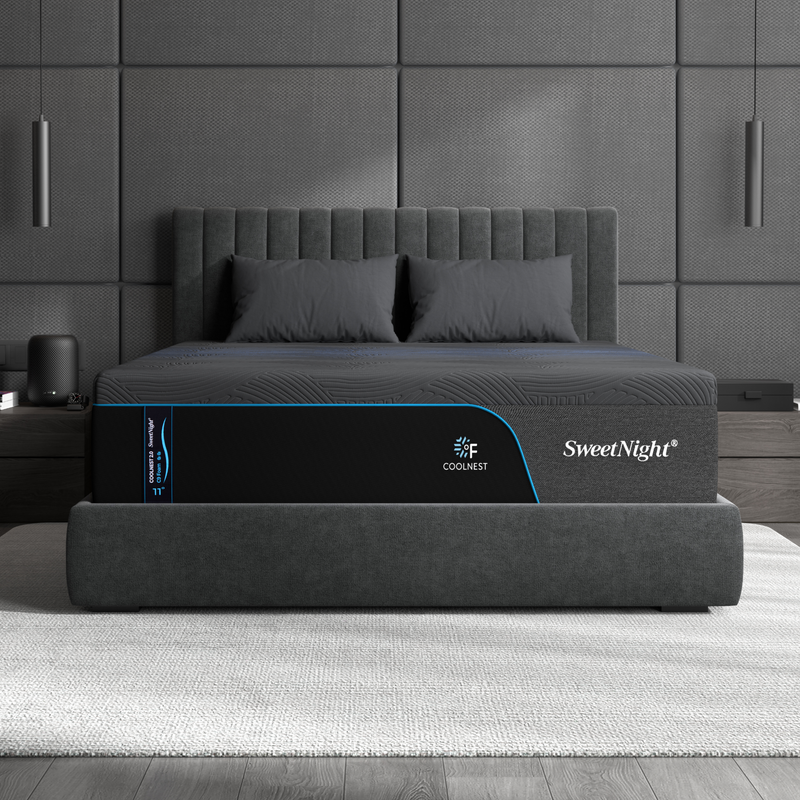
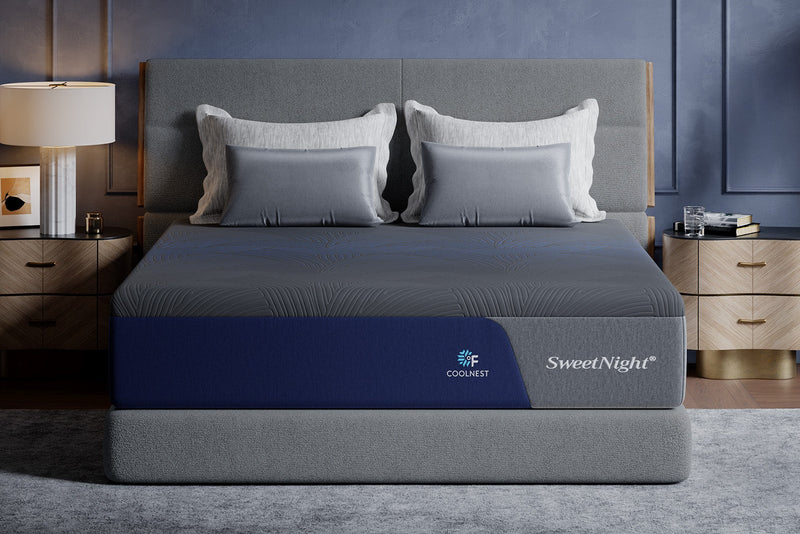
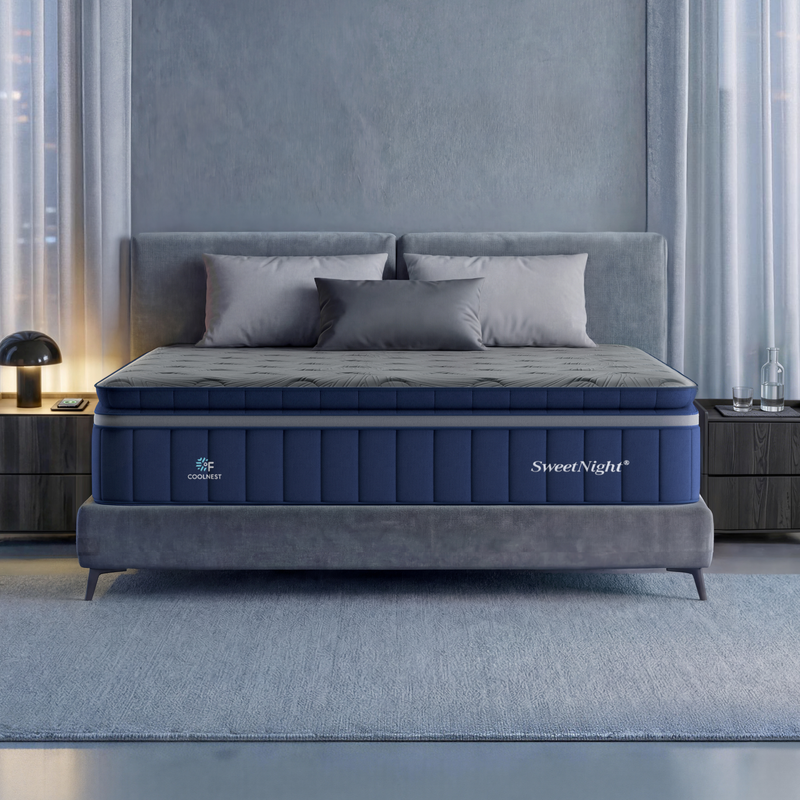
This is why you should never buy on the firmness number alone. Read how the bed is described, slow versus responsive, hugging versus floating, and think about which sensation you actually enjoy. Some people love the cradle of foam; others feel trapped by it and want the bounce of coils. A modern build like the CoolNest Ultra memory foam mattress lands on a Medium Plush (medium-soft) feel with zoned support, so you get plush, cradling contouring where you need pressure relief but firmer reinforcement under your hips, plus cooling built in so a foam feel does not mean sleeping hot. The point is that "medium-firm" tells you the ballpark; the material tells you the actual experience.
How to Choose the Right Mattress Firmness Without Guessing
Let's turn all of this into a simple decision path. Step one, nail down your dominant sleep position, the one you actually spend the most hours in. Side leans soft to medium, back leans medium to medium-firm, stomach leans medium-firm to firm, combination leans medium-firm. Step two, adjust for your weight: lighter sleepers size down a step for more contouring, heavier sleepers size up a step and prioritize supportive, durable construction.
Step three, factor in pain and partners. Back pain usually points to medium-firm with true spinal alignment rather than maximum hardness. A partner with a different position or weight usually points to medium-firm as the compromise, plus strong motion isolation. Step four, once you have a firmness zone, choose the feel, hugging foam versus bouncy hybrid, based on what you personally enjoy lying on, because two beds at the same firmness can feel completely different.
One more thing worth knowing before you commit: a brand-new mattress almost always feels firmer than it will in a month. Foams need to be slept on to break in and reach their true feel, and your body needs time to adjust to a new surface after years on your old one. It is genuinely common to lie down on a new bed the first night, think "this is too firm, I made a mistake," and then find it feels perfect by week three. That is why you should never judge firmness on the first night or two. Give a new mattress a few weeks of real sleep before deciding it is wrong, because the odds are good that some of what feels off at first is just the break-in period doing its thing.
Step five, and this is the one that de-risks everything, use the sleep trial. Firmness is personal and no amount of reading can perfectly predict how a bed feels under your body over weeks, not minutes. A generous in-home trial lets your spine and joints vote after real nights of sleep, and it is the only way to be truly sure. Do the homework to get into the right firmness zone, then let the trial confirm it. Get the position, weight, and feel right, and firmness stops being a gamble and starts being a fit, which is all it was ever supposed to be.
