
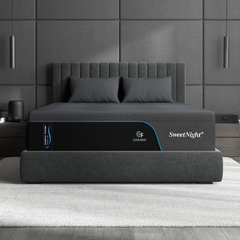


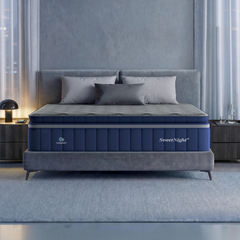
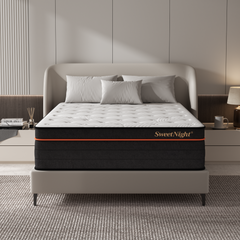

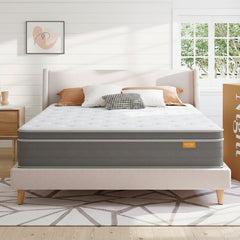
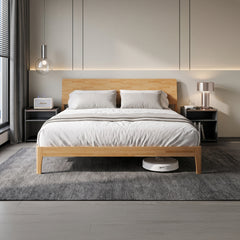

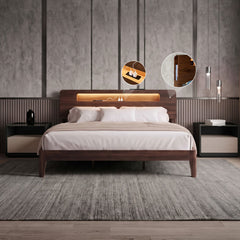
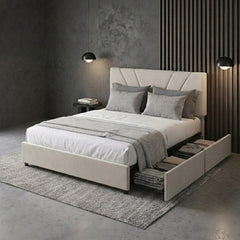
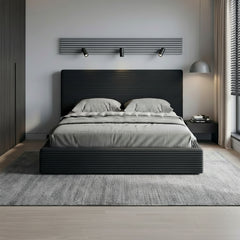
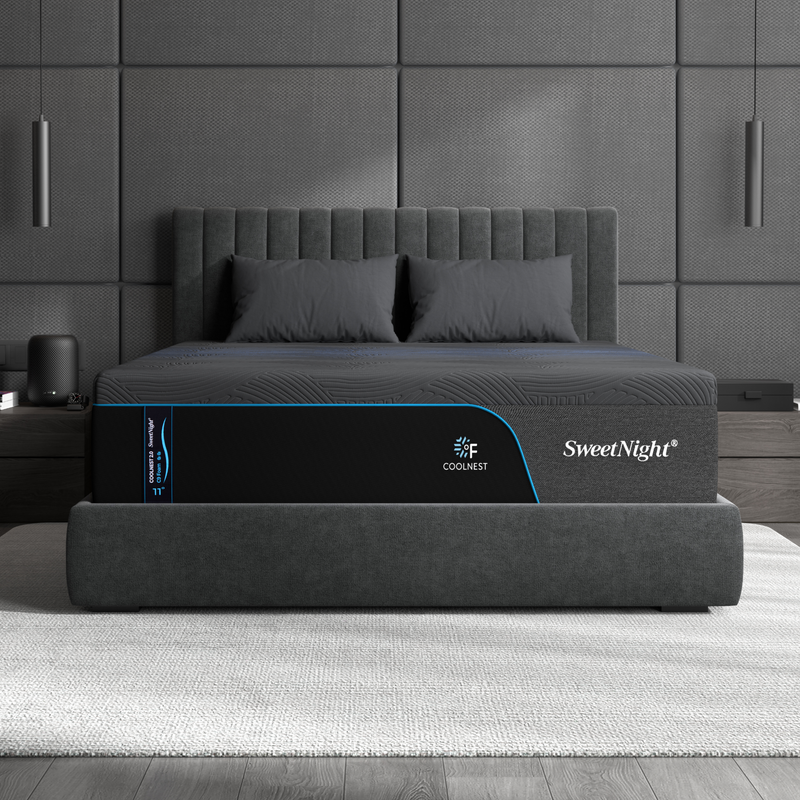


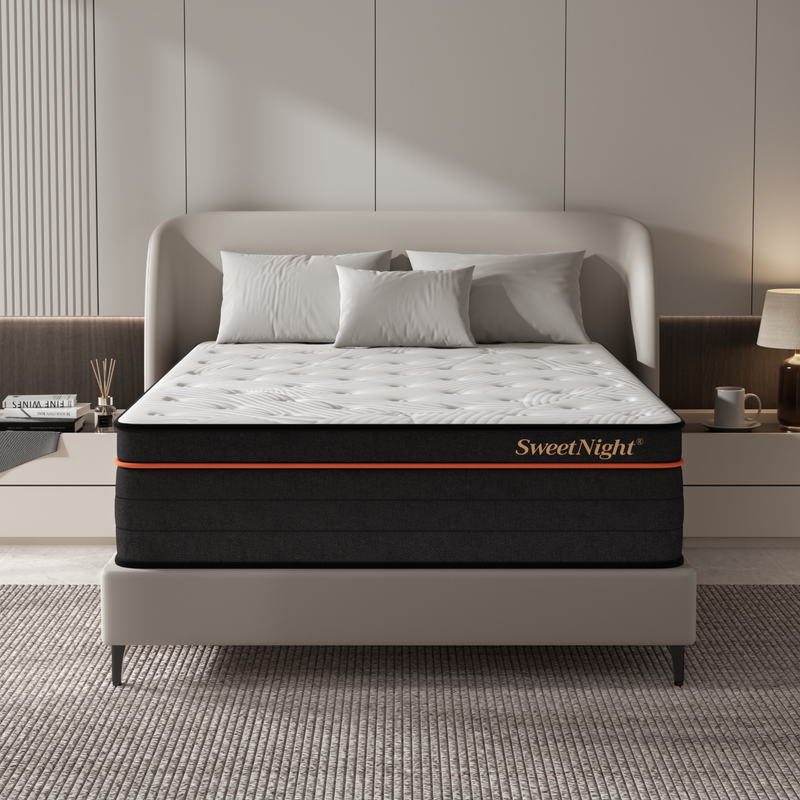

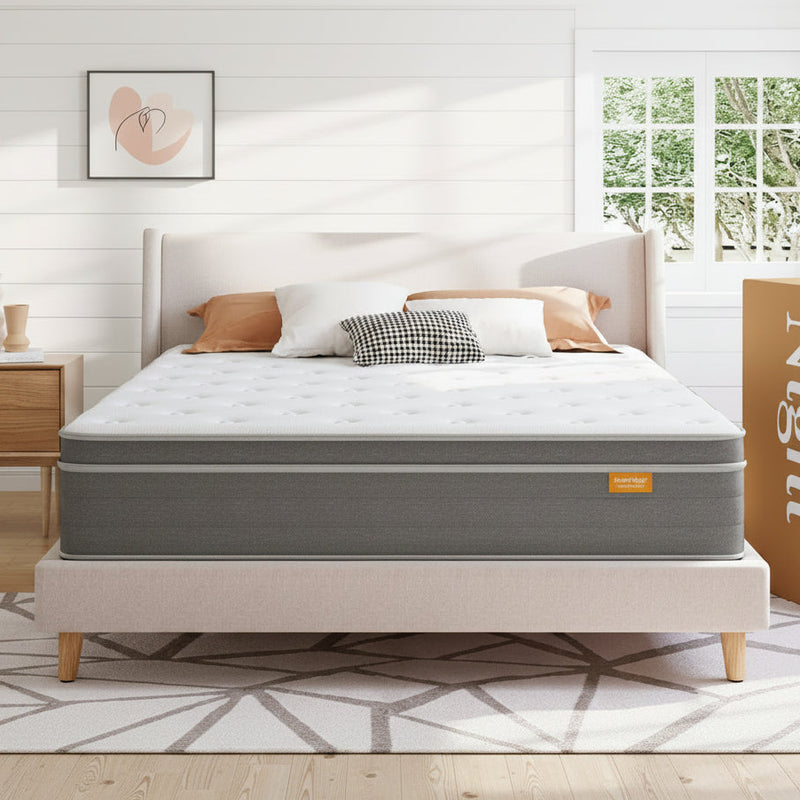

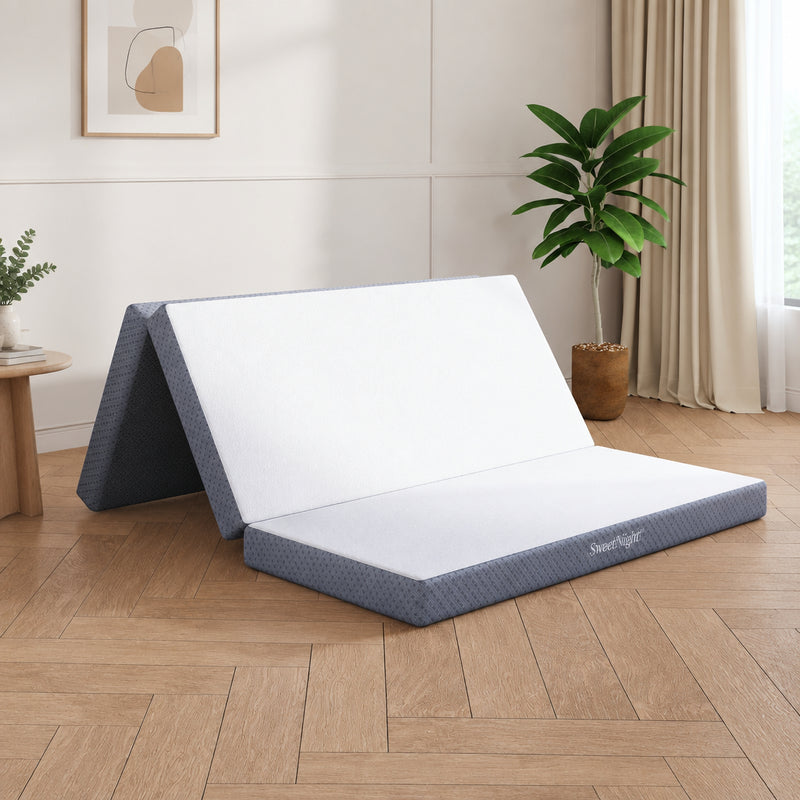

Most mattress marketing asks you to take the brand's word for it. This page does the opposite. Below is a straight summary of what happened when the SweetNight CoolNest® Ultra Memory Foam Mattress was put in front of three independent product-testing operations, plus the engineering details that technology and consumer media picked up when the mattress launched.
We have not rewritten anyone's conclusions, softened a low score, or invented a number. Where a score is unflattering, it is printed here with the rest. The scores, quotes and specifications below come from nine published sources — four scored reviews from three independent testing operations and five technology and consumer media placements — all linked at the end of this article. Where the testing teams disagree with each other, that disagreement is printed too, because it turns out to be the most useful thing on the page.
Short answer: what the experts found
Four scored reviews of the CoolNest® Ultra have now been published, by three separate testing operations. They arrive at the same verdict for different reasons — and they disagree, sharply, about two things.
Sleep Doctor rated it 8.4 out of 10 overall, with a perfect 10/10 for motion isolation and 9.5/10 for pressure relief — the two categories that decide whether couples and side sleepers actually sleep through the night. Their reviewers called the motion isolation "among the strongest we've seen." Edge support (6.0) and temperature control (6.5) scored lower.
Mattress Nut rated it 9.0 out of 10 and scored its cooling surface 91/100 — the highest figure that publication has recorded anywhere in the CoolNest range. Their verdict: "for its target buyer, the genuine hot sleeper who wants memory foam, the Ultra is the best mattress Sweetnight has ever built."
Sleep Foundation rated it 8.5 out of 10 after updating its card in September 2026 (it was 8.3), with the same 10/10 for motion isolation and 9.5/10 for pressure relief, and later that month named it Best Mattress for Hot Sleepers and Best for Couples on two of its 2026 lists. Treat that as corroboration of a limited kind, and we say so plainly on this page: Sleep Foundation is part of Sleep Doctor, so the two cards are one testing operation publishing twice, not two independent verdicts. Their tester Logan did put the motion finding more bluntly: "It's hard to find a mattress that isolates motion better than the CoolNest Ultra."
NapLab, a genuinely separate third team, rated it 8.5 out of 10 — its highest score for any SweetNight mattress. Response time 9.7/10 and pressure relief 9.0/10 led their card, and their cooling score of 8.0/10 lands between the two extremes above.
Those three cooling assessments — 6.5/10, 8.0/10 and 91/100 — look irreconcilable. They are not, and the reason is the single most useful thing on this page. It is unpacked in full below, along with the one finding the teams genuinely dispute: edge support. The mattress has separately been featured in New Atlas, TechWalls, T3, The Gadgeteer and Woman's World.
Who ran the first review, and how
The scorecard discussed throughout this article comes from Sleep Doctor, an editorial sleep-health publication whose mattress reviews are written by a dedicated product testing team and reviewed by Michael J. Breus, PhD, a clinical psychologist and sleep specialist. The CoolNest® Ultra review was written by staff writer Garen Glazier and reviewed by Dr. Breus. Sleep Doctor sells no mattresses and did not build this one.
Their method matters as much as their numbers, so here it is in their own words. "Leveraging our product testing methodology, we analyzed all three versions of the SweetNight CoolNest Ultra." That is an important detail: the 12-inch, 14-inch and 16-inch builds are not the same bed with extra padding, and the team tested each one rather than extrapolating from a single sample.
They also did not rely on one body type. "For the most comprehensive and inclusive overview of its performance, we included testers with different body types and position preferences." And crucially, the assessment was not purely subjective: "In addition to collecting subjective feedback from these testers, we took objective measures of temperature regulation, surface vibrations, and pressure buildup to determine how the mattress performs for different sleepers."
Surface vibration and pressure buildup measured instrumentally, across three mattress heights and multiple body types, is a meaningfully higher bar than a weekend on a review sample. It is also why the two headline scores below are worth reading closely.
Highlight 1: a perfect 10/10 for motion isolation
Motion isolation was the single highest score on the card — a flat 10.0 out of 10. Sleep Doctor does not hand those out casually, and their write-up explains why this one earned it.
"While all-foam models typically excel in this category, the SweetNight CoolNest Ultra motion isolation is among the strongest we've seen." That sentence carries a lot of weight, because it is a comparison against the category the CoolNest® Ultra should already win. All-foam mattresses are expected to absorb movement. Sleep Doctor is saying this one absorbs more than the beds it is naturally compared with.
On the mechanism, the review is specific: "Its generous foam layers absorb nearly all vibrations big and small, and this should appeal to couples." Note "big and small." A lot of mattresses damp the obvious jolt of someone getting out of bed and still telegraph the small stuff — a shoulder rolling over, a leg repositioning, a dog resettling at the foot of the bed. Small vibrations are the ones that pull a light sleeper out of deep sleep without ever fully waking them, which is why they cost more sleep quality than they seem to.
The finding held across all three heights, not just the one that tested best: "Each design isolates enough motion to prevent you and your partner from awakening when the other person changes positions during the night." In other words, choosing the 12-inch to save money does not cost you the motion isolation.
Sleep Doctor also connects the score back to construction: "The plush foams and close hug also substantially limit the spread of vibrations, which may help anyone who is easily awakened when their sleep partner moves in bed." The deep contouring that produces the pressure-relief score is the same property that stops movement from travelling — the two top scores are physically related, not coincidental.
If you share a bed with a partner on a different schedule, a restless sleeper, or a pet who treats 2 a.m. as social hour, this is the score to read first. It is also the reason the CoolNest® Ultra belongs on any shortlist of a mattress for couples where one person wakes easily.
Highlight 2: 9.5/10 for pressure relief
Pressure relief scored 9.5 out of 10, and Sleep Doctor leads their section on it with a blunt assessment: "Pressure relief is one of the SweetNight CoolNest Ultra's strongest selling points."
The explanation is mechanical rather than promotional. "Its polyfoam and memory foam comfort system hugs the body closely to distribute pressure evenly." Distributing load across a wider contact area is the whole job of a comfort system; the failure mode of a cheap foam bed is that it compresses under the heaviest points and leaves them bearing concentrated pressure anyway.
On who benefits most, the review is direct: "The SweetNight CoolNest Ultra's generous comfort system deeply cradles the sleeper to reduce pressure buildup for those prone to discomfort around their hips and shoulders." Hips and shoulders are exactly where side sleepers accumulate pressure, because side sleeping concentrates body weight onto two relatively narrow bony contact points instead of spreading it along the length of the body.
That is why one of the three official pros in Sleep Doctor's verdict reads: "Superior pressure relief well-suited to side sleepers." If shoulder or hip soreness is what wakes you, this score is the most relevant number on the page, and it is worth comparing against other options in the best mattress for side sleepers category before you decide.
The pressure-relief result also has a practical consequence for which height you buy, which the position-by-weight table further down makes clear: the softer 16-inch build posted the highest single rating anywhere in the review for side sleepers under 130 pounds.
Highlight 3: zoned support named as a headline strength
The third of Sleep Doctor's three listed pros is "Zoned support to promote better posture." They describe the layer responsible plainly: "A transitional polyfoam layer with seven firmness zones adds targeted support and conforming to promote spinal alignment."
This is the part of the build that keeps the two headline scores from cancelling each other out. Deep contouring is what produces excellent pressure relief and excellent motion isolation, but unmanaged it also lets the heaviest part of the body — the pelvis — sink further than the rest, which is how a plush bed causes lower-back ache. The 7-zone transitional layer is firmer under the hips and lumbar region and more yielding under the shoulders, so the shoulder is allowed to sink while the midsection is held up.
The full scorecard, printed in full
Publishing only the good scores would defeat the purpose of citing an independent review, so here is the entire card as Sleep Doctor rated it.
| Category | Score | What it means for you |
|---|---|---|
| Overall rating | 8.4 / 10 | Strong all-foam performer, carried by comfort-system scores |
| Motion isolation | 10.0 / 10 | Partner and pet movement stays where it started |
| Pressure relief | 9.5 / 10 | Hip and shoulder relief, especially for side sleepers |
| Temperature control | 6.5 / 10 | Rated as regulating temperature "moderately well" for a foam bed |
| Ease of movement | 6.5 / 10 | Close contouring means changing positions takes some effort |
| Perimeter (edge) support | 6.0 / 10 | Typical all-foam edges; usable surface feels slightly smaller |
| Durability | 6.0 / 10 | Backed by a 10-year limited warranty covering defects |
| Odor emissions (off-gassing) | 6.0 / 10 | Normal new-foam smell; ventilate the room on unboxing day |
| Sex | 6.0 / 10 | Follows from the softer, slower-responding surface |
Two of the lower scores deserve context rather than spin, because both are properties of all-foam construction generally.
Edge support (6.0). Sleep Doctor's own framing: "All-foam models often have limited edge support, and the SweetNight CoolNest Ultra follows suit." The practical effect they describe is that it "made the surface area feel smaller," and that the softer builds "compress more significantly under pressure." If you sit on the edge of the bed to dress every morning, or two adults sleep right out to the perimeter of a Queen, that is a real consideration. It is also the classic trade-off for the motion isolation that scored 10/10 — coil-reinforced perimeters and total vibration damping pull in opposite directions.
Ease of movement (6.5). "The close contouring foams allow enough sinkage that some individuals may feel like it takes some effort to change positions, and that effect is heightened on the softer versions." Again, this is the same deep-hug property as the 9.5 pressure-relief score, viewed from the other side. Combination sleepers who switch positions frequently all night should weigh this; the firmer 12-inch build is the one to look at if that describes you.
Temperature control (6.5). Sleep Doctor found that "compared to similarly constructed foam models, the SweetNight CoolNest Ultra regulates temperature moderately well," noting that it "incorporates several layers of foam designed for breathability to let heat escape." Their practical recommendation for warm sleepers is a useful one: "For hot sleepers, the medium firm (6) may be the best option because its minimal hug means the surface traps less heat." Less sinkage means less of your body wrapped in foam, which is the physics of it regardless of what the foam is made of. If cooling is your primary reason for shopping, buy the 12-inch.
Scores by sleep position and body weight
This is the most useful table in the entire review, and it is the reason testing all three heights mattered. Sleep Doctor rated each build separately for each sleep position across three body-weight bands. Find your row before you pick a height.
| Build | Position | Under 130 lb | 130–230 lb | Over 230 lb |
|---|---|---|---|---|
|
12-inch rated medium firm (6) |
Side | 7.0 | 8.5 | 7.0 |
| Back | 8.5 | 7.5 | 7.0 | |
| Stomach | 8.0 | 7.0 | 6.0 | |
|
14-inch rated medium (5) |
Side | 8.5 | 8.0 | 6.5 |
| Back | 8.0 | 7.0 | 6.0 | |
| Stomach | 7.5 | 6.5 | 5.5 | |
|
16-inch rated medium soft (4) |
Side | 9.5 | 7.5 | 6.0 |
| Back | 7.0 | 6.0 | 5.0 | |
| Stomach | 6.5 | 5.5 | 4.5 |
Read down the columns and three patterns fall out immediately.
The 16-inch is a side sleeper's bed. Its 9.5 for side sleepers under 130 pounds is the highest position rating anywhere in the review, and it is also the lowest-scoring build for stomach sleepers. It is a specialist, not an upgrade.
The 12-inch is the all-rounder. It never scores below 6.0 in any cell of the table, and it is the only build Sleep Doctor scored at 7.0 or above for every position in the 130–230 lb band. It is also their pick for hot sleepers. If you are buying for two people with different sleep positions, this is the sensible default.
Stomach sleepers over 230 pounds are the one group told to look elsewhere. Sleep Doctor's listed con is explicit: "May feel too plush to some stomach and back sleepers over 130 pounds." The table backs it up — scores fall through every softer build in that position.
A note on the firmness numbers themselves
Sleep Doctor rates the three builds as medium firm (6), medium (5) and medium soft (4) for 12, 14 and 16 inches respectively. SweetNight's own designations are medium for the 12-inch and medium plush for the 14 and 16-inch builds. Those are close but not identical, and the gap is worth explaining rather than hiding.
The 1–10 firmness scale used across the US mattress industry, where 1 is softest and 10 is firmest, is a working convention rather than a regulated measurement. There is no mandatory US firmness standard, so two testers can honestly rate the same bed a 4 and a 5. It is also worth knowing that the scale runs the opposite direction elsewhere: the European EN 1957 and Chinese GB/T 43007-2023 hardness grades run from 1 as the firmest to 10 as the softest, and are measured on standardized equipment. Treat any single firmness number, from a brand or a reviewer, as a directional signal rather than a specification.
What is inside, according to the review
Sleep Doctor describes the CoolNest® Ultra as "one of the brand's most luxurious all-foam models," and their layer-by-layer breakdown lines up with a four-layer comfort system over a polyfoam core.
| Layer | How the review describes it |
|---|---|
| Cover | "encased in a polyester cover designed to feel cool to the touch" |
| Comfort layer 1 | "The top foam layer incorporates phase change material engineered to redistribute heat" |
| Comfort layer 2 | "proprietary memory foam intended to allow more airflow than traditional memory foam" |
| Comfort layer 3 | Gel-infused memory foam; "a gel infusion and ventilation are built for extra heat dissipation" |
| Transitional layer | "A transitional polyfoam layer with seven firmness zones adds targeted support and conforming to promote spinal alignment" |
| Core & base | Polyfoam support core over a slip-resistant fabric base |
Sleep Foundation's 8.5/10, and why it is not a second opinion
Sleep Foundation has also published a scored review of the CoolNest® Ultra, rating it 8.5 out of 10 as of its 4 September 2026 update (it was 8.3 before). Before counting that as independent corroboration, one disclosure matters more than the number: Sleep Foundation and Sleep Doctor are the same company. Sleep Foundation's own about page states that "as of 2023, Sleep Foundation is a part of Sleep Doctor," and the site carries a "© 2026 Sleep Doctor Holdings, LLC" copyright notice. SleepFoundation.org was acquired from the non-profit National Sleep Foundation in 2019 and is no longer affiliated with it.
So the honest reading is one testing operation publishing on two properties, and the cards bear that out. Until September they matched in every category but one, and they are still close.
| Category | Sleep Doctor | Sleep Foundation |
|---|---|---|
| Overall rating | 8.4 / 10 | 8.5 / 10 |
| Motion isolation | 10.0 | 10.0 |
| Pressure relief | 9.5 | 9.5 |
| Temperature control | 6.5 | 7.5 |
| Ease of movement | 6.5 | 6.5 |
| Perimeter (edge) support | 6.0 | 6.0 |
| Durability | 6.0 | 6.5 |
Two categories now differ. Durability was always half a point apart, and when Sleep Foundation updated its card on 4 September 2026 it raised temperature control from 6.5 to 7.5, which lifted its overall rating from 8.3 to 8.5. Everything else is identical, including the firmness calls: medium firm (6) for the 12-inch, medium (5) for the 14-inch and medium soft (4) for the 16-inch.
What the Sleep Foundation write-up does add is a blunter sentence on the category the mattress won outright. Their tester Logan is quoted: "It's hard to find a mattress that isolates motion better than the CoolNest Ultra. Whether it's pets or people moving on the other side of the bed, you barely notice any vibrations at all." That is the same 10/10 finding stated in plainer language, and the reference to pets is worth noting — a dog resettling at the foot of the bed is exactly the small, repeated disturbance that costs sleep quality without waking anyone.
Their pros and cons are short and worth printing in full. Pros: "deep pressure relief from contouring memory foam layers," "choice of three heights and firmness levels," and "budget-friendly pricing." Cons: "only available in queen and king sizes," and "lacks firmness for most sleepers over 230 pounds." That second con is the same warning the position-by-weight table above delivers in numbers.
The most useful thing this second publication contributes is context, because the same team has scored the rest of the range. On their cards the original CoolNest® scored 8.1/10 and the CoolNest® Pro scored 8.3/10. Until September that was also the Ultra's figure; after the update the Ultra sits 0.2 ahead, almost entirely because of the higher temperature-control score. If you are choosing between the two, their scorecard still says the decision is mostly about which feel and which price you want, with a small edge to the Ultra if heat is the deciding problem. That is a more useful thing to know than an extra decimal place.
Sleep Foundation's 2026 lists: Best Mattress for Hot Sleepers and Best for Couples
At the end of September 2026 the same team put the Ultra on two of its best-of lists. On The Most Comfortable Mattresses it is named Best Mattress for Hot Sleepers; on Best Mattress for Back Pain Under $2,000 it is named Best for Couples. Both lists were updated on 29 September 2026 and carry the review's 8.5/10 Test Lab score. The company it keeps there includes the Helix Midnight Luxe, WinkBed, Saatva Classic, Bear Elite Hybrid and Leesa Sapira Chill Hybrid.
A list placement is not a new measurement. It comes from the testing operation already described above, so read it as that team's editorial judgment about where the Ultra fits, not as a fifth scorecard. What the two write-ups do add is reasoning the review card leaves out.
On heat. The hot sleeper entry explains why an all-foam bed got the award at all: "many softer mattresses struggle to sleep cool because their layers are more likely to absorb and trap heat, but models like the SweetNight CoolNest Ultra buck this trend by integrating breathable materials into their designs." It also contains the most practical sentence either list prints: "If pressure relief and motion isolation are your top priorities for the mattress you plan to buy, we recommend the 14-inch and 16-inch SweetNight CoolNest Ultra models... The 12-inch model is your best bet if temperature control is more important." That matches Sleep Doctor's tip in the scorecard above, and it is the clearest guidance anyone has published on which height a hot sleeper should buy.
On couples. The back pain list gives its reason in two sentences: "As an all-foam model, this model's thick comfort system provides the motion isolation couples usually look for to minimize interruptions. The zoned support system adds a touch of responsiveness to help keep your torso and hips aligned with the rest of your spine." Its reservation is the one every card on this page shares: "Some back and stomach sleepers weighing 130 or more may feel like they sink too deeply into the surface."
The rest of the CoolNest range placed on other Sleep Foundation lists in the same period: the original CoolNest® as Best Cooling Memory Foam Mattress and the CoolNest® Hybrid as Best Cooling Mattress on both the innerspring and sciatica lists. We have put every award and score for the three models on one page: Sleep Foundation 2026 awards for SweetNight CoolNest.
The second independent verdict: Mattress Nut's 9.0/10
A second independent outlet has also scored the CoolNest® Ultra. Mattress Nut rated it 9.0 out of 10 in a review titled "The New Cooling Flagship, Examined Layer by Layer," written by lead reviewer Romain Renard and last updated 24 July 2026. It uses its own scoring framework rather than Sleep Doctor's categories, which is useful precisely because it measures the bed along different axes: their scores are "generated by our editorial review methodology, calibrated against 47 reference mattresses tested 2024-2026."
Two notes for reading it accurately. First, the review carries two headline numbers, not one: a composite editorial score of 81.8/100 across their four metrics, and a quick-verdict rating of 9.0/10. Both appear on the page and both are reproduced here. Second, unlike the Sleep Doctor review, Mattress Nut carries an affiliate disclosure — "if you buy through links on this page, we may earn a commission at no extra cost to you." That does not make it sponsored content and it is clearly a hands-on editorial review, but you should know it when weighing the verdict.
| Mattress Nut metric | Score | What it covers |
|---|---|---|
| Quick-verdict rating | 9.0 / 10 | Their highest verdict for a SweetNight mattress to date |
| Composite editorial score | 81.8 / 100 | The average across their four metrics below, calibrated against 47 reference mattresses |
| MCS — MattressNut Cooling Score | 91 / 100 | The cool-touch surface. Their highest figure recorded anywhere in the CoolNest range |
| MIC — MattressNut Motion Isolation Coefficient | 84 / 100 | Their highest in the CoolNest line; credited to the all-foam structure |
| MCI — MattressNut Comfort Index | 82 / 100 | Overall comfort of the sleep surface |
| MES — MattressNut Edge Stability Rating | 70 / 100 | The weakest metric on their card — the same finding Sleep Doctor reached |
Their conclusion is quotable in full, and it is notably specific about who the bed is for:
"The CoolNest Ultra is the most interesting budget-flagship cooling launch of the summer… for its target buyer, the genuine hot sleeper who wants memory foam, the Ultra is the best mattress Sweetnight has ever built."
Note the conditions attached to that praise. "For its target buyer" and "who wants memory foam" are doing real work in that sentence — it is a verdict about fit, not a claim that this beats every mattress at every job. Their value argument is separate and concerns price: a bed combining "a zoned core, real ventilation engineering and the strongest cool-touch surface in Sweetnight's history" for under $930 in every Queen build is, in their assessment, "a package that usually costs double."
On motion isolation they go further than Sleep Doctor does, because they make a comparison Sleep Doctor had no reason to: "Excellent, and better than any hybrid, including Sweetnight's own. All-foam construction with a slow-response comfort layer is the best motion-absorbing architecture there is." Their 84/100 is, they note, the highest in the CoolNest line.
They are also the only source to explain why the zoned core matters at this price: "Zoned foam cores are genuinely rare below $1,000, most all-foam beds at this price are uniform-density slabs, which is precisely why they feel great in the showroom and saggy under your hips six months later." That is a durability argument, and it is worth setting against Sleep Doctor's 6.0 durability score rather than instead of it.
Two further findings deserve particular attention because of how they land against the first review.
They corroborate the edge-support limitation. MES 70/100 is the lowest metric on their card, matching Sleep Doctor's 6.0/10 for perimeter support. When two independent teams using entirely different scoring systems land on the same weakness, that finding is real. If you sit on the edge of the bed to dress, treat it as settled.
They add a caveat to the cooling claim, not just an endorsement of it. Despite awarding the surface 91/100, Mattress Nut is explicit that SweetNight's headline figure has limits: the "up to 11°" number is, in their words, "a lab-condition ceiling measured at first touch, not an all-night average." That is the most precise public statement anyone has made about that claim, and it comes from the outlet that scored the cooling highest. It is worth more than the marketing number.
The third independent verdict: NapLab's 8.5/10
A genuinely separate third team has now scored the mattress. NapLab rated the CoolNest® Ultra 8.5 out of 10, and that number carries a detail worth pausing on: it is the highest score NapLab has given any SweetNight mattress. On the same framework the original CoolNest® scored 8.46 and the CoolNest® Hybrid 8.13. Where Sleep Foundation puts the Ultra level with the Pro, NapLab puts it at the top of the range outright.
NapLab runs its own instrumented framework, and it rates two things neither of the other teams does: response time, and the company itself — trial length, warranty and returns policy. Here is their full card.
| NapLab category | Score | What it means for you |
|---|---|---|
| Overall | 8.50 / 10 | Their highest rating for any SweetNight mattress to date |
| Response time | 9.7 / 10 | The foam recovers its shape quickly for a memory foam bed |
| Pressure relief | 9.0 / 10 | Third team, third scale, same conclusion as the first two |
| Company (trial, warranty, returns) | 9.0 / 10 | 100-night trial and 10-year warranty rated well above average |
| Motion transfer | 8.8 / 10 | High, though not the perfect score the other card gave it |
| Edge support | 8.1 / 10 | The one place the three teams genuinely disagree — see below |
| Off-gassing | 8.1 / 10 | Rated more favourably than the 6.0 on the other card |
| Cooling | 8.0 / 10 | Good but, in their words, below average for the wider market |
| Sex | 6.9 / 10 | Low bounce, which they note is "typical for memory foam mattresses" |
Their firmness call is a single medium (5 out of 10) rather than a rating per height, and unlike Sleep Doctor they consider it suitable for all sleeping positions and all body weights. Where the two teams differ on who should buy it, the position-by-weight table earlier in this article is the more granular guide, because it was produced by testing each height separately.
Three of their findings change the picture the first two reviews painted.
They rate the edge support far higher — and their own text does not support it. 8.1/10 sits well above Sleep Doctor's 6.0/10 and Mattress Nut's 70/100. Before splitting the difference, read their prose rather than their number: NapLab records 4.50 inches of sinkage when sitting on the edge and lists weak edge support among their cons. Their words agree with the other two teams even where their score does not. Limited edge support remains the settled finding on this page.
Their cooling score is the one that resolves the argument. 8.0/10 is neither Mattress Nut's 91/100 for the cool-touch surface nor Sleep Doctor's 6.5/10 for whole-night regulation — it is a whole-mattress figure that sits above average without approaching the surface number, which is exactly where a bed with an outstanding cover and an all-foam core should land. Their explanation is the plainest any source offers: "fundamentally, this is still an all-foam memory foam mattress," and such beds "typically struggle more with heat retention." Read together, the three cooling scores are not a contradiction — they are a gradient from first touch to hour six.
They describe the feel in a single sentence that explains both top scores. "The memory foam is able to create the notable body-contouring hug that memory foam fans love, while at the same time remaining responsive enough to facilitate good ease of movement." That is the deep-hug property behind the pressure-relief and motion-isolation results, described from the inside.
Their cons are consistent with the rest of the record: low bounce and weak sex performance, cooling that is good rather than class-leading, availability limited to Queen and King, and the edge-support sinkage above. Their value verdict is measured rather than promotional: "If you're on a tight budget and want that classic memory foam feel, the Coolnest Ultra could be a reasonable pick."
Featured in New Atlas, TechWalls, T3, The Gadgeteer and Woman's World
Alongside the independent reviews, the CoolNest® Ultra has been featured across technology and consumer media. These placements are not test results and this article does not present them as such — but they document the engineering in more detail than any review does, and one of them makes a point about the product category that neither scorecard covers.
New Atlas (24 August 2026) and TechWalls (by Keffer) are sponsored placements — New Atlas carries the piece under its sponsored content section. T3 published its piece under the label "Sponsor Content Created With Sweetnight," so it belongs in the same bracket. None of the three describes hands-on testing. Read them as detailed, on-the-record product documentation rather than verdicts.
The Gadgeteer sits in a different category again. Its piece, written by Vincent Nguyen and published 25 August 2026, is a bylined buyer's guide rather than sponsored content, though it carries an affiliate disclosure ("if you buy something from a link in this article, we may earn a commission") and does not describe hands-on testing either. Its contribution is a comparison the scorecards do not make: it sets the CoolNest® Ultra against powered cooling systems such as the Eight Sleep Pod 5 and BedJet 3, and points out that the cooling here is "built into the mattress" — requiring no "pump, fan, power cord, temperature controller, or ongoing subscription." For anyone weighing a cooling mattress against a cooling device, that is the structural difference, and it is the one thing no temperature score captures: there is no hardware to fail and no subscription to keep paying.
Woman's World published "How SweetNight Supports Better Sleep for Women" on 3 September 2026, written by contributor Jon Stojan. It belongs firmly in this bracket and the publication says so itself: "Members of the editorial and news staff of Woman's World were not involved with the creation of this content." Two things to note before you weigh it. It is contributor content, not a review, and it is about the CoolNest® Hybrid rather than the Ultra, so it has no bearing on any score above. Its angle is women's sleep health — it cites research that women report more sleep difficulty and face a higher risk of insomnia than men, and that menopausal and pregnant women in particular tend to sleep hot — and it describes the Hybrid's cooling ice silk cover, open-cell and gel-infused foams, and DuoSense™ pillow top over Dynamic Coil™ springs. It is listed here for completeness of the media record, not as evidence of performance.
What the technology placements set out is the specification behind the five-stage cooling system that Sleep Doctor described in general terms.
| Stage | Documented specification |
|---|---|
| Gradient Cooling Ice Silk Cover | Qmax rating up to 0.25 J/(cm²·s), described by New Atlas as 47% higher than the 0.17 figure typical of standard fabrics; over 10,000 micropores per square centimetre |
| PCMflux® High Resilience Foam | Phase-change material plus gel particles, at twice the quantity of traditional formulations |
| Ventilated gel memory foam | 30% gel particles and more than 700 ventilation openings |
| AirMesh™ Breathable Memory Foam | Hollow-mesh structure offering up to six times the breathability of traditional closed-cell memory foam |
| Open-channel structure | Wave-shaped support structure adding further airflow channels through the core |
The headline figure both outlets carry is SweetNight's own: TechWalls states that the "CoolNest® Ultra delivers up to 11° cooler sleep comfort compared with a traditional memory foam mattress." That is a manufacturer claim about surface temperature at the point of body contact relative to a conventional memory foam bed, not an independently verified test result — and Sleep Doctor's 6.5 temperature score is the reminder that a cooling system is one input into how warm a bed feels, not a guarantee. New Atlas's framing is the fairer summary of what the design achieves: it makes "temperature management a central part of the design rather than an added extra."
The outlets also document the same support structure both review teams credited: seven ergonomic zones targeting head, shoulders, back, waist, hips, legs and feet, built from wave-cut foam over a high-density support base with a textured anti-slip bottom. And they confirm the certifications: OEKO-TEX® certified fabric, CertiPUR-US® certified foams, and fiberglass-free construction.
T3's framing of the cooling stack is the plainest summary any of them offer: "a combination of gel, memory and other material-infused foams that work to regulate and maintain your temperature while dissipating heat." That is an accurate description of a passive, multi-material system — and passive is the operative word.
Where the sources agree, and where they don't
With four scorecards from three independent testing operations and five media placements on the record, the disagreements are now more informative than the consensus. Read them in this order.
All three teams agree on the two strengths. Sleep Doctor scored motion isolation 10/10 and Sleep Foundation repeated it; Mattress Nut scored its Motion Isolation Coefficient 84/100, its highest in the CoolNest line, and called it "better than any hybrid, including Sweetnight's own"; NapLab scored motion transfer 8.8/10. On pressure relief the three cards read 9.5/10, 82/100 and 9.0/10. Three frameworks, same shape: this bed's comfort system is its strong suit. Note that only the Sleep Doctor operation awards a perfect 10 — NapLab's 8.8 is high rather than flawless, and if you are shopping specifically on motion isolation, 8.8 is the more conservative number to plan around.
Two of the three agree on the main weakness — and the third is the one real dispute on this page. Perimeter support 6.0/10 from Sleep Doctor and from Sleep Foundation; edge stability 70/100, their lowest metric, from Mattress Nut. NapLab breaks ranks with 8.1/10. Before splitting the difference, read NapLab's own text rather than their score: they measure 4.50 inches of sinkage when a tester sits on the edge, and they list weak edge support among their cons. Their prose agrees with the other teams even where their number does not, which is why limited edge support remains the most reliable negative finding here. It is the structural trade-off of an all-foam build: the property that stops vibration travelling is the same property that leaves the perimeter soft.
The cooling disagreement is the interesting one — and it resolves. Mattress Nut scored the cooling 91/100. Sleep Doctor scored temperature control 6.5/10 and called it "moderately well." That gap looks like a contradiction until you notice the two teams are measuring different things. Mattress Nut's MCS rates the cool-touch surface: the fabric and top foam at the moment of contact, which is where the Qmax 0.25 ice silk cover and phase-change layer do their work. Sleep Doctor's temperature control rates whole-night thermal regulation in a bed you have been sinking into for hours. A mattress can genuinely be class-leading at the first and merely good at the second, and this one is.
NapLab's 8.0/10 is the third data point, and it settles the question rather than muddying it. Their score is a whole-mattress cooling rating that sits comfortably above average without approaching the surface figure — precisely where a bed with an outstanding cover and an all-foam core should land. Their reasoning is the plainest of the three: "fundamentally, this is still an all-foam memory foam mattress," and such beds "typically struggle more with heat retention." Line the three up and they are not a contradiction; they are a gradient from first touch to hour six.
The tell is that Mattress Nut says so themselves. The outlet that scored the cooling highest is also the one that calls the "up to 11°" figure "a lab-condition ceiling measured at first touch, not an all-night average." Both reviews are describing the same physics from opposite ends. The practical takeaway they converge on: the surface is genuinely cold when you get in, and if all-night heat is your central complaint, buy the firmer 12-inch build so less of your body is enclosed in foam.
They recommend different heights, and the reason is instructive. Sleep Doctor points hot sleepers to the firmest 12-inch build, because less sinkage means less of your body enclosed in foam. Mattress Nut defaults to the 16-inch, calling it "the deepest cooling stack of the three heights" and the dedicated side-sleeper build. Both are right within their own framing: if your priority is staying cool over a whole night, the 12-inch logic holds; if it is pressure relief with the strongest cool-touch surface, the 16-inch is the one. Note that Mattress Nut rates the 16-inch Medium Plush at roughly 4.5-5/10 and explicitly tells stomach sleepers to avoid it — the same group Sleep Doctor's position table flags.
They disagree about how easy it is to move on. Sleep Doctor scored ease of movement 6.5/10, describing enough sinkage that "some individuals may feel like it takes some effort to change positions." NapLab scored response time 9.7/10 — the highest single number on any of the four cards — and wrote that the foam remains "responsive enough to facilitate good ease of movement." These are not quite the same measurement: NapLab is timing how fast the foam recovers its shape, while Sleep Doctor is judging how much effort a tester spends repositioning inside the hug. A foam can rebound quickly and still be deep enough to make rolling over feel like work. If you are a combination sleeper, weigh the 6.5 more heavily — it is measuring the thing you will actually notice at 3 a.m.
They rank it differently within SweetNight's own range. Sleep Foundation now puts the Ultra at 8.5/10, a little ahead of the CoolNest® Pro at 8.3 and the original CoolNest® at 8.1. NapLab puts the Ultra at the top outright, 8.5 against 8.46 for the original CoolNest® and 8.13 for the Hybrid. Both agree the gap between the Ultra and the rest of the line is small. If your budget is the deciding factor, that is a genuinely useful finding: the step up to the flagship buys a better cool-touch surface and zoned support, not a different class of mattress.
The sponsored placements describe cooling as the defining feature. That is consistent with the surface score and with the engineering documented in the specification table above — but it is promotional framing, not a test result. The independent numbers are the ones to weigh.
They diverge slightly on firmness naming, as covered above, which is a scale convention issue rather than a factual dispute.
Only the independent reviews cover edge support, ease of movement and off-gassing at all. That is the value of third-party scorecards: they rate the categories a product page has no incentive to discuss.
Who the CoolNest® Ultra is for
Strong fit, based on the review:
• Couples and light sleepers. A 10/10 motion isolation score, with the finding holding across all three heights, is as clear a signal as this category produces.
• Side sleepers with hip or shoulder pressure. 9.5/10 pressure relief, plus a named pro calling it "well-suited to side sleepers." Under 130 pounds, the 16-inch scored 9.5; in the 130–230 lb band, the 12-inch scored 8.5.
• Anyone sharing a bed with a pet or a partner on a different schedule. The review specifically credits absorption of "vibrations big and small."
• Back sleepers under 130 pounds. The 12-inch scored 8.5 in that combination.
• Buyers who want zoned support without hybrid pricing. Seven-zone construction is named as a headline strength.
Look carefully, or look elsewhere, if:
• You sleep mainly on your stomach and weigh over 130 pounds. This is Sleep Doctor's stated con, and the position table supports it.
• Edge support is a priority. 6.0/10, with the reviewers noting the surface "feel[s] smaller." A coil-based hybrid is the structurally better answer.
• You change positions constantly all night. Ease of movement scored 6.5, and the effect is "heightened on the softer versions." Choose the 12-inch if you still want this bed.
• Overheating is your single biggest complaint. Cooling here rated good rather than category-leading. Take Sleep Doctor's advice and buy the 12-inch, or consider a hybrid with airflow through the coil layer.
CoolNest® Ultra Memory Foam Mattress
8.4/10 Sleep Doctor • 8.5/10 Sleep Foundation • 9.0/10 Mattress Nut • 8.5/10 NapLab
10/10 motion isolation • 9.5/10 pressure relief • 91/100 cooling surface
From $729.99 • Free shipping • 100-night trial • 10-year warranty
Shop CoolNest® UltraPrice, sizes, trial and warranty
| Detail | As documented in the sources |
|---|---|
| Price | $729.99 – $1,029.99 depending on size and height |
| Sizes | Queen (60" × 80") and King (76" × 80") |
| Heights | 12", 14" and 16" |
| Weight | Approximately 60–90 lb depending on size and height |
| Sleep trial | 100 nights, with a 30-night minimum before a return; free mattress pickup |
| Warranty | 10-year limited warranty covering defects |
| Shipping | Free within the contiguous US; ships compressed and expands within about 72 hours |
| Returns | 30-day return window on unopened items, with a prepaid return label |
| Certifications | OEKO-TEX® certified fabric, CertiPUR-US® certified foams, fiberglass-free |
Frequently asked questions
What did Sleep Doctor rate the SweetNight CoolNest® Ultra?
8.4 out of 10 overall. The individual scores were motion isolation 10.0, pressure relief 9.5, temperature control 6.5, ease of movement 6.5, perimeter support 6.0, durability 6.0, odor emissions 6.0 and sex 6.0. The review was written by Garen Glazier and reviewed by Michael J. Breus, PhD.
What did Mattress Nut rate it?
9.0 out of 10 as a quick verdict, and 81.8/100 as a composite editorial score. The four metrics behind it: cooling 91/100 — the highest that publication has recorded anywhere in the CoolNest range — Motion Isolation Coefficient 84/100, comfort index 82/100 and edge stability 70/100. Their verdict: "for its target buyer, the genuine hot sleeper who wants memory foam, the Ultra is the best mattress Sweetnight has ever built." The review is by Romain Renard and carries an affiliate disclosure.
What did Sleep Foundation rate it?
8.5 out of 10 since its 4 September 2026 update (previously 8.3), with motion isolation 10.0, pressure relief 9.5, temperature control 7.5, ease of movement 6.5, edge support 6.0 and durability 6.5. Their tester Logan is quoted: "It's hard to find a mattress that isolates motion better than the CoolNest Ultra." One caveat on how much weight to give it: Sleep Foundation is part of Sleep Doctor — its site carries a "© 2026 Sleep Doctor Holdings, LLC" notice — so this is the same testing operation publishing a second time, not an independent third verdict. On their cards the original CoolNest® scored 8.1 and the CoolNest® Pro 8.3. It also named the Ultra Best Mattress for Hot Sleepers and Best for Couples on two 2026 lists.
Has the CoolNest® Ultra won any Sleep Foundation awards?
Yes, two in 2026. It is the Best Mattress for Hot Sleepers on Sleep Foundation's most comfortable mattresses list and Best for Couples on its best mattress for back pain under $2,000 list, both updated 29 September 2026 with an 8.5/10 Test Lab score. The testers recommend the 12-inch model if staying cool matters most, and the 14-inch or 16-inch if pressure relief and motion isolation come first.
What did NapLab rate it?
8.5 out of 10 — the highest score NapLab has given any SweetNight mattress, against 8.46 for the original CoolNest® and 8.13 for the CoolNest® Hybrid. Their category scores: response time 9.7, pressure relief 9.0, company (trial, warranty and returns) 9.0, motion transfer 8.8, edge support 8.1, off-gassing 8.1, cooling 8.0 and sex 6.9. They rate it medium (5/10) and consider it suitable for all sleep positions and body weights. Their verdict on value: "If you're on a tight budget and want that classic memory foam feel, the Coolnest Ultra could be a reasonable pick."
Is the CoolNest® Ultra good for couples?
This is its strongest area in the review. Motion isolation scored a perfect 10/10, and Sleep Doctor wrote that it is "among the strongest we've seen," that the foam layers "absorb nearly all vibrations big and small," and that every height "isolates enough motion to prevent you and your partner from awakening when the other person changes positions during the night." The one caveat for couples is edge support at 6.0, which makes the usable surface feel a little narrower than the dimensions suggest.
Is it a good mattress for side sleepers?
Yes, and it is named as such. One of the three listed pros is "Superior pressure relief well-suited to side sleepers," and pressure relief scored 9.5/10. For side sleepers under 130 pounds the 16-inch build scored 9.5; in the 130–230 lb range the 12-inch build scored 8.5 and the 14-inch 8.0.
Which height should I buy?
Based on the position-by-weight ratings: the 12-inch is the safest all-round choice and the one recommended for hot sleepers and combination sleepers; the 14-inch suits side and back sleepers in the middle weight band; the 16-inch is the specialist pick for lighter side sleepers who want maximum cushioning. Stomach sleepers should stay with the 12-inch.
Does the CoolNest® Ultra actually sleep cool?
This is the one question the two independent reviews answer differently, so here are both. Mattress Nut scored the cooling surface 91/100, the highest it has recorded in the CoolNest range. Sleep Doctor scored overall temperature regulation 6.5/10, describing it as performing "moderately well" against similarly constructed foam models. Both can be true, because they measure different things: the surface you touch is genuinely among the coolest in this price class, while an all-foam bed that hugs you closely still encloses more of your body than a coil hybrid does over a full night.
The "up to 11° cooler" figure carried by the media coverage is a manufacturer claim. Mattress Nut's characterisation of it is the fair one: it is "a lab-condition ceiling measured at first touch, not an all-night average." If cooling is your priority, both reviews point the same way on the practical question — Sleep Doctor recommends the firmer 12-inch build, because less sinkage means less of your body enclosed in foam.
Are the New Atlas, TechWalls, T3, Gadgeteer and Woman's World articles independent reviews?
No, and this article does not present them that way. New Atlas, TechWalls and T3 are sponsored placements — T3 labels its piece "Sponsor Content Created With Sweetnight." The Gadgeteer piece is a bylined buyer's guide with an affiliate disclosure rather than a sponsored placement. The Woman's World piece is contributor content, and it is about the CoolNest® Hybrid rather than the Ultra. None of the five describes hands-on testing. They are useful as detailed, on-the-record documentation of construction and specifications, and The Gadgeteer additionally makes a useful comparison against powered cooling systems. All scoring in this article comes from Sleep Doctor, Sleep Foundation, Mattress Nut and NapLab.
Why do the independent reviews disagree about cooling?
Because they measure different things. Mattress Nut's 91/100 rates the cool-touch surface — the cover and top foam at the moment you lie down. Sleep Doctor's 6.5/10 rates temperature regulation across a whole night in a bed you have been sinking into for hours. NapLab's 8.0/10 is a whole-mattress figure that lands between them. Read as a set they are a gradient rather than a contradiction: exceptionally cold at first touch, good rather than exceptional by hour six. Notably, Mattress Nut — the outlet that scored cooling highest — is also the one that describes SweetNight's "up to 11°" claim as "a lab-condition ceiling measured at first touch, not an all-night average," and NapLab is blunt that "fundamentally, this is still an all-foam memory foam mattress."
What is the main weakness the review identified?
Two, both stated as cons: "Limited edge support may make the bed feel smaller," and "May feel too plush to some stomach and back sleepers over 130 pounds." Both are characteristic trade-offs of a deeply contouring all-foam design — the same property that produced the 10/10 motion isolation and 9.5 pressure-relief scores.
The bottom line
An 8.4/10 and an 8.5/10 from one testing operation, a 9.0/10 from a second and an 8.5/10 from a third are good scores, and their consistency across four separate frameworks is itself worth something. But the overall numbers are the least interesting things on any of the cards, because an average blends together categories that matter enormously to some sleepers and not at all to others.
What the reviews actually say is narrower and more useful, and both teams converge on it. Mattress Nut scopes its praise explicitly — "for its target buyer, the genuine hot sleeper who wants memory foam" — and that is the right way to read this bed. It is an exceptional mattress at two specific jobs. Keeping one person's movement from reaching the other person — where it scored a perfect 10, "among the strongest we've seen." And relieving pressure at the hip and shoulder — where it scored 9.5 and was named "well-suited to side sleepers." If you are a couple, a light sleeper, or a side sleeper waking with shoulder soreness, those are the two scores your night depends on, and this bed is at or near the top of its category on both.
If instead you sleep on your stomach, sit on the edge of the bed every morning, or want the coolest possible surface above all else, the same review tells you honestly where the compromises are. That is what a third-party scorecard is for — and it is why the whole card is printed above rather than just the good half. If it does sound like your bed, the 7-zone cooling memory foam mattress is backed by a 100-night trial, so the only real cost of finding out is the time it takes to sleep on it.
Independent reviews. Sleep Doctor, "SweetNight CoolNest Ultra Mattress Review," written by Garen Glazier, reviewed by Michael J. Breus, PhD — read the full review. Sleep Foundation, "SweetNight CoolNest Ultra Mattress Review," 8.5/10, updated 4 September 2026; "The Most Comfortable Mattresses" and "Best Mattress for Back Pain Under $2,000," both updated 29 September 2026; Sleep Foundation is part of Sleep Doctor Holdings, LLC — read the full review. Mattress Nut, "Sweetnight CoolNest Ultra Review 2026: The New Cooling Flagship, Examined Layer by Layer," by Romain Renard, updated 24 July 2026; carries an affiliate disclosure — read the full review. NapLab, "SweetNight CoolNest Ultra Review," 8.5/10 — read the full review.
Media placements. New Atlas, sponsored content, 24 August 2026 — read the article. TechWalls, by Keffer, sponsored content — read the article. T3, "Sponsor Content Created With Sweetnight" — read the article. The Gadgeteer, by Vincent Nguyen, 25 August 2026, bylined buyer's guide with affiliate disclosure — read the article. Woman's World, "How SweetNight Supports Better Sleep for Women," by Jon Stojan, 3 September 2026, contributor content about the CoolNest® Hybrid — read the article.
Scores and quotations are reproduced as published. SweetNight did not commission, edit or approve the Sleep Doctor, Sleep Foundation, Mattress Nut or NapLab reviews. Last updated 30 September 2026.