




















Short answer: Density (measured in pounds per cubic foot) tells you how much foam material is packed into the mattress and largely predicts how long it will last, while ILD tells you how firm that foam feels — they are two separate specs, and a dense foam can be soft just as a light foam can feel firm.
The short version, if you're skimming:
- Density = durability. More material per cubic foot generally means the foam holds its shape longer and resists body impressions.
- ILD = firmness. It measures how much force it takes to compress the foam, and it says nothing about how long the foam lasts.
- They move independently. You can have dense-but-soft foam or light-but-firm foam, so never read one number as a stand-in for the other.
- Density has real trade-offs. Denser memory foam usually sleeps a little warmer and costs more; lighter foam is cooler and cheaper but wears faster.
- Brands vary wildly. There are no universal cutoff numbers, so treat published specs as a starting point and weigh them against warranty, feel, and where the foam sits in the mattress.
Why Foam Density Matters More Than You Think
Two mattresses can look identical in a showroom, carry the same firmness label, and feel nearly the same when you lie down for ninety seconds. Three years later, one still holds its shape and the other has a dip shaped like your body. The single spec that most often explains that difference is density.
Density describes how much actual foam material is packed into a given volume. In the industry it's reported in pounds per cubic foot — written as lb/ft³ or sometimes PCF — and it's a physical measurement, not a marketing grade. If you took a one-foot cube of the foam and put it on a scale, the number of pounds it weighs is its density. That's the whole idea. Higher density means more polymer and less air in the same space.
Why does that matter so much? Because foam fails by breaking down at the cell level. Every night you compress it, and every morning it recovers. Denser foam has more material to distribute that load, so each individual cell wall carries less stress and the structure resists permanent deformation for longer. Lighter foam has less material doing the same job, so it fatigues sooner and starts to sag. This is the mechanism behind most "my mattress went soft in the middle" complaints, and it's why we spend a whole section below on the link between density and sagging.
Here's the part most shoppers miss: density is one of the few mattress specs that's genuinely hard to fake and expensive to raise. Adding density means adding raw material, which adds cost and weight. That's exactly why cheaper beds cut it — and why a suspiciously light mattress at a suspiciously low price is often telling you something honest about its lifespan. You can't feel density directly with your hand in a store, which is precisely what makes understanding it worthwhile before you buy.
None of this means "denser is always better." A very dense comfort layer can trap heat and feel slow to respond, and you're often paying for durability you may not need in every layer. The goal isn't to chase the highest number. It's to understand what density buys you, where it matters most in the mattress, and how it interacts with the firmness you actually feel.
Density vs. Firmness: They're Not the Same Thing
This is the misunderstanding that costs people the most money, so it's worth being blunt: density and firmness are unrelated properties. Density is about mass. Firmness is about how the foam responds to pressure. Knowing one tells you almost nothing about the other.
Picture two blocks of memory foam. The first is dense but formulated to be soft — you press in and it gives way easily, cradling your hand, even though there's a lot of material inside it. The second is lighter but formulated firm — it resists your hand and barely dents, despite having less material overall. Both exist. Both are common. A dense foam is not automatically a hard foam, and a soft foam is not automatically a flimsy one.
The confusion is understandable because in everyday objects, heavier often feels sturdier. But foam chemistry lets manufacturers tune firmness and density on separate dials. They adjust the cell structure and formulation to set how it feels, and they adjust how much material goes in to set how dense it is. That's the reason you'll see a "plush" mattress that lasts a decade and a "firm" mattress that softens in two years — the firmness label had nothing to do with the outcome.
Why does this matter for a buyer? Because salespeople and product pages routinely blur the two. A page might tout a "supportive, high-density feel" as if density is why the bed feels firm. It isn't. If you want a firm feel, you're shopping for firmness (which the ILD spec below describes). If you want the bed to still feel that way years from now, you're shopping for density. Treat them as two questions:
- How do I want this to feel tonight? That's firmness. Soft, medium, firm — it's about comfort and pressure relief for your body and sleep position.
- How long do I want it to keep feeling that way? That's density (and overall build quality). It's about durability and resisting sag.
Get those two questions straight and half the confusing spec sheets suddenly make sense. A "medium-plush" mattress made from higher-density foams can deliver a soft, cradling feel that stays consistent for years. A firm bed made from cheap, low-density foam can feel great in week one and disappoint by year two. The label on the front says nothing about which one you're getting.
What Is ILD (Indentation Load Deflection)?
If density is the spec for durability, ILD is the spec for firmness — and it's the one that actually describes how hard or soft a foam feels. ILD stands for Indentation Load Deflection (sometimes written IFD, Indentation Force Deflection; they refer to the same idea). It measures the amount of force needed to compress a piece of foam by a set amount.
The standard test works like this: a flat, round plate presses into a thick sample of foam until it's compressed to 25% of its original thickness. The number of pounds of force required to reach that point is the ILD rating. A foam that takes more pounds to squish is firmer; a foam that takes fewer is softer. So a higher ILD means a firmer surface, and a lower ILD means a plusher one. That's the entire concept, and once you have it, "ILD" stops looking like jargon.
A few practical notes keep you from over-reading the number. First, ILD is measured on a foam sample under lab conditions, not on the finished mattress, so the feel you get in bed is the combined result of every layer, the cover, and the base — not any single ILD figure. Second, different foam types are tested slightly differently, so comparing the raw ILD of a latex layer to the raw ILD of a memory foam layer isn't quite apples to apples. Third, and most important: ILD does not describe durability at all. A foam can be soft (low ILD) and dense (long-lasting), or firm (high ILD) and light (short-lived). The two specs answer different questions.
Here's how the two work together in a real mattress. Density sets how much punishment the foam can take over years. ILD sets how it greets you tonight. When a comfort layer is described as soft and pressure-relieving, that's a low-ILD choice. When a support core is described as firm and stable, that's a high-ILD choice. A well-designed bed typically pairs a softer, contouring top with a firmer, denser base — low ILD where you want cradle, high ILD and high density where you want the structure to hold. Reading a spec sheet with both numbers in mind lets you see that logic instead of guessing from the marketing word on the box.
Low, Medium & High Density Foam Compared
Foam density is usually discussed in three broad bands — low, medium, and high — rather than exact thresholds, and for good reason. The precise cutoffs vary between brands, between foam types, and between memory foam and standard polyfoam. Anyone who tells you "below X is always bad" is oversimplifying. What's consistent is the pattern of trade-offs as you move up the scale, so that's what's worth learning.
Low-density foam uses the least material. It's the lightest, the cheapest to produce, and it tends to sleep the coolest because there's more air and less mass to trap heat. Those are genuine upsides. The downside is durability: with less material to spread the load, low-density foam fatigues faster and is the most prone to developing body impressions over time. It has a place — a thin, low-density accent layer or a guest bed used a few nights a year can be perfectly reasonable — but as the main comfort or support foam in a bed you'll sleep on nightly for years, it's a gamble.
Medium-density foam is the pragmatic middle. It balances a reasonable lifespan against cost, weight, and temperature. A lot of the mattress market lives here because it's the sweet spot for value: durable enough to hold up under regular use, not so dense that it's heavy, hot, or expensive. For many sleepers, well-made medium-density foam in the right places is entirely sufficient and there's no reason to pay up for more.
High-density foam packs in the most material. It's the most durable, the best at resisting sag, and it feels the most substantial and supportive underfoot. It's the standard choice for support cores, where longevity matters most. The costs are real, though: it's heavier, more expensive, and — particularly with memory foam — it tends to sleep warmer and respond more slowly, because dense material both holds heat and takes longer to spring back. That slow, deep-hug feel is exactly what some sleepers love and others find stuffy.
A more useful way to think about it than "high good, low bad" is to match density to the job each layer does:
- Support core (the thick bottom layer): this is where higher density earns its keep. It carries most of your weight and determines whether the bed sags. Skimping here is the classic false economy.
- Comfort layer (the top, where you feel the cradle): density still matters for how long the cushioning lasts, but there's more room to prioritize feel and coolness. A moderately dense comfort foam can be the right call.
- Transition layers (the middle): these blend the two and take real load, so very low density here often shows up as premature softening.
The honest takeaway is that brands vary and a single density number out of context can mislead. A bed built from thoughtfully chosen medium-and-high-density foams in the right layers can easily outlast a bed with one impressive-sounding high-density number stuck in the wrong place. Look at the whole construction, not one headline figure.
How Density Affects Durability & Sagging
If you remember one thing from this article, make it this: sagging is mostly a density-and-build story. When people say a mattress "went soft in the middle" or "developed a valley," they're describing the comfort and transition foams breaking down under repeated compression — and low density is the most common culprit. This is the single most consequential way density shows up in your day-to-day sleep, sometimes years after you bought the bed.
The mechanism is straightforward. Every night, the foam beneath your heaviest points — hips and shoulders — compresses. Over thousands of nights, the cell structure of the foam gradually fatigues. Denser foam has more cell walls sharing that load, so each one is stressed less and the material recovers more completely each morning. Lower-density foam concentrates the same stress on less material, so it stops fully rebounding and a permanent impression forms. That impression is what pulls your spine out of alignment and, ironically, is a frequent reason people who bought a bed for back comfort end up with more back pain a few years in.
It's worth separating "sag" from "softening," because they feel different but share a root cause. Softening is a gradual, all-over loss of firmness. Sagging is a localized dip where you sleep. Both trace back to foam that couldn't sustain the load it was asked to carry, which is a function of density, layer placement, and overall quality. If you want the fuller picture of the many reasons a bed loses its structure over time, we cover them in a dedicated guide on why mattresses lose support over time.
Density also connects directly to how many years you get out of a mattress. There's no universal number of years any foam is guaranteed to last — it depends on your weight, how the bed is built, and how well it's supported underneath — but the relationship is consistent: higher-density support foam, all else equal, buys you more usable life before that sag sets in. If you're trying to estimate a realistic replacement horizon for the bed you own or are considering, our breakdown of how long a mattress typically lasts puts density in the context of the other factors that decide it.
One caveat that saves people money: durability isn't only about density, and it isn't only about the mattress. A great mattress on a sagging box spring or slats spaced too far apart will fail early no matter how dense its foam is, because the foam is being asked to bridge gaps it was never designed to span. Density gives the foam its potential lifespan; proper support underneath lets it actually reach that potential. Get both right and you've solved most of the durability equation.
How Density Affects Heat Retention
Density and temperature pull in opposite directions, and this is one of the real tensions in mattress design. The same trait that makes dense foam durable — lots of material, little air — also makes it prone to sleeping warm. More solid material means more mass to absorb and hold your body heat, and fewer open spaces for air to move heat away. So as a rule of thumb, denser memory foam trends warmer, and lighter foam trends cooler. That's the trade-off that used to force hot sleepers to choose between a bed that lasts and a bed that breathes.
The reason it's a design problem rather than a dead end is that heat retention isn't only about density — it's about the whole construction. Manufacturers have several levers to pull heat out of a foam even when it's dense enough to last: open-cell structures that let air pass through instead of trapping it, cover materials that feel cool against the skin, phase-change materials that actively absorb and release heat as your body temperature shifts, and ventilated or channeled layers that keep air circulating. A modern bed can be built dense enough to resist sagging and still sleep cool, because the cooling is engineered separately from the durability.
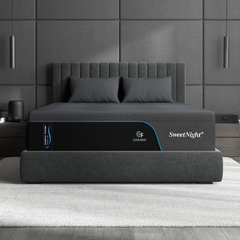
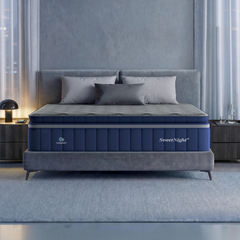
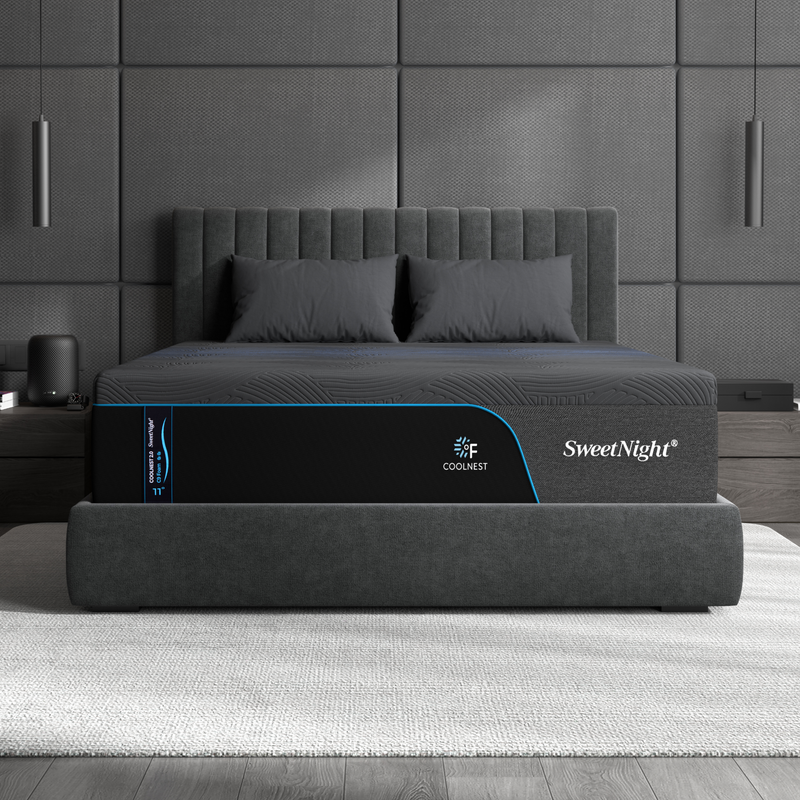
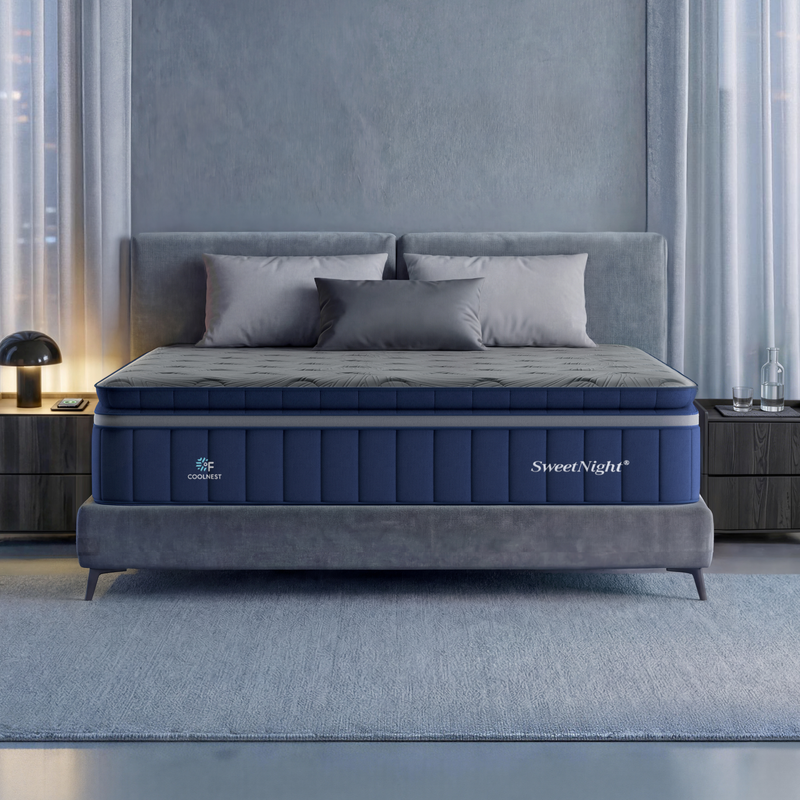
That combination is the whole idea behind a purpose-built cooling foam bed like the CoolNest® Ultra memory foam mattress, which stacks several of those heat-management approaches at once: a cool-to-touch cover for the initial contact, a phase-change foam layer that balances temperature through the night rather than just resisting it, and a highly breathable core that keeps air moving through the structure. The point isn't the product itself so much as what it illustrates — you no longer have to trade durability for coolness. A well-designed mattress can carry enough density to hold up over years and still manage heat, because the two goals are addressed by different parts of the build.

What this means when you're shopping: if you run warm and you're eyeing a dense, deeply contouring memory foam, don't just check the density number and assume you'll overheat. Check whether the bed pairs that density with real cooling features. And be skeptical in the other direction too — a bed marketed heavily on "cooling" that achieves it mostly by using thin, low-density foam is buying you a cool first year at the cost of a saggy third year. The best builds solve for both at once instead of trading one away.
Density and Support for Different Body Weights
Density isn't a one-size recommendation, and body weight is the biggest reason. The load a mattress carries scales with the person on it, so the density that feels perfectly supportive for a lighter sleeper can be inadequate for a heavier one — and the same firm, dense bed that supports a larger body can feel like an unyielding floor to a smaller one. Matching density to weight is where generic "best mattress" advice tends to fall apart.
The physics is intuitive once you see it. More body weight puts more compressive force on the foam, both nightly and over the years. Heavier sleepers therefore benefit from higher-density support layers, because those layers resist bottoming out (compressing so far you feel the hard base beneath) and hold up longer under the greater load. On lower-density foam, a heavier person will compress it further, sink more, and wear it out faster — the impressions and sag we discussed earlier arrive sooner and deeper. This is why a bed that earns rave reviews from average-weight sleepers can disappoint heavier ones: the foam simply wasn't specced for the load.
Lighter sleepers face the opposite situation. They don't press into foam as much, so they can be comfortable on lower-density or softer builds that a heavier person would sink through, and they may find very dense, firm foam doesn't compress enough to relieve pressure at the shoulders and hips. For a smaller-framed side sleeper, an extremely dense, firm surface can feel like it's pushing back rather than cradling, leaving pressure points unaddressed.
A few rough guidelines that hold up better than any single spec:
- Heavier sleepers should prioritize higher-density support cores and be wary of thick, soft, low-density comfort layers that compress and wear quickly. Durability and enough support to prevent bottoming out are the priorities.
- Lighter sleepers have more freedom to choose softer, less dense builds for pressure relief, and won't stress the foam as hard, so moderate density often serves them well.
- Average-weight sleepers are the group most mattresses are tuned for by default, which is why they have the widest range of options that "just work."
- Couples with a big weight gap face the hardest problem, since one side may compress the foam far more than the other. Zoned support and a genuinely durable, higher-density core help keep both sides consistent.
Firmness interacts with all of this, which is why the two dials matter together. A heavier sleeper isn't necessarily looking for a firmer feel — they're looking for enough density and support to keep the spine aligned without sinking too far. It's entirely possible to want a soft, contouring surface and still need dense, supportive foam underneath it to deliver that feel reliably. Density serves the support; firmness serves the feel; body weight decides how much of each you need.
How to Check Foam Quality Before You Buy
You can't squeeze a mattress in a store and feel its density, and you can't tell durability from a two-minute test lie-down. So quality assessment comes down to reading the right signals and asking the right questions. Here's a practical checklist that cuts through marketing.
Look for published density figures — and note where the foam sits. Reputable makers will tell you the density of their key layers, especially the support core, if you ask or dig into the specs. What matters most is the density of the layers doing the hard work: the support core and transition layers. A high density number quoted for a thin top accent layer, while the main structure stays vague, is a distraction. If a company won't disclose density anywhere, that silence is itself a data point.
Read the warranty like a spec. Warranty length is a rough proxy for how much confidence the maker has in the foam, but the more revealing detail is the sag depth threshold — the size of the impression that has to form before a claim is honored. A shorter warranty, or one that only covers very deep impressions, quietly tells you what to expect from the foam's durability. Longer coverage with a reasonable sag threshold signals denser, better-built foam.
Weigh the weight. Shipping weight is a crude but honest clue, because density is literally mass per volume. Between two similarly sized all-foam mattresses, the heavier one generally contains denser foam. It's not a precise measurement — construction differs — but a mattress that's startlingly light for its size is often light on material, and that usually means light on lifespan.
Separate the firmness claim from the durability claim. When you read the product page, sort each statement into the right bucket. "Plush," "firm," "medium" — those are firmness (ILD) claims about tonight's feel. "Durable," "won't sag," "long-lasting" — those are durability claims that density and build have to back up. If the page leans hard on firmness words and stays quiet on anything durability-related, you're being sold a feel, not a lifespan.
Understand what's actually inside. A mattress is a stack of different foams and materials, each with a job, and quality is about the whole stack working together, not one hero spec. Knowing how the layers combine — comfort, transition, support, cover — makes every other signal easier to read. If you want a plain-language tour of the components and how they fit together, our guide to what's inside your mattress breaks down the layers and the technology in each.
Use the trial period as your real test. No spec sheet substitutes for weeks of your own body on the bed. A genuine risk-free trial — long enough to get past the initial adjustment period — is the most reliable quality check available to you, because durability problems and comfort mismatches both tend to surface after the novelty wears off, not on night one. Buy from sellers who let you send it back, and actually use the window to sleep on it in your real conditions.
Put those signals together and you can judge foam quality without ever seeing a lab report. Density predicts durability; ILD describes firmness; the warranty, the weight, the disclosed specs, and the trial period let you verify the story the marketing is telling. When those all line up, you're probably looking at an honestly built mattress. When the marketing shouts about feel and goes quiet on everything structural, keep your guard up.
Frequently Asked Questions
Is higher-density foam always better?
No. Higher density generally means better durability and sag resistance, which is why it's the right choice for support cores. But it also tends to sleep warmer, cost more, weigh more, and respond more slowly. In a comfort layer, or for a lighter sleeper, a moderately dense foam is often the smarter pick. Match density to the job the layer does rather than chasing the highest number.
Does high-density foam mean a firm mattress?
Not at all. Density and firmness are separate properties. Density is how much material is in the foam; firmness (measured by ILD) is how hard it feels. A dense foam can be soft and cradling, and a light foam can feel firm. If you want a specific feel, you're looking at firmness; if you want it to last, you're looking at density.
What does ILD tell me that density doesn't?
ILD tells you how firm or soft the foam feels — specifically, how much force it takes to compress it. Density tells you nothing about feel and everything about how much material is there, which predicts durability. You need both to understand a foam: ILD for tonight's comfort, density for how long that comfort holds up.
Are there standard density numbers I should look for?
There's no universal cutoff, and any hard threshold you see quoted should be treated with caution. The exact ranges for "low," "medium," and "high" shift between brands and between foam types, and the same number means different things in a comfort layer versus a support core. Use density as a comparative signal — higher generally lasts longer — alongside warranty terms, weight, and a real trial period, rather than as a pass/fail line.
Why does my mattress sag even though it felt firm when I bought it?
Because firmness and durability are different things. The bed felt firm on day one thanks to its ILD, but if the foam was low density — or the support underneath it was inadequate — it couldn't sustain that structure under nightly load, so it developed a permanent impression. The initial firm feel never predicted the lifespan; density and build quality did.