









































The history of Labor Day usually gets told in about four sentences: workers wanted a day off, there was a parade in New York, Grover Cleveland signed a law, and now there are mattress sales.
That version is not wrong. It is just missing the strike that shut down the national rail network, the founder nobody can identify, the fire that killed 146 garment workers and radicalized a future Cabinet secretary, the Pullman porters who turned the same company into the base of the most influential Black-led union in American history, and the 44-year gap between the holiday and the law it was supposed to celebrate.
This is the full Labor Day history — organized as a timeline of 32 moments, with the origins, the meaning, the significance and the myths all handled separately so you can find exactly what you need.
Labor Day 2026 falls on Monday, September 7, 2026.
Labor Day History in Brief: The Short Version
If you need a brief history of Labor Day in one paragraph:
Labor Day grew out of the American labor movement of the 1880s, when 12-hour days and six- or seven-day weeks were standard. New York's Central Labor Union staged the first celebration — a parade of about 10,000 unpaid workers — on Tuesday, September 5, 1882. The first-Monday tradition was fixed in 1884. Oregon became the first state to make it a legal holiday in 1887, and by 1894 23 states had followed. Amid the national Pullman Strike, President Grover Cleveland signed Labor Day into federal law on June 28, 1894. The eight-hour day it symbolized did not become federal law until the Fair Labor Standards Act of 1938.
Now the long version.
The History Behind Labor Day: America Before the Holiday (Moments 1–6)
You cannot understand the holiday without understanding what people were escaping.
1. Industrial work in the 1800s had no legal ceiling. The U.S. Department of Labor describes the era at the height of the Industrial Revolution: twelve-hour days, six or seven days a week, no minimum wage, no overtime, no guaranteed day of rest.
2. Children worked full shifts. Children as young as five and six were employed in mills, mines, canneries and glassworks, hired precisely because they were small enough to reach into machinery and narrow seams. They were paid a fraction of adult wages.
3. The eight-hour idea predates the American movement. The industrial reformer Robert Owen articulated the formula in the early 1800s: eight hours labour, eight hours recreation, eight hours rest. It became the American movement's central demand — and note that rest was one-third of it, stated explicitly.
4. Australia got there first. Melbourne stonemasons won an eight-hour workday in 1856, and the "888" symbol became a permanent fixture of Australian labour iconography. American organizers knew it could be done because it had been done.
5. The Great Railroad Strike of 1877 showed the stakes. Wage cuts triggered a strike that spread across multiple states, was met with state militia and federal troops, and left dozens dead. It made clear that industrial conflict in America would be violent and national in scale.
6. Canada's Nine-Hour Movement produced marches in 1872. The Toronto printers' strike that spring led to demonstrations in Toronto and Ottawa and to the repeal of laws that had criminalized union organizing. This matters because of what happened ten years later.
Labor Day History Timeline: The Founding Years, 1872–1894 (Moments 7–15)
This is the core Labor Day origin history.
7. 1882 — Peter J. McGuire visits Toronto. A widely repeated and well-documented account holds that McGuire, a carpenter and labor organizer, attended a Canadian labour festival in Toronto and came back to New York determined to stage an American equivalent. If accurate, the American holiday has Canadian parentage.
8. September 5, 1882 — The first Labor Day. New York's Central Labor Union organized a parade from City Hall, past Union Square, and on toward a park in upper Manhattan. Roughly 10,000 workers marched. It was a Tuesday.
9. The marchers paid for the privilege. No holiday existed. Every person in that parade took an unpaid day off to attend a demonstration demanding paid time off. It is the sharpest irony in the entire history of the holiday.
10. The day ended in a picnic. Food, beer, cigars, music, speeches. Every Labor Day cookout since 1882 is descended from that afternoon.
11. 1883 — The second observance. Held again on September 5.
12. 1884 — The first Monday in September becomes the standard. The Central Labor Union adopted the fixed Monday date and urged labor organizations in other cities to copy it. They did, and the idea spread through the labor movement rather than through government.
13. February 21, 1887 — Oregon becomes the first state to legalize it. New York had introduced a bill earlier, but Oregon passed one first. Colorado, Massachusetts, New Jersey and New York followed later in 1887.
14. 1887–1894 — Adoption spreads to 23 states. Connecticut, Nebraska and Pennsylvania came aboard by 1890. The federal government was following the states, not leading them.
15. The founder is disputed, and the Department of Labor says so. The two candidates are Peter J. McGuire — general secretary of the Brotherhood of Carpenters and Joiners and a co-founder of the American Federation of Labor — and Matthew Maguire, a machinist and the secretary of the Central Labor Union in 1882, the body that actually organized the parade. Research published by the New Jersey Historical Society in the 1970s argued for Maguire; some historians have suggested his more radical politics made him an awkward figure for the labor establishment to canonize.
The Pullman Strike and the Federal Labor Day Holiday (Moments 16–20)
The history of Labor Day in the United States turns entirely on 1894.
16. Pullman, Illinois, was a company town. The Pullman Palace Car Company owned the housing, the shops, the water and the church its workers used.
17. May 1894 — Wages were cut; rents were not. After the Panic of 1893 crushed demand, the company slashed wages while leaving company-town rents untouched. Workers struck.
18. June 26, 1894 — The national boycott begins. Eugene V. Debs's American Railway Union refused to handle trains carrying Pullman cars. Rail traffic across a huge swath of the country seized up.
19. June 28, 1894 — Cleveland signs Labor Day into law. Congress moved the bill with extraordinary speed. Here is the correction most articles need: the signing happened two days into the national boycott, not after the strike ended. The strike would not formally conclude until August, and federal troops had not yet been deployed when Cleveland signed. Labor Day was a conciliatory gesture offered mid-crisis.
20. July–August 1894 — Federal troops and collapse. Troops were dispatched to Chicago, violence followed, Debs was arrested, and the strike collapsed. The holiday survived it. That is the uncomfortable core of the story: the United States got a permanent labor holiday in the same summer it broke a labor strike by force.
May Day Labor History vs. American Labor Day History
The most common question in labor day history and significance searches: why September, when the rest of the world uses May 1?
21. May 1, 1886 — The eight-hour-day general strike. American labor organizations set May 1 as the deadline for a nationwide eight-hour day, and hundreds of thousands took part in strikes and rallies, with Chicago as the epicenter.
22. May 4, 1886 — The Haymarket affair. At a rally in Haymarket Square, a bomb was thrown at police. The explosion and the gunfire that followed killed officers and civilians. The trial and executions that followed became an international cause célèbre.
23. May 1 becomes International Workers' Day. Adopted worldwide, and in many countries permanently linked to socialist and communist political traditions.
24. September was the deliberate American alternative. By placing the national holiday in September — a date already in use since 1882 and already law in nearly two dozen states — the United States got a labor holiday framed around a parade and a picnic instead of a bombing and a trial. Canada made the same choice.
Labor Day History After 1894: The Fights That Kept Going (Moments 25–29)
The holiday came early. The rights came late. This is the part of American Labor Day history that most timelines skip.
25. March 25, 1911 — The Triangle Shirtwaist Factory fire. 146 garment workers, most of them young immigrant women, died in a Manhattan factory fire where exit doors had been locked. A young observer named Frances Perkins watched it happen from the street. She later called it the day the New Deal began.
26. March 4, 1913 — The U.S. Department of Labor is created. President William Howard Taft signed it into existence on his final day in office. The first Secretary of Labor, William B. Wilson, was a former coal miner who had started underground as a boy.
27. 1935 — The National Labor Relations Act. Also called the Wagner Act, it established the legal right of most private-sector workers to organize and bargain collectively.
28. June 25, 1938 — The Fair Labor Standards Act. Signed by Franklin D. Roosevelt, with Frances Perkins — Secretary of Labor from 1933 to 1945 and the first woman to serve in a U.S. presidential Cabinet — as its principal architect. It set a federal minimum wage of 25 cents an hour, capped the workweek at a level that stepped down to 40 hours by 1940, and restricted child labor. Labor Day had existed as a federal holiday for 44 years before this passed.
29. 1970 — The Occupational Safety and Health Act. Signed in December 1970, it created OSHA and established, for the first time, a general federal duty for employers to provide a workplace free of recognized hazards.
The Black History of Labor Day: The Pullman Porters and What Came After
The black history of Labor Day is not a side note. It runs directly through the same company at the center of 1894.
30. 1925 — A. Philip Randolph organizes the Brotherhood of Sleeping Car Porters. The Pullman Company was, at the time, one of the largest single employers of Black men in the United States. Porters worked punishing hours for low pay and depended on tips. Randolph's union fought for more than a decade before winning recognition and a contract with Pullman in the late 1930s — making it the first major Black-led union to secure a collective bargaining agreement with a major American corporation.
31. August 28, 1963 — The March on Washington for Jobs and Freedom. Randolph was its chief organizer, and the full name matters: it was a jobs march as much as a civil rights march, with demands including a higher minimum wage and fair employment.
32. 1968 — Memphis sanitation workers. Following the deaths of two workers in a garbage compactor, Black sanitation workers struck under the banner "I AM A MAN." Dr. Martin Luther King Jr. traveled to Memphis to support the strike and was assassinated there on April 4, 1968. Labor rights and civil rights were, at that moment, the same fight in the same city.
Other threads worth knowing: the 1912 Lawrence textile strike in Massachusetts, remembered as the "Bread and Roses" strike and led largely by immigrant women; and the Delano grape strike launched in 1965, which brought Cesar Chavez and Dolores Huerta and the United Farm Workers to national prominence.
Labor Day History in Canada
Canada's Labour Day history runs parallel and sometimes ahead.
The 1872 Toronto printers' strike over the nine-hour workday produced large demonstrations and pushed the government to repeal laws criminalizing union activity. Annual labour parades continued through the following decades. Canada formalized Labour Day as a holiday on the first Monday in September in 1894 — the same year as the United States.
And if the account of McGuire's 1882 Toronto visit is accurate, the American holiday's original spark was Canadian.
The History of "No White After Labor Day"
A fashion rule with a confident tone and no birth certificate.
There is no documented origin for the "no white after Labor Day" rule. What exists is a set of plausible explanations:
- Practicality. Before air conditioning, lightweight white clothing was summer wear. When summer ended, so did the wardrobe.
- Class signaling. The most common theory holds that established old-money families in the late 19th and early 20th centuries used arbitrary etiquette rules to distinguish themselves from newly wealthy arrivals who did not know the codes.
- Vacation wardrobes. White was resort and country wear; September meant a return to the city and to darker, heavier clothes.
None of these is documented as the origin. The rule hardened into etiquette convention through repetition rather than proclamation — and Coco Chanel wore white year-round and treated the whole thing as beneath comment. The history of wearing white after Labor Day is, in the end, a history of a rule that was never actually written down.
Labor Day History for Kids: The Simple Timeline
A history of Labor Day for kids that stays accurate:
- Long ago, grown-ups and children worked twelve hours a day, almost every day.
- 1882 — Ten thousand workers marched in New York City to say that was too much. They gave up a day's pay to do it.
- 1884 — People decided to hold it every year on the first Monday in September.
- 1887 — Oregon became the first state to make it an official holiday.
- 1894 — The President made it a national holiday for the whole country.
- 1938 — A new law finally said most people could only be asked to work forty hours a week, and children could not work in factories.
- Today — We get a day off to thank everyone who works, and to rest.
Labor Day History and Significance Today
The meaning of Labor Day history comes down to one uncomfortable observation: almost everything Americans take as a natural feature of employment was, at some point, a demand that someone was punished for making.
The weekend. The lunch break. Quitting time. Overtime. The minimum wage. The rule that a nine-year-old cannot operate a loom. The fire exit that has to stay unlocked. None of it was inevitable and none of it was granted.
That is the significance. Labor Day is not a monument to a finished project. It is an annual reminder that the terms of work are always negotiated — and that the version we inherited was negotiated by people who marched on unpaid days off.
Labor Day History Timeline at a Glance
Copy this if you need the whole Labor Day history timeline in one block.
| Year | Moment |
|---|---|
| 1856 | Melbourne stonemasons win the eight-hour day in Australia |
| 1872 | Toronto printers' strike; Canadian Nine-Hour Movement demonstrations |
| 1877 | Great Railroad Strike sweeps multiple U.S. states |
| 1882 | First Labor Day parade, New York City, September 5 (a Tuesday) |
| 1884 | First Monday in September adopted as the standard date |
| 1886 | May 1 general strike; Haymarket affair, May 4, Chicago |
| 1887 | Oregon becomes the first state to make Labor Day a legal holiday |
| 1894 | 23 states have adopted it; Pullman Strike; federal law signed June 28 |
| 1911 | Triangle Shirtwaist Factory fire kills 146 garment workers |
| 1913 | U.S. Department of Labor created, March 4 |
| 1925 | Brotherhood of Sleeping Car Porters organized by A. Philip Randolph |
| 1933 | Frances Perkins becomes the first woman in a U.S. Cabinet |
| 1935 | National Labor Relations Act; Labor Day Hurricane devastates the Florida Keys |
| 1938 | Fair Labor Standards Act: minimum wage, 40-hour week, child labor limits |
| 1963 | March on Washington for Jobs and Freedom |
| 1968 | Memphis sanitation strike; assassination of Dr. King |
| 1970 | Occupational Safety and Health Act creates OSHA |
| 2026 | Labor Day falls on Monday, September 7 |
Where to Find Real Labor Day History Images and Primary Sources
If you are building a lesson, a presentation or a printable Labor Day history handout, skip the stock photography and go to the primary record. Three collections carry almost everything worth showing:
Lewis Hine's child labor photographs, produced for the National Child Labor Committee between roughly 1908 and 1924, are the single most powerful visual archive in American labor history — breaker boys in Pennsylvania coal chutes, girls dwarfed by spinning frames in Southern cotton mills, newsboys working past midnight. Hine recorded names, ages and locations, which is why the images still function as evidence rather than illustration.
Late-19th-century engravings of Labor Day parades, published in the illustrated weeklies of the period, show what the 1882 and 1880s marches actually looked like: banners by trade, brass bands, families walking behind the union locals.
Photographs of the Pullman Strike and the 1911 Triangle fire aftermath anchor the two turning points in the timeline above.
All three categories sit largely in public collections, which is also the reason they turn up in nearly every credible Labor Day history video and documentary ever made.
The Forgotten Third of the Slogan
Return to Moment 3, because it is the piece of Labor Day history that has quietly gone missing.
The demand was never just a shorter shift. It was eight hours for work, eight hours for rest, eight hours for what we will — three equal blocks, with rest given the same weight as labor. The reasoning was practical: a reduced workday achieves nothing if the hours you win back are not hours you can actually recover in.
The first block is now protected by federal law. The third block is yours to spend. The middle block — the eight hours of rest — is protected by nothing at all except whatever mattress you happen to be lying on. And for a lot of people that is a bed that runs hot through September, sags under the hips, and quietly converts eight hours in bed into five hours of real sleep.
Reclaim the Middle Eight Hours: SweetNight Labor Day Mattress Sale 2026
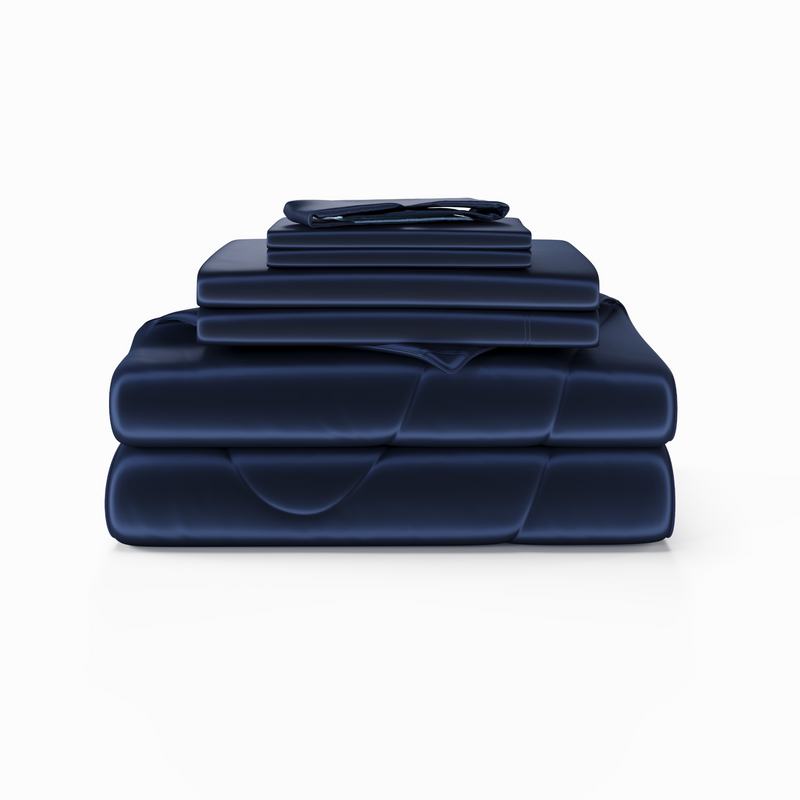
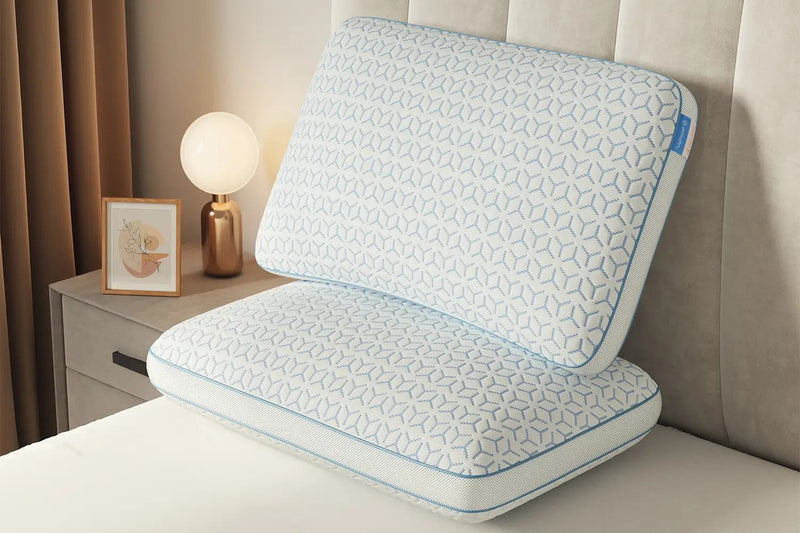
If you want to observe the history of Labor Day in the most literal way available, fix the surface where the second eight hours are supposed to happen. The SweetNight Labor Day Mattress Sale 2026 is running up to 45% off sitewide, with an automatic 10% off a single mattress, 15% off any two items and 20% off any three — the usual approach being a mattress bundled with a cooling pillow and sheet set.
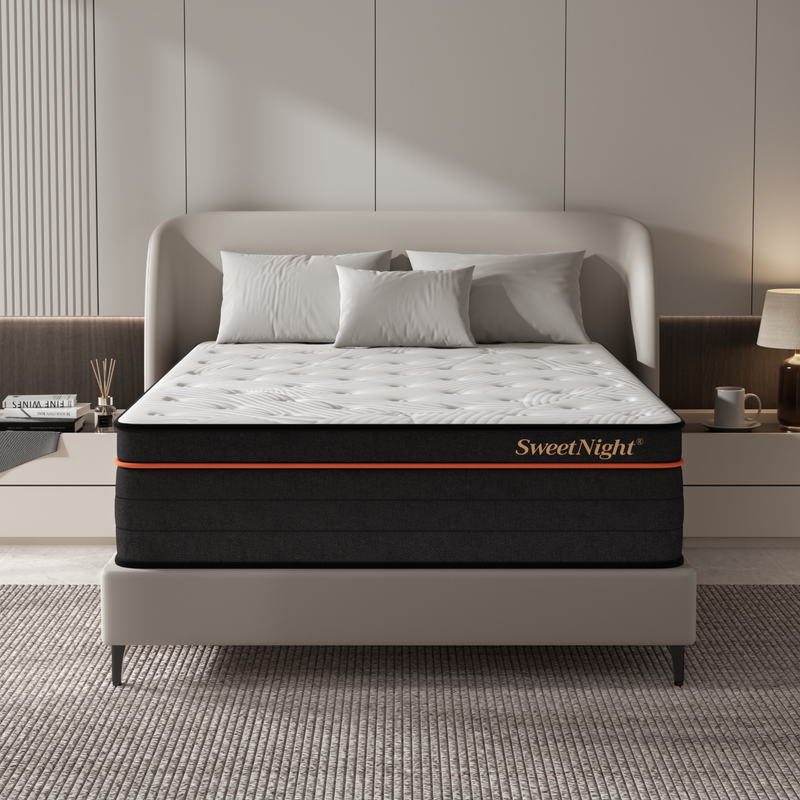
The lead product is the CoolNest® Ultra Memory Foam Mattress, and the seasonal fit is exact. Labor Day weekend is still hot across most of the country, and overheating is the most common reason people wake in the small hours. The CoolNest® Ultra is built specifically against that: a Gradient Ice Silk cover with a Qmax cooling value of 0.25 for instant cool-to-the-touch contact, PCMflux® phase-change foam that absorbs heat as your body warms and releases it as you cool, AirMesh™ breathable memory foam with up to 6× the airflow of standard memory foam, and a 3D open-channel structure that vents heat out of the mattress instead of letting it pool. SweetNight measures the combined system at up to 11° cooler than a conventional memory foam bed. Underneath, a refined 7-zone ergonomic support layer distributes pressure across shoulders, hips and lower back to keep the spine aligned through the night.

At the time of writing the Queen is $729.99 (from $919.99 — a $190 saving) with an extra 10% off applied at checkout, available in 12", 14" and 16" builds. All foams are CertiPUR-US® certified, the cover holds OEKO-TEX® STANDARD 100 certification, and it ships free with a 100-night risk-free trial and a 10-year warranty, with free pickup and a full refund if it does not suit you.
→ Shop the CoolNest® Ultra Memory Foam Mattress
→ Browse the full SweetNight Labor Day Sale 2026
They won the eight hours in 1938. Whether you actually sleep through them is a separate negotiation.
FAQ: The History of Labor Day
What is the history of Labor Day? It began with a parade of about 10,000 workers organized by New York's Central Labor Union on September 5, 1882. The first-Monday date was fixed in 1884, Oregon made it a state holiday in 1887, 23 states followed, and President Grover Cleveland signed it into federal law on June 28, 1894, during the Pullman Strike.
Who founded Labor Day? It is disputed. Peter J. McGuire of the Brotherhood of Carpenters and Joiners and Matthew Maguire of the Central Labor Union are both credited, and the U.S. Department of Labor acknowledges the uncertainty.
What is the history behind Labor Day becoming a federal holiday? The Pullman Strike of 1894 shut down national rail traffic. Congress passed the Labor Day bill at speed and Cleveland signed it on June 28, 1894 — two days into the national boycott, with the strike still ongoing.
Why is Labor Day in September and not May 1? May 1 became International Workers' Day after the 1886 Haymarket affair in Chicago and carried radical political associations. September offered the U.S. a labor holiday without them, and the date was already in use.
What is the history of "no white after Labor Day"? There is no verifiable origin. The leading explanations are pre-air-conditioning seasonal practicality and class-marking etiquette used by established wealthy families around the turn of the 20th century.
What is the Black history of Labor Day? It runs through the Brotherhood of Sleeping Car Porters, organized by A. Philip Randolph in 1925 against the Pullman Company; Randolph's leadership of the 1963 March on Washington for Jobs and Freedom; and the 1968 Memphis sanitation strike that Dr. Martin Luther King Jr. traveled to support.
When is Labor Day 2026? Monday, September 7, 2026.