
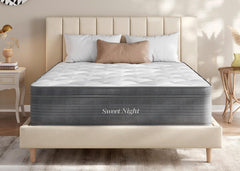
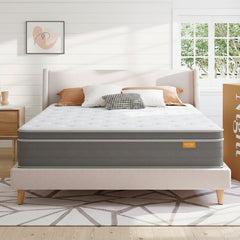






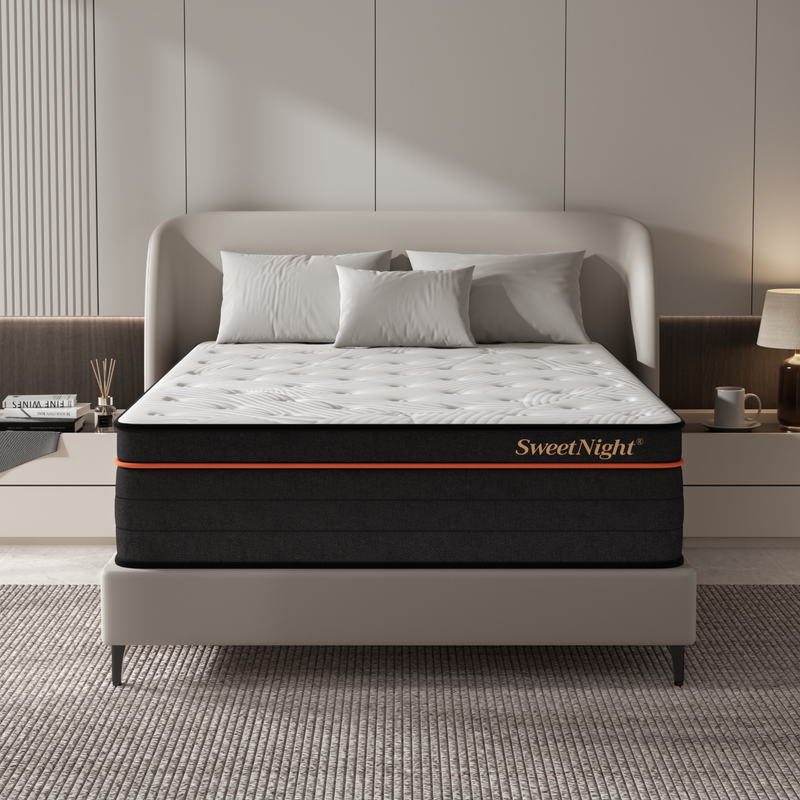
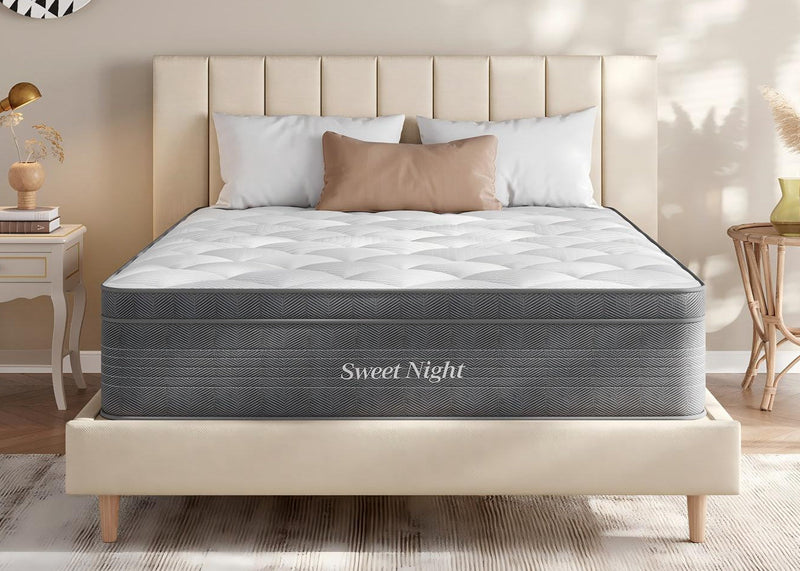
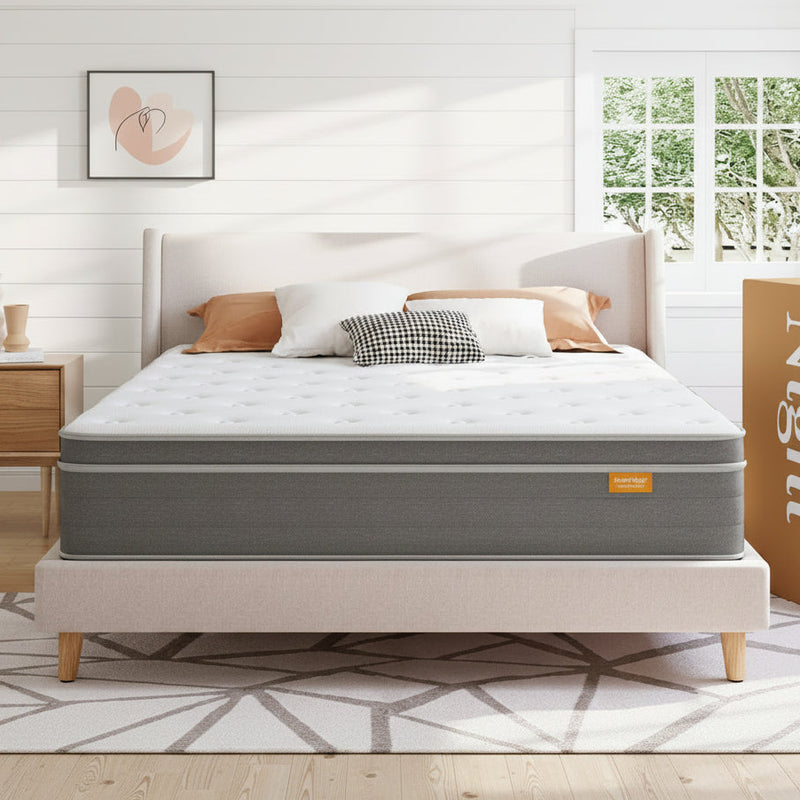


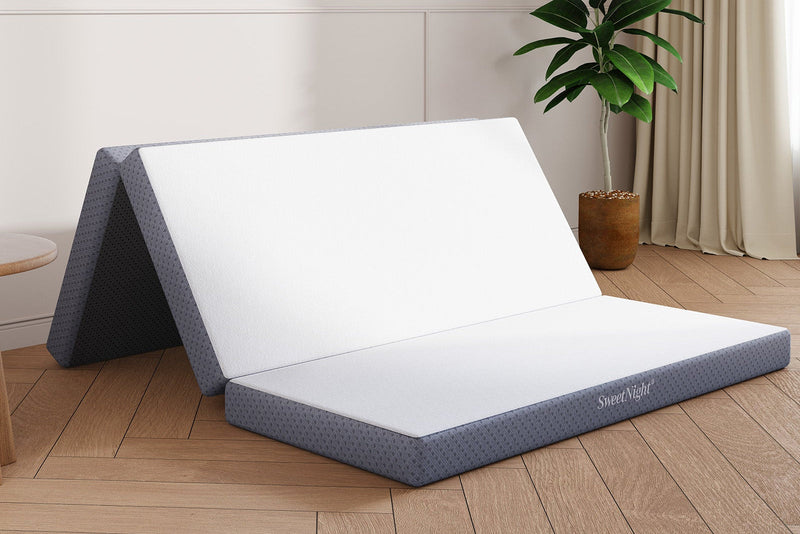

Short answer: Memory foam hugs your body and quiets motion, while latex pushes back with a springier, cooler-sleeping feel. Neither is "better" in the abstract — the right pick depends on how you sleep, how hot you run, and your budget.
The short version, if you're skimming:
- Feel: Memory foam = sink in and cradle. Latex = float on top with gentle bounce.
- Temperature: Latex runs cooler by default; modern memory foam closes the gap with open-cell and gel construction.
- Couples: Memory foam usually wins on motion isolation; latex wins on responsiveness for combination sleepers.
- Longevity & price: Natural latex tends to last longer and cost more; quality memory foam is easier on the wallet.
- How to decide: Match the material to your sleep position, your temperature, and whether you share the bed — then confirm the feel with a trial period at home.
Memory Foam vs. Latex: The Quick Verdict
If you press your hand into a memory foam mattress and lift it away, the surface slowly returns to shape. Press into latex and it springs back almost instantly. That single difference — slow versus fast recovery — drives almost everything else you'll notice, from how the bed feels when you roll over to how warm it sleeps.
Here's the honest summary before we get into the weeds. Choose memory foam if you want deep contouring, pressure relief on your shoulders and hips, and a bed that soaks up your partner's movement. Choose latex if you prefer a buoyant surface, sleep hot, or want the longest usable life you can get and don't mind paying for it. Plenty of people would be happy on either; the trick is knowing which trade-offs you actually care about.
It helps to think of the two materials as personalities rather than a ranking. Memory foam is the quiet, accommodating type — it molds to whatever you bring to it and asks nothing back. Latex is the athletic type — supportive, quick to respond, a little firmer in its opinions. A person who loves one will often be lukewarm on the other, and that's normal. The mistake shoppers make is treating the choice like a spec-sheet contest with a single champion. It isn't. It's a matching problem, and you're one half of the match.
One more thing to set up front: within each material there's enormous variety. A soft Talalay latex comfort layer and a firm Dunlop core feel like different worlds, and a plush gel memory foam behaves nothing like a dense, old-school pour. So when someone tells you "latex is too firm" or "foam sleeps hot," treat it as a data point about one specific bed, not a verdict on the whole category. The rest of this guide is about learning to read those differences so you can tell which version of each material actually suits you.
What Is Memory Foam?
Memory foam is a polyurethane foam engineered to soften in response to body heat and weight. As you settle in, the foam directly beneath your heaviest points — hips, shoulders, lower back — gives way and redistributes pressure across a larger area. That's why side sleepers often describe it as "cradling": the mattress fills the gap at your waist instead of leaving it unsupported.
The material has an unusual origin. It was developed in the 1960s for aircraft seat cushioning, prized for the way it absorbed impact and spread load. Those same properties — slow rebound, even pressure distribution — are exactly what make it comfortable in a bed. When people say a mattress "remembers" their shape, they're describing viscoelasticity: the foam is both viscous (slow to move) and elastic (it eventually returns), so it holds an impression for a moment before recovering.
The slow response has real benefits. It reduces the sharp pressure points that make you flip from side to side, and it isolates movement so a restless partner doesn't telegraph every turn across the bed. Picture lying on your side on a too-firm surface: your shoulder and hip carry most of your weight on small contact patches, and within twenty minutes you feel the ache that forces a position change. Memory foam widens those contact patches so the load spreads across your whole side, which is why people with shoulder or hip sensitivity so often gravitate toward it. If you want a deeper look at the chemistry and why the material behaves this way, we walk through how memory foam actually works in a separate guide.
Not all memory foam is the same, and the differences matter more than the marketing suggests. Density, measured in pounds per cubic foot, is the biggest one. Higher-density foam tends to be more durable and more supportive, but also slower to respond and warmer. Lower-density foam is lighter, quicker, and cheaper, but it can develop body impressions sooner. Then there's the response speed itself: some foams are formulated to rebound faster so you don't feel as "stuck," while traditional pours cling longer. When you shop, the useful questions aren't "is it memory foam" but "how dense is the comfort layer, and how quickly does it recover."
The classic drawbacks are heat and a "stuck" sensation. Because the foam conforms closely and older formulas trapped warmth, some sleepers felt they were sinking into a pocket. If you've ever had to plant a hand and consciously push to roll over on an old foam bed, that's the sensation. Both issues have been engineered down over the last decade — faster-recovery foams reduce the stuck feeling, and cooling construction addresses the heat — but they're worth understanding before you buy. More on temperature below.
What Is Latex?
Latex foam comes from either the sap of rubber trees (natural latex) or a petroleum-based process (synthetic), and many mattresses blend the two. It's made using one of two methods, Dunlop or Talalay. Dunlop is denser and a touch firmer, common in support layers; Talalay is lighter and more consistent, common in comfort layers. You don't need to memorize that, but the labels show up on spec sheets constantly, and knowing which is which helps you predict feel before you ever lie down.
The two methods differ in how the foam is cured. In the Dunlop process, the whipped latex is poured in one go and allowed to settle, so it ends up slightly denser at the bottom — a natural firmness gradient that makes it a workhorse for support cores. Talalay adds vacuum and flash-freezing steps that produce a more uniform, airier cell structure, which is why Talalay comfort layers feel lighter and springier. Neither is superior; they're tuned for different jobs. A lot of quality latex beds use Dunlop underneath and Talalay on top precisely to get the best of both.
What matters is the feel: latex is responsive and buoyant. It contours a little, then holds you near the surface with a gentle push-back. Combination sleepers tend to love it because you don't have to fight the mattress to change positions — you shift, and the surface is already back under you. It's also naturally more breathable thanks to its pinhole structure and open cell walls, which is a big part of why it earns its cool-sleeping reputation.
There's also a common preference story worth naming. People coming off a spring mattress who liked the "on top" feel but hated the pressure points often land happily on latex, because it keeps the buoyancy while smoothing out the sharp spots coils create. People coming off a broken-down foam bed who felt trapped tend to like it for the opposite reason: it never swallows them. If either of those descriptions sounds like your history, latex deserves a serious look.
The catch is cost and weight. Natural latex in particular is expensive to produce — harvesting and processing tree sap is labor-intensive — and the mattresses are heavy and genuinely awkward to move. A queen natural latex bed can be a two-person job just to rotate. If a "latex" bed is suspiciously cheap, it's often mostly synthetic or a thin latex layer over polyfoam, which won't give you the durability or feel you're paying the latex premium for. Read the construction, not just the headline, and be wary of the word "latex" doing a lot of work on a budget price tag. Terms like "100% natural latex" or a stated blend percentage tell you far more than the material name alone.
Feel and Comfort: Sinking In vs. Sleeping On Top
The cleanest way to picture the difference: memory foam lets you sink into the bed, latex keeps you on it. Everything else in this section is a consequence of that one contrast.
That has practical consequences depending on your body and position:
- Side sleepers usually prefer more contouring to cushion the shoulder and hip, which tilts toward memory foam or a softer latex comfort layer.
- Back sleepers want their lumbar curve filled without the hips dropping too far — both materials can do this at a medium to medium-firm feel.
- Stomach sleepers generally need a firmer, flatter surface to keep the hips from sagging, which often favors firmer latex or a firm foam.
- Combination sleepers who change positions all night tend to find latex easier to move on.
Let me put some texture on those bullets, because the categories blur in real life. Take a side sleeper with broad shoulders: on a firm latex bed the shoulder can't sink far enough, so the spine bends toward the mattress and the shoulder joint takes pressure all night. Swap to memory foam or a plush latex top and the shoulder settles in while the waist stays supported, keeping the spine closer to a straight line. Now take a stomach sleeper on soft memory foam: the hips sink, the lower back arches, and they wake up stiff. That same person on firm latex floats with the hips level and the ache never shows up. The material didn't change good to bad — it changed relative to the body on it.
Weight enters the picture too. A lighter person may never sink far enough into a firm mattress to engage the comfort layer at all, so a bed that reviewers call "medium" can feel rock-hard to them. A heavier person compresses the same bed further and reaches the firmer support layers sooner, so "medium" can feel soft and unsupported. This is why two honest people can describe the identical mattress in opposite terms. When you read the feel, factor in who's doing the reporting.
There's also the question of edge support, which the material choice quietly affects. Denser latex and firmer foams hold their shape better at the perimeter, so you can sit on the edge to tie your shoes or sleep near the side without feeling like you'll roll off. Very plush foams compress more at the edge. If you share a smaller bed and use every inch of it, edge support is worth checking in person.
There's no universal winner here. If you've only ever slept on an old innerspring, note that both materials will feel dramatically different from what you're used to, and your first night on either can be disorienting simply because it's unfamiliar, not because it's wrong. It helps to first sort out whether you even want foam over coils; our comparison of foam versus spring construction is a good starting point if you're still deciding at that level.
Temperature: Which One Sleeps Cooler?
All else equal, latex sleeps cooler than traditional memory foam. Its open structure and pinholes let air move, and because you rest nearer the surface, less of your body is surrounded by insulating material. Dense, old-style memory foam does the opposite: it conforms around you and holds heat, which is exactly why memory foam can sleep warm for some people.
The physics is straightforward once you see it. Heat leaves your body two main ways in bed: convection (air carrying it away) and conduction (the surface pulling it off your skin). Latex helps with the first because its aerated structure lets warm air escape instead of pooling around you. Traditional memory foam works against both — it wraps more of your body, cutting off airflow, and it's a poor conductor, so heat lingers at the contact points. That trapped warmth is the source of the classic "I woke up sweaty" complaint, and it's why cooling has been the single biggest engineering focus in foam for years.
But "all else equal" is doing heavy lifting in that sentence, because memory foam has changed. Three engineering moves have narrowed the gap:
- Open-cell foam is structured so air can pass through instead of getting trapped in closed pockets.
- Gel, copper, or graphite infusions pull heat away from the surface, at least early in the night.
- Phase-change materials and ventilated layers actively buffer temperature rather than just resisting it.
It's worth understanding what each of those actually does, because they're not interchangeable. Open-cell structure and ventilation attack the airflow problem — they let heat move instead of pooling. Gel and metal infusions attack conduction — they give heat a faster path away from your skin, though a fixed amount of gel can only absorb so much before it warms up, which is why some cooling foams feel great for the first hour and neutral by 3 a.m. Phase-change materials are the interesting ones: they absorb heat as they soften and release it as they cool, so they keep buffering across the whole night rather than saturating early. A serious cooling build usually combines more than one of these, because each covers a gap the others leave.

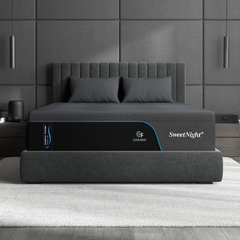
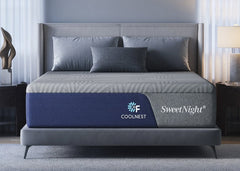
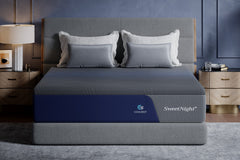
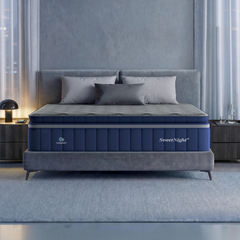
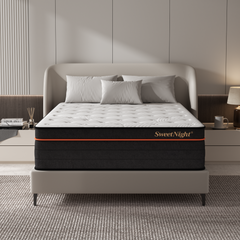
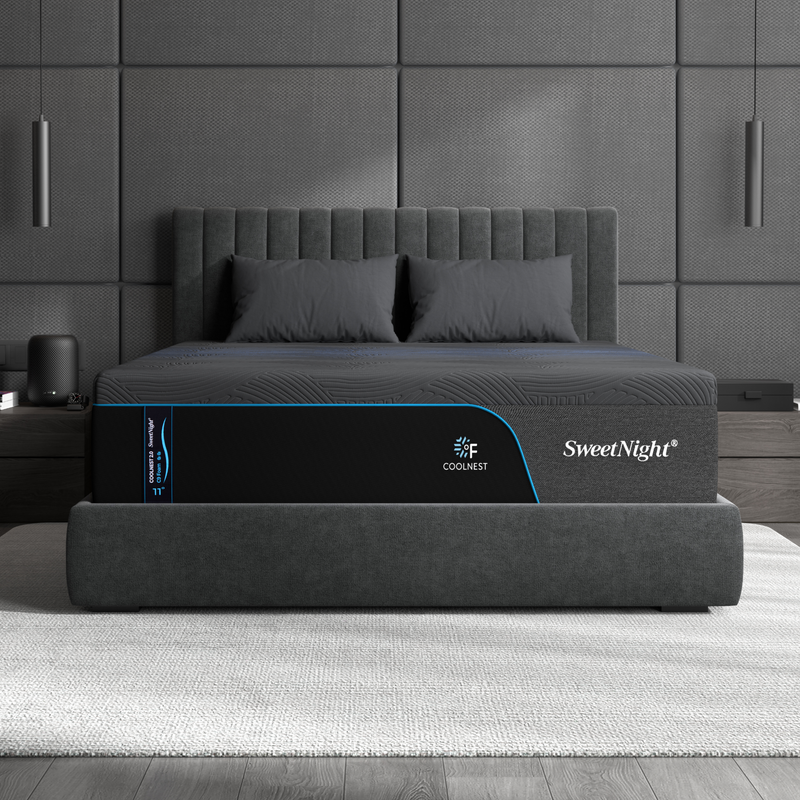
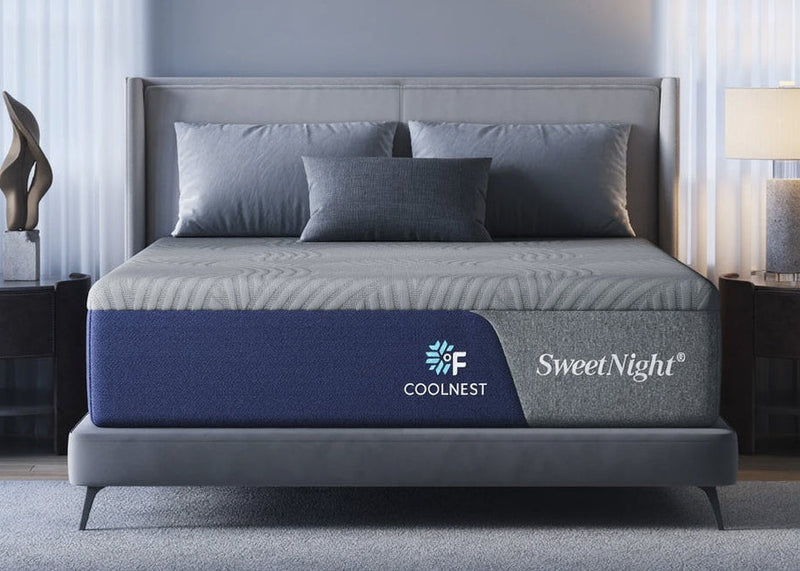
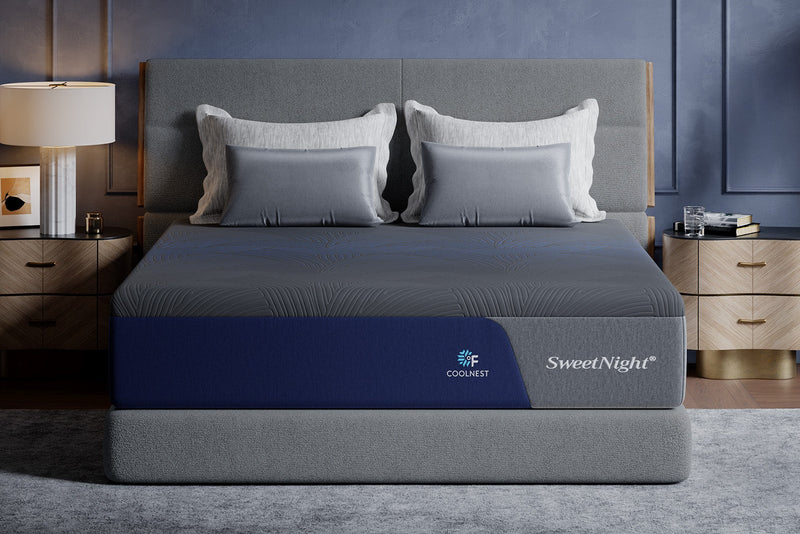
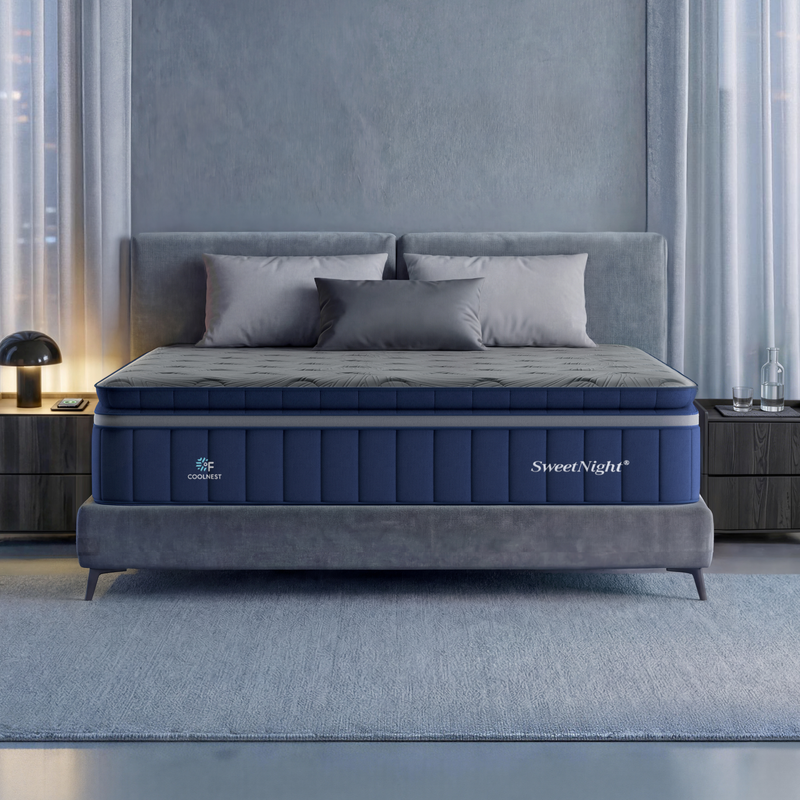
This is where the category has moved fastest. A modern cooling build like the CoolNest® Ultra memory foam mattress layers a cool-to-touch gradient cover, a PCMflux® phase-change foam that balances temperature through the night by absorbing and releasing heat, and a highly breathable AirMesh™ core for continuous heat dissipation — the point being that "memory foam sleeps hot" is now a statement about old memory foam, not the material as a whole. Its makers describe the overall system as feeling up to 11 degrees cooler, which is a felt-temperature claim rather than a promise about your room. If you run warm and still want the hug of foam, look for that combination of a cool-touch cover, phase-change buffering, and a ventilated core rather than assuming you have to switch to latex.

A practical caveat: no mattress material fully overrides your environment. A hot room, heavy comforter, or non-breathable sheets will make any bed feel warm. If you sleep hot, treat the mattress as one lever among several — breathable bedding, a cooler room, and moisture-wicking sleepwear all stack with a cooling build. The mattress sets the baseline; the rest of the setup decides how far the baseline gets you.
Motion Isolation for Couples
If you share a bed with a partner or a pet who moves at night, motion isolation is one of the most underrated specs. Memory foam is the champion here. Its slow-recovery structure absorbs movement locally, so when one person rolls over or gets up for water, the other side barely registers it. The foam dampens the energy of the movement instead of passing it along, which is the same reason it was useful as impact cushioning in the first place.
The classic demonstration is the wine-glass test: set a full glass on one side of a foam mattress, then drop onto the other side, and the glass hardly wobbles. It's a bit of a parlor trick, but it captures something real. On a bouncy surface, the energy of your partner flopping into bed travels across the mattress and reaches you as a jolt. On memory foam, that energy gets absorbed a few inches from where it started.
Latex transfers a bit more motion because of its bounce — not dramatically, and modern zoned or pocketed latex handles it well, but it's a real difference. The trade-off is the flip side of what makes latex nice for combination sleepers: responsiveness helps you move, which also means movement travels slightly further. You can feel it as a gentle ripple when your partner shifts, where foam would give you nothing.
How much this matters depends entirely on your household. Two heavy sleepers on similar schedules may never notice motion transfer regardless of material. But if one of you is a light sleeper who wakes at the smallest disturbance, or your partner works a different shift and comes to bed hours after you, weight the decision toward the foam side of the spectrum. Pets change the math too — a dog that circles and resettles three times a night is a lot of movement to absorb, and foam simply handles it better.
Durability, Weight, and Price Compared
Natural latex is the durability leader. A well-made natural latex mattress can stay supportive for well over a decade, which is part of how buyers justify the higher upfront cost. Latex resists the gradual softening and body impressions that eventually catch up with most foams, so it holds its original feel longer. Quality memory foam is no slouch — it commonly lasts many years — but very soft or low-density foams can develop body impressions sooner, showing up as a shallow dip where you sleep that no amount of rotating fully fixes.
A few realities to set expectations:
- Price: Natural latex sits at the premium end. Memory foam spans budget to premium, giving you more room to spend less without gambling on quality.
- Weight: Latex is heavy. Moving one alone is a genuine chore; foam beds are usually easier to handle and ship compressed in a box.
- Maintenance: Both benefit from a supportive base and occasional rotation. Neither should be folded or bent, especially latex.
The price gap deserves a fair framing. Latex costs more per year of use than the sticker suggests if it genuinely lasts longer, so the premium can pencil out for someone who plans to keep the bed a long time. On the other hand, sleep needs change — a growing family, a new partner, a back that isn't what it was — and a mattress you keep for fifteen years assumes your preferences won't move. Memory foam's lower entry price is partly a hedge against that: it's easier to replace a foam bed in year six without feeling you wasted a fortune. Neither approach is wrong; they suit different temperaments and different life stages.
The box-versus-delivery difference is more practical than it sounds. Most quality memory foam ships compressed in a box you can carry up a staircase yourself and expands in a few hours. Latex often ships uncompressed or only lightly compressed because of its density, which can mean freight delivery, a heavier lift, and more hassle if you live in a walk-up or plan to move often. If you relocate frequently, that weight is a recurring tax, not a one-time inconvenience.
Longevity also depends on what's under the mattress. A sagging box spring, a bed frame with slats spaced too far apart, or a base that flexes in the middle will shorten the life of any bed regardless of material, and it can void warranties that require proper support. Foam and latex both want a firm, evenly supported foundation — solid platform or closely spaced slats, generally no more than a few inches apart. Spend a little care on the base and you protect the far larger investment sitting on top of it.
Which Should You Choose by Sleep Position and Body Type?
Rather than declaring a winner, match the material to your situation:
- Side sleeper with shoulder or hip pain: memory foam, or latex with a plush comfort layer, for pressure relief.
- Back or stomach sleeper who wants support: firmer latex or a firm-feel foam to keep the spine neutral.
- Hot sleeper: latex, or a memory foam specifically built for cooling with open-cell and phase-change layers.
- Couple with mismatched schedules: memory foam for motion isolation.
- Heavier body: a denser, more supportive build in either material, since soft foams compress faster under more weight.
- Combination sleeper: latex for easy movement.
Most people don't fit one row cleanly, and that's where the decision gets interesting. Suppose you're a side sleeper who also runs hot — two rows point in opposite directions, foam for the shoulder and latex for the heat. That's exactly the conflict cooling memory foam is designed to resolve: you get the contouring your shoulder wants without the trapped warmth that usually comes with it. Or suppose you're a combination sleeper who shares the bed with a very light sleeper. Latex helps you move but transfers more motion; a responsive, faster-recovery foam or a zoned latex build can split the difference. When the rows disagree, look for the construction that addresses your two biggest complaints rather than forcing yourself into a single category.
Firmness matters as much as material. A "medium-plush" feel behaves very differently from a firm one even within the same foam type, so treat firmness and material as two separate dials you're setting. A useful mental model: material decides the character of the feel — hug versus float, quiet versus springy — while firmness decides how much of it you get. You can have plush latex and firm foam, and either combination might be exactly right for you. Get clear on which character you want first, then dial in the firmness for your position and weight.
Common Myths About Both Materials
A handful of half-truths follow these two materials around, and they steer people toward the wrong bed. Here are the ones worth clearing up.
"Memory foam always sleeps hot." This was largely true of the dense, closed-cell foams of fifteen years ago, and it stuck as conventional wisdom. It's outdated. Open-cell structures, ventilated cores, gel and graphite infusions, and phase-change layers exist specifically to move and buffer heat. A well-built cooling foam can sleep neutral or better. Judge the specific bed's construction, not the material's reputation.
"Latex is completely natural." Some latex is natural, some is synthetic, and a great deal is a blend — and beds are legally allowed to say "latex" across that whole range. If the natural content matters to you, look for a clear statement like "100% natural latex" or a stated blend ratio. The word "latex" alone tells you the feel, not the source.
"Foam mattresses sag in a year." Cheap, low-density foam can develop impressions fast, which is where this comes from. Quality higher-density foam holds up for many years. The variable is density and build quality, not the fact that it's foam. This is one more reason to ask about foam density instead of stopping at the word "memory foam."
"Latex is bad for allergies." The concern here is a latex protein allergy, which is real for a small number of people but is associated mainly with direct skin contact and certain products. A latex mattress is encased in covers and layers, and many sleepers with no latex sensitivity use it without issue. If you have a diagnosed latex allergy, take it seriously and talk to your doctor; if you don't, the mattress-causes-allergies fear is mostly overblown. Note that this is about latex specifically, not a claim that any mattress is hypoallergenic.
"A firmer mattress is always better for your back." This one crosses both materials. Firmness needs to match your position and weight, not maximize. Too-firm surfaces create pressure points and can push the spine out of line for side sleepers; too-soft ones let the hips sag for stomach sleepers. "Supportive" and "firm" are not the same word. The goal is a neutral spine, and the firmness that achieves it is personal.
"You'll get used to any mattress eventually." There's a real adjustment period — usually a few weeks — while your body adapts to a new surface, and it's worth pushing through early discomfort that comes from unfamiliarity. But genuine, position-specific pain that doesn't ease after that window is a sign of a mismatch, not something to tough out for years. Learn to tell break-in from bad fit, which is exactly what a trial period is for.
How to Test the Feel Before You Commit
You can read every comparison ever written and still not know how a mattress feels to your body until you sleep on it. Feel is subjective and position-dependent, and a showroom minute lying on your back does not predict a month of real nights. So the smartest thing you can do is build in a real test.
If you can visit a store, use the time well. Lie down in your actual sleep position — the one you fall asleep in, not a polite back-lying pose — and stay there several minutes, long enough for the comfort layer to respond and for pressure points to show themselves. Bring your own pillow if you can; the wrong pillow height can make a perfectly good mattress feel wrong at the neck. If you sleep with a partner, test it together, because motion transfer and the way two bodies settle only reveal themselves with two people on the bed.
Showroom testing has limits, though. You're lying on an unfamiliar bed in a bright store for a few minutes, often self-conscious, never actually asleep. It tells you what a mattress feels like to lie on, not what it feels like to sleep on for a month while your body adjusts. That gap is why an at-home trial period matters more than any showroom impression. Sleeping on a mattress in your own room, with your own bedding and your own routine, across enough nights to get past the initial adjustment, is the only test that reflects real conditions.
That's the real value of a genuine sleep trial. Many mattresses, including the CoolNest® Ultra, come with a risk-free trial — often around 100 nights — specifically so you can test the feel where it counts. A window that long lets you get past the break-in period, sleep through a range of nights, and find out whether the bed still suits you once the novelty wears off. To use a trial well, give the bed at least a few weeks before judging it, keep your setup consistent so you're testing the mattress and not a new pillow or a heat wave, and pay attention to how you feel in the morning rather than to first impressions.
Watch for a few concrete signals during the trial. Do you wake with pressure-point aches in the shoulder or hip? The comfort layer may be too firm or too thin for your position. Do you wake with lower-back stiffness? The support might be too soft, letting your hips sink. Are you overheating in the small hours? The cooling isn't keeping up with how you run. And notice whether you're sleeping through the night or surfacing when your partner moves — that tells you about motion isolation better than any test in a store could. Those morning-after clues are the honest verdict, and a trial period exists precisely so you can act on them without being stuck.
The Bottom Line
Memory foam and latex solve the same problem — comfortable, supportive sleep — with opposite personalities. Foam cradles, quiets motion, and now comes in genuinely cool-sleeping versions. Latex floats, breathes, and lasts, at a higher price and weight.
Skip the "which is best" framing and answer three questions instead: Do you want to sink in or stay on top? Do you sleep hot? Do you share the bed? Your answers will point clearly to one side. Then confirm the feel with an honest trial at home, because the body on the mattress always gets the final say. And if the only thing holding you back from foam was heat, know that the material has moved on — a well-built cooling memory foam can give you the hug without the night sweats.
Frequently Asked Questions
Is latex or memory foam better for back pain?
Both can help, and neither wins automatically. What relieves back pain is a neutral spine, which comes from matching firmness to your sleep position and body weight more than from the material itself. Side sleepers with back pain often do well with the pressure relief of memory foam or a plush latex top; back and stomach sleepers usually need firmer support in either material. Focus on getting your spine straight, not on the label.
Does memory foam really sleep hotter than latex?
Traditional dense memory foam does, because it wraps your body and traps heat. Modern cooling foam narrows the gap a lot with open-cell structures, breathable cores, and phase-change layers that buffer temperature through the night. Latex still has a natural airflow advantage, but a well-built cooling memory foam can sleep neutral or cool. Compare the specific construction rather than the material name.
How long do latex and memory foam mattresses last?
Natural latex is the durability leader and can stay supportive for well over a decade. Quality memory foam commonly lasts many years, though softer or low-density foams may develop body impressions sooner. In both cases a firm, well-supported base and occasional rotation extend the life considerably.
Which is better for couples?
Memory foam usually wins on motion isolation, so a restless partner or pet disturbs you less. Latex is more responsive, which helps combination sleepers move but transfers slightly more motion. If either of you is a light sleeper or you're on different schedules, lean toward foam; if you both value bounce and ease of movement, latex is fine.
Can I tell which one I'll like without buying first?
You can narrow it down by knowing whether you prefer to sink in or float on top, how hot you sleep, and whether you share the bed — but you can't fully know the feel until you sleep on it for a while. Testing in a store helps a little; a home trial period tells you far more, because it reflects real nights in your own room. Use the trial to check morning aches, temperature, and how well you sleep through disturbances before you commit.