






























Almost every pillow complaint is a height complaint in disguise. Too high, too low, fine when it was new and wrong six months later. An adjustable pillow exists because manufacturers cannot know your shoulder width, your sleeping position or how far your mattress lets you sink — and those three things decide the answer.
What follows is how the adjustment actually works, a method for doing it without overshooting, and an honest account of who should not bother.
Short Answer: An Adjustable Pillow Is a Loft Problem Solved Once
An adjustable pillow is a shell filled with loose material — usually shredded memory foam, sometimes blended with fiber — that you can add to or take out through a zip. That is the entire mechanism, and it addresses the single most common reason a pillow fails.
You get three things from it. A height that fits your body, rather than the average of a market survey. A pillow that can be re-tuned when something changes, which is the one thing a moulded pillow can never do. And a shape that conforms, because loose fill moves out from under your ear and gathers under your neck instead of holding one rigid profile.
What you give up is consistency. Loose fill migrates during the night, needs occasional fluffing, and does not hold a defined contour. If you want a specific shape that is still there at 5 a.m., that is a different product.
Why One Fixed Loft Never Fits Everyone
The correct pillow height is a measurement, not a preference, and it depends on three variables that no manufacturer can see.
Shoulder width. On your side, the gap between your ear and the mattress is roughly the horizontal distance from your neck to the point of your shoulder. Across adults that ranges from about four to six inches or more, which is a huge spread for a product usually sold in one height.
Sleeping position. The same person needs several inches less loft on their back than on their side, because the back of the head sits much closer to the mattress than the ear does.
Mattress firmness. A soft mattress lets your shoulder sink in, which shrinks the gap the pillow has to fill by roughly half an inch to an inch. A firm one does the opposite. This is why a pillow that was perfect in your old bed can feel wrong in a new one you love.
Multiply those together and "medium loft" covers a fraction of the population. The theory behind all of it is worth reading properly if pillow height is a recurring problem for you — we go into the measurements and the mattress interaction in our guide to pillow loft.
Shredded Memory Foam vs a Solid Foam Block
Both are memory foam. They behave almost nothing alike.
A solid block is one piece of moulded foam. It holds a defined shape, supports evenly, and does exactly the same thing every night. It also traps heat, because it is a continuous mass with no internal air channels, and it cannot be modified in any way.
Shredded foam is the same material torn into small pieces. Air moves between the pieces, so it breathes considerably better. It moulds around your head rather than compressing under it. And it can be added to or removed, which is the whole point.
| Solid foam | Shredded foam | |
|---|---|---|
| Height | Fixed at purchase | Adjustable any time |
| Airflow | Poor — continuous mass | Good — air moves between pieces |
| Shape | Holds a defined profile | Conforms, needs fluffing |
| Best for | Anyone wanting consistent contour support | Anyone between sizes, or unsure of their loft |
| Weak point | Runs hot, cannot be corrected | Fill clumps and migrates over time |
The choice is genuinely about which failure you would rather manage: a pillow that is the wrong height forever, or one that needs five minutes of attention every few months.
The 50/50 Blend: What Fiber Adds That Foam Does Not
Pure shredded foam has a specific feel — dense, slightly heavy, and it settles into a firm mass under sustained pressure. Pure fiber fill is the opposite: light, springy, and it flattens quickly under the weight of a head.

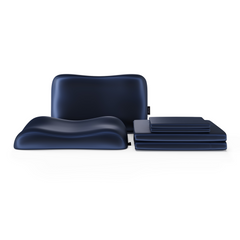
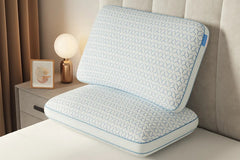
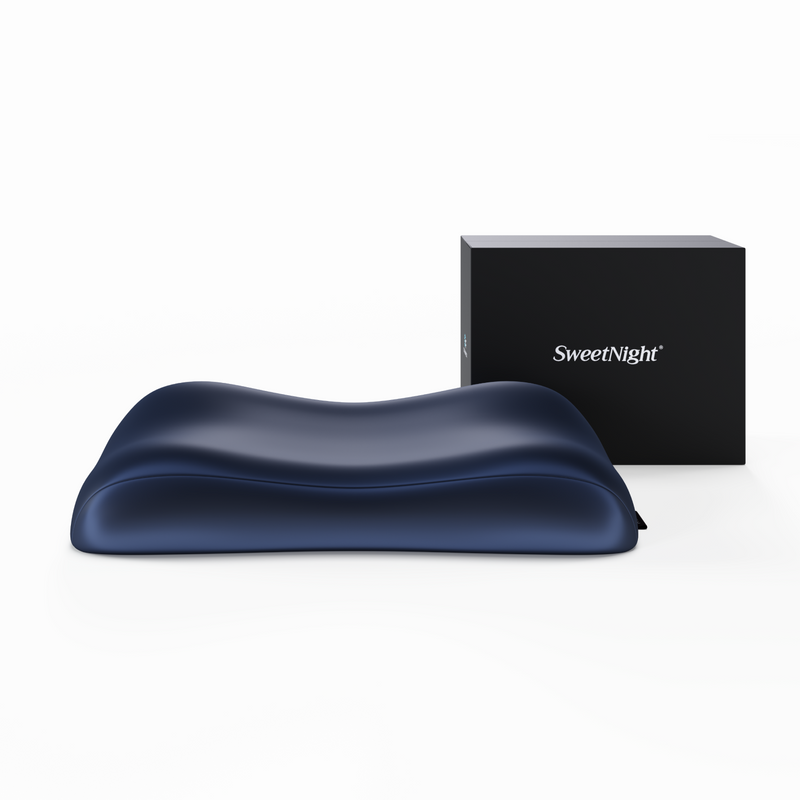
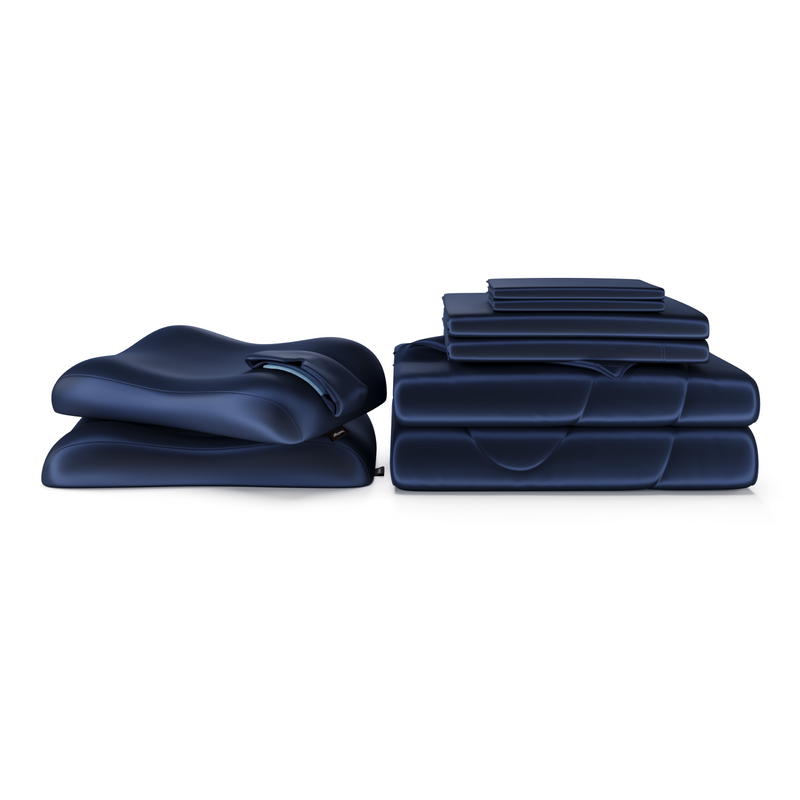
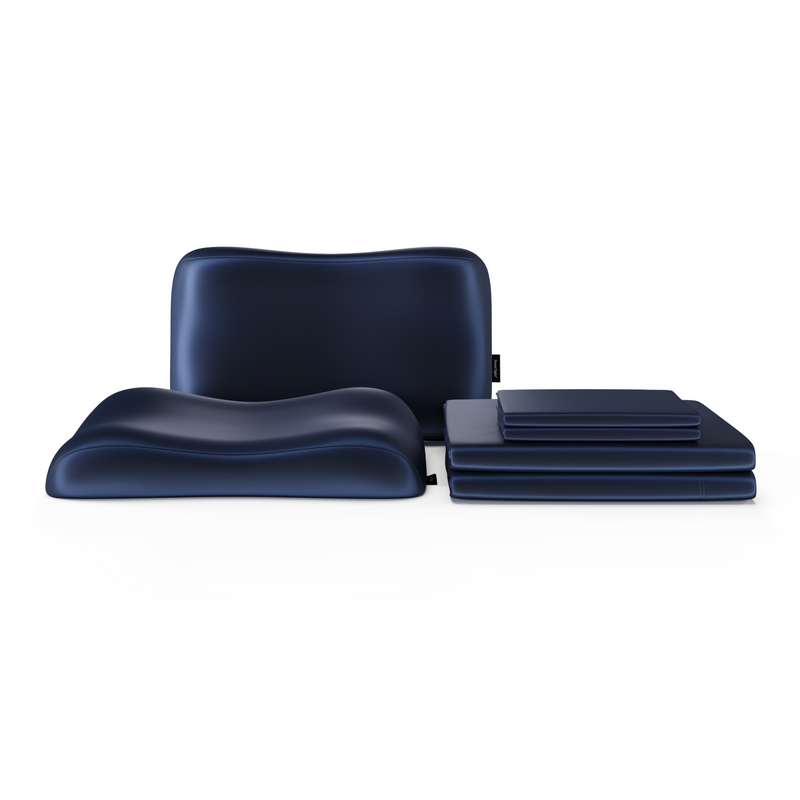
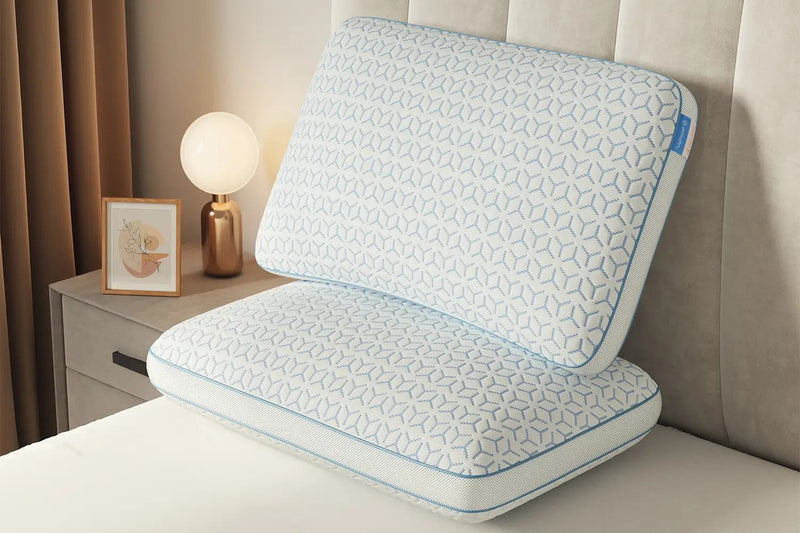
Blending them is a deliberate compromise. Our Cooling Memory Foam Pillow 2-Pack uses a 50/50 mix of shredded memory foam and down-alternative fiber. The foam half provides the body and the slow conforming response that people buy memory foam for; the fiber half adds loft per gram and quicker rebound, so the pillow springs back when you move rather than holding a dent.

There is a practical benefit that gets less attention: a blend is easier to adjust in small increments. Pure shredded foam comes out in dense handfuls, so each removal makes a bigger jump than you intended. A blend is lighter and airier by volume, so taking out a handful changes the height by a smaller and more controllable amount.
The trade-off, stated plainly, is that a blend does not feel like premium solid memory foam. If the slow-sinking sensation is what you want from a pillow, a blend will feel too lively.

How to Adjust Loft Properly (a Repeatable Method)
Most people ruin an adjustable pillow in the first week by taking out too much on night one. Do it this way instead.
- Sleep on it as it arrives for two nights. You need a baseline, and a new shredded pillow is at its highest before the fill settles.
- Run the alignment test. Lie in your normal position and have someone photograph you from the front (side sleeping) or the side (back sleeping). Side: your nose should line up with your sternum. Back: your chin should sit level with or just below your forehead.
- Remove one small handful at a time. Not two. A handful of blended fill is roughly a quarter to a half inch of loft, which is exactly the resolution you want.
- Redistribute before you judge. Zip it up, shake it out, and pat it flat. Fill that is bunched at one end reads as the wrong height when it is only badly distributed.
- Sleep on it for three nights before the next change. Your neck adapts over a couple of nights, so a one-night verdict is noise. Judge by how you feel in the first fifteen minutes after standing up, not by how it feels at bedtime.
- Keep everything you remove. Sealed bag, dated. You will want some of it back.
Expect the whole process to take two to three weeks. That sounds slow, and it is faster than buying three pillows in a row.
How Much Fill to Remove for Side, Back and Stomach Sleepers
There is no universal number of handfuls, because handfuls are not a unit and shoulder widths vary. What is reliable is the direction and the rough magnitude.
Side sleepers usually need the pillow close to full, and a fair number need it completely full. If you are a broad-shouldered side sleeper and the pillow still feels low at maximum fill, the pillow is undersized for you rather than badly adjusted — that is a signal to look at a taller product rather than to keep fiddling.
Back sleepers almost always remove fill, typically a meaningful fraction of it. The target is the smallest amount that still keeps your head from tipping backwards. Overshooting here is common because a low pillow feels comfortable at bedtime and produces the stiffness at 6 a.m.
Stomach sleepers should remove a great deal — most of it, in many cases. Any noticeable loft rotates the neck backwards while it is already turned sideways. Some stomach sleepers end up with the pillow nearly empty, which is a perfectly legitimate use of an adjustable design and one of the few ways to get a pillow that thin.
Combination sleepers should set the height for whichever position they spend the most of the night in, then accept a compromise in the others. If you genuinely split evenly, err toward the side-sleeping height, because a pillow that is slightly too high on your back is less punishing than one that is much too low on your side.
Dual-Sided Covers: Using Temperature as a Second Adjustment
Height is not the only thing worth tuning. Our 2-pack uses a two-texture cover with a different fabric on each face: one side is temperature-balanced for a neutral feel, and the other is a stronger cool-touch surface engineered to feel about 34% cooler on contact.
The reason this is more useful than it sounds is that your thermal needs change and your loft does not. Summer and winter, a hot bedroom and a cold one, a night with a fever — all of them call for a different surface against your face while the height that supports your neck stays exactly the same. Flipping the pillow gives you that without touching the fill.
It also solves a small shared-bed problem. Two people with the same pillows can run different sides up, so the sleeper who overheats gets the cooler surface and the one who is always cold gets the balanced one. Nothing about the bed looks different.
The honest limit: a cool-touch surface feels cold on first contact and then equalises with your skin. It reduces the number of times you flip the pillow hunting for a cool patch, but it does not keep pulling heat out of you indefinitely. For that you need airflow as well, which is where shredded fill has a genuine structural advantage over a solid block.
Re-fluffing: Keeping an Adjustable Pillow From Going Flat
Shredded fill compacts. The pieces settle into each other, air is squeezed out, and what felt generous in month one feels thin by month six. This is normal and it is fixable, which is precisely why an adjustable pillow outlasts a moulded one.
Weekly, take thirty seconds to hold the pillow at both ends and shake it, then pat it back into shape. That alone prevents most of the compaction.
Every few months, do the full job. Unzip it, pull the fill out onto a clean surface, and break apart any clumps with your hands — clumping is what causes the lumpy, uneven feel people mistake for the pillow wearing out. Put it back loosely rather than packing it in, then decide whether to add a handful from your reserve bag.
Airing helps too. Foam absorbs moisture from the air and from you, and damp foam compacts faster. An hour somewhere dry and out of direct sunlight, every month or two, keeps it lofting properly.
If a pillow no longer recovers after redistribution — the pieces stay crumbly and dense no matter what you do — the foam itself has broken down and it is time to replace it.
Care: What Can Be Washed and What Cannot
Split it in two, and remember which half is which.
The outer cover can be washed. It is removable and machine washable, which matters because the cover takes everything: sweat, hair products, skin oils. Wash it regularly — every couple of weeks is reasonable — and it will keep the pillow feeling fresh long after most people would have replaced it.
The inner liner and the fill cannot go in the machine. This is not a conservative recommendation, it is a hard limit. Memory foam soaks up a surprising amount of water, takes days to dry all the way through, and a wet foam core is an excellent environment for mildew. Heat compounds the damage: a hot dryer degrades the foam structure itself.
For the core, spot clean with a barely damp cloth and mild detergent, blot rather than rub, and let it air-dry completely before it goes back in the cover. If something has soaked through to the fill, the realistic options are patient air drying or replacement.
One prevention step is worth more than any cleaning method: use a pillow protector under the case. It costs very little and it keeps the part you cannot wash from ever needing to be washed.
Who Should Not Buy an Adjustable Pillow
Four groups are better served elsewhere.
People who want a defined contour. If you have found that a shaped neck roll is what settles your neck, loose fill will never reproduce it. That is a job for a cervical pillow with a moulded profile, and the two products are not substitutes for each other.
People who will not maintain it. An adjustable pillow that never gets fluffed or redistributed becomes a lumpy, compacted pillow within a year. If that sounds like an unwelcome chore, buy something moulded and replace it on schedule.
People who need the pillow right on night one. The tuning process takes two to three weeks. Anyone in acute discomfort who needs relief immediately will find that frustrating.
Anyone convinced that more fill means more support. The instinct with an adjustable pillow is to leave it stuffed. An overfilled pillow pushes your head forward and creates exactly the stiffness you were trying to avoid, and it is the most common way people conclude the product does not work.
If the sizing question is really about the pillow's footprint rather than its height, that is a separate decision with its own chart — see our guide to pillow sizes for how Standard, Queen and King compare and which fits your bed.
FAQ
Should I keep the fill I take out?
Always. Sealed bag, dated. You will want it back if you change mattress, change position, or overshoot. Fill also compacts over the first year, so people who removed some early often add a handful back later — and it cannot be matched once it is gone.
Will an adjustable pillow go flat?
It loses height gradually as the fill compacts, and unlike a solid pillow you can compensate. Open it, break up clumps by hand, redistribute, and add a little from your reserve. Doing that every few months keeps it usable far longer than a moulded pillow.
Can two pillows in a 2-pack be adjusted differently?
Yes, and couples should. A broad-shouldered side sleeper and a slim back sleeper need noticeably different heights. It is one of the few ways to get two genuinely different pillows that still look identical on the bed.
How often should I readjust?
When something changes — new mattress, new sleeping position, a new ache, or a sense that it has flattened. Otherwise a hand fluff every week or two and a full redistribution every few months.
Can you put a shredded memory foam pillow in the dryer?
The cover, yes, on low. The inner liner and fill, no. Foam absorbs water, takes days to dry through, and heat damages its structure. Wash the cover, spot clean the core, and air it out.
Adjustable or contour for neck pain?
Different tools. Adjustable lets you find a height nothing off the shelf provides, which matters if your shoulders are unusually broad or narrow. A contour holds a specific shape under your neck all night. If you want a shape, buy the contour; if you want to tune the height, buy adjustable.