





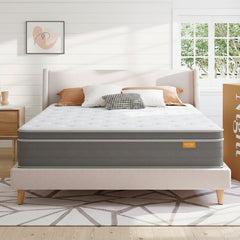




















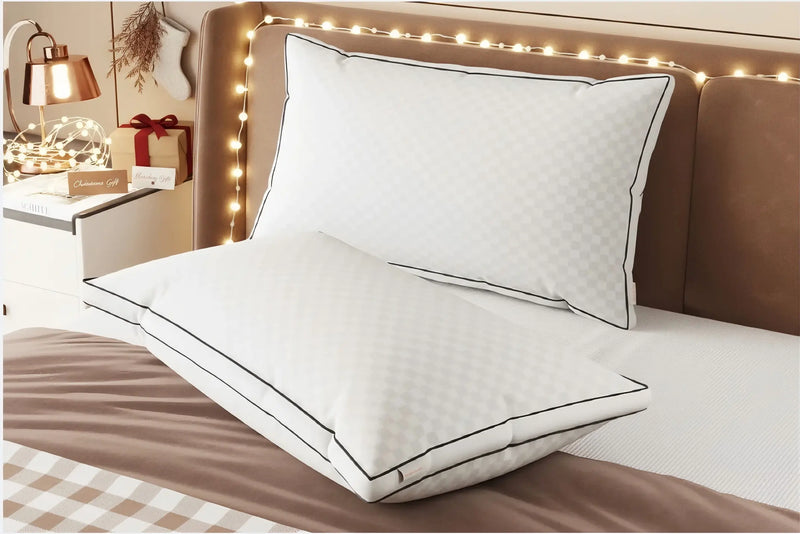
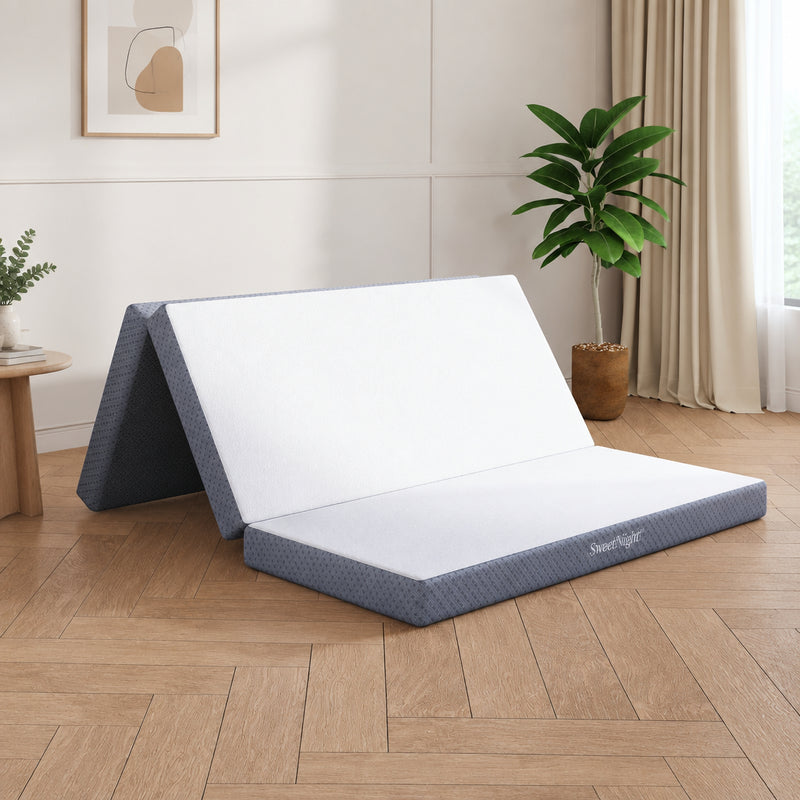

Key Takeaways
- Your pillow and mattress work as one support system, so the pillow is the cheapest, fastest way to change how the whole bed feels.
- Soft mattresses pair with lower pillows and firm mattresses pair with taller ones, because the way you sink changes the gap your pillow has to fill.
- The right loft for you depends on your sleep position, with side sleepers needing the most height and stomach sleepers needing almost none.
- A pillow can quietly fix a bed that feels too firm, too soft, too hot, or hard on your shoulders before you spend money on a new mattress.
- A second pillow between or under your knees often does more for back pain than anything you change at your head.
- If your pillow does not spring back when folded in half, the support is gone, and most pillows should be replaced every one to two years.
You spent weeks researching your mattress. You read the reviews, took the firmness quiz, maybe even unboxed it on camera. And then one morning you wake up with a stiff neck, a sore lower back, or that vague feeling that the bed just isn't doing what it promised.
Before you start a return or blame your purchase, look up. The thing under your head might be the real culprit.
Most people treat the mattress and the pillow as two separate decisions. They are not. They are two halves of one support system, and the pillow is the cheaper, faster, more adjustable half. Change it, and you can often change how the entire bed feels without spending another four figures. That is the whole point of this guide: understanding how pillows affect mattress comfort gives you a low-cost lever to fix problems you assumed were baked into the mattress itself.
This matters more than it sounds. About one in three U.S. adults regularly sleeps less than the recommended seven hours, according to the Centers for Disease Control and Prevention. A lot of that lost sleep gets blamed on stress or screens. Some of it is simply a head and neck that never settle into a comfortable position all night. Let's fix that part.
How Pillows Affect Mattress Comfort: Your Bed Is One System

Here is the mental model worth keeping. Your spine wants to stay in roughly the same neutral shape lying down that it holds when you stand with good posture. The mattress handles the big landmasses, your hips, shoulders, and torso. The pillow handles the gap between your head and the surface. If either one is off, your spine bends, your muscles work overtime to compensate, and you wake up feeling it.
The reason a pillow can rescue a mattress comes down to one word: sink. A soft mattress lets your shoulders and hips press down into the surface. A firm one keeps you sitting higher on top. That sink height changes the distance between your head and the mattress, which is exactly the distance your pillow needs to fill. So the "right" pillow is not a fixed thing. It depends on the bed it is sitting on.
This is why two people can buy the same well-reviewed pillow and have opposite experiences. One pairs it with a plush memory foam bed and floats. The other pairs it with a firm hybrid and wakes up with their chin tucked toward their chest. Same pillow, different mattress, different result. The pillow did not change. The system did.
Think of it like the suspension on a car. The mattress is the chassis and springs. The pillow is the headrest and the fine-tuning. You would not judge a car's ride quality by the seats alone, and you should not judge your bed by the mattress alone.
When the system is dialed in, your neck muscles get to relax for the seven or eight hours you are down. When it is off, those muscles stay slightly engaged all night, stabilizing a head that weighs around ten to eleven pounds. That low-grade tension is what produces morning stiffness, the dull headache, the shoulder that aches before you have even gotten out of bed. None of it is your mattress failing. It is the system being out of balance, and the pillow is the part you can adjust tonight.
The Pillow and Mattress Firmness Relationship Most People Get Wrong

If you remember one rule from this whole article, make it this one. Softer mattresses generally call for lower pillows. Firmer mattresses generally call for taller ones.
The logic follows directly from sink. On a soft surface, your head and shoulders drop into the mattress, which closes the gap your pillow has to fill. Pile on a tall, fluffy pillow and you crane your neck upward into an awkward forward bend. On a firm surface, you rest higher, the gap is wider, and a thin pillow leaves your head tipping backward with no support underneath the neck.
Sleep researchers make the same point. As National Geographic summarized from clinicians, a soft mattress that lets the body sink usually pairs better with a lower pillow, while a firm mattress that keeps the body elevated may need a taller one to keep the neck neutral. The pillow and the mattress are solving the same alignment problem from opposite ends.
Here is a practical starting matrix. Treat it as a first guess, then fine-tune by feel.
| Mattress feel | What your body does | Pillow loft to start with | Why |
|---|---|---|---|
| Plush / soft | Shoulders and hips sink in | Low to medium (around 3 to 4 in) | The mattress already closes part of the gap |
| Medium | Balanced sink | Medium (around 4 to 5 in) | Standard range for most sleepers |
| Firm | Body stays on top | Medium to high (around 5 to 6 in) | A wider gap needs more fill underneath |
| Sagging in spots | Body dips unevenly | Adjustable loft, add fill | You need to compensate for the dip |
Notice the catch in that last row. A sagging mattress does not give you a consistent gap, so a fixed-height pillow can never quite match it. This is where an adjustable pillow earns its keep, and it is the single biggest reason shredded-fill pillows have taken over. You can add or remove material until your head sits level over the dip instead of rolling into it.
There is a second variable layered on top of mattress feel, and that is your body. Broad shoulders create a larger gap when you sleep on your side, so a muscular or larger-framed sleeper on a firm bed needs noticeably more loft than a petite sleeper on the same bed. If you and your partner share a mattress but wake up feeling differently, you probably do not need two mattresses. You need two different pillows. If you are still deciding on the bed itself, our mattress firmness guide walks through how to match firmness to your body and position before you ever get to the pillow stage.
Common Mattress Problems a Pillow Can Actually Fix
This is the part competitors skip. Everyone tells you pillows matter. Few tell you which specific mattress complaints a pillow can quietly solve. Here is the troubleshooting table, followed by the detail.
| The complaint | What is really happening | The pillow-based fix |
|---|---|---|
| "My bed feels too firm" | You rest high; thin pillow tips your head back | Add loft so your neck is supported, not hyperextended |
| "My bed feels too soft" | You sink; tall pillow shoves your chin down | Drop to a lower-loft pillow so your head sits level |
| "There's a dip where I sleep" | Uneven support under your torso | Adjustable-fill pillow to level the head over the dip; knee pillow to stabilize hips |
| "I wake up too hot" | Mattress and pillow trap body heat | Switch to a cooling, breathable pillow surface |
| "I feel my partner move" | Motion travels through head and neck | A denser foam pillow steadies your head |
| "My shoulder hurts on my side" | Gap between shoulder and ear is unfilled | Higher, firmer pillow plus pressure relief at the shoulder |
| "My lower back aches" | Pelvis rotates out of neutral | Knee or lumbar pillow to hold the spine in line |
| "I snore on my back" | Airway partly collapses when flat | Slightly higher loft to open the airway |
The bed that feels too firm. A firm mattress is not automatically uncomfortable. Often it just leaves your head unsupported because you are perched on top with a big gap underneath your neck. People respond by buying a softer mattress when a taller pillow would have fixed the actual symptom. Before you replace the bed, raise the head support and see if the morning stiffness disappears.
The bed that feels too soft. The opposite problem. You melt into the surface, your tall pillow then pushes your chin toward your sternum, and you wake up with a tight neck and that "crick" feeling. The fix is counterintuitive: use less pillow, not more. A plush bed has already done part of the pillow's job for you.
The dip you sleep in every night. Body impressions are normal as foam compresses, but a real dip changes the support under your torso so your spine no longer rests flat. A head pillow with adjustable fill lets you build up height over the low spot, and a pillow placed between or under your knees keeps your pelvis from rotating into the dip. If the dip is deep and permanent, a pillow buys you time but not a cure, and we will cover that honestly later.
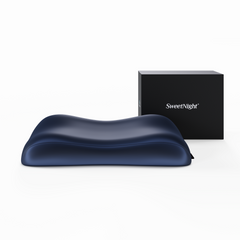
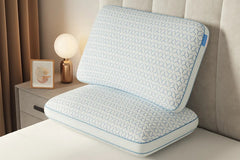
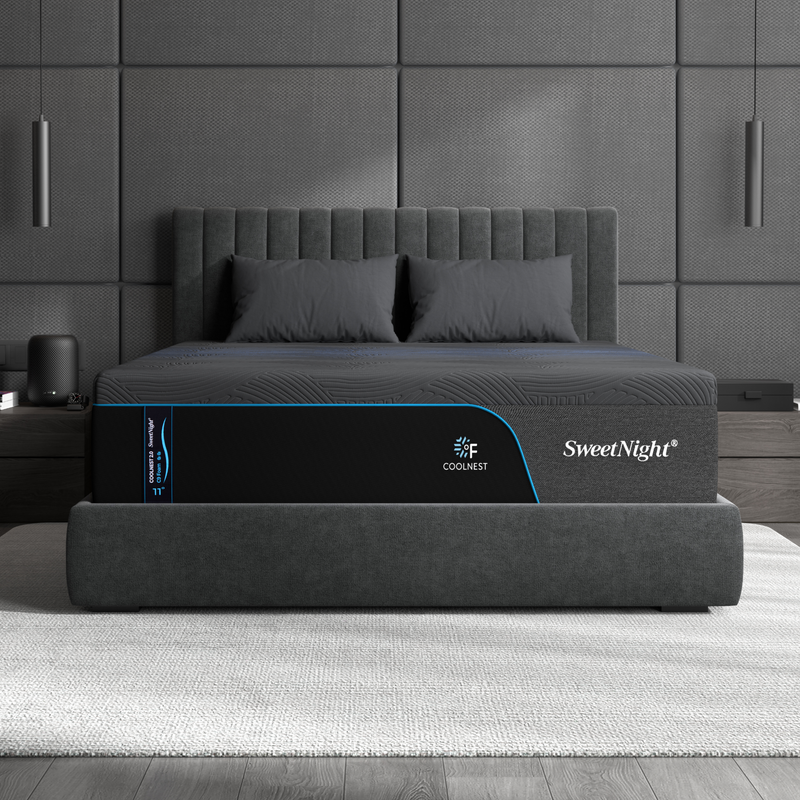
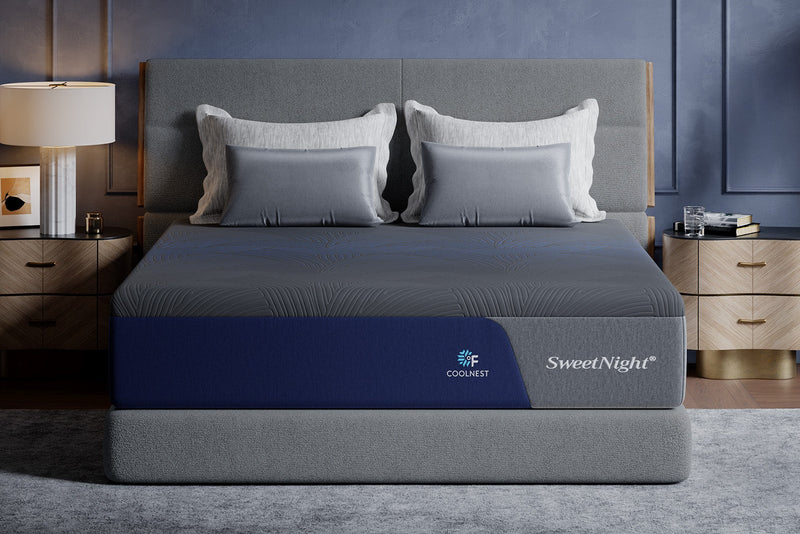
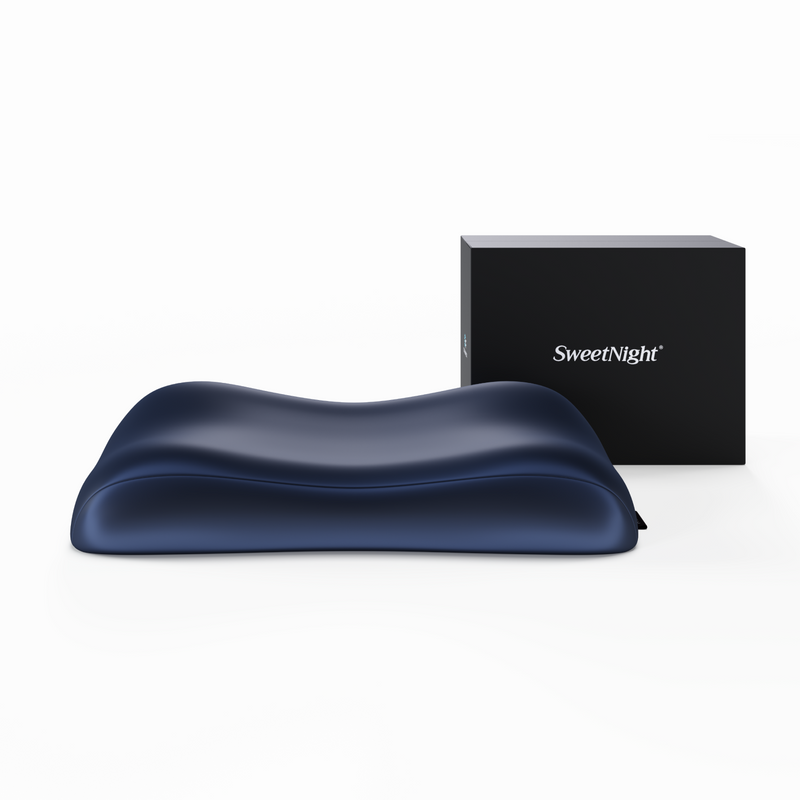
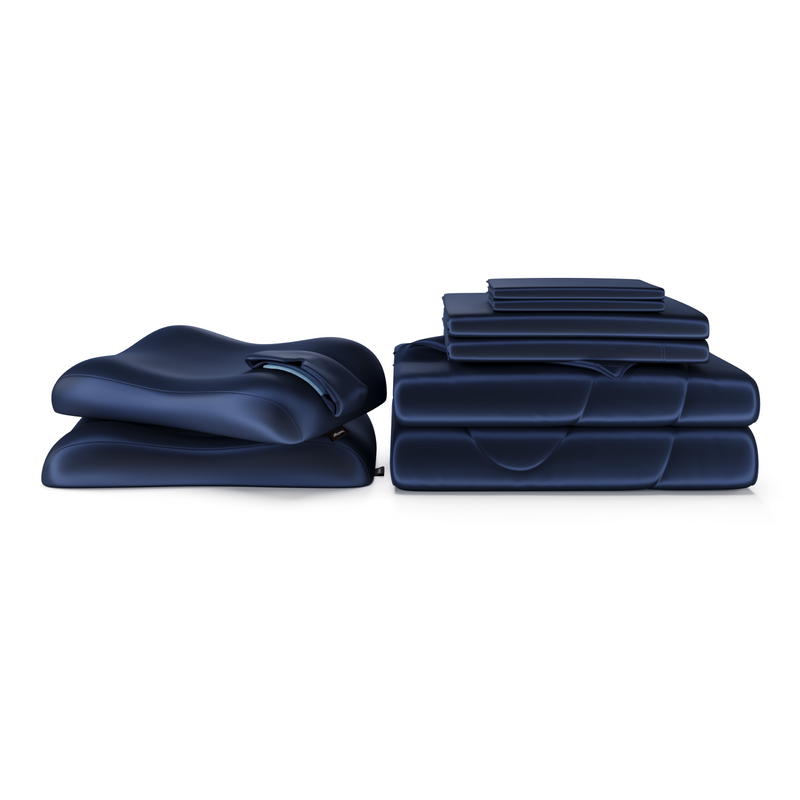
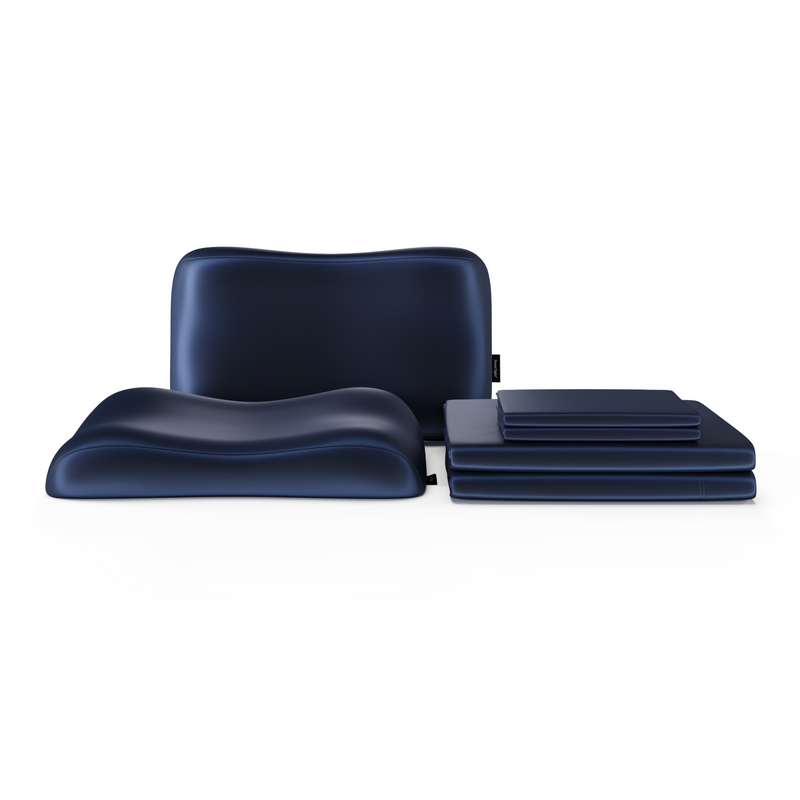
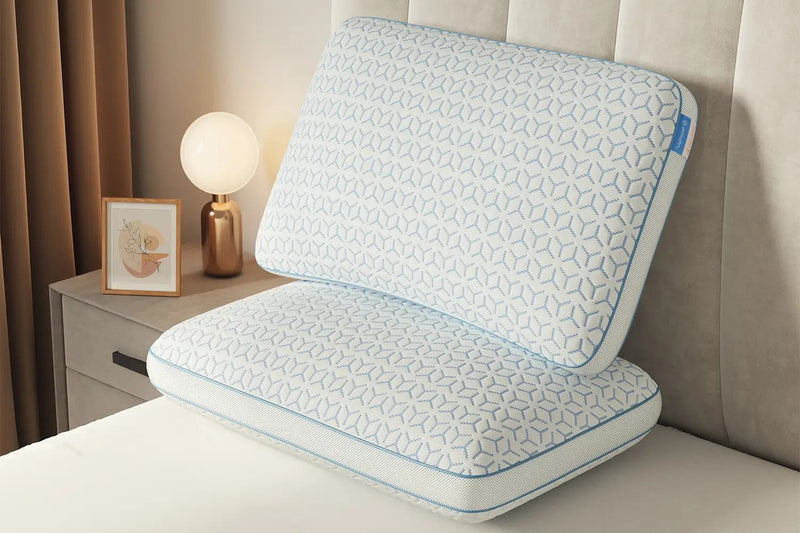
Waking up hot. Mattress heat is a system problem too. Even a breathable bed can trap warmth if your pillow holds heat against the one part of you that runs hottest, your head. A pillow with a cool-to-the-touch surface and real airflow makes a surprising difference. Our Cooling Memory Foam Pillow was built around exactly this, with an ice-silk side for hot nights and a triple-layer breathable structure that keeps air moving instead of letting heat pool. Pair it with a temperature-regulating bed like the CoolNest Memory Foam Mattress, which is engineered to feel up to eight degrees cooler, and you treat the heat at both ends.
Feeling your partner shift. Motion isolation is mostly a mattress trait, but a floppy, under-filled pillow lets your head bob with every movement that does make it through. A denser foam pillow holds your head steadier and dampens the small disturbances.
Shoulder pain on your side. This is the most common side-sleeper complaint, and it is usually a two-part fix. You need enough pillow loft to fill the wide gap between your shoulder and your ear, plus enough give in the mattress at the shoulder so it is not jammed against a wall. We go deep on this in our guide to why side sleepers get shoulder pain and how to fix it.
Lower back ache. A pillow under your head cannot fix your lumbar spine directly, but a strategically placed second pillow can. Side sleepers benefit from a knee pillow that stops the top leg from dragging the pelvis forward. Back sleepers can slip a thin pillow under the knees to flatten the lower back into the mattress.
Matching Pillow Loft to Your Sleep Position

Your sleep position decides the gap your pillow has to fill more than almost anything else. And the population is lopsided here. In a 2024 nationally representative survey reported by SSRS, about 69 percent of Americans usually sleep on their side, 19 percent on their back, and 12 percent on their stomach. Harvard Health likewise notes that more than 60 percent of adults are primarily side sleepers, making it the most common position by a wide margin.
That matters because each position wants a different loft.
| Position | The gap to fill | Pillow loft | Notes |
|---|---|---|---|
| Side | Wide (shoulder to ear) | High and supportive | The biggest gap of any position; firmer fill holds it |
| Back | Moderate (skull curve) | Medium | Supports the neck's natural curve without pushing the head forward |
| Stomach | Very small | Very low or none | A thick pillow cranks the neck backward |
| Combination | Changes through the night | Adjustable | One loft cannot serve every position |
Side sleepers face the largest gap and the highest stakes. Your head needs to stay level with your spine, not droop toward the mattress or get propped above it. That calls for a taller, firmer pillow, and broad-shouldered sleepers need even more. If your shoulder takes a beating, the mattress shares the blame, which is why we wrote a full breakdown of shoulder pressure in side sleepers.
Back sleepers want a medium loft that cradles the natural inward curve of the neck while letting the head settle back gently. Too high and your chin tucks toward your chest. Too flat and your head tips back. A pillow with a slightly higher edge to cup the neck and a lower center for the head works well here.
Stomach sleepers are the exception. This position already strains the neck by turning it to one side for hours, so the last thing you want is loft lifting your head even higher. Most stomach sleepers do best with a very thin pillow or none at all, plus a thin pillow under the pelvis to ease the lower back. If you can gradually train yourself out of stomach sleeping, your neck will thank you.
Combination sleepers, the people who start on their side and finish on their back, are the strongest case for an adjustable pillow. No single fixed height serves a side position and a back position equally. An adjustable shredded-foam pillow lets you settle into whichever loft the moment calls for. Our Comfort Pillow and Cooling Memory Foam Pillow both unzip so you can add or remove fill until the height matches your night.
How Pillow Height and Firmness Change Your Spinal Alignment
It is tempting to treat loft as a comfort preference, like how you take your coffee. The biomechanics say otherwise. Pillow height measurably changes the pressure on your head and neck and the very shape your cervical spine holds while you sleep.
A study published in the National Library of Medicine tested four pillow heights from 110 mm up to 170 mm and tracked both pressure and spinal alignment. The findings were not subtle. The tallest pillow produced roughly 30 percent more average cranial pressure than the lowest. Raising the pillow from lowest to highest increased the cervical angle by about 66 percent and pushed the neck into noticeably more extension. In plain terms, the wrong height does not just feel off. It bends your neck into a posture it was not meant to hold for hours.
So what height is the sweet spot? A systematic review in the Journal of Bodywork and Movement Therapies found that a pillow height in the range of about 7 to 11 centimeters tended to deliver the highest comfort ratings while reducing cervical and cranial pressure and easing muscle activation. That is a general benchmark for back-lying, not a law, and your ideal shifts with your mattress and position, but it is a reasonable place to anchor.
Firmness matters alongside height. A reviewed body of ergonomic research describes the pillow's job as supporting the head and neck so the cervical spine keeps its natural curve, the neck and shoulder muscles relax, and pressure on the discs eases. A pillow that is too soft collapses under your head and loses the loft within minutes, so a height that looked right when you bought it vanishes once you lie down. A pillow that is too firm holds its shape but transfers pressure into your skull and ear. The goal is a pillow that compresses to the right height and then stays there, which is why slow-rebound foams tend to keep their support more consistently through the night than a feather pillow you have to punch back into shape at 3 a.m.
Here is the connection back to your mattress. Both surfaces are trying to keep one line straight, from the crown of your head down through your tailbone. The mattress manages the heavy middle. The pillow manages the top. Neither can hold neutral alignment alone.
Choosing the Right Pillow Material for Your Mattress Type
Material decides how a pillow holds loft, how it sheds heat, and how long it lasts. It also decides how well the pillow pairs with your specific bed. Here is how the common fills stack up.
| Material | Feel and support | Heat | Best paired with | Watch out for |
|---|---|---|---|---|
| Solid memory foam | Conforming, steady support | Can trap heat unless gel or vented | Firm or hybrid beds | Heat retention in basic versions |
| Shredded memory foam | Conforming and adjustable | Better airflow than solid | Almost any bed, great for dips | Needs occasional fluffing |
| Latex | Responsive, buoyant, durable | Naturally breathable | Medium to firm beds | Heavier; firmer feel |
| Down / feather | Plush, soft, moldable | Breathable | Soft beds, light sleepers | Flattens fast, needs fluffing |
| Polyester (poly-fill) | Soft, inexpensive | Average | Budget setups | Loses loft quickly |
A few pairings worth calling out.
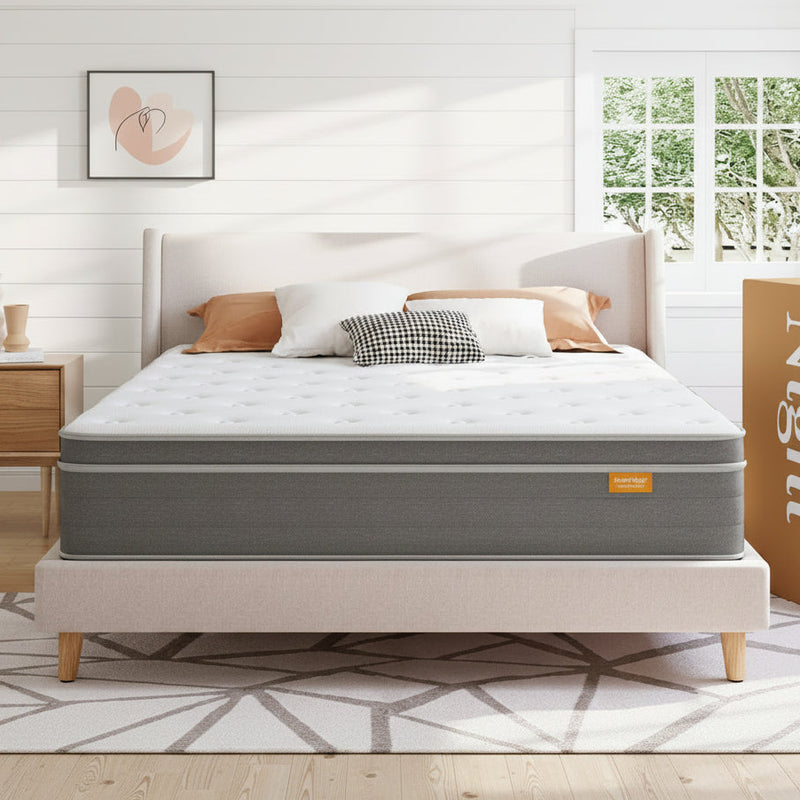
If your mattress runs firm, you want a pillow that adds reliable loft without collapsing, so shredded or solid memory foam is a natural match. On the firm CoolNest Hybrid Mattress, for example, a supportive foam pillow keeps your neck filled in over the wider gap that a firmer bed creates.
If your mattress is soft and you sink in, a plush down or low-loft pillow keeps you from over-lifting your head. The mattress has already done part of the work.
If you sleep hot on any bed, prioritize the surface and structure over the fill type. A pillow with a cooling cover and built-in airflow channels beats a basic foam pillow that bakes. The double-sided design on our Cooling Memory Foam Pillow gives you an ice-silk side for warm nights and a softer side for cooler ones, with a triple breathable layer underneath so heat escapes instead of building up against your head.
For the largest share of people, side and combination sleepers, adjustable shredded foam wins because it solves the loft problem and the consistency problem at once. You set the height, it holds, and you can retune it as your mattress ages or your body changes. That adaptability is also why a good pillow can keep working even after your mattress has started to soften. Allergy-prone sleepers should also lean toward foam and latex, since they resist dust mites better than feather and old poly-fill, and a washable cover helps. If you are weighing whether to add a topper instead of or alongside a new pillow, our comparison of a mattress versus a mattress topper lays out where each one actually helps.
Strategic Pillow Placement to Fix Mattress Support Gaps

Your head pillow is only the first pillow in the system. The rest of your body has gaps the mattress does not always fill, and a well-placed second or third pillow closes them. This is the cheapest spinal alignment tool in your house.
Between the knees (side sleepers). When you lie on your side, your top leg wants to fall forward, and it drags your pelvis and lower spine with it into a twist. A pillow between your knees keeps your hips stacked and your spine in line. This single move resolves a huge share of "my mattress is hurting my lower back" complaints, and it costs nothing if you already own a spare pillow.
Under the knees (back sleepers). Lying flat on your back can leave a gap under your lumbar curve, which keeps the lower-back muscles slightly engaged all night. A small pillow under the knees tilts the pelvis and lets your lower back settle into the mattress.
Under the lower back (back sleepers on a soft bed). If a soft mattress lets your hips sink too far, a thin pillow or rolled towel under the lumbar region restores the support the mattress lost. It is a patch, not a permanent fix, but it works.
Hugging a body pillow (side and pregnancy). A body pillow gives your top arm and leg somewhere to rest so they stop pulling you out of alignment. Pregnant sleepers in particular find it transforms side sleeping from a chore into something restful.
Under the feet or as a wedge (circulation and reflux). Slight elevation of the legs eases swelling and helps circulation. A wedge under the upper body helps with acid reflux and nighttime congestion, and it can ease snoring by keeping the airway more open.
None of these require buying anything specialized. They require thinking of pillows as a kit for the whole body, not a single object for your head.
Signs Your Pillow (Not Your Mattress) Is the Real Problem
How do you know the pillow is the weak link? Your body leaves clues. Run through this list before you blame the bed.
- You wake with a stiff neck, a sore upper back, or a tension headache, but the pain eases as the day goes on.
- You fluff, fold, or punch your pillow several times a night trying to find a tolerable spot.
- You stack two pillows to prop your head, or you have shoved one under to "fix" the height.
- You wake with numbness or tingling in an arm or hand.
- Your head feels perched too high or sunk too low when you first lie down.
- You sleep noticeably better in hotel beds, which usually means a different pillow, not a magic mattress.
If several of those sound familiar, the pillow is a prime suspect. There is also a simple physical test. Fold the pillow in half. A foam or down pillow with life left in it will spring back open. If it stays folded, the support is gone. Sleep scientists recommend washing pillowcases weekly, cleaning pillows every few months, and replacing most pillows every one to two years, though quality latex and foam can last longer.
There is a hygiene angle too. Over months, pillows accumulate skin cells, oils, dust mites, and allergens, which can worsen congestion and disrupt sleep in ways that have nothing to do with comfort. If you cannot remember the last time you replaced yours, that alone is a sign.
A worn pillow quietly undermines even a great mattress. You can own the best bed on the market and still wake up sore because the top six inches of your support system gave out a year ago.
A Simple Plan to Fix Your Mattress Tonight Using Pillows
Enough theory. Here is a sequence you can run through this evening, in order, before spending real money.
- Name the symptom. Stiff neck? Sore lower back? Too hot? Shoulder pain? Write down exactly where it hurts and when. That points you to the fix.
- Check your mattress feel and your pillow loft together. Soft bed with a tall pillow, or firm bed with a flat one, is the classic mismatch. Adjust loft in the direction the matrix above suggests.
- Lie down and have someone look, or use your phone. In your normal position, your head, neck, and spine should form one gentle line. Head tipped up or dropped down means the loft is wrong.
- Add a body pillow. Side sleeper with back pain gets a knee pillow. Back sleeper gets one under the knees. Reassess in the morning.
- Address heat at the head. If you run hot, swap to a cooling pillow surface before assuming the mattress is the problem.
- Give it three nights. Your body needs a few nights to adapt to any change. Judge by how you feel waking up, not by the first thirty minutes.
If you have an adjustable pillow, steps two and three become trivial. Unzip, add or remove a handful of fill, lie back, repeat until the line is straight. That ten-minute loop fixes more "bad mattress" complaints than most people expect.
When a Pillow Can't Fix It (And You Need a New Mattress)
Honesty matters here, because a pillow is a powerful tool and also a limited one. There are problems no pillow can solve.
If your mattress has a deep, permanent sag, broken or poking coils, visible body craters that do not recover, mold, or a core that has simply worn out, you are past the point of patching. A pillow can level your head over a dip for a while, but it cannot rebuild the support your torso has lost. The same goes for a mattress that was always the wrong firmness for your body. If a too-firm bed jams your shoulder and hip no matter what you do at the head, the foundation is the issue.
Age is the simplest signal. Most mattresses need replacing somewhere around seven to ten years, depending on materials and use. If yours is in that range and the pillow tricks only buy a night or two of relief, the math has shifted. Our guide on when to replace a mattress instead of fixing it lays out the specific tells.
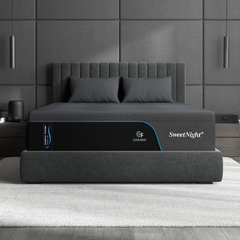
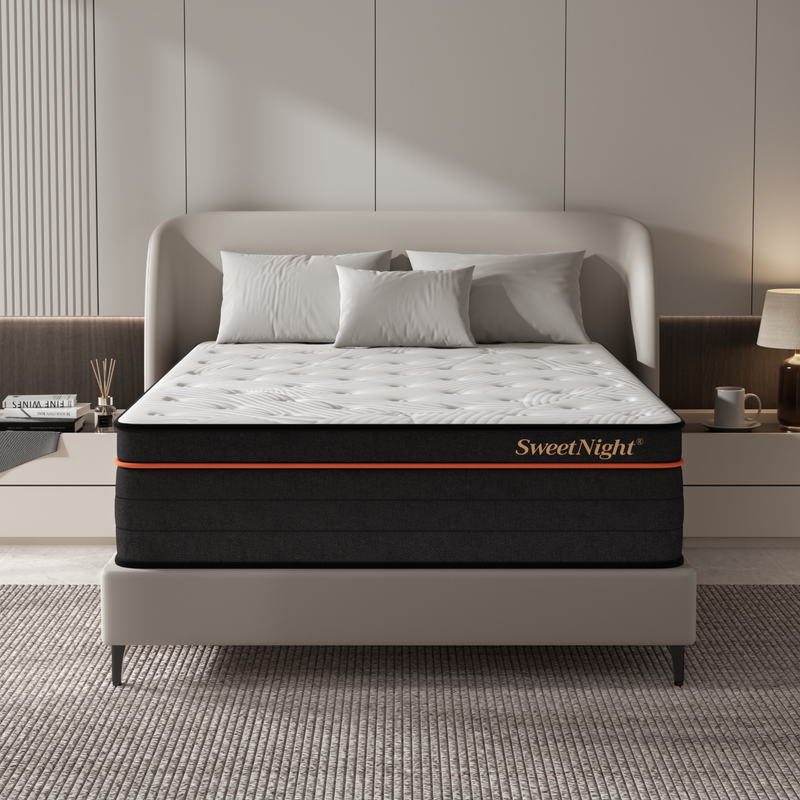
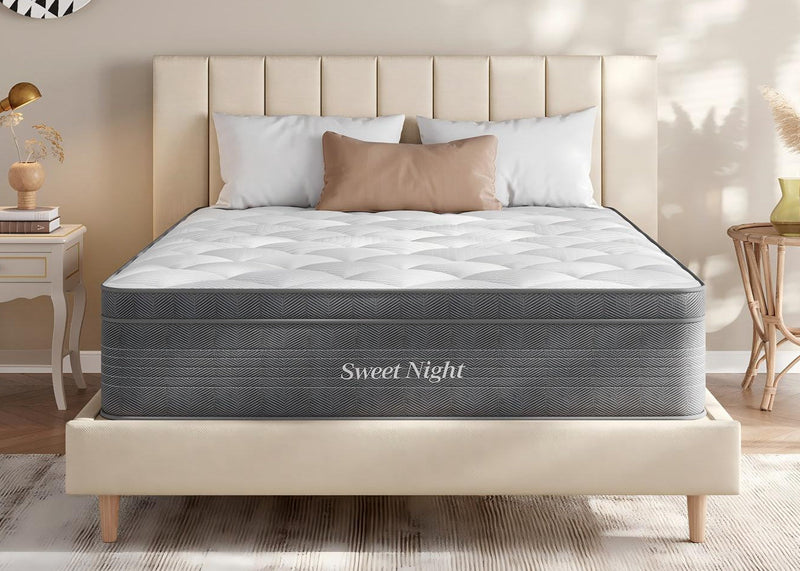
When you do reach that point, choose the bed and the pillow as a pair, the way they will actually be used. Our mattress collection runs from the cushioning CoolNest Memory Foam Mattress to the more supportive CoolNest Pro with precision 7-zone support, and the CoolNest Hybrid for sleepers who want airflow plus coil support. If you are starting the search from scratch, the how to choose a mattress guide and the mattress thickness guide will save you from buying the wrong thing twice.
If you're comparing mattresses after reading this, here's where each CoolNest® model fits:
- CoolNest® Hybrid Mattress: pocketed coils under a DuoSense™ pillow top. Pick this one if you want bounce, firm edges and less partner motion.
- CoolNest® Memory Foam Mattress: the lowest-priced model in the range, all-foam with 5-zone support and a breathable 3D-woven cover.
- CoolNest® Pro and CoolNest® Ultra: the step-up foam models, with PCMflux® temperature-regulating foam and 7-zone support. Ultra adds AirMesh™ foam and feels up to 11° cooler.
- Current prices on every size and thickness are on the Fall Sale page, or browse all mattresses.
Frequently Asked Questions About Pillows and Mattress Comfort
Can a pillow really make a firm mattress feel more comfortable? Yes, within limits. A firm mattress often feels uncomfortable mainly because it leaves your head and neck unsupported. Adding the right loft so your neck stays neutral can remove most of that morning stiffness. What a pillow cannot do is soften deep pressure on your shoulders and hips. If those are the issue, you may need a topper or a different firmness.
Should my pillow be softer or firmer than my mattress? There is no fixed rule tying the two firmnesses together. What matters is loft. A soft mattress usually pairs with a lower pillow because you sink in, and a firm mattress usually pairs with a higher pillow because you rest on top. Match the pillow to the gap your mattress leaves, not to the mattress's firmness rating.
How do I know if my neck pain is from my pillow or my mattress? Pillow-related neck pain tends to center on the neck and upper back, shows up in the morning, and eases through the day. Mattress-related pain more often hits the lower back, hips, or shoulders. Try fixing the pillow loft first, since it is the cheaper and faster change. If neck pain clears, you found your answer.
What pillow height is best for side sleepers? Side sleepers need the most loft of any position because of the wide gap between the shoulder and the ear. A taller, firmer pillow that keeps your head level with your spine is the target, and broad-shouldered sleepers need even more height. An adjustable pillow makes it easy to dial in.
How often should I replace my pillow? Most pillows should be replaced every one to two years, though high-quality foam and latex can last longer. Use the fold test: if it does not spring back when folded in half, the support is gone. Washing pillowcases weekly and cleaning the pillow every few months extends its life and keeps allergens down.
Will a cooling pillow help if my mattress sleeps hot? It helps more than people expect. Your head is one of the warmest parts of your body, so a pillow that traps heat keeps the whole bed feeling hot even when the mattress is breathable. A cooling surface and good airflow at the head treat the heat where it builds. Pairing it with a temperature-regulating mattress treats both ends of the problem.
Is one pillow enough, or do I need more than one? For your head, one correctly sized pillow is usually better than two stacked, since stacking tends to overshoot your loft. For the rest of your body, a second pillow between or under your knees often does more for spinal alignment than anything you do at your head. Think in terms of a small kit rather than a single object.
Can changing my pillow help with snoring? Sometimes, yes. When you sleep flat on your back, the tongue and soft tissues can settle backward and partly block the airway, which is a common trigger for snoring. A pillow with slightly more loft, or a wedge that raises your upper body, helps keep the airway open and can quiet light snoring. It is not a treatment for sleep apnea, though. If you snore heavily, gasp awake, or feel exhausted despite a full night in bed, talk to a doctor rather than relying on a pillow adjustment.
Does my body type change which pillow I need? It does, and people often overlook it. A larger or broad-shouldered sleeper creates a wider gap between the shoulder and the head when lying on their side, so they need more loft than a petite sleeper on the identical mattress. Heavier sleepers also sink deeper into the same bed, which shifts the loft equation again. This is why a pillow that feels perfect for your partner can feel completely wrong for you even when you share the bed. Sizing the pillow to your own frame, not the mattress alone, is the missing step for a lot of people.
The Takeaway
Your mattress sets the stage, but your pillow runs the fine-tuning, and the two only work as a pair. Before you write off a bed as too firm, too soft, too hot, or just wrong, adjust the cheaper, faster half of the system first. Match your pillow's loft to your mattress feel and your sleep position, place a second pillow where your body still has a gap, and give it a few nights. More often than people realize, the fix for a mattress problem was never the mattress at all.
When you are ready to upgrade either half, browse the pillow collection and the mattress lineup and choose them the way you will sleep on them, together.