
























Key Takeaways
- Fix the surface, replace the core. Comfort, stains, squeaks, and foundation sag are usually repairable; deep sagging, broken coils, mold, and a worn-out core are not.
- Age stacks the odds. Most mattresses last 7 to 10 years (innerspring closer to 6), so the older it is, the more a repair just delays the inevitable.
- A topper fixes feel, not failure. It can soften a too-firm bed or smooth minor wear, but it will never lift a deep sag or un-break a spring.
- Pain and the "hotel test" are your loudest signals. Waking up sore most mornings, or sleeping better anywhere else, usually means replace, not repair.
- Watch the false economy. A string of cheap patches on a dead mattress often out-costs one good replacement, and your back pays the interest.
There's a particular flavor of denial that shows up around the eight-year mark with a mattress. You wake up with a stiff back and blame the gym. Then the weather. Then your pillow, your posture, and possibly Mercury being in retrograde. You flip the mattress, wedge a board under the saggy part, order a topper, and tell yourself it's basically brand new. Sometimes that works beautifully. Other times you're just putting a fresh coat of paint on a car with no engine.
So which is it for your bed? That's the real question hiding behind replace mattress vs fix mattress, and most articles answer it with a shrug and a vague "well, it depends." We can do better than that. By the time you finish reading, you'll know exactly which mattress problems are worth repairing, which ones mean it's time to say goodnight for good, and how to tell them apart without a degree in foam chemistry.
One bit of honesty before we start. We build mattresses for a living, so of course part of us would love to sell you a new one. But we also print a line right on our mattress topper packaging that says a topper can't rescue a heavily damaged bed. Talking people into patching a dead mattress helps nobody, least of all their spine. So this guide leans toward whatever actually gets you better sleep, even when the honest answer is "keep the one you've got."
Replace Mattress vs Fix Mattress: The Quick Answer
If you're reading this at 1 a.m. with a sore lower back and no patience for a long article, here's the short version. The deciding factor is almost never a single symptom. It's a combination of age, the type of damage, and whether your sleep is actually suffering. Cosmetic and comfort issues are usually fixable. Structural and health issues usually are not.
Use this table as your gut check, then read on for the why.
| Lean toward fixing it | Lean toward replacing it |
|---|---|
| Mattress is under about 5 years old | It's 7 to 10+ years old (6 to 7 for innerspring) |
| One isolated issue (a stain, a squeak, a soft corner) | Sagging deeper than roughly 1.5 inches that won't bounce back |
| The core and springs are still intact | You can feel coils, slats, or the frame through the surface |
| It just feels a bit too firm or too soft | You wake up sore most mornings, no matter what you try |
| It's still under warranty | Allergies or asthma flare in bed and don't ease after a deep clean |
| You generally sleep fine on it | You sleep noticeably better in hotels or on the guest bed |
If your answers cluster in the left column, congratulations, you've got a repair job. If they cluster on the right, your mattress has done its tour of duty. And if you're split down the middle, the rest of this guide is basically written for you.
What Fixing a Mattress Can and Can't Actually Do

Before you spend a weekend and a hundred bucks trying to revive a tired bed, it helps to know what "fixing" really means. A mattress is not one object. It's a stack of layers, and only some of them can be patched once they go.
Here's the honest split.
Problems you can usually fix:
- It feels too firm or too soft. This is a comfort mismatch, not damage. A good topper changes the feel of the surface without touching what's underneath.
- A localized soft spot or shallow dip. If one area has gone soft but the rest is solid, you can often even things out with rotation and a topper.
- Stains and odors. Spills, sweat, that mystery coffee incident from 2021. Surface cleaning handles most of it, and a protector stops the next round.
- Squeaks and wobble. Nine times out of ten the noise is coming from the bed frame or foundation, not the mattress itself.
- A sagging base. If the dip is actually in your box spring or slats, replacing the foundation can make the whole bed feel firm again.
Problems you can't really fix:
- Deep, permanent body impressions. Once foam has compressed past the point of recovery, no amount of flipping brings it back. Foam doesn't heal.
- Broken or poking coils. A spring that has snapped or worked loose is a structural failure. You can feel it, and you can't un-break it.
- A worn-out support core. When the heart of the mattress gives out, the surface is just along for the ride.
- Mold inside the layers. This is a health line, not a comfort one. If moisture has gotten deep into the foam, the mattress goes. No debate.
- A full infestation. Bed bugs in the seams sometimes mean professional treatment, but a saturated mattress is usually a replacement.
Notice the pattern. Fixes work on the surface and the foundation. They fail when the core is gone. That single distinction settles most of the replace-mattress-vs-fix-mattress debate before you even pick up a screwdriver.
Signs You Should Replace a Mattress Instead of Fixing It
A topper can mask a lot of sins, which is exactly the problem. It buys comfort tonight while the real issue keeps quietly wrecking your sleep. These are the signs that the smart money is on replacement, not repair.
1. It's sagging deeper than a hammock you never asked for
Sagging is the number one reason people start bed-shopping, and for good reason. A dip in the middle pulls your spine out of alignment all night, which is how you end up stretching like a rusty hinge every morning. Most mattress warranties only kick in once an indentation hits about 1 to 1.5 inches deep, which tells you something: the manufacturers themselves treat that depth as real, structural failure rather than normal wear. If your sag is in that range and it doesn't spring back when you get up, a topper is a temporary bandage at best.
2. You wake up in pain (and it's not your gym membership)
This one has actual science behind it. In a randomized, double-blind trial published in The Lancet, researchers followed 313 adults with chronic lower back pain and found that the right mattress firmness meaningfully reduced their pain and disability over 90 days (Kovacs et al., 2003). A separate body of research led by Jacobson found that simply replacing older, worn mattresses improved sleep quality and reduced back and shoulder pain, with study participants' beds averaging close to a decade old (published in the Journal of Chiropractic Medicine). Translation: if you're consistently waking up stiff and sore, your bed may not be a nuisance. It may be the cause. For more on getting the support right, our mattress firmness guide breaks down what "medium-firm" actually means for your body.
3. It's older than your favorite jeans
The Sleep Foundation puts the typical mattress lifespan at 7 to 10 years, with traditional innerspring beds wearing out fastest at roughly 5.5 to 6.5 years. Age alone isn't a death sentence, but it stacks the odds. Past a certain point, every fix you attempt is just delaying an inevitable purchase while your nightly comfort slides. If your mattress is old enough to have a sleep history of its own, factor that heavily into the decision.
4. Your allergies treat the bedroom like a war zone
Mattresses collect dead skin, sweat, and the dust mites that feast on both. Estimates referenced by WebMD, drawing on Ohio State University research, suggest a used mattress can host anywhere from 100,000 to 10 million dust mites. The Asthma and Allergy Foundation of America notes that dust mites are one of the most common indoor allergy triggers in the country.
Now, a myth-buster, because you deserve the truth and not just the scary number. You may have read that a mattress "doubles in weight after ten years" from accumulated mites and skin. That claim gets repeated constantly, and it's wildly exaggerated. Public health specialists, citing the American Lung Association, point out that dust mites don't actually destroy or bloat mattresses the way the legend suggests (Ventura County Public Works). So here's the practical takeaway: if your allergies flare in bed but a deep clean and an allergen-blocking encasement fix it, that's a repair. If symptoms persist after cleaning, the allergens have likely soaked deep into layers you can't reach, and that's a replacement.
5. The coils are staging a breakout
If you can feel individual springs poking through, or you hear a metallic creak every time you roll over, the support system has failed. This is the structural equivalent of a flat tire. You can't patch your way around a coil that has snapped, and you shouldn't try.
6. You feel every move your partner makes
Older mattresses lose their ability to isolate motion. If your partner rolling over now registers like a small earthquake on your side of the bed, the materials have broken down. Newer beds with advanced support systems are specifically built to keep one sleeper's midnight fidgeting from waking the other.
7. You sleep better literally anywhere else
The "hotel test" is brutally honest. If you sleep like a baby in hotel rooms, on the couch, or at your in-laws' place, and then come home to tossing and turning, your mattress is the variable. No fix changes that conclusion. Your body has already filed its review.
When Fixing a Mattress Is Worth It Over Replacing
Replacement isn't always the answer, and we're not going to pretend otherwise. Plenty of mattresses get tossed years too early over problems a $40 fix would have solved. Lean toward repairing your mattress when these apply.
The mattress is still young. If it's under about five years old and a quality bed to begin with, the core almost certainly has years left. A young mattress with one annoying quirk is a repair, full stop.
There's exactly one problem. A single soft spot, one squeak, a too-firm surface, a stain. Isolated issues have targeted fixes. It's the pile-up of three or four problems at once that signals real decline.
It's purely a comfort preference. Maybe the mattress isn't broken, it's just firmer or softer than you'd like now. Bodies change, and so do preferences. A mattress topper is the cheapest way to dial in feel without replacing anything that's structurally fine.
It's under warranty. Always check before you buy. If the issue you're having is covered, the manufacturer may repair or replace the bed for little or nothing. Dig out your paperwork (or skim our warranty page for how coverage typically works) before spending a cent.
The timing is genuinely bad. If you're three weeks from a move or two months from a big seasonal sale, a smart temporary fix can carry you to a better buying moment. There's no medal for replacing a mattress at the worst possible price.
The honest principle ties all of this together. We put it on our own product inserts: a topper exists to upgrade comfort and squeeze more life out of a sound mattress, not to resurrect a wrecked one. If you keep that distinction in mind, you'll rarely guess wrong.
How to Fix a Sagging Mattress Without Replacing It
Say you've decided your bed is worth saving, at least for now. Here are the repairs that genuinely work, ranked roughly from "free" to "worth the spend," along with what each one actually accomplishes.

- Rotate it 180 degrees. Free, takes two minutes, and it's the single most underused fix out there. Rotating evens out the wear so you're not always compressing the same spots. Do it every three to six months. (Most modern foam and hybrid beds should be rotated, not flipped, since they're built one-sided.)
- Check and fix the foundation first. Before blaming the mattress, look underneath. A failing box spring or slats spaced too far apart will make a perfectly good mattress feel like it's sagging. For a queen or larger, you want center support and slats no more than about three inches apart. Fixing the base is often the whole solution.
- Slide a support board under the dip. A sheet of plywood or a bunkie board placed between the mattress and the foundation can firm up a sagging zone for a while. Be honest with yourself, though: this treats the symptom, not the cause. It's a stopgap, not a cure.
-
Add a quality topper. A good memory foam topper restores surface comfort, softens a too-firm bed, and evens out minor wear. It's the most effective single fix for comfort complaints, and the most overhyped fix for structural ones. It will not lift a deep sag from below.
- Protect what you've revived. Once the bed feels good again, keep it that way. A breathable, waterproof protector blocks the spills, sweat, and allergens that age a mattress fastest. Our guide to waterproof protectors and toppers covers how to layer them correctly.
Here's the reality check, because we promised honesty. Every fix on this list buys time. None of them rebuilds a worn-out core. If you're stacking three of these tricks at once just to get through the night, you've crossed from "maintaining a good mattress" into "negotiating with a bad one," and the negotiation rarely ends in your favor.
Repair vs Replace Mattress Cost: Is Fixing Really Cheaper?
The instinct to fix is usually about money, and fair enough. A new mattress is a real expense. But "cheaper tonight" and "cheaper over the next three years" are very different math problems, and the gap is where people get burned.
Let's lay out what each path typically costs and, more importantly, what it actually solves.
| Fix or replace | Typical cost | What it solves | What it won't solve |
|---|---|---|---|
| Rotate the mattress | Free | Uneven early wear | Structural sag, broken core |
| Support board under sag | $20-$60 | Temporary lift for a dipping spot | Worn-out comfort layers |
| Quality mattress topper | $60-$250 | Too-firm feel, minor surface wear | Deep sagging, broken springs |
| Protector or encasement | $25-$80 | Future stains, dust-mite exposure | Damage that's already done |
| New foundation or box spring | $80-$250 | Sag caused by a failing base | A mattress that's the real culprit |
| New mid-range mattress | $300-$900 | All of the above, properly | Your bank balance, briefly |
Now do the part most people skip: divide by nights. A quality mattress used for eight years works out to somewhere around 30 cents a night. Even an $800 bed is a few dimes for a third of your life, every single night, no subscription, no upsell. Suddenly the $200 you keep pouring into toppers and boards to nurse a dying mattress looks less like thrift and more like a slow, expensive way to sleep badly.
The trap is the false economy: small fixes feel responsible because each one is cheap, but a string of $60 patches that don't actually solve the problem can quietly out-cost a proper replacement, all while your back files a formal complaint. Spend money to fix what's fixable. Stop spending it to delay what isn't. If price is the barrier, many retailers (us included) offer financing options that spread a new bed over manageable monthly payments rather than one painful hit.
The Hidden Health Cost of Not Replacing an Old Mattress

This is the part the cost tables leave out, and it's the part that should weigh most. A worn-out mattress doesn't just feel bad. It quietly taxes your health in ways you don't connect back to your bed, which is exactly why people tolerate it for years.
Your spine never gets a break. When a mattress sags, your hips sink and your spine curves into positions it was never meant to hold for eight hours. That's how a tired bed turns into chronic morning stiffness, low back pain, and that delightful crunch when you first stand up. The clinical research is consistent on this: support quality and back pain are directly linked, and the Lancet trial showed that getting firmness right measurably cuts pain and daytime disability.
Your sleep gets shallower without you noticing. A bad surface means more tossing, more micro-awakenings, and less of the deep, restorative sleep your body actually repairs itself on. You might still "sleep eight hours" and wake up feeling like you fought a bear. The Sleep Foundation is blunt about the stakes: sleep is one of the most important pillars of health, and few products affect it as much as the thing you lie on every night.
It follows you into the daytime. Poor sleep doesn't politely stay in the bedroom. It drags down mood, focus, patience, and immune function. That foggy, irritable, "why am I like this today" feeling has a long list of possible causes, and a worn mattress sits quietly near the top of it.
Allergens add up for sensitive sleepers. For people with asthma or allergies, an old mattress saturated with dust-mite allergens can mean a low-grade flare every night. Cleaning and encasements help, but past a certain saturation point, the bed itself becomes the trigger you can't scrub out.
Here's the uncomfortable framing: choosing to "save money" by sleeping on a broken mattress isn't really free. You're paying for it in back pain, blurry mornings, and the kind of chronic fatigue that makes everything harder. That's a steep price for postponing a purchase you'll make eventually anyway.
Mattress Lifespan by Type: When to Replace vs Repair Each One
Not all mattresses age the same way, and they don't fail the same way either. Knowing what you own tells you how repairable it is and how soon to expect trouble. The lifespan figures below align with Sleep Foundation guidance.

| Mattress type | Typical lifespan | How fixable is it? | Most common failure |
|---|---|---|---|
| Innerspring | ~5.5-6.5 years | Hard | Sagging, poking or broken coils |
| Memory foam | ~7-10 years | Moderate (a topper helps) | Permanent body impressions, softening |
| Hybrid | ~7-10 years | Moderate | Coil wear plus foam softening |
| Latex | ~10-12+ years | Easier (very durable, sometimes layered) | Slow, gradual softening |
| Pillow-top | ~5-8 years | Hard | Top layer compresses and can't be re-fluffed |
A few practical notes that don't fit in a grid:
Innerspring beds are the quickest to give out and the hardest to fix, because once a coil fails there's no patching it. If you've got an older innerspring that's gone lumpy, repair is rarely worth it.
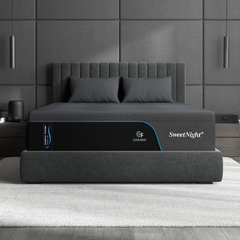
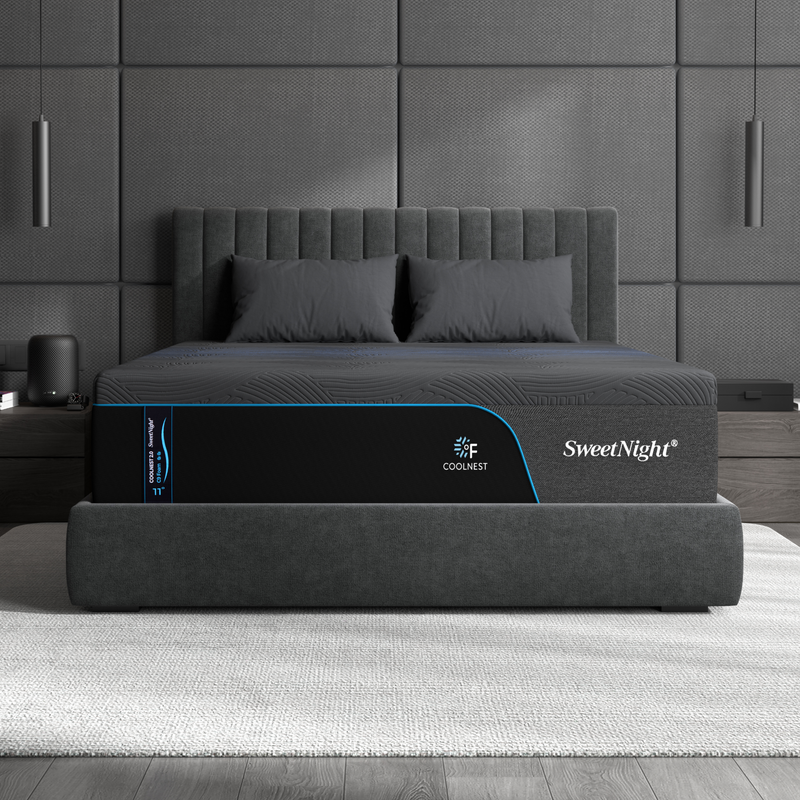
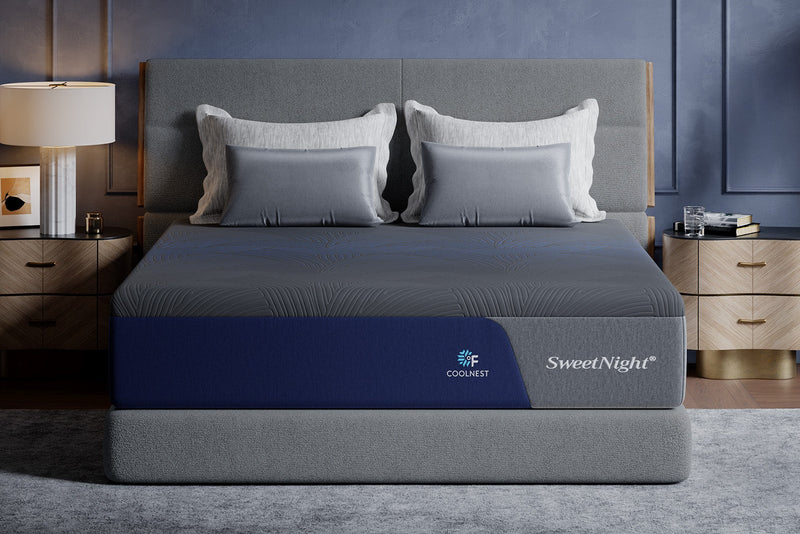
Memory foam ages by softening and holding impressions. The good news is that surface wear responds well to a topper, so a foam bed in its first several years is often very repairable. The bad news is that once the impressions go deep, foam doesn't recover. Our CoolNest Memory Foam Mattress uses higher-resilience foam specifically to resist that kind of permanent denting.
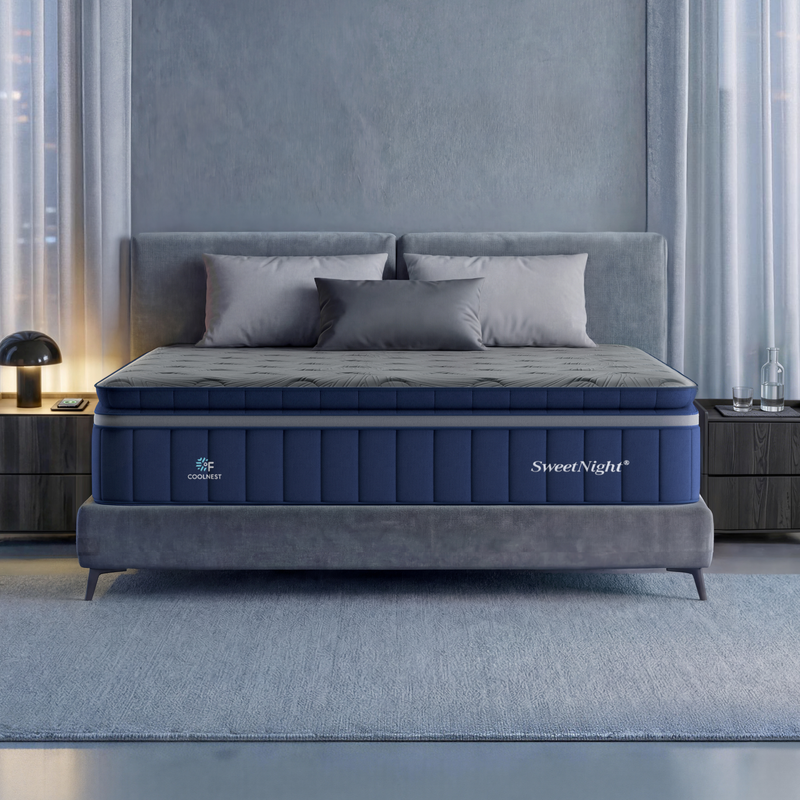
Hybrids combine coils and foam, so they can fail at either layer, but quality hybrids tend to be built tougher and last well. A hybrid like the CoolNest pairs reinforced coils with cushioning foam, which spreads the wear out.
Latex is the marathon runner of mattresses. If you somehow own one and it's just gone a touch soft, it's often worth keeping.
Pillow-tops are a tricky case, because the plush top layer compresses faster than the core. When the pillow-top flattens, you can't re-fluff it, and a topper on top of a flattened top starts to feel like a sandwich nobody ordered. If you love that plush feel, our pillow-top collection is built to deliver it without the early sag.
How to Make a New Mattress Last Longer So You Fix It Less Often
If you do end up replacing, a little maintenance keeps the next mattress out of the repair-or-replace debate for years longer. None of this is complicated.
- Use a protector from day one. This is the highest-return habit on the list. A breathable protector blocks sweat, spills, and allergens, which are the three things that age a mattress fastest. Put it on before the first night.
- Rotate every few months. Set a phone reminder for the change of seasons. Rotating spreads out the wear so no single zone collapses first.
- Give it a real foundation. A supportive base with proper center support and closely spaced slats prevents the sag that gets blamed on mattresses every day. The right bed support protects your warranty too, since many require adequate support to stay valid.
- Clean it a couple of times a year. Vacuum the surface, spot-treat stains, air it out. Our mattress cleaning guide walks through the whole routine without turning it into a chore.
- Keep food, pets, and humidity in check. Eating in bed invites stains and crumbs, pets bring dander and the occasional accident, and excess moisture invites mold. A little discipline here adds years.
Do these five things and your next mattress should comfortably reach the top end of its lifespan, with far fewer "should I fix this?" moments along the way.
What to Do With Your Old Mattress When You Replace It
Decided to replace? Don't just heave the old one to the curb and hope. Mattress disposal is a genuine environmental headache, and there are better options than the landfill.
The scale of the problem is striking. The EPA estimates the United States throws away roughly 18 million mattresses a year, and only a fraction get recycled, according to figures tracked by the Mattress Recycling Council. That's around 50,000 mattresses hitting landfills every single day, where a typical mattress takes 80 to 120 years to break down. Bulky, slow to decompose, and full of materials that don't belong in the ground.
The good news is you have choices:
- Recycle it. The nonprofit Mattress Recycling Council runs the "Bye Bye Mattress" program, with free or low-cost drop-off in states that have recycling laws. Roughly 80 to 90% of a mattress (steel, foam, fiber, wood) can actually be recovered and reused.
- Donate it, if it's still in genuinely usable shape. Shelters and charities sometimes accept clean, undamaged mattresses. Be respectful: nobody wants your sagging, stained reject.
- Use a takeaway service. Many mattress retailers will haul away your old bed when they deliver the new one. Ask before you buy.
Our full mattress disposal guide covers the step-by-step, including how to find recycling near you. It takes a few extra minutes and keeps a very large object out of a landfill for the next century. Worth it.
How to Choose a Replacement Mattress That Won't Need Fixing
If the verdict is replacement, the goal is simple: buy a bed you won't be patching again in three years. A few things separate the mattresses that last from the ones that sag on schedule.
Material density and quality. This is what actually determines longevity. Higher-density foams and reinforced coils resist the impressions and sagging that kill cheaper beds early. A bargain mattress that needs replacing in four years isn't a bargain, it's a subscription.
The right firmness for your body. Remember the Lancet research: medium-firm outperformed firm for back pain. Most sleepers do best in the medium to medium-firm range, with side sleepers often wanting a touch more give. If you're unsure, our mattress buying guide and firmness guide help you match feel to your sleep position.
A real trial period and warranty. A 100-night sleep trial means you can test the bed in your own bedroom, not for eight minutes in a showroom. A solid warranty signals the maker actually expects it to last.
Cooling, if you sleep hot. Heat is one of the quieter reasons people toss all night and assume their mattress is "broken." If you run warm, a bed built for temperature regulation solves a problem a topper never will. Our cooling mattress collection is engineered specifically for hot sleepers.

A few SweetNight options worth a look, depending on what you're after:
- The CoolNest Memory Foam Mattress for contouring pressure relief with built-in cooling and zoned support.
- The CoolNest Hybrid Mattress for sleepers who want the bounce and airflow of coils with the comfort of foam on top.
- The Twilight Hybrid Mattress for strong motion isolation, which is a lifesaver if your partner is a restless sleeper.
- The Gloaming and Island hybrids for cushioned, breathable support at a friendlier price.
Not sure which fits? Browse the full mattress lineup or take the sleep quiz to narrow it down by how you actually sleep. And don't forget the supporting cast: a fresh pillow and the right bedding finish the job a good mattress starts.
Replace Mattress vs Fix Mattress: FAQ
Can a mattress topper fix a sagging mattress? Only the mild kind. A topper smooths out minor surface wear and changes how firm the bed feels, but it can't lift a deep structural sag from below. If the dip is more than about an inch and doesn't bounce back, a topper just covers it temporarily. For comfort tweaks, though, a topper is the cheapest fix going.
Is it cheaper to repair or replace a mattress? Cheaper tonight, repair usually wins. Cheaper over the next few years, it depends entirely on what's wrong. Fixing a fixable problem (a foundation issue, a too-firm surface) is a smart spend. Pouring repeated small fixes into a mattress with a failed core is a false economy that often out-costs replacement while delivering worse sleep the whole time.
How many years before you should replace a mattress? The Sleep Foundation puts the average at 7 to 10 years, though innerspring beds tend to wear out closer to 6, and latex can run past 10. Age is a strong hint, not a hard rule. A 9-year-old mattress you still sleep great on might have life left, while a 5-year-old budget bed could be done early.
Can you fix broken springs in a mattress? Not really. A snapped or poking coil is a structural failure with no reliable home repair. If you can feel springs through the surface or hear them creak, that's a replacement signal, not a repair project.
Does flipping a mattress make it last longer? Rotating does, flipping usually doesn't. Most modern foam and hybrid mattresses are one-sided, built to be slept on from the top only, so you rotate them 180 degrees rather than flip them. Older two-sided innersprings can sometimes be flipped. Check your specific model before you try.
Will a new mattress actually fix my back pain? It can, if the old mattress is the cause. Clinical research found that replacing worn mattresses improved sleep and reduced back and shoulder pain (Jacobson study), and that the right firmness directly lowers back pain (Kovacs, Lancet). If your pain consistently eases when you sleep elsewhere, your bed is a prime suspect. If it doesn't, it's worth seeing a doctor, because the mattress may not be the issue.
My mattress smells but seems fine otherwise. Replace it? Probably not, if the smell is on the surface. Most odors come from sweat, spills, and trapped moisture, which respond well to cleaning and airing out. Our cleaning guide covers it. The exception is mold, which lives deep in the layers and means replacement. If you can see or smell mold rather than just funk, the mattress goes.
The Bottom Line on Replacing vs Fixing Your Mattress
Strip away all the detail and it comes down to one question: is the problem on the surface, or in the soul of the mattress? Surface and comfort issues (too firm, a stain, a squeak, a shallow dip, a failing base) are usually worth fixing, and fixing them well can add real years. Structural and health issues (deep sagging, broken coils, a dead core, mold, allergens you can't reach, and morning pain that won't quit) mean the mattress has earned its retirement, and patching it just postpones the inevitable while your sleep pays the difference.
The cheapest mattress in the world is the one that lets you sleep well and wake up without negotiating with your lower back. Sometimes that's the bed you already own, given a little care. Sometimes it's a new one. The trick is being honest about which, and now you have everything you need to make that call.
When the answer does turn out to be "new," start with the mattress collection and let how you sleep, not how stubborn you are, guide the choice. Your back will write you a much better review in the morning.