





Short answer: Gel, copper, and graphite infusions all work the same basic way — they conduct heat out of the foam early in the night — and none of them keeps you cool on its own once the material soaks up as much warmth as it can hold.
The short version, if you're skimming:
- Same job, small differences: All three infusions pull heat away by conduction. Copper and graphite tend to move heat a bit faster than gel; the real-world gap is smaller than marketing suggests.
- They saturate: An infusion can only absorb so much heat before it warms up and stops helping. That's why the cover, the airflow, and phase-change layers matter more over a full night.
- Cooling is a system: The cover fabric you touch, the breathability of the core, and how heat leaves the bed do more than any single powder mixed into the foam.
- Match it to how you sleep: If you run hot all night, prioritize ventilation and active temperature balancing over the infusion name on the label.
Why Foam Infusions Exist: The Heat Problem
Memory foam has one stubborn flaw baked into its design. The same slow-recovery structure that makes it cradle your shoulders and hips also wraps around your body and traps the warmth you give off. You lose heat all night — skin radiates it, sweat evaporates it — and dense foam gets in the way of both. The material conforms tightly, reduces the air gap between you and the mattress, and holds onto the heat it collects. For a lot of sleepers, that's the difference between drifting off and waking up at 3 a.m. damp and irritated.
This matters more than people give it credit for, because body temperature isn't a side detail of sleep. Your core temperature naturally drops as you fall asleep and stays lower through the night, then climbs again toward morning. A surface that fights that downward drift by holding heat against your skin can keep you in lighter sleep and nudge you awake during the natural surfacing points between cycles. If you want the physiology in more depth, we cover how heat affects sleep quality in a separate guide, but the short of it is simple: warmth at the surface is one of the most common reasons people blame a foam mattress for a bad night.
Infusions are the industry's most visible answer to that problem. Somewhere in the last decade or so, "gel memory foam" went from a premium feature to something you see on almost every foam bed, and copper and graphite followed. The pitch is intuitive: mix a heat-conductive material into the foam so it can carry warmth away from your body instead of holding it. It's a real mechanism, not a gimmick. But it comes with limits that rarely make it onto the label, and understanding those limits is the difference between buying a bed that actually sleeps cool and buying one that feels cool for twenty minutes and then quietly gives up.
The rest of this guide breaks down what each infusion does, where the honest boundaries are, and why the parts of a mattress you don't see — the cover you touch, the airflow inside, the layers that store and release heat — end up mattering more than the powder stirred into the foam.
Gel-Infused Memory Foam: How It Works
Gel is the original cooling infusion and still the most common. It shows up in two main forms, and the difference is worth knowing because they don't behave the same way. The first is gel beads or particles blended throughout the foam. The second is a layer of gel or a gel-like material applied to the surface, sometimes as a pad or a swirl you can see when you unbox the mattress. Both aim to do the same thing: give heat somewhere to go besides your body.
The mechanism is conduction. Gel has more thermal mass than plain polyurethane foam, so when warm skin meets a gel-infused surface, heat flows from you into the material because heat always moves toward cooler areas. In the first stretch of the night, that pulls warmth away from the contact points — your back, your side, wherever you press in — and it's why a gel foam can feel pleasantly cool the moment you lie down.
Here's the part that gets glossed over. Gel doesn't destroy heat or pump it out of the bed. It absorbs heat and holds it. Once the gel near your body warms up to roughly your temperature, the flow slows to a trickle, because conduction depends on a temperature difference and that difference is now small. At that point the gel is essentially saturated. It did its job for the early part of the night and then reached equilibrium with you. This is the honest reason so many people report that a gel mattress "feels cool at first but warms up" — that's not a defect, it's the physics of a passive heat sink working exactly as designed and then running out of runway.
Gel also has a second, subtler effect that has nothing to do with cooling: it can change the feel of the foam. Some gel formulations make memory foam a touch more responsive or firmer, others soften it. That's a side effect, not the selling point, but it's why two "gel memory foam" beds can feel quite different from each other. When you read a spec sheet, treat "gel-infused" as a description of one component, not a promise about the whole night. A thin gel swirl on top of an otherwise dense, unventilated foam will feel cool to the hand in the store and still sleep warm at hour four.
Copper-Infused Foam: Conductivity & Claims
Copper is a genuinely excellent conductor of heat — that's not marketing, it's basic material science, and it's the same reason copper shows up in cookware and heat sinks for electronics. On paper, that makes it an appealing thing to put in a mattress. The idea is that copper particles woven or mixed into the foam create pathways that move heat away from your body faster than foam alone could.
The catch is concentration. The copper in a mattress isn't a solid sheet; it's a relatively small amount of copper distributed through a material — foam — that is itself a poor conductor. A metal's conductivity only helps to the degree that there's enough of it, connected well enough, to actually form a path. A modest amount of copper powder suspended in insulating foam behaves a lot more like foam than like a copper pipe. So while the direction of the claim is real (copper does conduct heat away), the magnitude is easy to overstate. You are not sleeping on a heat sink.
Copper gets marketed for a couple of other properties too, and this is where you should keep your skepticism handy. You'll see claims about antimicrobial or "hygienic" benefits, and sometimes vague suggestions about copper being good for skin or recovery. Copper does have antimicrobial properties in certain forms and contact conditions, but whether a small amount embedded in foam under a cover meaningfully changes anything you'd notice is a much weaker claim than the packaging implies. The safe way to read a copper mattress: treat the cooling as a real-but-modest conduction effect, similar in kind to gel, and treat the bonus health claims as unproven marketing rather than a reason to buy.
Does copper cool better than gel? Sometimes, slightly, depending on how much is used and how it's structured — but it runs into the exact same wall gel does. Copper conducts heat well while there's a temperature gap between you and the foam. Once the surrounding foam warms up, there's nowhere for that heat to keep going, because the foam around the copper won't carry it away and the bed has no active mechanism to shed it. Copper can widen the early-night cooling window a little. It does not change the fundamental limit of a passive infusion.
Graphite-Infused Foam: Heat Wicking Explained
Graphite is the third common infusion, and like copper it's chosen for a legitimate reason: certain forms of graphite conduct heat very well, and graphite is often more practical to blend evenly into foam than metal particles. You'll see it described as "heat wicking," which is a slightly loose term — graphite doesn't wick moisture the way a fabric does. What it does is conduct thermal energy, spreading heat out and moving it away from the concentrated warm spots where your body contacts the surface.
The value of spreading heat is worth sitting with, because it's a little different from just soaking it up. When heat pools directly under your hips or shoulders, that's where you feel hot first. A conductive material that distributes that heat across a wider area of foam can keep any single spot from getting uncomfortably warm as quickly. Think of it as smoothing out the hot spots rather than removing the heat from the bed entirely. That's a real, useful effect, and it's part of why graphite-infused foams can feel more evenly temperate than a plain foam of the same density.
But graphite lives under the same ceiling as gel and copper. It is still a passive component. It moves heat around and helps the foam absorb it, and it too reaches a point where the whole region has warmed up and the conduction advantage fades. Graphite doesn't have a magic property that lets it keep exporting heat once the surrounding material is saturated. If the mattress can't get that accumulated heat out — through airflow, through a breathable core, through a cover that dissipates it — then graphite just delays the warm-up rather than preventing it.
One honest way to compare the three: gel, copper, and graphite are variations on the same theme, not three different philosophies. They differ in how fast and how evenly they conduct, and in the secondary claims manufacturers attach to them. None of them is a breakthrough that makes the others obsolete, and any brand telling you their particular infusion is the one that finally "solved" hot sleeping is overselling. The meaningful differences between cooling mattresses usually live somewhere other than the infusion.
Passive Cooling vs. Active Temperature Balancing
Everything covered so far — gel, copper, graphite — is passive cooling. Passive means the material has no way to regulate itself; it simply absorbs heat until it can't, following the temperature difference between you and the foam. Passive cooling is real and useful for the first part of the night, and for a lot of sleepers, that's genuinely enough. But it has a hard ceiling: a heat sink that fills up stops sinking heat.
Active temperature balancing is a different category, and the most common example in a mattress is phase-change material, or PCM. Phase-change materials do something infusions can't: they absorb heat by physically changing state (softening or melting at a set temperature range) and then release that stored heat later when the surface cools back down. Instead of just filling up and staying full, a phase-change layer buffers temperature in both directions — soaking up excess warmth when you're too hot and giving it back when the surface drops. The effect is less "instant cool to the touch" and more "the surface stays in a comfortable band longer instead of steadily heating up." It targets exactly the failure mode that trips up plain infusions: the slow creep of warmth over a full night.

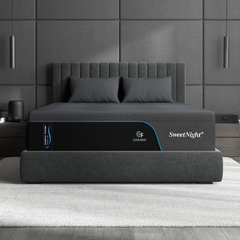
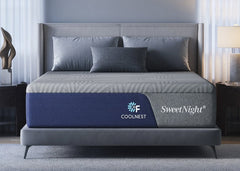
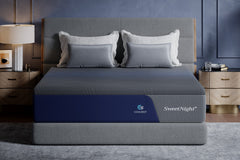
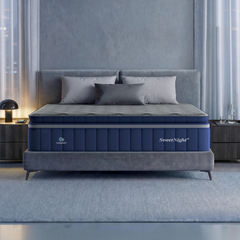
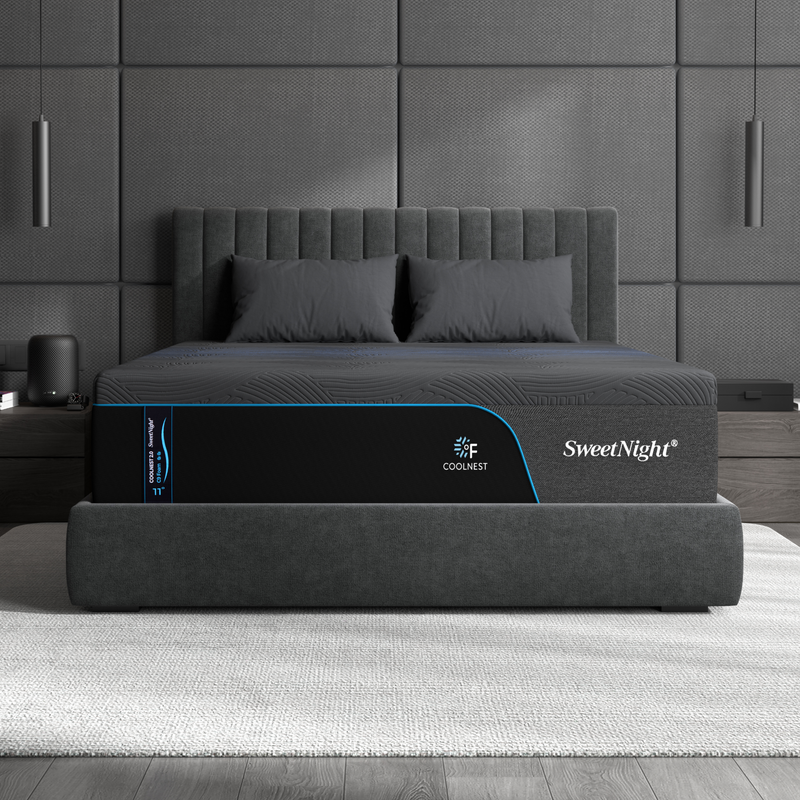
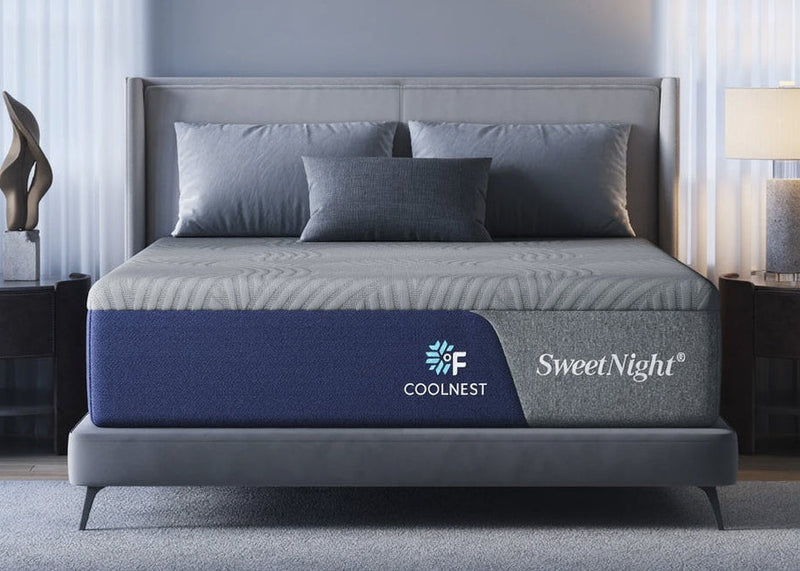
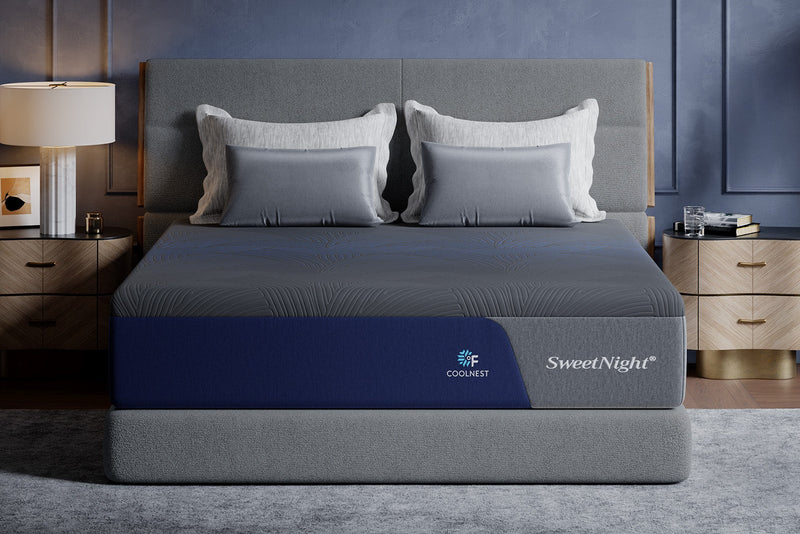
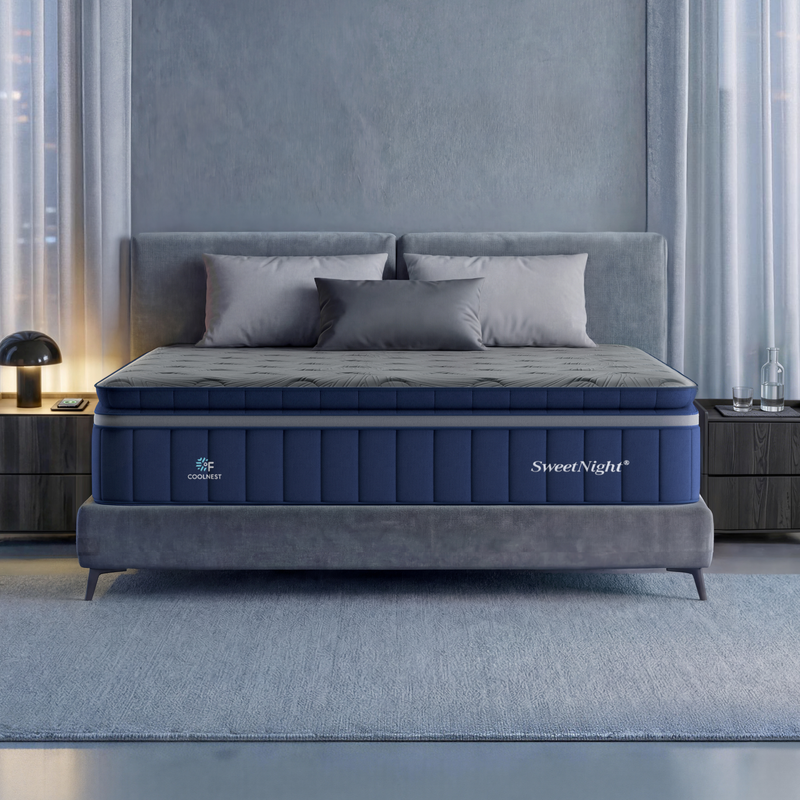
This is where the design of a mattress like the CoolNest® Ultra memory foam mattress gets its logic. Rather than betting everything on one infusion, it stacks approaches that cover each other's weaknesses: a cool-to-touch cover for the instant contact feel, a phase-change foam layer that actively balances temperature through the night instead of just soaking heat up once, and a highly breathable core so accumulated warmth has a way to leave the bed. The point isn't that any single element is miraculous — it's that passive infusions and active balancing solve different halves of the same problem, and a bed built to sleep cool needs both. Treat that as the template to shop against, not a checkbox: look for a cover that dissipates heat, some form of active balancing, and real ventilation, then judge the infusion as a nice-to-have on top.
It's worth being fair to passive cooling here too. Phase-change materials aren't infinite either — a PCM layer also has a capacity, and on a very hot night with a warm room it can be overwhelmed like anything else. Active balancing extends the comfortable window and evens out the swings; it doesn't repeal thermodynamics. But paired with airflow and the right cover, it addresses the exact stretch of the night — hours two through five — where a gel-only or copper-only bed tends to give up.
What Actually Keeps You Cool All Night (Layers Matter)
Step back from the infusion debate and the picture gets clearer. A mattress doesn't keep you cool with one clever material; it keeps you cool as a system, and each layer has a job. When people are disappointed by a "cooling" bed, it's almost always because one impressive-sounding feature was doing all the marketing while the rest of the construction quietly worked against it.
Here's how the layers divide the labor over a full night:
- The cover handles the first thing you feel — the cool-to-touch sensation when you lie down — and, if it's breathable, keeps helping heat and moisture escape from the surface.
- The comfort layer and its infusion pull heat away from your contact points early in the night. This is where gel, copper, or graphite earns its keep, and where it eventually saturates.
- Active layers like phase-change foam buffer the temperature swings through the middle of the night, covering the window where passive infusions fade.
- The support core and its structure determine whether accumulated heat can actually leave. A dense, sealed core traps it; a ventilated or open-structured one lets it move.
Notice that only one of those four jobs is the infusion. That's the whole point. If the cover is a slick, heat-trapping fabric and the core is a solid block of dense foam with nowhere for air to move, then the best graphite infusion in the world is filling a bucket with no drain. It'll absorb heat beautifully and then hold it right against you all night because the bed has no way to shed it. Conversely, a mattress with a modest infusion but a genuinely breathable core and a heat-dissipating cover can sleep cooler over eight hours than a flashier bed built around a single wonder-material.
There's also a factor that has nothing to do with the mattress at all: everything happening on top of it. Your sheets, your mattress protector, your pillow, and your bedding either help this system or fight it. A thick, non-breathable waterproof protector can undo a well-ventilated mattress single-handedly, because it seals the top of the bed. Tightly woven synthetic sheets trap heat that a breathable core is trying to release. If you've invested in a cooling mattress and still sleep hot, the culprit is often the layer you added last, not the bed underneath.
The practical takeaway: judge a cooling claim by the whole stack, not the headline material. Ask what the cover does, whether there's any active balancing, and how heat gets out of the core. A bed that has good answers to all three will beat a bed with one loud answer and two bad ones.
Infusions vs. Cover Fabric & Ventilation
If you could only improve one thing about how a foam mattress handles heat, the infusion would not be it. The cover and the ventilation usually do more, and they do it for longer.
Start with the cover, because it's the only part of the mattress your skin actually touches. This is why cool-to-touch fabrics exist. They're engineered so that heat transfers quickly from your skin into the fabric on contact, which produces that immediate cool sensation and, crucially, keeps producing it as you move to a fresh spot on the surface. Some fabrics quantify this with a Qmax value — a measure of how much heat the surface pulls on first contact; a higher number means a cooler initial feel. A good cool-touch cover addresses the exact moment infusions are best at (early contact) but at the layer closest to you, and it doesn't rely on the whole foam block staying cool. The fabric's weave and fiber also determine whether moisture and warm air can pass through instead of sitting trapped against your back.
Then there's ventilation, which is really about whether heat has an exit. Air is a lousy conductor but an excellent carrier — move it, and it takes heat with it. Open-cell foam structures, perforations, ventilated layers, and 3D mesh materials all exist to let warm air circulate out of the mattress and cooler air move in as you shift and press the foam like a slow bellows. This is the mechanism that actually removes heat from the bed rather than just relocating it, which is precisely what a saturated infusion can't do. A breathable core is what saves the whole system from the "bucket with no drain" problem.
Put those two against a passive infusion and the comparison is lopsided:
- An infusion helps for the first stretch of the night and then saturates.
- A cool-touch cover keeps delivering the contact-cool feel every time you move to a new spot, all night.
- Ventilation is the only feature on the list that genuinely removes accumulated heat from the mattress rather than storing it.
None of this means infusions are worthless. It means they're the supporting act, not the headliner. If you're comparing two beds and one leads with its exotic infusion while the other leads with a breathable build and a real cool-touch cover, the second one is more likely to keep you comfortable at 4 a.m. The reasons foam sleeps warm in the first place, and the full range of engineering used to counter it, are covered in our deeper guide to cooling gel memory foam mattresses if you want to go further down this path.
Which Cooling Approach Is Right for You?
The right approach depends less on which infusion you prefer and more on how hot you actually run and where in the night you get uncomfortable. Sort yourself into one of these and the priorities fall out naturally.
- You feel warm only at the moment you lie down, then settle: You're the easiest case. A good cool-to-touch cover and any reasonable infusion will likely satisfy you, because your problem is contact heat, not accumulated heat. Don't overpay for elaborate systems you won't need.
- You start comfortable but wake up hot a few hours in: This is the classic passive-cooling failure. Infusions alone won't fix it because they've saturated by then. Prioritize active temperature balancing (phase-change layers) and a ventilated, breathable core — the features that work in the middle of the night.
- You sleep hot from the moment you get in until morning: You need the full system and shouldn't compromise on any layer. Look for a heat-dissipating cover, active balancing, and genuine airflow all together, and pay just as much attention to your sheets, protector, and room temperature.
- You want the deep hug of memory foam but have always found it too warm: This is exactly the gap modern cooling builds were designed to close. The contouring you like comes from the foam; the temperature control comes from the cover, the active layer, and the ventilation stacked around it. You don't have to give up foam to sleep cool anymore — but you do have to buy a foam bed engineered as a system.
- You share the bed and one of you runs hotter: Ventilation and active balancing help both of you more than an infusion tuned for one feel. Breathable construction is more forgiving of two different thermostats.
Whatever bucket you land in, resist letting the infusion name drive the decision. "Copper-infused" or "graphite-infused" on a label tells you one component of one layer is doing modest early-night work. It tells you nothing about the cover, the core, or whether there's any active balancing — and those are the things that decide how you'll feel at hour five. Read the whole construction, weigh the cover and ventilation heavily, and treat the infusion as a small plus rather than the reason to buy.
The honest bottom line is unglamorous but freeing: no single infusion is the answer to hot sleeping, and any bed sold on that promise is leaning on a half-truth. Cooling is a system. Judge the system.
Frequently Asked Questions
Is copper or graphite infusion actually better than gel?
Marginally, sometimes, and only in the early part of the night. Copper and graphite can conduct heat a bit faster or more evenly than gel depending on how much is used and how it's structured, but all three are passive and all three saturate. The differences between them are far smaller than the difference between a mattress that has good ventilation and a cool-touch cover and one that doesn't. Don't choose a bed on the infusion name alone.
Why does my cooling mattress feel cool at first but warm up later?
Because passive infusions and gel absorb heat until they reach roughly your body temperature, and then the conduction that was cooling you slows to almost nothing. That's normal physics, not a defect. To fix the mid-night warm-up, you need features that keep working after saturation — a breathable core that lets heat escape and an active phase-change layer that buffers temperature both ways.
Do cooling infusions wear out over time?
The infusion material itself doesn't really "wear out" in the sense of losing its conductive property, but its practical benefit can diminish as the foam around it compresses and breathes less over years of use, and as covers and the surface accumulate wear. More to the point, its per-night limit was always there from day one — it saturates every single night, new or old. Longevity of cooling has more to do with the foam quality and ventilation staying intact than with the infusion degrading.
Can my sheets and mattress protector cancel out a cooling mattress?
Yes, easily. A thick non-breathable protector or tightly woven synthetic sheets can seal the top of the bed and trap the heat a ventilated mattress is trying to release. If you bought a cooling bed and still sleep hot, audit what's on top of it before blaming the mattress — the last layer you added is often the one undoing the rest.