


















Updated: August 11, 2026 · Reviewed by the SweetNight Sleep Comfort Team · 9 min read
Most king mattress guides are queen mattress guides with a bigger number in the title. That misses the point, because buying a king raises several problems that simply do not exist at smaller sizes: the base has to be engineered differently, two people now have genuinely separate microclimates, and the size decision itself has a version most people get wrong.
This guide covers the king-specific parts. The general "firm or soft" question is well covered elsewhere — what follows is what changes when the bed is 76 inches wide.
King vs California King vs Split King: Which Size You Actually Need
| Size | Dimensions | Width per person | Best for |
|---|---|---|---|
| Standard King (Eastern King) | 76 x 80 in | 38 in | Most couples; anyone prioritising shoulder room |
| California King | 72 x 84 in | 36 in | Sleepers over ~6 ft; long narrow rooms |
| Split King | 2 x (38 x 80 in) | 38 in | Mismatched firmness needs; adjustable bases |
| Queen (for comparison) | 60 x 80 in | 30 in | Smaller rooms; the size most people upgrade from |
Two things worth internalising.
A California King is not bigger. It is a different shape — narrower by 4 inches, longer by 4 inches. People routinely buy one believing it is the premium upgrade and end up with less shoulder room than a standard King. Buy it for height, not for status.
A King gives each person the width of a twin bed. 38 inches each is the same as a single. That framing explains why the upgrade from a queen feels so dramatic: you go from 30 inches each, which is narrower than a crib is long, to a genuinely separate sleeping space. If a partner's movement is what wakes you, this is a bigger lever than any material.
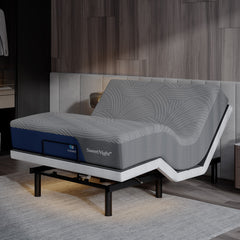
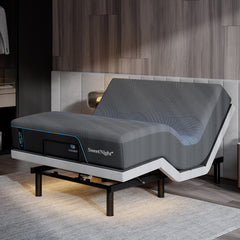
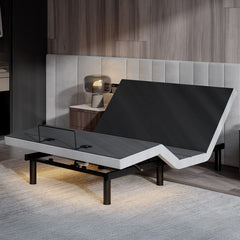
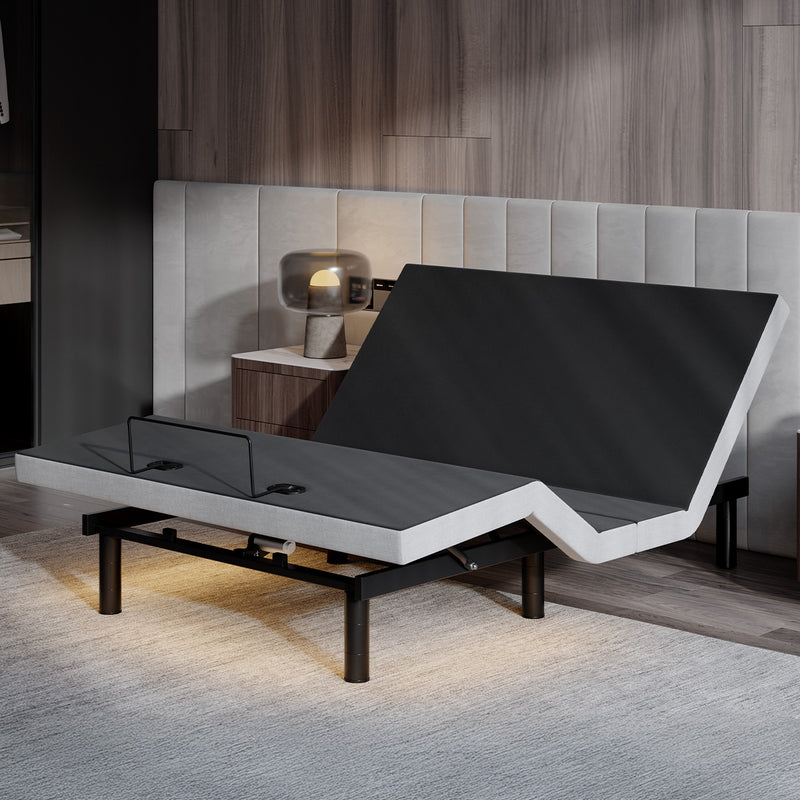
Split King is a solution to a specific problem. It exists so two people can have different firmness, and it is mandatory for adjustable bases where each side articulates independently. The cost is a seam down the centre, which matters if you sleep in the middle or move across it. A king-size topper over both halves largely bridges it; nothing removes it entirely.
Will It Fit? The Room Measurement Rule
A king mattress is 76 inches wide. A frame typically adds 2–4 inches on each side. So the bed occupies roughly 80–84 inches of wall, before anything else.
- Minimum comfortable room: 12 x 12 ft. This leaves roughly 30 inches on each side — enough to walk, make the bed, and open a wardrobe.
- Absolute minimum: 10 x 12 ft, leaving about 15 inches each side. You can pass, but making the bed becomes an exercise and bedside tables stop fitting.
- Under 10 ft wide: a queen will serve you better. A king in a small room means climbing over the foot of the bed every night.
Two checks people skip and regret. Measure the delivery path, not just the bedroom — stairwell turns, door widths, and low ceilings on landings. A king mattress in a box solves most of this, since it expands in the room, but a king bed frame or a boxed mattress in a rigid crate still has to make the corner. And plan for 24 inches at the foot if the room has a doorway or dresser there.
Why King Mattresses Fail in the Middle
This is the single most important king-specific fact, and it costs people a mattress.
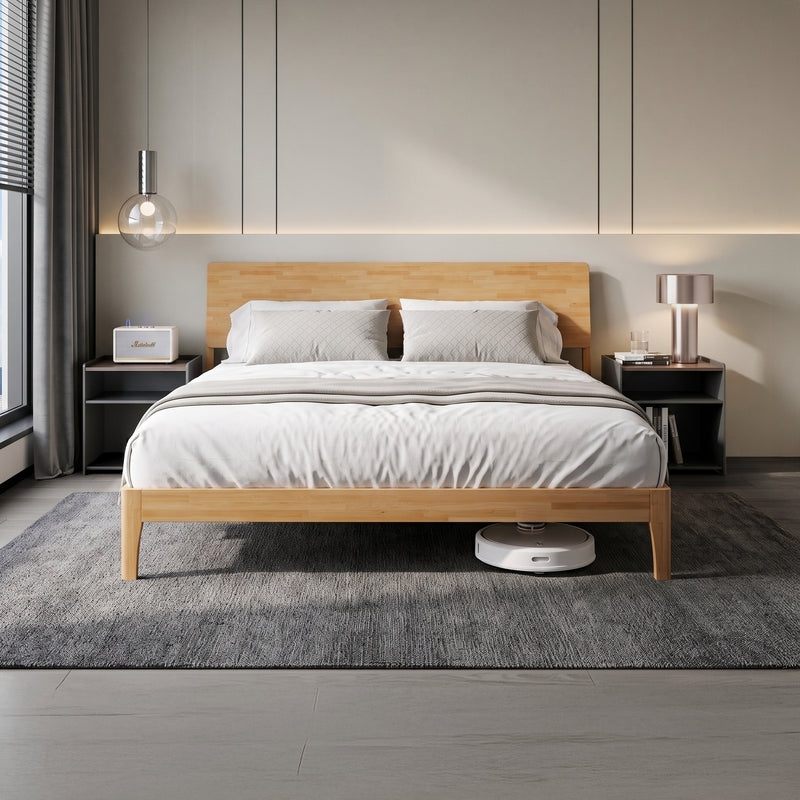
At 76 inches wide, side rails alone cannot carry the load. The frame needs a centre support rail running head to foot, with legs reaching the floor — usually two or three of them. Without that, the base flexes under the combined weight of two adults and a mattress, the mattress conforms to the flex, and a valley forms down the middle within a year or two.
The symptoms are distinctive: both people roll toward the centre, and the sag runs lengthwise down the middle rather than appearing under either sleeper. That pattern is diagnostic — it is a base failure, not a mattress failure.
What to require:
- A centre rail with floor-contacting legs. Not a rail that simply spans between side rails; legs that reach the ground.
- Slats no more than 3 inches apart for any foam or hybrid mattress. Wider spacing lets foam sag between the slats.
- Solid slats rather than wire mesh or an old sprung base.
Two consequences. This is the most common reason a king mattress warranty claim is refused, since nearly all warranties require adequate support and photograph evidence settles it quickly. And it means the frame is part of the mattress budget, not an accessory — a $1,200 mattress on a frame without centre legs is a $1,200 mattress with a two-year lifespan. The general failure checklist is in when to replace a mattress.
Motion Isolation: The King-Specific Requirement
Counterintuitively, a bigger bed can transmit more disturbance, not less, if the construction is wrong.
Movement travels through a mattress laterally. On a wide surface with a continuous innerspring or a springy core, one person turning over sends a wave clear across the bed. The extra width helps only if the material absorbs that energy locally rather than passing it along.
What isolates motion well, best first:
- Memory foam — absorbs energy locally; the benchmark for motion isolation.
- Pocketed-coil hybrid — each coil is individually wrapped and compresses independently. Nearly as good, with better airflow.
- Latex — responsive and buoyant, which means moderate transfer.
- Continuous or open-coil innerspring — coils are linked, so movement propagates. Worst choice at this size.
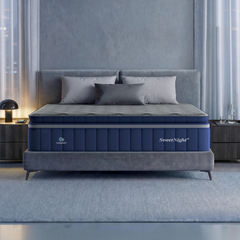
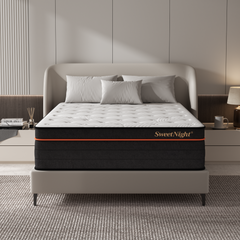
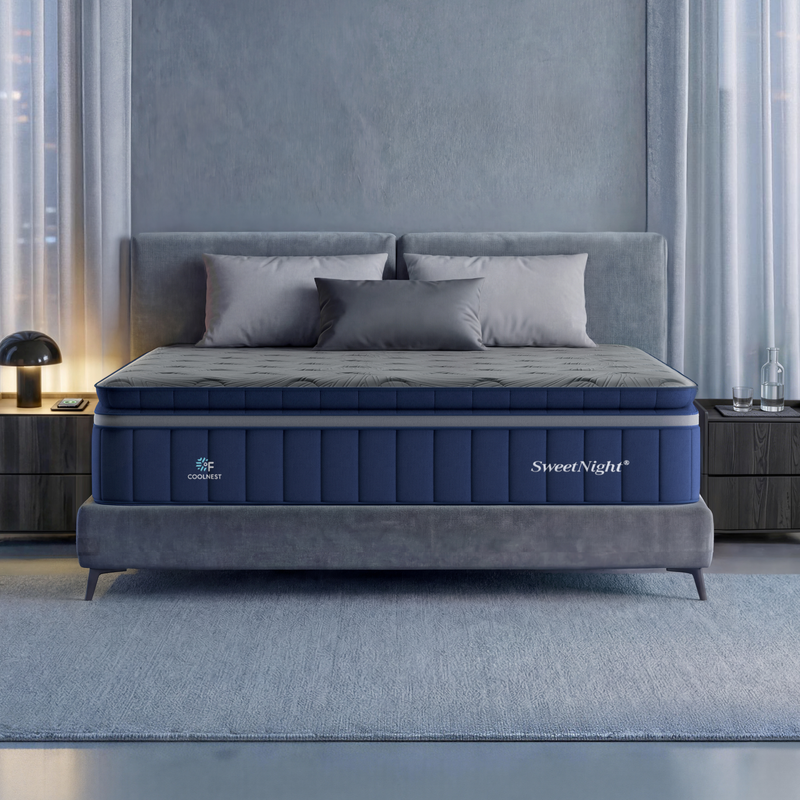
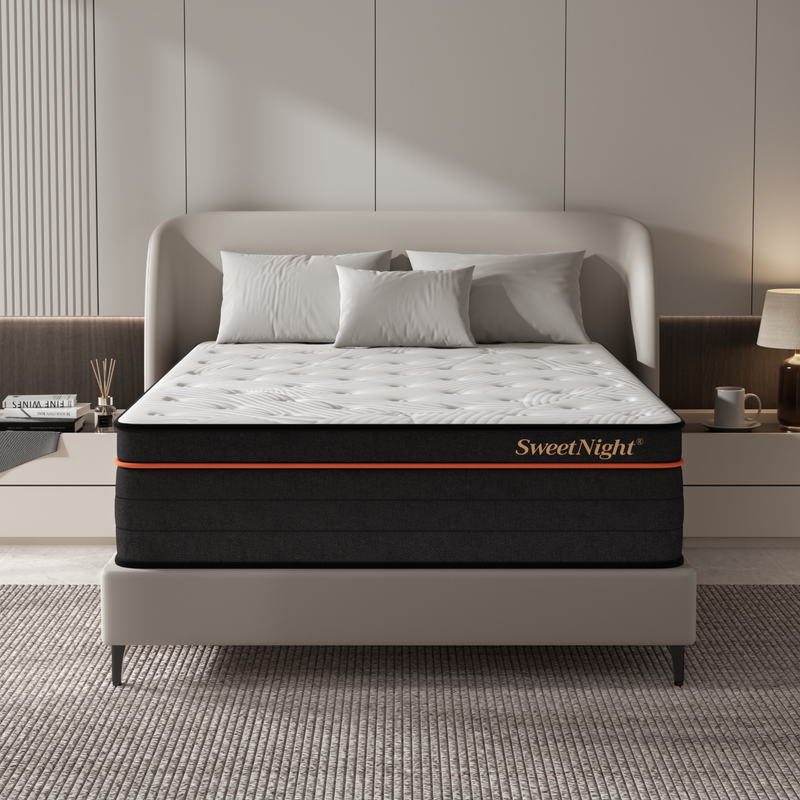
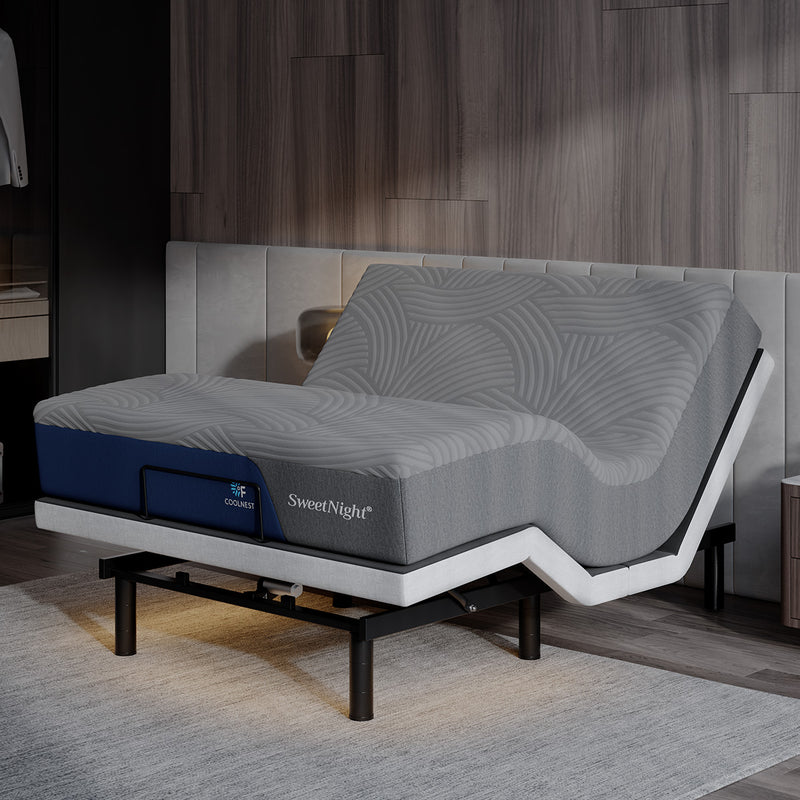
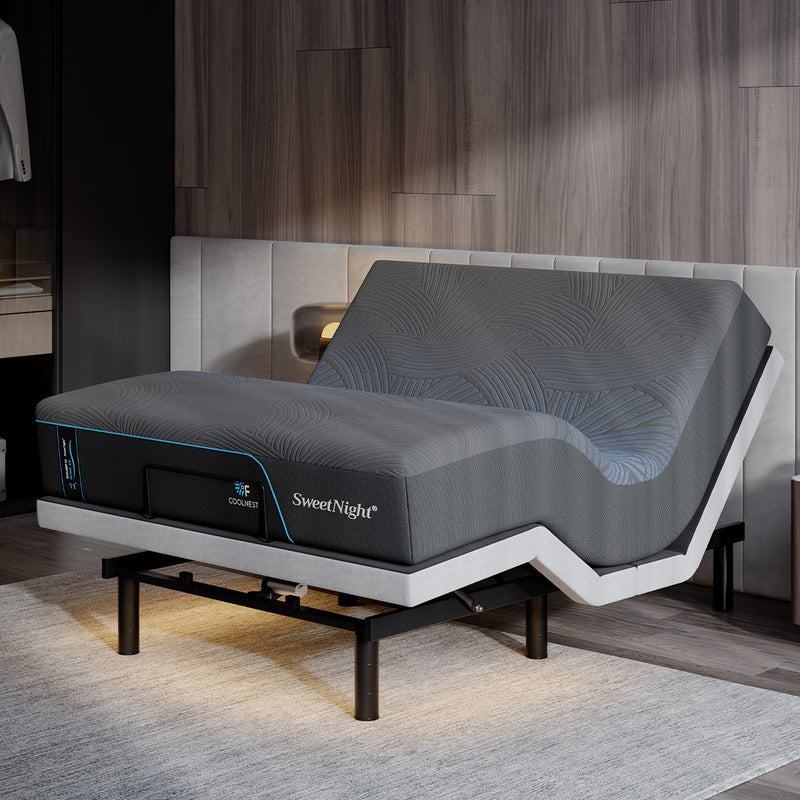
If a partner's movement is the reason you are upgrading, the pairing that solves it is a king width plus a foam or pocketed-coil construction. Width alone will disappoint you. Our CoolNest® Hybrid Mattress uses individually pocketed coils for that reason — independent compression for isolation, with the coil layer still moving air.
When Two People Need Different Things
A king is where mismatched requirements stop being a compromise and become solvable.
Different firmness preferences
A split king with two twin XL mattresses lets each person choose independently. If the seam is unacceptable, the workable alternative is a medium-firm mattress — which suits the widest range of body types and positions — plus a topper on one side only. That handles a moderate mismatch; it will not reconcile someone who needs plush with someone who needs extra-firm.
Different temperature needs
This is more common than firmness mismatch and less often addressed. Two bodies produce roughly twice the heat and moisture of one in the same enclosed space, which is why couples routinely sleep hotter than either would alone — the mechanism is in why couples sleep hotter than single sleepers.
What works at king size:
- Separate duvets. The single most effective fix, and it also ends the covers dispute. Two twin-size duvets on a king bed is standard practice across much of Europe for exactly this reason.
- A mattress that vents rather than encloses. A hybrid's coil layer moves air laterally across a wide bed far better than a solid foam slab. The best mattress for couples who sleep hot compares the options.
- Breathable sheets sized correctly. Undersized fitted sheets on a king pull taut and compress the comfort layer at the corners.
Different weights
A substantial weight difference between partners causes uneven wear and one person rolling toward the other. Look for higher-density support foam or a firmer coil gauge, and rotate the mattress head-to-foot every three months. The relationship between body weight and the right construction is in mattress thickness, body type and sleep position.
What to Look for in a King Mattress
- Support core density. A wide mattress carries more total load and has more unsupported span, so a weak core shows up faster than it would in a queen. For foam, look for a published density figure; brands that omit it usually have a reason.
- Edge support. More relevant at king size, because people sleep closer to the edges when they have the room. Reinforced perimeters keep the usable surface equal to the actual surface.
- Motion isolation. As above — the requirement that scales with width.
- Airflow. Two people, one enclosed surface. Open-cell foam or a coil layer.
- Handles and weight. A king mattress is heavy and awkward. Handles make quarterly rotation realistic rather than theoretical, and rotation is what keeps it flat.
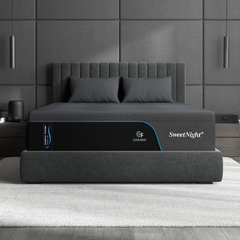
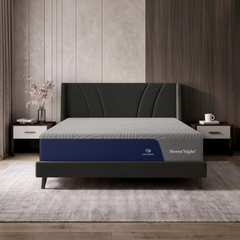
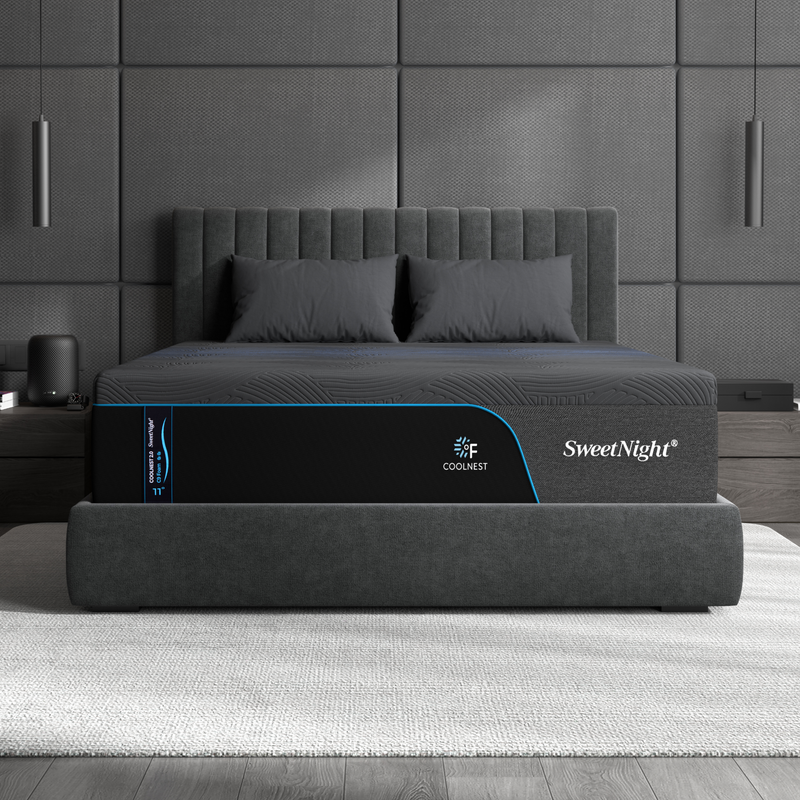
Across our own range, CoolNest vs Pro vs Ultra vs Hybrid lays out which construction suits which case; the CoolNest® Ultra cooling memory foam mattress prioritises heat management and motion isolation, and current king pricing is on the SweetNight deals page.
Delivery and Setup: What Nobody Warns You About
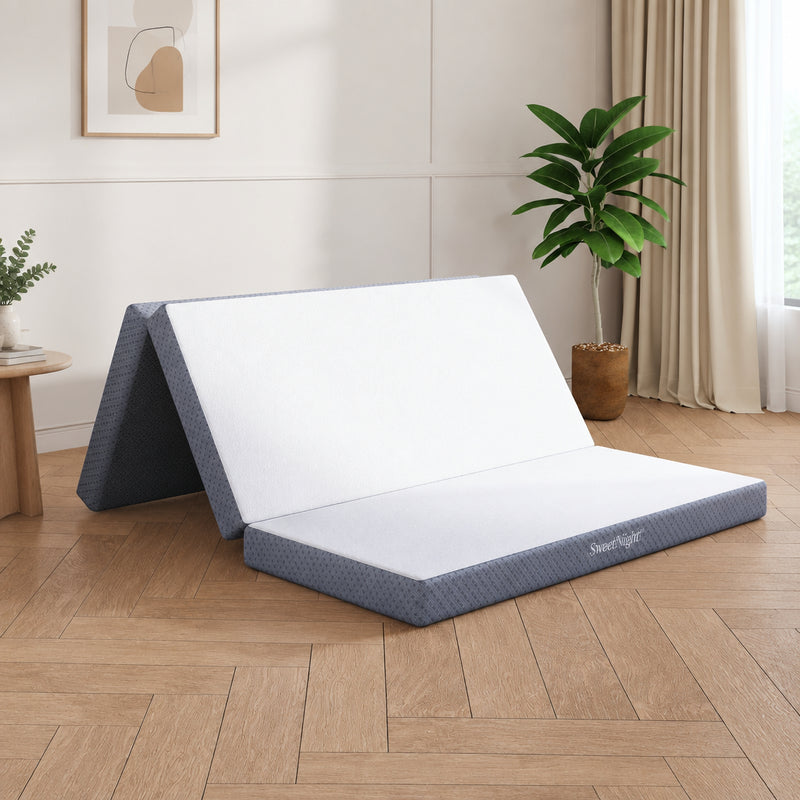
- A boxed king is heavy. Frequently 80–120 lb in a single package. Plan for two people, and get it into the bedroom before unboxing — once it expands it will not go through a standard door easily.
- Expansion takes 24–72 hours. It is sleepable sooner, but firmness and height are not final until it has fully decompressed.
- Off-gassing is normal. Ventilate the room for the first day or two. A smell persisting beyond a week is worth raising with the retailer.
- Buy sheets before delivery and check pocket depth. King sheets must accommodate mattress height plus any topper; a 14-inch mattress with a 3-inch topper needs deep-pocket sheets, and standard ones will pop off nightly.
- Removing the old king is a job. Ask about removal at the point of order — a king mattress does not fit in a car, and municipal bulky-waste collection often needs booking weeks ahead.
Frequently Asked Questions
Is a king mattress worth it over a queen?
If two adults share the bed nightly and the room takes it, yes — 8 extra inches per person is a large proportional gain from 30 inches. If one person sleeps there, or the room is under 10 feet wide, a queen is the better decision and leaves budget for a better construction.
Do I need a box spring for a king mattress?
Not for modern foam or hybrid mattresses, which need a solid or closely-slatted platform instead. What you do need is centre support with floor-contacting legs. An old sagging box spring is worse than no box spring.
Can I use two twin XL mattresses as a king?
Yes — that is exactly what a split king is, and two twin XL side by side match a standard king's footprint. Use a bridging connector or a king topper over both if the seam bothers you.
Why is my king mattress sagging on one side only?
That is a mattress or load issue rather than a base issue — typically one person heavier, or always sleeping in the same spot. Rotate head-to-foot every three months. If the dip measures over 1.5 inches against a taut string, it has failed structurally.
How often should I rotate a king mattress?
Every three months, and it matters more at this size because two people concentrate load on two fixed areas. Do not flip a one-sided mattress; rotating head-to-foot is the correct move.
Are king mattresses harder to move house with?
Noticeably, yes, and it is worth factoring in if you move often. A traditional king mattress will not bend around a tight stairwell turn and does not fit in most vehicles, so professional movers become effectively mandatory. A boxed foam king is far easier to bring in but cannot be re-compressed once expanded, so it faces the same problem on the way out. A split king sidesteps all of this, since two twin XL halves handle like ordinary single mattresses.
What is the difference between an Eastern King and a King?
Nothing — Eastern King is simply another name for the standard 76 x 80 inch King, used to distinguish it from a California King. Retailers use the terms interchangeably.
The Bottom Line
Measure the room first and require 12 by 12 feet for a king to be comfortable rather than merely possible. Pick a standard King unless someone is over six feet, in which case a California King trades shoulder room for length.
Then spend your attention on the two things unique to this size: a base with a centre rail and floor-contacting legs, without which the middle will sag regardless of what you paid; and a construction that isolates motion and vents heat, because a wide bed shared by two people amplifies both problems rather than diluting them.