









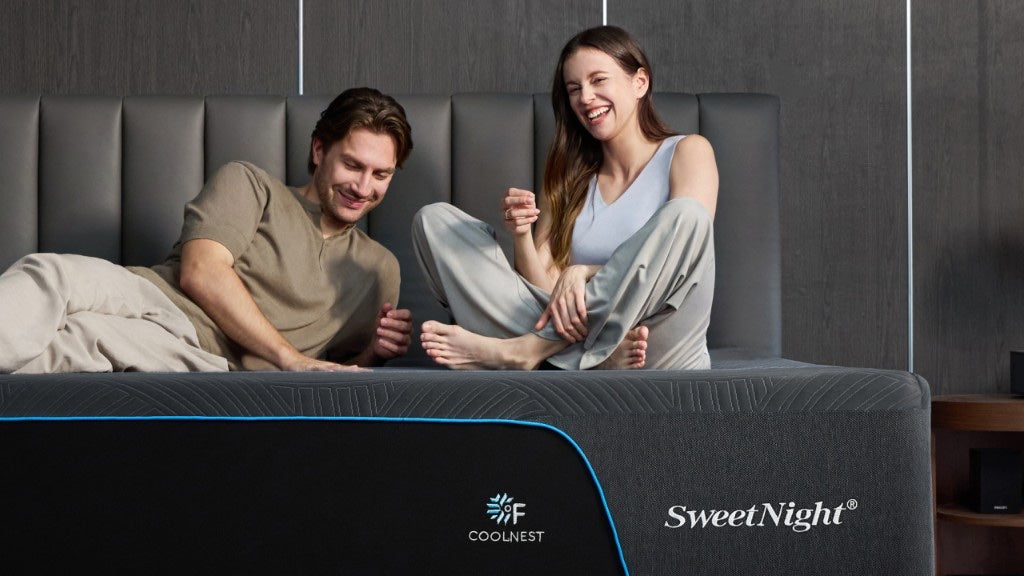
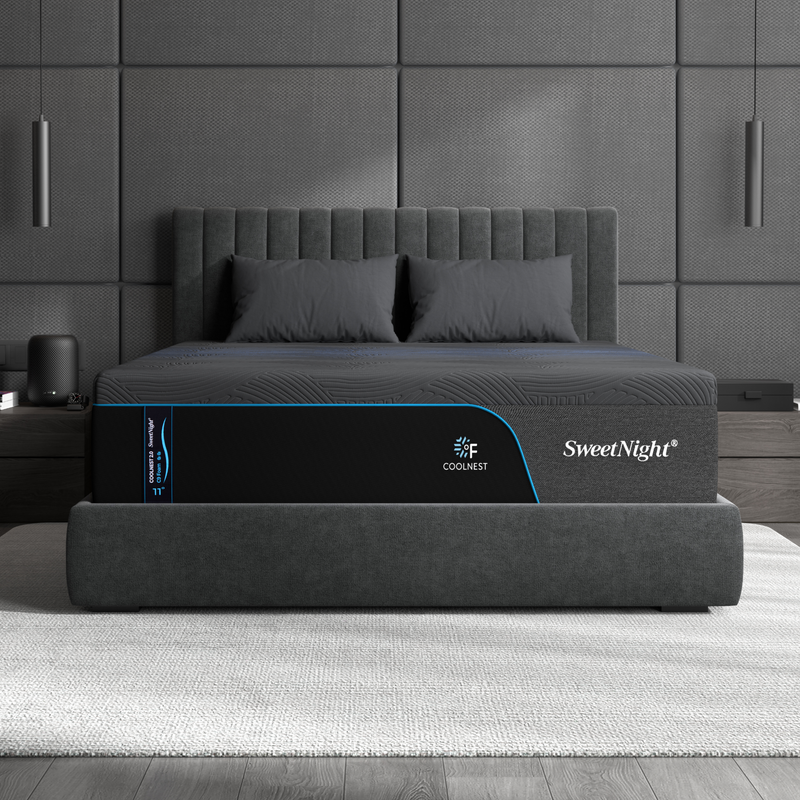


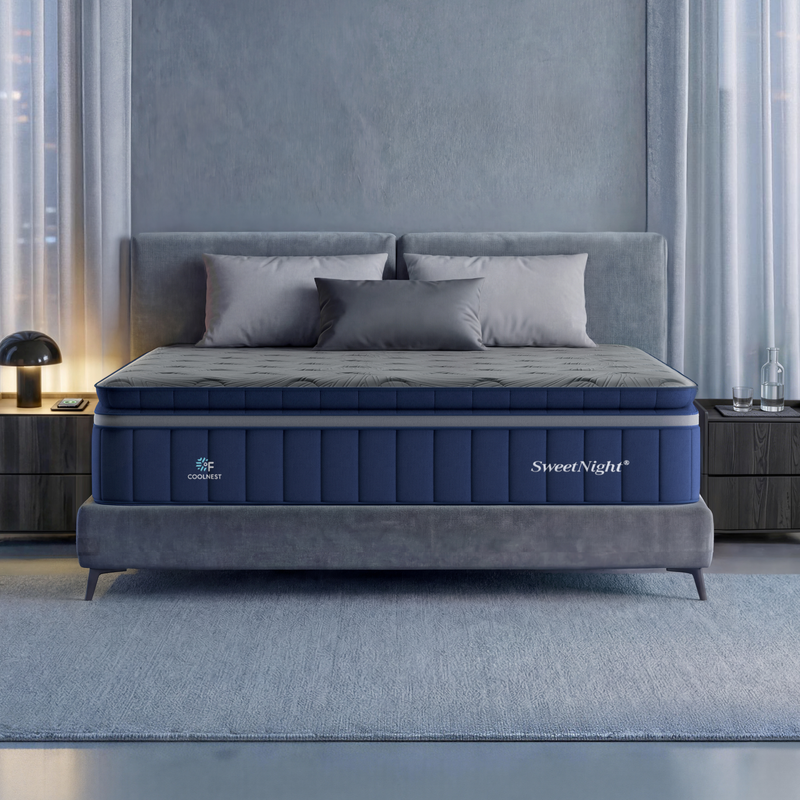






Ever ask yourself why a friend of yours is passionate about a 14-inch mattress when you find any inchage over 10 to be completely intolerable? The answer's neither about choice nor opinion; it's science. Body weight, sleeping positions, compression, and body-specific needs require certain measures of thickness to be met perfectly in order to either end up sleeping in bed like a king or sinking to the foundation of existence itself. Take our test to find what's perfectly yours!

Why Memory Foam Mattress Thickness Matters for Quality Sleep
Mattress thickness directly affects your sleep experience in several measurable ways:
- Pressure distribution: Thicker mattresses contain more foam layers, spreading your body weight across a larger surface area and reducing pressure points that cause numbness and discomfort
- Bottoming out prevention: Having enough thickness means that you never press all the way down to support an uncomfortable firm surface or bed frame, which is disruptive to sleep as well as painful
- Support longevity: The more material, the less stress per unit of foam, which encourages it to retain support qualities longer before creating body impressions
- Weight accommodation: Heavier individuals require more foam compression to accommodate their weight in order to keep a correct spinal posture during sleeping
- Accessibility: Total mattress height has an influence on accessibility as it is important for people who find it difficult to get in and out of bed, such as older people
- Temperature regulation: Additional layers provide an opportunity for companies to include cooling innovations and transition foams to better deal with temperature buildup issues
Factors such as body weight, sleeping positions, determine sleeping mattress thicknesses. Heavy body masses require thick foam to avoid sinking to the bottom, but sleeping positions also influence sleeping body masses, which in turn influence mattress thicknesses. Let's discuss body masses first.
How Thick Should a Memory Foam Mattress Be for Your Body Type
Body weight creates the most dramatic differences in thickness requirements. The chart below shows exactly which thickness range matches your weight, measured in pounds (lbs). Use your current weight to find your starting point.
| Body Weight | Recommended Thickness | Why It Works |
| Under 130 lbs | 8 to 10 inches | Lighter bodies don't compress foam deeply, so less material is needed |
| 130 to 230 lbs | 10 to 12 inches | Balanced support without excessive sinkage |
| Over 230 lbs | 12 to 14+ inches | Extra layers prevent bottoming out and maintain support |
These recommendations give you a solid foundation, but individual sleep positions and preferences can shift you up or down an inch or two within these ranges.

Best Thickness for Lightweight Sleepers (Under 130 lbs)
A thinner mattress requires less foam, as it won't compact as much in your body weight. A mattress of an 8 to 10-inch size is enough to support you without making it feel as if you're sleeping on top of it rather than in it. A thinner mattress is also cheaper to acquire, as well as easy to transport.
Ideal Thickness for Average Weight Sleepers (130 to 230 lbs)
This is suitable for most adults, and a range of 10 to 12 inches is best for most sleepers. You get enough foam to contour to support comfortable sleeping without being bulky at all. The middle layer needs enough room to function, although support layer foam is adequate.
Recommended Thickness for Heavy Sleepers (Over 230 lbs)
You need 12 inches minimum, with 14 inches being ideal for lasting comfort. The extra thickness ensures you have enough foam to compress without reaching the firm base layer too quickly. More material also means better durability since the foam won't wear out as fast from constant deep compression.
Heat is the part this rule of thumb usually skips. More body weight means more surface contact and more trapped heat, so the same extra foam that solves your support problem can leave you sleeping warmer. That trade-off is what the CoolNest® Ultra is built around: its 14″ and 16″ profiles give you the depth heavier sleepers need, while AirMesh™ foam and a Qmax 0.25 ice silk cover keep pulling that heat back out. If you're over 230 lbs and you run warm, look for that pairing rather than depth on its own.
Thick Memory Foam Mattress Recommendations by Sleep Position
Your sleep position changes how your body weight distributes across the mattress surface. Side sleepers concentrate weight on smaller areas while back and stomach sleepers spread it more evenly. These differences mean your sleep position can push you toward the higher or lower end of your weight category's thickness range.
What Thickness Back Sleepers Need
For back sleeping, a mattress needs to be able to contour to a range between 10-12 inches of thickness. This is optimal for providing enough contouring support for the natural shape of the lower back, as well as maintaining correct spinal positioning. A medium level of sinkage is needed, creating a support feel without dipping hips below shoulders.
Best Thick Memory Foam Mattress for Side Sleepers
Side sleepers benefit most from 12 to 14 inches because shoulders and hips create pressure points that need extra cushioning. The additional thickness allows these body parts to sink in properly while supporting your waist. Without adequate depth, your shoulder gets compressed uncomfortably against firmer layers below.
Optimal Thickness for Stomach Sleepers
Stomach sleeping works best with 10 inches or less. Too much thickness allows your hips to sink deeper than your chest, creating an uncomfortable arch in your lower back. A thinner profile keeps your body more level and prevents strain on your spine and neck.
How Thick Memory Foam Mattress Options Compare
Now that you know your ideal thickness range based on body weight and sleep position, let's break down what you're actually getting at each thickness level. Figuring out the construction differences helps you spot quality options and avoid overpaying for unnecessary features.
10 Inch Memory Foam Mattresses: Budget Friendly Choice
Construction: 2 to 3 inches memory foam over 7 to 8 inch support base
Best for:
- Guest rooms with occasional use
- Sleepers under 130 pounds
- Platform beds with built-in slats
- Budget-conscious customers who value affordability over lavishness
Shortcoming: Limited durability for heavier sleepers, as well as minimal support for side sleepers.
12 Inch Memory Foam Mattresses: The Popular Middle Ground
Construction: 3 to 4 inches memory foam with transition layers and thick support base
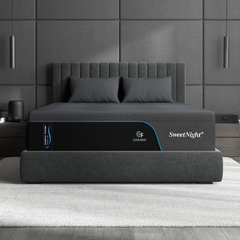
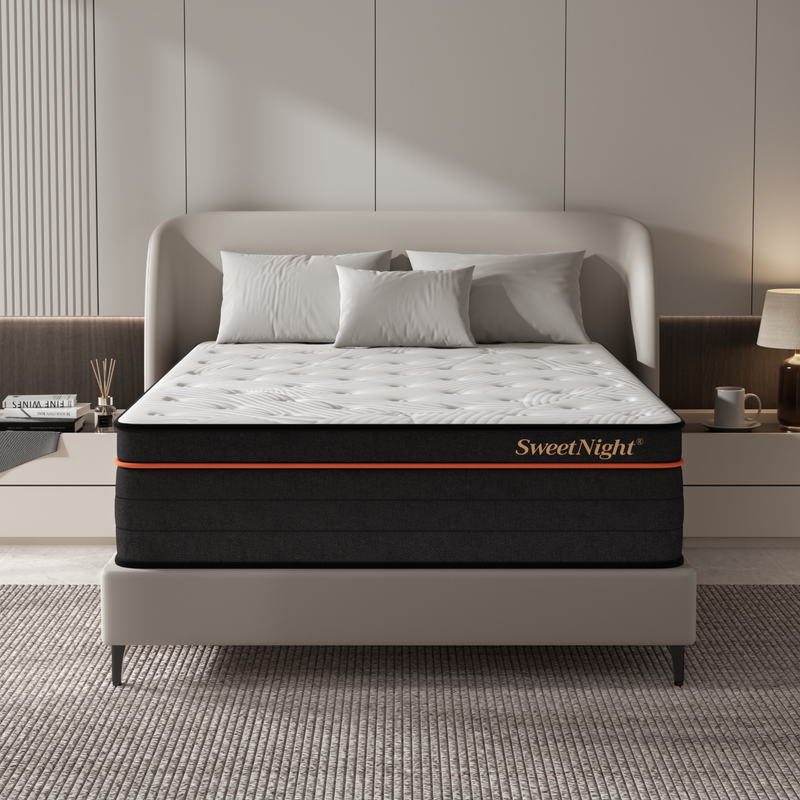
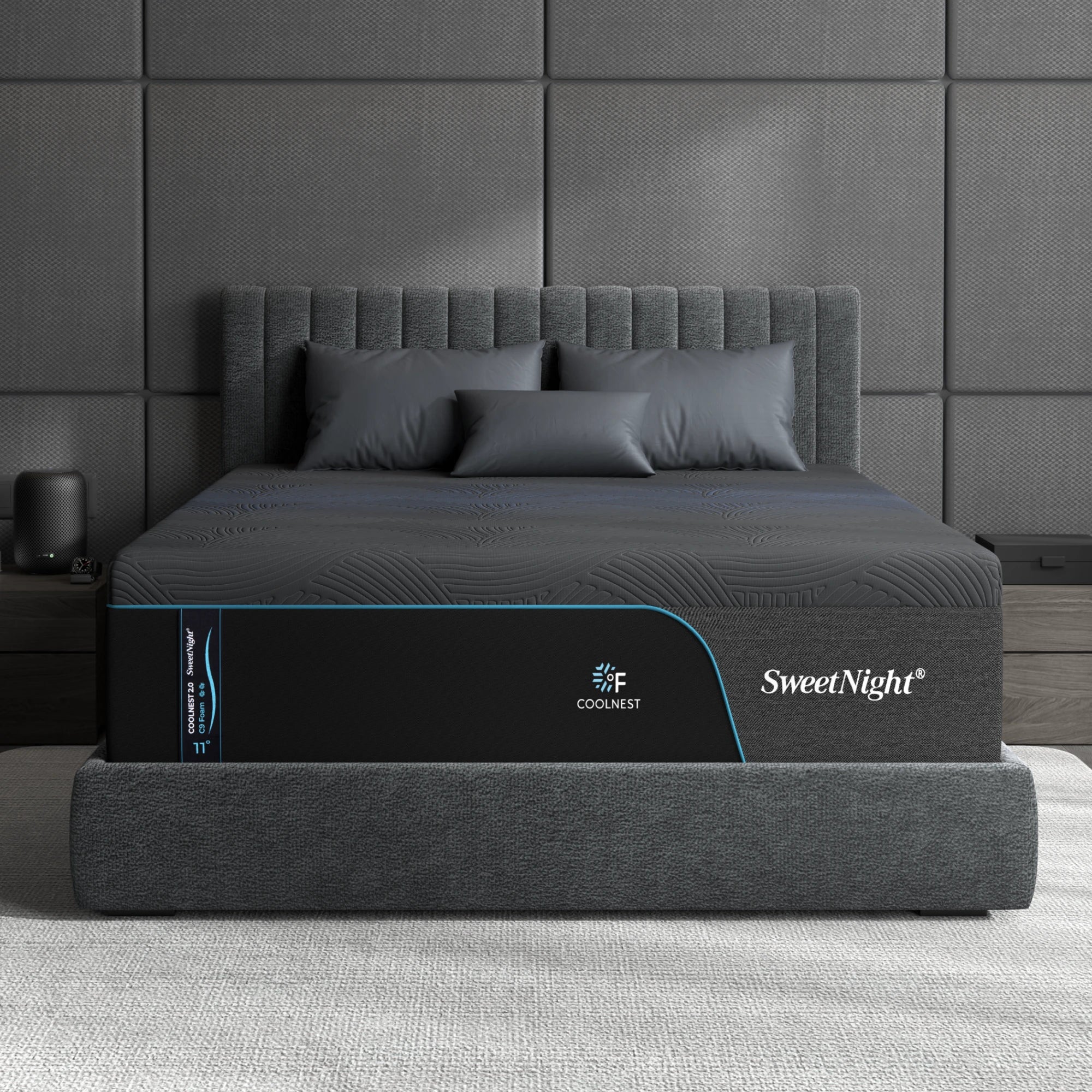
This versatile option suits most body types and sleep positions. You get real pressure relief without excessive sinking, making it the safe choice for daily use when you're unsure which thickness to pick. SweetNight's CoolNest® Ultra memory foam mattress comes in 12", 14", and 16" profiles, so you can match the thickness to your body while keeping its 7-zone support and cooling that sleeps up to 11°C cooler.
14 Inch+ Memory Foam Mattresses: Premium Comfort
Construction: 4 to 6 inches memory foam with multiple density layers
Best for:
- Sleepers over 230 pounds
- Side sleepers needing maximum pressure relief
- Couples with different body weights
- Those wanting hotel-like plush comfort
Limitation: Higher price and may require deep pocket sheets. Also affects bed height significantly.

Typical Errors While Selecting Memory Mattress Height
Buying a mattress is where common pitfalls appear, which end up costing money as well as lost sleep. Being aware of them prior to purchase helps avoid returns, poor sleep, as well as regrets of purchase. Below follow the most prevalent issues consumers face.
| Common Mistake | Why It's a Problem |
| Assuming thicker equals better quality | A poorly made 14 inch mattress with low density foam performs worse than a quality 10 inch option |
| Ignoring bed frame compatibility | Very thick mattresses look awkward on low profile frames and may not fit bed frames with footboards |
| Forgetting about sheet fit | Standard sheets struggle to fit mattresses over 14 inches deep |
| Overlooking room proportions | Extremely thick mattresses on tall frames can make bedrooms feel cramped |
| Not checking box spring needs | Traditional box springs reduce memory foam effectiveness regardless of thickness |
Traditional box springs reduce memory foam effectiveness regardless of thickness. Focus on foam quality and your body's needs first, then check practical details like frame fit and sheet size. Getting these basics right matters more than chasing the thickest option on sale.
If you're comparing mattresses after reading this, here's where each CoolNest® model fits:
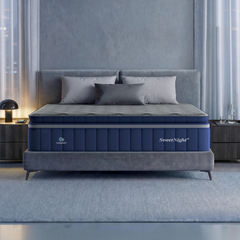
- CoolNest® Hybrid Mattress: pocketed coils under a DuoSense™ pillow top. Pick this one if you want bounce, firm edges and less partner motion.
- CoolNest® Memory Foam Mattress: the lowest-priced model in the range, all-foam with 5-zone support and a breathable 3D-woven cover.
- CoolNest® Pro and CoolNest® Ultra: the step-up foam models, with PCMflux® temperature-regulating foam and 7-zone support. Ultra adds AirMesh™ foam and feels up to 11° cooler.
- Current prices on every size and thickness are on the Fall Sale page, or browse all mattresses.
FAQs about Memory Foam Mattress Thickness
Q1. What Is The Minimum Thickness For A Memory Foam Mattress To Be Comfortable?
Eight inches is the practical minimum for daily use by adults. Anything thinner causes bottoming out. If budget is tight, choose 8 to 10 inches with good foam density over a thinner mattress with marketing gimmicks.
Q2. Can I Add A Topper Instead Of Buying A Thicker Mattress?
No, if you're bottoming out. Toppers add surface softness but don't fix insufficient core support. You'll just compress through both layers. Toppers only work for adjusting feel on already adequate mattresses.
Q3. How Much Does Memory Foam Mattress Thickness Affect Price?
Each inch adds $50 to $150 depending on quality. But a premium 10 inch mattress often costs more than a cheap 14 inch model. Check foam density specs, not just thickness and price tags.
Real pricing shows how uneven that range is. On the CoolNest® Ultra, a queen runs $729.99 at 12″, $799.99 at 14″, and $929.99 at 16″ — so the first two inches work out to about $35 each, while the next two cost about $65 each. The climb gets steeper as you go up, because the added depth goes into specialty comfort layers rather than more base foam.
Q4. Should Couples Choose Thicker Mattresses Than Single Sleepers?
Yes, specially in cases where there is a weight disparity in couples. A minimum of twelve inches is always a better option for couples to support them properly as well as provide effective motion isolation. Thick mattresses provide support for different compression levels in different regions of the mattress itself. Adequate support regardless of individual body weight as well as preferred sleeping positions.
The Right Thickness Changes Everything
Your body already figured out how thick it needs to be by looking at how much you weigh, as well as how you sleep. Stop second-guessing yourself, look at those figures up top, eliminate anything that's outside of range, and voila! You just eliminated 70% of what would otherwise have been nothing more than useless information to you in the first place. Being optimal is not always about being high-end, trendy, or even comfortable; sometimes it's just about biomechanics. Now go ahead, give that rest to your spine that it needs.