






Here’s a scenario that plays out in bedrooms everywhere. You sleep perfectly comfortably alone — the odd business trip, a night when your partner’s away, and you barely think about temperature. Then it’s back to two-in-a-bed and suddenly you’re both peeling off the covers at 2 a.m., there’s a “why is it so hot in here” muttered into the dark, and one of you migrates to the far edge of the mattress just to find cool sheets. If that sounds familiar, you’ve noticed something real: couples tend to sleep hotter than single sleepers, and it’s not a coincidence or a fluke of your particular bedroom.
Two bodies in one bed change the temperature math in ways that are pretty intuitive once you lay them out, and they change what your mattress and bedding need to do. The frustrating part is that most couples treat it like a personality clash — one person’s “always hot,” the other’s “always cold” — when a lot of it comes down to physics and setup you can actually fix. Let’s walk through why sharing a bed runs warm, why it hits some couples harder than others, and how to build a bed you can both sleep well in.
Why Do Two People Sleep Hotter Than One?
The simplest explanation is also the most obvious once you say it out loud: you’ve doubled the heat source in the same amount of space. Your body throws off warmth all night long — put two of them a foot apart under shared covers and you’ve roughly doubled the heat pouring into one mattress, without giving that heat any extra room to escape.
When you sleep alone, your body heat radiates outward in every direction and disperses into open air and open mattress. There’s cool space on either side of you to soak it up. Add a partner and you’ve closed off one of those directions with another warm body. Now the heat that used to drift sideways into empty sheets is meeting more heat coming the other way. The space between you two becomes a warm corridor that neither of you is cooling — you’re each contributing to it.
Shared bedding seals the deal. A single comforter stretched over two people traps a layer of warm air across the whole bed and holds both of your body heat under it like a lid. So it’s not that you’ve suddenly become a hotter sleeper the moment you coupled up — it’s that the bed as a system now has twice the heat input, less room for that heat to disperse, and often a single blanket doing its best to keep all of it in. That’s the core of why sleeping hot with a partner is so common.

The Body-Heat Math: Two Furnaces in One Bed
Let’s make the physics a little more concrete, because it reframes the whole problem. Your resting body continuously gives off heat — think of it as a low, steady output that never switches off while you’re alive, let alone asleep. A sleeping adult radiates a meaningful amount of warmth into the surrounding air and surface every single hour.
Put two of those in one bed and you’re not just adding the numbers — you’re concentrating them. The heat has to dissipate through the same mattress surface, the same blanket, the same volume of bedroom air that a single sleeper would use, except now there’s twice as much of it and the two heat sources are partially insulating each other. The bed simply can’t shed warmth as fast as two bodies pump it in, so the temperature at the surface climbs higher and stays higher than it ever would for one person.
This also explains the timing couples describe. Early in the night, before the bed has warmed up, things feel fine. But heat accumulates. Both bodies keep radiating, the mattress and bedding keep absorbing, and a few hours in the whole setup reaches a tipping point where it’s saturated and starts radiating warmth back at both of you. That’s the shared 2-to-4 a.m. wake-up, the synchronized covers-kick that so many couples know well. It’s not that you both randomly got hot at the same time — it’s that the bed hit its heat ceiling for both of you at once. Any solution has to raise that ceiling: move heat out faster, or stop trapping so much of it in the first place.

There’s a proximity factor on top of the raw math, too. Couples don’t just sleep in the same bed — they often sleep close, whether that’s deliberate cuddling or just gravitating together on a mattress that sags slightly toward the middle. The closer two bodies are, the more directly each one’s radiated heat lands on the other instead of dispersing into open sheets. A cheap mattress that dips in the center makes this worse by literally rolling you both toward each other into the hottest part of the bed, which is one reason couples on an old, sagging mattress often complain about heat as much as back pain. The physical setup keeps funneling both of you into the same warm pocket all night, and neither of you is getting the cool, open mattress a solo sleeper takes for granted.

How Shared Bedding Traps Heat Between Partners
Of all the factors, shared bedding is the one couples control most easily and think about least. A single duvet or comforter pulled over two people is a heat-trapping machine, and simply rethinking it can transform how hot a bed sleeps.
The problem is that one big blanket creates a continuous warm envelope over the entire bed. Both people’s heat collects under it, the fabric holds it in, and there’s no gap for warm air to vent. Worse, if that comforter is a heavy synthetic — polyester fill, a non-breathable shell — it doesn’t just trap heat, it also blocks the moisture your bodies produce from evaporating, so you get the clammy version of hot.
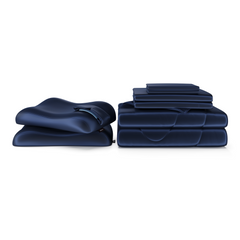
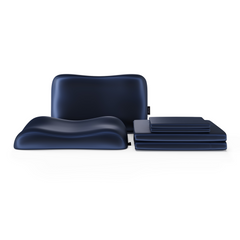
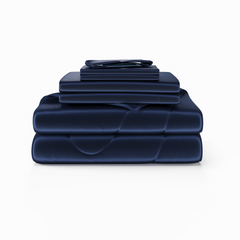
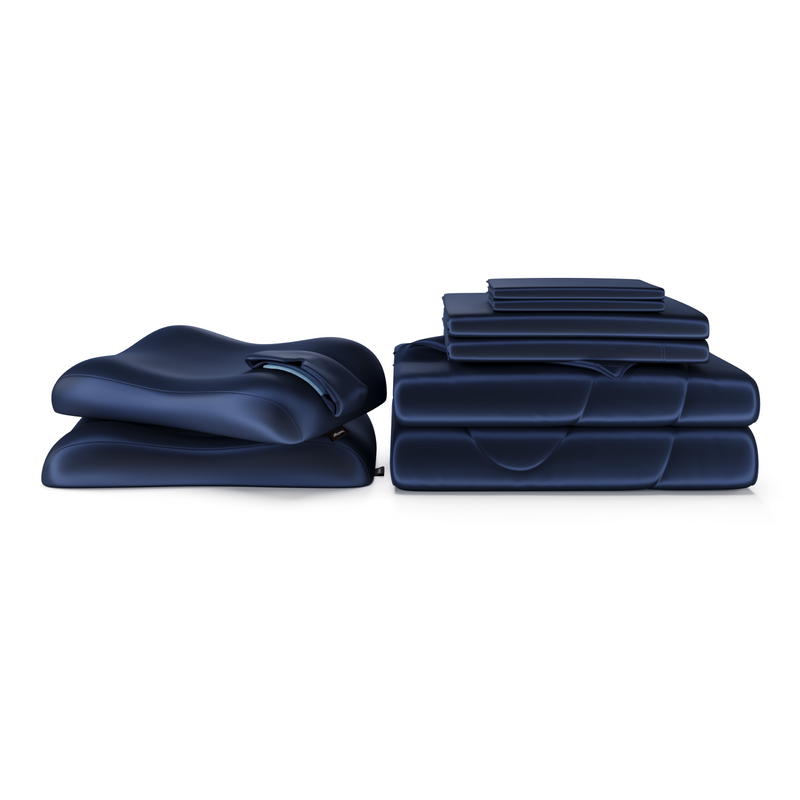
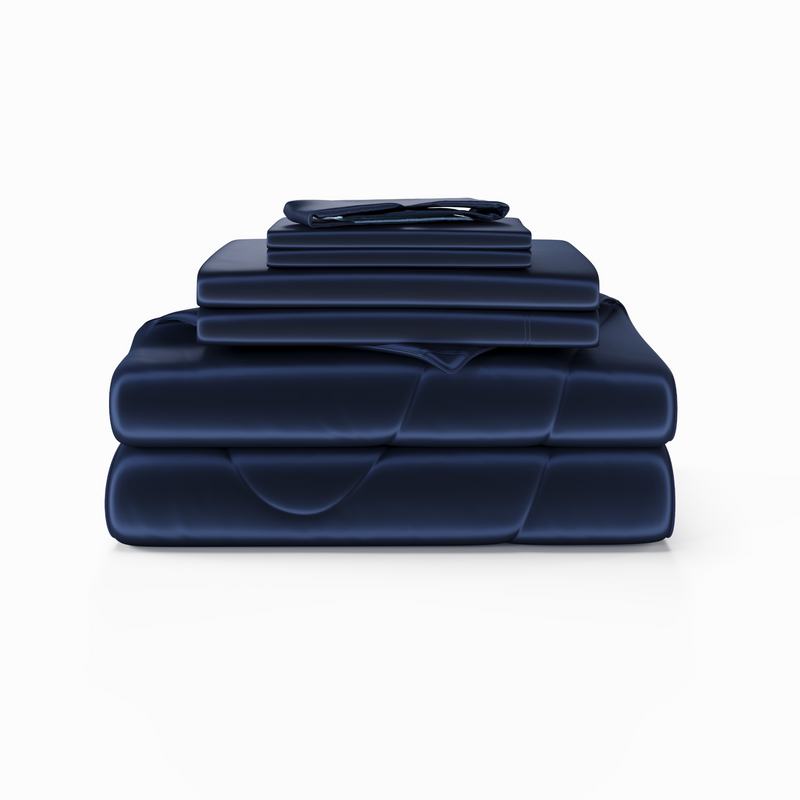
There’s a reason the “Scandinavian sleep method” — two separate single duvets on one bed instead of one shared one — keeps going viral on couples’ sleep forums. It works. Two lighter, individual blankets let each person’s heat vent independently instead of pooling under a shared lid, and as a bonus it ends the nightly blanket tug-of-war. Even if two duvets isn’t your aesthetic, the principle stands: lighter, breathable, adjustable layers each of you can control beat one heavy comforter you’re both stuck under. Swapping a dense synthetic duvet for breathable cotton or linen bedding is one of the cheapest, most effective moves a hot couple can make, and a lot of pairs feel the difference on the first night.

People sometimes resist the two-duvet idea because it feels like a step away from intimacy — as if separate blankets mean separate lives. In practice most couples find the opposite. You still share the bed, you can still cuddle before you drift off; you just each get to fall asleep at your own temperature instead of one of you quietly suffering under a shared comforter every night. Plenty of pairs report that they actually sleep closer once nobody’s overheating or yanking the blanket, because the bed stopped being a low-grade source of friction. If the aesthetics bother you, a single large duvet cover can be laid over two inner duvets so the bed still looks unified when it’s made in the morning. The point isn’t to sleep apart — it’s to stop forcing two different bodies under one identical layer and calling the result a compromise.
When One Partner Runs Hot and the Other Runs Cold
Then there’s the classic mismatch: one of you is throwing off the covers while the other is burrowing in for warmth, in the exact same bed. This one drives couples a little crazy because it feels like someone must be exaggerating — but you’re both telling the truth. People genuinely run at different temperatures, and the reasons are physiological.
Muscle is metabolically active and generates more heat, so a larger or more muscular partner often sleeps warmer at rest. Metabolism, thyroid function, hormones and even how much someone ate or drank that day all nudge the internal thermostat. Hormonal shifts — menopause, menstrual cycles, pregnancy — can make one partner run dramatically hotter for stretches of time. Men and women also tend to have somewhat different thermal comfort zones on average, which is why the “he’s hot, she’s cold” (or vice versa) dynamic is such a common one.
The important takeaway is that you can’t settle this by picking a single room temperature you both like — there often isn’t one. The realistic fix is a setup that lets each person regulate their own microclimate: separate blankets of different weights, layered clothing the cold sleeper can add without heating up the hot one, and crucially, a mattress that runs cool by default so it protects the hot sleeper without freezing out the cold one. A neutral-to-cool surface plus individually adjustable bedding beats fighting over the thermostat every night, because it lets you diverge instead of forcing a compromise that leaves one of you miserable.

It helps, honestly, just to stop treating it as an argument. A surprising amount of couples’ sleep friction comes from each person quietly assuming the other is being dramatic — the hot sleeper thinks their partner runs cold on purpose, the cold sleeper thinks the hot one won’t stop fiddling with the AC. Once you accept that two bodies genuinely have different thermostats and that no shared setting will please both, the problem shifts from “whose fault is this” to “how do we give each of us our own controls.” That reframing alone tends to defuse the nightly negotiation, and it points you straight at the practical answer: build in independence rather than searching for a single perfect compromise that doesn’t exist. The cooler-running the mattress is underneath both of you, the more room each person has to fine-tune from there.
Why Your Mattress Matters More When You Share It
People shopping alone tend to obsess over feel and forget temperature. For couples, the mattress’s cooling ability isn’t a nice-to-have — it’s doing double duty, because it’s the one surface absorbing heat from two bodies at once and it’s the layer that decides whether that heat gets stored or shed.
Remember that heat mostly can’t escape sideways through a mattress — foam especially is a slow horizontal conductor, so warmth concentrates right where each body presses rather than spreading out and venting off the edges. With two people, you’ve got two hot zones plus a warm corridor between them, all being absorbed by the same surface. A heat-trapping mattress under a couple is essentially storing double the warmth and radiating it back at both of you, which is exactly the tipping-point effect from earlier.

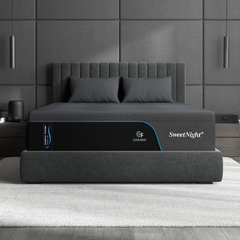
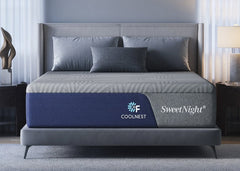
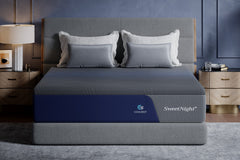
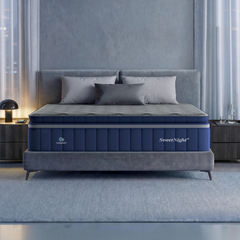
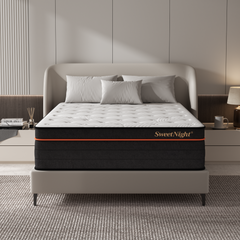
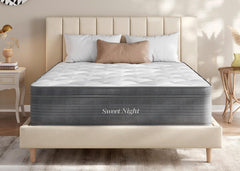
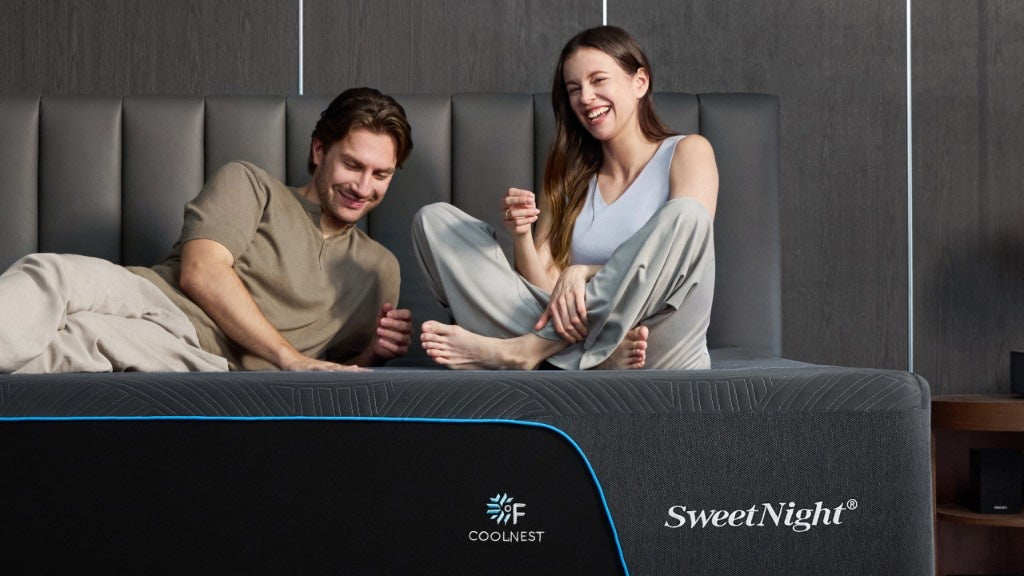
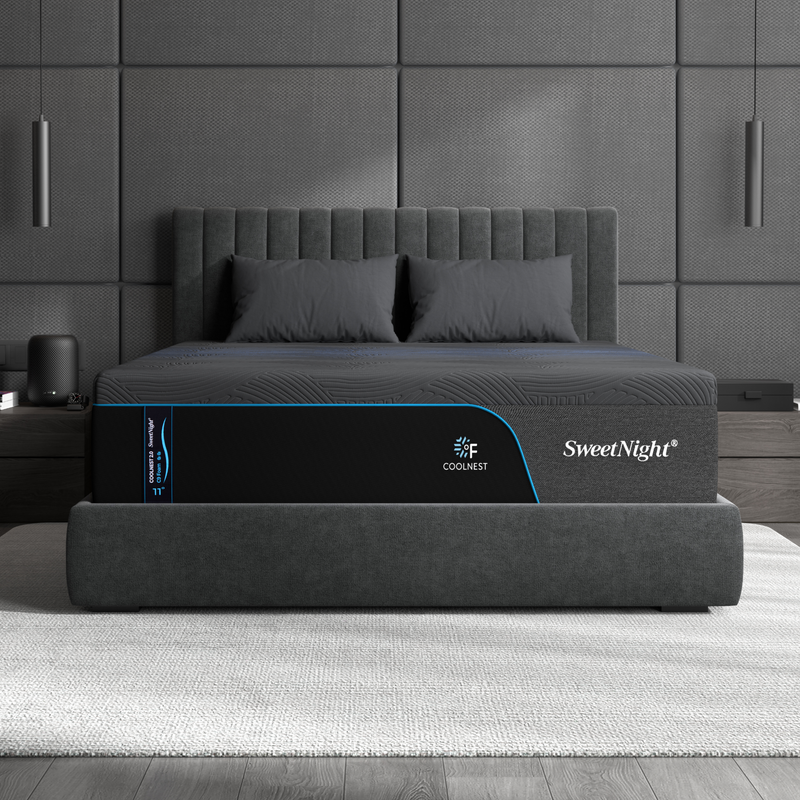
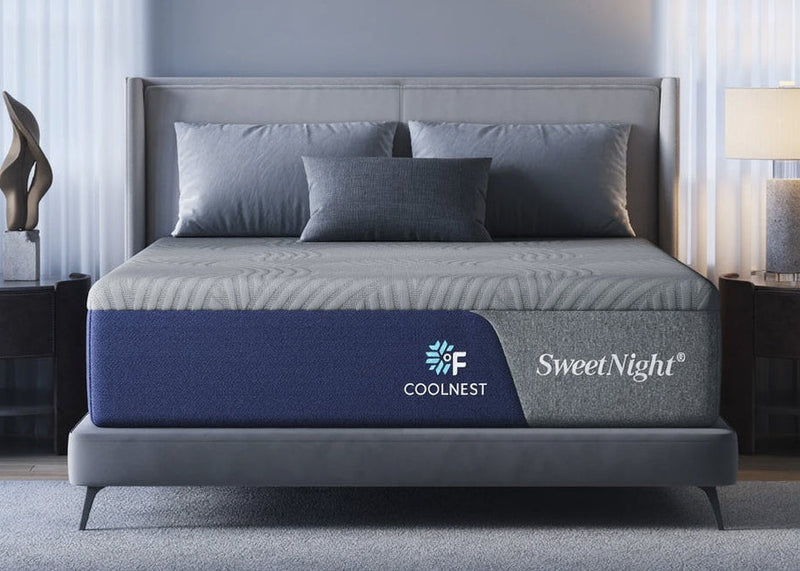
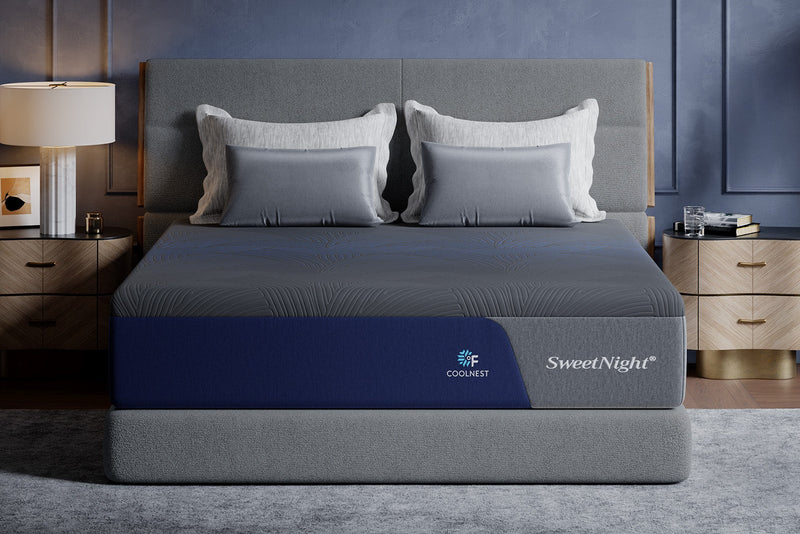
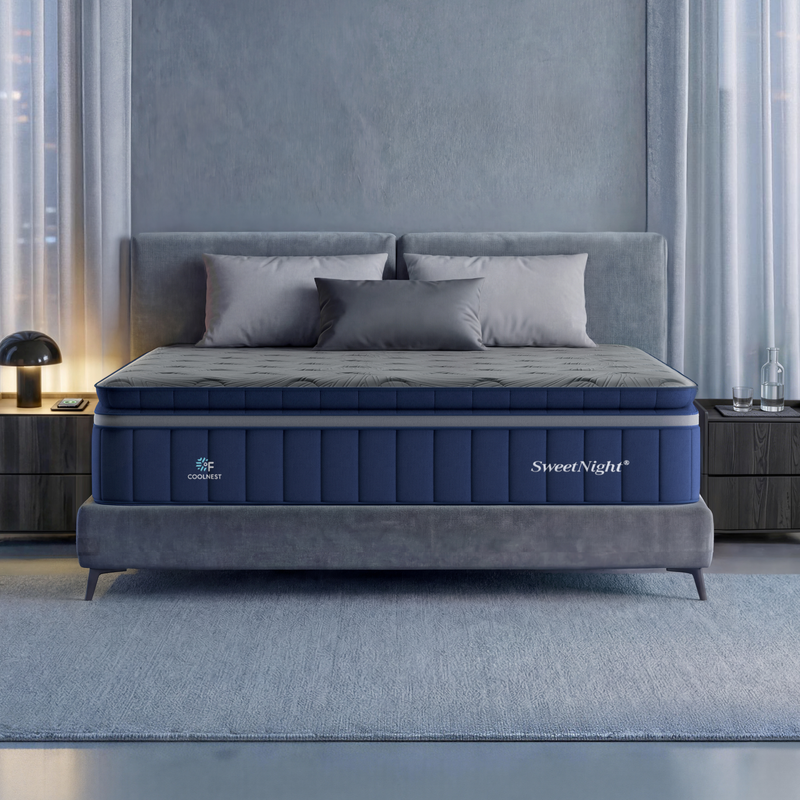
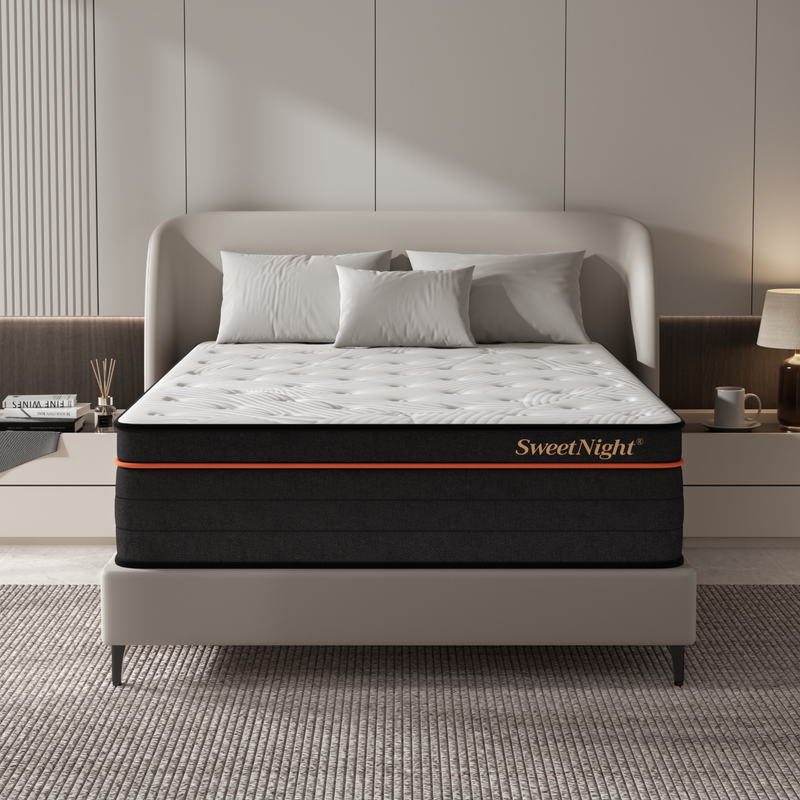
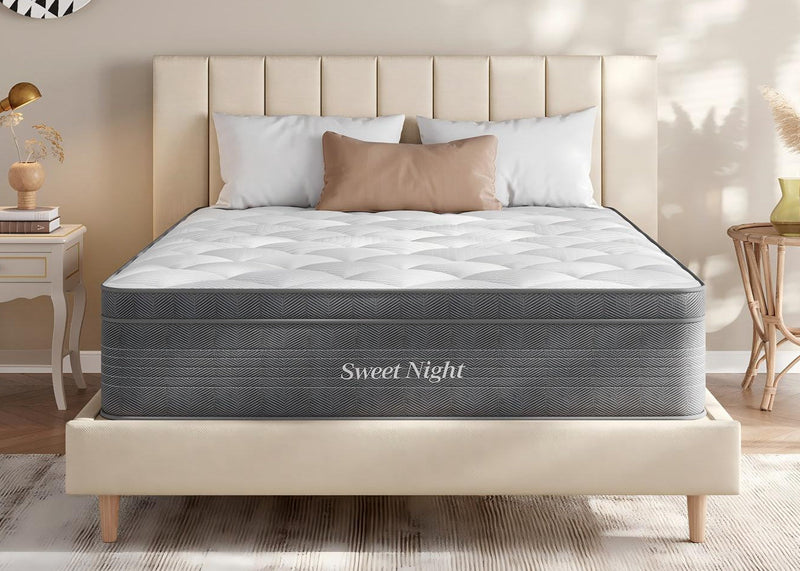
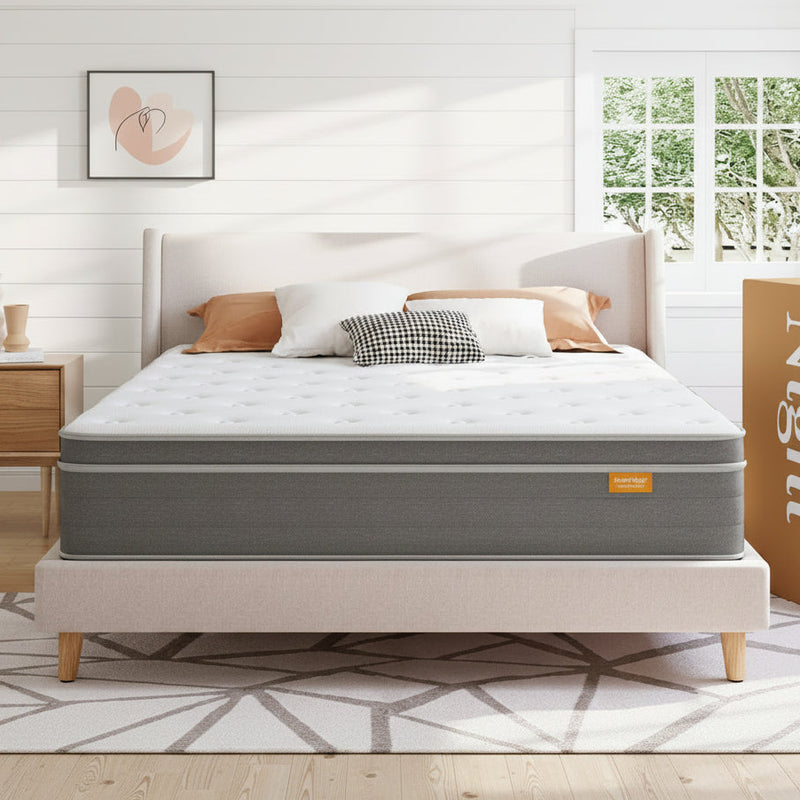
This is why a cooling mattress for couples pays off more than the same mattress would for a solo sleeper. A surface engineered to actively move heat — through gel foam, ventilation and airflow — keeps pulling warmth away even when there’s twice as much of it arriving. Beds like the CoolNest® Ultra are built around exactly this idea, layering a breathable cover, gel memory foam and a ventilated structure so heat has a route out instead of pooling under two sleepers. When you share a bed, the mattress is quietly the hardest-working part of your cooling setup, and it’s the piece most worth getting right.
Does a Bigger Bed Sleep Cooler for Couples?
A lot of couples ask whether simply upgrading to a bigger mattress will solve the heat, and the honest answer is: it helps, but it’s not a cure on its own. More space does genuinely reduce the problem, just not the way people assume.
The benefit of a larger bed — going from a full to a queen, or a queen to a king — is that it gives each person more room to spread out, which means more cool, unoccupied mattress to migrate to and more distance between the two heat sources. That warm corridor between you gets wider and cooler when you’re not shoulder-to-shoulder all night. Couples who feel cramped on a full or queen often report sleeping cooler purely because they can put a little space between them. If room space allows, sizing up is a legitimate part of the fix, and it’s worth weighing against how much floor space your bedroom can spare.
But size doesn’t change what the mattress material does with heat. A bigger heat-trapping foam bed is still a heat-trapping foam bed — you’ve just got more of it. If the surface stores warmth, spreading out only helps so much, because each of you is still lying on a patch that soaks up and radiates your heat. The best results come from pairing enough space with a genuinely cooling surface: a king-size cooling mattress gives you both room to spread and a surface actively shedding heat. Size and material solve different halves of the problem, and couples who are serious about sleeping cool address both rather than betting everything on a bigger bed.

Cooling Mattress Features That Matter Most for Couples
If you’re shopping as a couple, a few features deserve extra weight beyond what a solo sleeper might prioritize. You’re optimizing for two bodies, two sets of preferences and double the heat, so look for:
- Real, layered cooling. Gel-infused foam, an open-cell or ventilated structure and a breathable cover working together — not a single “cooling” label. With two heat sources, you need the surface pulling warmth away at multiple layers.
- Strong motion isolation. This isn’t a temperature feature, but it’s a couples feature: a mattress that absorbs one partner’s movement so the other doesn’t feel every turn. It matters because being woken by a restless partner and being woken by heat often compound each other.
- Edge support and enough surface. If one of you drifts to the cool edge every night, you want an edge that’s actually usable and doesn’t feel like you’ll roll off.
- A hybrid or heavily ventilated build. The airflow through coil or ventilation layers helps shed the doubled heat load better than a dense all-foam slab, which is why many hot couples lean hybrid.

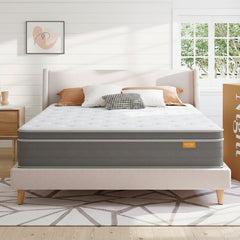
You don’t need every box ticked, but the combination of genuine cooling and good motion isolation is the couples sweet spot. The wider cooling mattress range and the CoolNest® family include both foam and hybrid builds, so you can match the approach to two people’s needs rather than compromising on one. When you share a bed, the mattress is doing the most work, so it’s the place to be picky.
Bedding and Setup Fixes for Couples Who Sleep Hot
A cool mattress does a lot, but the rest of your setup can either help it or fight it. Here’s a practical checklist for couples, cheapest fixes first:
- Go to separate blankets. Two lighter individual duvets instead of one shared comforter is the single most effective couples move — each person’s heat vents on its own and the blanket war ends too.
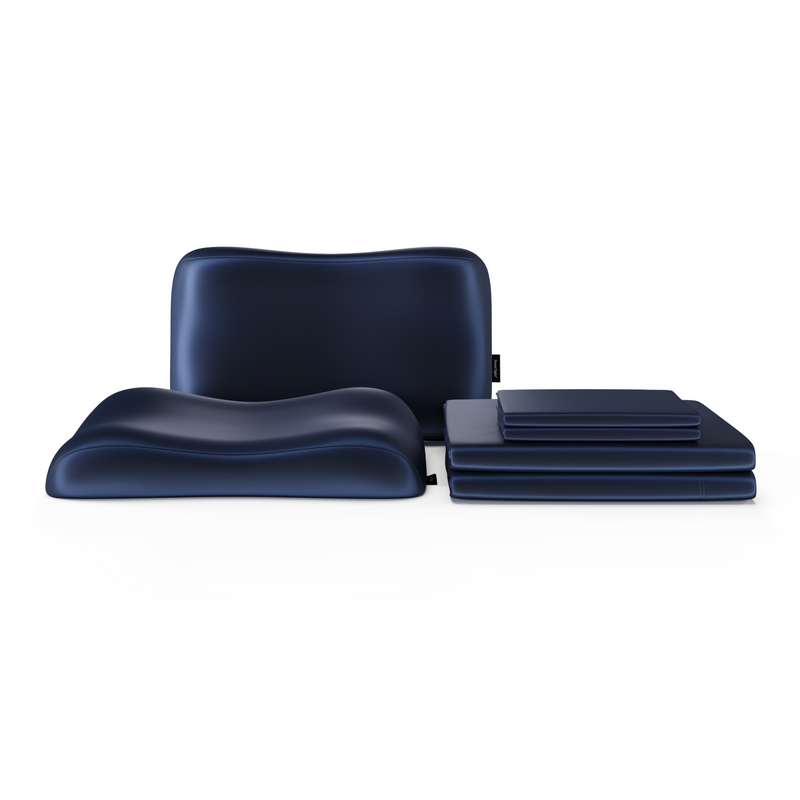
- Switch to breathable sheets. Cotton, linen or bamboo over polyester. They let air move and wick the moisture two bodies produce. Skip very high thread-count “luxury” sateens, which are often tightly woven and sleep warmer than a crisp percale.
- Add airflow. A fan moves air across both of you so sweat can evaporate; a ceiling fan plus the AC beats the thermostat alone. Point it at the bed, not the ceiling.
- Give each person their own temperature levers. Different-weight blankets, layered sleepwear the cold partner can adjust, maybe a cooling pillow for the hotter one. Let the two of you diverge instead of compromising.
- Mind the shared evening habits. Late alcohol, heavy dinners and hot rooms warm you both up before you even lie down.

The theme running through all of these is independent control. The reason couples sleep hot isn’t just heat — it’s two people with different needs forced to share one climate. Every fix that lets each of you regulate your own microclimate, on top of a surface that runs cool for both, chips away at the problem from a different angle.
If you’re going to spend money on only one thing, spend it on the layer that’s hardest to work around: the mattress. Sheets and blankets are easy, cheap swaps you can keep tuning, but you can’t out-sheet a surface that stores heat from two bodies and radiates it back all night. Get the surface right first, then layer the breathable, individually adjustable bedding on top — in that order, the smaller fixes finally have something to work with instead of fighting a losing battle against the bed underneath them.
When Sleeping Hot Together Points to Something Else
Most of the time, a hot shared bed is a physics-and-setup issue with a straightforward fix. But it’s worth knowing when one partner’s overheating deserves a closer look rather than another set of sheets.
If one of you has night sweats that soak the bedding night after night, overheating that started suddenly with no change to the room or bedding, or hot spells that come with other symptoms — unexplained weight loss, a racing heart, fever, fatigue that sleep doesn’t fix — that’s a signal to talk to a doctor. Hormonal changes, thyroid issues, blood-sugar swings, certain medications and menopause can all drive genuine night sweats that no mattress will fully solve, though a cooling setup still makes them more bearable.

The tell is usually whether the heat is symmetrical. If you both run warm on the same bed and cool right down when you sleep apart or fix the bedding, that’s the shared-heat effect this whole article is about, and it’s fixable at home. If one specific person is drenched regardless of the setup while their partner is fine, that’s worth a professional conversation. For the vast majority of couples, though, sleeping hot together is exactly what it looks like — two furnaces, one bed, and a setup that was trapping heat instead of releasing it. Give that heat somewhere to go — a cool surface, breathable individual bedding, a little airflow, room to spread out — and the bed you both dreaded on summer nights becomes one you can actually share in comfort.