
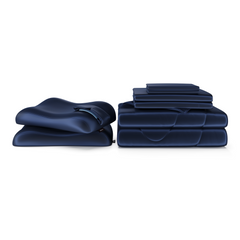
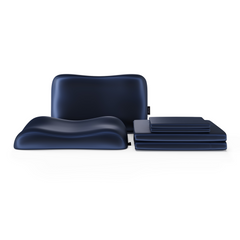
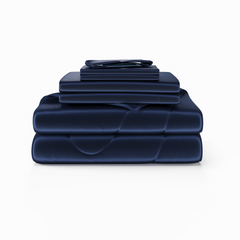


Published: July 22, 2026 · Reviewed by the SweetNight Sleep Comfort Team · 17 min read
Somewhere on the label of nearly every cooling sheet, cooling pillow, and cooling mattress cover sold today, there's a small, confident number: a qmax rating. Sometimes it's dressed up as “Q-Max 0.35” on a hangtag, sometimes it's buried in a spec table as “cool-to-touch value.” It's presented as proof — hard, scientific, Japanese-lab-tested proof — that the thing you're about to buy will keep you cool. And here's the strange part: almost nobody who prints that number, and almost nobody who reads it, can tell you what it actually measures. They know higher is supposed to be better. That's it.
That gap is the whole reason this article exists. Qmax is a real, rigorously defined physics measurement with a genuine story behind it — and it also has one enormous blind spot that the marketing quietly leans on. Once you understand both, you'll never look at a cooling-fabric label the same way. You'll know exactly what a qmax number is promising you, what it is not promising you, and how to tell a genuinely cool-sleeping product from one that just wins the first ten seconds. Let's get into it properly.
What Is Qmax? The Q-Max Value Meaning in Plain English
Start with the definition, because the q-max value meaning is simpler than the jargon makes it sound. Qmax is short for maximum heat flux — more precisely, the peak instantaneous rate at which heat flows out of your warm skin and into a cooler material the moment the two touch. It's measured in watts per square centimeter (W/cm²), and you'll occasionally see the same thing written as J/cm²·s, which is identical, since a joule per second is just a watt.
Picture the physics for a second. Your skin sits around 32–34°C. A cool bedsheet might be at 24°C. The instant your arm lands on it, there's an 8–10 degree temperature gap, and heat always runs downhill from warm to cool. In that first instant, heat pours out of your skin fast — and that rush, at its highest point, is what your nervous system reads as “ooh, cold.” Qmax is the number that captures the size of that rush. A high qmax means heat leaves your skin quickly at first contact, so the surface feels colder. A low qmax means the surface feels neutral or even warm.
The concept isn't new marketing fluff, either — it's decades old and academically serious. According to instrument maker Kato Tech, the metric was defined by Dr. Sueo Kawabata of Kyoto University in the 1970s, who in 1977 discovered a strong correlation between this initial peak heat flux and whether people described a fabric as feeling warm or cool. In other words, qmax exists because a scientist proved that this one physical quantity reliably predicts the human sensation of coolness on contact. That's a big deal, and it's why the number has real meaning.
But notice the exact words in that definition, because they carry the whole story: maximum, instantaneous, first contact. Qmax is a measurement of a single peak moment. It is a snapshot of the handshake, not a description of the whole relationship. Hold onto that — it's the key that unlocks everything else on this page.
How Is Qmax Measured? Inside the Cool-to-Touch Rating Test
If you want to trust a number, it helps to know exactly how it's produced — and the cool-to-touch rating test is refreshingly concrete. Qmax is measured on a specialized instrument called the KES-F7 Thermo Labo, part of the Kawabata Evaluation System, following the Japanese Industrial Standard JIS L 1927, “Measurement method of cool touch feeling property”. There's an equivalent international method too, but JIS L 1927 is the one most cooling-textile brands quote.
Here's what actually happens on the bench, per Kato Tech's own description of the standard. A small metal plate with a heat sensor — a stand-in for your skin — is warmed to roughly 10°C above the surrounding room temperature. The fabric sample sits separately at room temperature. Then the warm plate is brought down onto the cool fabric. In that instant, heat transfers from the plate into the fabric, spiking and then tapering off as the two surfaces move toward the same temperature. The machine watches that transfer and records the single highest heat-flux value during the process. That peak is your qmax.
Three things about this procedure matter enormously, and they explain most of the confusion around qmax cooling fabric claims:
- It's a fixed 10°C gap. The test doesn't use your real skin temperature or your real bedroom; it standardizes the temperature difference so results are comparable. That's good science, but it means the lab number describes an idealized handshake, not your specific bed on a humid August night.
- It's dry and unweighted. The standard test presses a plate onto a dry fabric under controlled, light contact. Your body adds sweat, oils, and real weight — all of which change the result, usually not in the fabric's favor.
- It's over in a heartbeat. The instrument is hunting for a maximum, which occurs in the first fraction of a second and then fades. By design, the measurement is finished long before the fabric has warmed up to skin temperature.
So when a label says “Q-Max 0.34,” it's reporting the peak of a heat-flux curve captured in a dry, standardized, 10-degree, split-second test. That's a legitimate, repeatable measurement — and understanding how it's produced is exactly what lets you see its limits.
What Is a Good Qmax Value? Reading the Numbers on a Cooling Fabric
Now the question everyone actually types into Google: what is a good qmax value? There are two answers — the official one and the marketing one — and you need both to read a label honestly.
The official answer comes straight from the standard. Under JIS L 1927, a textile is formally classified as having an instant cooling sensation once its qmax value reaches or exceeds 0.100 W/cm². That's the threshold where the standard says a human will notice the fabric feels cool rather than neutral. Below it, the material reads as ordinary; at or above it, it earns the “cool touch” description.
The marketing answer is where the numbers climb. In the cooling-bedding world, plain cotton percale might land somewhere around 0.13–0.15 W/cm²; engineered cooling fabrics — think cool-touch nylon, treated bamboo-derived rayon, or high-density weaves built for this — are commonly promoted from about 0.2 W/cm² upward, with premium products advertising figures in the 0.3–0.4 range and describing them as “very cool” or “ice-cool” to the touch. Those higher tiers aren't defined by JIS — they're an informal industry ladder — but they do roughly track real sensation: a 0.35 fabric genuinely does feel colder on first contact than a 0.15 one.
So a practical reading guide looks like this:
- Below ~0.10 W/cm² — not a cooling fabric; it'll feel neutral or warm. Standard cotton flannel, most microfibers.
- ~0.13–0.20 W/cm² — mild cool touch. Crisp cotton percale, some linen and Tencel-type blends. Pleasant, not dramatic.
- ~0.20–0.30 W/cm² — clearly cool to the touch. Purpose-built cooling covers and sheets. This is the sweet spot most quality cooling bedding aims for.
- ~0.30–0.40+ W/cm² — strong first-touch chill. Dense cool-touch synthetics and specialized weaves. Impressive at the shop—but read the next section before you fall in love with the digit.
One honest caveat that most sellers won't volunteer: qmax figures are only strictly comparable when they come from the same test conditions. Different labs, ambient humidity, sample pressure, and how the fabric was conditioned can nudge the result. A 0.33 from one brand and a 0.31 from another are, for practical purposes, the same fabric feel. Treat qmax as a band, not a decimal-point contest.
What "Cool to Touch Rating" Really Measures — and What It Doesn't
This is the section the marketing hopes you skip, so it's the one worth reading twice. We've established what cool to touch rating is: the peak heat flux at first contact. Now let's be blunt about what it is not.
Qmax does not measure how cool a surface stays. It measures how cool it starts. Those are completely different physical questions, and conflating them is the single biggest reason people buy “cooling” bedding that disappoints them by 2 a.m.
Think about why the first-touch chill happens at all. When you lie down, heat floods from your warm skin into the cool fabric until—and this is the crucial bit—the fabric warms up to roughly your skin temperature. Once the surface and your body are at the same temperature, the heat flux stops, because there's no longer a temperature gap to drive it. That's basic thermodynamics: heat only flows when there's a difference. The delicious cold you feel on contact is literally the sound of that temperature gap closing. And a high-qmax fabric closes it faster, not slower.
So the qmax number is describing an event with a built-in expiration. It tells you how good the first handshake feels. It tells you nothing about what happens next: whether the material can keep shuttling heat away from your body once the easy temperature gap is gone, whether it lets sweat evaporate, whether the layers underneath trap the warmth you've dumped into them, or whether air is moving through the system to carry heat out of the bed entirely. Those are the questions that decide whether you're comfortable at hour three — and qmax is silent on every single one.
None of this means qmax is fake or useless. It's a genuine, well-correlated measure of first-contact coolness, and first-contact coolness is a real, pleasant thing. The error isn't in the number; it's in the story people wrap around it — the quiet implication that a big qmax equals a cool night. It doesn't. It equals a cool minute. Whether that minute turns into a cool night depends entirely on things qmax was never designed to see.
Why a High Qmax Cooling Fabric Can Still Sleep Hot
Let's make the abstract concrete, because this is where a qmax cooling fabric so often breaks its promise. Imagine two surfaces. Surface A is a dense, slick cool-touch panel with a headline qmax of 0.38 — feels like marble when you lie down. Surface B is a more breathable cover with a modest qmax of 0.22, plus an airflow system underneath it. Which one keeps you cooler at 3 a.m.? Very often, it's B. Here's the mechanism.
That icy 0.38 panel earns its number partly by being dense and heat-absorbent — it has a lot of thermal mass to soak up that first burst of your body heat. But density is a double-edged sword. Once the panel has absorbed heat and warmed to your skin temperature, it becomes a warm slab pressed against you, and if there's nowhere for that stored heat to go — no airflow, no evaporation path, poor conductivity to layers below — it just sits there radiating your own heat back at you. You've traded a fantastic first touch for a stuffy middle of the night. This is precisely the trap memory foam is famous for; the Sleep Foundation notes plainly that memory foam “is designed to respond to body heat, and because of the density of the material, memory foam can, in fact, get quite warm.” A cold cover on top of a heat-hoarding core is a beautiful handshake attached to a sweaty night.
Surface B wins the night for the opposite reason. Its job isn't to win the first second; it's to keep the heat moving. Continuous airflow through and beneath the surface carries body heat out of the bed instead of letting it pool. Moisture wicks and evaporates, which is its own powerful cooling engine independent of qmax entirely. And breathable, ventilated construction means the heat you shed early doesn't get trapped in a layer six millimeters below your hip. The result is a surface that may feel merely “pleasant” on contact but stays comfortable hour after hour — which is the only kind of cool that actually helps you sleep.
This is why savvy shoppers learn to distrust a cooling product that brags about qmax and nothing else. A high cool-to-touch number with no airflow strategy behind it is a warning sign, not a selling point. If you want to go deeper on this exact question — whether cooling surfaces genuinely work overnight or just for the first few minutes — we pulled apart the evidence in do cooling mattresses actually work, which is the natural companion piece to this one.
Qmax vs. Thermal Conductivity vs. Continuous Cooling: The Three Numbers That Matter
To read cooling claims like a pro, it helps to separate three related-but-different ideas that get mashed together on marketing pages. Understanding how a qmax rating relates to the others is what turns you from a label-reader into a bed-buyer who can't be fooled.
1. Qmax (transient peak). The burst of heat flow at first contact, in W/cm². Governs the initial “this feels cold” sensation. Duration: about one second. This is a property of the surface material only.
2. Thermal conductivity (steady-state flow). How readily a material keeps conducting heat once things settle into a continuous state. A material can have a punchy qmax but mediocre ongoing conductivity, or vice versa. Conductivity matters more than qmax for what happens after the first minute, because it governs whether heat keeps traveling through the surface toward somewhere cooler.
3. Continuous cooling capacity (the system). This isn't a single fabric number at all — it's what the whole product does over hours: airflow through the structure, moisture evaporation, phase-change buffering, and the ability to keep dissipating heat rather than saturating. This is the property that actually determines whether you sleep cool, and it's the one no single cool-to-touch rating can capture.
Here's the relationship in one line: qmax sells the mattress in the showroom; continuous cooling capacity is what you sleep on at home. The two aren't enemies — the ideal product has a genuinely cool-touch surface and a system built to keep heat moving all night. But if a company can only talk about qmax, they're telling you about the showroom and hoping you won't ask about home. There's a related physics quantity worth knowing here too: thermal effusivity, which combines conductivity, density, and heat capacity, and is what truly drives that first-touch feel — it's the reason a stone countertop feels colder than a wooden one at the same temperature. Qmax is essentially effusivity's practical, standardized proxy for fabrics.
The Physics of First Touch: Why a Qmax Cooling Fabric Feels Icy for Ten Seconds
It's worth slowing down on why the chill fades, because once you truly get it, you'll never again mistake a high qmax for all-night cooling. The star of this show is that temperature gap we keep mentioning — and the way it collapses.
At the instant of contact, the gap between your ~33°C skin and a ~24°C sheet is at its widest, so heat flux is at its peak. That's your qmax moment. But heat transfer is self-limiting: the very act of pulling heat out of your skin warms the fabric and cools your skin surface, shrinking the gap. As the gap shrinks, the flux drops — fast at first, then leveling off. Within seconds to a minute or two, a small patch of fabric has essentially matched your skin temperature, the gap is gone, and the flux through that patch approaches zero. The chill you felt has “used itself up.”
What a good cooling system does is refuse to let the gap fully close. It has ways to keep pulling the warmed material back down toward a lower temperature: air flowing through the structure carrying heat away, moisture evaporating and taking latent heat with it, or a phase-change material that absorbs heat by melting at body temperature and holds the surface steadier. Each of these keeps a temperature difference alive, and a live temperature difference is the only thing that keeps heat flowing off your body. That's the entire secret of sustained cooling in one sentence: keep the gap open. Qmax measures how dramatic the gap is at the very start; it has no way to measure whether anything keeps it open afterward.
This also explains the classic “flip to the cool side of the pillow” ritual. When you flip, you're not touching a magically colder material — you're touching a patch whose temperature gap hasn't collapsed yet, because it's had time away from your body to shed the heat you dumped in it earlier. You're manually resetting the qmax moment. A well-engineered cooling surface does automatically, and continuously, what you're doing by hand at 3 a.m.: giving the material a way to keep releasing heat so the cool side never fully disappears.
How Moisture, Pressure, and Body Heat Change Your Real Qmax
The lab measures a dry fabric under light, even contact. You are not a dry, light, even contact. Real bodies distort the tidy qmax rating in three predictable ways, and knowing them helps you set realistic expectations for any cooling product.
Moisture is the big one. As soon as you begin to perspire — and everyone perspires during sleep, even in a cold room — water changes everything. Damp fabric conducts heat very differently than dry fabric, and a saturated surface can lose its cool-touch character entirely, feeling clammy instead of crisp. This is why a fabric's ability to wick and dry matters at least as much as its headline qmax. A moderate-qmax fabric that stays dry will out-sleep a high-qmax fabric that turns into a damp cloth against your back. Sweat management is a cooling feature the qmax test cannot see.
Pressure changes contact. Press harder, and more of your skin makes intimate contact with the material, and heat transfers faster than the gentle lab press implies — which is partly why heavier bodies and high-pressure zones like hips and shoulders can feel warmth build up even on a “cooling” surface. It's also why the fabric-level number tells you so little about a mattress, where your weight is pressing you into layers, not just resting on a sheet.
Your body keeps making heat. The lab plate has a fixed amount of warmth to give up; you are a furnace running all night, continuously generating metabolic heat. A fabric that could absorb a single burst from a test plate faces an entirely different task when it has to cope with a living, radiating human for eight hours. This is the deepest reason qmax can't predict overnight comfort: the test is a one-time event, and sleep is a marathon of continuous heat production.
Put those three together and you get the honest translation of any qmax spec: it describes an ideal, dry, brief, gentle contact — the best-case first impression. Your real night will always be a tougher test than the lab's, which is exactly why the systems that manage moisture, airflow, and continuous heat removal end up mattering more than the digit on the tag.
Qmax on a Mattress: Why the Cool-to-Touch Rating Is Only the First Handshake
Everything above applies double when the product is a mattress rather than a sheet, because a mattress is a stack of layers, and qmax only ever describes the top millimeter. When you see a qmax mattress claim, understand precisely what's being rated: the cover fabric, and only the cover fabric. It is genuinely useful information — a cover with a strong cool-to-touch rating gives you that welcome chill when you first get into bed — but it's the opening handshake of a very long night, and the layers below the cover decide how the rest of it goes.
Here's the anatomy of the problem. Beneath that cool cover sits foam or coils — often several inches of it — and that's where your body heat ends up after the cover's first-touch moment expires. If those layers are dense, closed, and airless, they behave like a thermos: they hold the heat you shed early and slowly bake you. A stunning cover qmax on top of a heat-trapping core is the most common bait-and-switch in cooling bedding, and it's why so many “cooling” mattresses feel amazing for the first few minutes in the store and disappointing at home by midnight. The store visit is the qmax test — brief, and about first touch. Your bedroom is the real test.
So the right way to evaluate a cooling mattress is to treat the cover's cool-to-touch rating as necessary but nowhere near sufficient. You want the cool surface, yes — and then you want to interrogate everything under it. Does air actually move through the structure? Is the foam engineered to breathe, or is it standard heat-hoarding memory foam? Is there anything actively buffering the surface temperature over time, or does it just saturate? If you're weighing this across a product family, our breakdown of CoolNest vs Pro vs Ultra vs Hybrid walks through how those layers differ tier by tier, and how hot sleepers and cold sleepers should weight cooling versus warmth differently in the first place.
From Qmax Rating to All-Night Cooling: What a Cooling Mattress Must Add
If qmax is only the first handshake, what does a mattress need to add to turn that handshake into a full night of cool sleep? This is where the conversation shifts from a single qmax rating to a system — and where it's worth looking at how a purpose-built cooling mattress is actually engineered, using SweetNight's flagship as a concrete example rather than a vague ideal.
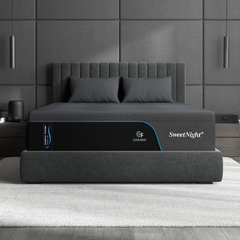
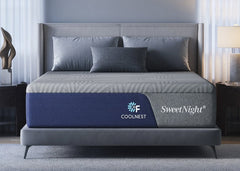
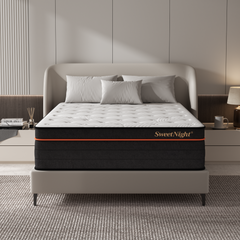
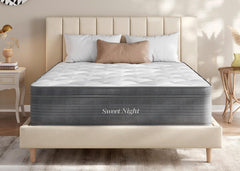
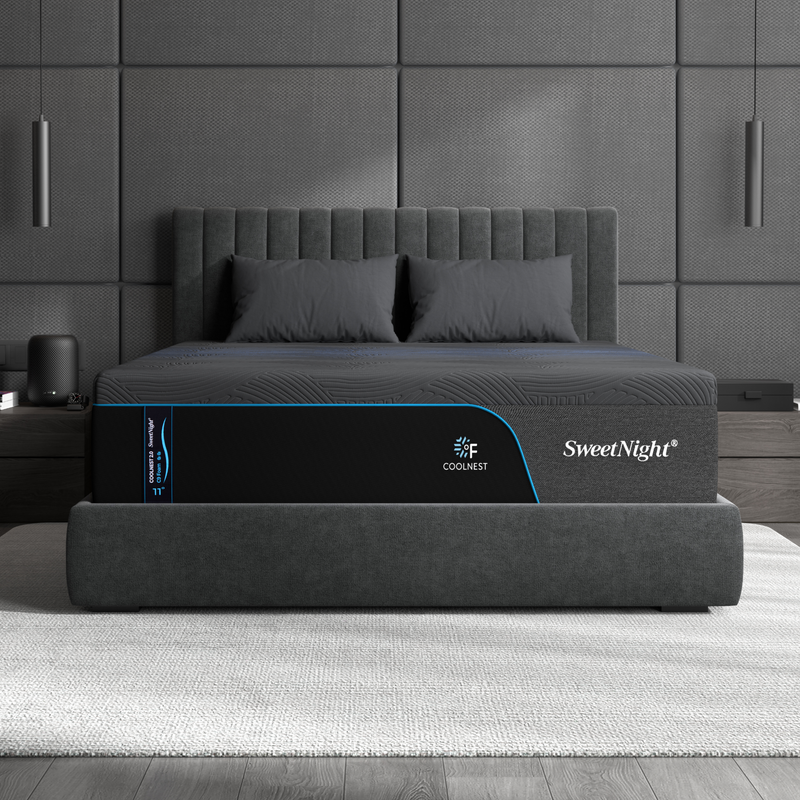
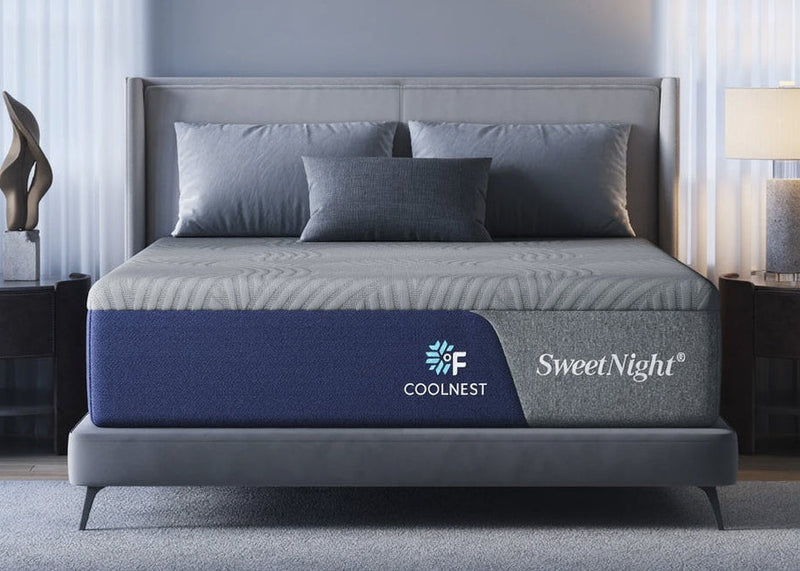
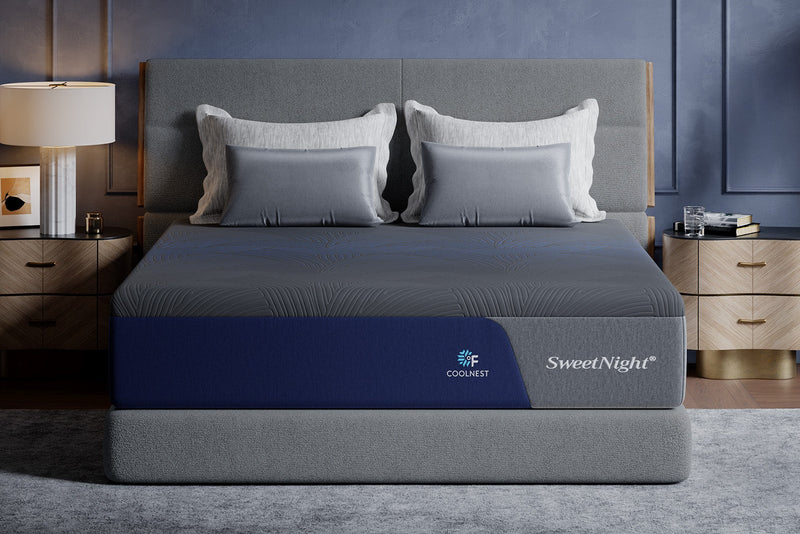
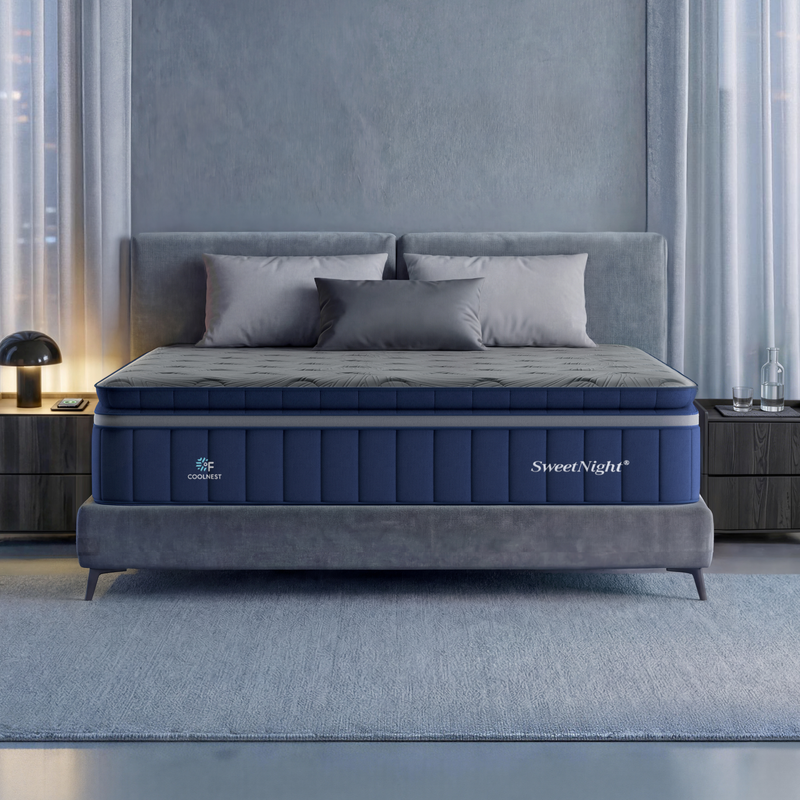
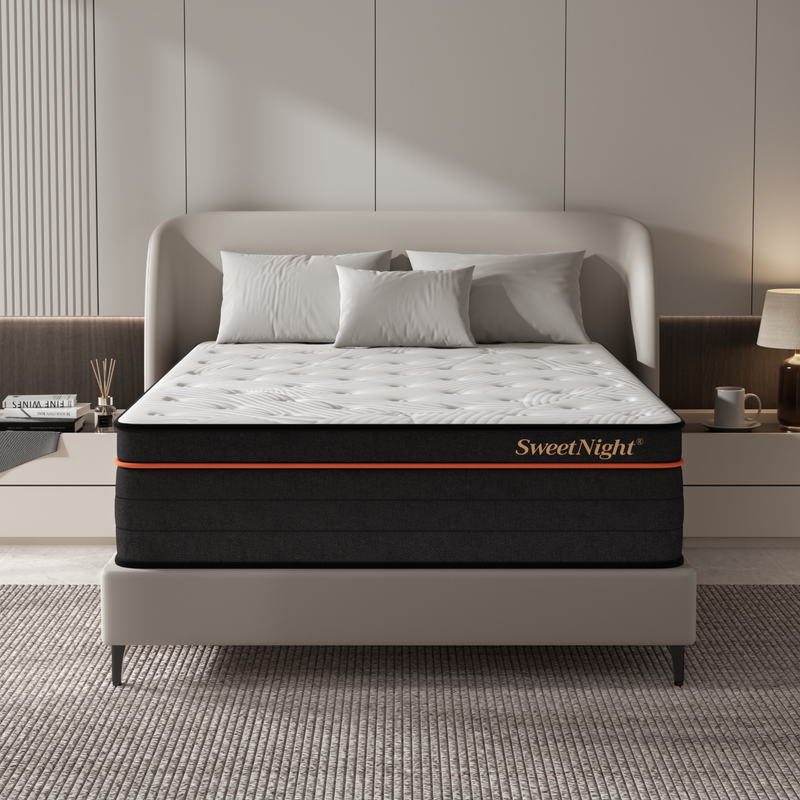
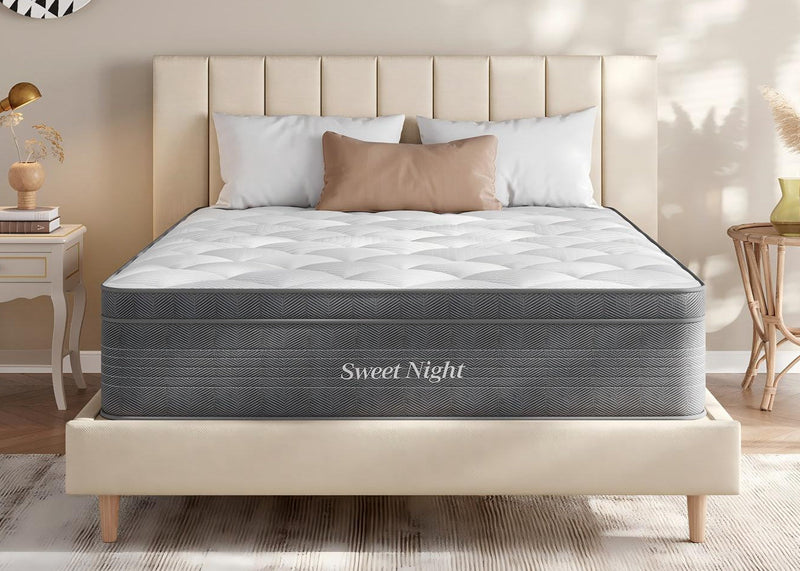
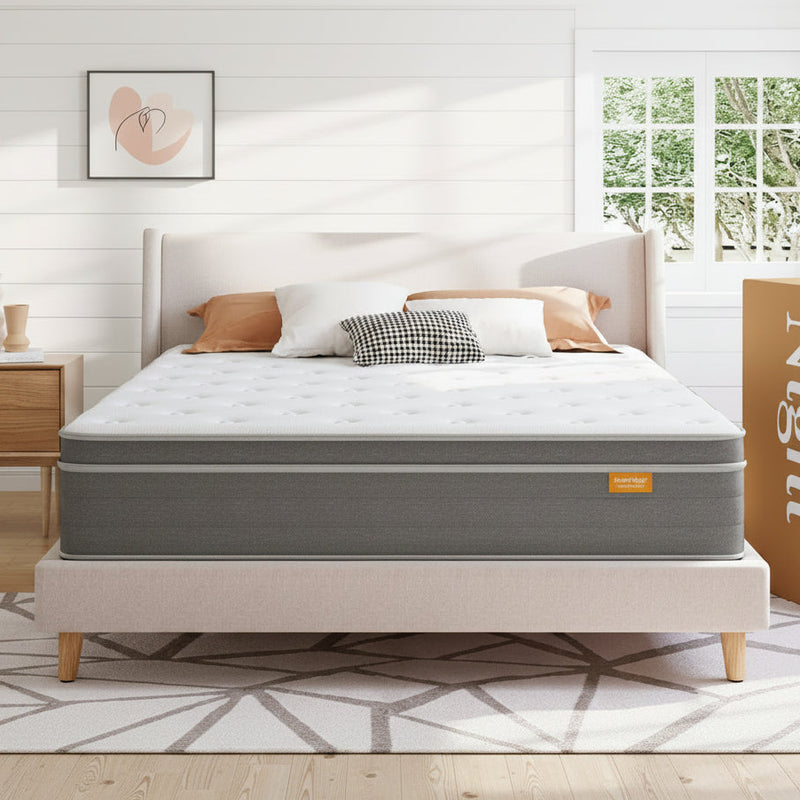
The CoolNest® Ultra cooling memory foam mattress is designed around exactly the gap this article keeps circling: the difference between feeling cool for a minute and staying cool for a night. It doesn't just rely on a cool-touch cover for the opening chill; it's built to keep heat moving after that first moment, which is the part qmax can't measure. Four things do that work:
- Instant Cooling Comfort — the first-touch chill, the part a good cover qmax is responsible for. This is the handshake, and it's a genuinely cool one.
- 3D Ventilated Circulation — airflow engineered through the structure, so the heat you shed early is carried out of the bed rather than pooling in a layer beneath your hips. This is the mechanism that keeps the temperature gap open after first contact.
- Continuous Heat Dissipation — the whole point of the design philosophy: keep releasing body heat all night instead of absorbing a burst and then saturating. This is the direct answer to the qmax blind spot.
- All-Night Thermal Balance — the goal state, a surface that holds a steadier temperature from lights-out to sunrise rather than starting icy and turning stuffy.
Add the Refined 7-Zone Precision Support and ergonomic spinal alignment, and you get a mattress that's engineered to sleep up to 11° cooler — a claim about sustained performance, not just first touch. That's the meaningful difference. A cheap cooling pad can post a high qmax; keeping a full-size human comfortable through REM cycles at 3 a.m. takes a system built for continuous heat removal. If you tend to run hot, the 11° cooler CoolNest Ultra mattress is built for precisely the problem qmax numbers can't solve on their own — and you can see the full lineup, including the value-anchor CoolNest memory foam mattress, on the best cooling mattress collection.
How to Shop for Qmax Cooling Fabric Without Getting Fooled by the Number
Time to turn all of this into a buying checklist, because reading about qmax cooling fabric only helps if it changes what you do at the checkout. Here's how to use the number wisely instead of letting it use you.
1. Treat qmax as a floor, not a headline. You want a cool-touch surface — anything comfortably above ~0.2 W/cm² for bedding you'll be in direct contact with is a fine target. But once a product clears that bar, stop rewarding higher digits and start asking about everything else. A jump from 0.30 to 0.38 is far less important to your sleep than whether the thing breathes.
2. Demand an airflow story. Ask, or read for, how the product moves heat after first contact. Ventilation channels, breathable open-cell foam, coil airflow, moisture-wicking layers — these are the features that decide hour three. If a product's entire cooling pitch is one qmax number, that's a tell.
3. Prioritize moisture management. For sheets and covers especially, wicking and fast-drying performance often matters more than a spectacular cool-touch rating, because damp fabric loses its cool feel and clings. A moderate-qmax fabric that stays dry beats a high-qmax fabric that goes clammy. Our comparison of cooling sheets across cotton, bamboo, linen, and Tencel is built around exactly this trade-off.
4. Distrust decimal-point precision. Because test conditions vary, treat qmax as a band. “0.34 vs 0.31” is marketing noise; “0.30 vs 0.14” is a real difference. Don't let a brand win your money on the third decimal place.
5. Match the product to your real problem. If your issue is “the bed feels warm when I first get in,” a high-qmax cover genuinely helps. If your issue is “I wake up sweating at 3 a.m.,” qmax is almost irrelevant — you need a system built for continuous heat dissipation, and no cool-touch number will fix a heat-trapping core. Diagnose your problem first, then shop.
Do those five things and the qmax number becomes what it should always have been: one useful input among several, rather than the whole decision.
Qmax and Hot Sleepers: Matching the Cool-to-Touch Rating to How You Sleep
The right target for a cool to touch fabric isn't universal — it depends on who's sleeping on it. Matching the number to your own body and habits is the last piece of reading qmax intelligently.
If you're a genuine hot sleeper — the kind who kicks off the covers, wakes up damp, and dreads summer — don't over-index on cover qmax. A cool touch is nice, but your defining problem is sustained heat, so weight the system features hardest: airflow, breathability, continuous dissipation, moisture handling. A high qmax that saturates will betray you specifically. The whole science of why some people run hot and what to do about it is worth understanding on its own terms, which is why we wrote up how heat affects sleep quality in depth.
If you're a cool or neutral sleeper who just enjoys that crisp first-touch feel, a high-qmax cover is a genuine pleasure and you can prioritize it more freely — you're less likely to overwhelm the surface's capacity with your own heat, so the first-touch chill carries more of the experience for you.
If you share a bed, remember there are two furnaces and two skin temperatures involved, and combined body heat pushes any surface toward saturation faster. Couples, especially with one hot sleeper, should lean even harder toward system cooling over cover qmax.
There's a real physiological reason all of this matters, and it's not just comfort. Your body has to shed core heat to fall and stay asleep — the Sleep Foundation explains that as bedtime approaches, your body cools itself through vasodilation, sending heat away from the core, and recommends a bedroom around 65°F (18.3°C) to support it. A mattress that keeps removing heat is helping that biological process along all night; a mattress that only feels cool for a minute helps it for a minute. That's the difference between a qmax badge and real sleep.
The Bottom Line on Qmax Rating and Real Cooling
So — what is qmax, really? It's a legitimate, decades-old physics measurement of one specific thing: the peak rate at which a fabric pulls heat from your skin in the first instant of contact, measured in W/cm² on a KES-F7 Thermo Labo per JIS L 1927, with 0.100 as the official cool-touch threshold and the cooling-bedding market clustering roughly around 0.2–0.4. The q-max value meaning is precise and honest when you read it precisely and honestly: it's the science of the first handshake.
The reason “nobody explains it” is that explaining it fully undercuts the way it's usually sold. A high qmax is a real, pleasant thing — and it's also a snapshot with a built-in expiration, blind to airflow, moisture, body heat, and everything below the surface. The showroom rewards qmax; your actual bedroom rewards continuous cooling. A cooling product worth buying delivers both: a genuinely cool touch and a system engineered to keep releasing heat long after the first-touch chill has faded.
That's the whole reason a mattress built for sustained heat removal — like the CoolNest® Ultra cooling memory foam mattress, engineered to sleep up to 11° cooler through continuous heat dissipation rather than a one-second chill — solves the problem a qmax number alone never could. Read the label, respect the number for what it is, and then look past it to the system underneath. If you want to put that into practice, current pricing on the full cooling range is on the SweetNight deals page. Next time you see a confident little qmax on a hangtag, you'll know exactly what it's promising — and, just as importantly, what it isn't.
Frequently Asked Questions About Qmax
What is the q-max value meaning in one sentence?
Qmax is the maximum instantaneous heat flux — the peak rate at which a fabric draws heat out of your skin the moment you touch it, measured in watts per square centimeter, where a higher number means a colder first-touch feel and nothing more.
What is a good qmax value for cooling bedding?
Officially, 0.100 W/cm² is the JIS L 1927 threshold for an “instant cooling sensation.” In practice, quality cooling bedding is usually marketed from about 0.2 W/cm² upward, with 0.3–0.4 promoted as very cool to the touch. Anything comfortably above 0.2 is a solid target — but once you're there, airflow and moisture management matter more than a higher number.
Does a high qmax rating mean I'll stay cool all night?
No. Qmax only rates the first-touch peak, over seconds. Staying cool for hours depends on continuous heat dissipation, airflow, and moisture handling — things qmax doesn't measure. A high cool-to-touch rating with no airflow system behind it can still sleep hot by the middle of the night.
Is qmax the same thing as thermal conductivity?
They're related but different. Thermal conductivity is steady-state heat flow; qmax is a transient first-contact peak that also depends on the material's density and heat capacity (together, thermal effusivity). Qmax predicts first-touch feel; conductivity and system airflow predict sustained cooling.
Why does my cooling fabric feel cold at first and then warm up?
Because heat only flows when there's a temperature gap between your skin and the surface. On contact the gap is wide, so the fabric feels cold — that's the qmax moment. As the surface warms to your skin temperature, the gap closes and the cooling stops. Sustained cooling requires airflow, evaporation, or phase-change buffering to keep that gap open.