
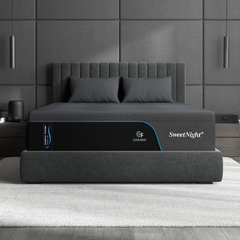
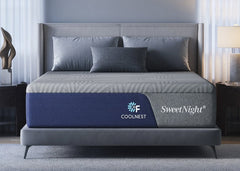
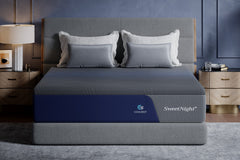
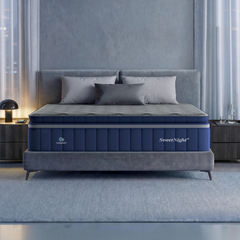
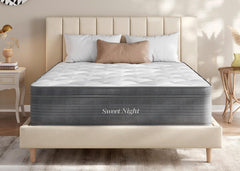
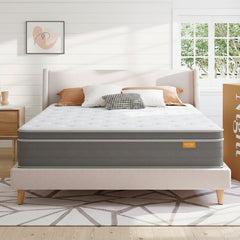





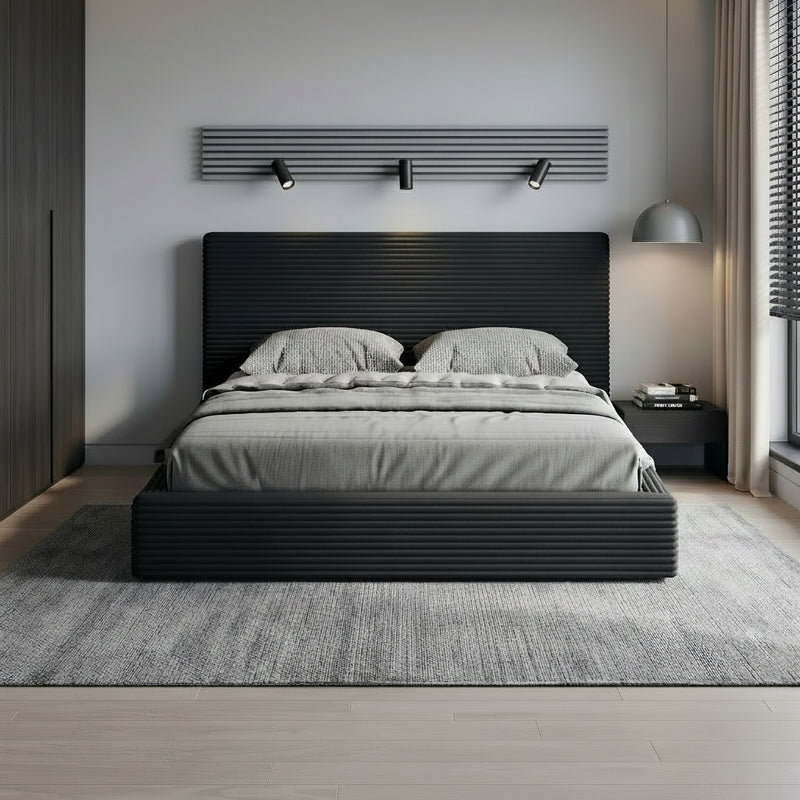
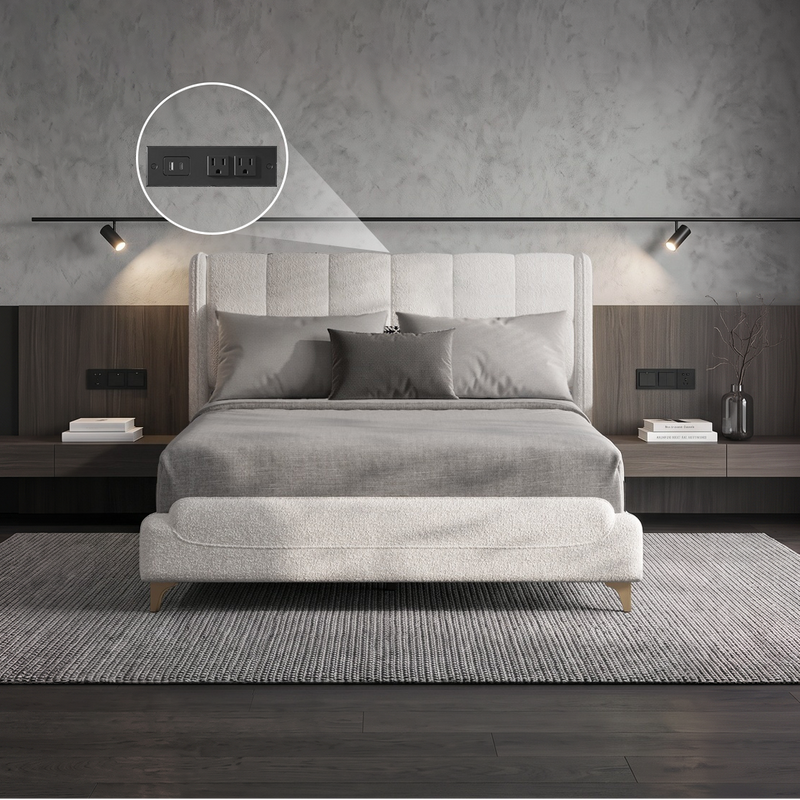
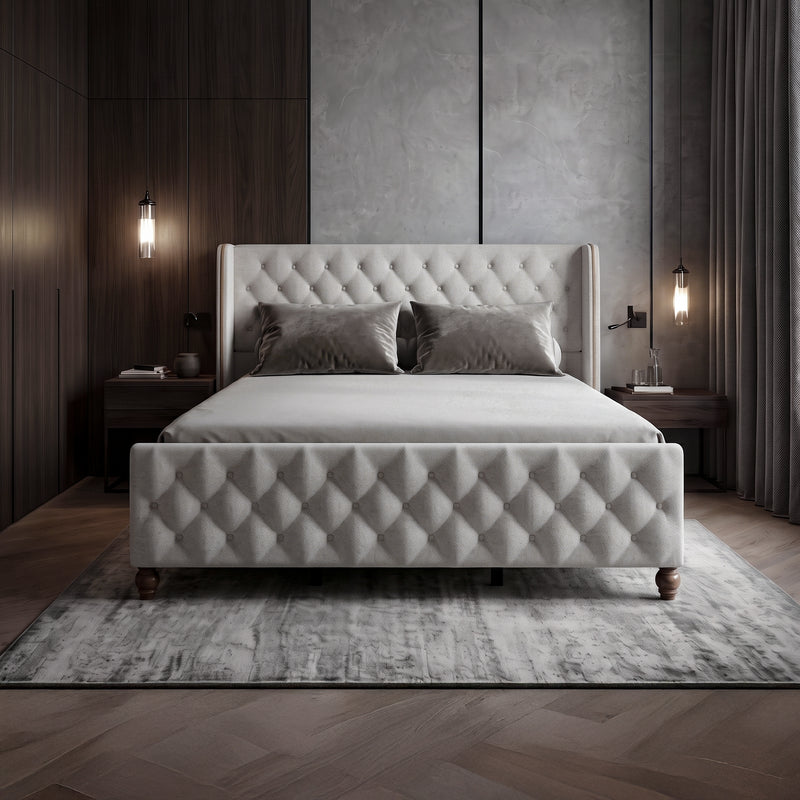
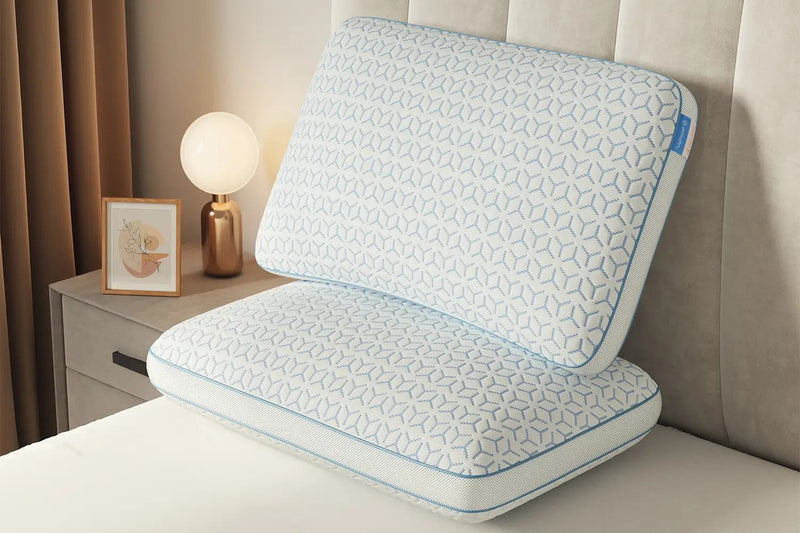

Motion isolation is a mattress's ability to absorb movement where it happens instead of letting it travel across the surface. On a bed with good motion isolation, your partner can roll over, get up, or climb back in without the movement reaching your side and pulling you out of sleep. The opposite trait — movement spreading freely across the bed — is called motion transfer.
If you've ever been jolted awake by a mattress lurching like a small boat because someone got up for water, you've already met the problem this feature exists to solve. Below: how motion isolation actually works, which mattress types handle it best, the seven build details that decide how much movement you feel, and how to test any bed before you commit to it.
Key Takeaways
- Motion isolation keeps one sleeper's movement from disturbing the other. It matters most for couples, and especially for couples on different schedules.
- The real variable isn't foam versus springs — it's whether the coils are individually pocketed and how thick the foam comfort layer on top is.
- All-foam beds win the raw motion test. Foam-topped pocketed-coil hybrids come very close while sleeping cooler and holding their edges better.
- Old-style connected-coil innersprings are the worst performers — avoid them if a partner's movement wakes you.
- Your bed frame matters too. A sagging box spring or a slatted frame with wide gaps can reintroduce motion transfer a good mattress just eliminated.
- You can test any mattress with a glass of water, and you can improve an existing one without replacing it.
What Is Motion Isolation, Really?
Motion isolation describes how well a mattress contains movement. When someone shifts on a bed that isolates motion well, the disturbance stays local — a small dip around where they moved — instead of rippling outward to the other side. Low motion transfer means high motion isolation, and that's what you want.

Picture the two extremes. On an old spring bed, one person sitting down makes the whole surface bounce, and you feel a partner get in on the far side like a wave arriving. On a bed with excellent motion isolation, someone can shift their weight a foot away and a glass of water on your side barely quivers.
Why does one mattress do this and another doesn't? It comes down to how the materials handle force. Some materials — dense viscoelastic foam above all — absorb kinetic energy and convert it to heat, deadening the movement almost immediately. Others, like connected steel coils, store that energy and pass it along the network, so a push in one place pops up somewhere else. Everything else in this guide follows from that single distinction.
How Motion Isolation Is Measured
Review labs quantify this rather than eyeballing it. The standard approach is to place an accelerometer or seismometer on one side of the mattress, drop a weighted object on the other side to simulate a person rolling over, and measure how much of that energy actually arrives at the sensor. The result gets reported as a motion transfer score, usually normalized so that lower readings mean better isolation.
Two things are worth knowing about these scores. First, they're comparative, not absolute — a score only means something next to other scores measured the same way. Second, they test a single sharp impact, while the disturbance that actually wakes you is often a slow, sustained shift in weight. That's why a lab number is a useful filter but never a substitute for sleeping on the thing, which we'll come back to.
Why Motion Transfer Wrecks Sleep for Couples
Sleep alone and motion transfer is a footnote. Share a bed and it becomes the difference between a full night's rest and chronic, unexplained exhaustion.
The reason is that these disturbances rarely wake you fully. Each time a partner shifts and the movement reaches your side, your brain surfaces briefly out of deep sleep — a micro-arousal you won't remember in the morning. String dozens of those across a night and you never get the long, unbroken stretches of deep and REM sleep your body needs. You spent eight hours in bed and still feel shredded, because the quantity looked fine while the quality was cut to pieces.
The problem compounds when two people are on different schedules. A night-shift worker climbing in at 6 a.m. A partner who makes a 3 a.m. bathroom trip every night without fail. A chronic tosser-and-turner. An early riser whose alarm detonates two hours before yours. Every one of those is a motion event that a poorly isolating mattress delivers straight to the sleeping partner, night after night.

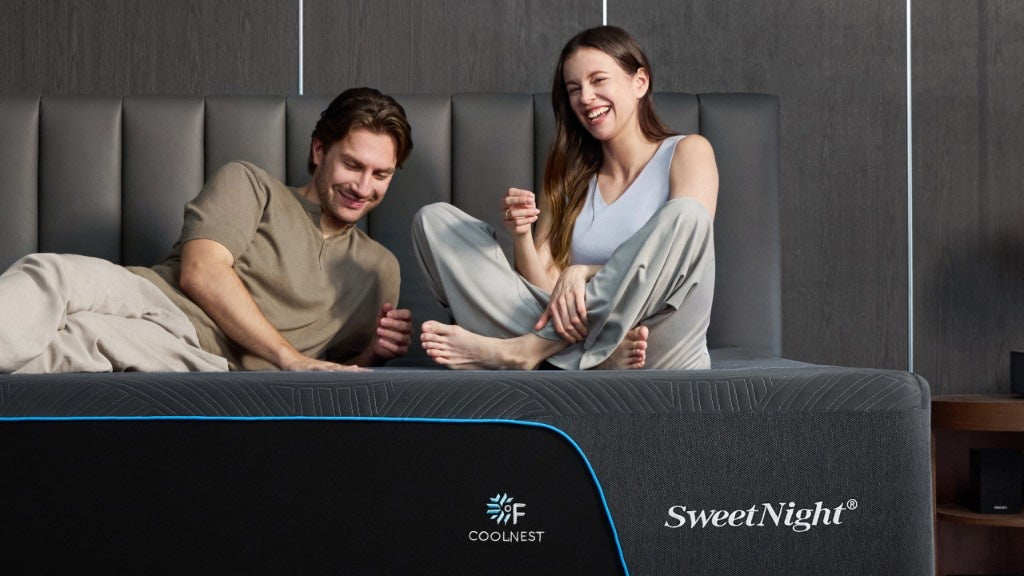
This is why motion isolation sits near the top of the priority list for anyone shopping as a couple — and why mattresses built specifically for two sleepers tend to lead with it. It's the feature that lets two people with mismatched bodies and mismatched schedules share one bed without quietly sabotaging each other.
Which Mattress Types Isolate Motion Best?
Here's how the major categories compare on motion isolation and the traits that travel alongside it:
| Mattress type | Motion isolation | Temperature | Ease of moving on it | Best for |
|---|---|---|---|---|
| All-foam (memory foam) | Excellent — the benchmark | Warmer, unless cooling-engineered | Slower, can feel "stuck" | Very light sleepers with a restless partner |
| Hybrid, pocketed coils + thick foam layer | Very good — close to all-foam | Cooler; coils allow airflow | Responsive, easy to reposition | Most couples |
| Hybrid, pocketed coils + thin foam layer | Moderate — spring bounce reaches the surface | Cool | Bouncy | Solo sleepers who want bounce |
| Latex | Fair to good — better than innerspring, below foam | Cool and breathable | Very responsive, springy | People who hate the sinking foam feel |
| Traditional innerspring (connected coils) | Poor — the worst performer | Cool | Very bouncy | Budget or guest rooms only |
Memory foam: the motion-isolation benchmark
Memory foam is essentially engineered to absorb movement. Press into it and it conforms slowly, deadening the force rather than springing back. That same slow, viscoelastic quality that makes it feel like it's hugging you is exactly what stops movement on one side from reaching the other.
Think of dropping a bowling ball onto a trampoline versus into a deep pile of foam. The trampoline flings the energy back and everything shakes. The foam swallows the impact and goes still almost immediately. Your partner's midnight roll is that bowling ball.

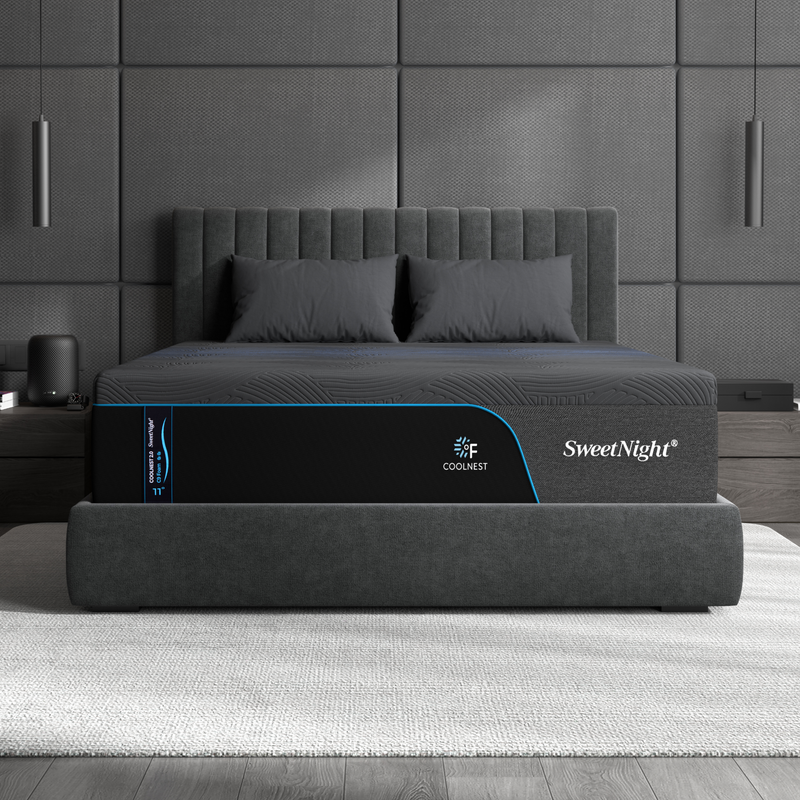
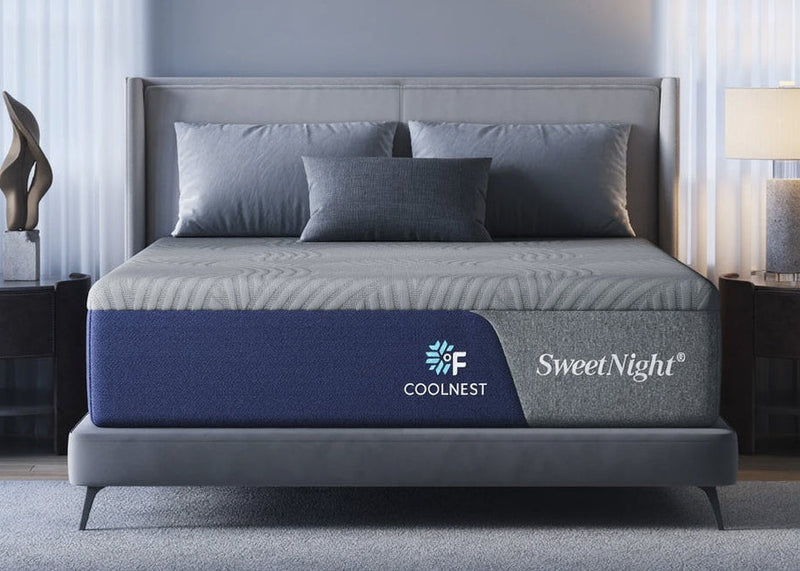
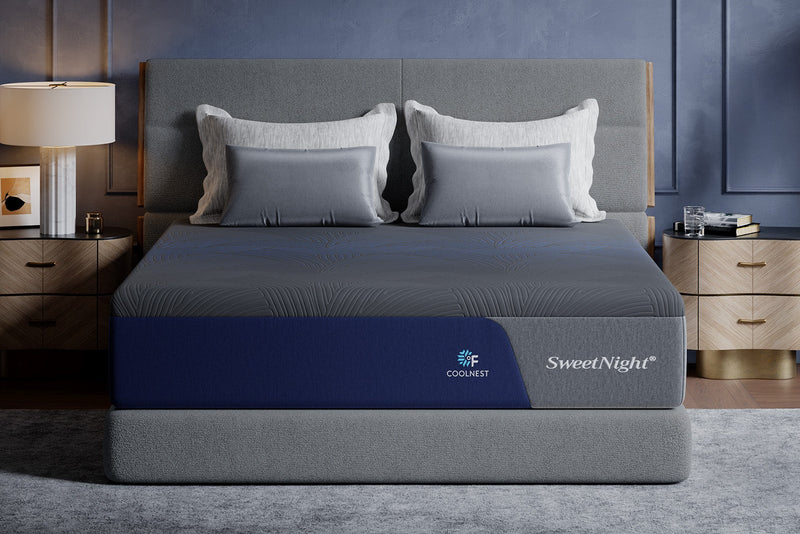
Foam's historical weakness was heat — dense material that hugs you also traps warmth — but modern cooling constructions have largely closed that gap. The CoolNest® Ultra memory foam mattress is built around exactly that combination: foam that deadens a partner's movement, layered with cooling so the surface doesn't turn into a heat trap.
Latex: responsive, but not the quiet champion
Latex gets left out of most motion isolation guides, which is a mistake given how many shoppers cross-shop it. Latex is buoyant and springy rather than absorbent — it pushes back instead of swallowing force. That makes it wonderful if you find memory foam suffocating and want to change positions easily, and it isolates motion clearly better than a connected-coil innerspring. But it won't match a dense foam bed for dead-quiet stillness. If your single biggest problem is a partner who moves all night, latex is not where the answer lives.
Pocketed-coil hybrids: the practical answer for most couples
Modern hybrids are a different animal from the innersprings people remember. A hybrid uses individually wrapped pocketed coils — each spring encased in its own fabric pocket, free to compress without dragging its neighbors down. Press one and the coil a foot away barely reacts. Layer foam on top and much of the remaining energy gets absorbed before it ever reaches the springs.

That's why a well-built hybrid lands very close to all-foam on motion, while keeping the airflow, edge stability and responsiveness that foam gives up. If you want a bed that stays quiet without sleeping hot, pocketed-coil hybrid mattresses are the category to start in.
Traditional innerspring: the one to avoid
Old-school innersprings use interconnected coils — press one and the energy hops through the entire network, bouncing the whole bed. If you've felt every single move your partner made on an older mattress, connected coils are why. For couples, this category is simply the wrong tool.
Foam vs Hybrid for Couples: What Most Guides Get Wrong
Nearly every article on this topic ends with "buy memory foam." That advice is right about the physics and incomplete about the problem.
Yes — in a controlled motion transfer test, a thick all-foam bed still edges out a hybrid. But motion isn't the only thing that wakes couples up. Two bodies generate significantly more heat than one, and overheating is one of the most common reasons couples report broken sleep. Couples also drift toward opposite edges to give each other room, so a mattress that collapses at the perimeter effectively shrinks the bed you paid for. And a partner who has to fight a deep foam hug every time they reposition ends up moving more, not less.
So the honest framing isn't "foam beats hybrid." It's this:
The variable that decides motion isolation is not foam versus coils. It's (1) whether the coils are individually pocketed, and (2) how thick and how dense the foam comfort layer above them is. A hybrid with a generous memory foam comfort layer over pocketed coils gets you nearly all of foam's quiet — while fixing the heat, the edge collapse, and the stuck feeling that make foam a compromise for two people.
Which is why two hybrids with identical coil counts can perform completely differently. Don't just count coils. Look at what's sitting on top of them — that layer is doing the quiet work.
7 Things That Change How Much Motion You Actually Feel
- Coil type. Individually pocketed coils versus interconnected coils is the single biggest structural factor. Everything else is secondary to this.
- Comfort layer thickness. A couple of inches of quality foam over the support core absorbs meaningfully more movement than a token half-inch of padding.
- Foam density. Denser memory foam absorbs more energy and holds up longer. Low-density foam feels similar in a showroom and stops performing within a couple of years.
- Overall mattress thickness. More material between your partner's hip and your shoulder means more distance for the energy to dissipate. See our mattress thickness guide for how thickness interacts with body weight and support.
- Firmness. Very firm surfaces transmit more movement than plush ones — a firm slab has less give to absorb the force. Our mattress firmness guide covers how to find a level two sleepers can live with.
- Your bed frame or foundation. This one blindsides people. An old box spring with its own coils, or a slatted frame with wide gaps and any flex in it, can reintroduce bounce that the mattress just removed. A rigid platform or closely spaced slats is the right base for a motion-isolating bed.
- Mattress age. Foam softens and coils lose tension. A mattress that isolated motion beautifully at year one can be noticeably worse at year eight — and sagging in the middle actively rolls you toward each other.
Motion Isolation vs Edge Support vs Easy Movement
Once you shop seriously you'll hit a tension the marketing never explains: the same softness that produces great motion isolation works against edge support. Plush, motion-absorbing foam compresses more at the perimeter, so the trait that keeps movement quiet can make the sides feel unstable.
For couples this matters more than expected, because both partners tend to migrate toward the edges to give each other space. A bed that caves at the perimeter means you paid for a queen and are both clinging to the middle.
There's a second trade-off too. Some sleepers find heavily motion-isolating beds feel "dead" — hard to move on, slow to respond. That's a real preference, not a defect. If you reposition frequently or dislike feeling enveloped, a responsive hybrid that isolates motion well is a better fit than the plushest all-foam option.
The good news: better mattresses engineer around the first trade-off, using firmer perimeter foams or reinforced edge coils to hold the sides up while keeping the sleep surface absorbent. You don't have to pick — but you do have to check for both.
How to Test Motion Isolation: The Wine Glass Test
You don't need a lab. Set a full glass of water on one side of the mattress. Have your partner press down, bounce, and roll around on the other side. Watch the glass. On a bed with strong isolation the water barely ripples. On a poor one it wobbles, sloshes, and on the worst offenders it tips.

Test the movement that actually happens in your bed, not generic rolling. Every couple has a signature disturbance:
- One of you gets up nightly → test someone climbing out and back in, not just rolling.
- One of you reads on a phone in bed → test small, repeated fidgeting rather than one big movement.
- A dog jumps up mid-night → test a sudden weight landing on the surface.
- You sleep near the edges → test movement near the perimeter, and press down there to check edge support at the same time.
The question isn't only whether you can feel the movement. It's whether it would have woken you if you'd been asleep.
Buying online? The return window is your version of the glass test, stretched over weeks. A spec sheet can claim great motion isolation; only real nights next to a real restless partner prove it. Every SweetNight mattress comes with a 100-day return policy, which is enough time to find out whether you've actually stopped waking up at 3 a.m.
How to Reduce Motion Transfer Without Buying a New Mattress
If replacing the bed isn't happening this month, these help — in rough order of how much difference they make:
- Add a dense memory foam topper. The most effective single fix. A few inches of quality foam over a bouncy mattress absorbs a real share of the movement before it reaches you. It won't turn an old connected-coil innerspring into a quiet bed, but it takes the edge off measurably.
- Fix the foundation. Swap a coil box spring for a rigid platform, or add a bunkie board over widely spaced slats. This is cheap and people almost never think of it.
- Move to a bigger bed. More distance between two sleepers means less of any given movement reaches the other. Going from a full to a queen or a queen to a king solves a surprising amount of this by geometry alone.
- Consider a split setup. Two twin XL mattresses side by side on a king frame gives near-total motion isolation, plus the option of different firmness levels for each sleeper. It's the nuclear option, and for couples with genuinely incompatible needs it works.
- Use separate duvets. Doesn't touch mattress physics, but a shared blanket transmits every tug and roll directly. Two duvets remove an entire category of disturbance for the price of one blanket.
If you're already at the point of buying a topper, price it against the mattress — the topper is often a third of the cost of solving the problem properly, and it doesn't fix sagging or bad edge support.
A worked example: what a 10/10 actually looks like
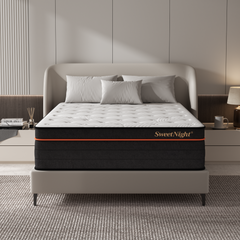
For a sense of what the top of this category measures out at, Sleep Doctor's product testing team scored the SweetNight CoolNest Ultra a perfect 10 out of 10 for motion isolation, having taken objective measurements of surface vibrations rather than relying on tester impressions alone. Their summary: it is "among the strongest we've seen," and its foam layers "absorb nearly all vibrations big and small."
A second independent scorecard puts a different number on the same property. Mattress Nut rated the same mattress 84/100 on its Motion Isolation Coefficient within a 9.0/10 overall verdict, crediting the all-foam construction directly: with no coil layer, there is no spring system to transmit a movement across the bed. Two teams, two unrelated frameworks, the same finding - which is roughly the best evidence this category offers.
A third framework has since been applied to it. NapLab scored motion transfer 8.8/10 as part of an 8.5/10 overall verdict, its highest for any SweetNight mattress. That is high rather than flawless, and it is the number to plan around if motion isolation is your single deciding factor. Sleep Foundation - part of Sleep Doctor rather than an independent fourth team - repeated the perfect 10, with editor Logan Foley writing that "it's hard to find a mattress that isolates motion better than the CoolNest Ultra." See all four scorecards.
Two details from that review are worth carrying into your own shopping. First, the score held across all three of its heights, which is a useful reminder that a thicker build is not automatically the quieter one. Second, the same review scored its perimeter support 6.0 - a direct illustration of the trade-off described above, where the deep foam hug that kills vibration is the same property that softens the edges.
Does Motion Isolation Matter If You Sleep Alone?
Mostly no — and that's worth saying plainly, because the worst outcome is paying a premium for dead-quiet stillness you'll never benefit from while skimping on the support and cooling that decide how you feel every morning. If you sleep solo, let this feature slide down the list and spend on firmness, support and temperature instead. Our mattress buying guide walks through how to weight those.
Three exceptions:
- You sleep with a pet. A dog that circles and resettles all night, or a cat that treats your legs as a racetrack, creates exactly the same problem a partner would.
- You wake yourself up. If you're a restless sleeper who surfaces every time you change position, a motion-absorbing surface smooths out your own movements.
- A partner may join the picture. A mattress lasts the better part of a decade. If cohabitation is plausible in that window, isolation future-proofs the purchase.
How to Choose a Mattress With Great Motion Isolation
A shopping checklist for couples:
- Confirm the coils are individually pocketed, or go all-foam. If the listing doesn't specify, assume connected and move on.
- Check what's above the coils. A generous memory foam comfort layer is what turns a spring bed into a quiet one.
- Verify edge support, especially if you both sleep toward the sides. Look for reinforced perimeter coils or firmer edge foam.
- Account for two bodies of heat. Cooling isn't a luxury feature when two people share the surface.
- Find a firmness you can both live with. A bed that isolates motion perfectly but hurts one partner's back solves nothing.
- Check your bed frame before you blame the mattress.
- Buy with a real return window and run the glass test over actual nights.
Where to start
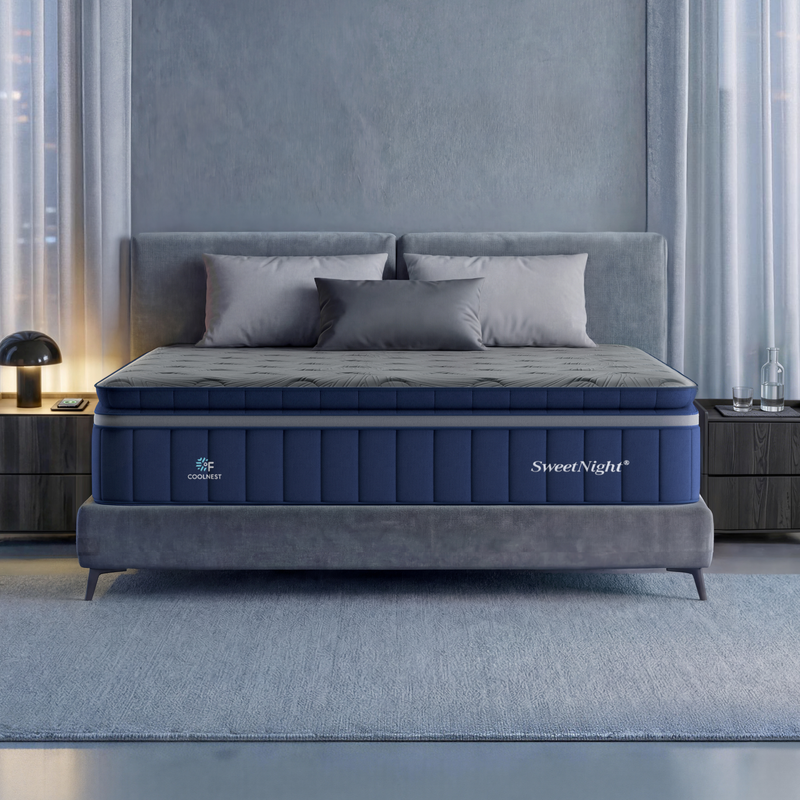
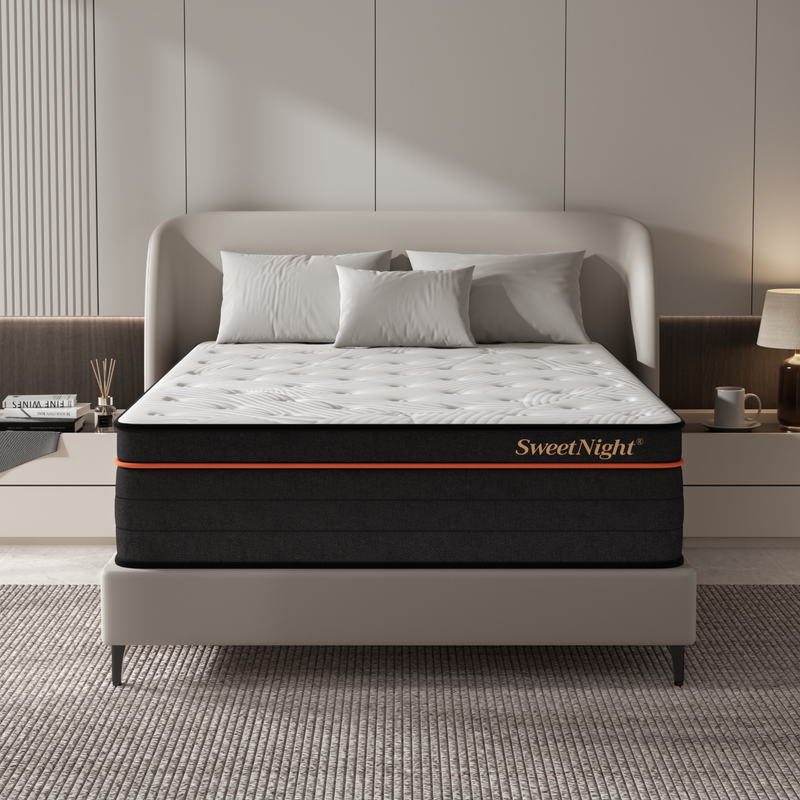
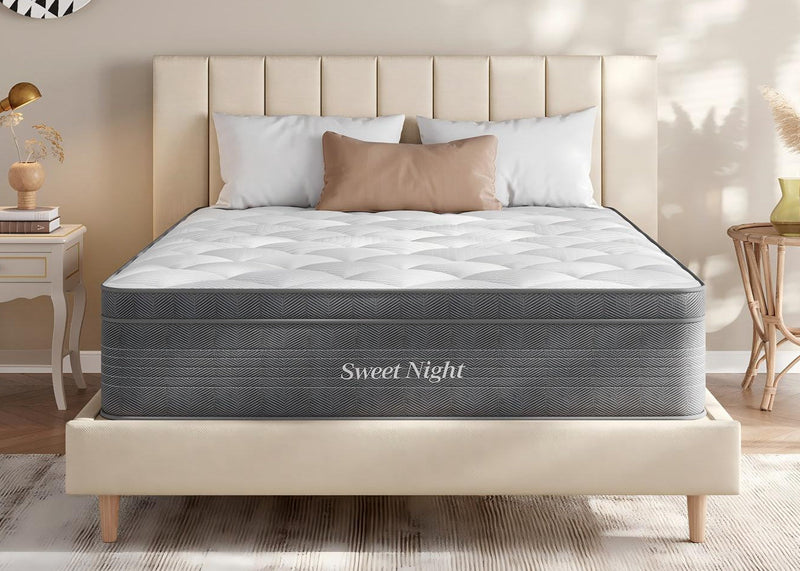
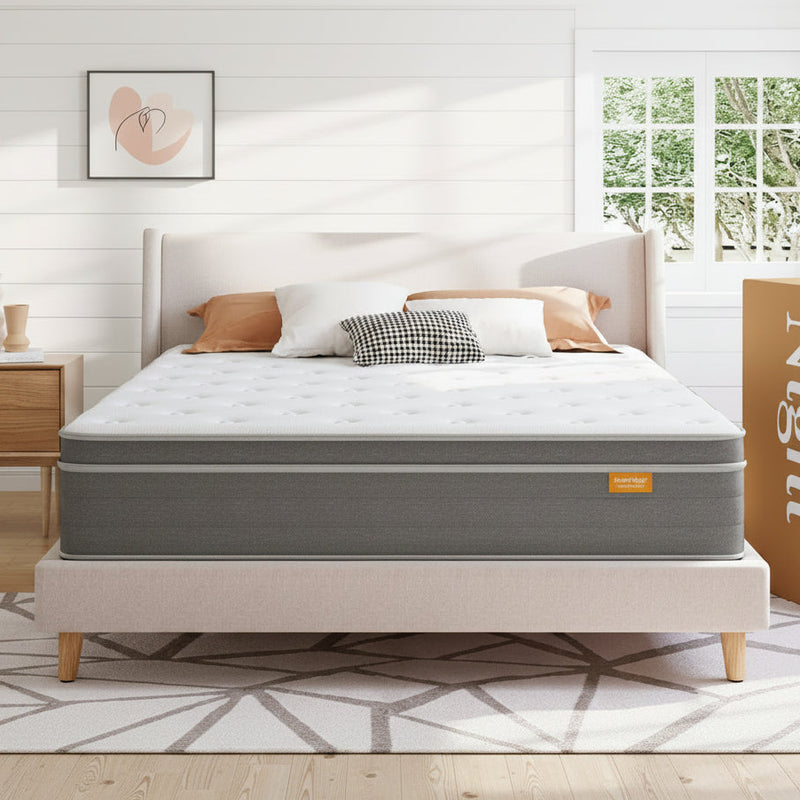
If you'd rather skip sorting the whole catalog: the SweetNight mattresses for couples are the ones built around this specific problem — pocketed coils for independent movement, memory foam comfort layers to absorb what's left, and cooling for two bodies instead of one.
The Twilight Hybrid is the pick if quiet is your first priority; the Island Hybrid leans more responsive and breathable if you'd rather not feel like you're sinking in. Both ship compressed, both include a 100-day return window, and both start under $400 — which is roughly what you'd spend on a good topper trying to patch the mattress you already have.
Frequently Asked Questions
What is motion isolation in a mattress?
Motion isolation is a mattress's ability to absorb movement at its source instead of transmitting it across the surface. Good motion isolation means one sleeper can move without disturbing the other.
Which type of mattress has the best motion isolation?
Dense all-foam memory foam mattresses isolate motion best. Pocketed-coil hybrids with a thick foam comfort layer come close while sleeping cooler, and traditional connected-coil innersprings perform worst.
Do hybrid mattresses have good motion isolation?
Yes, provided they use individually pocketed coils rather than connected ones and have a substantial foam comfort layer on top. Both details matter — a hybrid with pocketed coils but only thin padding lets noticeably more bounce reach the surface.
Does a mattress topper help with motion transfer?
A dense memory foam topper is the most effective way to reduce motion transfer without replacing the mattress. It absorbs a meaningful share of the movement, though it can't fully compensate for an old connected-coil innerspring or fix sagging and weak edges.
Can my bed frame cause motion transfer?
Yes, and it's a commonly missed cause. A coil box spring or a flexing slatted frame with wide gaps can reintroduce bounce that the mattress itself has removed. A rigid platform base or closely spaced slats is the better foundation for a motion-isolating mattress.
How do I test motion isolation before buying?
Place a full glass of water on one side of the mattress and have someone press, bounce and roll on the other side. Minimal rippling means strong isolation. When shopping online, use the return window to test over real nights instead.
Does motion isolation make a mattress feel too soft?
Not necessarily, but the traits are related. Highly motion-absorbent surfaces tend to feel plusher and slower to respond, and some sleepers find them hard to move on. A pocketed-coil hybrid is usually the better balance if you reposition often.
The Bottom Line
Motion isolation is a mattress's ability to keep one person's movement from disturbing another, and for couples it's among the most quality-of-life-defining things a bed can do. It's the difference between sleeping through a partner's restless night and being dragged awake by every roll and every 3 a.m. trip.
Memory foam leads on raw absorption. Pocketed-coil hybrids with a real foam comfort layer come close while solving the heat and edge problems that make all-foam a compromise for two people. Connected-coil innersprings are the ones to leave behind. And before you replace anything, check your bed frame — it may be the cheapest fix you'll find.
Match the priority to your reality: near the top of the list if you share a bed, well down it if you don't. Then test it with a glass of water and a real return window, and stop paying for someone else's midnight movements with your own rest.