



Short answer: Traditional memory foam is viscoelastic, which means it softens as it warms up and stiffens as it cools — so the same mattress can feel plush in a hot bedroom and noticeably firmer on a cold winter morning.
The short version, if you're skimming:
- It's the material, not you: Memory foam is designed to react to heat, and room temperature plus your own body warmth change how it feels.
- Warm = soft, cold = firm: Higher temperatures loosen the foam so it contours faster; lower temperatures make it dense and slow to give.
- Summer's problem is heat buildup: Soft foam that wraps around you can also trap warmth, which is what makes some beds sleep hot.
- Phase-change and breathable foams even things out: They buffer temperature swings so the surface stays closer to one consistent feel year-round.
- You can help with your room and bedding: Stable air temperature, the right layers, and a little patience on cold mornings go a long way.
Is It Just You? Foam Really Does Change With Temperature
You are not imagining it. If your memory foam mattress feels like it swallows you in July and turns into a firm slab in January, that swing is built into the material. Memory foam belongs to a family of materials called viscoelastic foams, and the whole point of that "visco" part is that the foam responds to heat. Warm it up and it relaxes. Cool it down and it tightens.
This trips people up because we tend to think of a mattress as a fixed object. A wooden chair feels the same in every season. A cast-iron pan is the same shape whether it's warm or cold. Memory foam doesn't play by those rules. Its firmness is a moving target that tracks the temperature of the room and the warmth coming off your body. So when you climb into bed on a chilly night and the surface feels harder than you remember, nothing is broken. The foam is simply doing what it was engineered to do.
Here's a quick test you can run yourself. Press your palm flat into the mattress in a cold room and count how long the dent takes to fill back in. Then try the same thing on a warm afternoon. On the cold day the foam recovers slowly and feels resistant under your hand. On the warm day it gives more easily and springs back a little quicker. That difference is the entire subject of this article, and once you understand it, most of the "why does my bed feel weird" questions answer themselves.
It's worth saying up front that this behavior isn't a flaw. The temperature response is exactly what lets memory foam mold to your shoulders and hips instead of pushing back like a gym mat. The warmth of your body is part of the mechanism. The catch is that the same mechanism reacts to the seasons, and if you don't know that, the seasonal change can feel like the mattress has a mind of its own.
How Heat Softens Memory Foam (and Cold Firms It)
To understand the summer-versus-winter difference, it helps to know a little about what viscoelastic foam actually is. "Elastic" describes a material that springs back to its shape, like a rubber band. "Viscous" describes a material that resists flow and moves slowly, like honey. Memory foam is both at once, and heat is the dial that shifts it between the two behaviors.
When the foam is warm, the long polymer chains inside it have more energy and can slide past one another more freely. The material becomes more fluid, more willing to deform, and quicker to conform to your body. That's the deep, slow-sinking hug people associate with memory foam. When the foam is cold, those same chains lose energy and lock up. They resist movement, so the foam feels dense, stiff, and reluctant to compress. Same mattress, same construction, completely different feel — and the only thing that changed was temperature.
The heat sources are twofold. First there's the ambient temperature of your bedroom. A room sitting at a comfortable summer warmth pre-softens the foam before you even lie down. A cold room does the opposite and keeps the foam stiff. Second there's your own body, which radiates warmth constantly. This is why memory foam feels firm the instant you get in, then gradually softens over several minutes as your body heat sinks into the surface directly beneath you. You're literally warming the foam into its softer state, one contact point at a time.
That gradual warm-up explains a common experience: the mattress feels one way when you first lie down and another way ten minutes later. The spot under your hip has absorbed enough body heat to relax and cradle you, while the untouched foam a few inches away is still at room temperature and still firm. You're feeling both states of the same material at the same time.
A few practical points fall out of this:
- Break-in time is real on cold nights. In a cold room the foam needs longer to reach the temperature where it conforms, so give it a few minutes before deciding the bed feels too hard.
- Denser foams swing more. High-density memory foam has more material to heat or cool, so it tends to show the temperature difference more dramatically than a lighter, more open foam.
- Surface temperature matters more than air temperature. What the foam "feels" is the heat right at its surface, which is a mix of the room and your body — not the thermostat reading alone.
None of this applies the same way to every mattress material. Latex, for example, springs back fast regardless of temperature and barely shifts feel across the seasons. Innerspring coils don't care about the thermostat at all. The temperature sensitivity is a memory foam signature, which is both its charm and the source of the seasonal riddle.
Why Your Bed Feels Harder on Winter Mornings
Winter is when the "my mattress got firmer" complaint peaks, and cold mornings are the sharpest version of it. Picture the overnight conditions. The heating has dropped back, the bedroom air has cooled, and the mattress has spent hours releasing the warmth it soaked up earlier. By the small hours, the foam has drifted toward room temperature, which in winter can be genuinely cool. Cool foam is stiff foam. So when you shift position at 3 a.m. or first sit up at dawn, the surface pushes back harder than it did when you fell asleep in a warmer bed.
There's an extra wrinkle for people who like a cold sleeping environment. Plenty of sleepers deliberately keep the bedroom chilly and pile on blankets, because cooler air helps them drift off. That preference is perfectly reasonable, but it also keeps the foam firm all night. The colder you keep the room, the more your memory foam behaves like the firm end of its range.
Two smaller factors add to the winter-morning stiffness. One is simply that you've been lying still for hours, and any mattress can feel less forgiving after a long stretch in one position, especially as bodies get a little stiffer with cold. The other is expectation: you remember the plush feel from a warm evening, so the firmer cold-morning version feels like a bigger change than it is. The contrast is real, but part of it is the memory of last night's softness sitting right next to this morning's firmness.
If a firmer winter feel is bothering you, a few things actually help:
- Warm the room before bed, not just the bed. Nudging the bedroom a couple of degrees warmer in the evening pre-softens the foam without cooking you.
- Give it break-in minutes. The foam under you will relax as your body heat transfers in; the first sensation isn't the settled one.
- Add a warm topper as a buffer. A wool or plush topper holds a little heat at the surface and softens the initial cold-contact feel.
- Check the base and the bedding weight. Sometimes what reads as "the mattress got hard" is really a change in how you're lying, not the foam.
It's also worth separating the seasonal effect from break-in on a genuinely new bed. A new mattress can feel too firm for reasons that have nothing to do with winter — it hasn't been broken in, or the firmness level just doesn't match your body yet. If you've recently bought your mattress and it feels harder than you expected, our guide on what to do when a new mattress feels too firm untangles the break-in question from the temperature one so you're solving the right problem.
The Downside: Overheating in Summer
If winter's issue is firmness, summer's is heat. And the two problems come from the same source, which is one of the quiet ironies of memory foam. The material softens in warm conditions so it can hug you closely — and that close hug is exactly what surrounds your body with foam and traps warmth against your skin.
Think about the geometry. When you sink into softened foam, more of your body is enclosed by the mattress. The foam wraps up around your hips, your shoulders, the sides of your torso. That's great for pressure relief, but heat has nowhere to go. Older, dense memory foam formulas made this worse because they were essentially closed-cell insulation: air couldn't move through them, so the warmth your body produces just built up in the pocket you were lying in. The result is the classic complaint that memory foam "sleeps hot."
Summer stacks the deck further. The room is already warm, so the foam starts soft and hugs deep. Humidity is higher, which makes it harder for sweat to evaporate and carry heat away. And the temperature gap between your skin and the surface is smaller, so the mattress can't shed your warmth as readily. Put those together and a foam bed that felt cozy in spring can feel stifling in July.
This matters for more than comfort. Your body needs to shed a bit of core heat to fall and stay asleep, and a surface that traps warmth works against that natural cool-down. When the bed keeps you too warm, you wake more often, sleep less deeply, and kick the covers off in the middle of the night. The heat isn't just annoying; it interferes with the sleep itself.
The industry response has been a wave of cooling engineering aimed squarely at this problem. Three moves do most of the work:
- Open-cell foam is built so air can actually pass through the structure instead of getting trapped, letting body heat dissipate rather than pool.
- Cool-to-touch covers use tightly knit fibers that pull warmth off your skin the moment you make contact, which is why the surface feels cool when you first lie down.
- Phase-change materials take a different approach entirely: instead of just letting heat escape, they absorb and store it, then release it later to keep the surface temperature steadier.
That last one is the most interesting, because it doesn't just fight summer heat — it addresses the whole seasonal swing at once. It deserves its own section.
What Is Phase-Change Material (PCM)?
Phase-change material is a substance that soaks up and gives off heat as it shifts between physical states, usually between a soft solid and a liquid, at a temperature tuned to sit near your skin. The everyday example is an ice cube. While it melts, it pulls a lot of heat out of its surroundings and holds its own temperature steady until it has finished changing state. PCM used in bedding works on the same principle, just calibrated to a comfortable sleeping range rather than freezing.
Here's why that's clever for a mattress. When your body heat starts to build up at the surface — say, on a warm summer night — the PCM absorbs that excess warmth and uses it to change state instead of letting the temperature at your skin climb. Later, if the surface starts to cool, the material can release stored heat back. The effect is a buffer. Rather than the foam swinging fully toward "hot and soft" or "cold and firm," the PCM shaves the peaks off both extremes and keeps the surface closer to a steady, neutral temperature.
That steadiness is the key connection to everything above. Traditional memory foam feels different across seasons precisely because its temperature drifts with the room and your body. A phase-change layer resists that drift. By holding the surface temperature more constant, it indirectly holds the feel more constant too, since the foam's firmness follows its temperature. So PCM isn't only a summer cooling trick; it's a year-round consistency tool. If you want the mechanics in more depth, we break down how phase-change cooling technology actually works in a dedicated explainer.

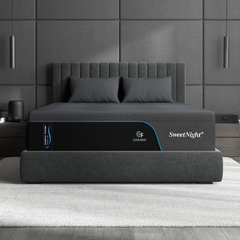
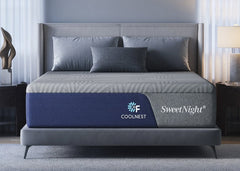
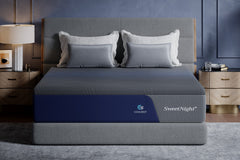
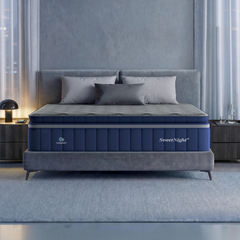
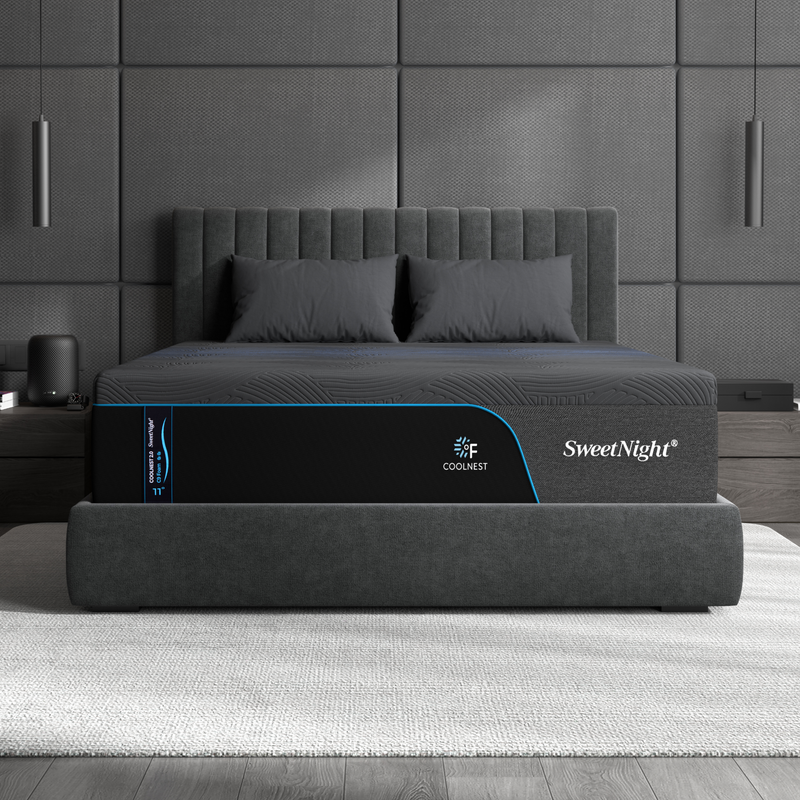
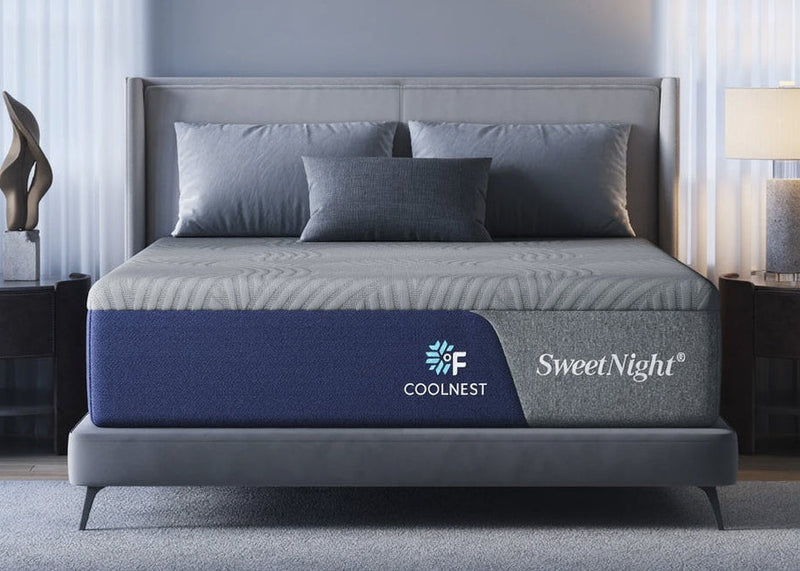
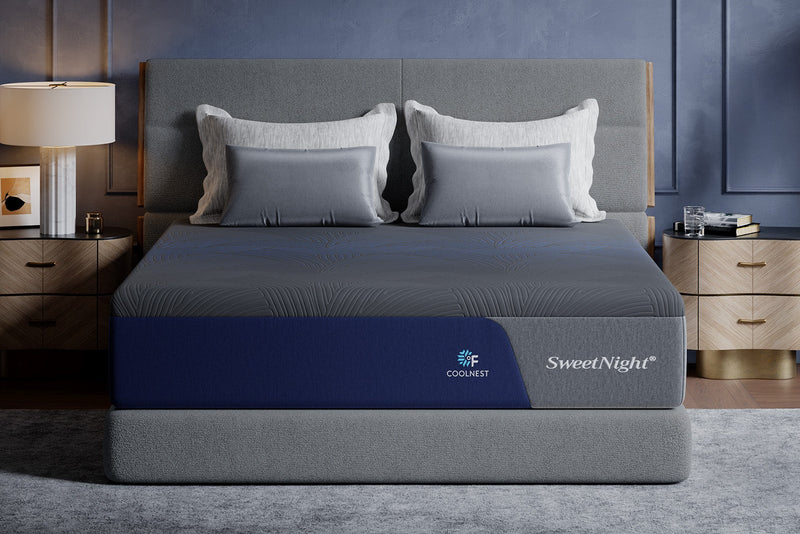
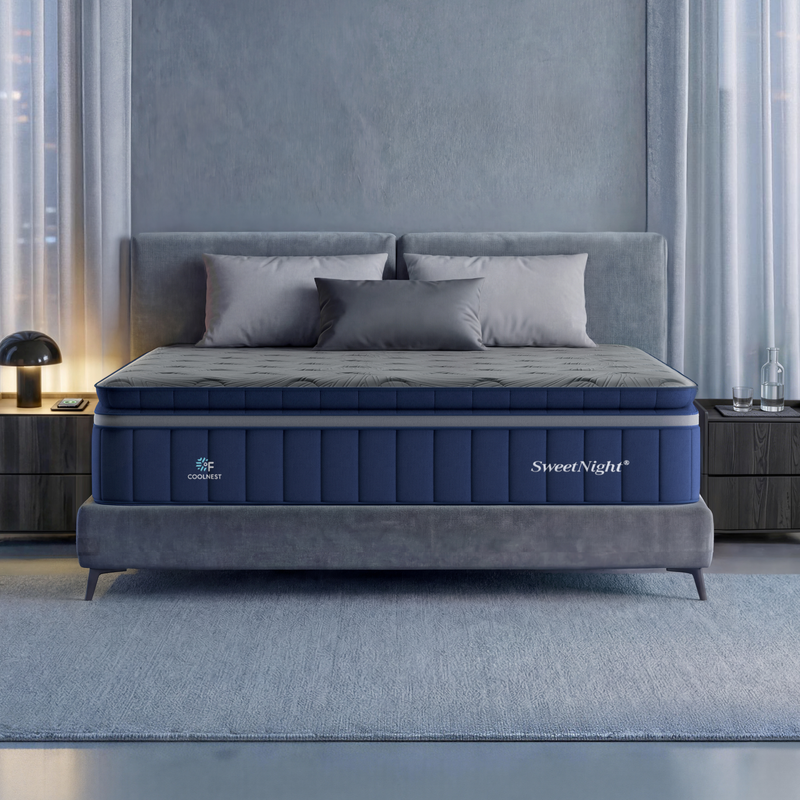
This is where thoughtful mattress design shows up. The CoolNest® Ultra memory foam mattress is one example that leans on this idea: it pairs a cool-to-touch Gradient Ice Silk cover with a PCMflux® phase-change foam that absorbs and releases heat through the night, plus a breathable AirMesh™ layer so warmth keeps moving away from the surface. The point isn't that phase-change material is exotic magic — it's that layering it into a foam mattress is a direct answer to the seasonal swing this whole article is about. You get the contouring hug of memory foam with far less of the "hot in summer, hard in winter" personality.
A couple of honest caveats keep expectations realistic. PCM buffers temperature; it does not run a compressor or actively refrigerate the bed. It works best against the everyday warmth your body produces, not against a bedroom that's genuinely overheated. And its effect is most noticeable right at the sleep surface, where you touch it, rather than deep in the mattress core. Treat it as a smart evener-out of temperature, and it delivers exactly what it promises.
How Temperature-Neutral Foams Stay Consistent
PCM is one piece of a broader shift toward foams that hold a steadier feel. When people talk about "temperature-neutral" or "cooling" memory foam, they usually mean a combination of design choices that, together, reduce how much the material swings with the seasons. It's worth knowing what those choices are so you can read a spec sheet with clear eyes.
Start with cell structure. Older memory foam was largely closed-cell, meaning the tiny bubbles inside were sealed off from one another. Heat and air got stuck. Open-cell foam connects those bubbles so air can circulate through the material, carrying body heat away and letting the surface temperature settle rather than climb. A more open structure also means the foam relies a little less on pure heat to soften, which takes some of the edge off the seasonal firmness change.
Next come ventilation and breathable layers. Some foams are engineered with 3D channels or a lofted mesh structure that keeps air moving continuously beneath and around you. Instead of your body heat sitting in a still pocket, it gets carried off by air movement. This is the same logic as a breathable fabric versus a plastic bag: the more freely air can move, the more stable and comfortable the temperature at your skin.
Then there are the surface materials. A cool-to-touch cover made from tightly knit, heat-conductive fibers pulls warmth off your skin on contact, which is why a good cover feels cool the instant you lie down. Gel, copper, and graphite infusions inside the foam work similarly, drawing heat away from the surface, at least early in the night before they saturate.
And finally the phase-change layer we just covered, which actively buffers the swing rather than only resisting it.
Stack these together and you get a foam that behaves much more consistently than a plain slab of dense viscoelastic. Here's the mental model:
- Traditional dense foam: big temperature swings, so a big feel change between summer and winter.
- Open-cell plus ventilation: heat dissipates, so the surface stays closer to a middle temperature and the feel is steadier.
- Cool-touch cover plus PCM: the surface actively resists both overheating and over-cooling, so the seasonal difference shrinks the most.
One realistic note: no foam is perfectly temperature-neutral. Physics still applies, and any viscoelastic material will shift a little with big temperature changes. The goal of these designs isn't to eliminate the effect entirely — it's to shrink it from something you notice and complain about to something you barely register. That's an achievable and meaningful difference, and it's what separates a modern cooling build from a bargain foam that behaves like it's from a decade ago.
Room Temperature, Bedding & Layering Fixes
You don't have to buy a new mattress to take some of the seasonal edge off the one you own. Because memory foam responds to the temperature at its surface, controlling your bedroom and your bedding gives you real leverage over how the bed feels. Think of it as managing the foam's environment so it stays closer to the sweet spot in both seasons.
The single biggest lever is the bedroom itself. A stable, moderate room temperature keeps the foam from drifting too far toward either extreme. Most sleep experts point to a cool but not cold bedroom as the general target for good sleep, and that same range happens to keep memory foam in a reasonable feel window — warm enough that it isn't a slab, cool enough that it doesn't cook you. If you've never dialed this in deliberately, it's worth reading how to find your best sleep temperature and then holding the room near it consistently rather than letting it lurch with the weather.
Beyond the thermostat, your bedding does a lot of quiet work:
- Swap layers by season. Breathable cotton or linen sheets and a light cover in summer let heat escape; flannel and a warmer duvet in winter hold surface warmth so the foam starts softer.
- Use a topper as a temperature buffer. A wool topper is a genuinely useful trick because wool moderates temperature in both directions — it wicks heat and moisture in summer and insulates in winter, smoothing the foam's seasonal swing from above.
- Mind what's directly under you. A thick mattress protector or a dense quilted pad can blunt a cool-to-touch cover's effect. If you paid for cooling, don't smother it.
- Manage humidity, not just heat. In a muggy summer room, a fan or a little air movement helps sweat evaporate, which does more for comfort than dropping the thermostat alone.
- Pre-condition the bed. On a cold night, turning up the bedroom heat for a while before you get in gives the foam time to soften; on a hot night, pulling back the covers to air the surface before bed helps it start cooler.
A word on mattress heating and cooling gadgets. Electric blankets and mattress warmers will absolutely soften memory foam in winter, since you're feeding heat straight into it — just use them safely and give the foam a little time. Active cooling pads exist too, though they're a bigger investment. For most people, getting the room temperature stable and matching bedding to the season handles the majority of the seasonal swing without any electronics at all.
The habits are simple, but they compound. If you keep the room steady, layer with the season, and give cold foam a few minutes to warm up, you take a mattress that felt wildly different across the year and pull both extremes toward the middle. That's often enough to make an older foam bed livable in both seasons.
Choosing a Mattress That Feels the Same Year-Round
If you're shopping specifically because your current bed feels like two different mattresses depending on the month, you can buy your way out of most of that swing — as long as you know what to look for. The goal is a foam built to hold a steadier surface temperature, because steady temperature is what keeps the feel steady.
Run down this checklist when you compare options:
- Open-cell or ventilated foam, not dense closed-cell. This is the foundation. A foam that lets air and heat move will swing far less than an old-style dense slab.
- A phase-change layer. If year-round consistency is your priority, PCM is the feature that most directly targets it, buffering both summer heat and winter cold at the surface.
- A cool-to-touch cover. It won't fix deep temperature swings on its own, but it steadies the first thing you feel and pairs well with the layers beneath.
- A firmness that suits you at a middle temperature. Test or judge the feel imagining a moderate room, since that's where you'll spend most of the year. A bed that's only comfortable when it's warm and soft will disappoint every winter.
- A real trial period. Temperature response is something you only fully understand after sleeping on a bed through different conditions, so an at-home trial that spans a few weeks is worth more than any showroom test.
Be a little skeptical of marketing that promises a mattress will literally stay one fixed temperature all night. No passive material does that; physics doesn't allow it. What good engineering genuinely delivers is a much smaller swing — a surface that resists both overheating and over-firming enough that you stop noticing the seasons. That's the honest, achievable version of "feels the same year-round," and it's the one worth paying for.
Also weigh firmness and material as separate decisions. A medium-plush feel that contours your shoulders and hips without swallowing you tends to age well across seasons, because it isn't relying on being at one temperature extreme to feel right. If you sleep hot, prioritize the cooling stack. If you sleep cold or keep a chilly room, a slightly softer baseline feel gives you room before winter firms it up. Match the bed to how you actually sleep, and the seasonal swing becomes a minor footnote instead of a nightly frustration.
The bottom line is that the summer-versus-winter difference is normal physics, not a defect. Traditional memory foam softens in heat and firms in cold because that's how viscoelastic material works, and that responsiveness is also what makes it comfortable in the first place. You can manage the swing with your room and bedding, and you can shrink it dramatically with a foam engineered to hold a steady surface temperature. Once you understand why the bed changes, you can stop fighting it and set things up so it feels right in both seasons.
Frequently Asked Questions
Is my memory foam mattress defective if it feels harder in winter?
Almost certainly not. Memory foam is viscoelastic, so it firms up when it's cold and softens when it's warm. A harder winter feel is the material behaving exactly as designed, not a sign of damage. Warm the room, give the foam a few minutes to absorb your body heat, and it should relax.
Why does my bed feel firm when I first lie down, then soften?
Because it starts at room temperature and warms up under you. The foam directly beneath your body absorbs your heat over the first several minutes and softens into its contouring state, while the surrounding foam stays firmer until it's warmed too. You're feeling the material transition in real time.
Does phase-change material actually cool the bed, or just even it out?
Mostly it evens it out. PCM absorbs excess heat when the surface warms and releases it later when the surface cools, buffering the temperature rather than actively refrigerating the mattress. That buffering reduces both summer overheating and winter firmness, but it isn't a powered cooling system.
Can I stop my foam mattress from sleeping hot without replacing it?
Often, yes. Keep the bedroom cool and stable, switch to breathable sheets in summer, add a wool topper to moderate surface temperature, avoid smothering the mattress under thick pads, and use a fan to move air. These steps won't rival a purpose-built cooling foam, but they take the edge off a warm-sleeping bed.
Do all mattresses change feel with temperature?
No — it's mainly a memory foam trait. Latex springs back quickly regardless of temperature and barely shifts across seasons, and innerspring coils don't respond to room temperature at all. If seasonal consistency matters most to you, that's part of why some shoppers look at latex, ventilated foam, or a phase-change build rather than traditional dense memory foam.