
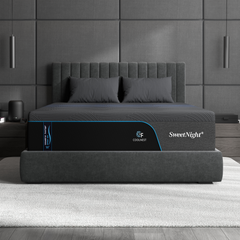













































The box arrives, the mattress unrolls and hisses up to full height, and you climb on expecting instant bliss. Then night one is stiff, or oddly soft, or smells faintly of chemicals, and by morning your back is talking to you. If you go looking for reassurance online, you'll find the mattress subreddits packed with people at exactly this point, counting nights and asking whether they made a mistake. It's one of the most common anxieties in the whole mattress-buying process.
Here's the reassuring part: the first 30 days of a new bed are their own distinct phase, with a fairly predictable arc. The mattress breaks in, your body adjusts, the new-foam smell fades, and a first impression that felt wrong on night two often looks completely different by week four. Knowing what's normal, what's just the break-in period, and what actually signals a problem is the difference between panicking on night three and giving a good bed the fair shot it needs. Here's the honest month-one timeline, start to finish.
What the Mattress Break-In Period Actually Is
Every new mattress arrives at its stiffest, densest, most unfamiliar state, and the break-in period is the stretch of time it takes for that to change. The foams have never been compressed by a sleeping body, the comfort layers are at full factory density, and the whole surface pushes back harder than it will once you've slept on it a while. So the bed you meet on night one is genuinely not the bed you'll have in a month, even though nothing visible is changing.
What's happening under the surface is mechanical. Foam cells that were packed tight during shipping start to flex and open up with each night of use, so the material gradually gets more responsive and molds to you more readily. Coils in a hybrid settle into their intended tension, and the cover relaxes from its tightly compressed shipping state. None of this is a defect or a sign of a cheap bed. It's the normal physics of a product that was rolled, vacuum-sealed, and boxed for weeks before it reached you.
The reason this matters so much is that it resets your expectations for the whole first month. Reviews and marketing describe how a bed feels after break-in, not on the first night, so the gap between the two catches almost everyone off guard. Treat the break-in period as the real, expected first chapter of owning the mattress, not as a warning sign. Most foam and hybrid beds do the bulk of their loosening over two to four weeks, which is exactly why sleep trials run long enough to cover it.
Different constructions break in a little differently, which is worth knowing so you don't compare your experience to the wrong benchmark. Denser all-foam beds tend to feel the stiffest out of the box and show the most obvious softening over the month, while hybrids with coils change less dramatically because the support core was never the part flexing. Thicker comfort layers can take a bit longer to fully open up than thin ones. None of that changes the basic timeline much, but it explains why your friend's bed felt broken in faster than yours, and why the same 30-day patience applies across the board.
Why a New Mattress Feels Different in the First Week
The first week is the strangest, because everything about the bed is unfamiliar at once. Your old mattress had years of broken-in grooves that let you sink into a body-shaped hollow, and your muscles learned to relax into that exact shape without you ever thinking about it. A fresh mattress holds you up evenly instead, and even when that support is objectively better, your body reads the change as wrong simply because it's different from what it memorized.
There's a real adjustment happening in your body, not just your head. If your last bed let your hips sag, your spine spent years sleeping in a slight curve, and a supportive new bed straightens that out. The muscles and ligaments that adapted to the old sag have to relearn a neutral position, and that transition can feel like stiffness or mild soreness for the first several nights. It usually eases as your body settles into the new alignment, the same way a new pair of supportive shoes feels odd before it feels great.
Sleep itself can get lighter and more broken during this stretch, too. Anything new in the sleep environment nudges your brain into a more alert state, and a different feel, a different bounce, even a different smell can keep you closer to the surface of sleep for a few nights. This is temporary and normal. The novelty wears off, your nervous system stops treating the bed as a change to monitor, and deeper sleep returns once the mattress stops feeling new. Give week one some grace; it's the least representative week of the entire month.
What to Expect from New Mattress Off-Gassing and Smell
Open a boxed foam mattress and you'll often catch a distinct chemical smell, sometimes sharp, sometimes faintly like paint or plastic. That's off-gassing, and it's the release of volatile organic compounds that were sealed inside the foam during manufacturing and compression. It sounds alarming, but for a certified mattress it's a normal part of unboxing, not a sign that something is wrong with the bed or dangerous to sleep on.
The smell is at its strongest in the first hours to days after you free the mattress from its plastic, then fades steadily as fresh air moves through the foam. Most of it clears within a few days, and lingering traces usually vanish within a couple of weeks. You can speed it along by unboxing in a well-ventilated room, opening windows, running a fan across the surface, and giving the bare mattress a few hours to breathe before you dress it with sheets.
If you want extra reassurance about what you're breathing, look for the certifications that reputable brands carry, like CertiPUR-US® or OEKO-TEX®, which set limits on the compounds used in the foam. A memory foam mattress from a certified line off-gasses within known, tested bounds, so the temporary smell is a nuisance rather than a hazard. If a strong odor is still going strong after two full weeks, that's worth raising with the seller, but in the typical first 30 days, off-gassing is an early-days event that quietly resolves itself.

Why You Might Sleep Worse Before You Sleep Better
It sounds backward, but a lot of people sleep worse for the first week or two on a brand-new bed they'll eventually love. The bed is at its firmest, your body is adjusting to new support, off-gassing might be lingering, and the sheer newness keeps your sleep light. Stack those together and the honeymoon you pictured turns into a few restless nights, which is jarring when you just spent real money expecting the opposite.
This dip is usually temporary and self-correcting. As the foam softens, your body adapts, the smell clears, and the novelty fades, the quality of your sleep climbs back up and often past where your old worn-out bed had it. The trap is judging the whole purchase during the worst stretch, when everything that could feel off is feeling off at the same time. Night three is the low point for many people, not the verdict.
The subreddits are full of near-identical stories: someone posts on day four convinced they bought a lemon, gets told to hang on, and comes back three weeks later saying it turned into the best sleep they've had in years. That pattern is common enough to plan around. Expect a rough patch, don't extrapolate it into a permanent judgment, and let the bed climb out of the dip before you decide anything. If sleep is still getting worse rather than better after a couple of weeks, that's a different signal worth paying attention to.
How Long It Takes to Adjust to a New Mattress
The rough rule most brands and sleep experts land on is 30 days, and that number covers two overlapping processes: the mattress breaking in and your body adjusting to it. Neither happens overnight, and they don't finish on the same schedule, which is why a single month is the honest window rather than a single week. Some people feel settled in ten days, others need the full month, and both are completely normal depending on the bed and the body.
Your own adjustment depends on how different the new bed is from your old one. Going from a sagging pillow-top to a supportive medium-firm is a bigger change for your body than swapping one similar bed for another, and a bigger change takes longer to feel natural. Age, weight, sleep position, and whether you have existing aches all shift the timeline too. There's no single correct number of nights, only a range, and 30 days is the point where most people have crossed it.
Consistency is what makes the adjustment stick. Sleeping on the new bed every night gives your body a steady signal to adapt to, while bouncing between the new mattress, a couch, and hotel beds stretches the whole thing out. If you can, commit to the new bed nightly for the first month so the adjustment has an uninterrupted run. A medium-firm mattress in particular tends to feel firm at first and settle into its true feel over these weeks, so steady nights are exactly what it needs to show you what it really is.

What Body Aches in the First 30 Days Mean
Waking up a little achy in the first couple of weeks on a new mattress is common and usually not cause for alarm. If your old bed let you sleep in a sagging curve, a supportive new one repositions your spine, and the muscles that adapted to the old shape can feel worked or stiff while they adjust to proper alignment. It's a bit like the mild soreness after starting a new exercise routine, and it typically eases as your body settles.
The key thing to watch is the direction of travel. Adjustment aches trend better week over week, getting milder and less frequent as the days pass. Pain that stays exactly the same, or ramps up, or shows up as sharp pressure in your shoulders and hips rather than general stiffness, is telling you something different. That pattern points toward a firmness or support mismatch rather than a normal break-in, and it won't resolve on its own the way adjustment soreness does.
Where the ache lands is a useful clue as well. Lower-back stiffness that fades over the first two weeks often means your spine is adapting to better support, which is a good sign in disguise. Persistent pressure-point pain, numb arms, or aching hips that get worse usually mean the surface is too firm or too soft for your body and position. If you have ongoing back trouble, a bed built for it, like a mattress for back pain, is worth considering, but give a normal new bed the two-to-three-week window before you conclude the aches are a mismatch rather than an adjustment.

How Room Temperature Affects a New Memory Foam Mattress
Here's a first-month variable almost nobody warns you about: temperature. Memory foam is heat-reactive by design, softening and molding as it warms to your body and stiffening when it's cold. Unbox a foam bed in a chilly room in winter and it can feel dramatically firmer than the same mattress would in a warm room, purely because the foam hasn't reached the temperature where it turns pliable. The bed isn't defective; it's just cold.
This throws off a lot of first-week judgments. People lie down on a cold foam surface, feel a board, and conclude the bed is too hard, when really it just needs body heat to relax. It's also why a mattress can feel stiff for the first twenty minutes and then start cradling you once you've warmed a body-shaped patch into it. If your bedroom runs cold, give the surface time to warm under you each night before you decide how firm it truly is.
You can work with this rather than against it during the break-in. Nudging the thermostat up a couple of degrees, adding a mattress protector that holds a little warmth, or simply sleeping on the bed consistently so it stays warm all help a stiff foam mattress show its softer side faster. Cold foam and firm foam are easy to confuse, and confusing them is one of the top reasons people misjudge a perfectly good bed in the first 30 days. Judge the feel once the mattress is warm, not in those first frigid minutes.
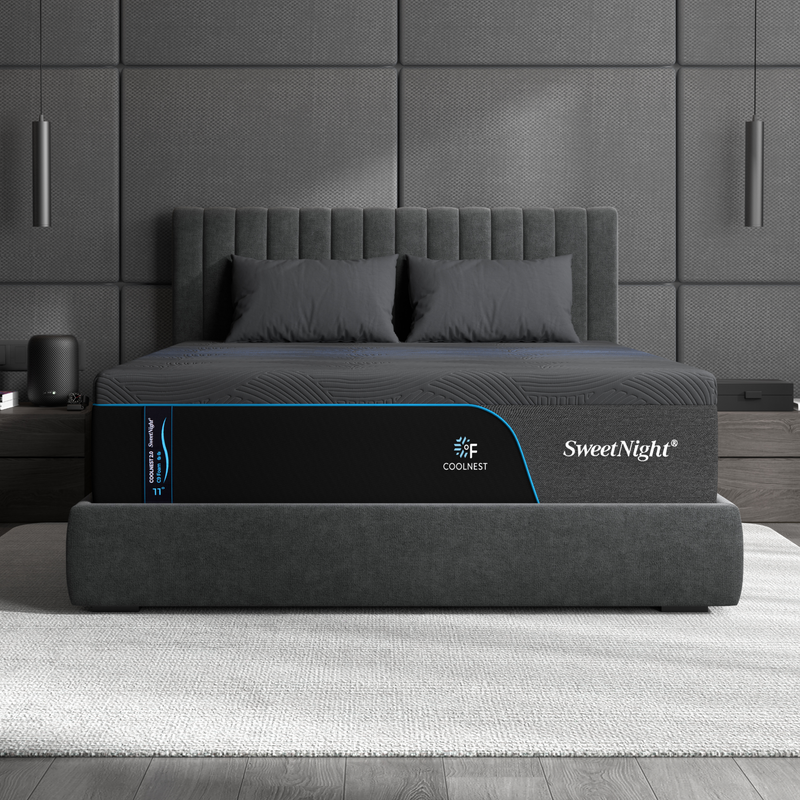
Temperature cuts the other way for hot sleepers, which is worth naming since overheating can sour a first month just as much as firmness. If you run warm, the newness of the bed plus dense fresh foam can leave you sweating through the adjustment period, and that discomfort is easy to blame on the wrong thing. A bed engineered for temperature control from the start, like the CoolNest® Ultra, breaks in the same way but doesn't stack heat on top of the usual first-week strangeness, so you're only adjusting to the feel, not fighting the temperature at the same time. Either way, separate how firm the bed feels from how warm it sleeps, because they're two different first-month variables people constantly mix up.

What a Healthy Break-In Timeline Looks Like Week by Week
It helps to have a rough map of the month so you know whether you're on track. Days one through three are usually the firmest, least comfortable, and most likely to involve off-gassing and light, broken sleep. This is the low point, and it's the worst possible time to judge the bed. Expect it, ride it out, and resist the urge to draw conclusions while everything is at its most unfamiliar and unsettled.
Through week one and into week two, the foam starts limbering up and your body begins adapting to the new support. The harshness fades bit by bit, the smell clears, and sleep usually starts climbing back toward normal, though not in a perfectly straight line. You might have a great night followed by a mediocre one; that zigzag is normal. The overall trend is what counts, and by the end of week two most people notice the bed is meaningfully more comfortable than it was on night one.
Weeks three and four are where the bed reveals its real, settled feel. Most of the softening is done, your body has largely adjusted, and the version of the mattress you're sleeping on now is close to the version you'll have for years. This is the point where an honest verdict is finally possible. If the trend across the month has been steadily positive, you've got a keeper. If nothing has improved at all after a full month of consistent nights, that flat line is your signal to act.
How to Speed Up the Mattress Break-In Period
You don't have to wait around passively while the bed breaks in; a few things genuinely hurry it along. The biggest one is simply using it, since foam softens with pressure and heat, so sleeping on it every night is the main engine of break-in. Beyond that, you can walk on it, crawl across it, or press firmly over the entire surface during the day to work the foam layers faster than nightly sleep alone would.
Warmth is your other big lever. A warmer room keeps the foam pliable, so bumping the thermostat up slightly or letting the bed hold your body heat each night speeds the softening. Good airflow helps clear off-gassing at the same time, so crack a window in the early days. Rotating the mattress head-to-foot once during the first month spreads the break-in evenly, especially if one side sees more use than the other, so no single zone lags behind.
Make sure the foundation isn't fighting you, either. A rigid platform or tightly spaced slats can make a firm new bed feel even firmer and mask the softening that's actually happening, so confirm your setup matches what the mattress calls for before you blame the bed. Dial in your pillow too, since the wrong pillow height on a new mattress throws off your neck and makes the whole thing feel worse than it is. Small setup fixes plus consistent, warm, nightly use is the fastest honest route through the break-in.
When First-Month Discomfort Signals a Real Problem
Most first-month discomfort is normal break-in, but not all of it, and knowing the difference protects you before your trial window closes. A genuine defect looks distinct from ordinary firmness or softness. Visible sagging, a surface that's harder or softer in patches, a lump or high spot, a comfort layer that seems bunched, or a bed that doesn't respond to pressure at all even after warming up are all manufacturing issues, and no amount of break-in fixes them.
The other real problem is a plain firmness or support mismatch. If your discomfort is trending worse rather than better across the weeks, if you wake with sharp pressure in your shoulders and hips, if your arm goes numb, or if you keep shifting all night because no position feels right, the bed may simply be the wrong feel for your body and sleep position. That won't resolve with time the way adjustment aches do, because it's about anatomy, not break-in.
The clean decision rule is direction plus deadline. Give the bed a fair, consistent 30 nights, warm it up, break it in, and track whether things are improving. If the trend is positive, keep going. If a full month of honest effort leaves you in the same pain or worse, or you spot signs of a true defect, use your sleep trial, since that's exactly what it's there for. A bed that feels off on night one is almost always fine by week four, and the small share that isn't is precisely what the trial and warranty exist to cover.