

















































Short answer: You can pay back some sleep debt with extra rest, but you can't fully undo the mental and physical toll of chronic short sleep by cramming hours in on the weekend — the reliable fix is getting closer to what you need most nights.
The short version, if you're skimming:
- What it is: Sleep debt is the running gap between the sleep your body needs and the sleep it actually gets.
- How it builds: Losing even 30 minutes a night adds up fast — a small nightly shortfall becomes hours of deficit within a week.
- Weekend catch-up: Sleeping in helps you feel better and recovers part of the deficit, but it doesn't reverse everything, and it can throw off your body clock.
- The real fix: Shrink the nightly gap, protect sleep quality, and be patient — recovery takes more than one long night.
- When to get help: Debt you can never seem to repay, loud snoring, or daytime sleepiness that won't quit are reasons to see a professional.
What Is Sleep Debt, Really?
Think of sleep like a checking account. Every night your body needs a certain deposit — for most adults that's somewhere in the range of seven to nine hours. When you make the full deposit, you wake up solvent: alert, steady, able to think. When you come up short, you're running an overdraft. Do it once and you barely notice. Do it night after night and the balance quietly slides into the red.
That running balance is sleep debt. It's the cumulative difference between the sleep you need and the sleep you actually get, added up over days and weeks. If you need eight hours and get six and a half, you've borrowed ninety minutes from your body. The debt isn't erased when the sun comes up. It carries forward, and it compounds.

The tricky part is that the "amount you need" isn't a number you get to pick. It's set largely by biology, and it varies from person to person. Some adults genuinely function well on seven hours; a smaller number need closer to nine. What almost nobody can do — despite what they tell themselves — is thrive long-term on five. The people who claim they've trained themselves to need less sleep have usually just gotten used to being tired. They've normalized the deficit, not eliminated it. If you're unsure where you land, our guide to how many hours of sleep adults actually need is a good place to calibrate your own target before you start doing the math on your debt.
One more thing worth getting straight up front: sleep debt is not the same as insomnia. Insomnia is when you have the opportunity to sleep and can't. Sleep debt is often self-inflicted — you had the chance to sleep and chose the show, the scroll, the deadline, the early alarm. That distinction matters, because the debt version is largely within your control, and that's actually good news. It means the fix doesn't require a prescription. It requires giving yourself back the hours.
How Sleep Debt Builds Up (Even 30 Minutes a Night)
People imagine sleep debt as something that happens after a dramatic all-nighter. It rarely does. The far more common version is slow and boring: a half hour shaved off the front or back of your night, repeated until it's a habit you don't even register anymore.
Run the numbers and the drift becomes obvious. Say your body needs eight hours, and you're consistently getting seven and a half. That's thirty minutes short. It feels like nothing — you're barely tired the next morning, maybe a little slower to wake. But over a five-day work week, that thirty minutes becomes two and a half hours of missing sleep. Over a month, it's roughly ten hours — more than a full night gone. You didn't skip a night. You just leaked sleep, a little at a time, until you were carrying the equivalent of a sleepless night on your back without ever having pulled one.
What makes the leak so easy is that the shortfall almost always feels justified in the moment. The reasons are all reasonable on their own:
- Bedtime creep. "One more episode" or "let me just finish this chapter" pushes lights-out later while the alarm stays fixed.
- The early alarm. A commute, a gym class, a kid's schedule — the morning end gets clipped even when bedtime doesn't move.
- Revenge bedtime procrastination. After a day with no time to yourself, staying up feels like the only slice of freedom you get, so you spend it, knowing you'll pay in the morning.
- Weeknight social life. Dinners, workouts, and late messages nibble at the edges of the night.
- Fragmented sleep. You spend eight hours in bed but wake repeatedly, so your actual sleep total is well under what the clock suggests.

That last point deserves emphasis because it's the one people miss entirely. Time in bed is not the same as time asleep. You can lie down for a dutiful eight hours and still build debt if the night is broken into pieces — woken by heat, by a partner shifting, by a pet, by noise, by a full bladder, by your own racing mind. Every awakening chops your sleep into shorter runs and can pull you out of the deeper stages before you've spent enough time there. On paper you slept eight hours. In practice your body banked six. The debt grows even though your bedtime looks responsible.
There's also a cruel psychological wrinkle: the more debt you carry, the worse your judgment gets about how much debt you're carrying. Chronic short sleep dulls your ability to notice that you're impaired. You adapt to feeling foggy and start treating "foggy" as your normal baseline. So people running a serious deficit will often insist they feel fine — not because they do, but because they've lost the clear-headed reference point that would tell them otherwise. The debt hides itself.
The Real Effects on Body & Brain
Short sleep doesn't announce itself with a single dramatic symptom. It works more like a tax skimmed off the top of everything you do. Individually the effects look minor. Together they add up to a meaningfully worse day, and over the long run, a meaningfully worse baseline of health.
Start with the brain, because that's where you'll feel it first and most. Sleep is when your mind files the day away — consolidating memories, clearing metabolic waste, and resetting the systems that govern attention and emotion. Cut it short and the machinery runs rough:
- Attention and focus suffer. You lose the ability to sustain concentration. Your mind wanders, you reread the same sentence, and you make careless mistakes on tasks you'd normally breeze through.
- Reaction time slows. This is the one with real-world stakes. A tired brain responds more slowly and sometimes has brief "microsleeps" you're not even aware of — a genuine hazard behind the wheel.
- Memory gets leaky. Because deep and REM sleep help lock in what you learned, short nights leave new information poorly stored. You study, you meet someone, you read the report — and it doesn't stick.
- Mood frays. Under-slept brains are more reactive. Small irritations feel bigger, patience runs thin, and low moods have less cushion. Emotional regulation is one of the first things to go.
The body pays too, though the bill arrives more slowly. Sleep is deeply tied to the systems that manage appetite, blood sugar, blood pressure, immune response, and hormone balance. Chronic short sleep nudges all of them in unhelpful directions. Appetite-signaling hormones shift so you feel hungrier and less satisfied, which is part of why tired people reach for more food and more sugar. The body handles glucose less efficiently. The immune system responds less robustly, which is why a run of bad nights so often precedes a cold. None of these are dramatic on any single day, but sustained over months and years, they're the reason sleep sits alongside diet and exercise as a genuine pillar of long-term health.
Then there's the everyday drag that's harder to quantify but easy to recognize: the mid-afternoon crash, the second and third coffee, the reliance on sugar to get through the slump, the sense that you're pushing through your day instead of moving through it. That feeling isn't a character flaw or a lack of discipline. It's the interest payment on the debt. Understanding what actually happens across a full night — and which stages you're shortchanging — makes the cost more concrete; our breakdown of the stages of sleep shows exactly what you lose when a night gets cut short.

A worthwhile way to picture it: a person carrying steady sleep debt isn't operating at 100 percent and occasionally dipping. They're operating at maybe 80 percent all the time and calling it normal. The scary and hopeful thing is the same — they've forgotten what 100 percent even felt like, which means they don't realize how much they'd gain by clearing the balance.
Can Weekend Lie-Ins Actually Repay It?
This is the question everybody actually wants answered, so let's be straight about it: partly, but not fully, and not without a cost.
The honest, evidence-supported picture is nuanced. Sleeping longer after a stretch of short nights does help. You'll feel less groggy, your alertness improves, and some of the deficit genuinely gets recovered — the body prioritizes the most restorative stages when given the chance, so a long night after several short ones tends to be deeper and more efficient than usual. If your only goal is to feel human again by Saturday afternoon, a lie-in works and there's nothing wrong with using it.

But "feeling better" and "fully recovered" are not the same thing, and this is where the weekend strategy quietly falls down. Research on catch-up sleep points to a consistent pattern: subjective grogginess bounces back faster than the deeper measures of performance and metabolic health. You can feel refreshed while some effects of the week's deprivation — on attention, on how your body handles blood sugar — are still lingering. The recovery is real but incomplete. You're paying down the principal, not clearing the account.
There are three specific reasons the weekend binge is a flawed repayment plan:
- You can't fully front-load or back-load sleep. The body doesn't bank sleep the way it banks fat. Sleeping ten hours on Sunday doesn't pre-fund a short Monday. Recovery works backward — it addresses a deficit already incurred — not forward.
- It scrambles your body clock. When you sleep till noon on the weekend after waking at six all week, you shove your internal clock hours out of sync. Come Sunday night you're not tired at your usual bedtime, so you fall asleep late, wake up exhausted Monday, and start the whole deficit over. People call this "social jet lag" — and it's a real thing, produced by giving yourself a two-time-zone flight every single weekend.
- It teaches you the wrong lesson. Relying on the weekend makes short weeknights feel survivable, which removes the pressure to fix the actual problem. The lie-in becomes an enabler rather than a cure.
So use catch-up sleep as a relief valve, not a strategy. If you've had a genuinely rough week, sleeping in an extra hour or two is reasonable and helpful. What doesn't work is running a deliberate deficit Monday through Friday on the assumption that Saturday will wipe the slate clean. It won't, and the whiplash to your body clock can leave you feeling worse by the next Monday than if you'd never over-slept at all.
A Realistic Plan to Recover Lost Sleep
If you've been carrying debt for a while, the instinct is to fix it all at once — one heroic 12-hour night to reset everything. That's not how recovery works, and trying it usually backfires by wrecking your schedule. The better model is gradual, steady repayment, the same way you'd tackle any debt you actually want gone.
Here's a plan that holds up in real life rather than on paper.
Repay in small, consistent installments. Instead of one giant night, add sleep in modest increments — going to bed 30 to 60 minutes earlier than usual for a week or two. A small, sustainable change you'll actually keep beats a dramatic one you'll abandon by Wednesday. If you're several hours in the hole, expect the repayment to take a couple of weeks of slightly longer nights, not a single weekend.

Protect the morning anchor. The single most stabilizing habit is a consistent wake time, including on weekends. It feels counterintuitive when you're tired, but a fixed wake-up is what keeps your body clock steady, and a steady clock is what makes falling asleep at a reasonable hour possible. If you want to add recovery sleep, add it at the front of the night by going to bed earlier — don't add it at the back by sleeping in, which drags your whole schedule later.
Use naps as a supplement, carefully. A short nap — roughly 20 minutes — can take the edge off accumulated debt without much downside. Keep them early in the afternoon and keep them short; a long or late nap steals from that night's sleep pressure and makes bedtime harder, which just reshuffles the debt instead of clearing it.
Fix the leak, not just the puddle. Recovering lost sleep is pointless if you're refilling the deficit every night. Alongside repayment, honestly identify where your nightly shortfall comes from — the late bedtime, the fragmented nights, the early alarm you can't move — and address the source. Debt recovery and debt prevention have to happen together or you'll be bailing a boat with a hole in it.
Give your body time and cues to catch up. Recovery sleep tends to be deeper if you let it happen naturally — consistent bedtimes, morning light, dim evenings. You're not forcing extra sleep so much as removing the obstacles and letting the debt draw the sleep it's owed.
Set your expectations correctly and you won't get discouraged. A few nights of better sleep will lift the acute fog. Fully rebuilding after a long stretch of deprivation — getting back the sharper attention, the steadier mood, the metabolic footing — is a matter of weeks of consistency, not a single indulgent Sunday. Slow and boring is exactly how the debt built up, and slow and boring is how it clears.
Why Sleep Quality Beats Just Sleep Quantity
Everything so far has treated sleep as a quantity — hours in, hours out. But there's a reason two people can spend the same eight hours in bed and wake up in completely different conditions. Hours are only half the equation. The other half is whether those hours are continuous and deep, or chopped into fragments that never let you settle into the restorative stages.
This is the part of the debt conversation that gets overlooked. You can be technically getting enough time and still building a deficit if the quality is poor. Every time you surface out of sleep — even briefly, even without fully waking — you interrupt the architecture of the night. Deep sleep and REM come in cycles, and they tend to arrive in longer, richer stretches when sleep is uninterrupted. Fragment the night and you keep restarting the climb, spending more of your time in the lighter stages and less in the ones that actually pay down the debt. Since REM in particular does much of the work for memory and mood, protecting it matters as much as protecting total hours; there are concrete ways to get more and better REM sleep that are worth building into your routine.
So what fragments sleep? Some causes are behavioral — alcohol, late caffeine, a chaotic schedule. But a huge and underrated one is physical: your sleep surface and your temperature. The body needs to shed heat to fall and stay asleep, and it naturally cools as it drifts down through the stages. If you're too warm, or if you're lying on a surface that traps heat around you, your body keeps nudging you toward the surface of sleep to deal with the discomfort — a shift, a kick of the blanket, a half-waking that you won't remember but that still cost you. Pressure points do the same thing: a shoulder or hip that aches on an unsupportive mattress prompts you to shift and rouse.

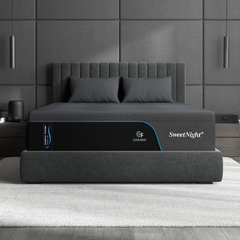
This is where the surface you sleep on quietly shapes your debt. A supportive, cool-sleeping bed reduces the small awakenings that fragment the night, which means more of your eight hours actually counts as restorative sleep. A mattress engineered for this — something like the CoolNest® Ultra memory foam mattress, which pairs a cool-to-touch cover and phase-change foam with zoned support to relieve pressure — is aimed squarely at that problem: keep the sleeper from overheating, cushion the pressure points, and you cut down the wake-ups that would otherwise chop the night into pieces. The point isn't the product for its own sake. It's the principle. If heat or pressure is pulling you out of deep sleep several times a night, no amount of extra time in bed fully compensates, because the time isn't converting into quality sleep.
The practical takeaway: before you conclude you simply need more hours, ask whether the hours you're already spending are being wasted. Cooler, quieter, more continuous sleep can shrink your debt without adding a single minute to your bedtime.
Habits That Prevent Sleep Debt
Recovering from debt is worth doing, but never accumulating it in the first place is easier. Prevention isn't glamorous and it isn't complicated — it's a handful of habits that, done consistently, keep the nightly gap from opening up. None of these will surprise you. The reason they work is that you actually do them, not that they're clever.
Treat your bedtime like an appointment. Most sleep debt is a scheduling failure, not a biological one. If you know your wake time and your sleep need, your bedtime isn't a suggestion — it's a fixed point you work backward from. Protect it the way you'd protect a morning meeting. That means deciding in advance when the screens go off and the day ends, rather than letting the night trail on until you're suddenly too tired to think.
Keep wake time consistent, weekends included. A stable wake-up is the anchor that holds your whole clock in place. Drift by two or three hours on the weekend and you re-create the social jet lag that sabotages Sunday night. A consistent rise time is arguably the single most effective sleep habit there is, and it costs nothing.
Give yourself a real wind-down. You can't sprint from a stimulating day straight into sleep. Build a buffer — 30 to 60 minutes of lower light, no work, no doomscrolling — that signals to your body the day is closing. The specific activity matters less than the consistency and the dimness.
Mind the obvious chemical culprits. Caffeine has a long tail; an afternoon coffee can still be in your system at bedtime, so pull your cutoff earlier than feels necessary. Alcohol is the sneaky one — it helps you fall asleep and then fragments the back half of your night, which is exactly the quality problem discussed above. A nightcap buys you an easier bedtime and a worse night.
Get morning light. Light early in the day sets your internal clock and makes it easier to feel sleepy at the right hour that night. A few minutes outside in the morning does more for your bedtime than most people expect.

Set up the room for continuous sleep. Cool, dark, and quiet is the classic prescription because it works. Temperature is the one people underinvest in — a slightly cool room and a surface that doesn't trap heat prevent the small overheating awakenings that erode quality. Keep the space dark enough that light doesn't pull you toward the surface of sleep, and deal with recurring noise rather than sleeping through it night after night.
Watch the time-in-bed illusion. Finally, remember that scheduling eight hours in bed doesn't guarantee eight hours asleep. Build in a little margin. If you consistently need a while to fall asleep, or you wake once or twice, budget for that so your actual sleep hits your target rather than falling quietly short.
Do these and the nightly gap mostly closes on its own. The goal isn't perfection — miss a night here and there and you'll be fine. The goal is to keep the small, steady leak from becoming the default, because the default is what turns into debt.
When to See a Professional
Most sleep debt is a lifestyle problem with a lifestyle fix: give yourself back the hours and protect their quality, and the deficit clears. But not all of it. Sometimes the reason you can't repay the debt — or can't figure out why you're exhausted despite spending enough time in bed — is a genuine sleep disorder that no amount of good habits will resolve on its own. Knowing the difference is important, and this is the point where self-help stops and professional help begins.

None of what follows is medical advice, and it's not a diagnosis. It's a set of signals that it's worth talking to a doctor or a sleep specialist. Consider reaching out if:
- You spend enough time in bed but never feel rested. If you're consistently getting seven to nine hours and still wake up unrefreshed and drag through the day, the problem may be quality — possibly an undiagnosed disorder — rather than quantity.
- You snore loudly, gasp, or stop breathing in your sleep. Loud, chronic snoring, choking or gasping awakenings, or a partner who notices you stop breathing are classic signs of sleep apnea, which fragments sleep badly and carries real health risks. This is worth taking seriously.
- Daytime sleepiness is severe or dangerous. Falling asleep unintentionally — at your desk, in meetings, and especially while driving — is a red flag that goes beyond ordinary tiredness.
- You can't fall or stay asleep despite the opportunity. If you're giving yourself adequate time and a good environment but still lie awake for long stretches most nights for weeks, that pattern points toward insomnia, which has effective treatments worth pursuing.
- Your legs won't settle. An uncomfortable, creeping urge to move your legs at night that eases when you move is a recognizable pattern worth mentioning to a professional.
- The debt is affecting your mood or functioning in a way that worries you. Persistent low mood, anxiety, or an inability to cope that tracks with your sleep is a reason to get support rather than push through.
The distinction that matters most: if your sleep is short because of your schedule, you can fix it yourself with the strategies above. If your sleep is disrupted despite your best efforts — if you're doing everything right and still can't get restful sleep — that's not a willpower problem, and it's exactly the situation a professional is there for. There's no prize for suffering through a treatable condition, and chronic sleep problems tend to get easier to address the sooner you raise them.
Frequently Asked Questions
Is sleep debt permanent?
Short-term debt is recoverable — a stretch of consistent, adequate nights repays it. The concern with chronic, long-running deprivation is that some of the health effects are tied to the sustained pattern, which is why the reliable answer isn't heroic catch-up but returning to a routine where you're not building new debt each night. Repay what you can, then stop borrowing.
How long does it take to recover from sleep debt?
It depends on how deep the hole is. Acute grogginess from a rough week can lift in a few solid nights. Fully rebuilding after months of chronic short sleep — regaining sharper focus, steadier mood, and metabolic footing — generally takes a couple of weeks of consistent, sufficient sleep, not a single long night.
Can I train myself to need less sleep?
Essentially, no. You can get used to feeling tired and mistake that adaptation for needing less, but your underlying need is set largely by biology and doesn't shrink because you demand it to. The people who seem to run on little sleep are usually running a permanent deficit, whether or not they feel it.
Do naps help with sleep debt?
A short nap of around 20 minutes, taken early in the afternoon, can relieve some accumulated debt without much downside. Long or late naps backfire — they steal from that night's sleep pressure and make bedtime harder, which just moves the debt around instead of clearing it.
Is it better to go to bed earlier or sleep in later to recover?
Earlier bedtime, in almost every case. Adding recovery sleep at the front of the night preserves a consistent wake time and keeps your body clock stable. Sleeping in drags your whole schedule later and sets up the Sunday-night rebound that starts the deficit again.