







Short answer: The military sleep method is a two-minute wind-down routine that relaxes your body head to toe, slows your breathing, and clears your mind with a calm mental image — and while it takes practice, most people can train themselves to fall asleep far faster with it.
The short version, if you're skimming:
- What it is: A sequence that combines progressive muscle relaxation, slow breathing, and a soothing mental picture.
- Where it comes from: It's widely reported as a technique used to help military pilots fall asleep in tough conditions.
- The catch: "Two minutes" is the goal after weeks of practice, not a first-night guarantee.
- Why it works: It gives your racing brain one simple job and lets physical tension drain out before you chase sleep.
- What helps it stick: A cool, comfortable sleep surface and a consistent routine remove the distractions that keep the method from working.
What Is the Military Sleep Method?
The military sleep method is a short, structured routine you run through once you're lying in bed, designed to switch your body out of alert mode and into sleep. It isn't a drug, a gadget, or a breathing trick you do in isolation. It's a sequence — relax your face, drop your shoulders, release your arms and legs, empty your mind — performed deliberately and in the same order every night until it becomes automatic.

The name is the source of both its appeal and a lot of confusion. It's commonly attributed to a method taught to help military aviators fall asleep quickly under difficult conditions, where a pilot might have only a few minutes to rest between missions and no control over noise, light, or when the next demand would come. That origin story gets repeated everywhere, and it's a reasonable way to understand the intent: this is a technique built for people who cannot rely on a perfect environment and still need to sleep on command.
What the method actually contains is not mysterious. It stitches together three techniques that sleep specialists and relaxation therapists have used for a long time: progressive muscle relaxation, slow controlled breathing, and guided mental imagery. None of those is exotic. The interesting part is how they're layered and drilled. You do them in one flowing sequence, you do them every night, and you treat the whole thing as a skill you're building rather than a switch you flip. That framing — sleep as a trainable skill — is the part most people miss when they try it once, fail, and give up.
It's worth being clear about what the method is not. It won't fix an underlying sleep disorder, it won't override caffeine you drank at 6 p.m., and it won't outmuscle a genuinely uncomfortable bed. What it does well is address the most common reason healthy people lie awake: a body that's still physically tense and a mind that won't stop narrating. If those are your obstacles, this is a genuinely useful tool.
The Origin: How Pilots Learned to Sleep Anywhere
The story usually told is that this technique came out of military aviation training, where falling asleep fast wasn't a luxury but a performance requirement. A tired pilot makes worse decisions, and fatigue compounds over days of broken rest. If you could teach someone to reliably fall asleep in a short window — even sitting upright, even in a noisy room, even with adrenaline still in their system — you'd protect both the person and everyone depending on them.
Present this as commonly reported rather than as a documented clinical trial, because that's what it is. The method circulates through books, articles, and training lore, and the specifics of who developed it and when tend to shift depending on who's telling it. What's consistent, and what matters, is the design goal behind it: build a routine robust enough to work in bad conditions. That constraint shaped every part of the technique.

Consider what "sleep anywhere" actually demands. You can't count on darkness, so the method leans on closing your eyes and building an internal image instead of relying on the room. You can't count on quiet, so it uses breathing and muscle relaxation to lower physical arousal regardless of noise. You can't count on comfort, so it starts by systematically discharging tension from the body rather than waiting for the environment to feel right. Every element is a workaround for something a normal sleeper takes for granted.
There's a reason the military framing resonates even for civilians who've never been near a cockpit. Most of us occasionally face our own version of "hostile conditions" for sleep: the night before a flight, a hotel room with a humming air conditioner, the stretch of insomnia after bad news, the 2 a.m. wake-up when your brain decides to relitigate a conversation from three days ago. A method engineered for the worst case tends to hold up well in ordinary bad nights too.
The practical takeaway from the origin story isn't the mythology — it's the mindset. Pilots reportedly practiced this until it worked, treating it as a drill. They didn't try it once and conclude they "just can't fall asleep fast." That distinction, practice versus a single attempt, is the difference between the people who swear by this method and the people who dismiss it.
Step-by-Step: The 2-Minute Technique
Here is the full sequence. Read it through once, then run it from memory so you're not reaching for your phone. The order matters, and the direction of travel — from the top of your head down through your body, then out to your mind — is deliberate. You're draining tension the way you'd let water out of a tub, starting at one end and working through.
1. Relax the muscles in your face. Start with your forehead. Let it go slack. Then your eyebrows, letting them fall away from each other. Soften your eyelids so they rest without squeezing. Unclench your jaw — most people hold a surprising amount of tension there — and let your tongue rest loosely in your mouth. Relax your cheeks. The face is first for a reason: it holds a lot of subtle tension, and once it releases, the rest of the body tends to follow.

2. Drop your shoulders as low as they'll go. Let them sink toward the mattress, away from your ears. Then release your upper arms, feeling them go heavy. Move down to your forearms, your hands, your fingers. Let each part get heavier as you go. Don't force anything downward; just stop holding it up. The sensation you're after is weight — limbs that feel too heavy to lift.
3. Exhale slowly and relax your chest. Breathe out in an unhurried way and let your chest settle. There's no rigid count here; the goal is a long, easy exhale that signals your body to stand down. Feel your torso soften as the breath leaves.
4. Release your legs. Work downward the same way you did with your arms. Relax your thighs, letting them sink. Then your calves. Then your ankles and feet, all the way to your toes. By the time you reach your feet, your whole body should feel loose and weighted, as if you're melting slightly into the bed.

5. Clear your mind for ten seconds. This is where most people struggle, so the method gives you concrete tools instead of the impossible instruction "stop thinking." Try one of these mental images and hold it:
- Picture yourself lying in a canoe on a calm lake, nothing above you but a clear blue sky. Let the boat drift.
- Picture yourself in a black velvet hammock in a pitch-dark room, held and weightless, with nothing to see and nothing to do.
- If images won't hold, repeat the words "don't think, don't think, don't think" gently for about ten seconds, which crowds out the wandering thoughts by occupying the same mental space they'd use.

That's the whole method. Relax the face, drop the shoulders and arms, exhale and soften the chest, release the legs, then clear the mind with an image. Practitioners report that after enough repetition, the sequence itself becomes a cue: starting it tells your brain that sleep is coming, and you begin to nod off partway through rather than at the end.
A few practical notes. Do it lying in your actual sleeping position, not sitting up rehearsing. Keep your eyes closed the entire time. If your mind wanders during the imagery — and it will, especially early on — don't treat it as failure. Notice it, return to the image, and continue. The wandering and returning is the training. And give the two-minute expectation some grace: that number describes a practiced result, not night one.
The Science of Progressive Muscle Relaxation
The muscular core of this method — releasing your body part by part from head to toe — is a real, well-established technique called progressive muscle relaxation, or PMR. It's used widely by therapists for anxiety, stress, and sleep trouble, and it rests on a simple physiological idea: mental tension and physical tension feed each other, so if you can lower one, you help lower the other.
The classic form of PMR has you deliberately tense a muscle group for a few seconds, then release it, moving through the body one region at a time. The tensing does two things. It teaches you to notice tension you're carrying without realizing it, and it makes the release more pronounced by contrast — the drop from clenched to loose is more obvious than trying to relax a muscle that's already sitting at low tension. The military version streamlines this into mostly releasing rather than tensing, which is faster once you already know what "letting go" feels like. If you're brand new to the sensation, spending a week or two on the full tense-and-release version can make the shorthand military approach work much better later.

Why does relaxing your muscles help you fall asleep? When you're stressed or alert, your body sits in a low-grade state of readiness — the sympathetic nervous system, the "fight or flight" side, keeps muscles slightly braced and your system primed to react. Sleep requires the opposite: the parasympathetic "rest and digest" state, where heart rate eases, breathing slows, and muscles let go. You can't consciously order your nervous system to switch modes, but you can nudge it through the back door. Slow breathing and deliberate muscle release are two of the most reliable levers we have for tipping the balance toward the parasympathetic side.
There's also an attention benefit that's easy to overlook. Scanning your body from forehead to toes gives your mind a specific, physical, non-threatening task. Instead of narrating tomorrow's meeting, your attention is occupied with the felt sense of your jaw softening or your calves going heavy. It's a gentler version of the same principle behind counting sheep, except it comes with a genuine physiological payoff rather than just distraction. This overlap with mindfulness is why many people find that relaxation and meditation practices for sleep reinforce the muscle method — they train the same skill of anchoring attention in the present instead of the anxious future.
One honest caveat: PMR reduces the physical and mental arousal that keeps you awake, but it isn't a sedative. It lowers the barriers to sleep rather than forcing sleep to happen. That's actually the healthier way to think about all of this. You're not overpowering your body; you're removing the obstacles and letting sleep arrive on its own, which is exactly how good sleep is supposed to work.
Why It Fails for Some People (and How to Fix It)
Plenty of people try the military sleep method, don't fall asleep in two minutes, and decide it doesn't work for them. Usually the method is fine and the expectations or the setup are the problem. Here are the common failure points and what to do about each.
You expected it to work immediately. This is the big one. The two-minute figure describes people who've drilled the technique, often for weeks. Trying it once and grading yourself on speed is like doing a single set of push-ups and concluding weightlifting doesn't build strength. Commit to running the sequence every night for three to four weeks before judging it. Early on, focus on completing the routine calmly, not on how fast you drop off.
You're trying too hard. Sleep is unusual in that effort backfires. The more you strain to fall asleep, the more alert you get, because straining is itself a form of arousal. If you find yourself gripping the mental image, checking every few seconds to see if you're asleep, or feeling frustrated, you've turned the method into a performance. Loosen your grip. The imagery should be something you let drift toward, not a target you attack.

Your mind won't hold the image. If the canoe or hammock keeps dissolving into your to-do list, don't force it. Switch to the verbal version — repeating "don't think" — which some people find easier because it occupies the language part of the brain that does most of the anxious narrating. Others do better with a slow breathing count as the anchor. Try each for a few nights and keep whichever holds your attention with the least effort.
Your body isn't the problem — your environment is. The method assumes that once tension and mental chatter are handled, you'll drift off. If you're too hot, on a lumpy mattress, in a bright room, or listening to a noisy street, no relaxation sequence will fully compensate. Heat in particular is a frequent hidden saboteur: your core temperature needs to drop slightly for sleep to begin, and a bed that traps warmth fights that process all night. Fix the obvious physical distractions first, then let the method do its job.
You're stimulated when you start. Caffeine late in the day, alcohol, a heavy meal, an intense workout close to bedtime, or scrolling your phone until the moment you close your eyes all leave your system too activated for a two-minute wind-down to overcome. The method is a wind-down, not an off switch. Give it something to work with by easing off stimulation in the hour before bed.
There's a deeper issue. If you consistently can't sleep despite good habits and a good environment, or you wake unrefreshed no matter what, the barrier may be an actual sleep disorder like insomnia or sleep apnea, or anxiety that needs its own attention. No bedtime technique substitutes for medical guidance in those cases. The military method is a tool for ordinary difficulty falling asleep, not a treatment for a clinical condition.
Notice that most of these fixes aren't about the technique at all — they're about giving the technique fair conditions. Sort out expectations, effort, and environment, and the method itself rarely needs troubleshooting.
Pairing It With a Calm, Cool Sleep Setup
A relaxation method can only take you as far as your surroundings allow. You can perfectly release every muscle from your forehead to your toes and still snap back to alertness the moment you notice you're too warm or a spring is digging into your shoulder. The whole point of the military method is to remove distractions from the inside — tension, mental chatter — so it makes sense to remove the physical distractions from the outside at the same time. The two halves work together.
Temperature is the one worth prioritizing. Your body lowers its core temperature slightly to initiate sleep, and it keeps releasing heat through the night. A sleep surface that traps that heat quietly works against you, producing the kind of low-level discomfort that pulls you out of the drowsy state you just built. You may not even register it as "too hot" — just a vague restlessness that keeps you from settling. This is exactly the physical distraction a relaxation technique can't override, because it's a real signal your body keeps sending.

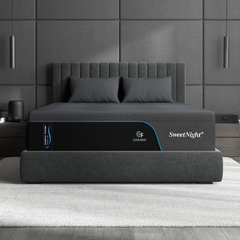
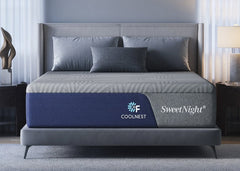
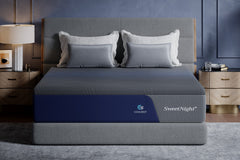
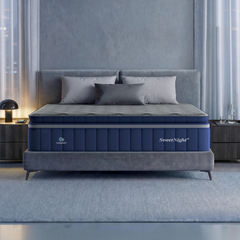
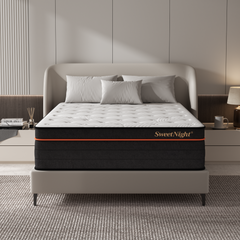
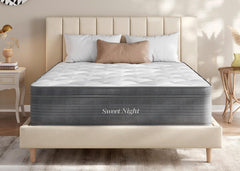
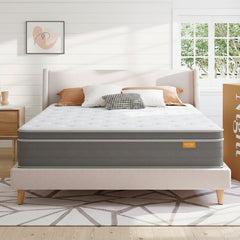
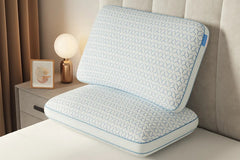
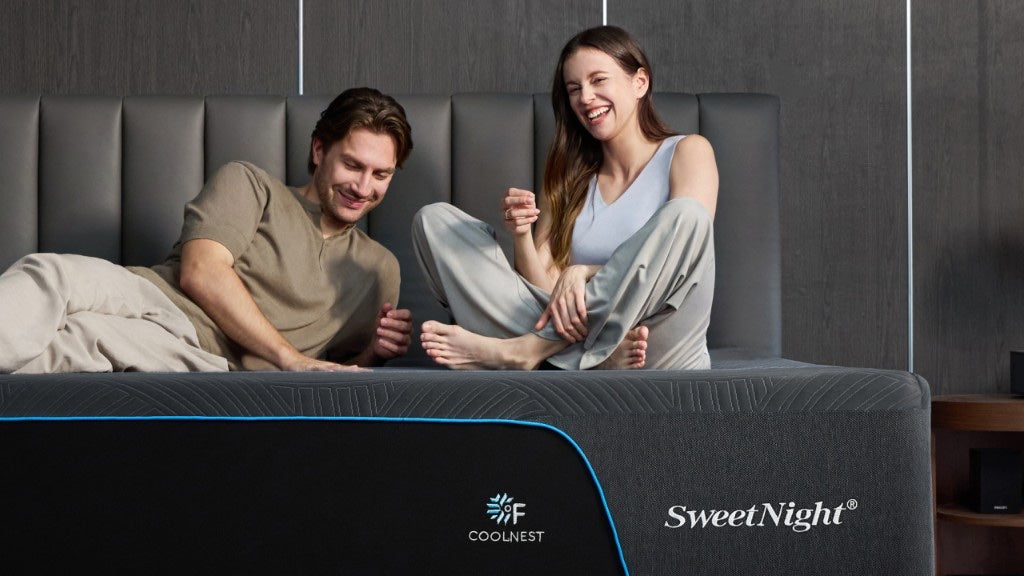
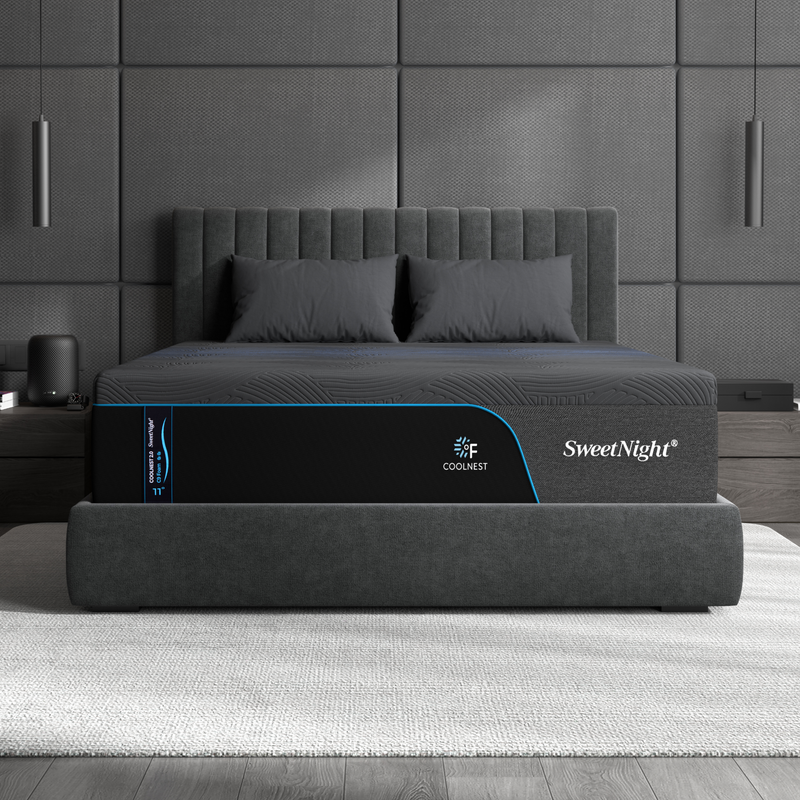
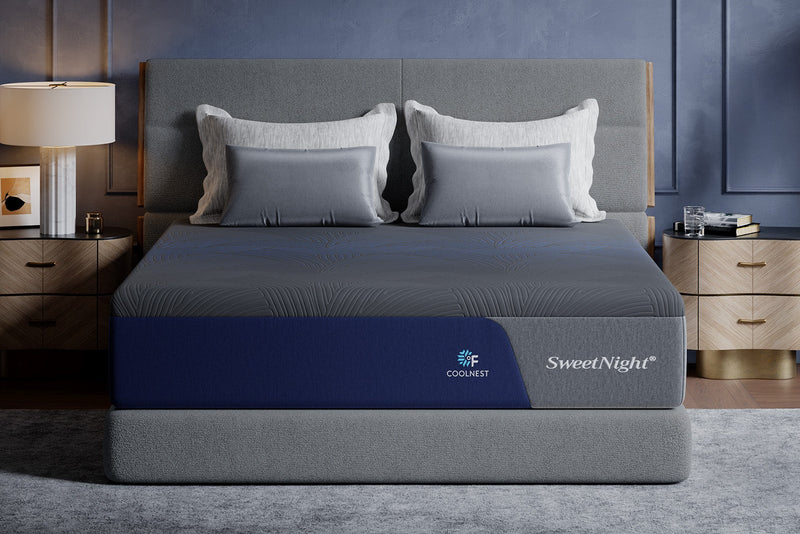
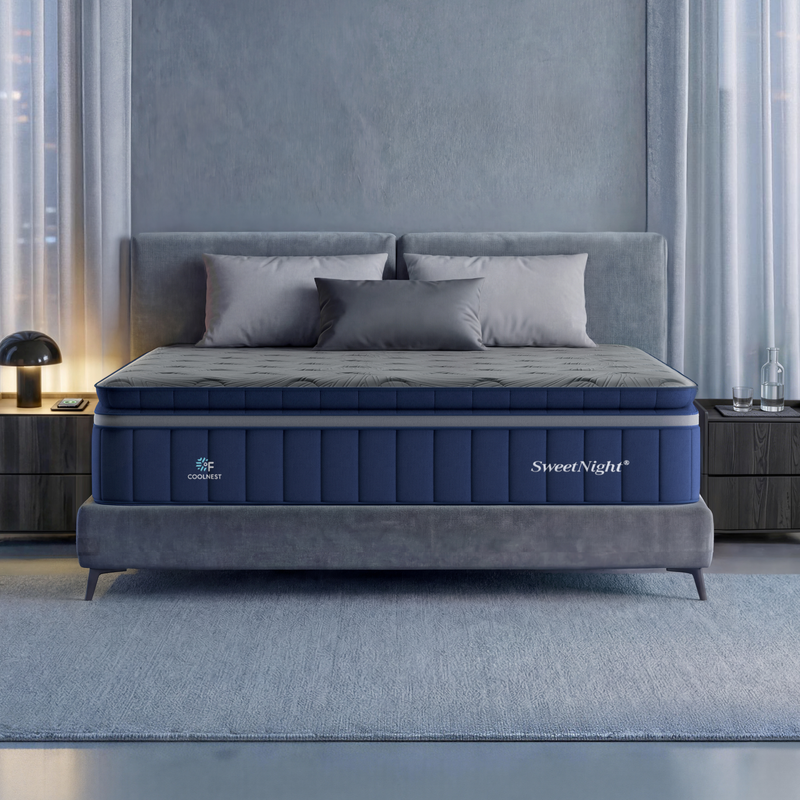
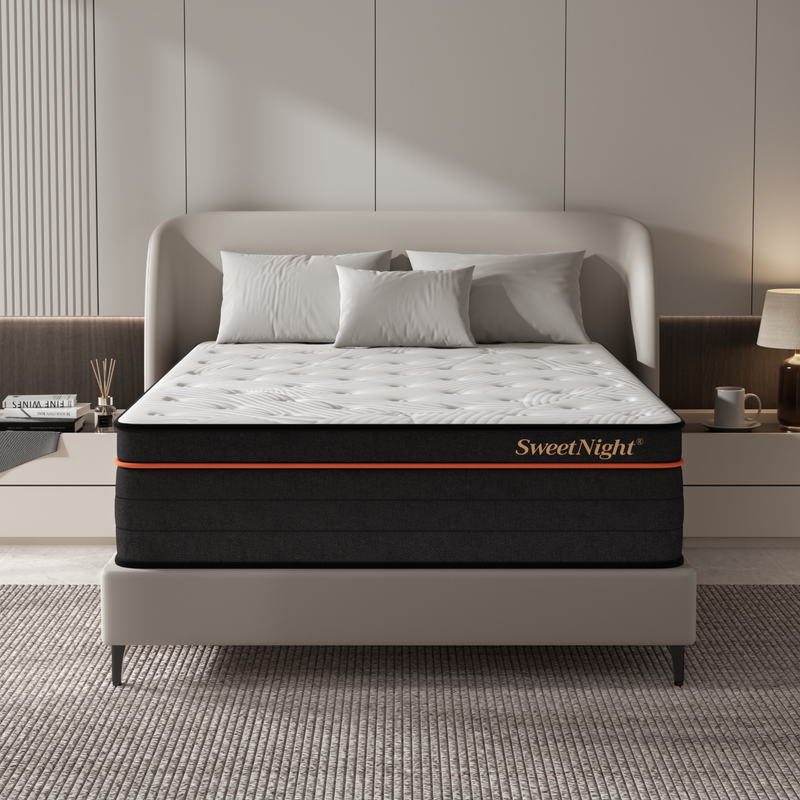
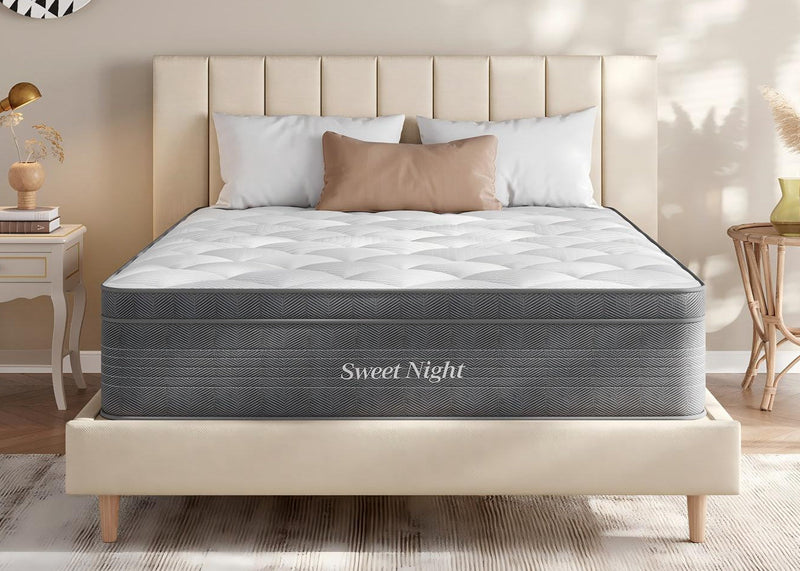
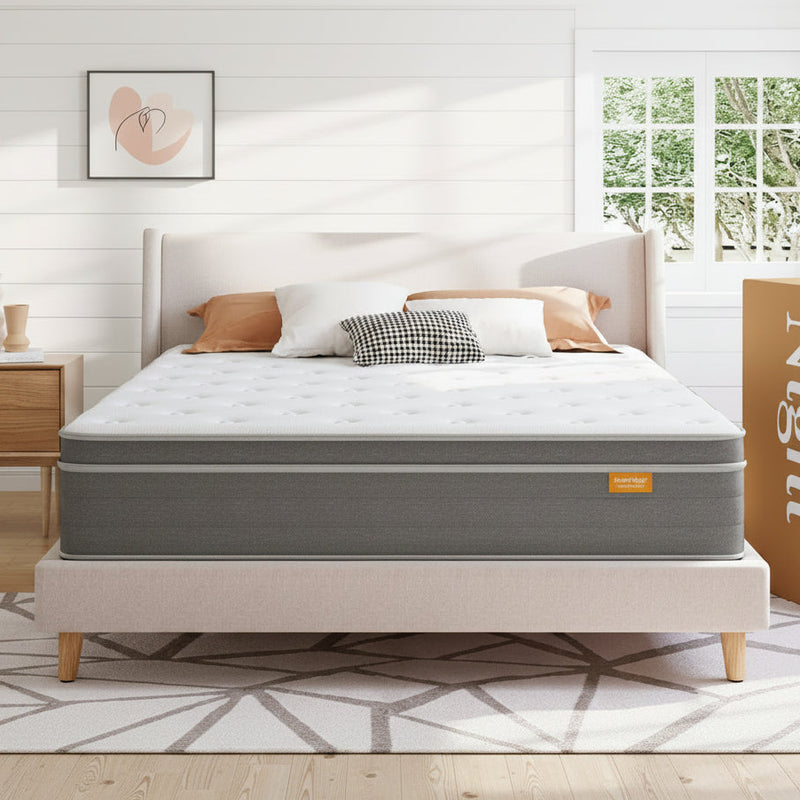
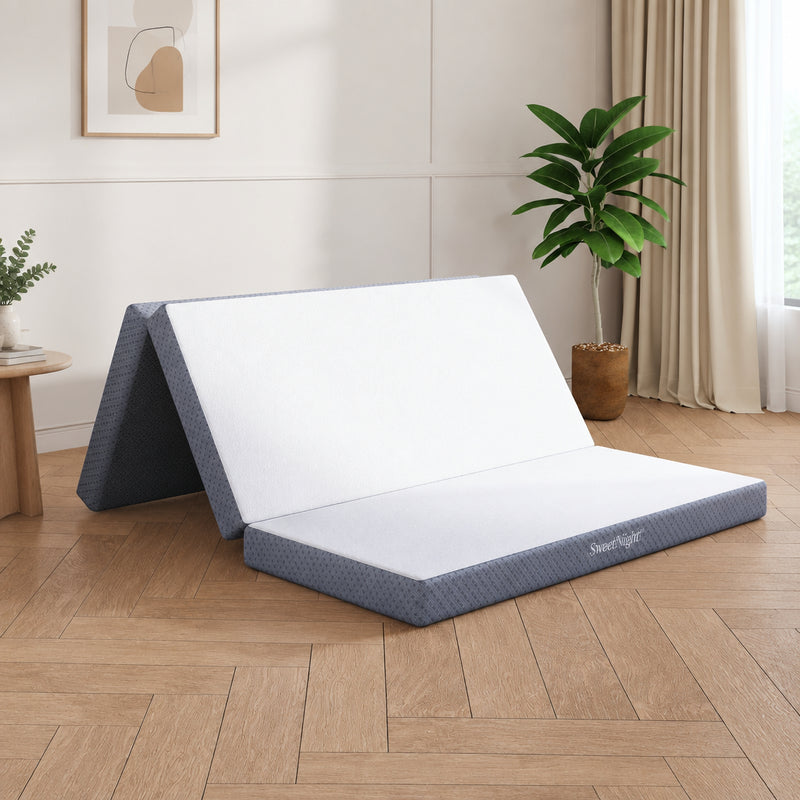
That's the case for a bed built to shed heat rather than store it. A cooling-focused mattress like the CoolNest® Ultra memory foam mattress pairs a cool-to-touch cover with a phase-change foam that helps balance temperature through the night and a breathable core that lets heat escape instead of pooling under you — a surface that stays out of your way so the relaxation sequence can do its work. The idea isn't that a mattress puts you to sleep. It's that the right surface removes the physical reasons you'd wake back up, which is precisely what the military method needs from your environment to succeed.
Beyond temperature, a few basics round out the setup. Keep the room dark, since even modest light delays the drowsiness you're cultivating. Keep it quiet, or use steady background sound to mask sudden noises. Reserve the bed for sleep so your brain associates lying down with switching off rather than working or scrolling. None of this is complicated, and none of it costs much attention once it's in place. It just clears the field so that when you start relaxing your face and dropping your shoulders, nothing physical is left to yank you back.
Other Fast Sleep Methods (4-7-8 Breathing, Paradoxical Intention)
The military method isn't the only way to shorten the time it takes to fall asleep, and it's genuinely useful to have more than one tool. Different techniques suit different nights and different minds. Two are worth knowing well.
4-7-8 breathing. This is a simple, real breathing pattern popularized as a natural way to calm the nervous system. You breathe in quietly through your nose for a count of four, hold the breath for a count of seven, and exhale slowly through your mouth for a count of eight, usually with a soft whooshing sound. Then you repeat the cycle a few times. The long exhale is the active ingredient: extending your out-breath relative to your in-breath encourages the parasympathetic, rest-and-digest response, slowing your heart rate and easing you toward sleep. It works well on its own and pairs naturally with the military method — some people use a round or two of 4-7-8 as the breathing step in the sequence. If the exact counts feel awkward or make you lightheaded, don't fixate on the numbers; the principle of a slow, long exhale matters more than hitting four, seven, and eight precisely.

Paradoxical intention. This one sounds like a trick, but it addresses a real trap. The harder you try to fall asleep, the more the effort keeps you awake, because trying is a form of alertness. Paradoxical intention flips the instruction: instead of trying to sleep, you gently try to stay awake — lying comfortably with your eyes closed and calmly attempting to keep them open a little longer, without any real urgency. By removing the pressure to perform, you remove the anxiety that was fueling the wakefulness, and sleep often slips in through the side door. It's especially helpful for people whose main problem is frustration and clock-watching. If your insomnia is driven by the stress of not sleeping, this reframe can defuse the loop.
Body scan and simple counting. Related to the muscle-relaxation core of the military method, a slow body scan — moving your attention through each part of your body without necessarily relaxing it, just noticing — is a gentle way to anchor a wandering mind. Plain counting works too: slowly counting breaths, or counting backward from a few hundred, gives the anxious brain a boring, repetitive task that leaves little room for spiraling thoughts.
The honest way to use all of these is to treat them as a small toolkit rather than searching for the one perfect method. Some nights the muscle sequence works best; other nights breathing or paradoxical intention fits better. If you want a broader rundown of approaches, our guide to falling asleep faster at night covers more options and when to reach for each. Experiment, keep what works for you, and don't feel obligated to use a technique that never clicks.
Building a Routine That Makes It Stick
A technique you use inconsistently gives inconsistent results. The military method rewards repetition more than almost any other sleep tool, both because it's a skill you're training and because your body responds strongly to predictable cues. The way to get the promised two-minute result is to embed the method in a stable nightly routine.
Start with a consistent sleep schedule. Going to bed and waking up at roughly the same times every day, weekends included, is the single most powerful thing you can do for your sleep, because it trains your internal clock to expect sleep at a set hour. When your body already anticipates rest, the military method has an easier job — it's nudging a system that's primed rather than fighting one that's wired. Even a rough consistency, within an hour or so, helps a lot.
Build a short wind-down before you get in bed. Your nervous system doesn't go from busy to asleep instantly; it needs a runway. Spend the last thirty to sixty minutes before bed doing calm, low-stimulation things — dim the lights, put the phone away, read something undemanding, stretch, or take a warm shower. The warm-shower trick has a physiological logic: warming up and then cooling down as you get out mimics the temperature drop that accompanies sleep onset. By the time you lie down, you want to be most of the way relaxed already, so the military sequence is finishing the job rather than starting from a standstill. If you want help structuring this part, our walkthrough on creating a relaxing bedtime routine lays out a practical sequence you can adapt.

Practice the method deliberately at first. For the first couple of weeks, run the full sequence each night with a little conscious attention — think through each step, notice what "letting go" feels like in each body part, get familiar with your chosen mental image. You're not just trying to fall asleep; you're building the reflex. Over time the steps blur together and start happening almost on their own, and that's when the speed shows up. Many practitioners find they no longer make it to the mental-imagery step because they're already asleep by the time they get there.
Keep your expectations realistic and your judgment patient. Some nights you'll drift off in what feels like moments; some nights, after a stressful day or too much coffee, it'll take longer no matter what you do. That's normal, and it doesn't mean the method failed. Sleep varies. What you're building is a reliable average — a routine that gets you to sleep faster and more consistently than white-knuckling it in the dark. Judge it over weeks, not by any single night.
Finally, protect the routine from the two things that quietly wreck it: screens and stimulation. The blue light and mental engagement of a phone right before bed pull you in the opposite direction from where the method is trying to take you, and caffeine or alcohol too close to bedtime leave your body too activated for any wind-down to fully counter. You don't have to be rigid about it. Just give the method a fair starting point, in a calm and comfortable bed, and let repetition do the rest. Done consistently, this is one of the most reliable ways to teach yourself to fall asleep quickly — not because it's magic, but because you've turned falling asleep into a practiced skill.
Frequently Asked Questions

How long does it really take to fall asleep with the military method?
The often-cited target is around two minutes, but that describes people who've practiced the technique for weeks. When you start, expect it to take longer, and treat consistency as the goal rather than speed. Most people who stick with it for a month notice they fall asleep meaningfully faster than before, even if they don't hit the two-minute mark every night.
Do I have to do the steps in exact order?
The head-to-toe order is designed to be easy to remember and to let tension drain progressively, so it's worth following, especially while you're learning. Once the sequence is second nature, small personal variations are fine — what matters is that you release your body, slow your breathing, and quiet your mind, in whatever flow you can perform without thinking about it.
Can I combine it with 4-7-8 breathing?
Yes, and many people do. The breathing step in the military sequence is a natural place to slot in a round or two of 4-7-8, using the long, slow exhale to deepen the relaxation. Just don't turn it into a math exercise; if counting distracts you, keep the breathing simple and slow instead.
What if I still can't fall asleep after several weeks of trying?
First check the basics: a cool, dark, quiet room, a comfortable bed, a consistent schedule, and no late caffeine or screens. If you've handled all of that and still struggle night after night, or you wake up unrefreshed regardless, it's worth talking to a doctor. Persistent trouble sleeping can point to insomnia, sleep apnea, or anxiety, and those need proper attention rather than a bedtime trick.
Does it work if I'm sitting up or traveling?
The method was reportedly built for exactly those conditions, so it holds up better than most in a plane seat or an unfamiliar room. It won't be quite as effective as lying in your own comfortable bed, but the muscle release and mental imagery still lower your arousal and give you a real chance at rest where you'd otherwise stay wound up.